


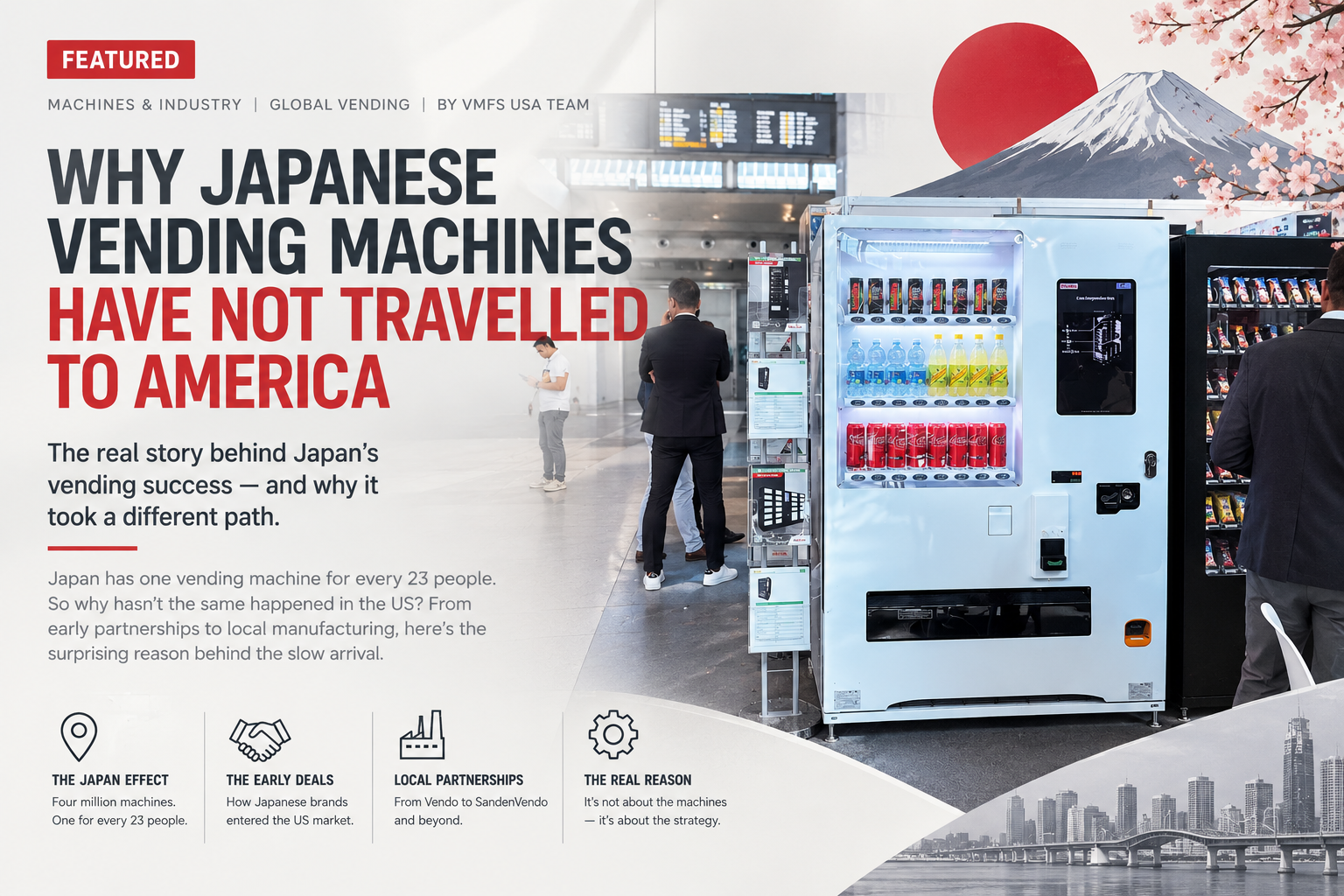


Diseñe la solución de vending perfecta para su ubicación y clientes.

Únete al boletín de VMFS y forma parte de una red próspera dedicada al éxito colectivo.
Un registro. Posibilidades infinitas.

En 1937, dos hermanos fundaron The Vendo Company en Kansas City, Missouri. Durante las décadas siguientes, Vendo se convirtió en uno de los nombres definitorios del vending de bebidas frías en Estados Unidos, suministrando máquinas a las principales marcas de refrescos y produciendo una larga serie de innovaciones que terminaron en casi todas las máquinas expendedoras de bebidas fabricadas desde entonces.
La crisis del petróleo de los años 70 golpeó duramente al negocio. Vendo vendió la mayor parte de sus operaciones y se retiró a la distribución de bebidas. Luego, en 1988, la japonesa Sanden Corporation la adquirió. La empresa fue recapitalizada, reinició su programa de ingeniería y, en 2005, trasladó su sede a Dallas y adoptó el nombre SandenVendo America como guiño a su matriz.
Sanden hizo lo mismo en Europa. En lugar de enviar máquinas japonesas a todo el mundo, construyó y compró capacidad local. Producción en Casale, al norte de Italia, que se remonta a los años 60, filiales en Alemania, Francia, Bélgica y España, y la adquisición de Vendhall en el Reino Unido en 2000.
Esta es la respuesta real a la pregunta. La industria japonesa del vending se expandió internacionalmente mediante la adquisición de fabricantes locales y la construcción de máquinas específicas para cada región en fábricas locales. El capital viajó. La filosofía de ingeniería viajó. Las máquinas en sí, en gran medida, no lo hicieron, y existen buenas razones para ello.
Hay también un círculo virtuoso en esta historia. Fuji Electric, líder del mercado japonés de vending durante más de medio siglo, entró originalmente en el negocio en la década de 1950 mediante un acuerdo técnico para licenciar tecnología de vending de Seeburg, una empresa estadounidense. La tecnología viajó de oeste a este, Japón la refinó hasta convertirla en algo extraordinario y luego regresó no como gabinetes exportados, sino como propiedad de fábricas estadounidenses y europeas. Gran parte de lo que hay hoy en nuestras unidades en stock desciende de ese intercambio en una dirección u otra.
Aquí está el detalle que nos llamó la atención, porque es el ejemplo más concreto que hemos encontrado de por qué el hardware no cruza fronteras tan fácilmente.
En trabajos de ingeniería publicados sobre la adaptación de sus máquinas para el mercado chino, Fuji Electric señaló que Japón establece su condición de prueba ambiental de alta temperatura a 32 grados Celsius, unos 90 Fahrenheit. Dado que los veranos japoneses históricamente se mantenían en ese rango, la empresa nunca había necesitado verificar el funcionamiento de las máquinas en condiciones de alta temperatura y humedad superiores a los 40 grados Celsius, aproximadamente 104 Fahrenheit.
Ahora piense en un verano estadounidense. Phoenix, Las Vegas, Dallas, Houston, Miami, gran parte del interior del oeste y toda la Costa del Golfo pasan semanas cada año en exactamente las condiciones para las que nunca se validaron esas máquinas. Y eso es temperatura ambiente, antes de tener en cuenta lo que ocurre dentro de un gabinete oscuro expuesto al sol directo en un patio.
Esto no es una crítica a la ingeniería japonesa. Es una ingeniería excelente, optimizada precisamente para las condiciones que fue diseñada para enfrentar. Ese es precisamente el problema. Una máquina ajustada para un clima que alcanza los 90 grados no es lo que uno quiere para mantener productos refrigerados durante un agosto en Texas, que es la razón por la cual la capacidad de refrigeración es la primera especificación que interrogamos en cualquier equipo destinado a la mitad sur del país y por qué nuestras máquinas para exterior se especifican por clima en lugar de como una sola categoría.

La segunda razón es la que todos intuyen, pero pocos explican con precisión. La densidad de vending en Japón no es principalmente un logro tecnológico. Se basa en una tasa inusualmente baja de delincuencia contra la propiedad, lo que permite que las máquinas permanezcan solas en una calle pública, llenas de existencias y efectivo, durante la noche, sin blindaje.
Elimine esa premisa y todo el modelo económico cambia. Los operadores estadounidenses históricamente ni siquiera han considerado unidades independientes a pie de calle, porque las pérdidas esperadas por vandalismo y robo simplemente no lo justifican. La misma precaución se aplica en gran parte de Europa.
Esa única diferencia se traslada al hardware:
Nada de esto hace imposible el comercio minorista exterior sin vigilancia aquí. Simplemente lo convierte en un ejercicio diferente de ingeniería y ubicación, que es precisamente lo que evalúan nuestros socios en VPlaced al analizar un sitio exterior: iluminación, visibilidad, supervisión pasiva y quién está realmente presente a las tres de la mañana.
Este punto es estructural y es la razón por la cual los dos mercados han producido equipos tan diferentes, aunque casi nunca se menciona.
En Japón, una gran parte de las máquinas de bebidas son propiedad y están operadas por los propios fabricantes de bebidas. La máquina es un canal de distribución para una empresa de bebidas, lo que significa que puede optimizarse en torno a una categoría de producto, estandarizarse en cientos de miles de unidades y justificarse tanto por la presencia de marca como por la rentabilidad a nivel de máquina.
En Estados Unidos, el comprador suele ser con mucha más frecuencia un operador independiente que gestiona una ruta de máquinas mixtas en sitios no relacionados. Ese operador necesita flexibilidad, desea llevar varias categorías en un solo gabinete, se preocupa intensamente por la eficiencia del reabastecimiento en rutas largas y tiene que justificar cada máquina por su propia rentabilidad.
Son clientes distintos que quieren máquinas distintas. Una unidad de bebidas alta, elegante y de una sola categoría construida para una esquina de Tokio no es lo que busca un operador en la zona rural de Michigan, lo cual es parte de por qué las máquinas combinadas que transportan tanto snacks como bebidas siempre se han vendido mejor en este mercado que los formatos especializados que dominan en Japón.
Luego hay una serie de obstáculos prácticos poco glamurosos, cada uno superable individualmente y colectivamente lo suficientemente caros como para mantener a la mayoría de los fabricantes en su país.
| Barrera | Por qué detiene la exportación |
|---|---|
| Suministro eléctrico | Japón utiliza 100V y, excepcionalmente, dos frecuencias de red. El suministro estadounidense y europeo difiere en ambos aspectos, lo que requiere un rediseño más que un simple adaptador |
| Gestión de divisas | Los mecanismos de monedas y billetes están construidos en torno a la moneda de un país específico. Cada nuevo mercado requiere nuevo hardware y nueva validación |
| Estándares sin efectivo | Japón construyó su propio ecosistema sin contacto basado en tarjetas de transporte. Exportar significa certificar contra sistemas de pago completamente diferentes |
| Certificación de seguridad | Las marcas de aprobación requeridas en América del Norte y Europa son procesos separados con costes separados por modelo |
| Piezas y servicio | Una máquina sin una red local de repuestos y técnicos capacitados es invendible, por muy buena que sea |
| Economía de rutas | La densidad japonesa significa rondas de reabastecimiento cortas. Las rutas estadounidenses cubren distancias que cambian lo que significa un diseño de máquina eficiente |
Cualquiera de ellos es solucionable. Todos juntos, para un fabricante que ya sirve a un mercado nacional de varios millones de máquinas instaladas, sumaron durante décadas una decisión comercial sencilla: quedarse en casa. Ese cálculo solo está cambiando ahora, porque el mercado doméstico japonés ha madurado y comenzado a declinar, lo que da a esos fabricantes una razón para mirar hacia afuera que antes no tenían.

La máquina de las fotografías anteriores es un contrapunto útil, porque muestra lo que sucede cuando un mercado se optimiza para sus propias condiciones en lugar de importar las de otro.
Se trata de un quiosco automatizado europeo, y junto a una unidad convencional de frente de cristal se encuentra un banco de casilleros iluminados individualmente que dispensan multipacks de cerveza y cajas completas. Las máquinas de bebidas japonesas son extraordinarias para entregar una sola lata fría, caliente o fría, en segundos. Nunca fueron diseñadas para entregar a alguien una caja de veinte botellas, porque ese no era el problema que el mercado japonés les pidió resolver.
Los formatos de casilleros responden a una pregunta genuinamente diferente: cómo vender algo demasiado grande, pesado o incómodo para sobrevivir a un espiral o una caída. Una vez que se logra eso, el rango de lo que una máquina puede vender se expande enormemente, lo cual es el mismo principio detrás de los sistemas de casilleros y ascensores en nuestra gama especializada.
La lección no es que una región construya mejores máquinas. Es que el equipo de cada mercado es un registro fósil de las limitaciones bajo las que creció, y copiar la máquina sin entender la limitación es la razón por la que los operadores terminan decepcionados.
Nada de lo anterior significa que no haya nada que aprender. Hay mucho, y a nuestro modo de ver, es el pensamiento, más que las cabinas, lo que vale la pena importar.
Todo lo anterior explica por qué ejecutamos máquinas piloto en lugar de importar lo que funciona bien en otro lugar y esperar lo mejor. Sería más rápido importar una máquina bien valorada de otro mercado y ponerla en catálogo. También sería una excelente manera de vender a los operadores equipos que fallan en su segundo verano.
Actualmente tenemos unidades piloto funcionando en una variedad de climas y tipos de sitios en Estados Unidos, y lo que estamos midiendo refleja exactamente los modos de falla que este artículo ha estado describiendo:
Esa última línea es la que sigue produciendo sorpresas, y es la misma lección que aprendieron los fabricantes japoneses cuando entraron en China y descubrieron que sus máquinas nunca habían sido validadas por encima de los 40 grados. Nadie sabe lo que necesita un mercado hasta que coloca equipos en él y observa.
Nuestra postura, claramente: el objetivo no es construir una copia estadounidense de una máquina japonesa. Es tomar lo que esos fabricantes demostraron sobre fiabilidad, eficiencia y venta minorista desatendida, y combinarlo con equipos realmente diseñados para el calor estadounidense, los inviernos estadounidenses, las rutas estadounidenses y los operadores estadounidenses. Para eso son las pruebas piloto.
Si desea conversar sobre un sitio específico, preferimos tener esa conversación antes de que compre, no después. Todo lo que suministramos se encuentra en la gama de VMFS USA, con unidades en stock que se envían entre 7 y 21 días con una garantía de piezas de un año.
Preparar el sitio correctamente es un trabajo que realizan nuestros socios en VPlaced, y los permisos que conlleva una instalación exterior o pública son gestionados por VAdviced. Una vez que una máquina está activa, registrarla en VendingFinder es la forma en que la gente la encuentra cuando nada más cercano está abierto.
También seguimos añadiendo ubicaciones piloto, especialmente en climas exigentes. Si usted tiene un sitio que enfrenta calor extremo, inviernos duros, aire salino costero o alta humedad, genuinamente nos gustaría saber al respecto.
Una combinación de factores en lugar de uno solo. La tasa de criminalidad muy baja permite que las máquinas permanezcan desatendidas en la vía pública, la alta densidad de población y el terreno costoso hacen que la huella de una máquina sea económicamente atractiva frente a una tienda, y los fabricantes de bebidas poseen y operan grandes flotas como canal de distribución. Juntos, producen aproximadamente una máquina por cada veintitrés personas.
En parte sí se venden, indirectamente. Sanden adquirió el fabricante estadounidense Vendo en 1988 y construye máquinas aquí bajo SandenVendo America. Lo que no ha viajado es el hardware en sí, debido a diferencias eléctricas, sistemas de moneda y pago, requisitos de certificación, redes de servicio y máquinas diseñadas para un clima y un entorno de criminalidad que no coinciden con este mercado.
Son sobresalientes en aquello para lo que fueron diseñadas, que es entregar bebidas de manera fiable y eficiente en condiciones japonesas. Si son mejores para un sitio estadounidense depende totalmente de ese sitio. Una máquina optimizada para un clima que alcanza los 32 grados Celsius no es la opción correcta para una gasolinera en Phoenix, por muy bien construida que esté.
No. El mercado interno ha madurado y el número de instalaciones se ha mantenido estable o en declive durante algunos años, lo cual es precisamente la razón por la que los fabricantes japoneses se han interesado más en los mercados extranjeros que durante las décadas en las que el mercado nacional por sí solo era suficiente.
El pensamiento más que el hardware. Tratar el tiempo de actividad como el producto, tomarse en serio la eficiencia energética porque los costos operativos se acumulan, diseñar pensando en el reabastecedor en lugar de solo en el cliente, y combinar lo caliente y lo frío en un solo gabinete, algo que el vending estadounidense apenas ha explorado y que se adapta al cambio estacional que enfrentan los operadores al aire libre.
Construido para este mercado, no prestado de otro
Realizamos pruebas piloto en climas estadounidenses para poder decirle qué sobrevivirá realmente en su sitio, en lugar de lo que funcionó bien en otro lugar. Díganos a dónde irá la máquina y a qué clima se enfrenta.
Visitar la tienda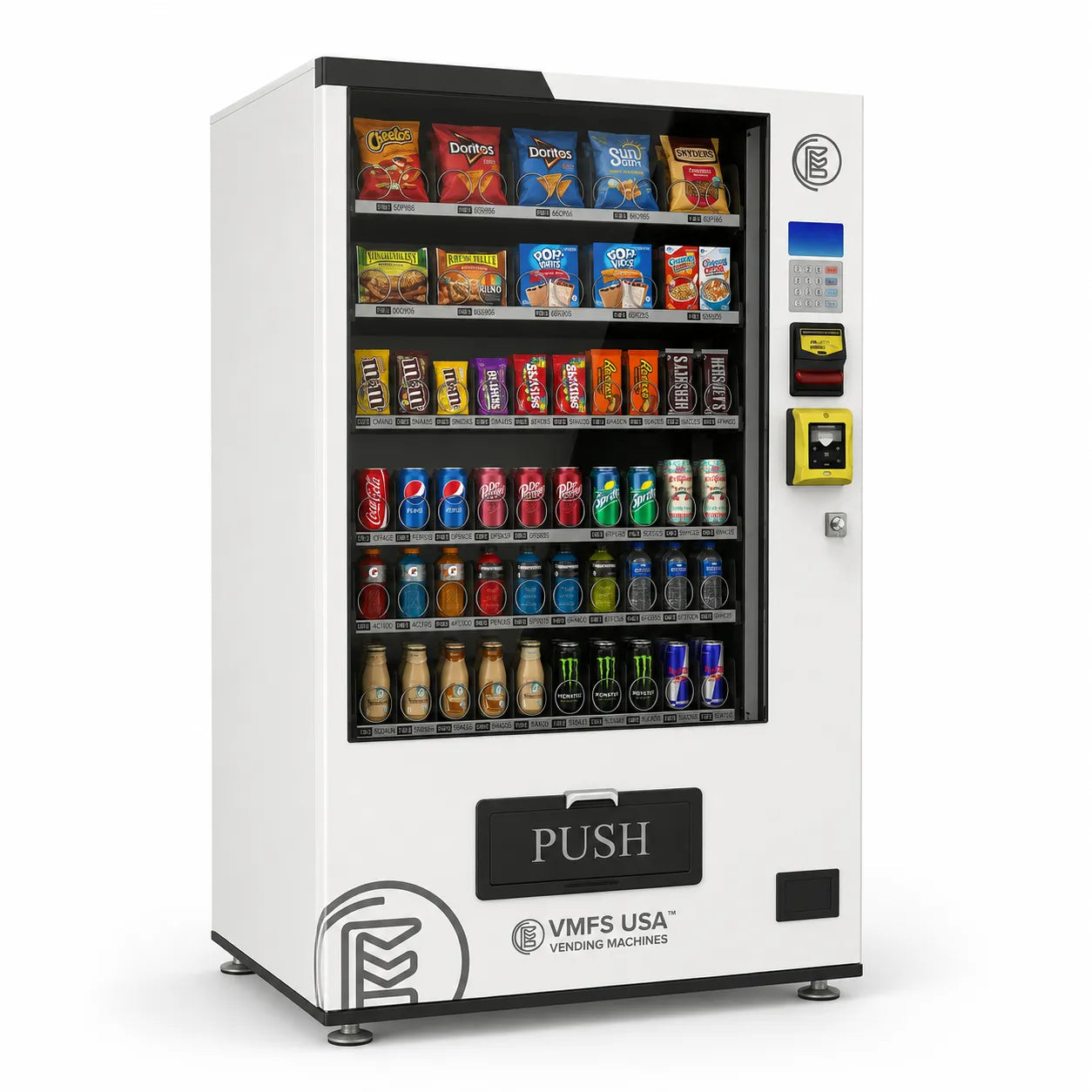
Compartir:
¿Qué es la venta automática de alimentos? La guía completa del comercio minorista automatizado de comida
¿Qué es un establecimiento de venta de alimentos? Definición legal, equipamiento y visión general del negocio