



Design the perfect vending solution for your location and customers.

Sales, inventory and alerts for your whole route, from one machine to a fleet.
Answer a few questions about your location, products and budget and get a shortlist.
Estimate revenue, payback period and margin before you buy.
Sales, setup help, warranty and parts from the VMFS USA team.
Join the VMFS newsletter and step into a thriving network dedicated to collective success.
One signup. Endless possibilities.
Reporting unpermitted food operators directly protects public health, eliminates unsanitary commercial practices, and prevents widespread foodborne disease transmission. Learning how to report illegal food vending involves documenting specific health violations, identifying vehicle or cart identifiers, and contacting municipal environmental health divisions through 311 or county health portals.
Unlicensed food vendors lack mandatory health inspections, potability testing, and mechanical refrigeration equipment required under state retail food codes. Filing a formal food safety violation complaint triggers code enforcement investigations that safeguard urban food supplies.
Unpermitted food vending occurs when an individual or business sells prepared, perishable food items to the public without valid health department permits, business licenses, or certified commercial kitchen infrastructure.
Public health departments enforce strict operational standards because improper food handling quickly propagates pathogen outbreaks across communities.
Unregulated street food operations pose severe health hazards due to missing temperature controls, unverified water sources, and absent employee hygiene facilities. According to the CDC Food Safety Data, roughly 48 million Americans contract foodborne illnesses each year, leading to 128,000 hospitalizations and 3,000 fatalities.

Furthermore, unpermitted cart operators often lack handwashing sinks with running potable water, leading to norovirus transmission via cross-contamination.
Commercial food sellers must hold valid health department permits, local business operational licenses, and state sales tax registrations before serving the public. Mobile food units, food trucks, and pop-up stands must operate from an approved commercial commissaries where equipment is sanitized, wastewater is drained, and food is prepped safely under certified supervisory oversight.
Authorized retail food operations must also display clear inspection decals indicating recent health department compliance reviews. Knowing how to get a food vending license ensures legitimate operators meet all state and municipal environmental standards prior to opening.
Submitting an effective report requires systematically gathering actionable evidence, recording operational locations, and routing complaints to the correct regulatory body.
Follow these four steps to file a complete unlicensed food vendor reporting claim with local health officers.

Validating whether a vendor is operating legally begins by inspecting the physical setup for required municipal permit decals and business disclosures.
Look for these key indicators of illegal food operations:
Missing Health Permits: Absence of a color-coded county health department permit card or inspection sticker on the vehicle, trailer, or pushcart.
Lack of Business Identification: No visible company name, contact phone number, or business address printed on the exterior of the mobile unit.
Unsanitary Utility Setup: Use of open gasoline generators next to exposed food, or graywater draining directly onto public streets and sidewalks.
Improvised Cooking Equipment: Cooking raw meats on unapproved residential charcoal grills, open fire pits, or plastic folding tables without sneeze guards.
Absence of Handwashing Stations: Operating without a dedicated plumbed handwashing sink containing hot running water, liquid soap, and disposable paper towels.
If a vendor exhibits multiple red flags, document their setup discreetly without engaging in physical confrontation.
Accurate documentation strengthens health department food complaint reports, enabling code enforcement officers to issue citations or confiscate non-compliant gear.
When preparing your report, record the exact street address or nearest intersection, operating days, and specific peak hours of operation. Take clear photographs of the vendor's setup, vehicle license plate numbers, signage, and physical food handling practices from a safe distance.
Note explicit health code violations, such as raw meat stored at ambient outdoor temperatures, workers handling cash and ready-to-eat food without washing hands, or pest activity around food containers.
Municipalities process reporting unpermitted food vendors through centralized 311 civic service systems or dedicated county environmental health division portals.
To report an ongoing violation:
Call 311 or Access Online Portals: Dial 311 within city limits or navigate to your city or county health department website.
Select Environmental Health / Food Safety: Categorize the complaint under "Unlicensed Food Operator," "Food Safety Violation," or "Mobile Food Truck Complaint."
Provide Detailed Evidence: Submit the exact address, photo attachments, vendor name (if known), vehicle license plate details, and descriptions of observed violations.
Request an Investigation Case Number: Save your tracking number to monitor municipal response times and follow up with health inspectors.
Code enforcement teams use these localized reports to conduct targeted spot-check inspections and clear illegal street operations.
When illegal vending involves uninspected meat products, poultry, or mass-distributed packaged foods, report the activity directly to federal regulatory bodies.
Citizens can report adulterated meat or poultry complaints to the USDA Food Safety and Inspection Service through their toll-free Meat and Poultry Hotline at 1-888-674-6854. For non-meat packaged food products, submit violations through the FDA Safety Reporting Portal.
Federal agencies intervene when illegal food distribution crosses state lines or poses systemic bio-security risks to commercial supply chains.
Selecting the correct regulatory authority ensures your report is reviewed quickly by officers holding active enforcement jurisdiction.
The table below outlines primary reporting channels based on vendor type and violation severity:
| Agency / Regulatory Body | Jurisdiction & Violation Scope | Recommended Contact Method | Expected Enforcement Action |
| City/County Health Department | Unpermitted street carts, food trucks, pop-up vendors, missing health permits | Local 311 Service or Online Health Portal | Site inspection, cease-and-desist orders, equipment impoundment |
| Municipal Code Enforcement | Public right-of-way obstruction, zoning violations, unpermitted sidewalk sales | City Hall / Code Enforcement Division | Monetary citations, administrative fines, relocation notices |
| USDA Food Safety & Inspection Service | Uninspected meat, poultry, or processed egg products sold to the public | 1-888-MPHotline (1-888-674-6854) / FSIS Online Portal | Product seizure, federal investigation, criminal charges |
| FDA Consumer Safety Officers | Contaminated non-meat packaged foods, shell eggs, unpasteurized dairy, cross-state sales | FDA Safety Reporting Portal / Regional District Office | Product recalls, administrative detention, federal injunctions |
| Local Fire Marshal | Open flames, uninspected propane tanks, blocked fire hydrants, generator hazards | Non-emergency Fire Department Dispatch | Immediate operational shutdown, fire safety citations |
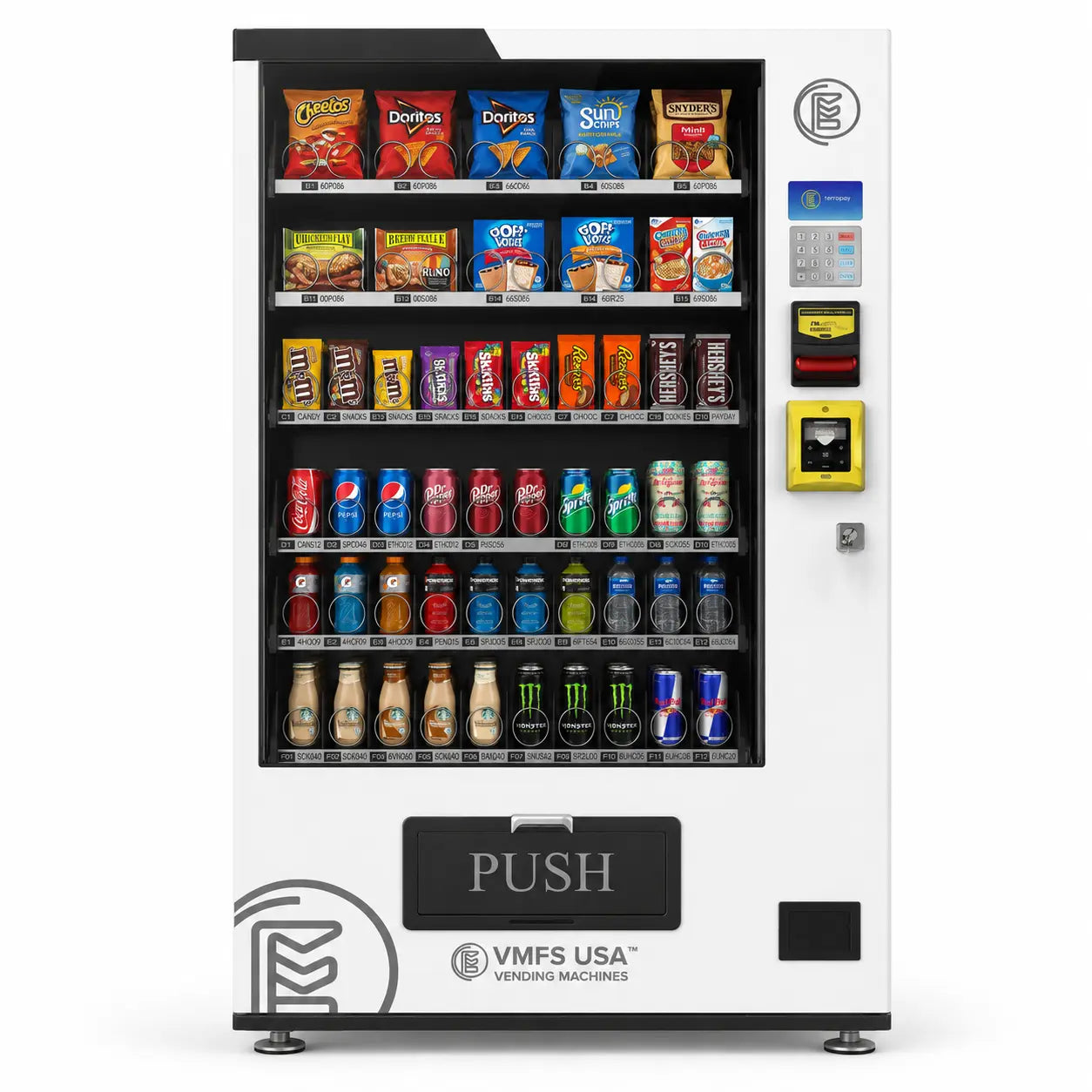
Commercial automated food machines provide a fully permitted, hygienic alternative to unpermitted street vendors by combining controlled thermal storage with automated dispensing mechanisms.
Businesses looking to launch clean, legal food operations can review how to start a hot food vending machine business in 2026 to meet all municipal standards.
If power fails and internal temperatures enter the danger zone for more than 30 minutes, electronic health locks activate automatically, preventing the machine from dispensing compromised food.
To learn more about internal mechanical refrigeration and thermal airflow cycles, read about the cold food vending machine work process. Operators can also explore proper loading techniques by examining how food in vending machines should be dispensed and guide consumers on how to get food from a vending machine safely.
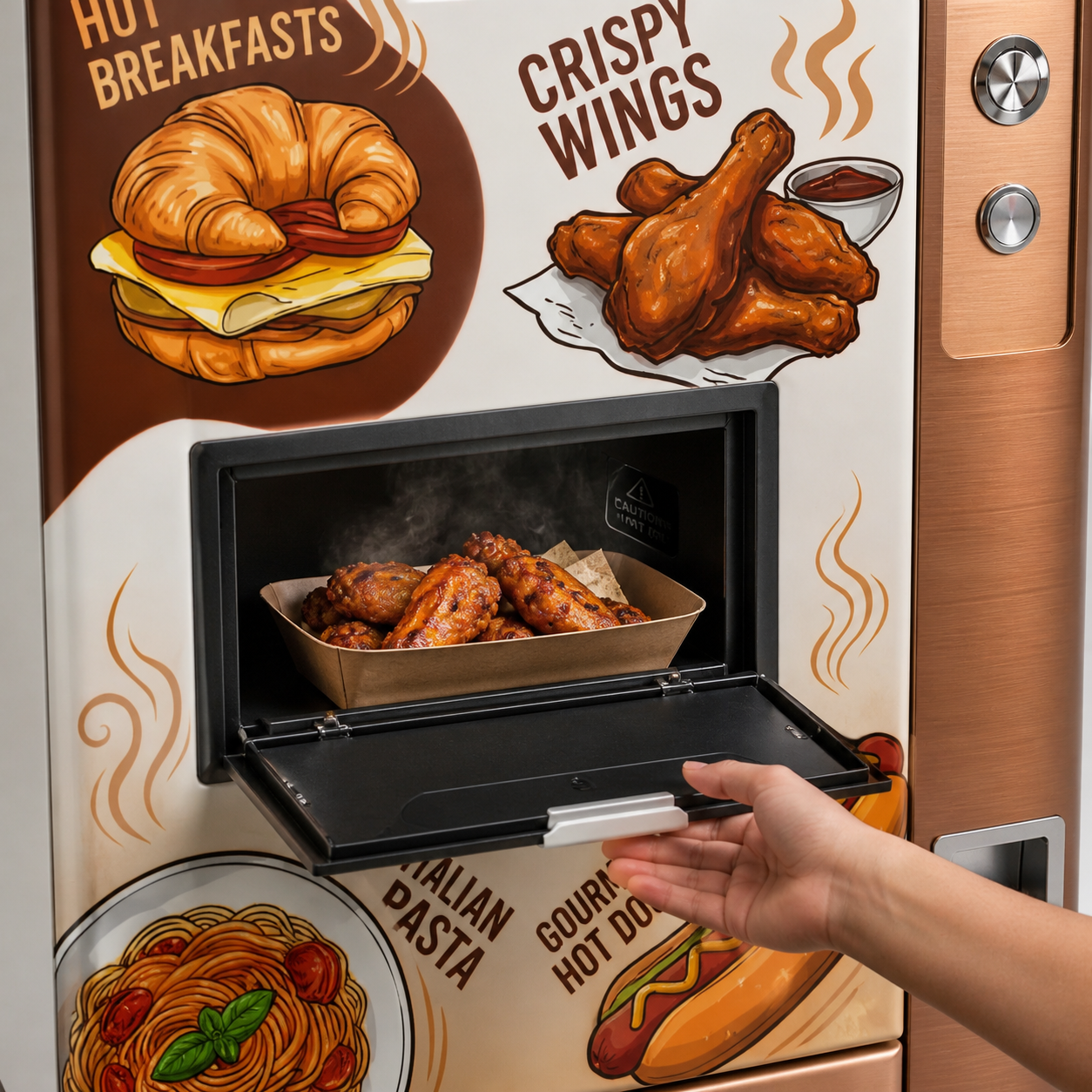
Automated hot food units utilize sealed internal ovens and robotic arms that eliminate human food contact during preparation.
Automated Pizza Dispensing: Commercial units maintain frozen dough and pre-portioned toppings in climate-controlled lockers before baking them rapidly in internal convection ovens. Operators can explore automated pizza vending machines to see how sealed baking chambers preserve food safety, or review how a pizza vending machine works for mechanical breakdowns.
Automated Hot Water Noodle Machines: Specialized noodle machines store sealed food cups and dispense precise volumes of boiling water ($195^\circ\text{F}$ to $205^\circ\text{F}$) automatically. Discover automated cup noodle vending machine technology to review automated water filtration and sanitation cycles.
Fresh Burger Dispensing: Sealed thermal holding chambers maintain prepared burgers at safe temperatures without human handling. Learn more in our detailed burger vending machine guide.
To evaluate financial investments in compliant food technology, research pizza vending machine costs, review options on where to buy pizza for vending machines, analyze the overall profitability of automated pizza units, and evaluate the long-term benefits of automated pizza dispensing. Investors can also analyze expanded commercial models through pizza food franchise investments.
Similarly, operators interested in instant soup systems can study how ramen vending machines work and evaluate ramen vending machine profitability in high-traffic commercial environments.
Operating a legal, permitted food distribution business protects your investment against fines, equipment seizure, and civil liability.
Establishing a commercial food vending company requires selecting a legal business structure to insulate owners from personal liability.
Entrepreneurs should consider forming an LLC for a vending operation or evaluate alternative corporate frameworks such as a C-Corporation structure, an S-Corporation tax structuring model, or a simple sole proprietorship entity. Securing professional registered agent services for food businesses ensures your company receives official state regulatory notices and permit renewals reliably.
Additionally, operators must secure state sales tax licenses, register with local health boards, and stock healthy, compliant inventory options like healthy food for vending machines and pre-packaged vending machine healthy snacks.
Sourcing NAMA-certified, NSF-listed equipment ensures your automated food hardware passes state health department inspections on the first attempt.
Operators can source certified hardware directly from a trusted Vending Machine Company in USA like VMFS USA. Explore our complete line of Hot Food Vending Machines to find compliant systems for any commercial facility.
To outfit specific commercial sites, select from these specialized automated units:
Office Meal Programs: Deploy a compact Lunch Box Vending Machine for fresh daily meal options.
Low-Footprint Hot Meals: Install a Mini Hot Food Vending Machine in tight breakrooms.
On-Demand Pizza: Utilize a Commercial Pizza Vending Machine for 24/7 freshly baked slices.
Instant Noodle Stations: Deploy a Ramen Noodle Vending Machine in student centers and late-night hubs.
High-Volume Food Services: Upgrade to a Large Hot Food Vending Machine for maximum daily meal output.
Placing automated equipment on commercial property requires executing legal placement agreements with property owners.
Property managers interested in hosting compliant automated food services can explore listing commercial space for vending placement through VPlaced. Operators looking for vetted placement sites can leverage Vending Finder to secure high-traffic locations, while deploying specialized marketing strategies via VMarketed to drive daily foot traffic.
Report illegal street food vendors by dialing 311 or submitting a complaint through your local county health department's online portal. Provide the exact location, operating hours, vehicle license plates, and photographs of observed health code violations.
You need the vendor's physical location, times of operation, descriptions of food items sold, vehicle or cart identifying marks, and specific observed health violations. Pictures of missing health permits, improper food storage, or absent handwashing stations strengthen the report.
Yes, most municipal 311 systems and county environmental health portals allow citizens to submit anonymous food safety complaints. However, leaving contact details allows health inspectors to follow up if additional location details are required.
The health department assigns an environmental health inspector to conduct an unannounced site visit. If violations or missing permits are verified, inspectors issue administrative fines, cease-and-desist orders, or impound unpermitted equipment.
The USDA Food Safety and Inspection Service (FSIS) regulates meat and poultry products. Report uninspected or illegal meat sales to the USDA Meat and Poultry Hotline at 1-888-674-6854.
Unpermitted vendors operate without mandatory health inspections, potability water testing, or commercial refrigeration. Holding perishable foods in the danger zone ($41^\circ\text{F}$ to $135^\circ\text{F}$) allows bacterial pathogens like Salmonella and E. coli to multiply rapidly.
Legitimate vendors display a valid, current health department permit decal, business name, and contact details on their vehicle or cart. They also utilize commercial refrigeration units, running hot water handwashing sinks, and sneeze guards.
Illegal vendors face administrative fines, confiscation of food inventory and equipment, court summonses, and permanent bans from obtaining future commercial vending permits.
Automated food machines feature health locks that prevent food sales if internal temperatures exceed safety thresholds. They also utilize NAMA-certified, sealed components that eliminate manual food handling.
You can buy NAMA-certified, NSF-compliant hot food equipment directly from VMFS USA. Explore our full range of Hot Food Vending Machines to start a fully permitted automated food enterprise.

Compartir:
What to Look for in Office Coffee Machine Features - Buying Guide