

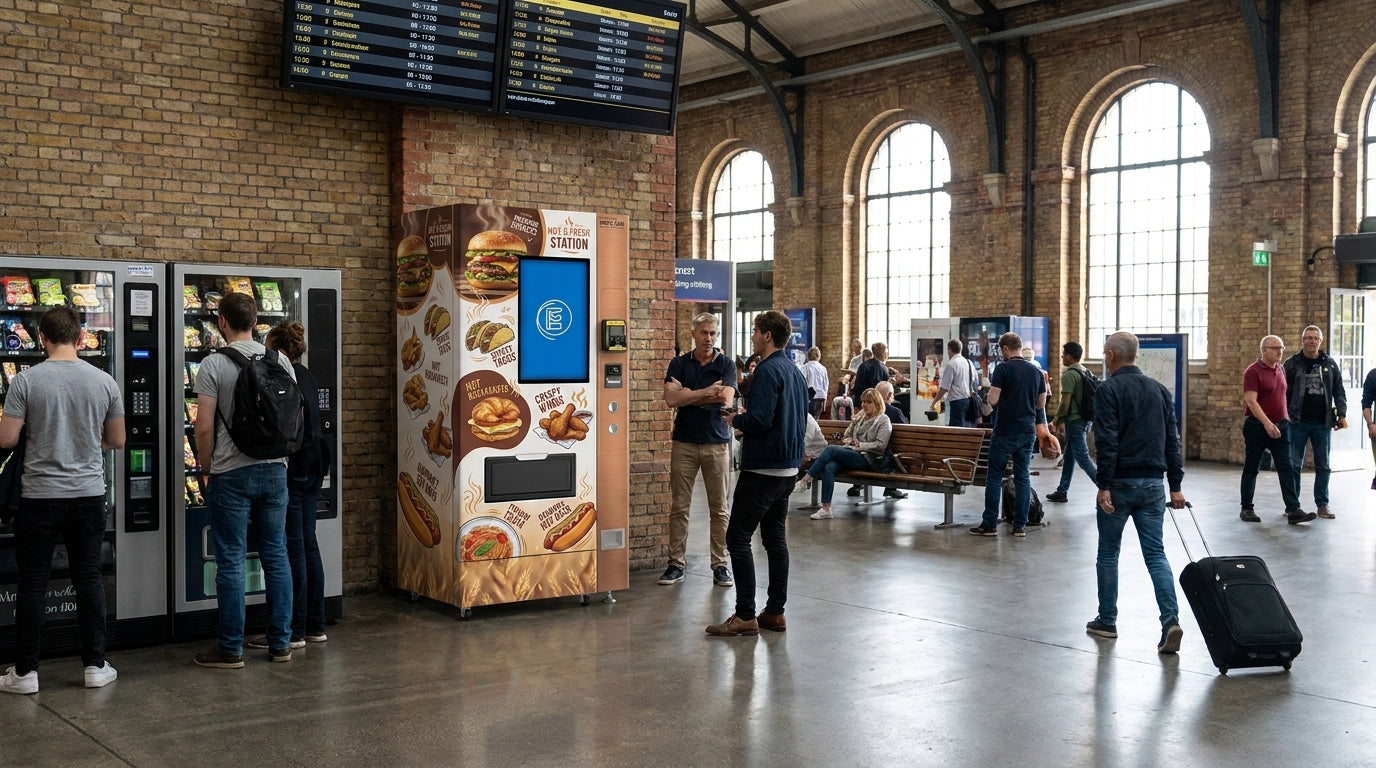


Design the perfect vending solution for your location and customers.

Sales, inventory and alerts for your whole route, from one machine to a fleet.
Answer a few questions about your location, products and budget and get a shortlist.
Estimate revenue, payback period and margin before you buy.
Sales, setup help, warranty and parts from the VMFS USA team.
Join the VMFS newsletter and step into a thriving network dedicated to collective success.
One signup. Endless possibilities.
A commercial food vending machine costs between $3,000 and $25,000 on average, depending heavily on internal refrigeration mechanics, smart heating capabilities, touchscreen interfaces, and automated dispensing robotics. Standard cold food machines range from $4,000 to $10,000, while high-tech automated hot meal kiosks and specialized robotic units sell for $8,000 to $25,000+.
Understanding how much does a food vending machine cost requires evaluating upfront capital expenditure alongside long-term operational maintenance. Industry data from the NAMA Industry Research reveals that the convenience services sector accounts for over $18.2 billion in annual U.S. revenue, fueled by rapid growth in smart automated hot and fresh food hardware.
Selecting the right machine category depends on target foot traffic, meal prep complexity, and daily cup or meal volume requirements.
New food vending machines cost between $6,000 and $25,000, refurbished units range from $3,500 to $8,000, and used machines typically sell for $1,500 to $5,000. Initial equipment condition directly impacts ongoing repair reserves, component reliability, and customer satisfaction.
New machines include factory warranties, modern MDB 4.2 telemetry card readers, and energy-efficient compressors. Refurbished units replace worn motors, bill validators, and cooling coils, offering a balanced middle ground for expanding operators. Used units present lower entry barriers but carry higher breakdown risks and lack modern cashless payment capabilities.
| Equipment Condition | Purchase Price Range | Typical Warranty | Key Financial Advantages | Primary Operational Risks |
| New Commercial | $6,000 – $25,000 | 1 to 3 Years | Latest telemetry, zero initial repair costs, highest energy efficiency | Higher upfront capital expenditure requirement |
| Refurbished | $3,500 – $8,000 | 90 to 180 Days | 30%–50% savings over new, tested core components | Shorter component lifespan than factory-new units |
| Used / As-Is | $1,500 – $5,000 | None / As-Is | Lowest entry cost, fast break-even on low-traffic sites | Frequent compressor failures, outdated MDB protocols |
Hardware costs scale proportionately with mechanical complexity, thermal isolation engineering, and automated food preparation components.
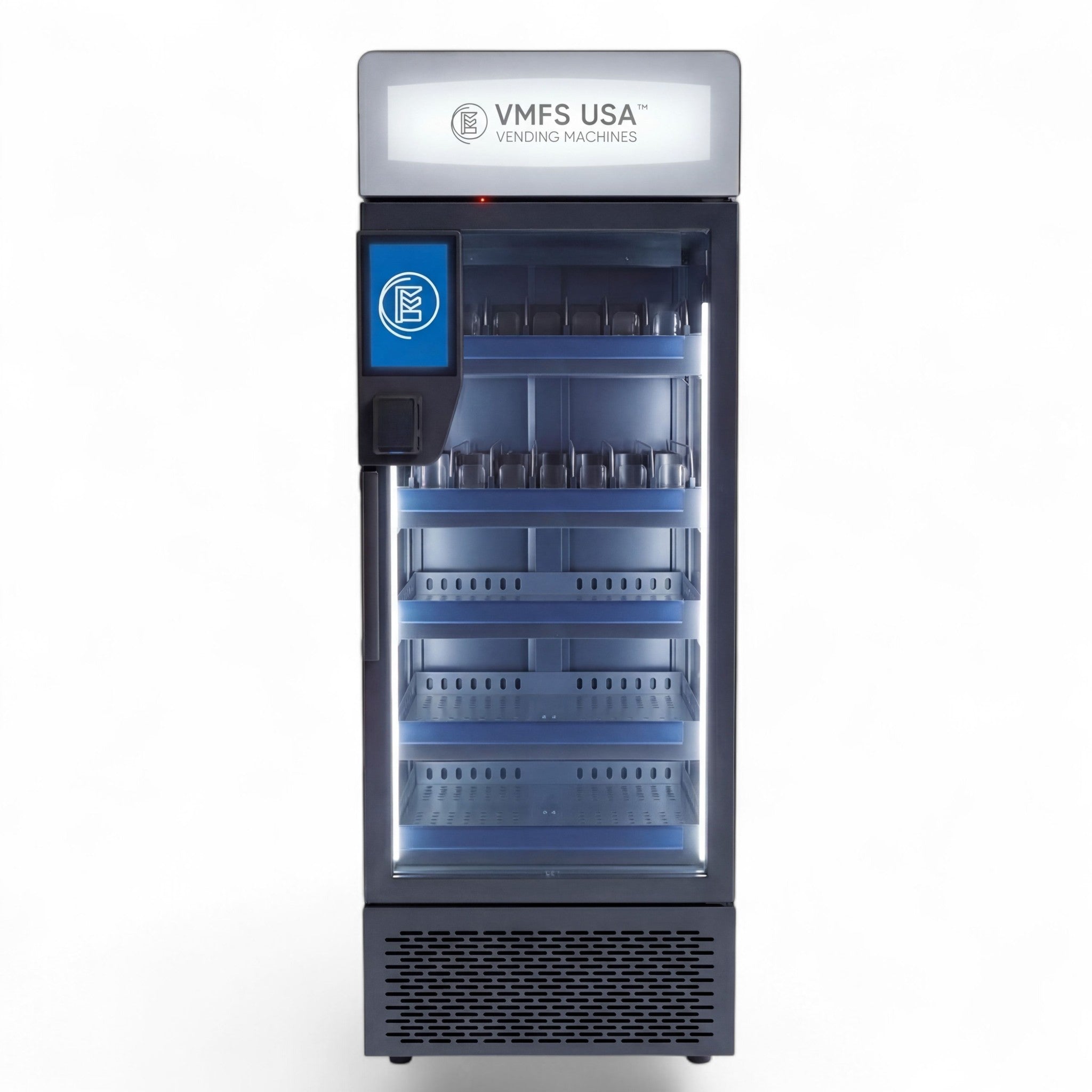
Cold food vending machines cost between $4,000 and $10,000 new. These systems utilize forced-air commercial refrigeration compressors and health safety locks that monitor internal cabinet temperatures continuously.
According to the FDA Food Code Compliance Guidelines, automated machines storing Time/Temperature Control for Safety (TCS) foods must maintain temperatures at or below 41F. If power fails or internal temperatures exceed safety limits for more than 30 minutes, automatic health locks disable sales to prevent foodborne illness.
Understanding the internal cold food vending machine work process helps operators optimize shelf arrangement. Proper loading dictates how food in vending machines should be dispensed without damaging delicate packaging or blocking elevator drop trays, allowing operators to offer fresh options like healthy food for vending machines.
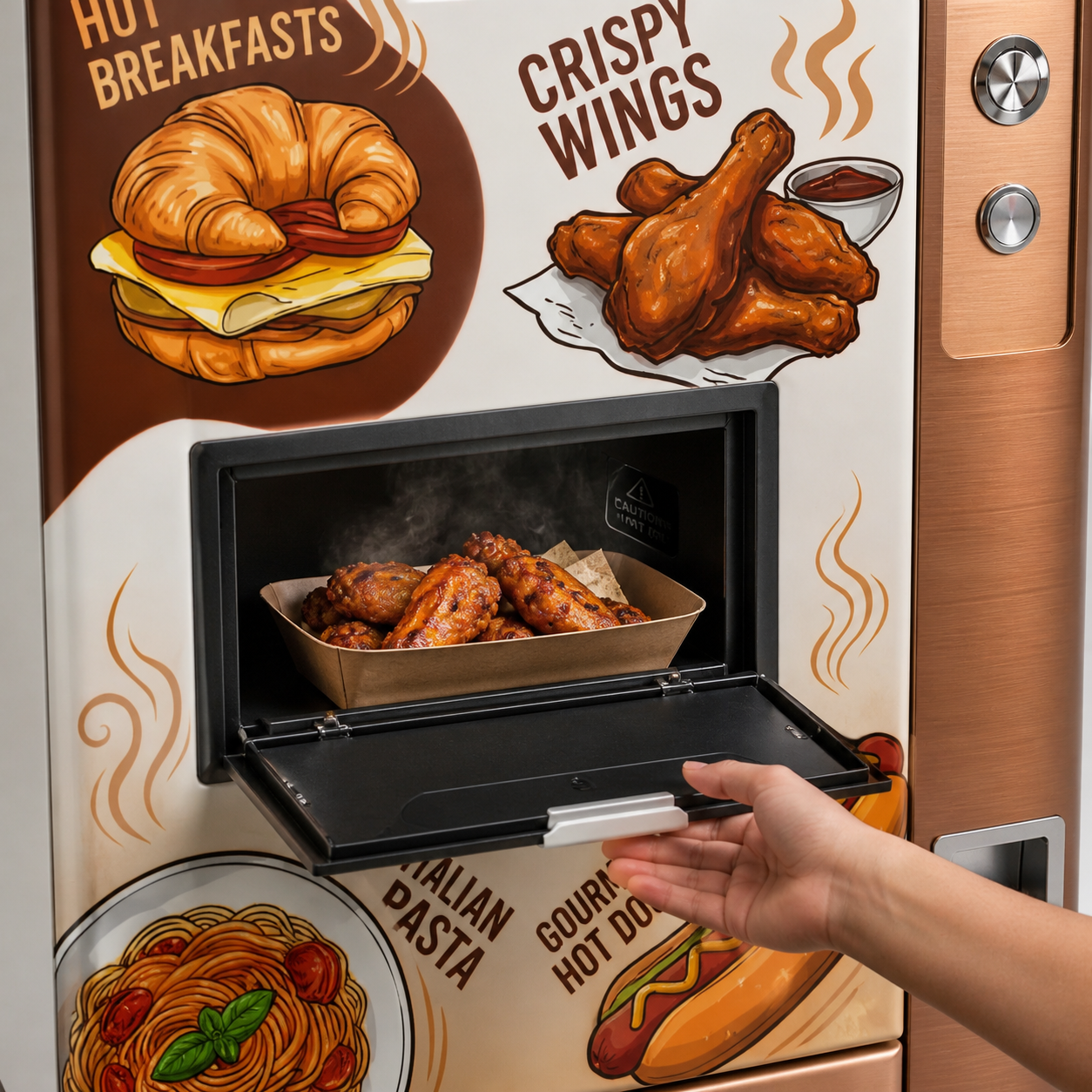
Commercial hot food vending machines range from $8,000 to $18,000, combining temperature-controlled cold storage with high-speed internal microwave heating modules. These units store meals in refrigerated compartments until purchase, transferring items into internal heating chambers that dispense hot meals in under 90 seconds.
Operators seeking high-capacity automated hot meal dispensers can source commercial-grade units directly through VMFS USA, a leading Vending Machine Company in USA. Explore our full inventory of Hot Food Vending Machines to compare thermal capacities and delivery mechanisms.
For targeted location footprints, operators can deploy specialized meal hardware:
Office & Workplace Dining: The Lunch Box Vending Machine provides temperature-controlled daily meal boxes.
Compact Commercial Footprints: The Mini Hot Food Vending Machine offers high-speed heating in tight breakrooms.
High-Volume Corporate Centers: The Large Hot Food Vending Machine features expanded storage channels for high-demand shifts.
Reviewing our step-by-step operational guide on how to start a hot food vending machine business in 2026 outlines complete launch requirements. Operators can also diversify menu offerings by consulting our comprehensive burger vending machine guide.
Automated pizza vending machines cost between $15,000 and $35,000+, representing one of the highest-revenue automated food categories. These kiosks store frozen or chilled raw pizza crusts and toppings, baking individual pizzas inside internal $500^\circ\text{F}$ convection ovens in 3 minutes.
Interested operators can view full specifications for our commercial Pizza Vending Machine. Evaluating overall pizza vending machine costs against daily volume reveals exceptional profit potential in university dorms, airports, and entertainment centers.
To assess pizza automation viability, explore how pizza vending machines are here to transform instant dining, analyze how a pizza vending machine works mechanically, review sourcing strategy for where to buy pizza for vending machines, and evaluate how profitable is a pizza vending machine long-term. Operators can also review the broader financial benefits of pizza vending and evaluate highest earning pizza food franchises.
Automated ramen and instant noodle vending machines cost between $7,000 and $15,000. These specialized units store sealed noodle containers, automatically dispensing measured boiling water.
Check out technical specs for our dedicated Ramen Noodle Vending Machine. Experience industry innovations from major trade expos like Venditalia 2026 cup noodles vending machines to see automated boiling water injection in action.
Operators can study how ramen vending machines work step-by-step and calculate revenue projections to see if ramen vending machines are profitable in high-traffic commercial hubs.
Vending hardware costs fluctuate based on five core structural specifications that dictate operational speed, customer throughput, and maintenance intervals.
Modern machines utilize MDB 4.2 protocol card readers supporting Apple Pay, Google Pay, and RFID employee badges. These systems improve average ticket sizes by 25% over cash-only models.
Smooth drop mechanisms preserve product presentation during dispensing. Educating consumers on how to get food from a vending machine safely reduces physical machine abuse, while stocking popular items like vending machine healthy snacks drives repeat purchases.
Recurring operational expenses for a commercial food vending machine average $300 to $800 per month per machine, excluding initial hardware financing payments. Budgeting for recurring fees prevents unexpected cash flow shortages during initial deployment.
Initial Inventory Stocking: $300 to $800 per unit for opening product fills.
Electricity Utility Costs: $30 to $80 monthly per machine depending on compressor power ratings.
Telemetry & Credit Card Processing: $10 to $25 monthly SaaS subscription plus 2.5% to 3.5% transaction processing fees.
Location Commission / Rent: 10% to 20% of gross sales paid to property owners, or flat monthly site fees ($100–$300).
Maintenance Reserve: $30 to $50 monthly ($300–$600 annually) set aside for wear-and-tear repairs.
The table below outlines realistic total year-one capital allocations for a single commercial hot food machine operating in a moderate-traffic corporate location:
| Cost Category | Upfront Expense | Monthly Recurring | Total Year 1 Expense |
| New Hot Food Machine | $9,500 | $0 | $9,500 |
| Freight, Delivery & Setup | $400 | $0 | $400 |
| Opening Inventory Fill | $500 | $400 (Replenishment) | $4,900 |
| Business License & Permits | $300 | $0 | $300 |
| Location Rent / Commission | $0 | $225 (15% of $1,500 gross) | $2,700 |
| Telemetry & Card Processing | $0 | $55 ($15 sub + 3% card fee) | $660 |
| Electricity Utilities | $0 | $50 | $600 |
| Total Year-One Investment | $10,700 | $730 / month | $19,060 |

Food vending machines achieve capital payback within 12 to 24 months, generating average gross monthly revenues between $800 and $2,500 per unit in viable commercial locations. Net profit margins average 20% to 35% after accounting for inventory costs, commission fees, and maintenance reserves.

Securing high-footfall sites is the single most critical factor determining machine payback speed. Property owners interested in hosting machines can explore listing commercial space for vending placement on VPlaced.
Operators seeking prime locations can utilize Vending Finder to locate vetted commercial sites, while driving customer foot traffic through targeted marketing solutions from VMarketed.
Forming a legal business entity protects personal assets from commercial liabilities while ensuring compliance with local health department regulations.
Operators must secure local retail food permits ranging from $150 to $700 annually. Review our guide on how to get a food vending license for state-by-state compliance steps.
For detailed regulatory guidance, refer to the U.S. Small Business Administration Licensing Guide. Choose the right legal structure for your operation:
LLC Formation: Most popular structure for small routes. Learn how to form an LLC for a vending machine business.
Corporate Structures: Evaluate an S-Corporation tax setup or a C-Corporation entity structuring model for rapid franchise scaling.
Sole Proprietorship: Explore the entry-level sole proprietorship model for single-machine operations.
Registered Agent Services: Secure official registered agent services for vending operations to handle state tax and regulatory filings seamlessly.
Selecting the optimal machine configuration requires aligning hardware capabilities with site footfall and target product margins.
Low Budget / Single Location ($3,000 – $5,000): Refurbished combo snack and cold drink machine. Best for small office breakrooms under 50 employees.
Medium Budget / Corporate Footprints ($6,000 – $12,000): New glass-front cold food machine or compact hot meal unit with touchscreen GUI and MDB card reader.
High-Volume Premium Kiosks ($12,000 – $25,000+): Custom robotic hot food, pizza, or noodle dispenser with cloud telemetry, age verification, and high-speed heating coils.
Explore our complete catalog at VMFS USA or browse our dedicated Hot Food Vending Machines collection to start building your route today.
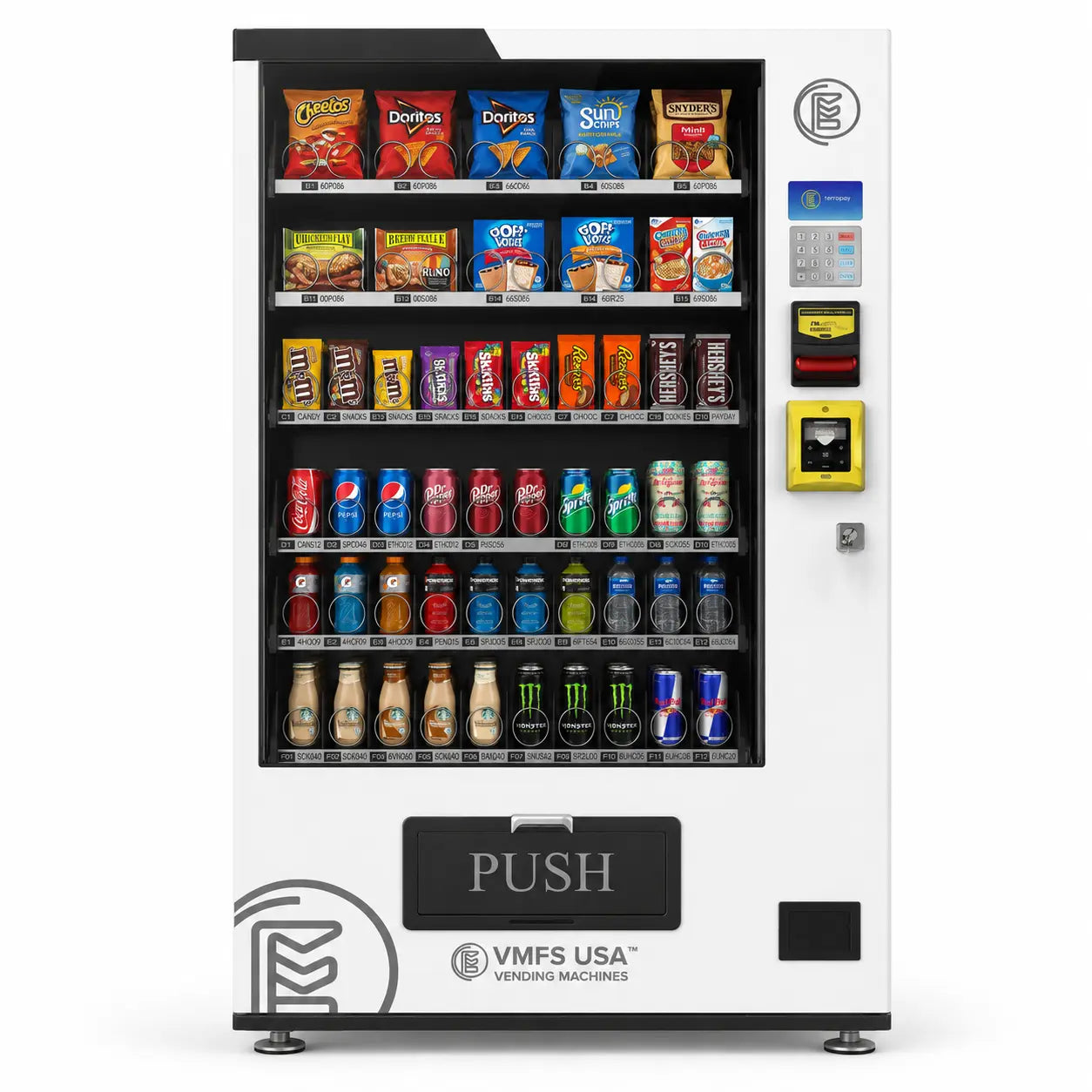
A basic commercial food vending machine costs between $3,000 and $6,000 for standard refurbished or entry-level cold snack units. Fully refrigerated fresh cold food machines run $4,000 to $10,000 new.
New hot food vending machines cost between $8,000 and $18,000. Advanced robotic pizza kiosks or custom hot meal systems can cost $15,000 to $35,000+ depending on heating speed and automation features.
Monthly operating costs range from $300 to $800 per machine. This covers inventory restocking, 10%–20% location commission fees, $30–$80 for electricity, card processing fees, and telemetry subscriptions.
Most commercial food vending machines achieve full capital payback within 12 to 24 months. High-traffic placements generating over $1,500 per month can break even in as little as 8 to 12 months.
Buying new provides factory warranties, modern cashless payment telemetry, and zero initial maintenance. Refurbished machines ($3,500–$8,000) offer a cost-effective alternative with tested core components.
Local health department permits and business licenses cost between $150 and $700 annually per machine, depending on city and state regulations.
A well-placed food vending machine generates between $300 and $800 in net profit per month in moderate-traffic sites, and up to $1,500+ monthly in premium high-traffic locations like hospitals or universities.
Most compact hot food machines run on standard 120V / 15A or 20A dedicated circuits. Larger units with high-wattage convection ovens or rapid microwave elements may require 208V–240V dedicated lines.
Health locks monitor internal cabinet temperatures automatically. If temperatures rise for more than 30 minutes due to power loss or refrigeration failure, the system locks the machine to prevent selling spoiled food.
You can buy commercial NAMA-certified hot food vending machines directly from VMFS USA. Explore our full line of Hot Food Vending Machines for nationwide delivery and warranty support.

Compartir:
How to Report Illegal Food Vending - Step by Step Reporting Guide
Can Anyone Buy a Pokemon Vending Machine? Legal Rules and Operator Guide