


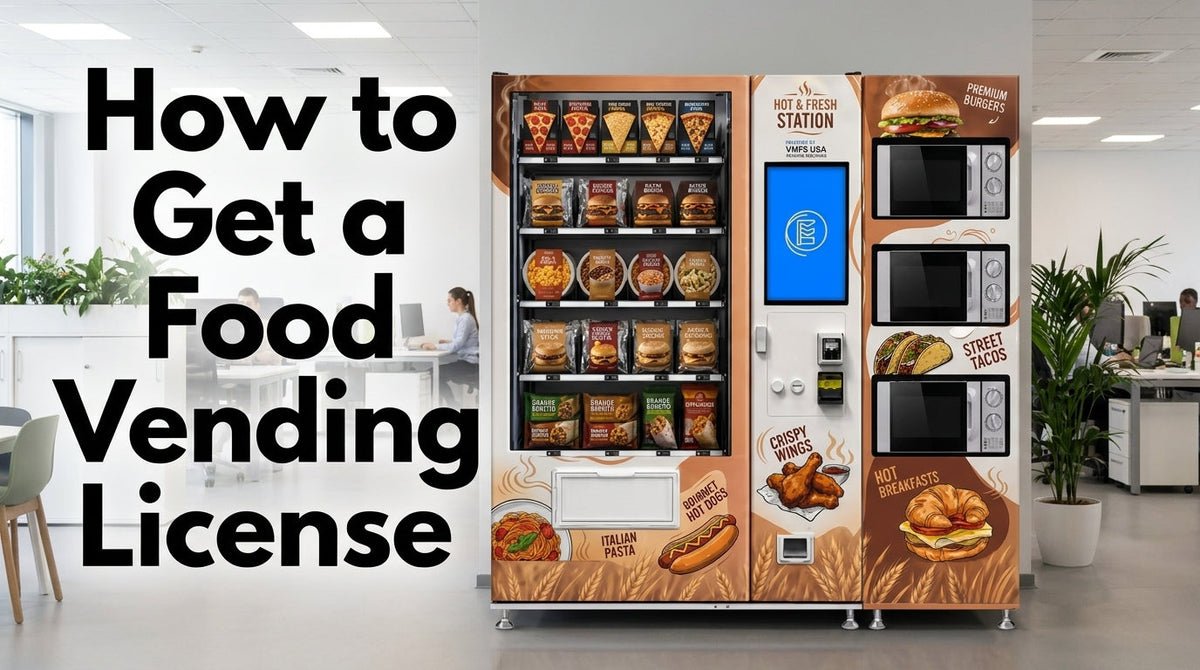


Diseñe la solución de vending perfecta para su ubicación y clientes.

Únete al boletín de VMFS y forma parte de una red próspera dedicada al éxito colectivo.
Un registro. Posibilidades infinitas.
Una licencia de venta de alimentos es un permiso emitido por el departamento de salud estatal o local que autoriza a los operadores de máquinas expendedoras comerciales a almacenar, transportar y dispensar productos alimenticios directamente a los consumidores a través de equipos minoristas automatizados. Los municipios exigen licencias de venta de alimentos porque los equipos automatizados manejan alimentos que requieren Control de Tiempo y Temperatura para su Seguridad (TCS, por sus siglas en inglés) —como carnes, lácteos, comidas cocinadas y productos cortados preparados—, los cuales presentan graves riesgos para la salud pública si se mantienen fuera de estrictos límites de temperatura.
Operar sin los permisos válidos puede desencadenar citaciones municipales, incautaciones inmediatas de las máquinas y sanciones financieras que superan los $5,000 por infracción. Adquirir equipos comerciales de un proveedor certificado como VMFS USA, una destacada empresa de máquinas expendedoras en EE. UU., simplifica el cumplimiento porque las unidades automatizadas modernas vienen equipadas con sensores de temperatura instalados de fábrica y bloqueos sanitarios automáticos requeridos por los códigos estatales.

Establecer una entidad comercial formal aísla sus activos personales de las responsabilidades comerciales y permite operar legalmente bajo las normas de ingresos estatales. La mayoría de los operadores eligen formar una LLC para un negocio de máquinas expendedoras porque limita la exposición personal a reclamos por enfermedades de los consumidores o disputas sobre la propiedad. Alternativamente, los operadores pueden evaluar una propiedad única, establecer una sociedad general para un negocio de máquinas expendedoras, estructurar una sociedad en comandita para un negocio de máquinas expendedoras, crear una sociedad de responsabilidad limitada (LLP), o constituirse como una corporación S, una corporación C, o incluso una corporación sin fines de lucro para la venta de alimentos.
Toda entidad estructurada requiere un agente registrado para un negocio de máquinas expendedoras designado para aceptar notificaciones legales. Una vez registrado ante el Secretario de Estado, solicite un Número de Identificación de Empleador (EIN) gratuito al Servicio de Impuestos Internos (IRS) y solicite una Licencia de Impuesto sobre las Ventas Estatal para cobrar legalmente el impuesto sobre las ventas al por menor.
Los departamentos de salud exigen que los operadores de rutas de alimentos automatizados posean una Certificación de Gerente de Protección de Alimentos válida acreditada por el Instituto Nacional Estadounidense de Estándares (ANSI), como ServSafe. Esta certificación verifica la experiencia operativa en el control de la contaminación cruzada, la gestión de alérgenos, los procedimientos de enfriamiento rápido y la gestión de riesgos críticos.
Los empleados de campo que abastecen o limpian las máquinas deben completar un curso básico para manipuladores de alimentos aprobado por el estado. Estos certificados deben permanecer archivados en la sede de su empresa y presentarse cuando se solicite durante las inspecciones de salud rutinarias.
Los códigos de salud en los 50 estados prohíben a los vendedores almacenar, cocinar, empaquetar o preparar artículos alimenticios TCS dentro de cocinas residenciales. Los municipios exigen que los operadores contraten una cocina comercial, instalación de catering o comisaría compartida con licencia.
Su acuerdo con la comisaría sirve como prueba de una base de operaciones compatible. La comisaría proporciona refrigeración con certificación NSF, instalaciones de lavado de vajilla comercial, recargas de agua potable y gestión profesional de trampas de grasa. Los inspectores de salud inspeccionan tanto su comisaría principal como sus máquinas individuales en el campo.
Antes de instalar equipos en el sitio, envíe sus esquemas de hardware y solicitudes de permisos de salud a su departamento de salud local del condado o ciudad. Las regulaciones estatales requieren que el hardware de dispensación de alimentos automatizado cumpla con las normas de la Fundación Nacional de Saneamiento (NSF/ANSI Standard 25).
Revisar el proceso de trabajo de las máquinas expendedoras de alimentos fríos interno garantiza que su equipo cumpla con las especificaciones estatales para la circulación de aire y la regulación térmica continua.
Un inspector de salud verifica la funcionalidad del hardware, el mantenimiento de la temperatura y las prácticas de saneamiento antes de otorgar un sello de operación. El inspector prueba el bloqueo automático de salud de la máquina simulando una interrupción de energía o un pico de temperatura.
Los inspectores verifican que su hardware muestre el etiquetado exterior obligatorio. Cada máquina debe contar con una calcomanía resistente a la intemperie que muestre el nombre comercial del operador, número de teléfono, dirección y número de registro de la licencia.
Asegurar los derechos legales para colocar máquinas en propiedades privadas o comerciales requiere un Acuerdo de Ubicación firmado que detalle el acceso eléctrico, los porcentajes de comisión y los deberes de mantenimiento. Los propietarios que buscan servicio de comida automatizado pueden registrar su ubicación para conectarse con operadores de máquinas expendedoras calificados para agilizar la instalación.
Asegúrese de que los sitios de colocación cumplan con las ordenanzas de zonificación locales y los estándares de espacio de la Ley de Estadounidenses con Discapacidades (ADA). Los controles de dispensación, las ranuras para monedas y los lectores de tarjetas deben estar a una altura entre 15 y 48 pulgadas del piso terminado para garantizar el acceso.
La Administración de Alimentos y Medicamentos de los EE. UU. (FDA) establece pautas básicas de saneamiento para el hardware de alimentos automatizado minorista a través del modelo del Código Alimentario de la FDA. Las autoridades sanitarias locales hacen cumplir estas pautas para prevenir patógenos transmitidos por los alimentos como Listeria monocytogenes, Salmonella y Escherichia coli.

Según la Sección 3-501.16 del Código Alimentario de la FDA, todos los alimentos TCS fríos mantenidos dentro de una máquina automatizada deben permanecer a 41°F (5°C) o menos. Las máquinas de mantenimiento en caliente que dispensan comidas cocinadas deben mantener las temperaturas internas a 135°F (57°C) o más. Si las temperaturas entran en la zona de peligro entre 41°F y 135°F por más de 30 minutos, el interruptor sanitario automático de la máquina debe activarse instantáneamente.

Este bloqueo sanitario bloquea físicamente las puertas de los mecanismos de dispensación, evitando que los consumidores compren alimentos potencialmente descompuestos. Comprender cómo deben dispensarse los alimentos en las máquinas expendedoras, protege a los operadores de incumplimientos de hardware durante auditorías de campo sorpresa.
La gestión del cumplimiento requiere presupuestar tasas recurrentes federales, estatales y municipales. La siguiente tabla detalla los rangos de costos promedio y los plazos de respuesta en los niveles de jurisdicción estándar.
| Tipo de permiso/licencia | Agencia emisora | Cuota anual estimada | Plazo de tramitación típico |
| Licencia comercial general | Secretario municipal o del condado | $50 – $200 | 1 – 2 semanas |
| Permiso estatal de impuestos sobre las ventas | Departamento estatal de ingresos | $0 – $50 (a menudo gratis) | 3 – 7 días hábiles |
| Permiso de establecimiento de servicios alimentarios | Departamento de Salud del condado | $150 – $500 | 2 – 4 semanas |
| Calcomanía sanitaria por máquina | Salud ambiental local | $10 – $100 por unidad | 1 – 2 semanas |
| Alquiler de comisaría con licencia | Instalación de cocina comercial | $200 – $1,000 / mes | Inmediato tras contrato |
| Certificación de gerente de alimentos ServSafe | Proveedor acreditado por ANSI | $100 – $200 (válido por 5 años) | 1 – 3 días (tras el examen) |
Consultar recursos oficiales como la Guía de la Administración de Pequeñas Empresas de EE. UU. (SBA), proporciona asistencia estructurada para navegar por las variaciones regulatorias regionales.
El equipo de alimentos fríos que almacena ensaladas, yogur, fruta fresca, sándwiches y comidas envasadas requiere un control de refrigeración continuo. Los inspectores de salud verifican que el inventario fresco, como los alimentos saludables para máquinas expendedoras y los snacks saludables para máquinas expendedoras, mantenga una cadena de frío de 41°F desde el vehículo de transferencia de la comisaría directamente al equipo.
Los operadores deben mantener un etiquetado claro con fechas de caducidad, listados completos de ingredientes y declaraciones de los principales alérgenos (incluyendo leche, huevos, pescado, mariscos, frutos secos, cacahuetes, trigo, soja y sésamo). Los consumidores que consultan cómo obtener comida de una máquina expendedora esperan artículos frescos y seguros protegidos por una integridad de refrigeración verificada.
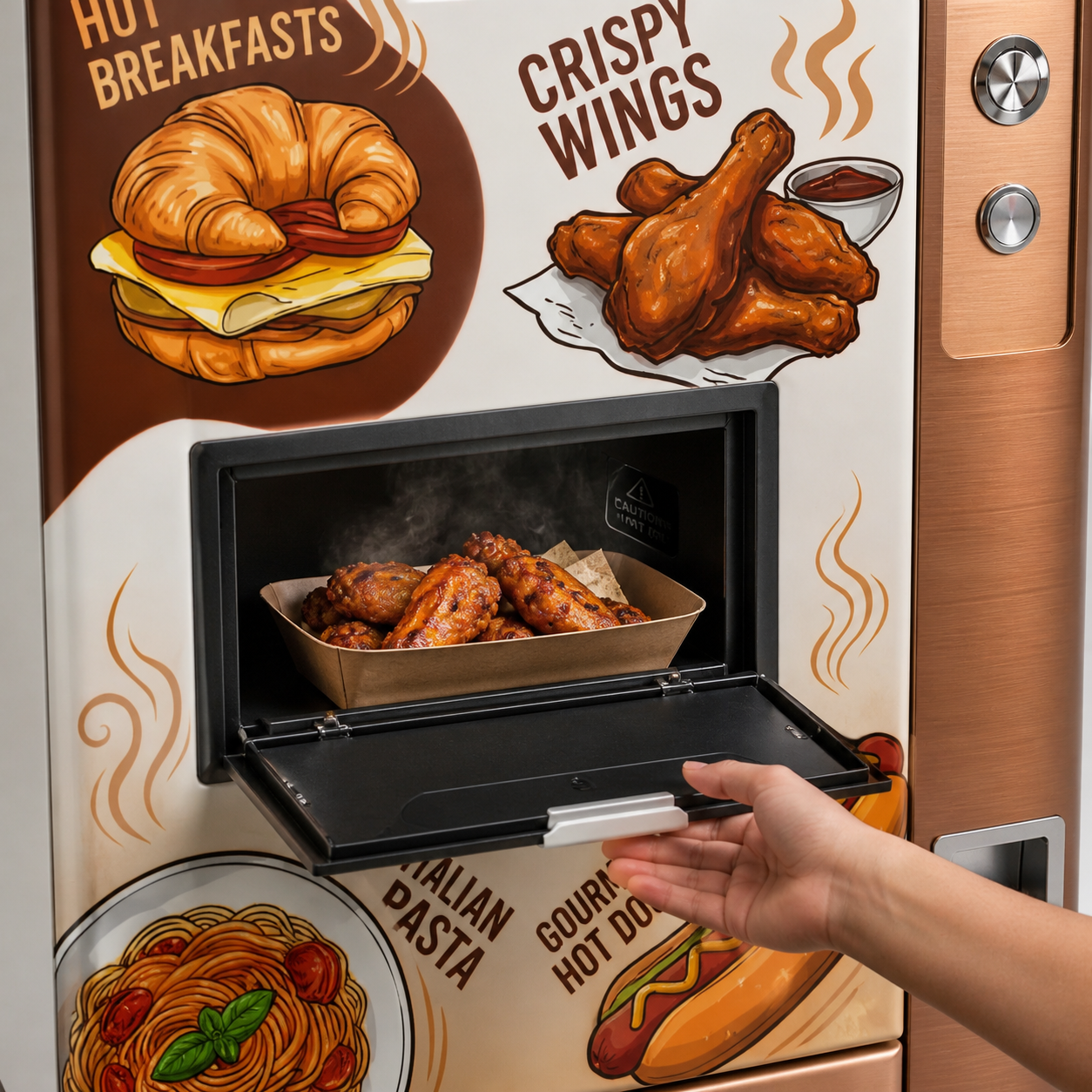
Las máquinas de comida caliente que dispensan hamburguesas, platos principales y cajas de almuerzo personalizadas enfrentan un escrutinio estricto porque mantienen los alimentos a altas temperaturas o calientan rápidamente artículos precocinados antes de su retiro. Los operadores que siguen una guía sobre cómo iniciar un negocio de máquinas expendedoras de comida caliente en 2026 deben confirmar que sus máquinas incorporen elementos de microondas integrados o módulos de calentamiento por inducción capaces de alcanzar una temperatura central interna de 165°F en 120 segundos.
Revisar configuraciones operativas especializadas como una guía de máquinas expendedoras de hamburguesas ayuda a aclarar cómo los inspectores evalúan los componentes de almacenamiento en caliente y calentamiento rápido.
El hardware automatizado de venta de pizza integra refrigeración y hornos de convección de alta temperatura dentro de un mismo chasis. La unidad mantiene la masa refrigerada y los ingredientes frescos a 41°F o menos, y luego hornea la pizza a temperaturas superiores a 400°F al realizar el pedido.
Los departamentos de salud inspeccionan los brazos robóticos mecánicos internos, las bandejas de recolección de aceite y los sistemas de filtración de aire de escape para evitar la acumulación de grasa. Los operadores que analizan cómo funciona una máquina expendedora de pizza y evalúan los beneficios de la venta de pizza deben incluir los procedimientos de saneamiento en los programas de mantenimiento diario.
La viabilidad comercial depende de entender el costo de la máquina expendedora de pizza, revisar dónde comprar pizza para máquinas expendedoras, y calcular el ROI esperado a través de qué tan rentable es una máquina expendedora de pizza.
Para ubicaciones minoristas de alto volumen, implementar una máquina expendedora de pizza dedicada captura la demanda de comida caliente de alto margen durante todo el día. Los inversores a menudo sopesan las franquicias de pizza de mayor rendimiento y las inversiones más inteligentes con el crecimiento de las máquinas expendedoras al escalar las operaciones junto con las tendencias de la porción del futuro: las máquinas expendedoras de pizza ya están aquí.
Las máquinas expendedoras de fideos ramen cuentan con sistemas automáticos de dispensación de agua caliente que requieren válvulas de prevención de reflujo certificadas bajo las normas ASSE 1022. La caldera interna debe calentar el agua al menos a 190°F para rehidratar los fideos al instante mientras elimina posibles contaminantes bacterianos transmitidos por el agua.
Las autoridades sanitarias inspeccionan las líneas de fontanería interna, las unidades de filtración de agua y los receptáculos de descarga de residuos. Revisar las perspectivas del sector, como visitamos Venditalia 2026 y vimos una máquina expendedora de sopa instantánea que dispensa agua caliente en el vaso automáticamente, proporciona un contexto de diseño práctico para los sistemas de suministro de agua caliente.
Comprender cómo funcionan las máquinas expendedoras de ramen de forma rápida, caliente y sin complicaciones, y calcular métricas financieras con ¿son rentables las máquinas expendedoras de ramen?, asegura un despliegue escalable. Los operadores pueden solicitar una máquina expendedora de fideos ramen específica equipada con medidas de seguridad para el calentador de agua automático.
Preparación de alimentos en el hogar: Preparar artículos de tiempo/temperatura controlados (TCS) en cocinas domésticas provoca cierres inmediatos por parte del departamento de salud y fuertes multas. Almacene y empaque siempre el inventario dentro de una comisaría comercial aprobada.
Falta de etiquetas de identificación operativa: Operar equipos sin marcar conduce a la incautación municipal. Coloque calcomanías duraderas y resistentes a la intemperie con el nombre de su empresa, dirección, número de teléfono y código de permiso en cada unidad.
Descuido de los registros de temperatura diarios: Los inspectores de salud auditan los registros de temperatura durante las visitas rutinarias. Utilice un software de telemetría automatizado para registrar los registros de temperatura digitales de forma continua.
Cobro de impuestos sobre las ventas no registrado: No remitir el impuesto sobre las ventas al por menor conduce a graves auditorías de ingresos estatales. Regístrese para obtener permisos estatales de impuestos sobre las ventas antes de procesar las transacciones de los clientes.
Rangos de alcance ADA no conformes: Colocar las ranuras para monedas, las pantallas táctiles o las puertas de entrega a más de 48 pulgadas o a menos de 15 pulgadas del suelo viola las normas de la ADA y conlleva el riesgo de litigios civiles federales.
Sí, la mayoría de los departamentos de salud locales requieren una calcomanía de operación distinta por cada máquina, junto con su permiso principal de establecimiento de alimentos. Las tarifas suelen oscilar entre $10 y $100 por unidad al año, según las directrices del condado.
No, los códigos de salud estatales prohíben estrictamente abastecer las máquinas automáticas con alimentos preparados en cocinas residenciales. Todos los alimentos perecederos TCS deben proceder de una comisaría comercial autorizada o de un distribuidor de alimentos inspeccionado.
Las máquinas expendedoras de alimentos fríos deben mantener temperaturas internas constantes de 41°F (5°C) o menos. Si la temperatura sube por encima de 41°F durante más de 30 minutos, un bloqueo sanitario automático debe inhabilitar la venta.
Un bloqueo sanitario automático monitorea las temperaturas internas del gabinete y corta la energía a los mecanismos de dispensación si se superan los umbrales térmicos. Este mecanismo de seguridad impide físicamente que los clientes compren productos perecederos en mal estado.
Una comisaría es una instalación de cocina comercial inspeccionada utilizada para la preparación de alimentos, el reabastecimiento y la desinfección de equipos. Los departamentos de salud requieren un contrato formal de comisaría antes de emitir permisos de venta de alimentos.
Sí, los conductores de ruta y los técnicos que reabastecen o desinfectan las máquinas de alimentos perecederos deben poseer un Certificado de Manipulador de Alimentos aprobado por el estado. Los operadores también deben mantener una certificación de Gerente de Protección de Alimentos acreditada por ANSI.
No, los artículos preenvasados no perecederos como las papas fritas y las barras de caramelo no requieren control de temperatura ni permisos especializados del departamento de salud. Los alimentos perecederos o calientes clasificados como bienes TCS requieren una autorización completa del departamento de salud.
Los costos iniciales de licencia oscilan entre $200 y $800 por máquina, cubriendo registros comerciales, permisos de salud y certificaciones de gerencia. Los alquileres continuos de instalaciones de comisaría añaden de $200 a $1,000 en gastos generales mensuales.
Cuando la energía cae, la batería de respaldo de la máquina registra la duración de la temperatura interna. Si la temperatura interna del gabinete supera los 41°F durante más de 30 minutos, el bloqueo sanitario se activa y bloquea las ventas hasta que se realice un servicio manual.
Sí, las reglas federales de la FDA requieren que los operadores con 20 o más máquinas muestren la información sobre calorías cerca de las puertas de dispensación o en las interfaces de pantalla. Todas las etiquetas de alimentos preparados deben enumerar los principales alérgenos alimentarios, incluido el sésamo.
Compartir:
Fallos de las máquinas expendedoras de Pokémon y su solución: manual completo para el operador
¿De dónde obtienen sus productos las máquinas expendedoras? Guía completa de abastecimiento y cadena de suministro