




Diseñe la solución de vending perfecta para su ubicación y clientes.

Únete al boletín de VMFS y forma parte de una red próspera dedicada al éxito colectivo.
Un registro. Posibilidades infinitas.
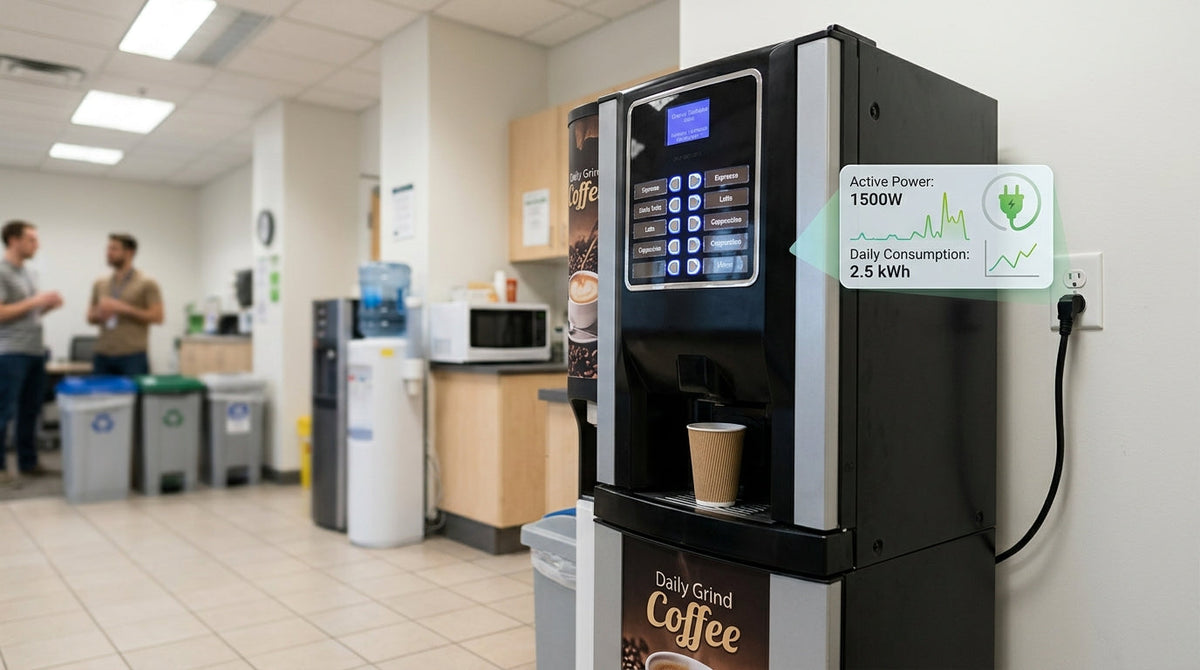
El consumo eléctrico de una máquina expendedora de café suele oscilar entre 1.200 y 2.500 vatios durante el calentamiento activo, con un uso diario promedio de entre 3 y 8 kWh, dependiendo del tamaño de la máquina, el volumen de la taza y la frecuencia con la que la caldera se enciende para mantener la temperatura. Esta guía desglosa el consumo de energía según el tipo de máquina, calcula los costes operativos mensuales realistas y analiza los factores específicos —diseño de la caldera, modo de espera, refrigeración— que aumentan o disminuyen el consumo.
Una máquina expendedora de café comercial consume entre 1.200 y 2.500 vatios mientras calienta agua activamente, y este consumo se reduce significativamente una vez que la caldera alcanza y mantiene su temperatura objetivo. El consumo diario de electricidad suele oscilar entre 3 y 8 kWh, impulsado principalmente por la frecuencia con la que se activa la resistencia para mantener la temperatura lista para el servicio durante las horas de funcionamiento.
Este rango varía según la categoría de la máquina y está directamente relacionado con el aspecto mecánico general cubierto en cómo funcionan las máquinas expendedoras de café, ya que la caldera —la mayor fuente de consumo de energía en cualquier máquina— se enciende y apaga continuamente para compensar la pérdida de calor y satisfacer la demanda de cada ciclo de preparación.
El mayor consumo individual, típicamente de 1.000 a 2.000 vatios durante el calentamiento activo.
Las máquinas de café frío o helado añaden la carga de un compresor que funciona continuamente en segundo plano.
Las máquinas permanecen inactivas entre transacciones, pero mantienen la caldera caliente, consumiendo energía reducida pero existente.
Un mayor número de transacciones diarias implica más ciclos de preparación y, proporcionalmente, un mayor consumo total.
El consumo eléctrico en una máquina expendedora de café depende principalmente del ciclo de la caldera, ya que la resistencia debe reactivarse repetidamente para compensar la pérdida de calor y recalentar el agua utilizada en cada ciclo de preparación. Una máquina que procesa más transacciones diarias enciende su caldera con mayor frecuencia, lo que aumenta directamente el consumo total de kWh durante el periodo de facturación.
Cada ciclo de preparación extrae agua caliente de la caldera, que luego debe recalentarse para mantener la temperatura configurada; este consumo de recalentamiento es la razón principal por la que las máquinas de alto volumen consumen más electricidad de lo que sugeriría únicamente su potencia nominal.
Las máquinas situadas en entornos más fríos, o aquellas con un aislamiento interno menos eficaz, pierden calor más rápido y activan la caldera con mayor frecuencia para compensar, razón por la cual los factores ambientales discutidos en la guía de instalación afectan indirectamente tanto al coste energético a largo plazo como al rendimiento mecánico.
La potencia varía significativamente entre las categorías de máquinas expendedoras de café, ya que el método de preparación, la refrigeración y la complejidad de la bebida aumentan la carga eléctrica base. Las máquinas de café instantáneo consumen menos que las de grano a taza, y las máquinas de café helado añaden el consumo del compresor al de la caldera estándar.
Nota técnica: La potencia nominal indicada en la placa de la máquina refleja el consumo máximo durante el calentamiento activo, no el consumo continuo promedio; el uso real de kWh durante un día es significativamente menor que la potencia máxima multiplicada por el total de horas de funcionamiento.
Para calcular el coste operativo mensual se debe multiplicar el consumo diario promedio de kWh por la tarifa eléctrica local y luego por el número de días operativos en el periodo de facturación. Una máquina que promedia 5 kWh al día a una tarifa comercial típica de 0,13 $ por kWh cuesta aproximadamente 19,50 $ al mes, aunque las tarifas y los patrones de uso varían según la región y el tipo de máquina.
Este coste operativo es un factor pequeño pero real en el coste total de propiedad discutido en la guía de precios, y debe tenerse en cuenta en el presupuesto junto con los suministros y el mantenimiento, en lugar de tratarse como algo insignificante.
Esta tabla resume la potencia típica, los kWh diarios y el coste mensual estimado en las categorías comunes de máquinas comerciales, con una tarifa estándar de 0,13 $/kWh.
| Tipo de máquina | Potencia máxima | kWh diarios prom. | Coste mensual est. |
|---|---|---|---|
| Unidad compacta de encimera | 1.000–1.400W | 2,5–4 kWh | 10$–16$ |
| Máquina de grano a taza CorePro | 1.400–2.000W | 4–6 kWh | 16$–23$ |
| Máquina de café y bebidas calientes | 1.800–2.200W | 6–8 kWh | 23$–31$ |
| Máquina expendedora de café helado | 2.100–2.800W (con compresor) | 7–10 kWh | 27$–39$ |
| Máquina expendedora de café Pro | 2.000–2.500W | 7–9 kWh | 27$–35$ |
El modo de espera consume notablemente menos energía que el calentamiento activo porque la caldera mantiene en lugar de aumentar la temperatura del agua durante los periodos de inactividad, extrayendo ráfagas intermitentes en lugar de una potencia alta sostenida. Una máquina que permanece inactiva durante la noche sigue consumiendo energía para mantener la caldera caliente, a menos que esté equipada con una función programada de ahorro o suspensión.
Las máquinas con programación de espera (que reducen o pausan el calentamiento durante las horas predecibles de bajo tráfico, como por la noche en oficinas) pueden reducir significativamente el consumo diario total sin afectar la calidad del servicio durante las horas activas.
Reducir el consumo energético comienza por ajustar la capacidad de la máquina a la demanda real, ya que una máquina sobredimensionada con una caldera más grande que funciona muy por debajo de su capacidad diseñada desperdicia energía al mantener calor que no se utiliza. Dimensionar correctamente el equipo, cubierto en la guía de máquinas expendedoras de café comerciales, reduce indirectamente el desperdicio de energía junto con sus beneficios principales en costes y rendimiento mecánico.
Elegir entre una máquina expendedora de café de alta eficiencia energética y una estándar afecta tanto al coste inicial como a los gastos operativos a largo plazo. Los modelos de alta eficiencia utilizan un mejor aislamiento y una gestión de espera más inteligente para reducir el consumo, generalmente con un pequeño aumento de precio sobre el equipo estándar.
| Factor | Máquina estándar | Máquina de bajo consumo |
|---|---|---|
| Aislamiento de la caldera | Estándar | Mejorado, reduce pérdida de calor |
| Gestión de espera | Básica o nula | Programación disponible |
| Coste inicial | Menor | Pequeño incremento |
| Coste energético a largo plazo | Mayor | Menor, se acumula con la vida útil |
Los operadores que gestionan varias máquinas en una ruta de máquinas expendedoras de café ven cómo la inversión en eficiencia energética se convierte en ahorros significativos a gran escala, lo que la convierte en un factor a considerar en las decisiones de equipamiento para toda la flota.
Los requisitos eléctricos para la instalación dependen de la potencia máxima de la máquina y no de su consumo promedio, ya que el circuito debe soportar el arranque y la carga del calentamiento activo sin saltar. La mayoría de las máquinas comerciales requieren un circuito dedicado de 120 V o 208–240 V clasificado para el amperaje máximo del equipo, tal y como se detalla en la guía de instalación.
Confirmar esta especificación antes de la instalación evita las fallas relacionadas con caídas de tensión cubiertas en la guía de resolución de problemas, ya que un circuito insuficiente provoca problemas de fiabilidad y un uso ineficiente de energía cuando la caldera lucha por alcanzar la temperatura configurada.
Explore la gama de máquinas expendedoras de café comerciales de VMFS USA y compare modelos diseñados para un funcionamiento eficiente y fiable.
Comprar máquinas expendedoras de café
Compartir:
Arrendamiento de máquinas expendedoras de café: cómo funciona el arrendamiento y cuánto cuesta
¿Cuántas máquinas expendedoras con IA necesitas para gestionar un negocio a tiempo completo?