


A vending machine operator is the person or company that places vending machines in host locations, keeps them stocked and working, collects the sales and pays the location its share. The term also describes the route job of servicing those machines for a vending company.
This guide explains both meanings: what operators do each week, how the money flows, what the role pays as a job according to U.S. Department of Labor data, and what equipment, paperwork and habits separate a profitable route from a struggling one.
What Is a Vending Machine Operator?
A vending machine operator runs unattended retail: they own or manage vending machines, place them where people need quick purchases, and handle everything that keeps those machines selling. The machine completes each transaction, but the operator chooses the location, the products, the prices and the service schedule, and carries the costs when any of those choices are wrong.
Operators range from one person with a single snack machine in a local gym to regional companies running thousands of machines, micro markets and office coffee programs. The business model is the same at every size. Put the right equipment where demand already exists, keep it full and working, and make sure every sale clears product cost, location commission, payment fees and the cost of driving to the machine.
Two meanings of the job title
The phrase is used in two different ways, and search results mix them. In the business sense, an operator is the owner of the vending business: the person who signs location agreements, buys inventory and keeps the profit. In the employment sense, "vending machine operator" is also a job title for the route worker who restocks, cleans, collects from and repairs machines for a vending company. Federal job data files that worker under coin, vending and amusement machine servicers, with titles such as vending service technician and full service vending driver. Most small operators do both jobs themselves until the route is large enough to hire help.
The official industry definition
The U.S. Census Bureau gives vending its own industry code. Under the 2022 North American Industry Classification System, NAICS 445132 "Vending Machine Operators" covers establishments primarily engaged in retailing merchandise through vending machines that they service. Two details in that definition matter. Operators are classified as retailers, not equipment companies, and the defining activity is servicing the machines, not just owning them. You will see this code on loan applications, insurance quotes, state tax registrations and some local permit forms.
The operator landscape in numbers
The 2022–2023 industry census from NAMA (the National Automatic Merchandising Association), compiled with research firm Technomic, estimated about 10,450 companies operating vending in 2023, out of roughly 11,450 operators across all convenience services. Those operators ran an estimated 2.89 million vending points of sale and generated about $18.2 billion in vending revenue. The same census found that 67% of operators were "blended," offering more than one service line such as vending plus micro markets or office coffee, and that the number of operators had fallen by an average of 4.4% a year since 2020 as the industry consolidated. Dividing machines by operators gives an average of roughly 277 machines per operator, which shows how much of the market sits with larger route companies and why a new operator usually wins by serving smaller or overlooked locations well.
What Does a Vending Machine Operator Do?
A vending machine operator manages the full operating cycle of every machine: finding and signing locations, installing equipment, buying and loading products, servicing and repairing machines, collecting and reconciling sales, and keeping the location owner satisfied. The work splits into recurring route tasks and less frequent business-development tasks.
| Responsibility | What it involves | Why it matters |
|---|---|---|
| Location acquisition | Finding sites, pitching owners, negotiating commission and service terms | Location decides traffic and sales ceiling |
| Machine selection | Matching snack, drink, combo, smart or specialty equipment to the site | Wrong machine wastes capital or misses demand |
| Product sourcing | Buying from wholesale clubs, distributors and direct vendors | Controls cost of goods and margin |
| Inventory and restocking | Tracking sell-through, expiration dates and par levels, loading machines | Empty slots are lost sales |
| Maintenance and repair | Clearing jams, servicing card readers, coin mechanisms and refrigeration | Downtime costs sales and location trust |
| Cash and reconciliation | Collecting cash, matching it to machine and cashless reports | Catches theft, miscounts and shrink early |
| Route planning | Scheduling visits by need instead of habit | Fuel and labor are the biggest controllable costs |
| Location relationships | Reporting sales, paying commission, handling complaints | Keeps the placement for years |
| Bookkeeping and compliance | Sales tax, permits, insurance, records | Avoids fines and shows which machines earn |

Finding and signing locations
Location work never stops, because placements are won, lost and outgrown. Operators look for sites with steady traffic, long dwell time and limited nearby food options: offices, warehouses, factories, apartment communities, hotels, hospitals, schools, gyms and transit facilities. They pitch the decision-maker, agree on commission, service frequency and placement terms, and put the deal in writing. VMFS covers the process step by step in its guide to how to scout and pitch a vending machine location, and the best vending locations guide ranks site types by demand.
Installing the machine
After the agreement is signed, the operator decides exactly where the machine stands. Visibility, a dedicated outlet, floor strength, door widths, accessibility and security all affect whether the install goes smoothly and whether people notice the machine. The operator then configures prices and payment hardware, loads the first fill, test-vends every selection and confirms the card reader settles transactions before leaving the site.
Inventory and restocking
Restocking is the most frequent task and the one that most directly drives revenue. Operators watch which items sell, which sit, and which expire, then adjust the mix and the par level for each slot. Fast movers earn more facings; slow movers are swapped out unless they serve a specific group at that site. Perishables need tighter rotation. Stock usually comes from wholesale clubs, snack and beverage distributors, and direct vendor accounts, and buying in volume is how operators protect margin. VMFS explains the mechanics in its guide to loading and stocking a vending machine.
Maintenance and repairs
Operators inspect machines on every visit and fix most faults themselves: jammed bills, stuck products, misaligned spirals, card reader connection errors, failing coin mechanisms and dirty condenser coils. Major failures call for a technician or replacement parts. Preventive work matters financially because a machine that cannot vend earns nothing while still occupying the location. The vending machine maintenance guide lays out daily, weekly and quarterly checklists.
Cash collection and reconciliation
Cash management means emptying coin boxes and bill stackers, counting, and comparing the totals with the machine's own sales records and the cashless processor's report. A gap between what the machine says it sold and what was collected points to a bill reader miscount, a pricing error or theft. Reconciled numbers also feed the commission payment to the location and the operator's sales tax filings.
Serving the location owner
Every operator has two customers: the people buying from the machine and the property that hosts it. Location owners care about a clean, working, well-stocked machine, prompt response to complaints and refund requests, transparent sales reporting and on-time commission. Operators who treat the host as a partner keep placements longer and get referrals to other sites.
How a Vending Route Works
A vending route is the group of machines an operator services in one geographic area, organized so the operator can restock, collect and repair as many machines as possible per hour of driving. A route of 20 machines spread across offices, apartment buildings and gyms is run as one business with one schedule, one inventory pool and one vehicle, rather than as 20 separate businesses.
Fixed schedules vs. need-based routing
Traditional routes visit each machine on a fixed calendar, for example every Tuesday and Friday. That is simple, but it sends the operator to half-full machines while busy sites run out of best sellers. Need-based routing uses telemetry: a device reads the machine's sales and stock data (on most machines, the DEX audit data from the controller) and reports it over a cellular or Wi-Fi connection, so the operator sees which machines need product before leaving the warehouse. The operator then pre-kits only what each stop needs and skips machines that can wait. VMFS's article on restock scheduling and routes compares the two approaches in detail.

What happens at a service stop
A typical stop follows the same order every time, which keeps visits short and mistakes rare:
- Check the machine's display and error log, and confirm the card reader is online.
- Pull expired or damaged products and note them as spoilage.
- Load the pre-kitted products, oldest stock to the front, and fill to par.
- Collect cash and record the totals against the machine's sales data.
- Clean the glass, keypad and delivery bin, and check refrigeration temperature on cold machines.
- Test-vend any slot that was jammed or reloaded, then log the visit.
Vending Machine Operator Jobs: Duties, Pay and Outlook
As an employee role, a vending machine operator is a route servicer or technician paid hourly, and federal data puts the median at $22.81 an hour, or $47,450 a year, as of 2025. That figure comes from O*NET, the U.S. Department of Labor's occupational database, which reports Bureau of Labor Statistics wage data for "Coin, Vending, and Amusement Machine Servicers and Repairers" (SOC 49-9091). Job ads use many names for the same work, including vending service technician, vending mechanic, full service vending driver and field service technician.
| Measure (O*NET, SOC 49-9091) | Figure |
|---|---|
| Median hourly wage (2025) | $22.81 |
| Median annual wage (2025) | $47,450 |
| Employment (2025) | 34,700 |
| Projected growth, 2025 to 2035 | Decline (-1% or lower) |
| Projected job openings, 2025 to 2035 | 3,800 |
| Education reported by workers | 92% of respondents say new hires need a high school diploma or equivalent |
| Typical training | A few days to one year of on-the-job training |
The task list O*NET publishes reads like an operator's week: filling machines with products and money, inspecting machines to find the cause of malfunctions, fixing jammed bills and stuck products, keeping records of merchandise distributed and money collected, collecting coins and bills and settling accounts, testing machines, ordering parts, and installing machines with the necessary water and electrical connections. The core skills listed are repairing, equipment maintenance and troubleshooting, with mechanical and computer knowledge.
The projected decline is worth reading carefully. It describes employee servicer jobs, which shrink as large companies consolidate routes and telemetry cuts unnecessary visits. It does not measure demand for owner-operators, whose income comes from profit rather than wages. For route employee pay by experience level and region, see VMFS's guide to the vending machine route driver role.
Employee or owner: A servicer earns a wage whether a machine sells or not. An owner-operator earns only what is left after product, commission, fees and route costs, which can be far more or far less than the median wage depending on locations.
How Does a Vending Machine Operator Make Money?
An owner-operator makes money on the spread between the wholesale cost of products and the retail price charged at the machine, minus every cost of running the route. Gross sales are not profit. A machine that sells $1,000 in a month has to cover the product it sold, the location's commission, card processing, software, fuel, repairs, insurance and taxes before anything reaches the owner.
The operator's cost stack
| Cost | Typical range or example | Source |
|---|---|---|
| Location commission | Commonly 5% to 25% of revenue; some sites accept free placement | NerdWallet |
| Card processing | About 3% to 6% per transaction (e.g. ~2.5% + $0.10, or ~5.95% flat) | VMFS payment system comparison |
| Card reader service | About $7.95 to $18.95 per device per month | VMFS payment system comparison |
| Machine software | VMFS Cloud plans from $7.99 per machine per month | VMFS Cloud |
| Product cost | Set by your wholesale sources and pricing | Your invoices |
| Route costs | Fuel, vehicle, time, parts and repairs | Your records |
Payments now shape revenue more than many new operators expect. Cantaloupe's 2026 micropayment trends report found that 78% of vending sales were cashless in 2025, up from 73% the year before, and that the average cashless ticket was $2.45 against $1.57 for cash. A machine without a working card reader is cut off from most buyers, which is why cashless payment systems belong on every machine you place. Check each product page before buying, because some models include a reader and others list it as an upgrade.
What drives sales at a machine
| Factor | Effect on sales |
|---|---|
| Foot traffic | More potential buyers per day |
| Dwell time | People who stay longer buy more often |
| Audience fit | Product preferences differ by venue and shift pattern |
| Nearby alternatives | A store or cafeteria next door caps demand |
| Product mix and pricing | Relevant products at fair prices raise purchase rate |
| Visibility | A machine people do not see cannot sell |
| Payment options | Card and mobile acceptance removes the "no cash" barrier |
| Uptime and stock | Broken machines and empty slots lose sales and trust |
Because these factors interact, experienced operators judge the location, machine and product mix as one unit rather than blaming or crediting the machine alone. A premium machine in a weak site underperforms; a basic machine in the right break room can be the best earner on the route. For realistic income ranges and worked examples, read are vending machines profitable.
Operator vs. Owner, Route Driver and Location Host
The operator is whoever runs the commercial activity of the machine; the owner simply holds title to the equipment, and in most small businesses they are the same person. The distinction matters when machines are leased, when a company hires route drivers, or when a property owner buys a machine and contracts someone else to service it.
| Role | What they do | How they get paid |
|---|---|---|
| Machine owner | Holds title to equipment; may lease it out | Asset value, rent or operating profit |
| Operator | Runs locations, inventory, pricing, service and payments | Profit after all costs |
| Route driver or technician | Restocks, collects, cleans and repairs for an operator | Hourly wage, sometimes incentives |
| Location host | Provides space and power; sets placement rules | Commission, rent or a free amenity |
| Equipment supplier | Sells machines, parts, software and support | Equipment and service revenue |

How location owners find operators
Property managers who want vending without buying equipment usually look for a full-service operator who supplies, stocks and maintains the machine and pays a commission. Many start with referrals or a search for local companies, then compare service frequency, product range and commission terms. VPlaced, a VMFS sister site, explains how to find vending machine operators and lets property owners list a location for qualified operators.
Types of Vending Machine Operators
Operators are usually defined by what they sell and how they sell it, and most growing operators combine more than one model. NAMA's census finding that two-thirds of operators are blended reflects how routes evolve: a snack-and-drink operator adds a micro market at a large account, or a coffee operator adds cold drinks.
Snack and drink operators
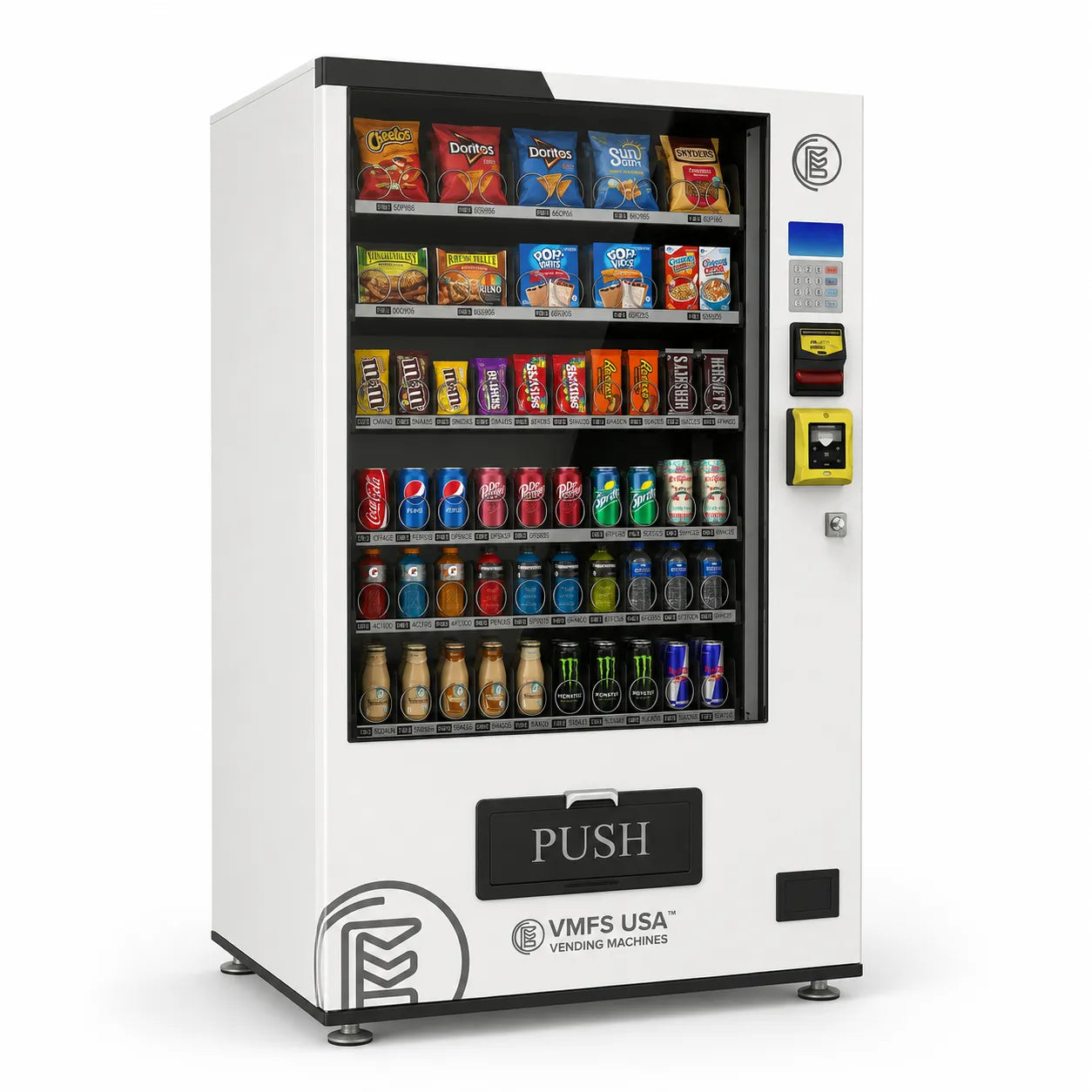
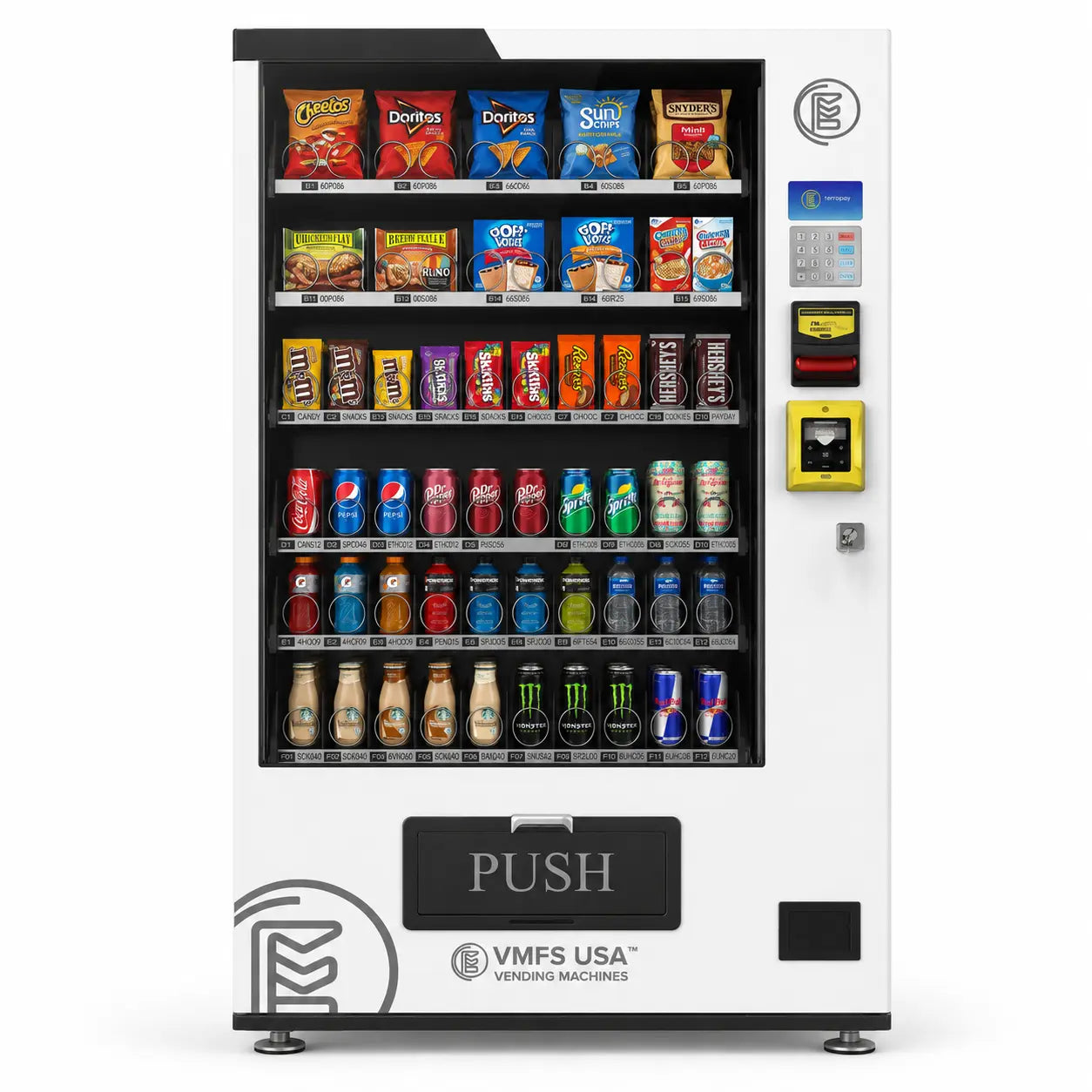
The classic route: packaged snacks, candy and cold beverages in offices, factories, schools and apartments, using snack vending machines, drink machines and combos.
Smart and AI operators
Touchscreens, telemetry and computer-vision coolers that let shoppers open the door, take items and pay automatically. See the smart vending machines operator guide.
Micro market operators
Open shelves and coolers with a self-checkout kiosk at workplaces with enough headcount. VMFS covers the model in its micro markets operator guide.
Coffee and hot beverage operators
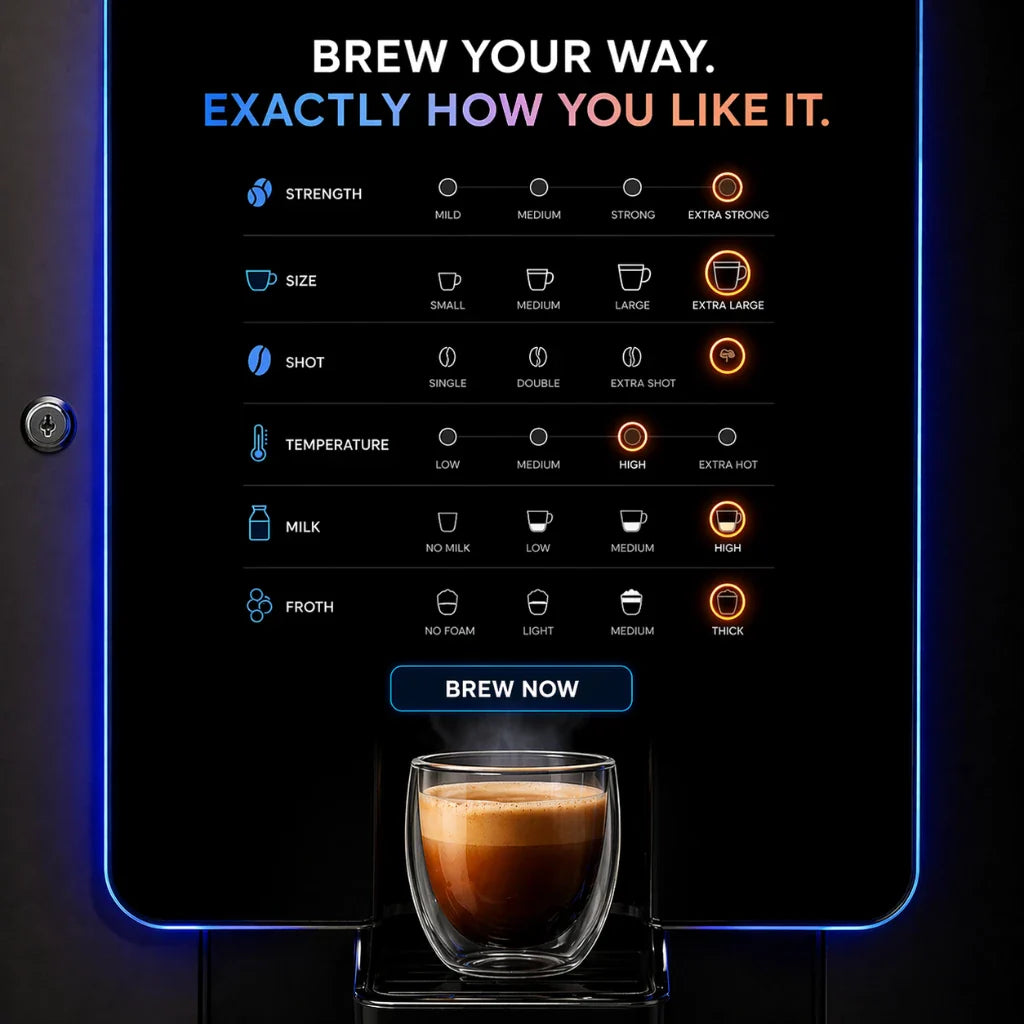
Bean-to-cup and fresh-brew machines for offices, dealerships and waiting rooms, with ingredient supply and cleaning as core tasks.
Specialty operators
Personal care, PPE, electronics accessories, cosmetics, pet products and other niche lines where a site has a clear need for one category.
Collectible operators
Trading card and toy machines in malls, game stores and entertainment venues, where authenticity, security and restock timing decide results.
Collectible vending has its own operating rules. Operators in that segment manage high-value sealed product, anti-theft loading and drop-driven demand; VMFS's Pokémon card vending machine operator guide goes deeper on the operational details.
Equipment and Software Operators Use
Operators need four things to run a machine: the cabinet that holds and dispenses product, a payment system, telemetry or management software, and a vehicle and tools to service the route. The machine should be chosen for the location, not the other way around: a refrigerated combo suits a break room with mixed demand, while a countertop unit fits a small lobby or front desk.
| Equipment tier | VMFS example (active catalog) | Price | Typical fit |
|---|---|---|---|
| Countertop snack | Countertop Snack Vending Machine | $1,900 | Small offices, front desks, shops |
| Slim combo | Slim Combo Vending Machine | From $3,650 | Tight spaces needing snacks and drinks |
| Smart combo with touchscreen | Smart Combo Vending Machine | From $4,650 | Break rooms, apartments, gyms |
| AI grab-and-go cooler | AI Smart Cooler Vending Machine | $4,950 | Secure workplaces, fresh food and premium drinks |
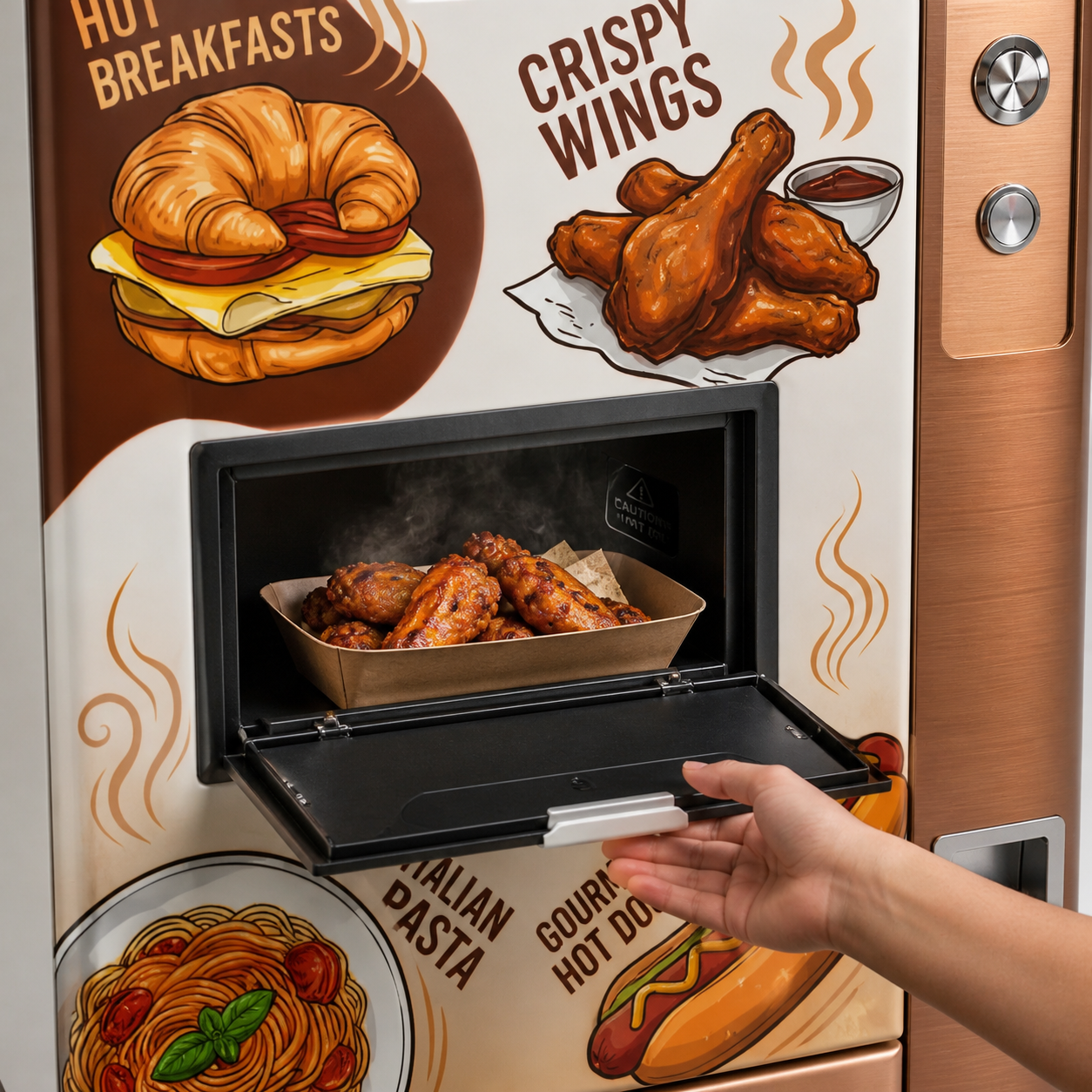
| Specialty and hot or frozen food | Elevator, ice cream, hot food and card machines | Up to $19,950 | Destination and niche locations |
The lowest-priced new machine in the VMFS catalog is the Countertop Snack Vending Machine at $1,900. Many first routes start with combo vending machines such as the Slim Combo Vending Machine and the Smart Combo Vending Machine, because one cabinet covers both snack and drink demand. Operators moving into open-door retail look at AI grab-and-go vending machines; VMFS lists an AI recognition fee of $0.07 per completed transaction on that platform. Every VMFS machine carries a 1-year parts warranty, and according to VMFS shipping information, in-stock units usually ship within 7 to 10 days while custom builds take around 45 days.
On the software side, VMFS Cloud works with every VMFS machine; plans start at $7.99 per machine per month (Basic), with the $16 Advertising plan adding remote pricing and screen ads, and AI Cloud at $39.99. It shows live sales with margin, slot-level stock, low-stock and fault alerts, and planograms you can copy between machines, which is the data need-based routing depends on. For the full buying process, start with VMFS's guide to buying a vending machine.
Equip your first route
Compare snack and drink combo machines sized for break rooms, apartments and gyms, all compatible with VMFS Cloud.
Shop Combo MachinesLicenses, Taxes and Location Contracts
Most vending machine operators need some combination of a business registration, a sales tax permit and local licenses, but the exact list depends on the state, county, city and products sold. The U.S. Small Business Administration lists vending machines among activities commonly regulated at the local level and notes that license requirements and fees vary based on business activities, location and government rules. Some states license machines individually: under Iowa Code section 137F.6, for example, the annual food license fee is $50 for the first vending machine and $10 for each additional one, and every licensed machine must display a tag or decal with the operator's address, phone number and license number. Food, tobacco and age-restricted products add further rules.
A practical setup sequence for a new operator looks like this: choose a business structure, register it, obtain an EIN from the IRS if needed, register for sales tax in each state where machines sit, apply for any city or county vending licenses, buy general liability and product liability insurance, and open a separate business bank account. VMFS keeps state-by-state detail in its guide to vending machine permits in the United States.
An LLC is not legally required to operate vending machines, but many operators form one to separate business liabilities from personal assets and to look established to property managers. VMFS weighs the trade-offs in do you need an LLC for a vending business.
Location agreements
Every placement should have a written agreement covering commission rate and basis (gross or net), payment timing, service frequency, who pays for power, exclusivity, insurance, term and how either side can end the deal. Vague agreements are where operators lose money: an exclusivity clause that does not stop the host from adding a competing machine, or a term that lets the host cancel the week after an expensive install. Start from a vending machine contract template and review the common placement contract red flags on VAdviced, the VMFS legal and compliance sister site, before signing.
From One Machine to a Route
Most operators start with one or two machines, prove that the locations earn, and then add machines in the same area so each trip services more sales. Growth changes the job: at one machine the operator is a stocker and repair person; at fifty, the operator is managing a small distribution business.
Stage 1: one to a few machines
A single machine is a low-risk way to learn product selection, pricing, payment setup, restocking and basic repairs. The goal at this stage is to measure true net profit per machine, including your time and mileage, so expansion decisions rest on real numbers.
Stage 2: a small route
Once several locations perform consistently, the operator groups machines geographically and moves to need-based scheduling. Inventory tracking becomes a system rather than a notebook, and underperforming machines are relocated instead of tolerated.
Stage 3: an established route
Larger operations add a warehouse or storage unit, a dedicated vehicle, standardized location agreements, telemetry across the fleet and, eventually, employees. Established routes are also sellable assets, which is why clean records and written location agreements matter from the first machine.
Advantages of operating vending machines
- Sales happen outside staffed hours, often around the clock
- Scales one machine at a time with no storefront
- Many niches beyond snacks and drinks
- Telemetry and cashless payments reduce manual work
- Routes can be built around your own geography and schedule
Challenges to plan for
- Good locations are contested by other operators
- Upfront capital for machines and first inventory
- Mechanical, refrigeration and payment faults need fast response
- Product expiration and spoilage eat margin
- Vehicle and fuel costs rise with route spread
- Licensing and sales tax rules vary by jurisdiction
What Makes a Good Vending Machine Operator?
Good operators are disciplined about locations, consistent about service and guided by data rather than habit. None of these require a degree; O*NET reports that most people doing the work have a high school diploma and learn on the job. They do require treating a few machines as a real retail business from day one.
Location discipline. Strong operators say no to sites that look busy but will not buy, and they move machines that consistently underperform instead of hoping they recover.
Operational consistency. Customers judge the whole business by the machine in front of them. A dead card reader or an empty water row damages trust even if the operator is otherwise competent, so the service routine has to be the same on every visit.
Data over assumptions. Sales data shows which products move, when demand peaks, which sites need extra visits and which machines should be relocated. Operators who check their numbers weekly fix problems before the location owner notices them.
Mechanical confidence. The skills O*NET highlights for this occupation (repairing, equipment maintenance and troubleshooting) save service calls and downtime.
Relationships. A location owner can be a long-term partner. Reliable communication, clean equipment, transparent reporting and on-time commission make it easy to keep strong placements and earn referrals.
If you are ready to start, the step-by-step guide on how to become a vending machine operator walks through the first machine, and the free VMFS vending machine operator certification course covers buying, setup, locations, margins and growth across eight modules.
Learn the job before you buy
The free VMFS operator course covers machines, locations, margins, routes and exit planning in eight modules.
Start the Free CourseFrequently Asked Questions
Sources
- O*NET OnLine (U.S. Department of Labor) — Coin, Vending, and Amusement Machine Servicers and Repairers, 49-9091.00
- U.S. Census Bureau — 2022 NAICS Descriptions (445132 Vending Machine Operators)
- NAMA Foundation and Technomic — 2022-2023 Convenience Services Industry Census
- U.S. Small Business Administration — Apply for licenses and permits
- Iowa Legislature — Iowa Code section 137F.6, License fees
- NerdWallet — How to Start a Vending Machine Business
- Cantaloupe — 2026 Micropayment Trends Report
- VMFS USA — Payment system comparison
- VMFS USA — VMFS Cloud plans and features
- VMFS USA — Warranty policy
- VMFS USA — Shipping information
Share:
The Bread Vending Machine America Hasn't Discovered Yet
The Vending Machine That Lets You Buy More Than One Thing