




Design the perfect vending solution for your location and customers.

Join the VMFS newsletter and step into a thriving network dedicated to collective success.
One signup. Endless possibilities.
Machines & Hardware | Bakery Vending | By the VMFS USA Team | August 2026
The short version
You have done this. It is half seven in the evening, you walk past the bakery on your street, and the lights are off. Trays empty. Everything you wanted sold out by ten that morning or binned an hour ago. So you go to the supermarket instead and buy bread in a plastic bag that will still be soft in four days, which tells you something about what is in it.
Here is the part that bothers me. That bakery wanted to sell you something. They had it. The timing was just wrong for both of you.

Think about when you actually want fresh bread. Early, before work, ideally before the shop has even opened. And in the evening, on the way home, when you realise there is nothing for dinner. Those are the two moments.
A traditional bakery is closed for both. It opens after the early crowd has already given up, does most of its business in a three hour window, and shuts long before the evening one starts. The product is sitting right there behind a locked door.
And what does not sell that day does not get a second day. Freshly baked bread has roughly a 24 hour life before it stops being sellable. Packaged supermarket bread gets around three days, which is exactly why it is packaged the way it is.
Research from the Pacific Coast Food Waste Commitment puts bakery at 15.8 percent of all unsold food in America. Retail data points to roughly 12 percent of store baked bread and bakery items never selling at all. Every one of those was made, priced, displayed, and then thrown out.
That is not a small operational annoyance. For a bakery running thin margins, it is the difference between a decent year and a hard one.
Go to Germany and you will find bread machines standing outside bakeries in small towns, dispensing rolls at five in the morning. In France and Italy the same thing. It is not a novelty over there. It is just how you buy bread when the shop is shut.
One German bakery put a machine outside their shop and called it the Sustainability Box. The pitch was simple: buy our fresh bread at any hour, at up to 30 percent off, and it does not go in the bin. It was the first of its kind in their whole region. Their managing director framed it as using their product as efficiently as possible, which is a better way of putting it than most marketing departments would manage.
Another operator with bakeries in Paris and Hamburg went further, loading part baked bread that gets finished when the customer orders it.
The gap: in most of the US, a bread vending machine is still the kind of thing people stop and photograph because they have never seen one. That is not a market that does not work. That is a market nobody has served yet.
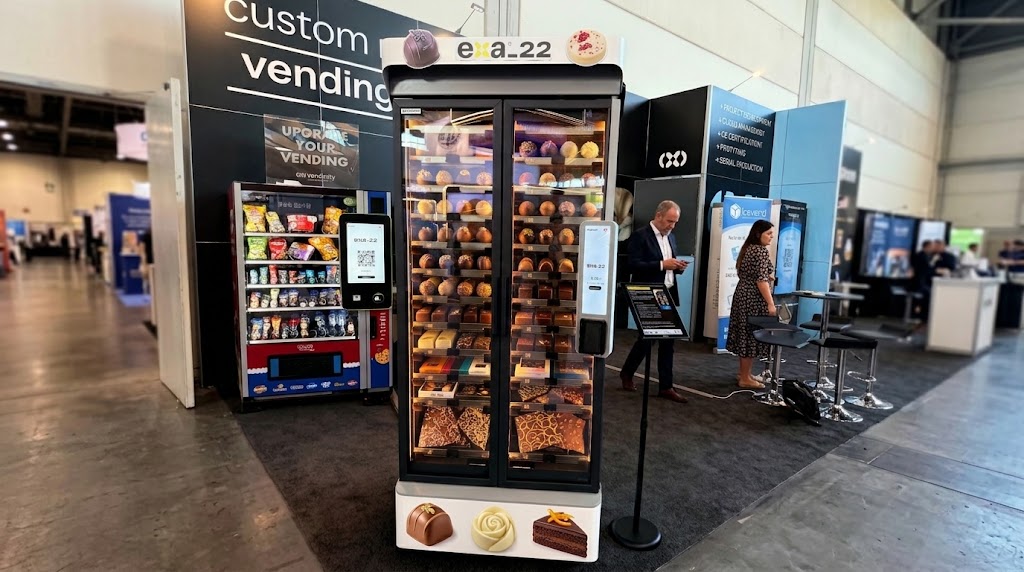
So, the machine. Two glass doors, warm amber strip lighting running down both sides, and behind the glass a grid of individual shelves numbered 01 through 24. Croissants on one, focaccia on another, pretzels, baguettes, small round loaves. Each item on its own little tray with nothing touching it.
The lighting deserves a mention because it does more work than you would expect. Bread under warm light looks like bread. Bread under the cold white LED strip in a standard snack machine looks like a prop.

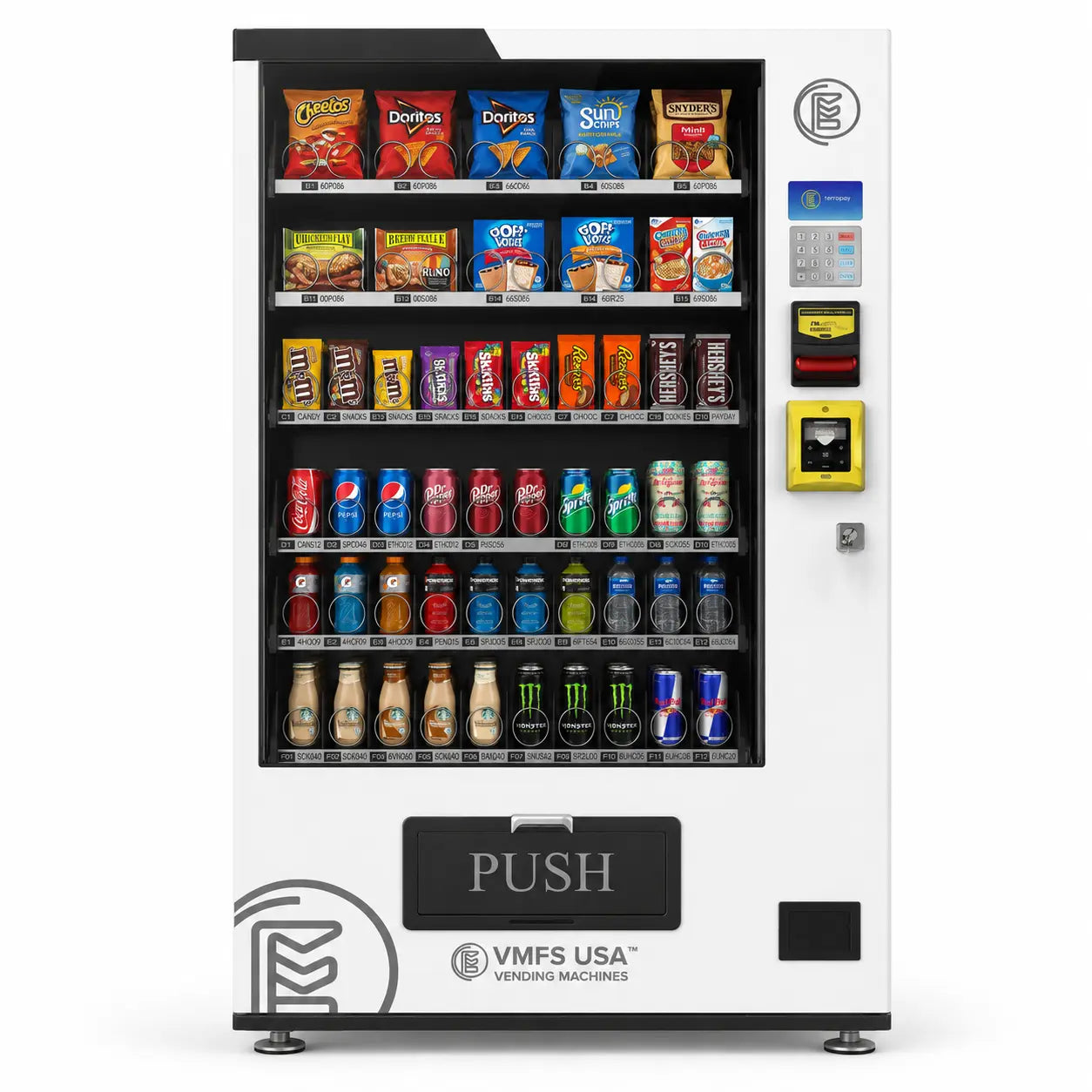
Most vending machines you have used work on a spiral coil. The coil turns, your item falls, you fish it out of a flap at the bottom. Fine for a bag of chips. Absolutely fatal for a croissant.
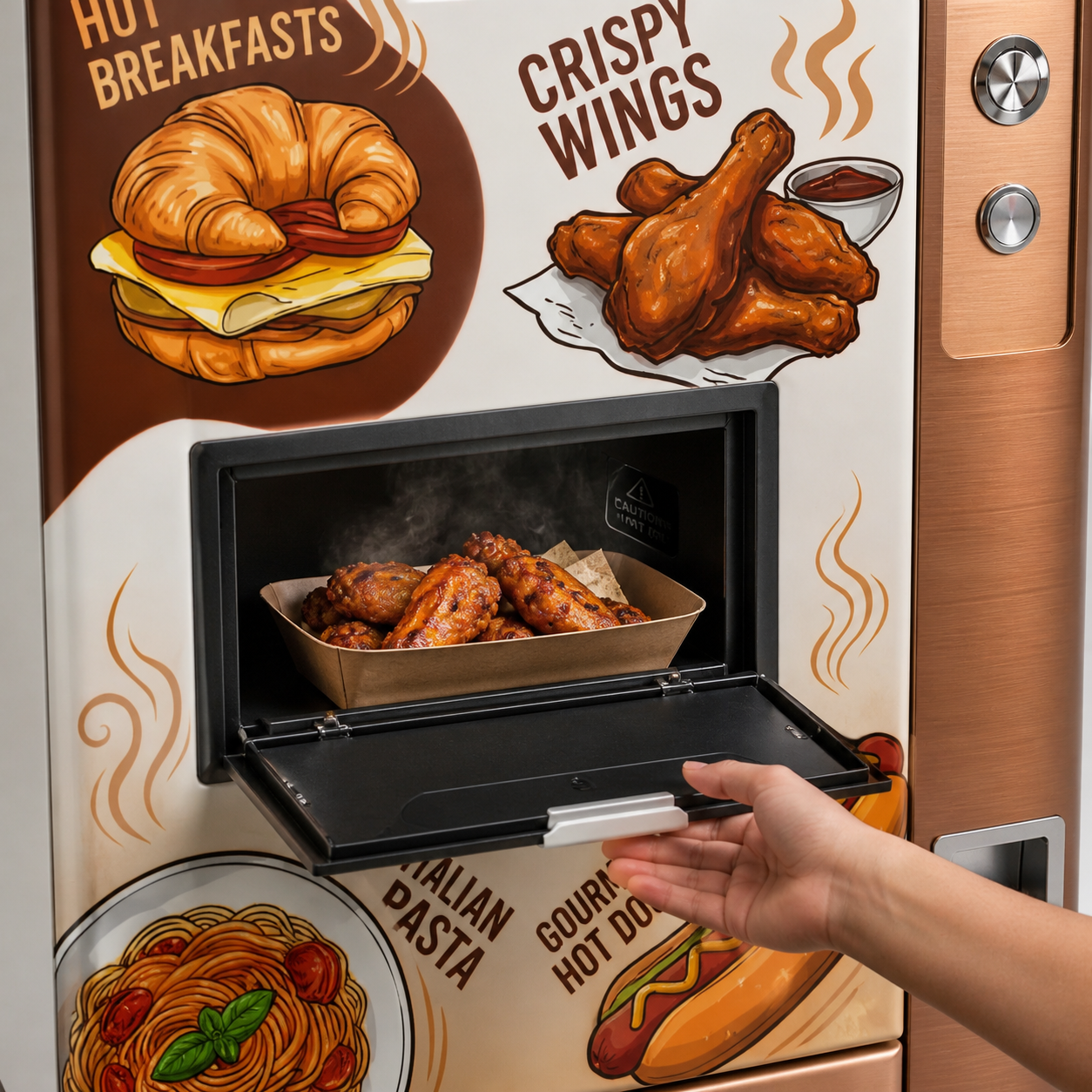
This machine does not drop anything. Each product sits in its own compartment, and when you pay, that compartment opens. You reach in and lift it out level, the same way you would take it off a counter. No fall, no tumble, no impact at the bottom.
| Mechanism | How it delivers | Right for |
|---|---|---|
| Coil | Item falls to a bin | Chips, candy, sealed packs |
| Elevator | Platform lowers item gently | Boxed cake, glass, fragile retail |
| Locker | Door opens, you lift it out | Bread, pastry, anything soft or awkward |
We have covered that middle row before with our food elevator vending machine, which is the right answer for boxed and fragile product. Lockers go a step further for bakery, because a baguette is not just fragile, it is an awkward shape that no coil will ever hold properly.
This is the spec people ask about most and almost nobody explains properly, so let me be precise about it.
The machine runs a combined cooling and heating module. Not one or the other. That matters more than it sounds, because a bakery does not sell one kind of product. A croissant wants to be warm. A cream filled eclair absolutely does not, and will make somebody ill if you get it wrong. Being able to hold both conditions in one machine is what makes it viable for an actual bakery rather than a single product novelty.
Let us be straight about one thing: this is a holding machine, not an oven. It keeps product at temperature. It does not bake from raw. Anyone implying otherwise is selling you something. If you want genuinely heated prepared food, that is a different build, closer to our hot food vending machine or the pizza vending machine.
On the chilled side, if your product mix leans cold rather than warm, a smart fridge vending machine or something from the wider refrigerated range may suit you better than a bakery locker.

The compartment layout is not fixed. These build from a single section up to around 40, and the size of each locker gets matched to what you are putting in it. That is not a marketing line, it is a practical necessity. A baguette and a macaron do not belong in the same size box, and a machine that forces them to is a machine wasting half its capacity.
So a bakery running mostly loaves configures deep, tall compartments. One selling mostly pastries and sweets configures many small ones. Most run a mix, and the useful part is that bread, rolls and confectionery can all go through in a single transaction. If you are specifying something to your own product line, our food vending machine system is the place to start that conversation.
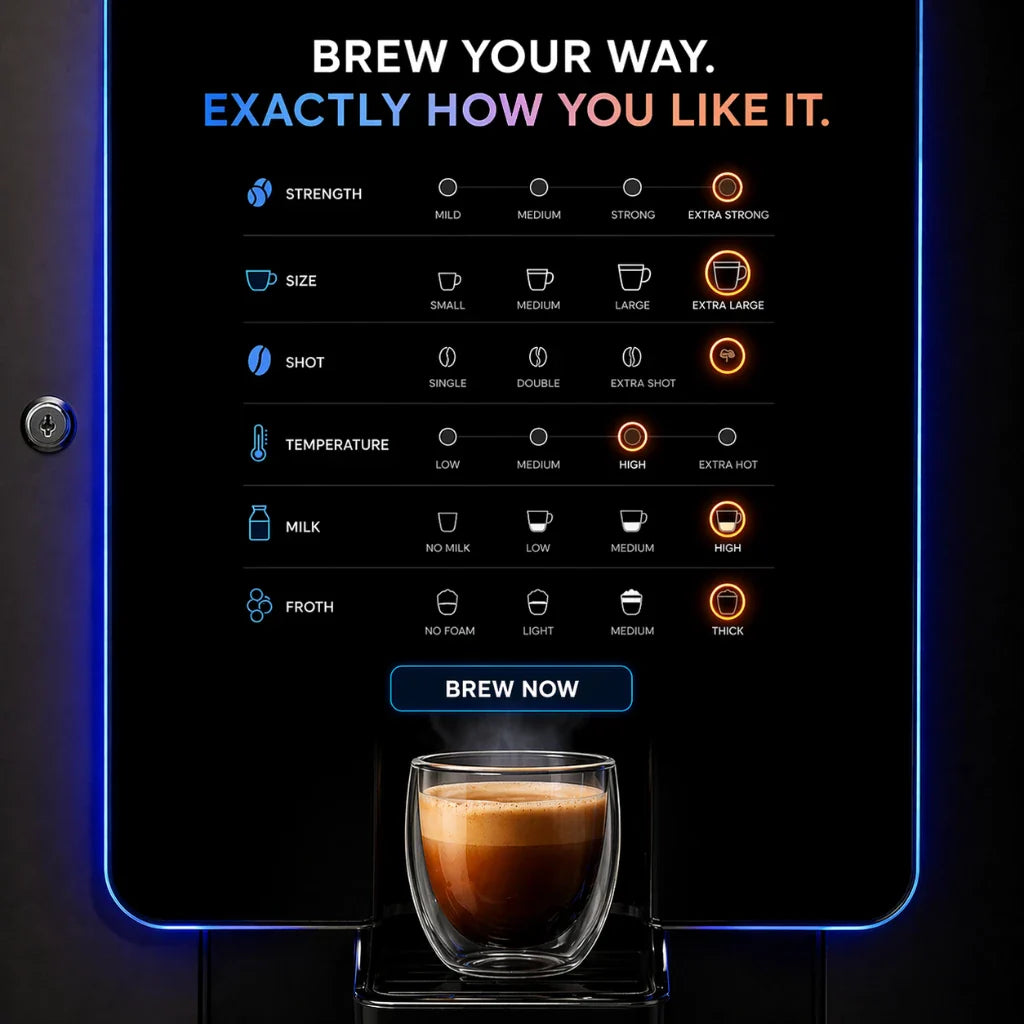
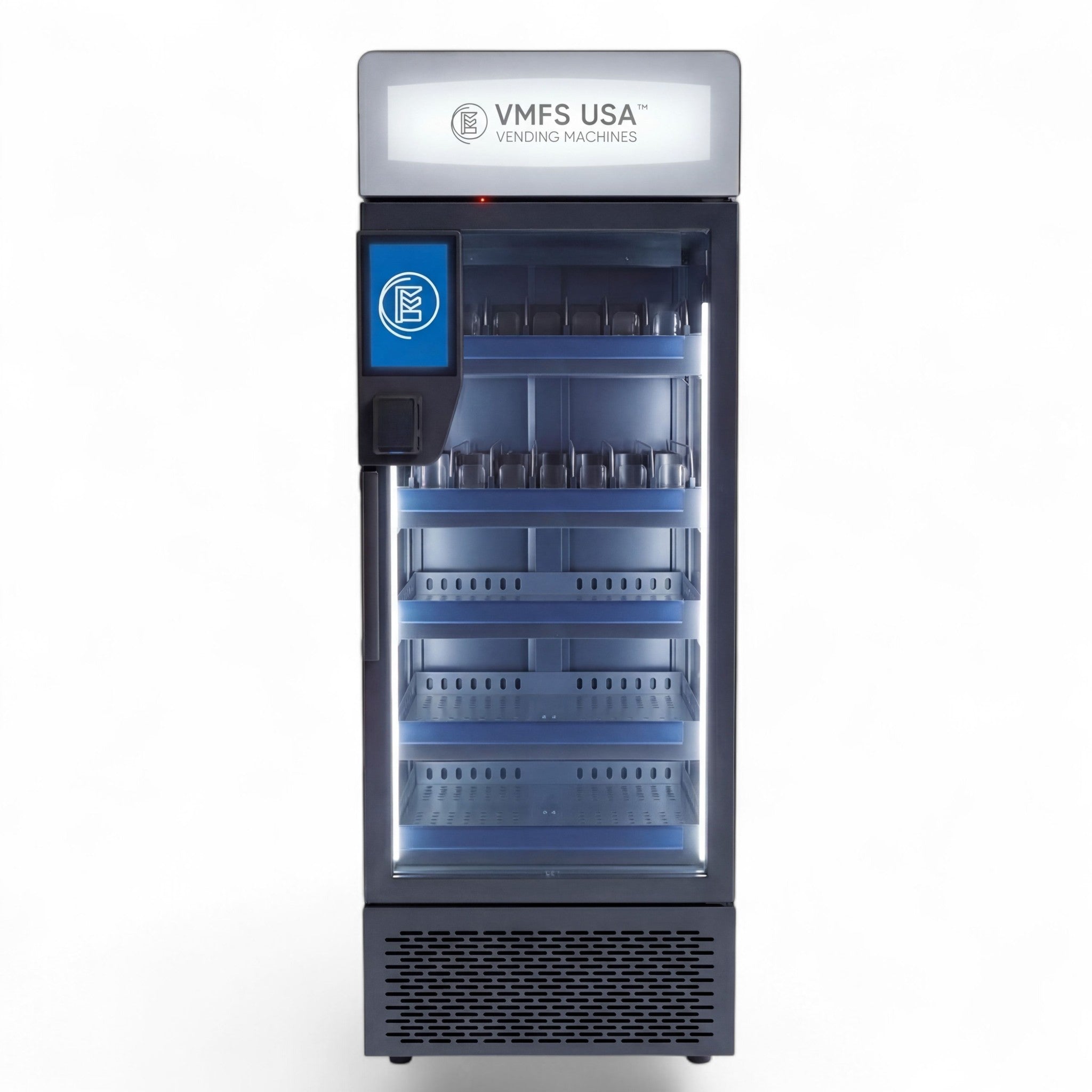
The unit we looked at had a tall vertical touchscreen, card payment built in, and a menu that can be skinned to a bakery's own colours and branding. Which matters, because a machine outside your shop should look like it belongs to your shop, not to whoever manufactured it. You can see similar interfaces across our touch screen vending machines.
Behind it sits cloud software doing the genuinely useful work:
That discount code function is worth pausing on. It is exactly what turns end of day surplus into revenue instead of waste. Drop the price automatically after 7pm, let people know, and sell what would otherwise have gone in the bin.

We would rather tell you now than have you find out in month three.
Three things outside the hardware decide whether this works. Placement first, because a bread machine lives on being near where people already walk home, and finding those spots is what our partners at VPlaced do. Then the legal side, which for fresh food means permits, health department requirements and temperature records, and that is VAdviced territory. And then getting people to know it exists, especially at 6am, which is where VMarketed comes in. These are separate paid services, but they connect, so you are not assembling four unrelated vendors from scratch.
On our side, you can browse the full food vending machine range or see what is ready now in in stock units, which typically ship within 7 to 21 days. Machines carry a one year parts warranty. If you would rather just look at everything, the whole lineup of vending machines is here.
Two things working together. Each item sits in its own sealed compartment rather than in open air, and a combined cooling and heating module holds the right storage condition for that product. That combination extends shelf life well beyond what an open bakery counter achieves.
No, and be careful of anyone who says theirs does. A locker style bakery machine holds product at temperature, it does not bake from raw. Some European operators load part baked product that gets finished elsewhere, but the machine itself is a holding and dispensing unit.
Because a spiral drops the product. A croissant or a soft roll will not survive that, and a baguette will not sit in a coil in the first place. With lockers the compartment opens and the customer lifts the item out level, so it arrives in the same state it went in.
Configurations run from a single section up to around 40, with each compartment sized to the product going in it. A machine built for loaves looks very different inside from one built for pastries, and most bakeries run a mix so bread and sweets can be bought together.
That is the most common European setup, mounted on the wall outside so customers can buy when the shop is closed. It needs a weather rated build and reliable power, and local rules on street facing installations are worth checking first.
Thinking About a Bakery Machine?
We supply food, refrigerated and heated vending systems across the US. Tell us what you bake and where you want to sell it, and we will help you spec the right machine.
Browse the Machines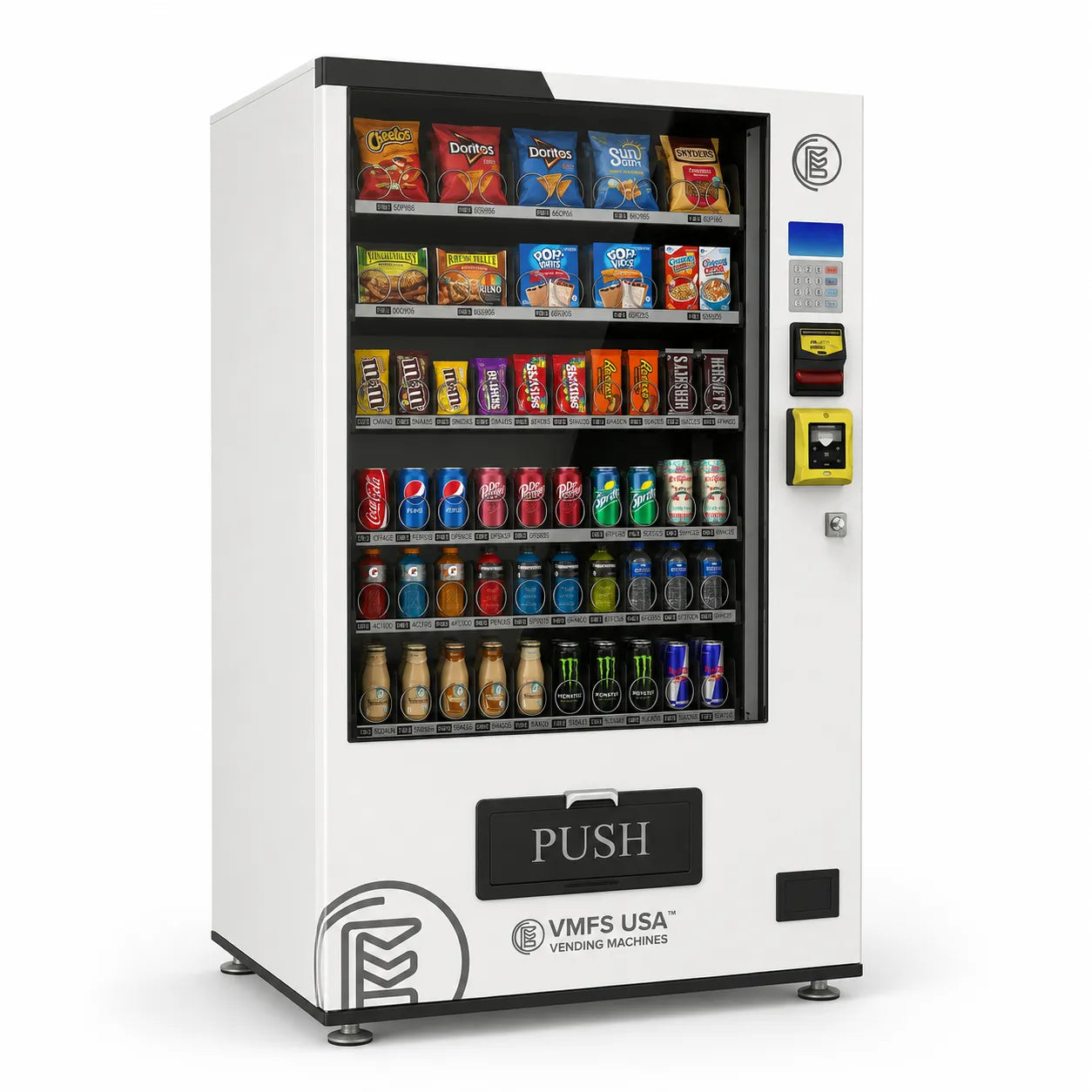
Share:
Inside a Trading Card Vending Machine: How the Hardware Actually Works
What Is a Vending Machine Operator? Duties, Pay and Daily Work