


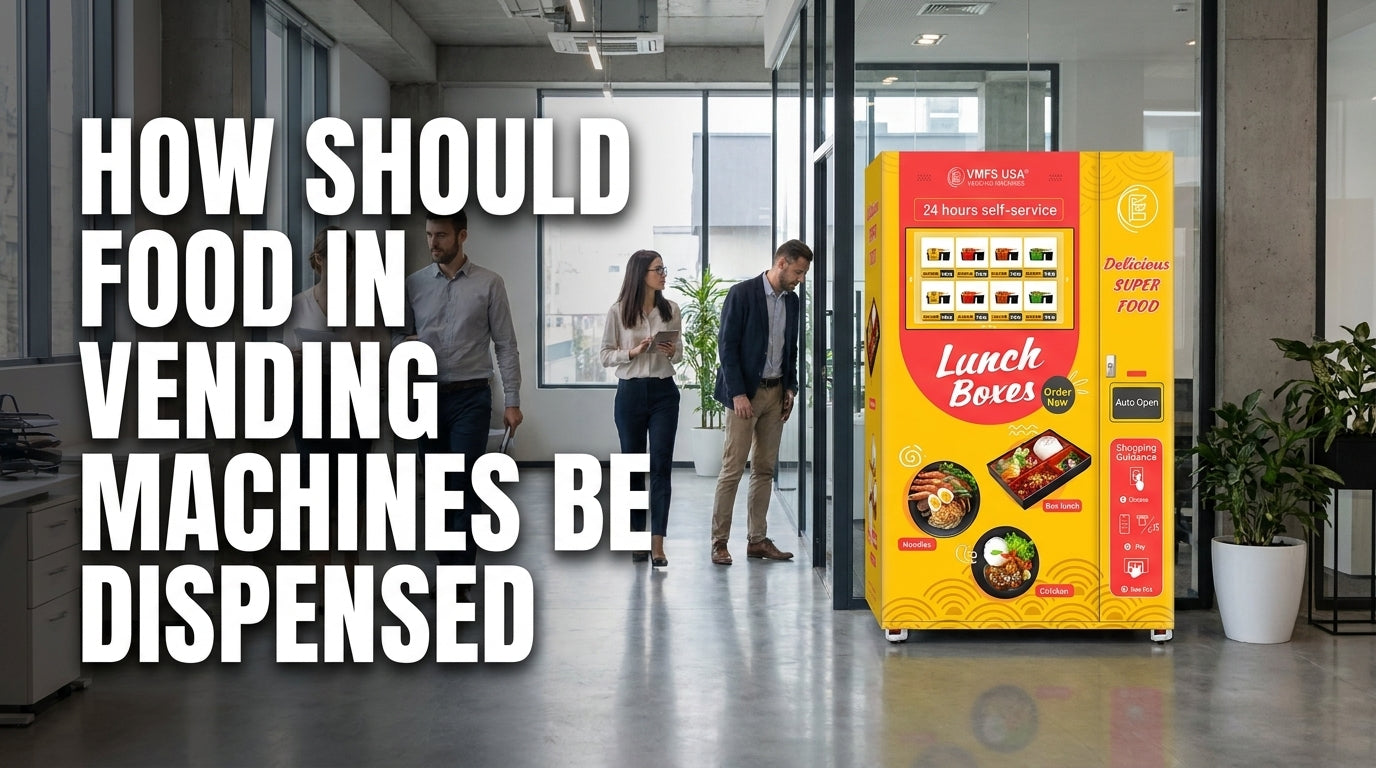


Diseñe la solución de vending perfecta para su ubicación y clientes.

Únete al boletín de VMFS y forma parte de una red próspera dedicada al éxito colectivo.
Un registro. Posibilidades infinitas.
Los alimentos en las máquinas expendedoras deben dispensarse a través de mecanismos de entrega automatizados, con temperatura controlada y sanitarios que prevengan la contaminación física, mantengan los límites de seguridad térmica y eliminen el daño al producto durante el transporte. El cumplimiento de los marcos normativos federales, como la Sección 4-204.111 del Código de Alimentos de la FDA y la Norma NSF/ANSI 25, exige que la dispensación automática de alimentos requiera un monitoreo continuo de la temperatura ambiente, bloqueos automáticos de seguridad sanitaria, plataformas elevadoras de caída suave y verificación óptica de entrega.
Comprender los estándares de ingeniería y operativos detrás de los sistemas de entrega de alimentos permite a los operadores mantener la integridad del producto y garantizar la seguridad del consumidor. Los equipos modernos fabricados por VMFS USA, una destacada empresa de máquinas expendedoras en EE. UU., utiliza transporte robótico avanzado y aislamiento térmico de circuito cerrado para lograr una entrega de alimentos sin contratiempos. Evaluar estos sistemas requiere analizar los mandatos reglamentarios federales, la arquitectura mecánica, el manejo específico de temperatura y el cumplimiento legal. Los consumidores que aprenden cómo obtener alimentos de una máquina expendedora de manera segura se benefician directamente de estos rigurosos controles de ingeniería.
Las máquinas expendedoras que dispensan alimentos con control de tiempo/temperatura para seguridad (TCS) operan bajo marcos normativos federales rígidos para prevenir brotes de enfermedades transmitidas por los alimentos. La Sección 4-204.111 del Código de Alimentos de la FDA exige que los alimentos perecederos dispensados automáticamente se mantengan dentro de parámetros de temperatura verificados desde su almacenamiento hasta su entrega. La ingeniería del equipo debe integrar barreras de aislamiento mecánico para que el aire exterior no calentado o enfriado no pueda ingresar al gabinete de almacenamiento interno durante el proceso de dispensación.
Los estándares de saneamiento de la National Sanitation Foundation, específicamente la Norma NSF/ANSI 25, establecen reglas de construcción para los equipos de venta de alimentos. Esta norma exige superficies de contacto con los alimentos lisas, no porosas y fáciles de limpiar dentro de los conductos de entrega internos. Todos los componentes internos que entran en contacto con los envases de los alimentos deben resistir la corrosión, la absorción de humedad y el crecimiento microbiano, asegurando que la seguridad del consumidor no se vea comprometida durante ciclos de uso de alto volumen.
El cumplimiento de las directrices de la FDA y la NSF requiere que los equipos de venta se sometan a pruebas rigurosas de materiales en contacto con alimentos, retención térmica y fiabilidad de los bloqueos automáticos. Según estas directrices, los gabinetes internos deben presentar esquinas interiores redondeadas y juntas selladas para eliminar la acumulación de residuos de alimentos. Los mecanismos de dispensación también deben evitar que los consumidores introduzcan manualmente la mano en el gabinete de almacenamiento a través de la solapa de entrega, previniendo tanto el robo como la contaminación del producto.

Un bloqueo automático de seguridad sanitaria se activa si las temperaturas internas del gabinete superan los límites de seguridad, deshabilitando permanentemente el mecanismo de dispensación hasta que un técnico inspeccione el sistema. Para los alimentos TCS fríos, la temperatura del aire interno debe mantenerse igual o por debajo de los 41°F (5°C). Si la temperatura sube por encima de los 41°F durante más de 30 minutos, la placa de control electrónica activa un solenoide interno que bloquea mecánicamente la solapa de acceso y detiene la aceptación de pagos.
Para los alimentos TCS calientes, el gabinete o la unidad de calentamiento de la máquina debe mantener una temperatura mínima de 135°F (57°C) o más. Si una falla en el calentamiento hace que las temperaturas de almacenamiento caigan por debajo de los 135°F durante 30 minutos consecutivos, el bloqueo sanitario se activa automáticamente. Estos bloqueos automatizados eliminan el error humano, asegurando que el inventario deteriorado o microbianamente inseguro no pueda ser dispensado a los consumidores bajo ninguna circunstancia.

La lógica de dispensación de inventario PEPS (FIFO, por sus siglas en inglés) opera debido a que el stock cargado anteriormente debe venderse antes que los artículos recién cargados para evitar la caducidad del producto. Los controladores automáticos de las máquinas expendedoras utilizan secuencias de motor programáticas para avanzar los productos almacenados en la parte delantera de las filas de los estantes antes de mover el inventario trasero hacia adelante.
Los procedimientos de carga adecuados requieren que los técnicos coloquen el inventario fresco detrás del stock restante en bandejas de empuje horizontales o espirales. Las máquinas inteligentes avanzadas verifican las posiciones de almacenamiento en los estantes mediante escáneres de código de barras, lo que garantiza un seguimiento preciso de la vida útil y bloqueos automáticos por caducidad para los carriles de productos individuales.
Los sistemas de entrega mecánica determinan cómo deben dispensarse los alimentos en las máquinas expendedoras evaluando la geometría del envase, la fragilidad estructural, el peso total y el estado térmico. Seleccionar el sistema de entrega mecánica correcto evita la deformación del producto, la ruptura del envase y los atascos mecánicos internos durante la ejecución de la transacción.
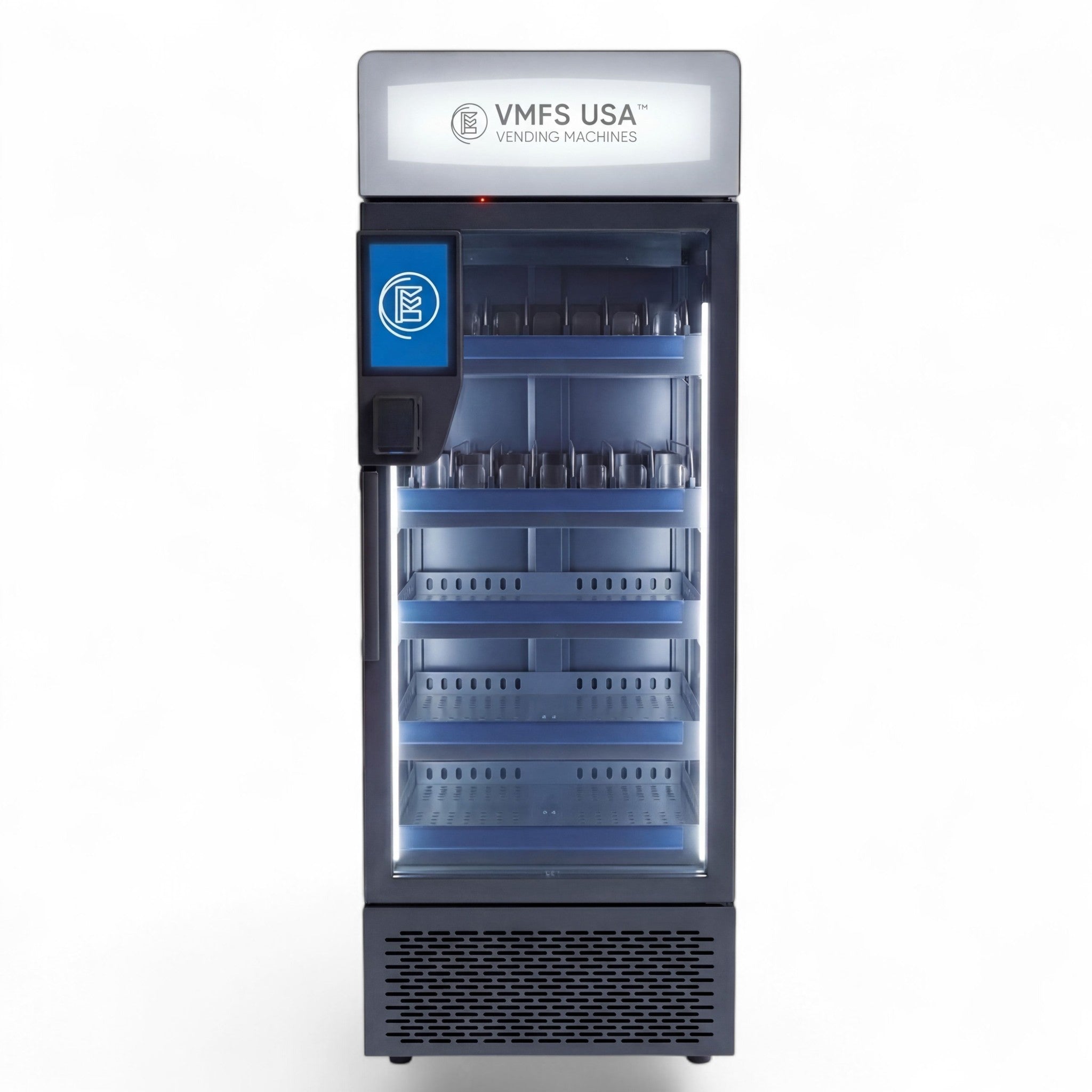
Las plataformas elevadoras de caída suave eliminan las fuerzas de impacto por caída gravitatoria al transportar artículos suavemente en pistas verticales del eje Z. Un motor paso a paso interno impulsa una plataforma horizontal hasta la altura del estante designado, donde una cinta transportadora de banda plana empuja la comida envasada hacia la bandeja del elevador.
El elevador desciende suavemente hasta la altura de la puerta de recuperación y desliza el paquete hacia el compartimento de acceso del cliente. Esta arquitectura de caída suave protege las ensaladas en capas, las cajas de comida frágiles, los recipientes de vidrio y las cenas frescas para microondas contra daños físicos que ocurrirían en los conductos de caída por gravedad.
Las espirales dobles y los empujadores motorizados entregan artículos envasados rígidos y resistentes a impactos girando un ciclo calibrado de 360 grados para empujar los artículos fuera de los bordes del estante. Los parámetros de torque del motor se controlan electrónicamente para garantizar una velocidad de alimentación constante sin aplastar los envases flexibles.
Los conjuntos de sensores de caída ópticos infrarrojos, como los evaluados bajo las directrices de tecnología de venta de la National Automatic Merchandising Association (NAMA), se colocan a través de la parte inferior del conducto de entrega para verificar el éxito de la caída del producto. Si un artículo no logra interrumpir el haz infrarrojo durante la rotación del motor, el controlador de la máquina gira la espiral una segunda vez o solicita al cliente que seleccione un artículo alternativo, asegurando un procesamiento de ventas transparente y cero pagos perdidos.
Las diferentes clasificaciones de alimentos exigen entornos mecánicos adaptados para combinar la preservación térmica a largo plazo con una entrega de servicio rápida.
Las máquinas de alimentos refrigerados utilizan compresores de refrigeración sellados herméticamente, ventiladores de evaporador de recirculación y un aislamiento de espuma de poliuretano grueso para mantener los gabinetes interiores por debajo de los 41°F. Analizar el proceso de trabajo de la máquina expendedora de alimentos fríos demuestra cómo las cortinas de aire internas evitan que el aire externo cálido inunde el gabinete cuando se abre la compuerta de entrega.
Las opciones de almacenamiento como vasos de fruta fresca y ensaladas verdes de las líneas de inventario de alimentos saludables para máquinas expendedoras exigen un control preciso de la humedad dentro del gabinete de refrigeración. Mantener la frescura estructural en los artículos de las líneas de máquinas expendedoras y snacks saludables requiere una distribución constante del flujo de aire en todos los niveles internos de los estantes.
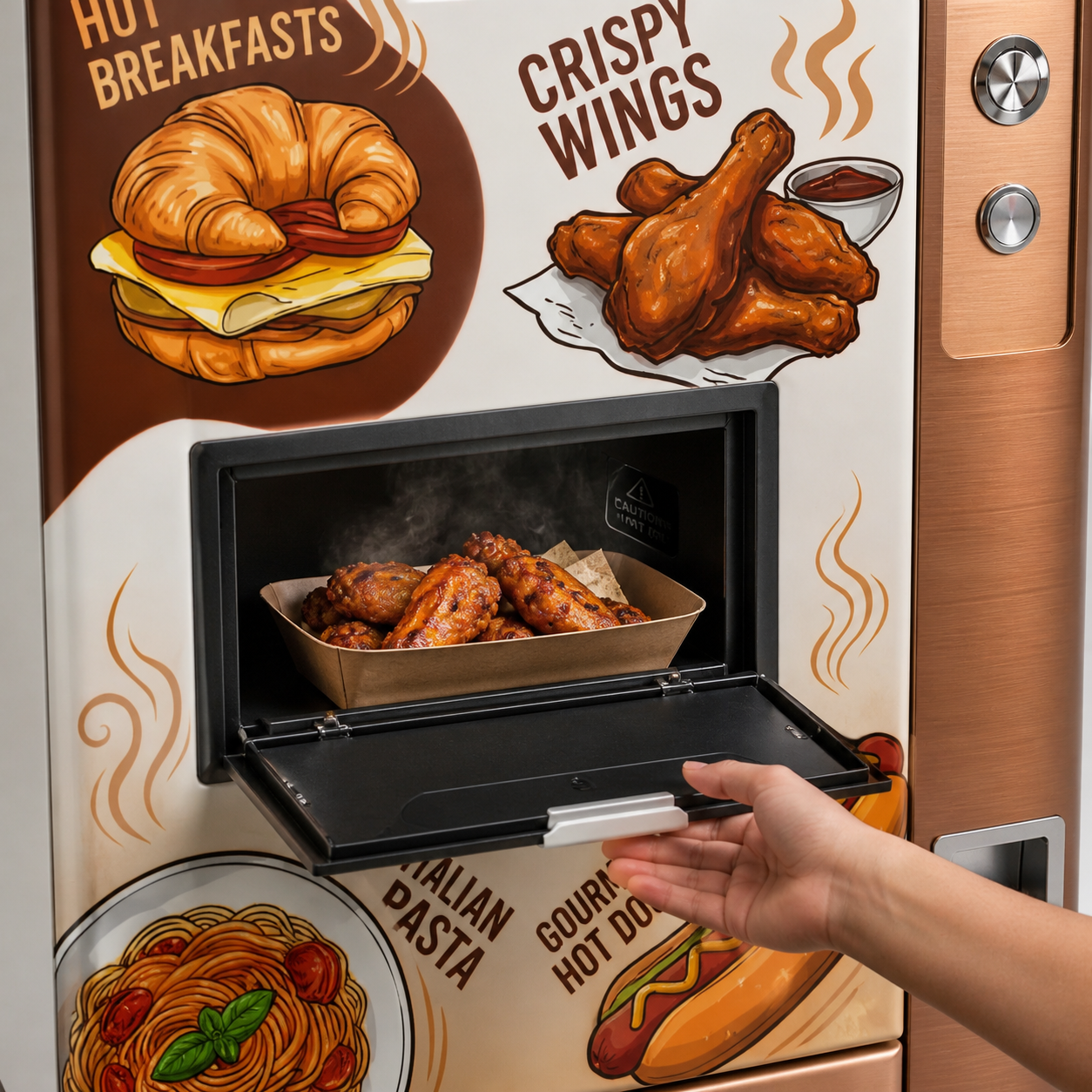
Las máquinas de dispensación de alimentos calientes almacenan comidas selladas y precocinadas dentro de un compartimento refrigerado interno hasta que se realiza una selección. Tras la validación del pago, un brazo robótico interno mueve el envase de comida seleccionado a un módulo de horno de microondas industrial, de radiofrecuencia o de inducción.
Revisar una guía completa de máquinas expendedoras de hamburguesas destaca cómo los elementos de calentamiento de alta potencia elevan la temperatura central de la comida por encima de los 165°F (74°C) en menos de 90 segundos. Los operadores que exploran cómo iniciar un negocio de máquinas expendedoras de comida caliente en 2026 deben seleccionar equipos que cuenten con magnetrones comerciales y ventilaciones de vapor automatizadas para entregar comidas calientes y calentadas de manera uniforme de forma segura.
Las máquinas expendedoras de pizza automatizadas almacenan masas preformadas con ingredientes frescos dentro de un refrigerador interno a 38°F (3°C) o en un gabinete congelador a -0°F (-18°C). Al realizar el pedido, un mecanismo robótico transfiere la bandeja de pizza seleccionada a un horno de convección o infrarrojos de alta temperatura que opera por encima de los 700°F (371°C).
Los desarrollos de la industria detallados en el sabor del futuro: las máquinas expendedoras de pizza ya están aquí muestran que las pizzas pueden hornearse y encajarse en 3 minutos. Los inversionistas que evalúan las franquicias de pizza de mayor recaudación: inversiones más inteligentes con el crecimiento de las máquinas expendedoras dependen de comprender cómo funciona mecánicamente una máquina expendedora de pizza antes de comprometer capital. Analizar el costo de la máquina expendedora de pizza junto con el abastecimiento de suministros desde dónde comprar pizza para máquinas expendedoras determina la rentabilidad general, tal como se detalla en qué tan rentable es una máquina expendedora de pizza.
Las máquinas expendedoras automatizadas de fideos instantáneos combinan compartimentos de almacenamiento en seco con módulos calibrados de ebullición e inyección de agua. Las innovaciones en equipos observadas cuando visitamos Venditalia 2026 y vimos una máquina expendedora de fideos en vaso que dispensa agua caliente en el vaso automáticamente destacan las agujas automatizadas que perforan la tapa e inyectan agua a 195°F (90°C) directamente en los vasos de fideos.
Comprender cómo funcionan las máquinas expendedoras de ramen de forma rápida, caliente y sin complicaciones ayuda a los operadores a evaluar los ciclos de filtración de agua y saneamiento. Analizar si las máquinas expendedoras de ramen son rentables confirma que los tiempos de preparación rápidos combinados con el desperdicio mínimo de ingredientes ofrecen altos márgenes operativos.
| Tecnología de dispensación | Artículos alimentarios objetivo | Tiempo promedio de dispensación | Fuerza de impacto por caída | Integración de bloqueo de seguridad |
| Elevador de caída suave (Soft-Drop) | Ensaladas, cajas Bento, sándwiches, botellas de vidrio | 12 – 18 segundos | Cero (descenso suave) | Obligatorio (estándar FDA 41°F) |
| Caída por espiral | Snacks en bolsa, barras de chocolate, pasteles envueltos | 5 – 8 segundos | Alto (caída de 12–36 pulgadas) | Opcional (alimentos no TCS) |
| Horno de inducción robótico | Hamburguesas precocinadas, platos de pasta, burritos | 90 – 180 segundos | Cero (transferencia robótica de bandejas) | Obligatorio (estándar FDA 135°F) |
| Horno de pizza de alta temperatura | Pizzas frescas de 10-12 pulgadas crudas/prehorneadas | 120 – 240 segundos | Cero (transportador horizontal) | Obligatorio (estándar NSF 25) |
| Inyección de agua caliente | Fideos en vaso, sopas instantáneas, gachas | 45 – 60 segundos | Cero (plataforma de sujeción) | Obligatorio (protección contra quemaduras por agua caliente) |

Pros:
Entrega sin impacto: Previene la rotura del empaque, fallas en el sellado y alteración en la presentación de los alimentos.
Flexibilidad de empaque: Se adapta a geometrías de paquetes no estándar, recipientes redondos, cajas bento y recipientes de vidrio frágiles.
Capacidad optimizada: Elimina los conductos de caída vertical anchos, lo que permite un espaciado de estantes más ajustado y una mayor carga total de productos.
Contras:
Complejidad mecánica: Requiere motores paso a paso, correas de transmisión y sensores de calibración de posición adicionales.
Mayor costo de capital: Aumenta el precio inicial de compra de la máquina en comparación con los modelos básicos de doble espiral.
Mayor mantenimiento: Exige la limpieza periódica de las guías del elevador y la recalibración de los sensores ópticos del eje Z.
Establecer una empresa de venta automatizada de alimentos requiere crear entidades legales sólidas para proteger a los operadores de la responsabilidad personal relacionada con reclamos de seguridad alimentaria o daños a la propiedad. Decidir formar una LLC para un negocio de máquinas expendedoras crea una entidad legal separada, separando los activos comerciales de las tenencias personales y proporcionando ventajas fiscales de transferencia.
Designar un agente registrado para un negocio de máquinas expendedoras garantiza que las notificaciones legales, las presentaciones de cumplimiento estatal y las citaciones fiscales se procesen sin demora. Los operadores deben elegir la estructura corporativa óptima basada en planes de expansión y preferencias fiscales:
Seleccionar la estructura comercial adecuada afecta las obligaciones de presentación de impuestos, la entrada de capital de los inversionistas y la exposición a la responsabilidad personal. Los operadores pueden evaluar distintas vías legales:
Selección de entidad corporativa: Compare los pasivos fiscales evaluando un modelo de estructuración de Corporación C contra una configuración fiscal de Corporación S para flotas de máquinas expendedoras de pequeña escala.
Estructuras de asociación: Estructure emprendimientos con múltiples propietarios eligiendo formar una LLP para un negocio de máquinas expendedoras, estableciendo una sociedad general para un negocio de máquinas expendedoras, o creando una sociedad en comandita para un negocio de máquinas expendedoras.
Modelos de negocio alternativos: Evalúe opciones simplificadas de propietario único mediante una configuración de empresa unipersonal o explore configuraciones institucionales mediante un modelo de corporación sin fines de lucro para máquinas expendedoras para colocaciones en hospitales o escuelas.
Operar legalmente requiere obtener un Número de Identificación de Empleador (EIN) federal del IRS y registrarse para obtener permisos estatales de impuestos sobre las ventas. Los operadores deben establecer estructuras especializadas de declaración de impuestos para máquinas expendedoras a fin de calcular con precisión los ingresos brutos locales y los impuestos sobre las ventas en múltiples jurisdicciones municipales.
La formalización de acuerdos de ubicación con los propietarios de los inmuebles requiere contratos legalmente vinculantes que cubran las asignaciones de servicios públicos de energía eléctrica, los porcentajes de participación en los ingresos, la indemnización por responsabilidad civil y los derechos de acceso al sitio. Estas protecciones legales garantizan asociaciones operativas estables a largo plazo mientras salvaguardan las inversiones en equipos.
Asegurar ubicaciones anfitrionas rentables requiere hacer coincidir las dimensiones de la máquina, los requisitos eléctricos y los perfiles de tráfico peatonal con las propiedades comerciales anfitrionas. Los propietarios que buscan monetizar el espacio no utilizado pueden asociarse con operadores experimentados para instalar soluciones de alimentos automatizadas y totalmente gestionadas.
Los propietarios de propiedades comerciales pueden simplificar la instalación de máquinas mediante el uso de plataformas especializadas de búsqueda de ubicaciones. Los administradores de propiedades pueden visitar VPlaced para propietarios de ubicaciones para listar los detalles del espacio, encontrar operadores compatibles, comparar propuestas y completar las instalaciones de máquinas expendedoras sin complicaciones:
Listar detalles del espacio: Los propietarios comparten la demografía de la ubicación, los metros cuadrados, los puntos de acceso eléctrico y el volumen de tráfico peatonal.
Emparejamiento de operadores: La plataforma identifica y empareja operadores regionales calificados de máquinas expendedoras en función del tipo de máquina y la capacidad de servicio.
Comparar propuestas: Los anfitriones comparan los porcentajes de participación en los ingresos del operador, las opciones del menú de la máquina y las garantías de mantenimiento.
Configuración sin complicaciones: El operador seleccionado gestiona la entrega, los permisos sanitarios, el abastecimiento y el mantenimiento continuo de la máquina.
Los alimentos deben dispensarse a través de mecanismos automatizados con certificación NSF equipados con monitoreo de temperatura continuo y elevadores o transportadores de caída suave. Los artículos perecederos deben mantener un control estricto de refrigeración a 41°F (5°C) o menos, o de mantenimiento en caliente a 135°F (57°C) o más.
Un bloqueo automático de salud se activa si las temperaturas internas de almacenamiento superan los 41°F para alimentos fríos o caen por debajo de los 135°F para alimentos calientes durante más de 30 minutos consecutivos. El controlador electrónico deshabilita la compra y bloquea automáticamente la trampilla del puerto de entrega.
Los elevadores transportadores evitan que las comidas empaquetadas delicadas o pesadas caigan y se rompan al impactar en el contenedor de recuperación. Bajan suavemente ensaladas frescas, cajas de comida y recipientes de vidrio hasta el nivel de la puerta del cliente.
El Código Alimentario de la FDA exige que los alimentos fríos que requieren control de tiempo/temperatura por seguridad (TCS) se mantengan a 41°F (5°C) o menos en todo momento mientras estén almacenados dentro de una máquina expendedora.
Los sensores ópticos proyectan haces de luz infrarroja a través del conducto de entrega inferior. Si un paquete que cae no logra romper el haz, el motor ejecuta un ciclo de rotación secundario o le pide al usuario que seleccione otro artículo o reciba un reembolso inmediato.
Las máquinas de alimentos calientes deben calentar las comidas perecederas precocinadas a una temperatura interna de al menos 165°F (74°C) antes de dispensarlas. Los módulos de convección o microondas de alta velocidad realizan este ciclo de calentamiento en menos de 180 segundos.
Las máquinas de fideos en vaso bloquean el recipiente dentro de un compartimento seguro, perforan la tapa con una aguja sanitaria, inyectan agua a 195°F (90°C) en volúmenes precisos y mantienen la puerta exterior bloqueada hasta que finaliza la dispensación para evitar quemaduras.
La lógica FIFO garantiza que los artículos cargados primero se dispensen primero durante las transacciones de venta. Los motores de empuje automatizados o la rotación de pistas secuenciadas fuerzan el inventario más antiguo hacia adelante antes de que se puedan seleccionar artículos más nuevos.
Las máquinas expendedoras de alimentos calientes requieren circuitos eléctricos dedicados monofásicos de 208V–240V clasificados para 20 a 30 amperios para alimentar de manera confiable los hornos de convección internos o las matrices de microondas.
Los operadores deben limpiar y desinfectar las zonas de contacto con alimentos, los conductos de entrega y las bandejas de transporte semanal o quincenalmente utilizando desinfectantes químicos seguros para alimentos, de conformidad con la norma NSF/ANSI 25.
Compartir:
Máquinas expendedoras en exteriores: cómo funcionan realmente en los climas de EE. UU.
¿Cuáles son los beneficios de las máquinas expendedoras de pizza? Perspectivas financieras, operativas y de mercado