


Máquinas expendedoras de café comerciales: La guía definitiva para el comprador
Las máquinas expendedoras de café comerciales están construidas para un ciclo continuo de alto volumen, a diferencia de las máquinas domésticas diseñadas para un puñado de tazas diarias, y esa distinción se refleja en calderas reforzadas, tolvas más grandes y hardware de pago más resistente, clasificado para cientos de transacciones al día. Esta guía cubre todas las categorías principales de máquinas, las características que separan el equipo de grado comercial de las unidades de consumo, y un marco de referencia para que el comprador adapte la clase de máquina al tamaño de su negocio y al tráfico esperado.
Tabla de contenidos
- Qué hace que una máquina sea de "grado comercial"
- Categorías de máquinas expendedoras de café comerciales
- Características clave a evaluar
- Clases de capacidad y volumen diario
- Tabla comparativa de categorías
- Máquinas comerciales frente a las de consumo
- Elección según el tipo de ubicación
- Modelos de propiedad: Compra, alquiler o colocación
- Consideraciones a largo plazo más allá de la compra
- Preguntas frecuentes
Qué hace que una máquina sea de "grado comercial"
Una máquina expendedora de café de grado comercial está diseñada para un ciclo diario continuo bajo una tensión mecánica y térmica sostenida, lo que requiere calderas reforzadas, bombas de mayor capacidad y componentes clasificados para cientos en lugar de decenas de ciclos de preparación diarios. Las máquinas de consumo comparten el mismo principio básico de preparación, pero utilizan piezas de menor resistencia que se desgastan rápidamente bajo el volumen de transacciones comerciales.
Esta distinción es más importante al evaluar el costo total de propiedad, ya que una unidad de consumo sometida a un servicio comercial falla más rápido y con mayor frecuencia de lo que sugerirían los patrones de falla descritos en la guía de solución de problemas para equipos debidamente clasificados. Comprender esta base moldea cada decisión de compra posterior.
Caldera reforzada
Construida para ciclos de calentamiento continuos en lugar de un uso doméstico intermitente.
Mayor capacidad de tolva
Reduce la frecuencia de recarga para adaptarse al volumen de transacciones comerciales.
Hardware de pago comercial
Lectores de tarjetas clasificados para un alto número de transacciones diarias y fiabilidad de red.
Componentes reparables
Piezas modulares diseñadas para una reparación rápida en el campo en lugar de reemplazar la unidad completa.
Categorías de máquinas expendedoras de café comerciales
Las máquinas expendedoras de café comerciales se dividen en categorías distintas según el método de preparación y la complejidad de la bebida, y hacer coincidir la categoría adecuada con las necesidades de una ubicación es la decisión más importante en el proceso de compra. Cada categoría compensa de manera diferente el costo, la calidad de la bebida y la simplicidad mecánica.
Máquinas de café instantáneo y liofilizado
Las máquinas de café instantáneo y liofilizado dispensan polvo de café preprocesado mezclado con agua caliente, ofreciendo el tiempo de preparación más rápido y la menor complejidad mecánica. Máquinas como la máquina expendedora de café y bebidas calientes entran en esta categoría, adaptada a ubicaciones de alto volumen que priorizan la velocidad y la fiabilidad sobre el sabor de especialidad.
Máquinas de grano a taza (Bean-to-cup)
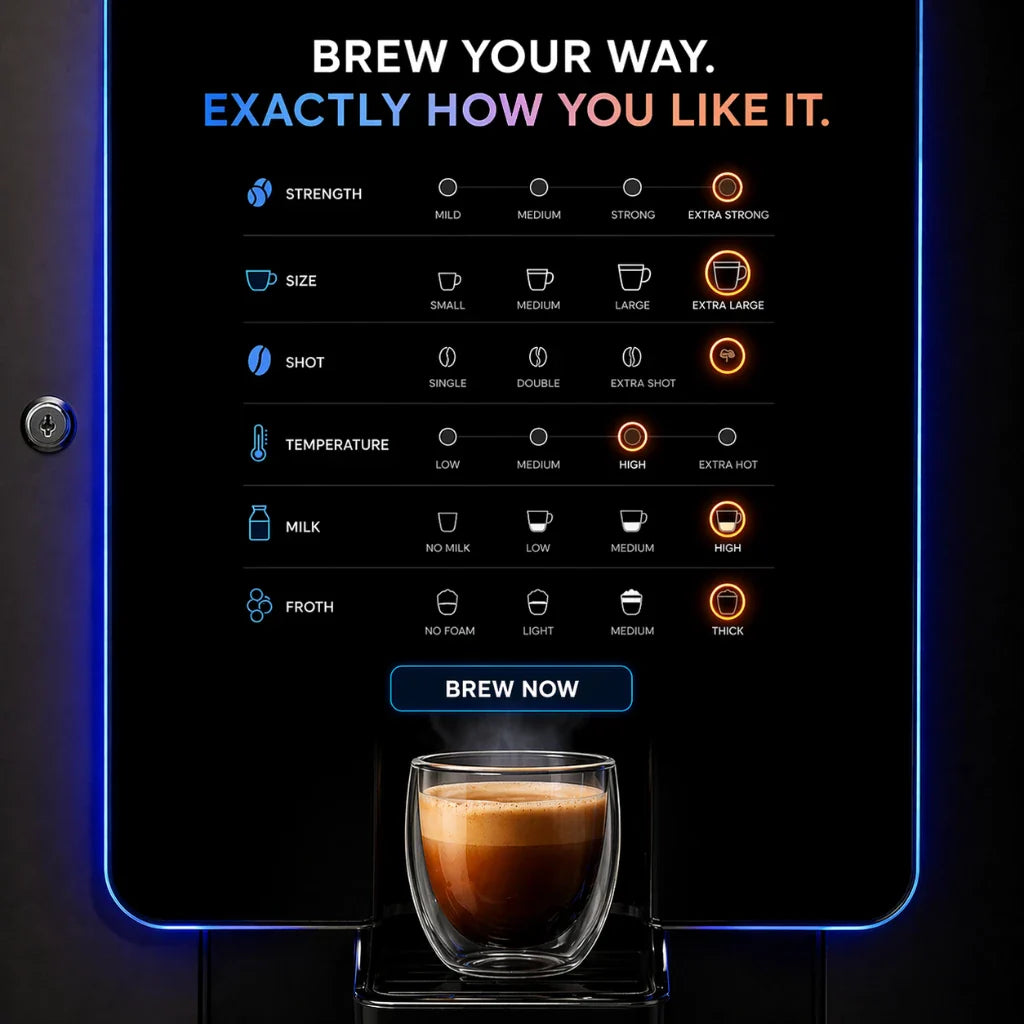
Las máquinas de grano a taza muelen granos enteros frescos para cada taza, ofreciendo un sabor notablemente mejor a costa de una mayor complejidad mecánica y requisitos de limpieza más frecuentes. Las unidades premium como la máquina de café premium de encimera con pantalla táctil utilizan este método de preparación para ubicaciones donde la calidad de la bebida impulsa la retención de clientes.
Máquinas combinadas y de especialidad
Las máquinas combinadas emparejan el dispensado de café con aperitivos o bebidas frías en un solo espacio, como la máquina expendedora de café y aperitivos, mientras que las unidades de especialidad como la máquina expendedora de café helado añaden refrigeración para la capacidad de preparar café en frío y bebidas heladas.
Características clave a evaluar
Evaluar las características clave significa mirar más allá del menú de bebidas, hacia las especificaciones mecánicas y de pago subyacentes que determinan la fiabilidad y el rendimiento diario. Las características que más importan varían según la ubicación prevista y el volumen de transacciones esperado.
- Flexibilidad de pago: El soporte para pagos sin efectivo, sin contacto y móviles afecta directamente la velocidad de las transacciones y los ingresos captados en sitios de alto tráfico.
- Capacidad de la tolva y del depósito: Una mayor capacidad reduce la frecuencia de recarga, un factor significativo cubierto en la guía de suministros para ubicaciones de alto volumen.
- Personalización de bebidas: Más opciones de bebidas aumentan el valor percibido pero añaden complejidad a la tolva y a la mezcla.
- Monitoreo remoto: Las máquinas conectadas informan sobre el inventario y el estado de fallas de forma remota, reduciendo visitas de servicio innecesarias.
Nota para el comprador: Un enfoque integral como el sistema de máquina expendedora de café combina el equipo con piezas compatibles y suministro, simplificando las decisiones de características y compatibilidad a largo plazo para los operadores que administran múltiples unidades.
Clases de capacidad y volumen diario
La clase de capacidad debe coincidir con el volumen de transacciones diarias real en lugar del crecimiento futuro aspiracional, ya que una máquina sobredimensionada en un sitio de bajo tráfico desperdicia capital, mientras que una insuficiente en un lugar concurrido crea problemas de tiempo de inactividad y frecuencia de recarga cubiertos en la guía de instalación.
Las ubicaciones de bajo volumen (oficinas pequeñas con menos de 20 tazas al día) funcionan bien con unidades compactas, mientras que los centros de tránsito o los hospitales con gran afluencia que procesan cientos de tazas al día necesitan los componentes reforzados que se encuentran en máquinas como la máquina expendedora de café Pro.
Tabla comparativa de categorías
Esta comparación resume cómo difieren las categorías de máquinas expendedoras de café comerciales según los factores que más importan a los compradores.
| Categoría | Método de preparación | Ideal para |
|---|---|---|
| Máquina de café instantáneo/bebidas calientes | Polvo disuelto en agua caliente | Ubicaciones de alto volumen y prioridad en velocidad |
| CorePro grano a taza | Molienda de granos frescos por taza | Ubicaciones comerciales estándar que valoran el sabor |
| Unidad premium con pantalla táctil | Grano a taza con interfaz digital | Oficinas pequeñas, ubicaciones premium de formato pequeño |
| Máquina de café helado | Preparación caliente más dispensado refrigerado | Ubicaciones que desean opciones frías y calientes |
| Combo de café y aperitivos | Café más expendio separado de aperitivos | Ubicaciones con doble flujo de ingresos |
| Unidad Pro de servicio completo | Sistema de múltiples bebidas de alta capacidad | Rutas comerciales e institucionales de alto tráfico |
Máquinas comerciales frente a las de consumo
Elegir entre equipos de grado comercial y de consumo para un local comercial afecta la fiabilidad, el costo del servicio y la durabilidad a largo plazo bajo un uso sostenido. Las máquinas de consumo cuestan menos por adelantado, pero no están diseñadas para el volumen de transacciones que genera la mayoría de los locales comerciales.
Máquinas de grado comercial — Ventajas
- Construidas para cientos de ciclos diarios sin desgaste prematuro
- Los componentes reparables reducen el riesgo de reemplazo de la unidad completa
- Hardware de pago clasificado para un alto volumen de transacciones
Máquinas de grado comercial — Limitaciones
- Costo inicial más alto que las alternativas de consumo
- Mayor tamaño en la mayoría de las categorías
Máquinas de grado de consumo — Ventajas
- Menor costo inicial
- Tamaño compacto adaptado para un uso de muy bajo volumen
Máquinas de grado de consumo — Limitaciones
- Los componentes se desgastan rápidamente bajo el volumen de transacciones comerciales
- Carece de hardware de pago de grado comercial y monitoreo remoto
Las empresas que evalúan opciones de estilo doméstico para entornos muy pequeños deberían consultar el resumen de las mejores máquinas de café para oficina en casa, mientras que cualquier ubicación que genere tráfico regular debería optar por equipos de grado comercial desde el principio.
Elección según el tipo de ubicación
El tipo de ubicación predice fuertemente qué categoría de máquina funciona mejor, ya que los patrones de tráfico, las expectativas de los clientes y las limitaciones de espacio varían significativamente entre la sala de descanso de una oficina y el vestíbulo de un hospital. Adaptar la categoría al contexto evita tanto el subaprovisionamiento como el gasto innecesario en funciones.
Los entornos de oficina generalmente prefieren unidades compactas y fáciles de usar —la guía sobre cómo usar una máquina de café en la oficina refleja este caso de uso de menor complejidad— mientras que los espacios públicos e institucionales de alto tráfico se benefician del mayor rendimiento y el monitoreo remoto que se encuentran en las unidades comerciales de servicio completo.
Modelos de propiedad: Compra, alquiler o colocación
La elección del modelo de propiedad afecta el costo inicial, el control y la economía a largo plazo, independientemente de la categoría de máquina seleccionada. La compra ofrece control total y el menor costo a largo plazo, mientras que los modelos de alquiler y colocación reducen el riesgo de capital a expensas de los ahorros a largo plazo.
Los operadores que desarrollan una ruta de expendio de café en múltiples ubicaciones, o que evalúan un modelo de franquicia de expendio de café, deben sopesar la estructura de propiedad frente al volumen esperado por sitio antes de estandarizar un enfoque en toda su cartera de ubicaciones.
Consideraciones a largo plazo más allá de la compra
Las consideraciones a largo plazo van mucho más allá de la decisión de compra inicial, ya que el mantenimiento continuo, la obtención de suministros y la disponibilidad de piezas determinan qué tan bien funciona una máquina durante toda su vida útil. Una máquina bien elegida aún requiere el cuidado preventivo detallado en la guía de limpieza y mantenimiento y acceso confiable a los componentes cubiertos en la guía de piezas.
El abastecimiento a través de un proveedor de máquinas expendedoras de café consistente simplifica esta relación continua, brindando a los operadores un punto de contacto único para piezas, servicio y futuras actualizaciones de equipos a medida que cambia el volumen del negocio.
¿Listo para explorar las máquinas expendedoras de café comerciales?
Explore la gama completa de máquinas expendedoras de café comerciales de VMFS USA y encuentre la categoría adecuada para su negocio.
Comprar máquinas expendedoras de café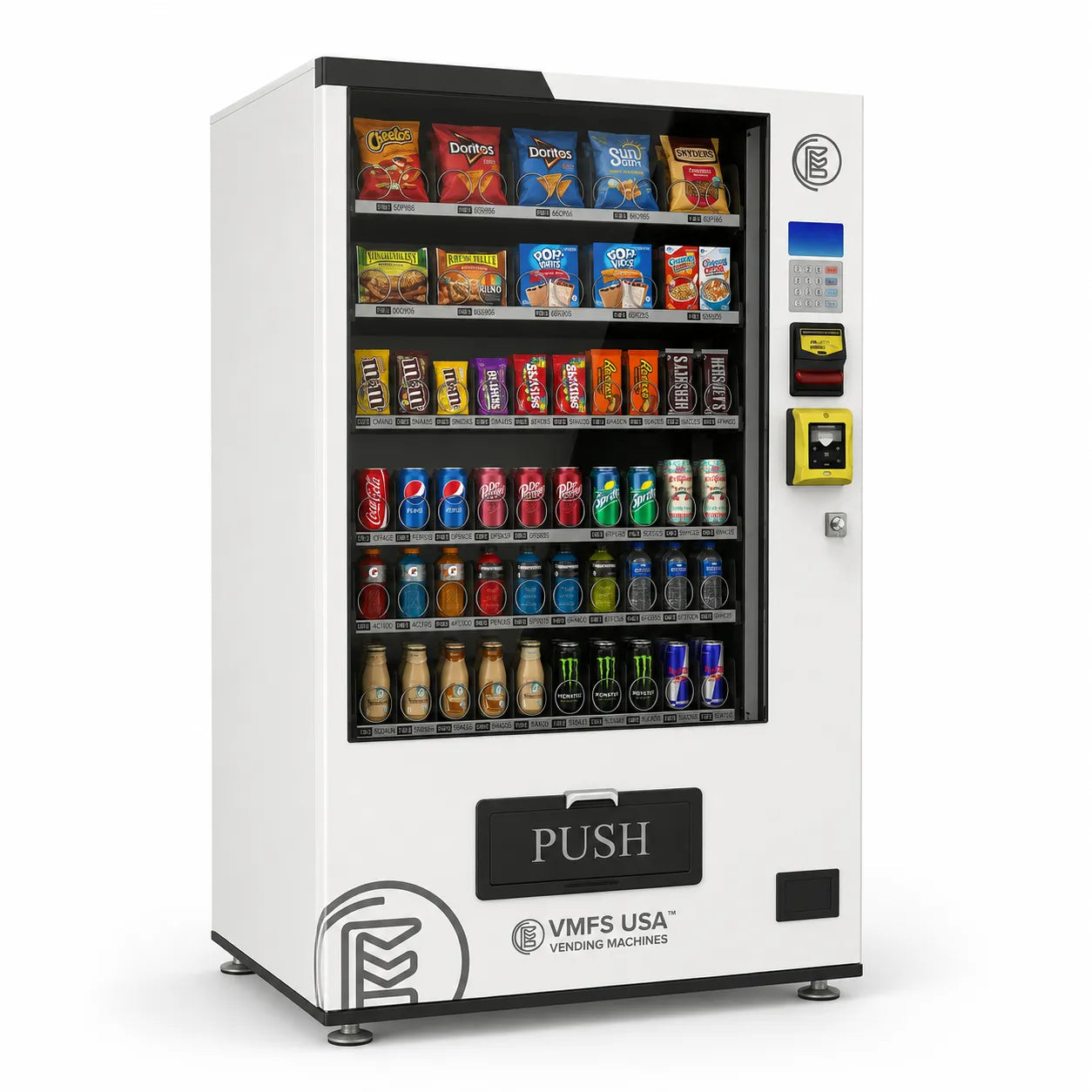
Compartir:
Máquina expendedora de café industrial: la guía completa
Cómo conseguir ubicaciones para máquinas expendedoras con IA: la guía completa de 2026