


Las piezas de las máquinas expendedoras de café se dividen en cinco sistemas funcionales (calefacción, preparación, dispensación, pago y electrónica de control), y saber qué hace cada componente hace que el diagnóstico de fallas y las decisiones de reparación sean mucho más rápidas. Esta guía desglosa cada pieza fundamental por función, señales comunes de falla y ciclo típico de reemplazo, brindando a los operadores y técnicos una referencia única para la adquisición y el mantenimiento de máquinas comerciales.
Tabla de contenidos
- Por qué es importante conocer las piezas de la máquina
- Piezas del sistema de calefacción y agua
- Piezas del sistema de preparación
- Piezas de dispensación y suministro de ingredientes
- Pago y electrónica de control
- Vida útil de las piezas y referencia de reemplazo
- Piezas OEM frente a piezas de posventa
- Adquisición de piezas de repuesto
- Cómo la calidad de las piezas afecta el tiempo de actividad de la máquina
- Preguntas frecuentes
Por qué es importante conocer las piezas de la máquina
Conocer las piezas de la máquina expendedora de café es importante porque la mayoría de las llamadas de servicio se deben a un conjunto pequeño de componentes, y saber qué pieza gobierna cada síntoma reduce significativamente el tiempo de diagnóstico. Un técnico que puede identificar la pieza fallida a simple vista (una caldera con cal, un solenoide de preparación desgastado, un sinfín atascado) resuelve las fallas en minutos en lugar de realizar una verificación completa de todos los sistemas.
Este conocimiento también da forma a las decisiones de compra. Los operadores que evalúan máquinas para una ruta de venta de café se benefician al comparar la accesibilidad y modularidad de las piezas en distintos modelos, ya que las máquinas con componentes fácilmente intercambiables reducen tanto el tiempo de reparación como el costo de mano de obra técnica. El conocimiento de las piezas está directamente relacionado con el proceso de resolución de problemas cubierto en la guía de resolución de problemas de máquinas expendedoras de café, donde cada síntoma se vincula con un componente fallido específico.
Diagnóstico más rápido
Reconocer una pieza por su firma de falla reduce el tiempo de resolución de problemas de horas a minutos.
Abastecimiento más inteligente
Conocer las especificaciones de las piezas evita pedir componentes incompatibles que retrasan las reparaciones.
Menor tiempo de inactividad
Tener existencias de piezas de desgaste común evita esperar envíos durante una falla activa.
Mejores compras
Comparar la modularidad de las piezas en los modelos de máquinas mejora las decisiones sobre costos de servicio a largo plazo.
Piezas del sistema de calefacción y agua
El sistema de calefacción y agua lleva el agua a la temperatura de preparación y la suministra bajo presión a la cámara de infusión, lo que lo convierte en el subsistema más afectado por la acumulación de minerales y la fuente de la mayor variedad de quejas sobre sabor y flujo.
Caldera / Resistencia calefactora
La caldera calienta el agua entrante hasta la temperatura de preparación objetivo, generalmente entre 195 y 205°F, para una extracción óptima. La acumulación de cal aísla el elemento, lo que lo obliga a consumir más energía y, eventualmente, a agrietarse o fallar; una falla causada directamente por omitir la descalcificación en lugar de por defectos de fabricación.
Bomba de agua
La bomba presuriza el agua a través de las líneas y hacia el grupo de preparación. Una bomba defectuosa produce un flujo débil o inexistente, mientras que una bomba parcialmente obstruida por cal produce un vertido lento e inconsistente en lugar de una parada total.
Filtro de agua y válvulas solenoides
El filtro en línea protege la caldera del contenido mineral antes de que entre al sistema, y las válvulas solenoides controlan el flujo de agua entre el depósito, la caldera y el grupo de preparación. Un filtro saturado acelera la formación de cal en cada componente aguas abajo.
Piezas del sistema de preparación
El sistema de preparación extrae el sabor del café molido y controla la precisión de la dosis, determinando directamente el sabor y la consistencia de la taza. Este es el subsistema más afectado por el desgaste diario, ya que procesa granos físicos en cada ciclo.
- Grupo de preparación: La cámara en máquinas expendedoras de café caliente donde el agua caliente se encuentra con el café molido bajo presión; los residuos de aceite de café se acumulan aquí más rápido y causan un sabor amargo y rancio si no se limpian regularmente.
- Muelas del molinillo: En las máquinas de grano a taza, las muelas muelen los granos enteros a un tamaño de partícula consistente; las muelas desafiladas producen una extracción desigual y una intensidad inconsistente.
- Pistón/junta de preparación: Comprime el café y sella la cámara durante la extracción; una junta desgastada provoca fugas y pérdida de presión a mitad de la preparación.
- Sensor de dosificación: Mide y controla la cantidad de café dispensado por ciclo; un sensor descalibrado produce bebidas débiles o excesivamente fuertes.
Nota técnica: El desgaste del grupo de preparación es acumulativo y gradual, por lo que la degradación del sabor a menudo se atribuye erróneamente a la calidad del grano cuando la causa real es la acumulación de aceite en la propia cámara.
Piezas de dispensación y suministro de ingredientes
Las piezas de dispensación mueven la bebida terminada y sus ingredientes desde los sistemas internos hasta la taza del cliente. Estos componentes son mecánicos en lugar de térmicos, lo que significa que fallan debido al desgaste físico, atascos y humedad en lugar de estrés térmico.
| Pieza | Función | Señal común de falla |
|---|---|---|
| Dispensador de vasos / solenoide | Libera un solo vaso de la pila por transacción | Atascos, caídas laterales, fallas de no liberación |
| Tolvas de ingredientes | Almacenan café en polvo, cacao, crema y azúcar | Agrupamiento en ambientes húmedos, bloqueo del sinfín |
| Cuenco mezclador / batidor | Combina agua caliente con ingredientes en polvo | Bebidas arenosas o incompletamente disueltas |
| Conducto de entrega | Guía la bebida terminada hacia el vaso | Goteos, derrames, vertido desalineado |
Pago y electrónica de control
La electrónica de pago y control gobierna el procesamiento de transacciones y coordina cada subsistema mecánico, lo que significa que una falla aquí puede detener toda la máquina incluso cuando el hardware de preparación y dispensación es completamente funcional.
Lector de tarjetas / Terminal de pago
Validadores de monedas y billetes
Placa controladora de venta
Vida útil de las piezas y referencia de reemplazo
Diferentes piezas se desgastan a diferentes ritmos dependiendo del estrés térmico, los ciclos mecánicos y la exposición a la humedad. Esta referencia ofrece a los operadores una base de planificación para almacenar repuestos y presupuestar los costos de reemplazo.
| Pieza | Vida útil típica | Factor principal de desgaste |
|---|---|---|
| Caldera / resistencia calefactora | 3–5 años | Acumulación de cal mineral |
| Bomba de agua | 2–4 años | Cal y ciclos continuos |
| Juntas del grupo de preparación | 6–12 meses | Compresión diaria y exposición al calor |
| Muelas del molinillo | 1–2 años (alto volumen) | Dureza del grano y número de ciclos |
| Solenoide del dispensador de vasos | 2–3 años | Fatiga por accionamiento mecánico |
| Lector de tarjetas / terminal de pago | 4–6 años | Obsolescencia de firmware, desgaste del conector |
Piezas OEM frente a piezas de posventa
Elegir entre piezas OEM y de posventa afecta tanto el costo de reparación como la confiabilidad a largo plazo. Las piezas OEM se fabrican según las especificaciones originales exactas, mientras que las piezas de posventa son producidas por terceros para encajar en la misma ranura a un precio menor.
Piezas OEM — Ventajas
- Ajuste y rendimiento garantizados según la especificación original
- Normalmente conserva la cobertura de garantía del fabricante
- Mayor vida útil promedio por componente
Piezas OEM — Limitaciones
- Mayor costo inicial que las equivalentes de posventa
- Plazos de entrega más largos para modelos de máquinas menos comunes
Piezas de posventa — Ventajas
- Menor costo, a menudo 30–50% menos que el OEM
- Mayor disponibilidad y envío más rápido para piezas comunes
Piezas de posventa — Limitaciones
- Calidad variable entre fabricantes
- Puede anular la cobertura de garantía en máquinas más nuevas
Los operadores que adquieren máquinas a través de un proveedor de máquinas expendedoras de café deben confirmar la disponibilidad de piezas y los términos de suministro de OEM antes de la compra, ya que la facilidad de servicio a largo plazo afecta el costo total de propiedad tanto como el precio inicial de la máquina descrito en la guía de precios de máquinas expendedoras de café.
Adquisición de piezas de repuesto
La adquisición de la pieza de repuesto correcta comienza con la identificación del modelo exacto de la máquina y el número de pieza, ya que componentes visualmente similares entre fabricantes a menudo usan diferentes especificaciones de montaje, voltajes o tamaños de rosca. Pedir por número de modelo en lugar de descripción genérica evita costosos errores y retrasos repetidos en el envío.
Los operadores que tienen múltiples máquinas en una ruta se benefician al mantener un inventario de las piezas con mayor tasa de falla (juntas de preparación, filtros y solenoides) en lugar de pedir de forma reactiva después de cada falla. Este enfoque se vincula directamente con la estrategia preventiva descrita en la guía de limpieza y mantenimiento, ya que el mantenimiento programado identifica las piezas desgastadas antes de que fallen por completo.
Cómo la calidad de las piezas afecta el tiempo de actividad de la máquina
La calidad de las piezas determina directamente el tiempo de actividad de la máquina, porque un componente de baja calidad falla antes, y cada falla saca la máquina de servicio hasta que se repara. Una máquina construida con piezas duraderas y fáciles de conseguir experimenta ventanas de reparación más cortas y menos fallas repetidas que una que utiliza componentes propietarios o difíciles de conseguir.
Este factor de tiempo de actividad influye directamente en los ingresos. Las máquinas con frecuentes tiempos de inactividad relacionados con las piezas pierden ventas durante cada hora no operativa, lo cual es una consideración fundamental para saber si las máquinas expendedoras de café siguen siendo rentables en una ubicación determinada. Comprender cómo funcionan las máquinas expendedoras de café como un sistema integrado deja claro por qué una sola pieza fallida (incluso una de bajo costo como una válvula solenoide) puede dejar inoperativa a toda una máquina.
¿Busca una máquina fabricada con piezas útiles y fiables?
Explore la línea de máquinas expendedoras de café comerciales de VMFS USA, diseñadas para facilitar el acceso a las piezas y un mantenimiento rápido en el campo.
Comprar máquinas expendedoras de café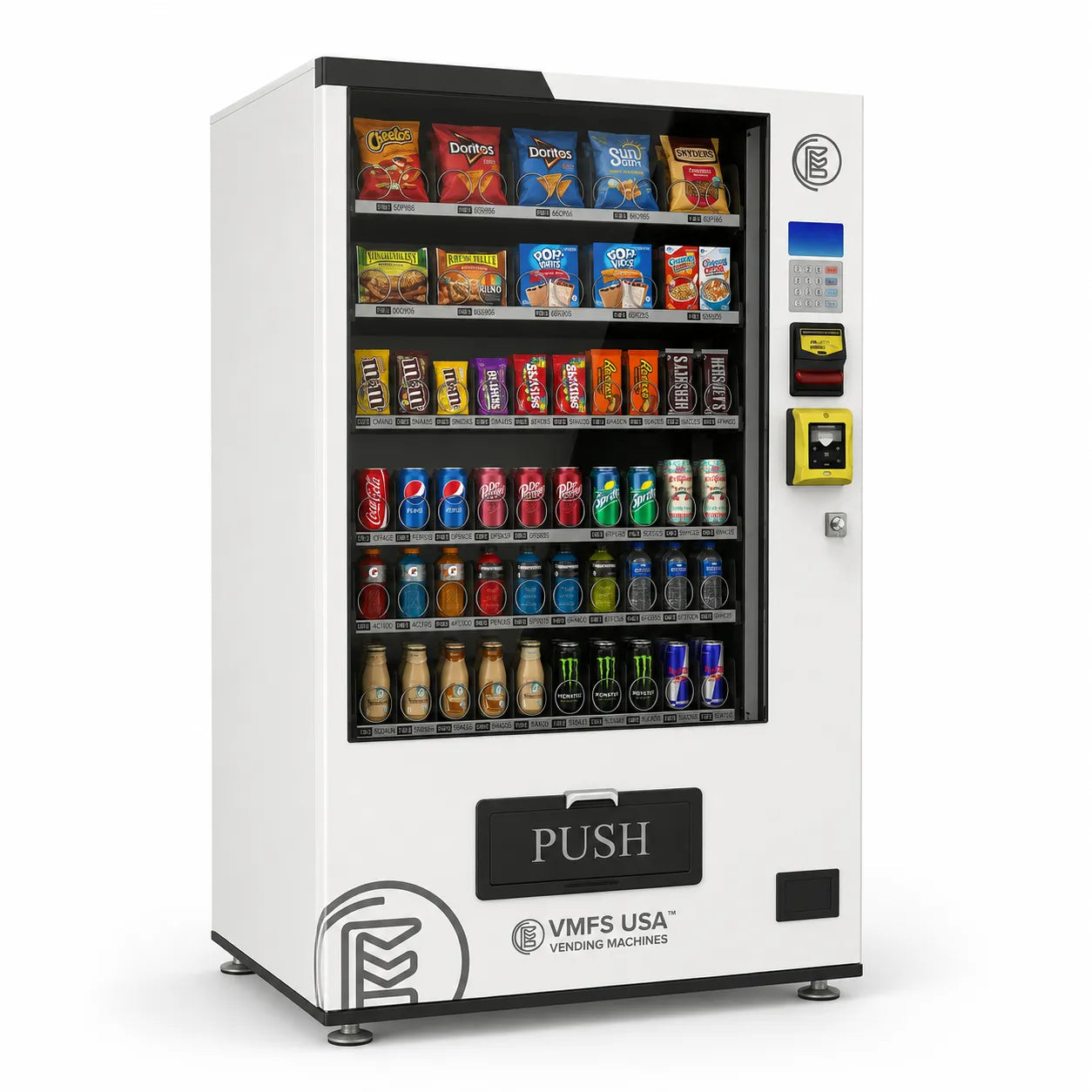

Compartir:
Solución de problemas de su máquina expendedora de café automática: guía detallada paso a paso
Guía de instalación de la máquina expendedora de café: configuración paso a paso