



Design the perfect vending solution for your location and customers.

Sales, inventory and alerts for your whole route, from one machine to a fleet.
Answer a few questions about your location, products and budget and get a shortlist.
Estimate revenue, payback period and margin before you buy.
Sales, setup help, warranty and parts from the VMFS USA team.
Join the VMFS newsletter and step into a thriving network dedicated to collective success.
One signup. Endless possibilities.
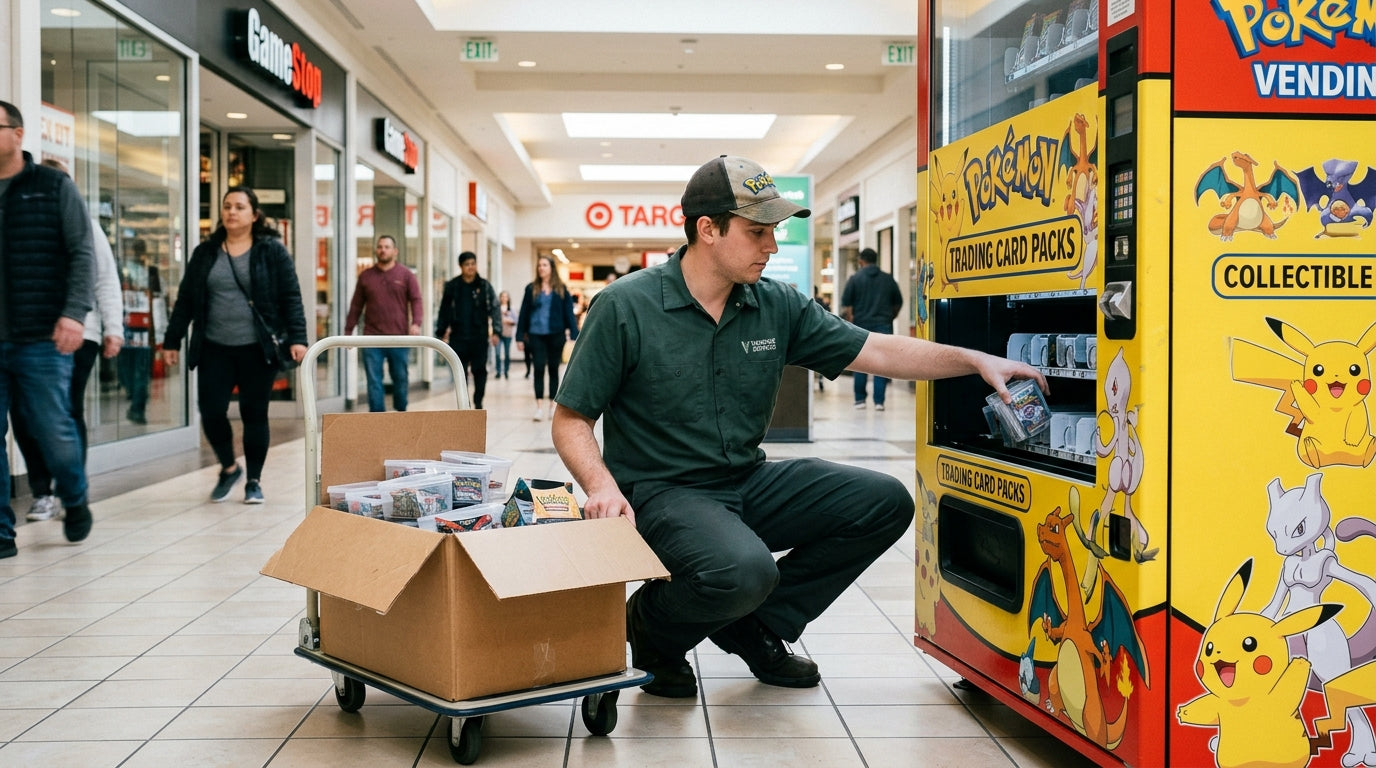
A Pokémon vending machine stocking schedule is the operational routine an operator builds around when, how much, and in what order to restock each machine in their network, distinct from simply knowing that machines generally need refilling every few days. Building an effective schedule means combining restock frequency data with route planning, inventory allocation, and demand pattern shifts around new set releases, rather than treating every machine identically regardless of its actual sales velocity. This guide walks through how to build, refine, and manage that schedule as an operator scales beyond a single machine.
Table of Contents
A stocking schedule combines three decisions for every machine in a network: how often to visit, how much inventory to bring, and in what order to visit multiple machines during a single route. This is a distinct operational layer from restock frequency alone, since two machines needing refills every three days can still require completely different route sequencing depending on their location relative to each other. Operators building out this routine as part of a broader operation should review the guide to starting and operating a Pokémon vending machine for how stocking fits into the full operational picture.
Base restock frequency varies by location traffic, and this baseline data is the starting point every stocking schedule builds from before route and inventory decisions get layered on top.
| Location Type | Typical Restock Frequency |
|---|---|
| Dedicated game/hobby store | Every 1–2 days |
| Mall or arcade | Every 2–3 days |
| Entertainment venue | Every 3–5 days |
| Laundromat or low-traffic spot | Weekly |
A full breakdown of the Pokémon vending machine restock guide covers this frequency data in more depth, including how new set releases temporarily shift these baselines upward across nearly every location type.
Route planning becomes essential the moment an operator manages more than two or three machines, since visiting locations in an inefficient order wastes time that could otherwise go toward servicing more machines per day.
Machines with the shortest restock interval should anchor route planning, since these locations have the least tolerance for a delayed visit before a stockout starts costing real sales. Building a route around these anchor stops first, then fitting slower-cycling machines into the remaining schedule, produces a more resilient overall routine than treating every stop as equally time-sensitive.
Clustering nearby machines into the same visit day reduces total travel time, even when their individual restock intervals don't perfectly align, since a machine slightly ahead of its ideal restock date still benefits from an efficient route more than a schedule optimized purely around individual timing. Operators expanding into new areas can source additional geographically convenient locations through VPlaced's location owner matching process, which helps build a route-friendly network rather than accepting whatever scattered locations become available individually over time.
Bringing too little inventory means a wasted trip that doesn't fully restock a machine's capacity, while bringing too much ties up capital in product sitting unsold in a vehicle rather than generating revenue on a shelf or in a machine. Tracking each machine's actual sell-through rate by product type, rather than restocking a flat quantity across every visit, lets operators bring inventory that matches real demand at each specific location instead of guessing.
New Pokémon TCG set releases predictably spike demand across nearly every machine in a network simultaneously, which means a stocking schedule built around normal-demand baselines needs a temporary override during these windows rather than assuming the standard route and quantities will hold. Building this adjustment into the schedule proactively, rather than reacting after multiple machines already show stockouts, protects sales during exactly the period when demand, and therefore revenue potential, is highest.
Machines with telemetry hardware report real-time inventory data, which turns a fixed calendar-based schedule into a demand-responsive one where operators restock based on actual depletion rather than an assumed interval. Understanding how Pokémon vending machines work, particularly the telemetry component covered in more detail in a breakdown of Pokémon vending machine components, clarifies exactly how this remote data becomes actionable schedule input rather than just a passive dashboard number.
Restocks based on actual depletion, not assumptions. Fewer wasted visits to machines that aren't yet empty. Faster response to demand spikes during set releases.
Simpler to run without telemetry-equipped machines. Predictable route planning regardless of connectivity. Requires more conservative restock intervals to avoid stockouts between visits.
Treating every machine identically regardless of its individual sell-through rate is the most common scheduling mistake, since a flat restock interval either over-services slow machines or under-services fast ones. Failing to plan for set-release demand spikes in advance is a second frequent gap, leading to preventable stockouts during the highest-revenue windows of the year. A third mistake is prioritizing route efficiency over actual restock urgency, visiting machines in a convenient geographic order rather than the order their individual depletion timelines actually demand.
Fast-selling machines need shorter intervals than slow ones, not a flat schedule.
Build in a temporary schedule override before demand spikes, not after stockouts appear.
Telemetry-equipped machines let a schedule respond to actual depletion.
Operators running a handful of machines can often manage scheduling with a simple spreadsheet tracking restock dates and quantities per location, while larger networks benefit from dedicated route and inventory management software that integrates directly with telemetry data from connected machines. The right tool depends on network size more than any universal best practice, since the operational complexity that justifies dedicated software only emerges once manual tracking starts creating real scheduling errors. The complete 2026 operator guide covers broader operational tooling recommendations beyond stocking specifically, useful for operators building out systems across their full business rather than scheduling alone.
Stocking is one part of a broader operational routine that also includes mechanical maintenance and site selection, each covered separately. A full Pokémon vending machine maintenance schedule covers the servicing side of the operational routine that runs alongside, but separately from, the stocking schedule covered in this guide, while reviewing the best places for Pokémon vending machine placement helps ensure new machines added to a growing network fit efficiently into an existing route from the start rather than requiring a schedule overhaul later.
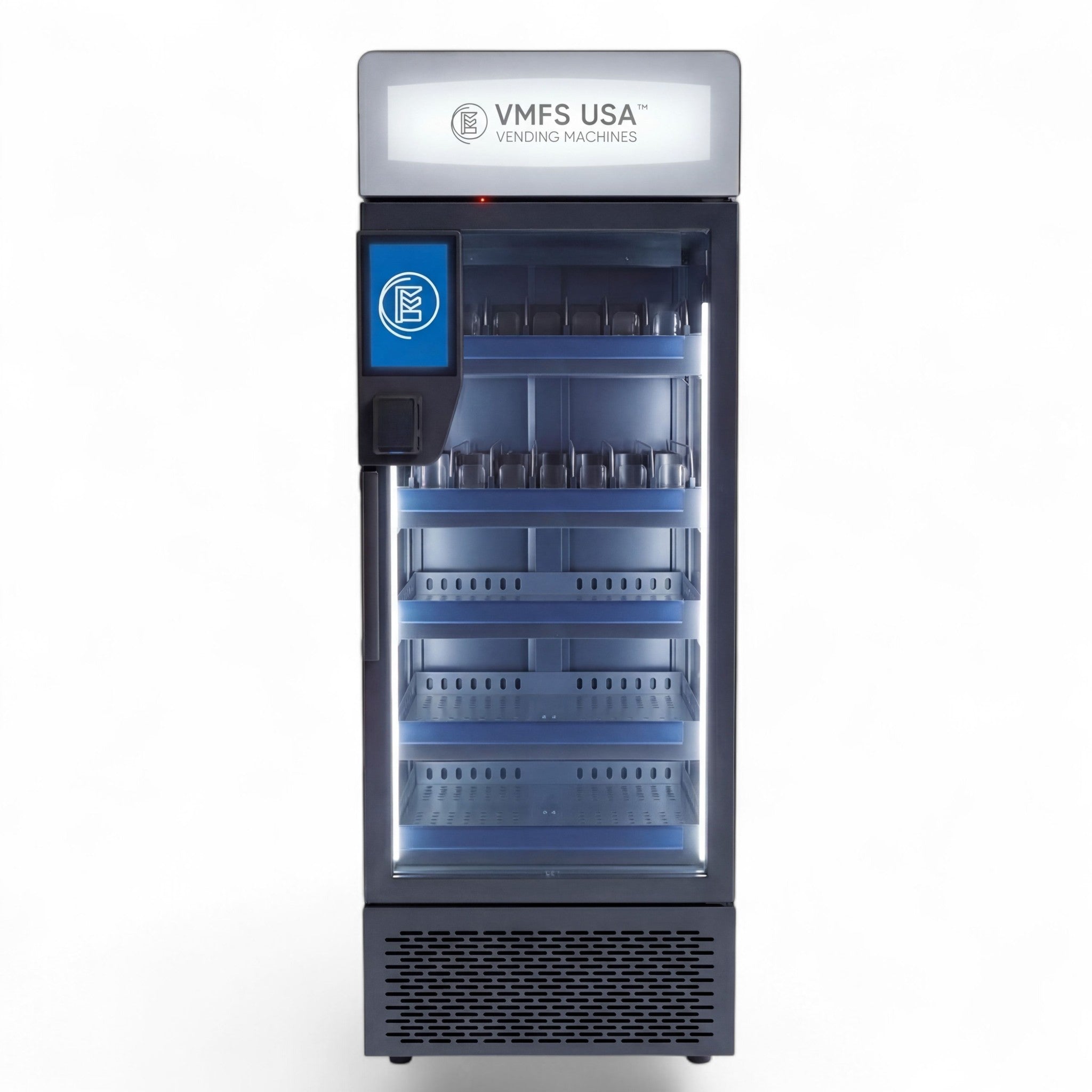
Built with telemetry that turns your stocking schedule into a data-driven routine.
Pokémon Card Vending MachineCompare additional options for dispensing trading card products.
It's the operational routine combining restock frequency, route planning, and inventory allocation that an operator uses to keep every machine in their network adequately stocked.
A restock guide covers how often machines typically need refilling based on location traffic, while a stocking schedule is the actual operational plan combining that data with route sequencing and inventory quantities.
Machines with the shortest restock interval should anchor route planning first, since these locations have the least tolerance for a delayed visit before a stockout costs sales.
Track each machine's actual sell-through rate by product type and bring inventory matched to that real demand, rather than restocking a flat quantity across every location.
Yes, new set releases predictably spike demand across most machines simultaneously, so building a temporary schedule override in advance protects sales during these high-revenue windows.
Telemetry-equipped machines report real-time inventory data, turning a fixed calendar-based schedule into a demand-responsive one where restocking happens based on actual depletion.
Yes, a manual calendar-based schedule works, though it typically requires more conservative restock intervals to avoid stockouts between visits compared to a data-driven approach.
Treating every machine identically regardless of its individual sell-through rate is the most common mistake, since a flat restock interval either over-services slow machines or under-services fast ones.
Not necessarily. A simple spreadsheet works well for a handful of machines, while dedicated route and inventory software becomes worthwhile once network size makes manual tracking error-prone.
A new machine should be evaluated for how it fits geographically into an existing route before installation, rather than added as an afterthought that disrupts an otherwise efficient schedule.
Compartir:
Pokémon Vending Machine Components: What's Inside and How Each Part Works
How Much Is a Snack Vending Machine? Complete Pricing Guide