



Design the perfect vending solution for your location and customers.

Join the VMFS newsletter and step into a thriving network dedicated to collective success.
One signup. Endless possibilities.
A snack vending machine typically costs between $2,000 and $9,000, with how much you pay driven mainly by slot capacity, cashless payment and telemetry technology, and whether the unit is new or used. A compact countertop model for a small office sits at the low end, while a high-capacity elevator-style machine with advanced smart features pushes toward the top. Because "how much for a snack vending machine" depends so heavily on configuration, this guide breaks the range down by machine type, explains where to buy one, and walks through the full buying process from budget to installation.
Table of Contents
Three factors explain most of the price difference between a budget snack machine and a premium configuration.
More product slots directly raise manufacturing cost, since each slot needs its own coil and internal structure, which is why a compact 20-slot countertop unit costs meaningfully less than a high-capacity machine offering 40 or more selections.
Cashless payment terminals, touchscreen interfaces, and remote inventory telemetry each add cost individually, and a machine bundling all three commands a higher price than a mechanically similar unit running simpler, offline technology.
Condition status creates the widest single price swing in this category, since a used machine can sell for a fraction of an equivalent new unit's price, a tradeoff covered in more depth later in this guide.
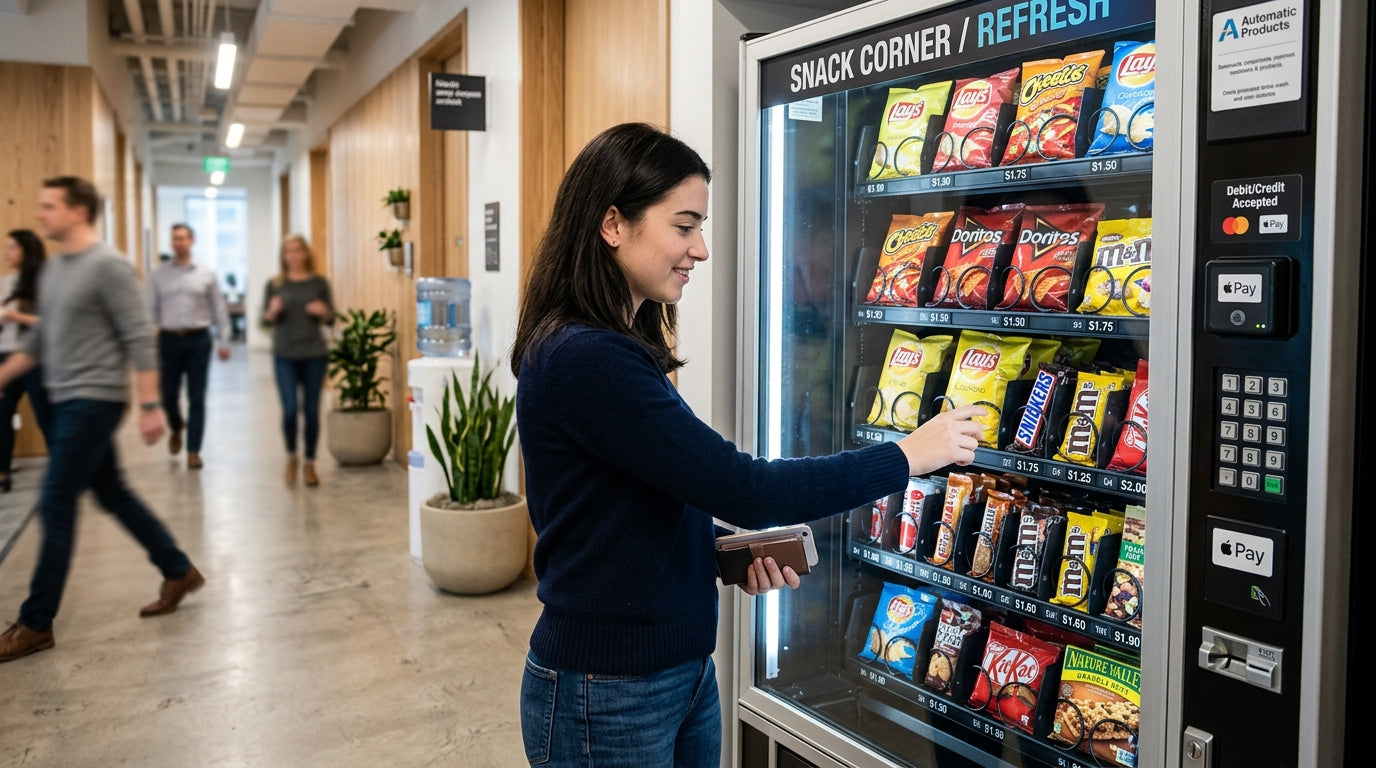
Countertop and compact snack machines, well suited to small offices, typically run $2,000 to $3,500, trading total capacity for a minimal footprint that fits a break room counter or small common area.
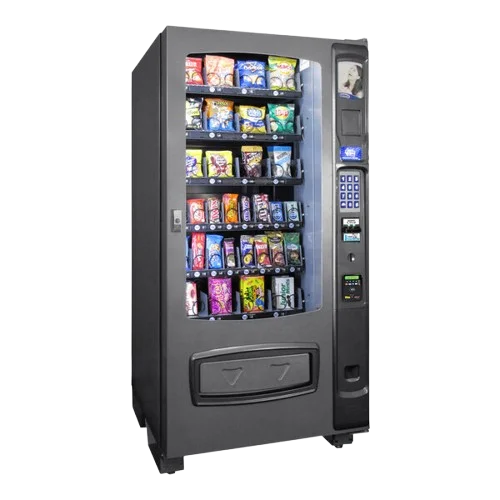
Standard free-standing snack machines, the most common configuration in offices, gyms, and retail environments, generally run $3,500 to $6,000 depending on capacity and technology level.
Elevator-style machines, which use a robotic delivery platform instead of a simple spiral coil, typically run $6,000 to $9,000, reflecting the added mechanical complexity of that delivery system alongside typically higher capacity.
Machines combining snack and beverage dispensing generally price between the standard and elevator tiers, since the added refrigerated compartment increases cost without requiring the more complex elevator mechanism.
| Machine Type | Typical Price Range | Best Fit |
|---|---|---|
| Countertop/compact | $2,000–$3,500 | Small offices, break rooms |
| Standard snack | $3,500–$6,000 | Offices, gyms, moderate-traffic sites |
| Elevator snack | $6,000–$9,000 | High-traffic locations, larger facilities |
| Combo snack/drink | $4,000–$7,500 | Locations wanting both categories in one unit |
Beyond the headline number, price reflects cabinet construction and security hardware, the control board coordinating payment and dispensing, and the coil or elevator mechanism itself. Cheaper machines often cut cost through lighter-gauge steel or simpler control boards, savings that tend to show up later as increased service calls rather than durable long-term value.
Buying direct from the company that actually builds the equipment removes reseller markup and shortens the support path if something needs adjustment, since requests go straight to the team that designed and assembled the machine rather than passing through an intermediary.
A reliable seller offers transparent, itemized pricing, clear warranty terms, and configuration options matched to your specific space and product plans, rather than a single fixed catalog unit with no ability to adjust capacity or features to fit your situation.
Look for itemized costs rather than a single vague number.
Confirm coverage terms before committing to a purchase.
A seller who can match capacity to your specific space is worth the search.
Start by measuring your intended space and estimating expected daily traffic, since these two factors determine which capacity tier actually makes sense. Next, decide between new and used based on your budget and risk tolerance, then compare configuration options and technology features against your product plans before finalizing a specific model. Confirm delivery, installation, and warranty terms in writing before payment, and plan initial inventory purchase alongside the machine itself so the unit can be stocked and generating revenue from day one rather than sitting empty after installation.
Buyers searching for where to buy a snack vending machine for an office typically fall into two categories: facilities teams purchasing a machine outright to stock and manage internally, and small vending operators placing a machine under a revenue-share agreement with the office as host location. For internal office use, a compact or standard machine usually covers demand without unnecessary capacity, while operators serving multiple office clients often standardize on one configuration across locations to simplify servicing and restocking.
Full manufacturer warranty coverage. Current-generation payment and telemetry technology. Maximum remaining mechanical life before major repairs are likely.
Lower upfront cost, often 30 to 50 percent less than new. Reduced or absent warranty coverage. Technology may lag current cashless payment standards.
Delivery and installation, initial inventory, and any revenue share negotiated with a host location all add to total launch cost beyond the machine's purchase price. Operators sourcing a location through a matching platform such as VPlaced's location owner matching process should factor the resulting placement terms into their total budget before finalizing a specific machine purchase.
Product mix planning matters as much as machine selection, since a compact machine stocked with the wrong items underperforms a similarly sized unit matched well to its audience. A detailed look at healthy food options for vending machines covers how to build a product mix that appeals to health-conscious buyers, an increasingly important consideration for office placements specifically, where demand for better-for-you snacks tends to run higher than in general public locations.
Operators running snack machines as a business, rather than buying one for internal office use, should budget for entity formation and compliance costs alongside the equipment itself. Many operators form an LLC for their vending machine business given the liability protection it offers, while a sole proprietorship suits a simpler, single-operator setup. Operators launching with a partner should review a partnership structure for a vending machine business before finalizing ownership terms, and confirming a registered agent for a vending machine business is in place rounds out the basic legal setup regardless of entity type chosen.
Add the machine's purchase price to delivery, installation, and initial inventory costs to reach total investment, then compare that figure against expected monthly net revenue at the intended location to estimate payback time. A higher-capacity machine can still deliver a faster payback than a cheaper unit if the location's traffic genuinely supports the added volume, which is why matching capacity to actual demand matters more than minimizing upfront spend alone.
Cost is one part of a broader purchase decision that also includes location strategy, product mix, and ongoing servicing. Matching machine capacity to actual site demand remains the single biggest factor in whether a given purchase turns into a strong investment or an oversized expense sitting underused in a location that never needed that much capacity to begin with.
Compare current pricing across every capacity tier covered above.
Snack Vending MachinesFrom compact office units to high-capacity elevator configurations.
Snack vending machines typically cost between $2,000 and $9,000, with price driven mainly by slot capacity, technology features, and whether the unit is new or used.
Countertop and compact snack machines typically run $2,000 to $3,500, well suited to small offices and break rooms without the need for high capacity.
Buying directly from a manufacturer offers transparent pricing, clear warranty terms, and configuration options matched to your space, rather than going through a reseller with a fixed catalog.
Measure your space and estimate expected traffic first, decide between new and used, compare configuration and technology options, then confirm delivery and warranty terms in writing before finalizing payment.
A compact or standard machine purchased directly from a manufacturer typically covers office demand well, whether you're buying to manage internally or placing one as a vending operator serving office clients.
Used machines typically sell for 30 to 50 percent less than an equivalent new unit, though buyers should weigh that savings against reduced warranty coverage and older technology.
Delivery and installation, initial inventory stocking, and any revenue share paid to a host location all add to total investment beyond the equipment price itself.
If you're running it as a business rather than buying for internal office use, forming an LLC or another proper business structure is common for liability protection before launching.
Yes, a machine stocked with the wrong items for its audience underperforms a similarly sized unit matched well to buyer preferences, including growing demand for healthier snack options.
Add the machine's total upfront investment, including installation and initial inventory, then compare it against expected monthly net revenue at the intended location to estimate a payback timeline.


Compartir:
Pokémon Vending Machine Stocking Schedule: How to Plan and Manage Restocks
How to Start a Snack Vending Machine Business: Step-by-Step Guide