




Diseñe la solución de vending perfecta para su ubicación y clientes.

Únete al boletín de VMFS y forma parte de una red próspera dedicada al éxito colectivo.
Un registro. Posibilidades infinitas.

Venditalia es la feria internacional líder del sector del vending. Se celebra cada dos años desde 1998 y es el lugar donde operadores, fabricantes y distribuidores de todo el mundo se reúnen para ver cómo será el futuro del comercio minorista automatizado en los próximos años. La edición de 2026, celebrada el pasado mes de mayo, fue una de las más grandes hasta la fecha, con más de trescientos expositores repartidos en más de treinta mil metros cuadrados, una gran parte de ellos provenientes de fuera de Italia.
Asistimos, recorrimos la feria durante días y obtuvimos una visión clara de hacia dónde se dirige el sector. Si quieres conocer nuestra opinión sobre el aspecto de la comida caliente de la feria, analizamos una máquina de fideos instantáneos totalmente automatizada que dispensa su propia agua caliente en un artículo separado aquí. Este escrito trata sobre algo más silencioso pero, posiblemente, más importante para los operadores: el mecanismo de entrega y cómo está ampliando lo que una máquina puede vender físicamente.
Durante años, la conversación en el vending se ha centrado en los pagos y la telemetría. Esos aspectos importan, pero lo que realmente destacó en 2026 fue un hardware que finalmente permite que los productos de primera calidad, frescos y frágiles, viajen desde la estantería hasta el cliente sin un solo rasguño. Esa capacidad única está abriendo puertas que estuvieron cerradas a los operadores durante décadas.
Para entender por qué son importantes estas máquinas, ayuda comprender la limitación que resuelven. En una máquina de snacks o bebidas tradicional, el producto se coloca en una espiral o en una bandeja, la espiral gira y el artículo cae en un depósito de recogida en la base. Es simple, fiable y económico. También es totalmente inadecuado para cualquier cosa delicada.
A una bolsa de patatas fritas no le importa una caída de 30 centímetros en una bandeja metálica. A un cupcake, una copa de helado, un tarro de cristal, un pastel en caja o una caja de regalo cuidadosamente empaquetada, definitivamente sí. Si se caen, el resultado es un producto aplastado, envases rotos, clientes insatisfechos y devoluciones. Ese detalle mecánico es la razón por la que el vending de comida y productos premium se estancó durante tanto tiempo. Los operadores querían vender productos de mayor valor, porque un mayor valor significa un mayor margen por venta, pero el método de entrega limitaba lo que podían cargar físicamente en la máquina.
En el momento en que resuelves el problema de la caída, se abre todo un catálogo de productos que antes estaban prohibidos, y las máquinas expendedoras premium que lideraban ese cambio estaban por todas partes en la feria de 2026. Una vez que el producto ya no tiene que caer, la pregunta deja de ser qué puede sobrevivir al proceso de dispensación de esta máquina y pasa a ser qué es lo más valioso que comprará el cliente en este punto de venta.
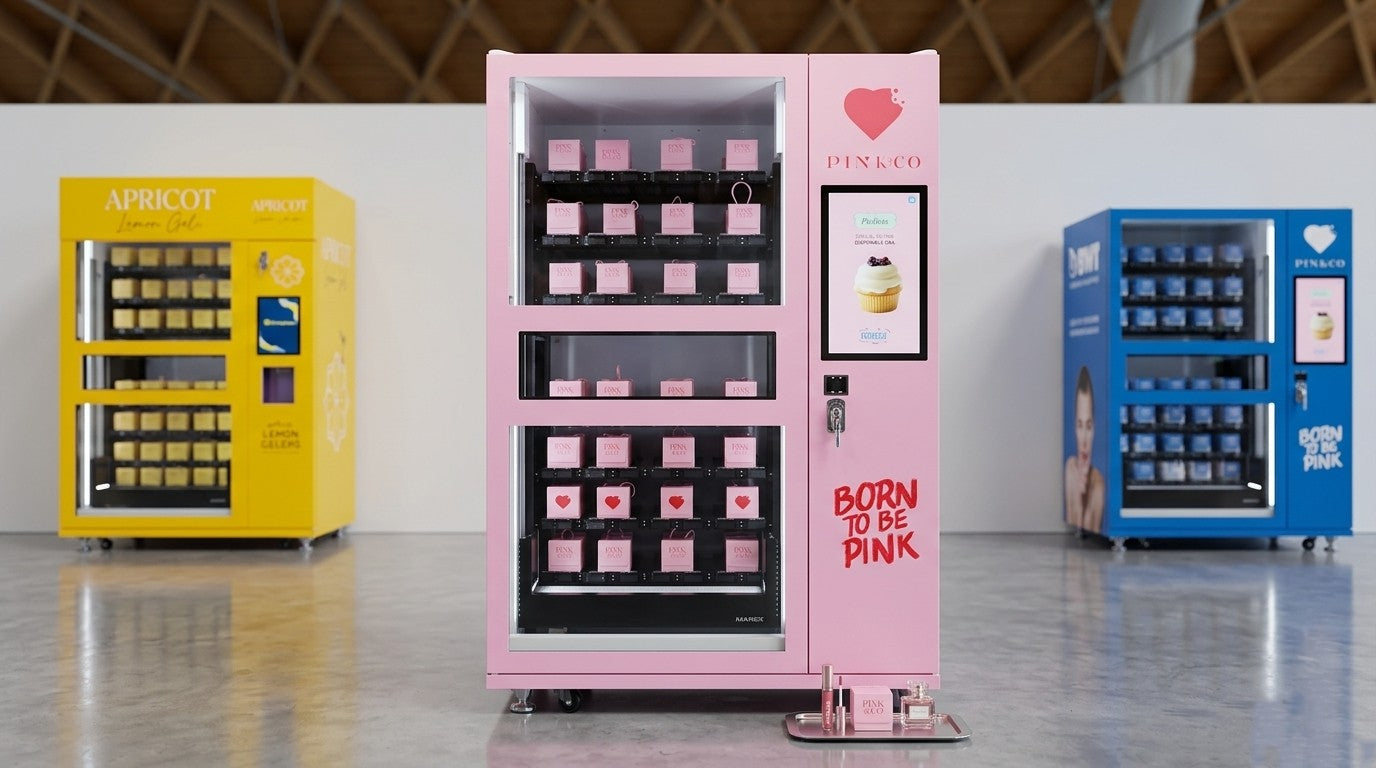
La solución expuesta en las máquinas premium era un sistema de entrega por ascensor. En lugar de dejar caer el producto, una plataforma motorizada sube por el interior del mueble hasta la estantería exacta donde se encuentra la selección, recoge el artículo y lo baja suavemente hasta la ventana de entrega a una altura cómoda. No hay caída libre en ningún momento del trayecto. El cupcake que empieza en la estantería superior llega a la ventana en las mismas condiciones en las que salió.

Mecánicamente, es un gran paso adelante respecto a la espiral. La plataforma se mueve en ejes verticales y, a menudo, horizontales, posicionándose con precisión bajo cada carril de producto, razón por la cual estas máquinas pueden manejar una cuadrícula completa de diferentes productos en lugar de unas pocas columnas fijas. Hemos desglosado la secuencia completa en nuestra guía sobre cómo funcionan las máquinas expendedoras con ascensor, así que aquí seremos breves con la mecánica. La conclusión de la feria fue sencilla. Ver un cupcake glaseado bajar suavemente hasta la ventana intacto hace que el valor del sistema sea obvio de una manera que una hoja de especificaciones nunca podría lograr. Las máquinas expendedoras con ascensor que suministramos están construidas con este mismo método de entrega.
La idea central: una máquina tradicional pide al producto que sobreviva a la entrega. Una máquina con ascensor protege el producto durante la entrega. Esa diferencia es la razón por la que el vending de productos premium y frágiles es ahora viable.
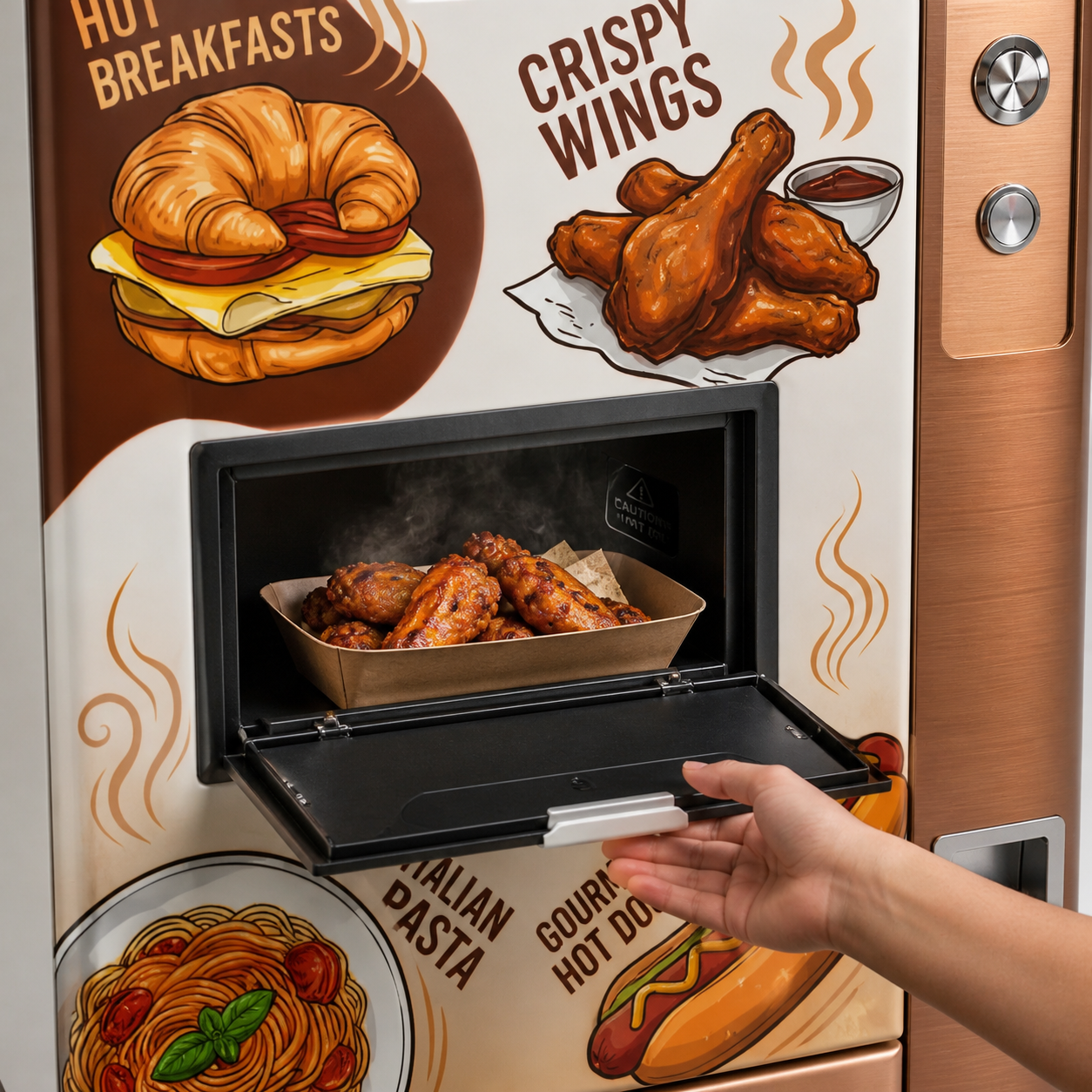
El segundo elemento es la propia ventana de entrega. En una máquina estándar, la zona de recogida es una pequeña trampilla cerca del suelo, diseñada para una lata o una bolsa. En estas máquinas premium, la ventana de entrega es grande, está situada aproximadamente a la altura de la cintura y, a menudo, iluminada desde el interior. Esto no es solo estético. Una ventana más grande permite introducir productos más grandes y altos, artículos en caja y recipientes que nunca cabrían por una trampilla tradicional, y permite que el cliente meta la mano y levante el producto suavemente en lugar de tener que pescarlo en un depósito.

Para un producto premium, el momento de la recogida forma parte de la compra. Cuando alguien paga un precio elevado por un postre artesanal, entregárselo a través de una pequeña trampilla a la altura de los tobillos arruina toda la experiencia. Una ventana amplia y bien iluminada a una altura natural indica calidad y hace que la transacción se sienta más cercana a ser atendido en un mostrador que a utilizar una máquina. Las marcas presentes en la feria lo entendían claramente, y es un detalle que se traslada directamente a cómo deben presentarse y promocionarse estas máquinas, un trabajo que nuestro equipo de marketing gestiona a través de VMarketed.
El tercer elemento es lo que hace que todo esto sea práctico para un operador real: las estanterías modulares. Las máquinas no estaban bloqueadas a un tamaño de producto único. Sus estantes y carriles se ajustan, por lo que el mismo mueble puede albergar una caja baja y ancha en un estante y un recipiente alto y estrecho en el siguiente. Un conjunto que observamos dispensaba cajas de regalo sorpresa que variaban de tamaño de un producto a otro, y la estantería simplemente absorbía esa variación sin atascarse ni fallar en la alimentación.

Esto importa más de lo que parece. Una máquina que solo admite un tamaño de producto específico te encadena a un único proveedor y a un único artículo para siempre. Una máquina con estanterías ajustables te permite cambiar todo tu mix de productos sin comprar hardware nuevo. Vende pasteles en caja este trimestre, cambia a bebidas especiales embotelladas al siguiente y, a continuación, añade una línea de coleccionables frágiles para las fiestas. A la plataforma de entrega no le importa cuál sea el producto siempre que quepa, y la estantería se reconfigura a su alrededor.
Esa flexibilidad es exactamente lo que separa a una máquina novedosa de un activo de ingresos a largo plazo. También es una razón fundamental por la que los operadores están dispuestos a invertir más por adelantado en estos sistemas. Si estás sopesando una configuración fija frente a algo más adaptable, nuestra comparación entre máquinas personalizadas y estándar profundiza en las ventajas e inconvenientes.
Al combinar los tres elementos, el panorama comercial es convincente. Una entrega delicada, una ventana grande y estanterías ajustables significan que una sola máquina ahora puede vender categorías que eran esencialmente imposibles hace unos años: postres artesanales, comida fresca y refrigerada, regalos en caja, cosméticos, coleccionables delicados y productos en envases de vidrio. Una línea de postres congelados, por ejemplo, puede funcionar en una máquina de helados con ascensor, mientras que los artículos refrigerados se sitúan junto al resto de nuestras máquinas expendedoras de comida. Cada uno de ellos conlleva un precio más alto y un margen más saludable que una bolsa de patatas fritas.
También cambia dónde puede generar beneficios una máquina. Una máquina de postres premium en un centro comercial exclusivo, el vestíbulo de un hotel, una terminal de aeropuerto o un lugar de eventos puede exigir precios que una máquina de snacks nunca podría alcanzar en el mismo sitio. El hardware finalmente iguala la ambición, y la pregunta del operador cambia de qué puede dispensar físicamente esta máquina a qué es el producto de mayor valor que aceptará esta ubicación. Si quieres ver los tipos de sistemas que admiten la entrega por ascensor y configuraciones ajustables, puedes explorar toda la gama aquí.
Una máquina premium solo obtiene un rendimiento premium en la ubicación adecuada, y esta es la parte que los operadores suelen subestimar más. Una máquina de helados o cupcakes que triunfaría en el atrio de un centro comercial concurrido o en el vestíbulo de un hotel puede quedar inactiva en un pasillo de oficinas tranquilo. La calidad del tráfico peatonal importa tanto como la cantidad, porque las compras impulsivas premium dependen de que la audiencia correcta esté en el lugar correcto y en el estado de ánimo adecuado.
Lograr esto requiere una verdadera estrategia de ubicación, desde la prospección y el análisis de tráfico hasta la negociación de la ubicación en lugares que se ajusten al producto y al precio. Ese es el trabajo en el que se centra nuestro equipo de ubicación a través de VPlaced, que busca y asegura ubicaciones adaptadas a una máquina y a su audiencia ideal. Con los productos premium, la ubicación no es un detalle. Es la diferencia entre una máquina que se paga sola rápidamente y una que nunca lo hace.
Vender productos frescos, refrigerados o perecederos en una máquina conlleva obligaciones que un snack sellado nunca tendrá. Dependiendo de la ubicación y el producto, es posible que tengas que tratar con permisos de manipulación de alimentos, requisitos del departamento de salud, control y supervisión de temperatura, etiquetado de alérgenos y consideraciones de responsabilidad. Ninguna de estas es una razón para evitar el vending de comida premium, pero son aspectos que hay que resolver antes de que la máquina entre en funcionamiento, no después.
Las reglas varían según el estado e incluso el municipio, y equivocarse puede significar multas o un cierre forzoso. Los permisos y las formalidades legales que conlleva vender productos frescos y regulados a través del comercio minorista automatizado son exactamente lo que nuestro departamento de cumplimiento gestiona a través de VAdviced. Es mucho más barato configurar esto correctamente desde el principio que solucionar un problema una vez que la máquina ya está instalada y generando ingresos.
Una última cosa destacó en la feria, y no fue algo mecánico. Cada máquina premium estaba totalmente personalizada con una marca. No era una cabina genérica con una pegatina pegada, sino una identidad completa: un vinilo personalizado, un nombre, una paleta de colores, un eslogan y una pantalla mostrando imágenes del producto. Estas máquinas fueron construidas para ser notadas, fotografiadas y recordadas, y la marca hizo tanto trabajo como el hardware para atraer a la multitud.
Esa es una estrategia deliberada. Cuando una máquina parece una boutique en lugar de una unidad de venta automática, los clientes la tratan, y la valoran, de manera diferente. Construir ese tipo de identidad, desde el diseño del vinilo hasta el nombre y el contenido en pantalla, es una disciplina en sí misma. Las máquinas que triunfaron en la feria en 2026 fueron aquellas que trataron la marca como una parte fundamental del producto en lugar de algo secundario, y esa mentalidad es la diferencia entre pasar desapercibido en una pared y convertirse en una razón por la que la gente se detiene y saca sus teléfonos.
La señal clara de Venditalia 2026 es que el mecanismo de entrega, y no la terminal de pago, es ahora la frontera. Los sistemas de elevador, las grandes ventanas de entrega y los estantes modulares han eliminado discretamente los límites físicos que mantuvieron al vending estancado en snacks y bebidas durante décadas. Las máquinas que aprovechan esto están vendiendo productos premium, frescos y frágiles con márgenes que el hardware antiguo nunca podría soportar.
Para los operadores, la oportunidad es real, pero conlleva más piezas móviles que una ruta de snacks: la máquina adecuada, la ubicación correcta, el cumplimiento legal y la marca adecuada. Lograr que los cuatro elementos estén alineados es lo que convierte una máquina premium en un retorno premium, y es la razón principal por la que el ecosistema VMFS conecta esas piezas en un solo lugar en lugar de dejar que el operador las busque por separado.
¿Pensando en una máquina de vending premium?
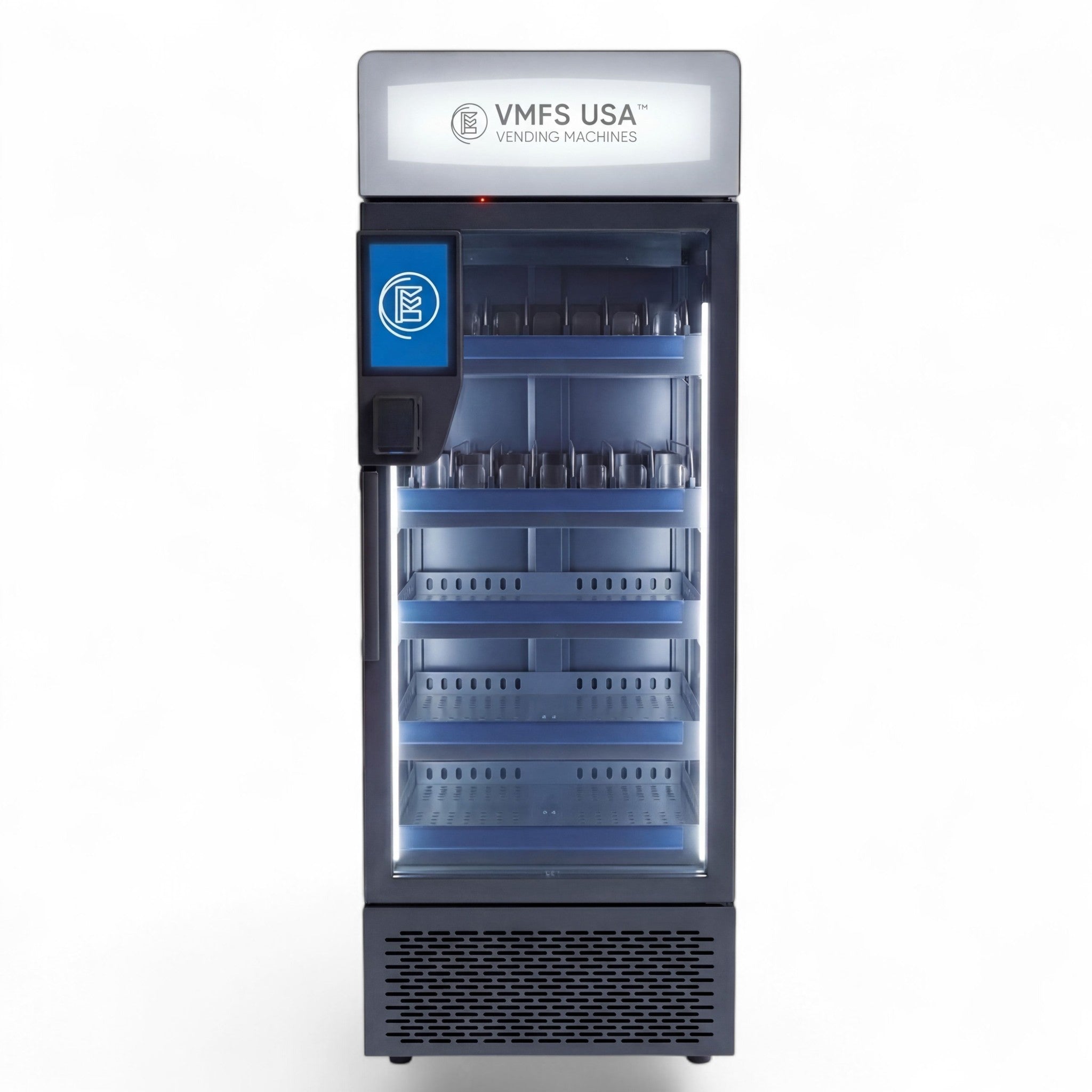
VMFS USA diseña y suministra sistemas de vending modulares y de entrega por elevador creados para productos premium, frescos y frágiles. Díganos qué quiere vender y dónde, y le ayudaremos a encontrar la máquina adecuada para la oportunidad.
Explorar las máquinas
Compartir:
Cómo iniciar un negocio de máquinas expendedoras de snacks: Guía paso a paso
¿Dónde puedo comprar una máquina expendedora de Pokémon?