




Design the perfect vending solution for your location and customers.

Join the VMFS newsletter and step into a thriving network dedicated to collective success.
One signup. Endless possibilities.
A custom vending machine is worth buying when your product, location or brand needs something a standard off-the-shelf unit cannot do; when it doesn't, a standard machine costs less and arrives sooner. At VMFS USA, configured custom builds start at $3,595 and typically take around 45 days, while in-stock units with no wrap or major changes usually ship within 7 to 10 days.
This buyer's guide explains the three levels of "custom," compares custom and standard machines side by side, lists the signs you have outgrown standard equipment, and walks through the build process, the spec sheet to send a manufacturer and a final buyer checklist.
"Custom" describes three different purchases: a standard machine with your branding on it, a production platform configured around your product, or a cabinet engineered from scratch. Sellers use the same word for all three, which is why quotes for a "custom vending machine" can differ by thousands of dollars and by months of lead time. Knowing which level you actually need is the first decision in any custom purchase, because it sets the price bracket, the delivery window and how much engineering risk you take on.
Level 1: Branded standard machine
A production unit with a vinyl wrap, logo panels, LED colors or screen graphics. The mechanism and layout stay stock. Fastest and cheapest route to a machine that looks like yours.
Level 2: Configured platform
A proven cabinet configured to your product: tray spacing, delivery system, temperature zone, payments, touchscreen, telemetry and compliance features, plus branding.
Level 3: Ground-up build
A new cabinet or dispensing mechanism engineered for a product nothing on the market can vend. Highest cost, longest lead time and the most testing before deployment.
Most operators who say they want a custom machine need Level 2. A configured platform keeps the reliability, parts supply and service knowledge of a production machine while changing the parts that decide whether your product sells: how it is held, how it is delivered, what temperature it is kept at and how the customer pays. That is how the VMFS custom vending machine builder works. You start from a base system, choose the product type, cabinet format, delivery method (drop, elevator, conveyor or sensor-based), temperature zone (ambient, refrigerated or frozen), payment hardware and branding, and the price updates as you add each option.
Level 1 suits operators whose products already vend reliably from a spiral or tray but who want a machine that reads as a branded storefront rather than a generic box. Level 3 is the right call only when a product's size, fragility or handling rules make every production platform unworkable; examples include oversized merchandise, items that need a custom gate or locker, and products with unusual dispensing steps. Ground-up builds are where a manufacturer's engineering depth matters most, which is covered in our guide to custom vending machine manufacturers.

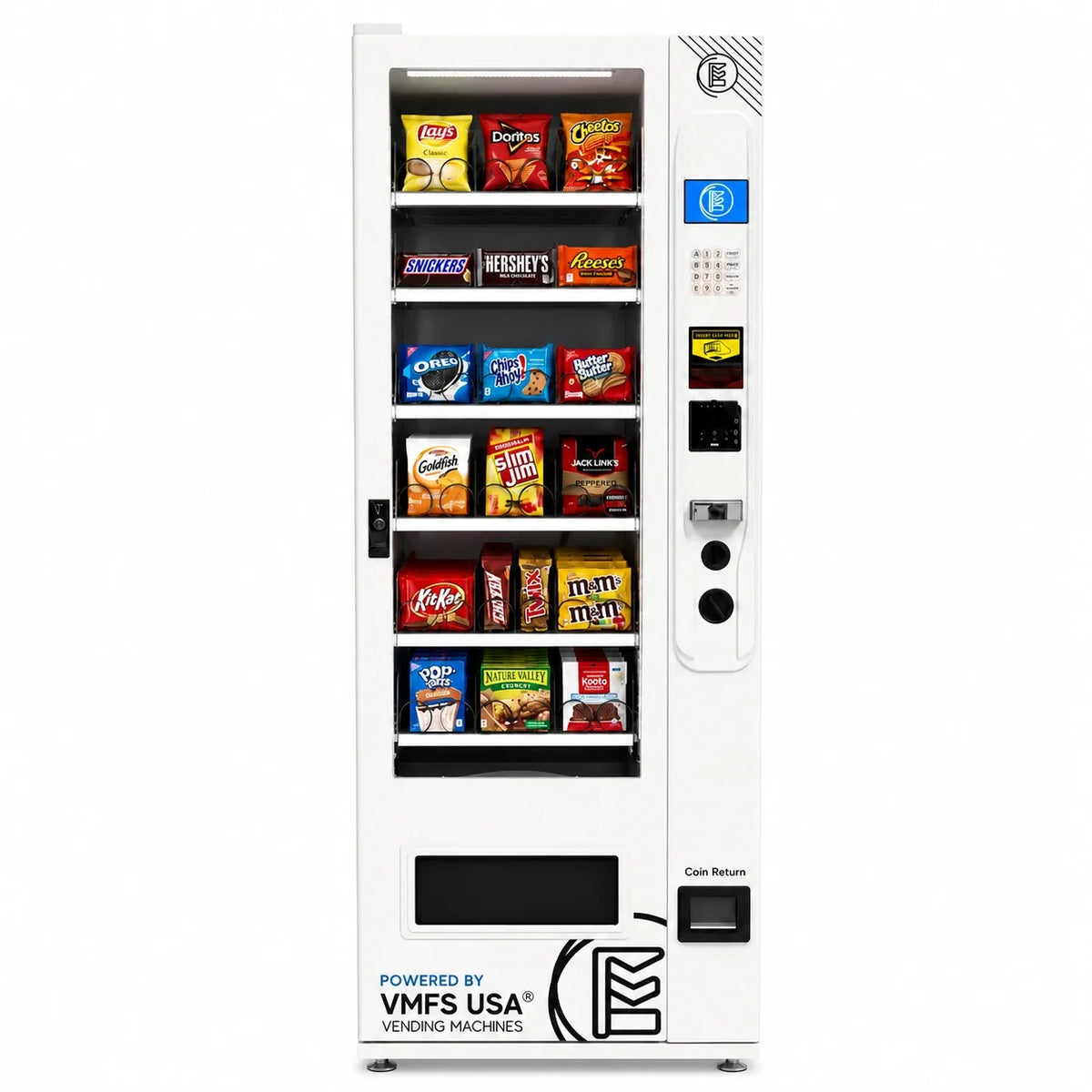
The image above shows the practical difference. On the left, a standard spiral layout built for chips, candy and bottles. On the right, a configured interior built for boxed trading card products, where shelf spacing, lighting and the delivery path are chosen around the item instead of the other way round. Both are commercial machines; only one is a sensible home for a product that would jam or crush in a coil.
A standard machine is a fixed configuration built to fit as many buyers as possible, while a custom machine is configured or engineered around one product, location and brand. The standard unit wins on price, speed and resale; the custom unit wins on product fit, presentation and control. The table compares the three levels on the factors that drive a buying decision, using live VMFS prices and published lead times where they exist.
| Factor | Standard (incl. Level 1 branding) | Configured custom (Level 2) | Ground-up build (Level 3) |
|---|---|---|---|
| What changes | Exterior only: wrap, decals, screen graphics | Trays, delivery system, temperature, payments, screen, telemetry, compliance, branding | Cabinet, mechanism and software designed for one product |
| Product fit | Snacks, drinks and items that suit spirals or standard trays | Products sized, weighed and handled to spec | Products no existing platform can dispense |
| Example VMFS starting price | Seaga QB2200 $2,999; Slim Combo from $3,650; Smart Combo from $4,650 | Entry builds from $3,595; mid-range from $4,950; advanced from $8,990 | Custom quote; engineering is usually billed on top of the unit |
| Typical lead time | In-stock units with no wrap or major changes usually ship in 7 to 10 days (VMFS) | Around 45 days for custom builds, wraps and special configurations (VMFS) | Bespoke builders commonly quote about 8 to 16 weeks |
| Parts and service | Widely stocked parts, familiar to technicians | Production parts plus your configured options | Depends on the builder; confirm spare-parts plan in writing |
| Resale and redeployment | Easiest to resell or move to any site | Good if the base platform is common | Narrow resale market |
| Best for | Pilots, first machines, mainstream product mixes | Operators and brands with a defined product and site | Unique products and multi-unit brand programs |
Two lines in that table deserve emphasis. First, the price gap between standard and configured custom is smaller than most buyers expect: an entry-level custom build starting at $3,595 sits within a few hundred dollars of standard combo machines in the same catalog, because both share a production base. Second, the lead-time gap is real. If a location host wants a machine next week, an in-stock standard unit is the only realistic answer, and a custom build should be scheduled around a confirmed install date. The full line-by-line pricing for every build type lives in our custom vending machine cost guide, so this guide does not repeat it.
Advantages of going custom
Trade-offs to plan for
See what your build would cost
Pick a product type, format, payments and branding in the VMFS builder and watch the price update as you configure.
Start your custom buildFor a business that hosts a machine rather than runs a route, "standard" often means a free placement: an outside operator installs, stocks and services its own machine and pays you a commission, while owning a custom machine means you keep the margin but take on the work. Commissions in placement deals are commonly quoted somewhere between 5% and 25% of sales, depending on the location's volume and the operator's terms. That range is the whole of the host's upside in a placement deal, and the host has no say over products, prices or how the machine looks.
Owning reverses every one of those trade-offs. You choose the product mix and pricing, you put your own brand on the cabinet, and you see the sales data. In exchange you buy the machine, keep it stocked, handle card processing and refunds, and arrange service. Gyms, hotels, clinics, campuses and offices with steady daily traffic are the hosts most likely to come out ahead by owning, because their audiences want specific products that a route operator's average mix will not carry. A gym that wants protein snacks and recovery drinks, or a hotel that wants travel essentials beside its beverages, is buying control as much as revenue.
A placement deal remains the sensible choice when you want no operational involvement at all, when nobody on site can restock, or when the location's demand is unproven. Our breakdown of the vending machine revenue split between operator, location and supplier shows where the money goes in each arrangement. If you would rather have an operator bring a machine to your space, VPlaced lists your location for vetted operators; if you are an operator looking for hosts, VMFS also offers location matching.
Before you switch: ask your current placement operator for 6 to 12 months of sales by item. Not every operator will share it, but if they do, it tells you which products sell, how often the machine is refilled and whether the volume justifies owning.
You have outgrown standard equipment when the machine, rather than demand, is what limits your sales. The signs show up in refund logs, stockout patterns, location conversations and expansion plans long before they show up in a spreadsheet. Any one of the patterns below is worth investigating; two or more together usually mean an upgrade will pay for itself faster than staying put.
A standard machine's slot dimensions and spiral pitch assume a generic product mix. When your best products are boxed, tall, heavy, fragile or oddly shaped, the result is jammed coils, wasted columns and refunds for items that never dropped. Specialty retail is where this hits first: cosmetics, electronics accessories and collectibles often need shelves, elevators or lockers rather than coils. VMFS sells purpose-built examples such as the Cosmetics Vending Machine ($5,950) and the Electronics Vending Machine ($7,950) because those products do not vend reliably from a standard snack cabinet.
If your top three items sell out days before the next service visit while slow movers sit untouched, the machine is allocating equal space to unequal demand. A configured layout matches column count and depth to actual sales, so one restock covers a full cycle. Telemetry makes the pattern visible: platforms like VMFS Cloud report sales by slot and send low-stock alerts, which turns a hunch about "always empty" columns into a configuration decision.
A wrap on a generic cabinet is often enough. It stops being enough when the brand needs integrated lighting, a touchscreen that plays its own video and promotions, or a cabinet finish that matches a retail fit-out. Brands that use machines as unattended stores rather than snack points tend to reach this stage when they move into malls, airports and flagship locations.
One standard machine is easy to manage; ten mismatched machines are not. Standardizing on one configured platform means every site uses the same trays, parts, payment setup and dashboard, which simplifies training, spares and restocking. The VMFS custom build page describes a Tier 1 auto parts plant in Toledo, Ohio, that started with one Smart Combo machine on a 60-day trial, recorded more than 1,400 units sold per month at that spot, and then expanded to a seven-machine fleet on a single monitoring dashboard.

Older standard machines may lack the controller support, space or power for a modern card reader, a touchscreen or an ID check. If you plan to sell age-restricted products, need contactless and mobile wallets at every site, or want screen advertising as a second revenue line, it is usually cheaper to specify those features at build time than to retrofit them. VMFS lists machines with built-in age verification for regulated products.
A standard machine is the better buy when your products already vend reliably from a production layout, when you need equipment quickly, or when the location has not yet proven its demand. In those cases the extra cost and lead time of a custom build buy you little. Plenty of profitable routes run entirely on standard combo and snack machines, and a well-placed standard unit beats a beautifully configured machine in a weak location every time.
Testing a new site is the clearest case. A standard machine such as the Seaga QB2200 ($2,999) or the Slim Combo (from $3,650) lets you validate traffic and product demand before committing to a configuration. If the location performs, the sales data tells you exactly what to specify for the custom build that replaces it, and the standard unit moves to the next test site. Speed is the other case: VMFS keeps several popular models available as in-stock machines for fast delivery, which matters when a host wants a machine before a custom build could ship.
Budget matters too. If cash is tight, inventory, a card reader and a strong first location usually earn more than custom features. The upgrade can come later, funded by a machine that has already proven the location. When you do upgrade, branding is the easiest first step: a vinyl wrap on a standard machine you own is a Level 1 customization, and a professionally installed wrap generally lasts several years before it needs refreshing.
Rule of thumb: go standard to learn, go custom to scale. Use the first machine at a site to collect real sales data, then let that data write the custom specification.
A configured custom build moves through five steps: product, format, features, branding and price, followed by a configuration review, production and freight delivery. At VMFS that sequence runs through an online builder rather than weeks of email, and the published lead time for custom builds, wraps and special configurations is around 45 days. Ground-up builds from specialty fabricators take longer because they add design, prototyping and testing.
After the order, the VMFS team reviews every configuration before production starts, the machine is built to that specification and you receive updates through production and shipping. Finished machines ship by freight nationwide, and white-glove delivery can include inside delivery, placement assistance and packaging removal depending on site access and the carrier. The shipping information page explains how to inspect the crate and note damage on the delivery receipt before signing.
For ground-up projects, bespoke builders commonly quote about 8 to 16 weeks, with the most complex proprietary dispensing mechanisms at the long end, and design or engineering work is typically priced separately from the unit. That is why a Level 3 project should start with a written requirements document and a prototype sign-off, not a deposit. The stages from concept to deployment are covered step by step in our custom vending machine development process guide.
| Purchase type | Typical timeline | Source |
|---|---|---|
| In-stock unit, no wrap or major changes | Usually ships within 7 to 10 days | VMFS shipping page |
| Custom build, wrap or special configuration | Around 45 days | VMFS shipping page |
| Quote for a configured build | Usually within one business day | VMFS custom page |
| Ground-up bespoke machine | About 8 to 16 weeks | Digital Media Vending |
A useful quote request names the product, the site, the payment and data setup, the compliance needs and the branding files. The more of this you send up front, the fewer revisions the quote needs and the less chance a configuration reaches production with a wrong assumption. Use the sections below as your spec sheet.
List every product with its dimensions, weight, packaging type and storage temperature, plus how many different items you plan to sell and which ones you expect to sell fastest. Product size and weight decide tray spacing and delivery method; temperature decides whether the cabinet is ambient, refrigerated or frozen. If anything is fragile, glass-bottled or heavy, say so, because that is the case for elevator vending machines, which lower products to the delivery port instead of dropping them.
Give the footprint available, door widths on the delivery path, floor type, access to a dedicated outlet, and whether the machine will sit indoors, under cover or fully outdoors. Indoor and outdoor builds are different products: the VMFS warranty states that using an indoor model in an outdoor or semi-outdoor environment voids it. Where a site must meet ADA accessibility standards, the controls customers operate should sit within the 15 to 48 inch reach range described in U.S. Access Board guidance; the guidance notes that the dispensed products themselves are not covered.
State which payment methods each site needs (card, contactless, mobile wallet, cash) and whether you already use a card reader brand. Ask whether the controller uses the industry-standard MDB interface so readers can be swapped later, and compare reader hardware and monthly fees on VMFS's payment system page. Decide on remote monitoring before ordering, because telemetry is easiest to configure at build time.
Products and fleet size create obligations that change the build. Under FDA rules, operators who own or operate 20 or more vending machines must disclose calorie information for covered foods, so a growing operator should plan for labeling space or screen-based disclosure. Federal rules limit cigarette and smokeless tobacco vending to facilities where no one under 21 is present or permitted, which is why regulated products call for ID checks and careful site selection. State and local permits vary; our guide to vending machine permits covers the main categories, and VAdviced explains licensing for custom machines.
For refrigerated builds, ask whether the cooling system is ENERGY STAR certified or uses comparable low-power modes and efficient refrigerants. A machine that runs every hour of the year pays its electricity bill for as long as it is deployed, so efficiency belongs on the spec sheet next to capacity.
Send vector logos, brand colors, any required brand guidelines and the message the machine should communicate at a glance. Keep the product window and screen area clear in the design; a wrap that hides products or ventilation looks good in a mockup and hurts sales and cooling in the field.
Budget for the machine, the options that turn it into your configuration, freight and installation, payment and software fees, and your first inventory, then decide how to finance the total. VMFS publishes three starting points on its custom page: entry builds from $3,595 with standard branding and basic card and cash payments, mid-range builds from $4,950 with a touchscreen, cloud monitoring and contactless payments, and advanced builds from $8,990 with refrigeration or freezing, elevator or conveyor delivery and age verification. A configured Build Your Combo Vending Machine listing starts at $4,950, while the Smart Elevator standard model starts at $8,650.
Every VMFS machine includes a one-year parts warranty, with extended two-year coverage for $250 and three-year coverage for $400 available at purchase (specific product warranties can vary). VMFS does not offer in-house financing or leasing; instead it works with PayPal, Klarna and ClickLease, with terms typically ranging from 6 to 48 months and ClickLease covering up to $30,000. Details and eligibility are on the vending machine financing page. Outside supplier financing, SBA microloans of up to $50,000 can fund equipment through nonprofit intermediaries.
On taxes, business equipment may qualify for Section 179 expensing or 100% bonus depreciation under current IRS guidance; confirm how it applies to your purchase with your accountant before you rely on it. To test whether a build pays off at a given location, run your expected sales, prices and costs through the VMFS ROI calculator, and read our breakdown of custom vending machine ROI for the variables that move the payback period.
The costliest mistakes with custom machines are ordering before a location is secured, under-budgeting the total cost, and customizing the wrong things. Each is avoidable with a little sequencing.
Ordering before the location is confirmed. A custom machine without a signed placement is inventory, not an asset. Get the host agreement in writing, including commission, access hours and power, before you place the order, especially with a lead time measured in weeks.
Budgeting only for the machine. Freight, installation, payment hardware and processing, software, permits, first inventory and a maintenance reserve all sit on top of the machine price. Operators who budget only for the cabinet are routinely surprised by the total.
Choosing the wrong platform for the site. A snack-only machine where drinks drive demand, or a refrigerated build where power is unreliable, will underperform however well it is branded. Match the temperature zone and delivery system to what the location actually buys.
Customizing the look but not the layout. A striking wrap on a machine that jams on your best product still loses sales. Fix product fit first, then branding.
Over-engineering the first unit. Ground-up builds make sense for proven products and multi-unit programs. For a first machine, a configured platform is faster, cheaper and easier to service, and it still gives you room to refine the next order.
Work through this checklist before you pay a deposit. Every item maps to a decision that affects whether the machine performs at its location.
Get a quote built around your setup
Send your product, location and feature list and VMFS will return a detailed quote with freight, customizations and financing options, usually within one business day.
Request a quote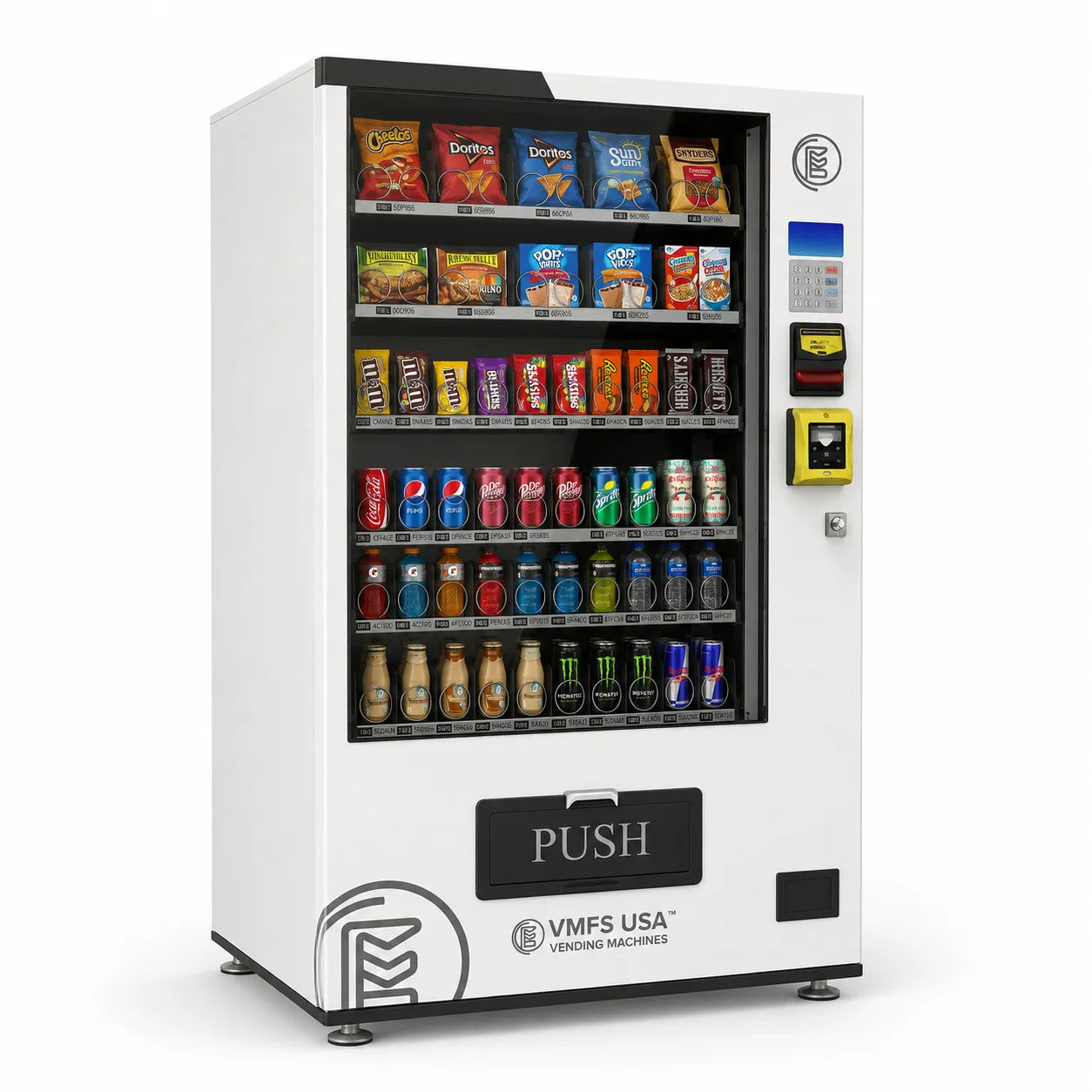
Share:
Geek Bar Shortages: Market Reality and Strategies for Retailers
Vending Machine Security: How to Prevent Theft and Vandalism