


Every location is different.
Every product category is different.
And not every vending machine should be configured the same way.
VMFS systems are modular — which means you can configure them based on your specific goals.
This guide explains what can be customized and what to expect during the process.
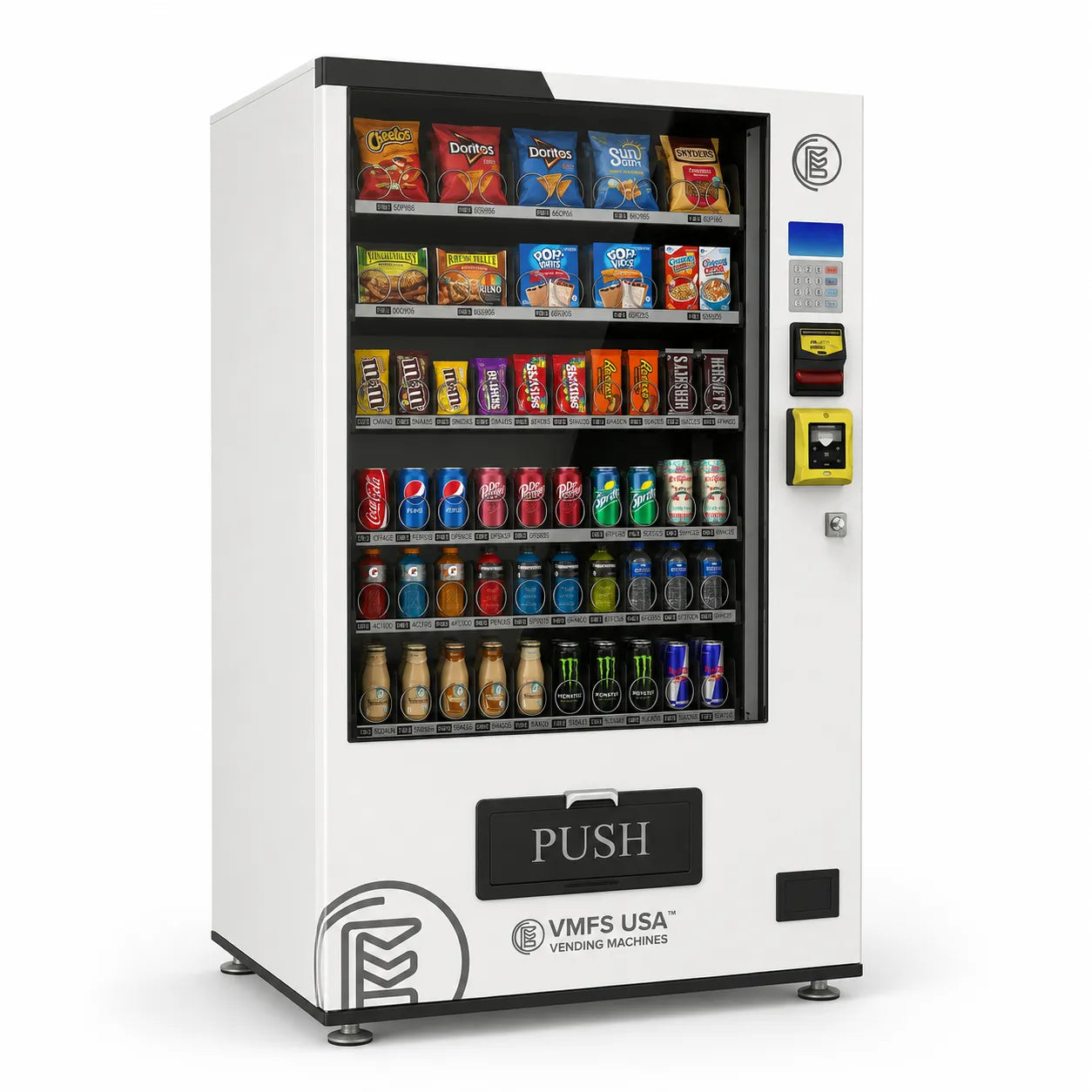
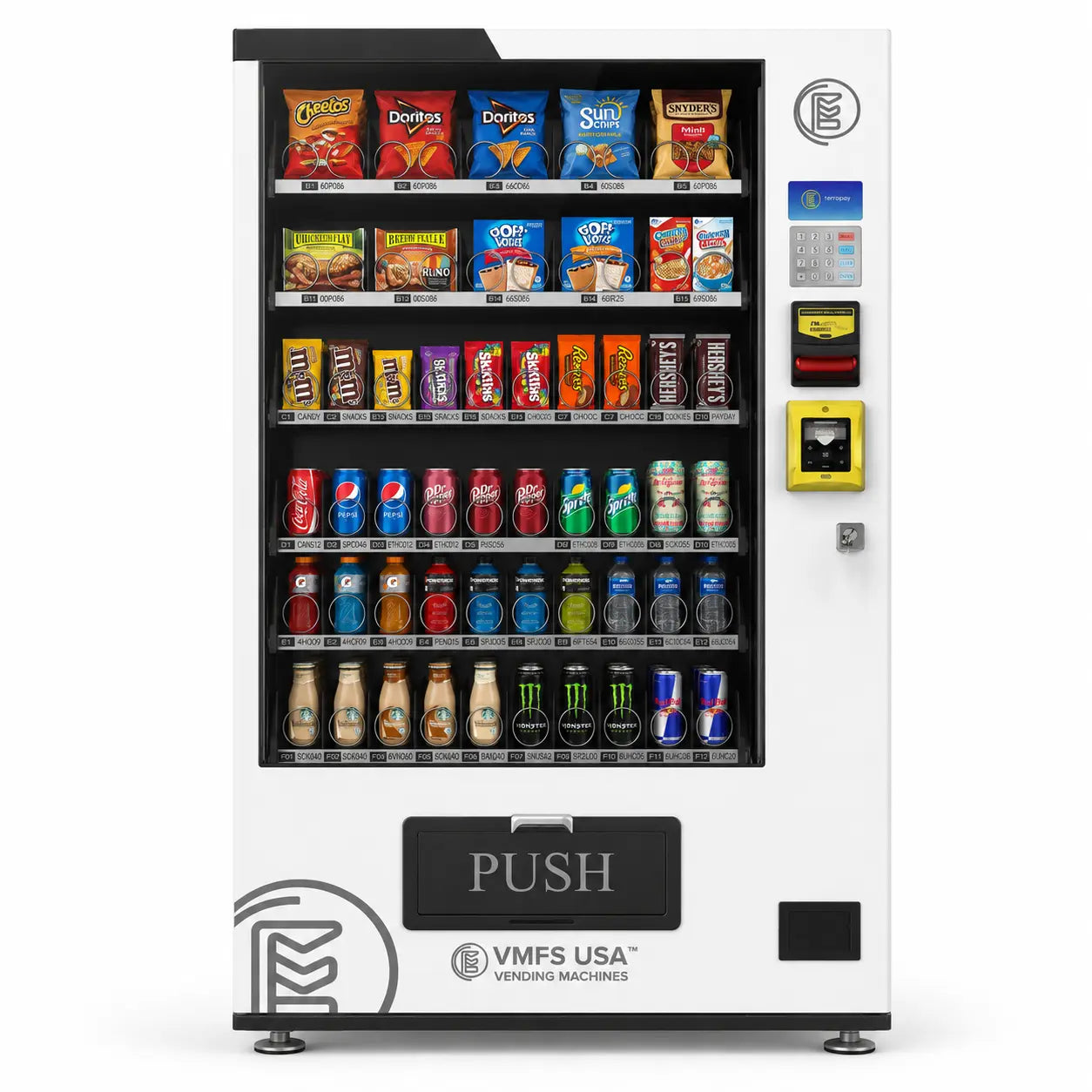
1. Exterior Branding & Wrap
One of the most visible customization options is exterior branding.
Options include:
- Full vinyl wrap
- Partial branding panels
- Logo placement
- Color matching
- Custom graphic design
- Corporate branding integration
Why It Matters
- Increases brand recognition
- Improves location approval rates
- Makes machines look intentional
- Enhances perceived professionalism
Typical wrap cost:
$300 – $800 depending on design complexity
Custom wraps are applied before shipment or shortly after delivery.
2. Touchscreen Interface & UI
For Smart and Advanced systems, you may customize:
- Background graphics
- Brand logo placement
- Product category layout
- Promotional banners
- Advertisements
- Language settings
Enterprise clients often request fully branded UI experiences.
Touchscreen customization enhances user engagement.
3. Product Configuration
Machine interiors can be configured based on product type.
Options include:
- Spiral trays (standard snacks)
- Adjustable tray spacing
- Elevator systems (fragile items)
- Locker-style compartments
- Large-item dispensing slots
Fragile or high-ticket products require specific delivery systems.
The internal setup must match your product category.
4. Payment Module Options
You can customize:
- Cashless-only configuration
- Hybrid (cash + card)
- Age verification modules
- ID scanners (where applicable)
- Tap-to-pay integration
For regulated products, compliance hardware may be required.
5. Connectivity Options
Depending on deployment, machines may include:
- WiFi connectivity
- 4G/5G cellular module
- Offline fallback functionality
Enterprise deployments often require SIM-based connectivity for reliability.
6. Security Upgrades
Optional enhancements include:
- Reinforced locking systems
- Outdoor weatherproof upgrades
- Anti-theft reinforcement
- Camera integration
- Tamper-resistant payment housing
Outdoor placement typically requires additional reinforcement.
7. Cooling & Temperature Configuration
Machines can be configured for:
- Standard refrigerated drinks
- Combination snack & beverage
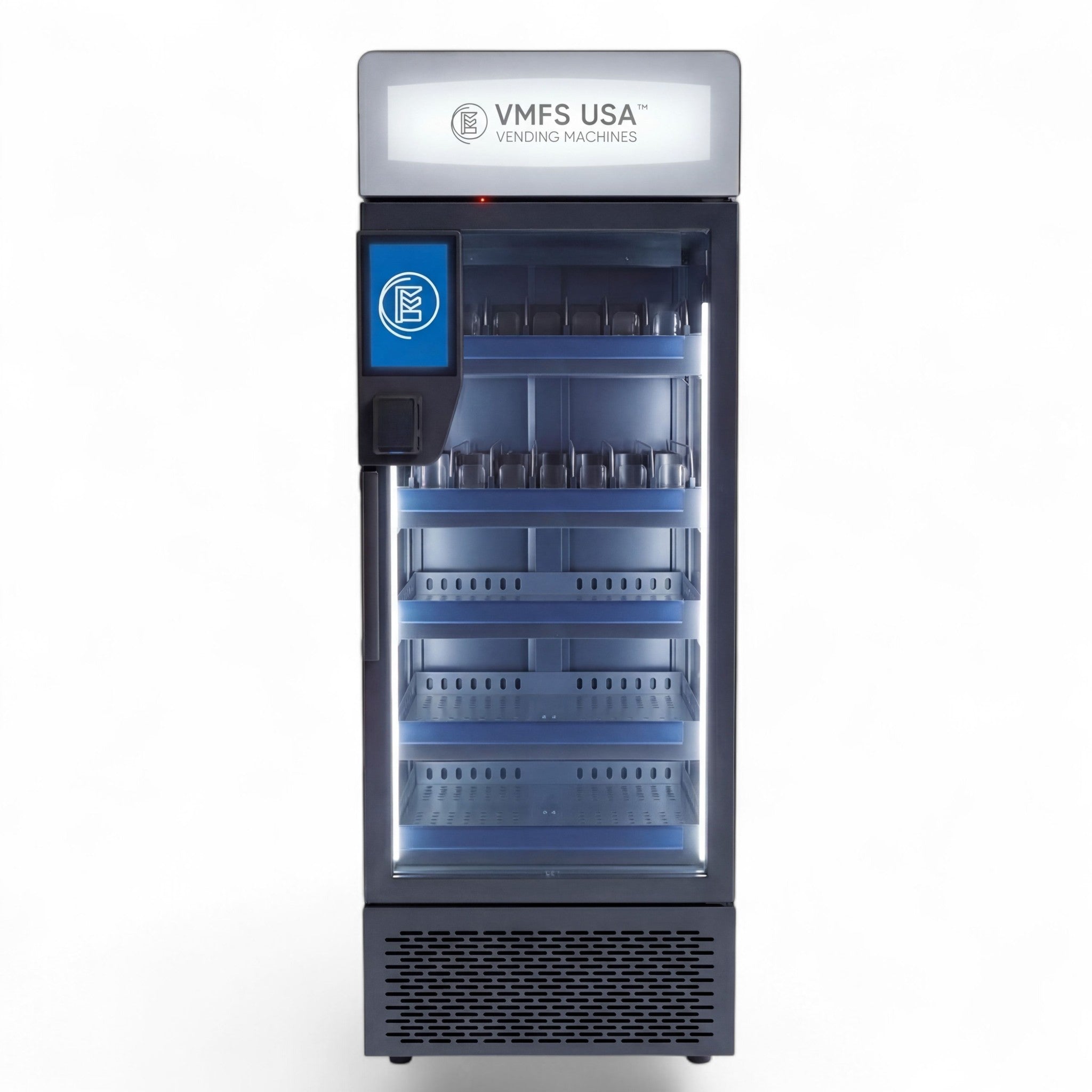
- Temperature-adjustable compartments
- Fresh food compliance levels
Fresh food systems require stricter cooling control.
8. Specialty & Innovative Configurations
VMFS systems can support:
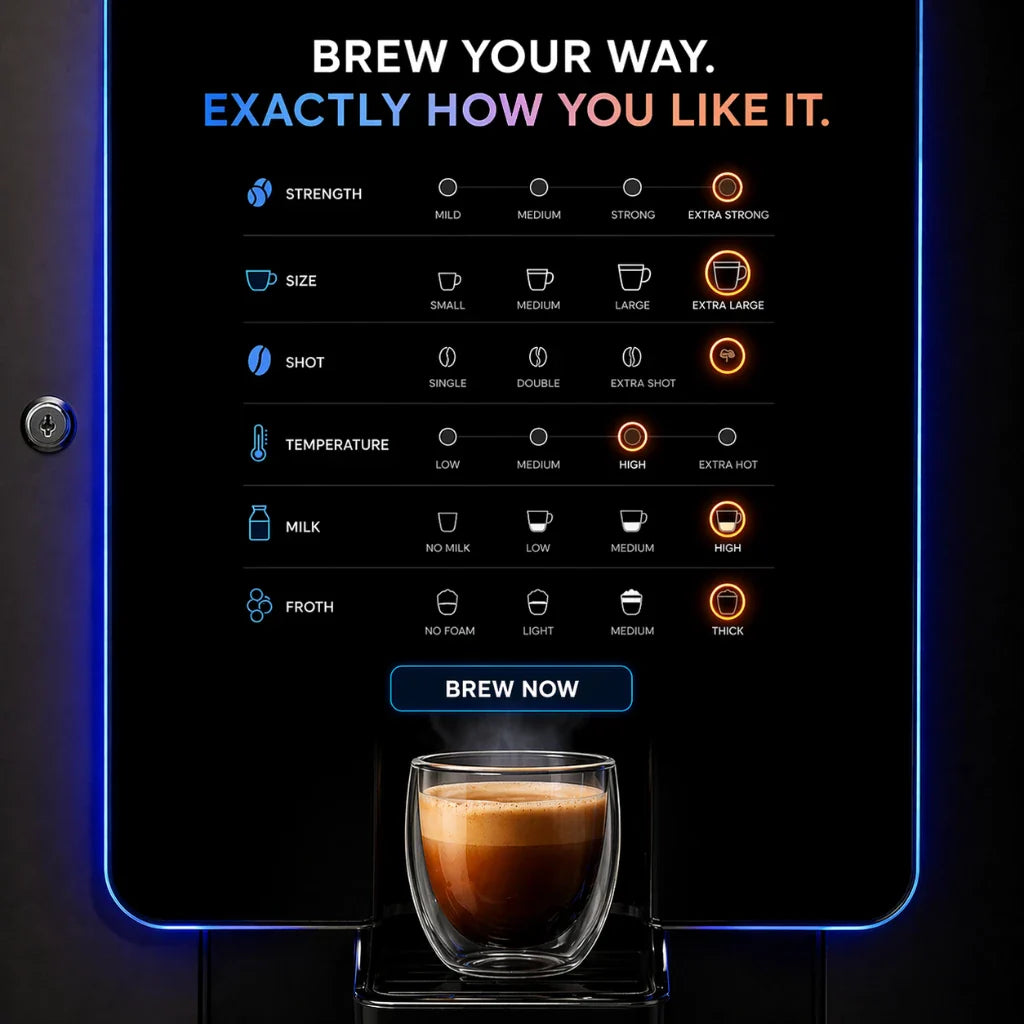
- Coffee modules
- Fresh food vending
- Pizza systems
- High-ticket retail
- Electronics
- Collectibles
- Niche retail categories
Not all machines are built for all products.
Product category determines internal configuration.
9. Custom Manufacturing (Advanced Projects)
For enterprise or specialty deployments, VMFS can support:
- Custom cabinet dimensions
- Specialized dispensing systems
- Branded exterior shells
- Unique product architecture
- White-label systems
These projects typically require:
- Design approval
- Engineering timeline
- Longer lead times
- Minimum production requirements
Advanced customization is a structured process — not an instant modification.
10. Lead Time Expectations
Customization may affect production timelines.
Typical lead time ranges:
- Standard configuration: 4–6 weeks
- Custom wrap only: +1–2 weeks
- Advanced system modification: 6–12+ weeks
- Fully custom builds: project-based timeline
Plan accordingly.
11. What Cannot Be Customized
To set expectations clearly:
- Structural frame dimensions have limits
- Power requirements must remain compliant
- Safety certifications cannot be altered
- Internal mechanical systems follow tested specifications
Customization must operate within engineering standards.
12. How to Choose the Right Customization Level
Ask:
- Is branding important in this location?
- Am I selling premium or high-ticket items?
- Is this an enterprise deployment?
- Is this machine indoors or outdoors?
- Do I need compliance hardware?
Over-customizing for a basic warehouse placement may not increase ROI.
Match customization to strategy.
13. Final Thought
Customization should support your business model — not complicate it.
Start simple if you are new.
Scale sophistication as you grow.
A well-configured system looks intentional, operates efficiently, and aligns with your long-term strategy.

Share:
How Modern Vending Becomes a Managed Retail System