


The question every serious buyer asks before committing is simple: will this machine make money?
The answer depends on your product category, your location, your margin structure, and how well the machine is configured and managed. But it is absolutely calculable - and for businesses that get those variables right, a custom vending machine generates returns that a standard machine cannot match.
This guide breaks down exactly how ROI works for custom machines - including real numbers by industry, the two revenue models most operators use, and a straightforward formula you can apply to your own product and location scenario. If you are still in the early evaluation stage and want to understand the full buying picture first, the custom vending machine buyer guide is the right place to start before working through the numbers here.
Why ROI Looks Different for Custom vs Standard Machines
A standard vending machine generates revenue from product sales only. That is the entire model.
A custom vending machine generates revenue from two sources simultaneously - and this is the fundamental difference in the ROI calculation.
| Revenue Source | Standard Machine | Custom Machine |
|---|---|---|
| Direct product sales | Yes | Yes |
| Brand visibility and awareness | No | Yes - every interaction |
| Screen advertising revenue | No | Yes - where applicable |
| Premium price positioning | Limited | Yes - brand justifies margin |
| Customer data and insights | No | Yes - via cloud telemetry |
The branded machine commands a higher price point for the same or similar product. The screen earns between transactions. The cloud data tells you which products move, when, and at what velocity - so you optimize without guessing. None of these are available on a standard machine.
The Two Revenue Models
Model 1 - Direct Product Revenue
The core model. You stock the machine, customers buy, you collect the margin between your cost price and your sell price.
The variables that determine this revenue stream:
- Average transaction value: What does a typical customer spend per visit?
- Daily transaction volume: How many sales does the location generate per day?
- Gross margin per transaction: What percentage of each sale is profit after product cost?
- Machine uptime: How reliably does the machine operate without faults or empty columns?
Model 2 - Indirect Branding Value
This is harder to put an exact number on but very real in its commercial impact.
Every customer who walks past your custom vending machine - whether they buy or not - receives a brand impression. In a high-footfall location, that is hundreds or thousands of impressions per day from a single machine. Compare that to the cost-per-impression of digital advertising, outdoor media, or in-store display, and the machine's value as a brand channel becomes tangible.
Brands using AI-powered vending machines take this further - using intelligent screen content to deliver contextually relevant brand messaging based on location, time of day, and customer behaviour patterns. The machine earns attention even when it is not processing a transaction.
ROI Breakdown by Industry
ROI varies significantly by product category. Here is a realistic picture across the main custom vending industries.
Beauty and Hair Products
| Metric | Typical Range |
|---|---|
| Average transaction value | $18 - $45 |
| Gross margin per transaction | 55% - 70% |
| Daily transactions (good location) | 15 - 40 |
| Monthly gross revenue | $8,100 - $54,000 |
| Typical payback period | 8 - 18 months |
Beauty vending performs strongly in salons, hotels, gyms, and airport locations where customers have both the need and the budget for impulse or convenience beauty purchases. Hair extensions, skincare travel kits, and cosmetics all carry the margin structure that makes vending genuinely profitable at moderate transaction volumes.
Cannabis and CBD
| Metric | Typical Range |
|---|---|
| Average transaction value | $25 - $80 |
| Gross margin per transaction | 40% - 65% |
| Daily transactions (dispensary) | 20 - 60 |
| Monthly gross revenue | $15,000 - $144,000 |
| Typical payback period | 6 - 14 months |
Cannabis and CBD represent some of the strongest unit economics in vending, particularly in dispensary environments where the machine handles overflow traffic and extends operational hours. Age verification integration is a requirement in this category - but it is a solved problem at the hardware level and does not materially affect the customer experience when implemented well.
For healthcare and pharmaceutical dispensing applications where compliance requirements are more extensive, the complete customized vending machine buyer guide covers the specific regulatory and hardware considerations that affect ROI calculations in that space.
Trading Cards and Collectibles
| Metric | Typical Range |
|---|---|
| Average transaction value | $5 - $25 |
| Gross margin per transaction | 35% - 55% |
| Daily transactions (retail/card shop) | 20 - 80 |
| Monthly gross revenue | $3,000 - $60,000 |
| Typical payback period | 10 - 20 months |
Transaction volume is the key driver in trading card vending. Lower average order values are offset by high purchase frequency - repeat buyers and impulse purchases from foot traffic. The strongest locations are card shops, gaming stores, hobby retailers, and any venue with a collector customer base.
Apparel and Merchandise
| Metric | Typical Range |
|---|---|
| Average transaction value | $20 - $60 |
| Gross margin per transaction | 50% - 75% |
| Daily transactions (event / retail) | 10 - 50 |
| Monthly gross revenue | $6,000 - $90,000 |
| Typical payback period | 8 - 16 months |
Apparel and merchandise vending works best as a brand activation channel. A custom vending machine deployed at an event, stadium, or flagship store location can generate compressed high-volume sales during peak periods. The branded machine itself also functions as a marketing asset in the space - not just a transaction point.
How to Calculate Your Expected ROI
Use this straightforward model to build your own projection before you invest.
The Foot Traffic Formula
Start with your location's realistic foot traffic:
- Estimate daily foot traffic past the machine location
- Apply a conservative conversion rate: 1% - 3% for most locations, up to 5% for targeted category placements
- Multiply by your average transaction value
- Multiply by your gross margin percentage
- Multiply by 30 for monthly gross profit
Example: 500 daily foot traffic x 2% conversion = 10 daily transactions x $30 average order x 60% margin = $180 daily gross profit x 30 days = $5,400 monthly gross profit.
At that rate, a $15,000 machine investment has a payback period of approximately 2.8 months at that location. Adjust the variables for your own scenario.
The Margin and Product Mix Model
If you are stocking multiple product types at different price points, build a weighted average:
| Product | Price | Cost | Margin | % of Sales Mix | Weighted Contribution |
|---|---|---|---|---|---|
| Product A | $30 | $10 | 67% | 40% | $8.00 |
| Product B | $20 | $9 | 55% | 35% | $3.85 |
| Product C | $15 | $8 | 47% | 25% | $1.75 |
| Blended margin per transaction | $13.60 | ||||
Use your blended margin figure in the foot traffic formula for a more accurate projection across a mixed-product machine.
What Affects ROI Most - The 5 Key Variables
- Location quality: The single biggest variable. A well-placed machine in high-footfall, high-intent traffic outperforms a poorly placed machine in any category. This is why placement strategy deserves real investment - Vplaced takes a data-driven approach to matching machine placement with locations that align with your product category, customer profile, and revenue targets.
- Product margin: Higher-margin products compress your payback period significantly. A machine selling $40 margin-per-transaction products pays back twice as fast as one selling $20 margin-per-transaction products at identical transaction volumes.
- Machine uptime: Every hour a machine is offline or experiencing vend failures is lost revenue. Cloud-connected machines with remote monitoring via VMFS Cloud catch faults before they become extended downtime events - protecting revenue consistency across your fleet.
- Restocking efficiency: Running columns to empty before restocking is a common and avoidable revenue leak. Remote inventory monitoring tells you which columns are running low before they run out - so you restock on schedule, not in response to a complaint.
- Pricing strategy: Custom machines in branded environments support premium pricing that identical products in unbranded standard machines cannot. The brand context created by a well-designed custom vending machine justifies a price premium that directly improves your margin per transaction.
Realistic Timeline to Recoup Your Investment
| Machine Investment | Monthly Net Profit | Payback Period |
|---|---|---|
| $8,000 | $2,000 | 4 months |
| $12,000 | $2,500 | 4.8 months |
| $18,000 | $3,500 | 5.1 months |
| $25,000 | $4,500 | 5.6 months |
| $35,000 | $5,500 | 6.4 months |
These are illustrative figures based on moderate-performing locations in established categories. Your actual payback period depends on the variables covered above. The important point: higher-specification machines do not proportionally increase payback time, because they generate higher revenue through better conversion, premium pricing, and reduced operational downtime.
Structuring the Investment
The upfront cost of a custom machine build does not have to be a single capital outlay. For businesses that want to deploy now and manage the cost across manageable terms, flexible financing solutions allow you to launch your machine, generate revenue from day one, and service the investment cost from the returns the machine produces - rather than from existing working capital.
This approach is particularly useful for multi-machine deployments, where the revenue from an initial machine can partially fund the next one while financing structures the remainder.
ROI Across Machine Categories
The ROI framework above applies across the full range of custom machine types. For specific category configurations worth considering alongside your product planning:
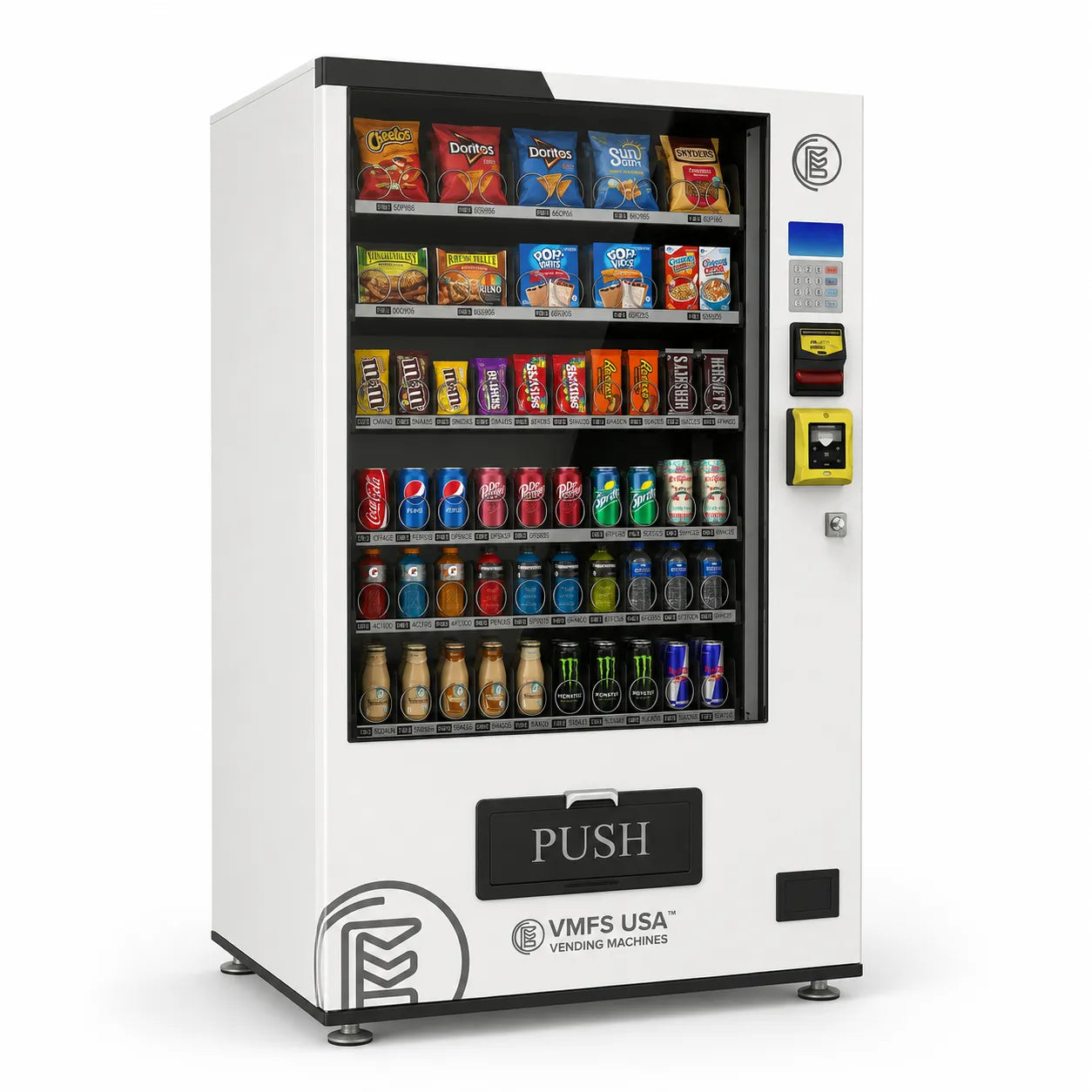
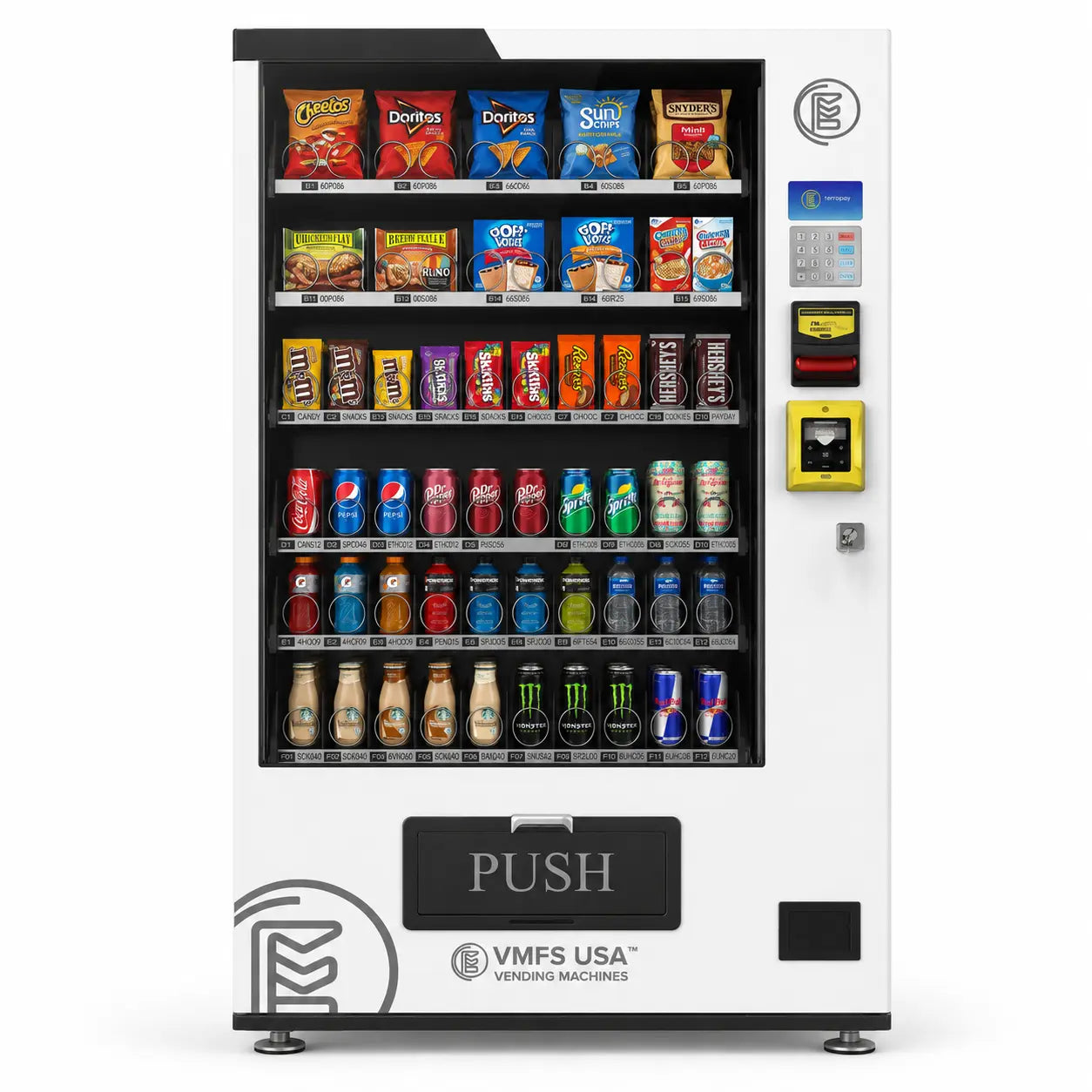
- Combo vending machines allow you to stock multiple product categories in a single machine - increasing average transaction potential and reducing the number of machines needed to serve a diverse product mix at a single location.
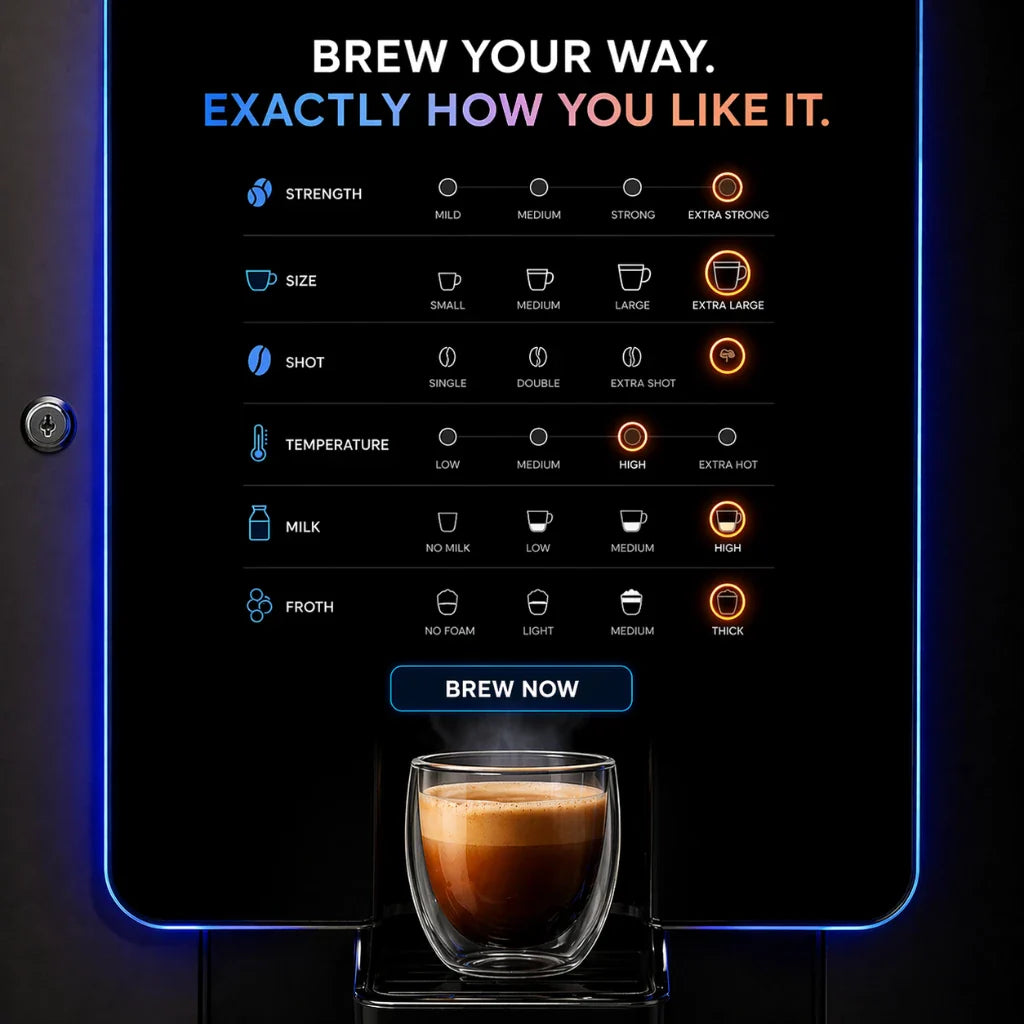
- Coffee vending machines in workplace and hospitality environments generate consistent high-frequency, lower-ticket revenue streams that produce strong monthly returns through volume rather than margin - a different ROI profile worth modelling separately if hot beverages are part of your consideration.
Frequently Asked Questions
What is a realistic ROI expectation for a first custom vending machine?
For a well-placed machine in a suitable category with a sound product margin, most operators see payback within 6 to 18 months. The range is wide because location quality and product margin are the two dominant variables. A strong location with 60%+ margin products can achieve payback significantly faster than the midpoint suggests.
Does the custom branding actually affect revenue?
Yes, in two measurable ways. First, a branded machine commands a premium price that an identical product in a generic machine cannot. Second, branded machines generate higher conversion rates in high-footfall environments because they communicate product value and brand trust at a glance. The design is not decorative - it is functional.
How do I know if my location is good enough to justify a custom machine?
Run the foot traffic formula with conservative conversion assumptions before committing. If the numbers do not work at 1% conversion, the location is unlikely to generate acceptable returns regardless of machine quality. If they work at 1% and improve materially at 2-3%, you have a viable location with upside.
What ongoing costs reduce my net ROI?
Key ongoing costs to factor in: product restocking and cost of goods, location rent or revenue share if applicable, routine maintenance, software or cloud subscription fees, and wrap replacement over time. Net ROI is gross margin minus these operating costs - model both figures, not just gross revenue.
Can I improve ROI after the machine is deployed?
Yes. The most effective levers post-deployment are: product mix optimization based on sales data, pricing adjustments, location moves if the initial placement underperforms, and screen content updates to improve conversion. All of these are accessible remotely on a cloud-connected machine without physical intervention.
Where can I get a more detailed cost breakdown before I commit?
The custom vending machine pricing guide covers cost by specification tier, technology level, and product category - giving you the input numbers you need to build a complete ROI model before your first manufacturer conversation. If you want to step back further and review the full buying decision, the complete custom vending machine buyer guide covers everything from product fit and manufacturer selection through to realistic cost and timeline expectations.
Share:
Custom Vending Machine Development Process: Step-by-Step Guide
How Much Does a Custom Vending Machine Cost? 2026 Price Guide