


Pricing is the question every serious buyer wants answered before anything else - and the one most manufacturers stay vague about until you are deep into a sales conversation.
This guide gives you real numbers. Researched price ranges by specification tier, an honest breakdown of every cost factor, a category-by-category reference table, and the ongoing costs most buyers miss entirely.
By the end, you will have accurate benchmarks to bring into any conversation about investing in a custom vending machine - and a clear picture of what actually moves the price at each level.
Why Custom Vending Machine Prices Vary So Much
A custom vending machine is not a product with a fixed price tag. It is a configured build where every specification decision affects the final number.
Industry data shows custom machines ranging from as low as $3,000 for compact touchscreen units to over $200,000 for fully bespoke, ground-up engineering projects. The gap is not random - it reflects real differences across five cost layers:
- Machine size, cabinet engineering, and internal configuration
- Screen type, size, and interface technology
- Branding, wrap quality, and finish
- Software, cloud connectivity, and payment integration
- Regulatory compliance features (age verification, audit logging)
Understanding which of these apply to your use case is what produces an accurate budget - rather than anchoring to an average that may be completely irrelevant to your actual build.
The 5 Main Cost Factors - With Real Numbers
1. Machine Size and Cabinet Configuration
Cabinet size drives the foundational cost of any build. Larger cabinets require more material, more internal components, and more engineering time.
Key variables that affect size cost:
- Overall cabinet height, width, and depth
- Number of product columns and row configuration
- Display window size and panel count
- Single temperature zone vs multi-zone (ambient + chilled)
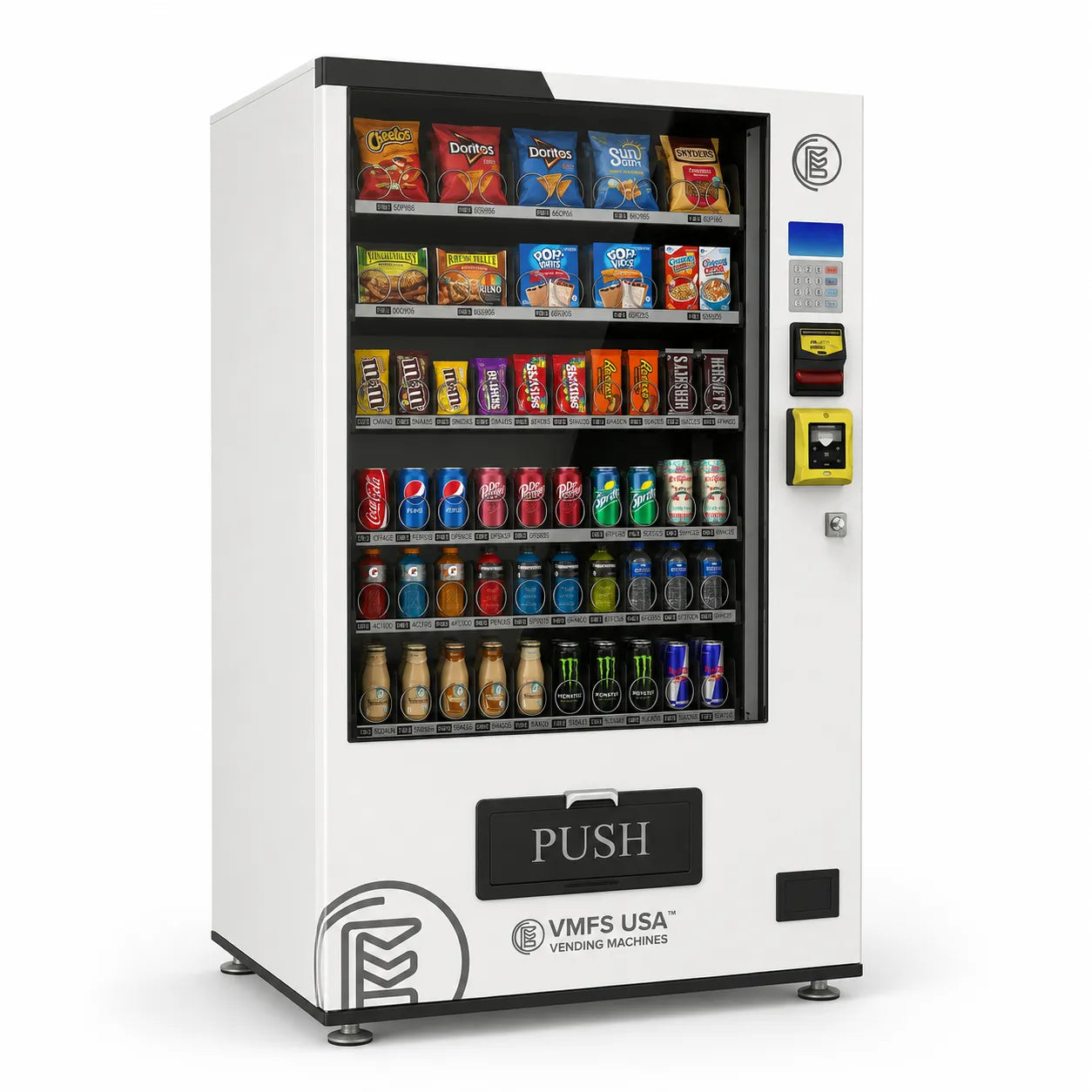
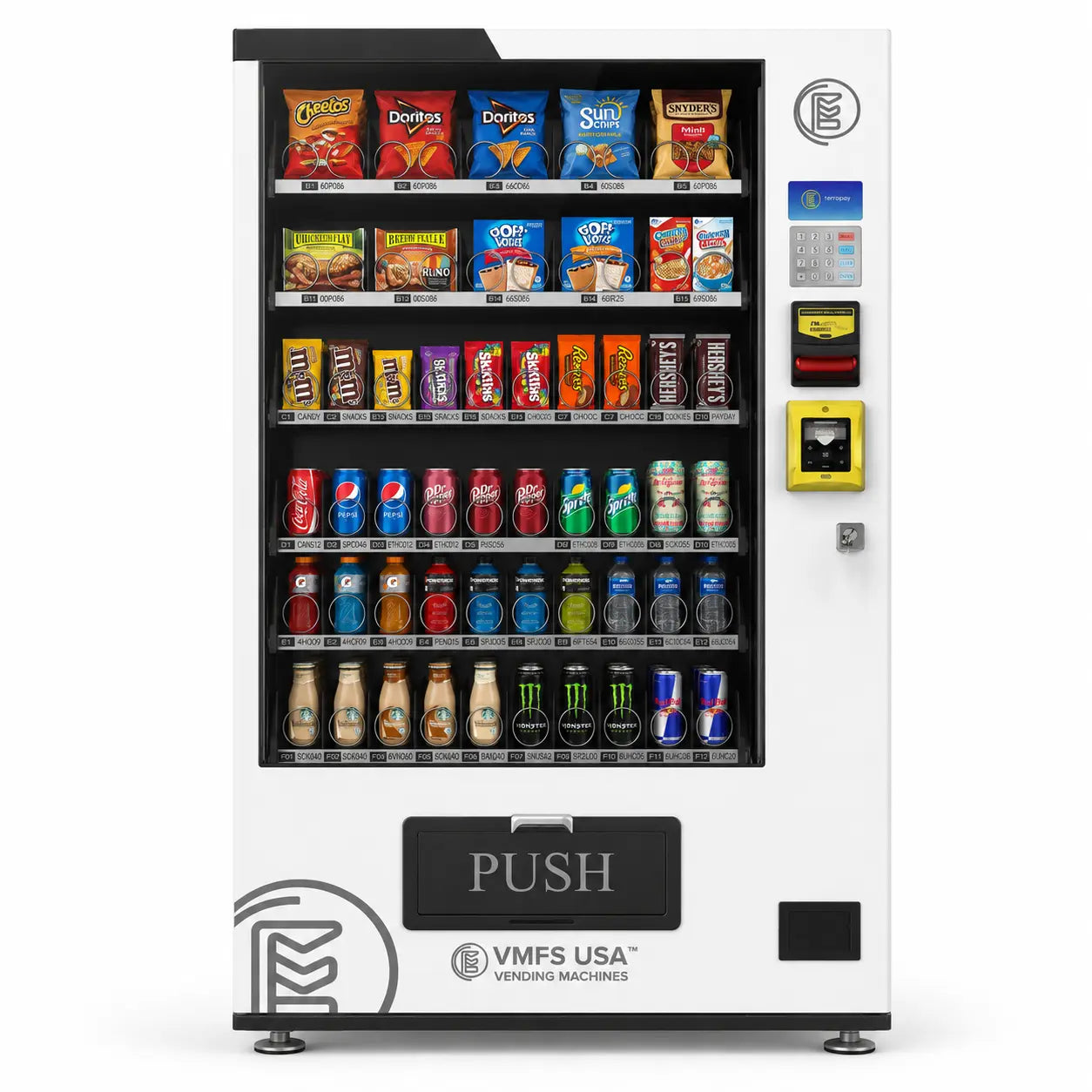
For operators who need to serve both ambient and temperature-controlled products from one location, a combo vending machine handles multiple product categories and temperature zones within a single footprint - reducing the cost and space of running two separate machines while maintaining full product range.
2. Branding, Wrap Design, and Finish
Wrap costs are far more accessible than most buyers expect. Real market pricing in 2025:
| Wrap Type | Typical Cost | Notes |
|---|---|---|
| Basic vinyl panel wrap (per side) | $150 - $250 per side | Print and ship, self-install |
| Full machine commercial wrap | $500 - $1,500 | Professional grade, all surfaces |
| Pantone-matched commercial wrap | $800 - $2,000 | Colour-accurate, brand-critical deployments |
| Premium specialty vinyl (chrome, reflective, matte) | $1,200 - $3,000+ | High-visibility, flagship activations |
Wraps are renewable. When you run a new campaign, refresh the wrap - not the machine. Factor a wrap replacement every 2 to 4 years into your ongoing operating cost rather than treating it as a one-time expense.
3. Screen and Technology Level
Screen specification is one of the most significant individual cost items in a custom build. Based on 2025 market data, touchscreen vending machines start from around $3,100 for compact units and reach $15,500 for larger models with advanced displays and smart software.
| Screen Type | Machine Price Impact | Best For |
|---|---|---|
| No screen (button interface) | Base machine cost only | Single-product, low-complexity builds |
| Compact touchscreen (10-15 inch) | Entry-level range ($3,100 - $5,000) | Basic UI, small footprint machines |
| Mid-size touchscreen (17-22 inch) | Mid-range ($5,000 - $10,000) | Multi-product, branded interface |
| Large touchscreen (24-55 inch) | $8,000 - $15,500 | High-SKU, premium brand experience |
For brands deploying at the premium end, AI grab-and-go vending machines use computer vision and intelligent product recognition to eliminate the traditional vend interface entirely - customers tap, open, take, and walk away. The machine handles identification and billing automatically.
4. Software, Cloud, and Payment Integration
This is where the previous version of this guide had inaccurate numbers. Here are the real figures based on current market pricing:
| Software / Feature | One-Time Cost | Ongoing Monthly Cost |
|---|---|---|
| Cloud monitoring and telemetry platform | Often included in machine cost | $16 - $50 per machine per month |
| Vending management software (entry-level) | $0 - $300 setup | $20 - $50 per month |
| Vending management software (enterprise) | $300 - $1,000 setup | $50 - $150+ per month |
| Custom UI / branded interface design | Included or $500 - $2,000 | Update fees where applicable |
| Cashless payment hardware | Included in most modern machines | 1.5 - 3% per transaction |
| Age verification integration | $1,500 - $4,000 | Compliance update fees |
Cloud monitoring is significantly more affordable than most buyers anticipate - platforms like Vendron offer advanced monitoring from around $16 per machine per month, with enterprise-level solutions topping out around $150 per month. The operational savings from reduced downtime and smarter restocking schedules typically cover this cost within the first month of use.
VMFS Cloud connects your entire machine fleet to a unified monitoring and management platform - giving you real-time sales data, live stock levels, machine health alerts, and operational visibility across every location from a single dashboard. For operators managing multiple machines, this is not an optional add-on. It is what makes fleet management scalable without proportionally increasing operational headcount.
5. Shipping, Installation, and Setup
These costs are regularly excluded from headline machine prices. Always confirm what is included before signing:
- Domestic freight: $200 - $1,000 depending on machine size and distance
- White-glove delivery and installation: $500 - $2,000
- Network and cloud activation: Often included - confirm explicitly
- Site survey: Variable - sometimes included in placement consultation
Cabinet dimensions and delivery requirements should be confirmed against your specific location before ordering. Vplaced provides placement analysis that ensures your machine specification - footprint, power requirements, and positioning - is matched to environments that support both the delivery logistics and the revenue targets you are planning for.
Custom Vending Machine Price Ranges by Tier
Entry-Level Custom: $3,000 - $9,000
What you get:
- Standard cabinet with basic custom configuration
- Full vinyl wrap with brand colours and logo
- Compact touchscreen or button interface
- Cash and card payment
- Basic software - limited or no cloud connectivity
Best for: Testing the concept, single-product or low-SKU deployments, short-term event activations, or cases where branding is the primary customization goal.
Mid-Range Custom: $9,000 - $15,500
What you get:
- Custom or semi-custom cabinet configuration
- Commercial-grade Pantone-matched wrap
- Mid to large touchscreen with branded UI
- Full payment suite including contactless and mobile wallets
- Cloud connectivity and remote monitoring
- Inventory management software
Best for: Multi-SKU ranges, brand-forward deployments, and operators planning to scale to multiple locations where remote fleet management becomes operationally important. This tier covers the majority of serious custom vending deployments.
High-End and Smart Machines: $15,000 - $60,000+
What you get:
- Fully bespoke cabinet engineering
- Large-format or full-front touchscreen
- Custom UI with advertising panels and content management
- Age verification integration
- AI-driven cashierless or smart product recognition technology
- Full telemetry analytics dashboard
- Multi-temperature configurations where required
Best for: Flagship retail activations, regulated product categories (cannabis, vape, CBD), high-footfall premium environments, and brands where the machine is a primary customer-facing brand asset.
For completely bespoke ground-up builds with novel engineering requirements, costs can reach $200,000+ - but this applies to purpose-built machines for highly specific use cases, not standard custom branded deployments.
Cost by Product Category - Reference Table
| Product Category | Typical Tier | Realistic Cost Range | Primary Cost Driver |
|---|---|---|---|
| Trading cards and collectibles | Entry to mid | $4,500 - $12,000 | Dispense mechanism precision |
| Beauty and skincare | Mid-range | $8,000 - $15,500 | Display window + branded touchscreen |
| Hair extensions and wigs | Mid to high | $9,000 - $18,000 | Cabinet height + custom shelf config |
| Apparel and merchandise | Mid-range | $8,000 - $16,000 | Cabinet width + column configuration |
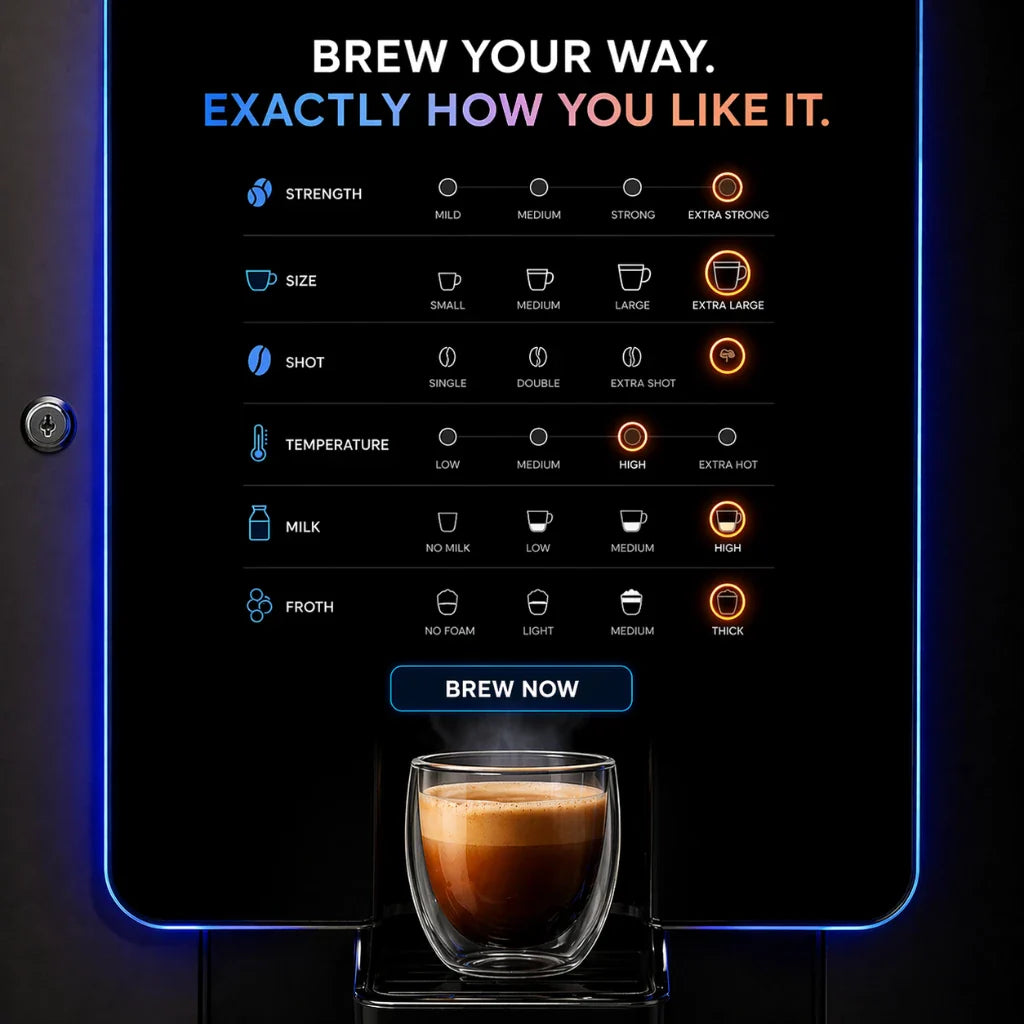
| Coffee and hot beverages | Specialist | $5,000 - $15,000 | Brewing hardware + temperature systems |
| Vape and e-cigarettes | Mid to high | $3,000 - $20,000 | Age verification integration |
| CBD and hemp | Mid to high | $10,000 - $22,000 | Compliance software + age gate |
| Cannabis and THC | High-end compliance | $5,000 - $45,000 | Full compliance hardware + audit logging |
| Medical and pharmaceutical | High-end compliance | $20,000 - $60,000+ | Regulatory compliance + audit software |
These are build cost ranges, not total investment figures. Add freight, installation, software subscriptions, and initial product stock to get your full launch budget.
Hidden Costs Most Buyers Overlook
The machine purchase price is one number. Total cost of ownership over 3 to 5 years is a very different number - and the gap catches buyers who have not planned for the full picture.
Maintenance and Repairs
- Annual preventive maintenance: $200 - $500 per machine
- Component replacements (payment hardware, mechanism parts): $200 - $1,500 per incident
- Software and firmware updates: often included in cloud subscription
Location Fees
- Location commission or revenue share: typically 5% - 25% of gross sales
- Flat monthly location rent: varies significantly by venue type
Restocking and Operations
- Restocking labour and transport per visit
- Product wastage in refrigerated or perishable categories
- Initial stock to fill machine at launch: $200 - $800 depending on product
Insurance and Compliance
- Liability insurance: $300 - $1,200 annually
- Business license: $50 - $500 depending on state and category
Mapping all of these against projected revenue using the foot traffic and margin model in the custom vending machine ROI guide gives you a real net profitability figure - which is the number that actually determines whether your investment makes sense.
Is Financing Available for Custom Vending Machines?
Yes - and for many buyers it is the more commercially sound route than a single capital outlay.
Flexible financing solutions allow you to structure the investment across manageable monthly terms. The machine generates revenue from day one - meaning the financing cost is partially or fully offset by operational returns while you retain working capital for other business priorities.
For multi-machine deployments, this approach allows you to scale progressively. The returns from an initial unit help fund the next while financing structures the remainder - without requiring disproportionate capital exposure at any single point.
Price vs Value - What Higher Spec Actually Gets You
The question is not which machine is cheapest. It is which specification generates the strongest return at your specific location, with your specific product and margin structure.
| Feature | Commercial Impact |
|---|---|
| Branded touchscreen UI | Supports premium pricing - brand context justifies higher margin |
| Pantone-matched wrap | Brand consistency across locations and over time - no visual drift |
| Cloud monitoring | Catches faults before downtime - protects revenue at $16+ per month |
| Full cashless payment | Cashless payment can increase sales 20-30% vs cash-only machines |
| Age verification | Unlocks high-margin regulated categories unavailable to standard machines |
What to Prepare Before Getting a Quote
A specific brief produces an accurate quote. A vague inquiry produces a vague range. Before approaching any manufacturer, prepare:
- Product dimensions, weight, and storage requirements
- Number of SKUs and required stock capacity
- Location type, available footprint, and power supply details
- Brand guidelines including Pantone codes
- Screen size preference and payment methods required
- Any regulatory requirements for your product category
- Target launch date
If you are still working through whether a custom machine is the right investment for your business - including how to evaluate manufacturers, what the development process involves, and what realistic timelines look like - the complete custom vending machine buyer guide covers every decision point before you reach the pricing conversation.
For Seaga vending machines - a well-established hardware platform frequently used as the base for custom branded deployments - configurations and pricing vary by model and specification. These represent a cost-effective route to a professionally branded machine without full ground-up engineering cost.
Frequently Asked Questions
What is the most affordable way to get a custom vending machine?
A standard cabinet with a custom vinyl wrap is the lowest-cost entry point - typically $3,000 to $6,000 all-in at the entry tier. This gives you branded visuals without bespoke engineering. If your product fits a standard shelf configuration and your operational needs are straightforward, this is a legitimate starting point. If your product requires specific dispensing mechanics, temperature control, or compliance software, the entry-level spec will underperform regardless of its lower cost.
How much does cloud monitoring actually cost per month?
Much less than most buyers expect. Entry-level cloud monitoring platforms start from around $16 to $20 per machine per month. Mid-range enterprise platforms run $50 to $150 per month. Many machine manufacturers include basic cloud connectivity in the machine price - confirm this explicitly when getting quotes. The operational savings from avoided downtime and smarter restocking typically cover the subscription cost within the first month.
Can I update the machine's branding UI myself after purchase?
Yes, on cloud-connected machines. Screen content, pricing, promotional offers, and branded imagery can typically be updated remotely through the machine's management dashboard without a site visit or manufacturer involvement. Physical wrap changes require a new print and installation - your manufacturer should retain your Pantone specifications for consistent reprinting.
Are there ongoing costs after I buy the machine?
Yes. Factor in cloud monitoring ($16 - $150 per month), payment processing fees (1.5 - 3% per transaction), location commission (5 - 25% of gross sales), annual maintenance ($200 - $500), and wrap replacement every 2 to 4 years. Model these against your projected revenue to arrive at a real net return figure before committing to any machine specification.
How does US-built compare to overseas machines on cost?
Overseas machines typically cost 20 - 40% less at the unit level. However, freight, import duties, longer lead times, and significantly more complex post-delivery support reduce that gap considerably. For brand-critical machines where downtime has a direct revenue impact, the after-sales support trade-off deserves careful evaluation against the unit cost saving.
How do I know if the machine cost is justified for my business?
Model the machine cost against your projected revenue using the foot traffic formula and product margin calculation in the custom vending machine ROI guide. If the payback period at conservative conversion assumptions is acceptable, the investment is justified. If not, the issue is usually location quality, product margin, or specification mismatch - all of which are solvable before you commit.
Share:
Custom Vending Machine ROI Explained: Real Numbers, Real Profits
How to Choose the Best Vape Vending Machine: A Buyer's Guide