


A commercial laundry vending machine costs between $450 and $4,500 depending on dispensing technology, product capacity, and integrated payment mechanisms. Entry-level mechanical single-column soap dispensers start at $450 to $700, multi-column mechanical units cost $900 to $2,200, and high-capacity electronic or smart glass-front laundry vending systems range from $2,500 to $4,500+.

Beyond the base hardware purchase price, commercial operators must account for freight shipping ($150–$350), security mounting hardware ($100–$250), and initial detergent inventory ($100–$400). A complete initial deployment typically requires a total capital expenditure between $800 and $5,200 per location.
Average Cost Breakdown by Laundry Vending Machine Type
Commercial laundry dispensers vary widely in engineering complexity, ranging from simple mechanical drop-shelf units to automated smart machines. Selecting the correct model requires balancing initial capital constraints with expected daily vend volume.
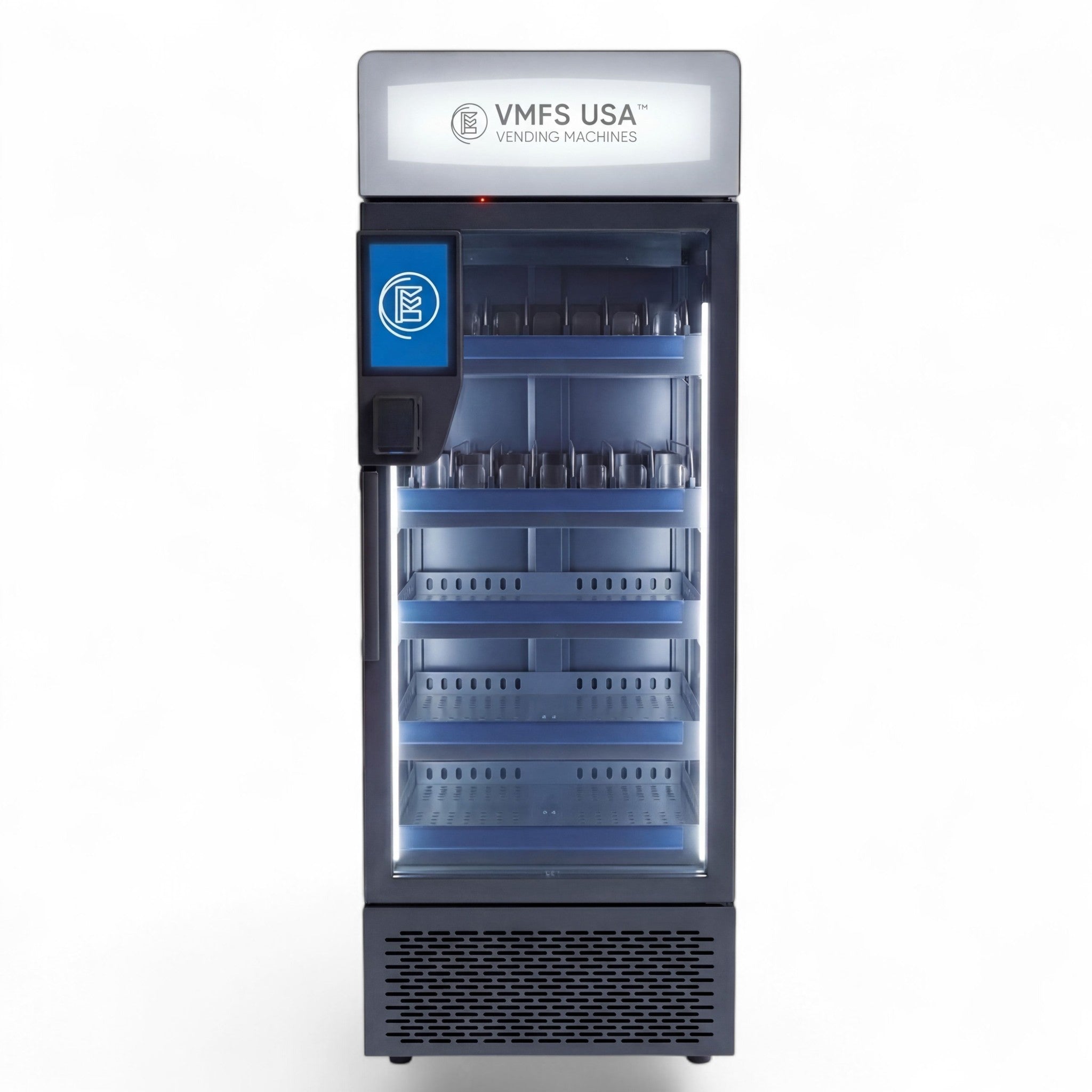
For operators evaluating automated dispensing hardware, VMFS USA provides commercial-grade distribution systems designed specifically for high-traffic laundry environments.
Mechanical Soap Dispensers ($450 – $2,200)
Mechanical laundry vending machines operate without external electrical power, utilizing mechanical coin drop mechanisms and gravity-fed drop shelves. Single-column models dispense one product type (such as single-use Tide detergent boxes) and cost $450 to $700.
Multi-column mechanical units feature 2 to 8 independent vertical columns, allowing operators to sell detergent, fabric softener, bleach, and dryer sheets simultaneously. These multi-column dispensers cost between $900 and $2,200, making them the industry standard for traditional self-service laundromats.
Electronic Glass-Front Laundry Machines ($2,200 – $3,500)
Electronic laundry machines require a standard 110V electrical outlet and feature internal motor-driven spirals or conveyer belts to dispense products. Prices range from $2,200 to $3,500 depending on coil configuration and physical cabinet size.
These units accommodate larger, higher-margin inventory items, including full-sized liquid detergent bottles, bleach jugs, and reusable laundry bags. Electronic control boards enable variable pricing per selection, allowing operators to maximize profit margins across different brand offerings.
Smart Touchscreen & AI Laundry Vending Systems ($3,500 – $4,500+)
Smart laundry vending machines incorporate dynamic touchscreen interfaces, automatic age/identity verification, remote inventory telemetry, and credit card processors. These advanced units cost $3,500 to $4,500+ and are tailored for upscale apartment complexes, hotel laundry facilities, and modern laundromat lounges.
Modern units like the laundry vending machine system provide real-time reporting on product sales, stock levels, and hardware diagnostic alerts, minimizing machine downtime and eliminating manual coin collection routes.
Key Factors Driving Equipment Pricing
Equipment prices are directly influenced by structural build quality, capacity metrics, security features, and onboard payment hardware. Understanding these pricing variables prevents overpaying for unnecessary specifications or under-specifying hardware for high-volume sites.
Prior to acquiring equipment, reviewing a comprehensive guide on buying a vending machine helps clarify how component specifications directly impact long-term operational profitability.
1. Payment Hardware and Cashless Systems
Base mechanical machines only accept physical quarters via coin chutes, adding no extra electronic hardware cost. Upgrading an electronic machine to accept credit cards, mobile payments (Apple Pay/Google Pay), and contactless tap requires a card reader and telemetry module, which adds $300 to $500 per machine plus monthly cellular gateway fees ($10–$15/month).
2. Cabinet Gauge and Vandalism Protection
Laundry rooms in unmonitored multi-family housing or 24-hour laundromats face elevated risks of theft and physical vandalism. Heavy-duty 14-gauge cold-rolled steel cabinets equipped with high-security T-handle locks, punch-proof coin chutes, and impact-resistant polycarbonate glass panels increase machine cost by $250 to $600, but safeguard cash receipts and inventory.
3. Product Capacity and Column Flexibility
Larger shelf capacities reduce restocking visit frequency and route labor costs. A 2-column mechanical dispenser holding 46 boxes costs significantly less than an 8-column unit holding 184 boxes. High-capacity configurations require larger cabinet footprints, reinforced wall-mounting brackets, and heavier internal drop mechanisms.
4. Remote Telemetry and Cloud Management
Integrated machine management software enables automated restock alerts and digital sales tracking. Incorporating smart telemetry hardware into electronic machines adds $200 to $400 to the initial purchase price, but significantly lowers route management costs.
Mechanical vs. Electronic Laundry Dispensers
Choosing between mechanical and electronic equipment impacts operational flexibility, maintenance frequency, and payment options. Each design offers distinct trade-offs regarding upfront cost and long-term revenue potential.
Operators exploring diverse equipment configurations can review various types of vending machines to determine whether wall-mounted dispensers or floor-standing glass-front machines best fit their target floor plan.
| Feature / Metric | Mechanical Dispensers | Electronic Glass-Front Dispensers |
| Average Hardware Cost | $450 – $2,200 | $2,200 – $3,500+ |
| Power Requirements | None (100% Non-Electric) | Standard 110V AC Outlet |
| Accepted Payment Methods | Coins / Quarters Only | Credit Cards, Mobile Pay, Cash, Bills |
| Product Package Limits | Standard Vending Cartons Only | Flexible (Bottles, Bags, Boxes, Pods) |
| Pricing Flexibility | Fixed (Adjusted via coin mechanism swap) | Digital (Adjustable per selection instantly) |
| Maintenance Complexity | Low (Purely mechanical linkages) | Moderate (Motors, sensors, control board) |
Mechanical Laundry Dispensers
-
Pros: Operates without electricity; highly durable steel construction; minimal maintenance required; lower initial purchase price.
-
Cons: Restricted to quarters; limited to uniform rectangular box packaging; price changes require physical coin mechanism replacement.
Electronic Laundry Dispensers
-
Pros: Accepts credit cards and mobile pay; accommodates bottles and irregular packaging; enables remote sales and inventory monitoring.
-
Cons: Requires a dedicated power outlet; higher initial capital cost; sensitive to power surges or electrical board failures.
Operators seeking specialized non-traditional dispensing configurations can explore specialty vending machines engineered for unique retail environments.
Ancillary Deployment Costs: Freight, Mounting, and Stocking
The total cost to deploy a laundry vending machine includes shipping, site preparation, installation hardware, and initial product inventory. Budgeting for these operational expenses ensures immediate deployment without capital shortfalls.
Understanding supply chain costs and learning where to buy vending machines enables operators to secure reliable equipment warranties while controlling freight and logistics expenses.

Freight Shipping and Delivery
Commercial laundry dispensers weigh between 40 lbs (single-column mechanical) and 450 lbs (full-sized glass-front units). Freight shipping costs across the continental US range from $150 to $350 depending on liftgate requirements, residential vs. commercial delivery destinations, and carrier distances.
Wall Mounting Brackets and Floor Pedestals
Mechanical laundry dispensers are typically mounted to concrete or drywall studs using heavy-duty masonry anchors or dedicated steel pedestals. Steel mounting brackets cost $50 to $120, while heavy-gauge steel floor pedestals cost $150 to $280. Professional installation labor adds $100 to $250 if performed by an outside contractor.
Initial Inventory Stocking
Filling a laundry vending machine with single-use detergent cartons, fabric softeners, bleach packets, and laundry bags requires an initial inventory outlay. Calculating how much it costs to stock a vending machine shows that initial detergent inventory typically ranges from $100 to $400, yielding a 200% to 300% retail markup upon sale.
Operating Costs, Revenue Splits, and Profit Margins
Laundry vending machines achieve gross profit margins between 60% and 80% due to the low cost of goods sold (COGS) for single-use detergent cartons. Understanding unit economics helps operators forecast net monthly cash flow accurately.
To maximize route profitability, operators monitor their baseline vending machine profit margin across all placed machines to optimize pricing and inventory mix.
Unit Economics and COGS Breakdown
Single-use detergent cartons (such as Tide, Gain, or Bounce) purchased in wholesale master cases cost between $0.35 and $0.65 per unit. These same boxes vend in commercial laundry rooms for $1.50 to $2.50 each, generating a gross profit of $1.00 to $1.85 per vend.

Location Commissions and Revenue Splits
Property owners, laundromat operators, or apartment management companies usually request a commission fee for housing the machine. Standard location commission rates range from 10% to 20% of net sales, or a flat space rental fee of $25 to $50 per month.
Ongoing Maintenance and Software Fees
Routine mechanical upkeep, coin mechanism clearing, and cabinet cleaning cost under $100 annually. For card-enabled electronic machines, operators pay a credit card processing fee (typically 5% to 6% per transaction) and a monthly cellular connection fee ($10 to $15/month).
Operators should track ongoing vending machine maintenance costs to budget accurately for wear-and-tear items like coin chutes and motor solenoids.
Optimal Placement Locations and Site Acquisition
Securing high-foot-traffic locations with strong laundry demand is critical for maximizing daily vending volume. Ideal locations feature steady weekly turn rates and a captive customer base lacking immediate retail alternatives.
For comprehensive location strategies, review this guide on smart places to put a vending machine to evaluate property demographics and foot traffic metrics.
Top Vending Placement Property Types
-
Commercial Laundromats: High volume, captive audience; customers regularly forget to bring soap or run out of supplies mid-wash.
-
Multi-Family Apartment Buildings: Buildings with 20+ units sharing a centralized laundry facility generate consistent weekly detergent demand.
-
College Dormitories and Student Housing: High student density with frequent small-load laundry habits creates steady sales for detergent pods and sheets.
-
RV Parks and Campgrounds: Extended-stay parks with wash facilities yield high-margin sales from seasonal travelers.
-
Extended-Stay Hotels and Motels: Guests requiring quick laundry solutions buy single-use detergent cartons at premium retail price points.
Operators looking for new sites can utilize online directories such as vendingfinder.com to locate nearby commercial laundromats and multi-family housing complexes.
When approaching facility managers, having formal location contracts prepared ensures smooth negotiations. Review best practices on how to find vending machine location contracts to lock in long-term operational rights.
Buying New vs. Used Laundry Vending Machines
Acquiring laundry vending equipment involves deciding between factory-new machines with warranties or pre-owned equipment purchased at a discount. Each path carries specific operational advantages and maintenance risks.
Before buying secondary-market equipment, review a dedicated guide to buy a used vending machine to learn how to test mechanical drop shafts and verify coin mechanism calibration.
| Criteria | Factory New Machines | Used / Refurbished Machines |
| Average Cost | $900 – $4,500 | $250 – $1,200 |
| Warranty Coverage | 1 to 3 Years Factory Warranty | None or 30-Day Seller Warranty |
| Mechanical Reliability | High (Zero component wear) | Variable (Potential gear/chute fatigue) |
| Payment Capabilities | Modern Cashless Ready (MDB Standard) | Legacy Coin-Only (Requires costly retrofits) |
| Aesthetic Condition | Perfect (Zero rust or scratches) | Minor denting, surface rust, or key wear |
Operators looking to combine laundry products with beverages or snacks in high-footprint locations can evaluate combo vending machines to double revenue per square foot.
For location placements requiring high-tech automation, exploring AI grab and go vending machines provides friction-free payment experiences that drive higher retail transaction totals.
Legal Structuring, Insurance, and Operational Protection
Establishing a formal business entity protects laundry vending operators from personal liability while ensuring tax compliance and contract enforceability with property owners.
Entity Selection and Corporate Governance
Operating as a sole proprietorship exposes personal assets to property damage claims, such as liquid detergent leaks damaging building floors. Establishing a Limited Liability Company (LLC) isolates commercial liabilities within the corporate entity.
For official state filings and legal notice compliance, operators must secure a registered agent for a vending machine business to maintain corporate standing.
Commercial Insurance Coverage
Vending machines placed in public laundry rooms require commercial general liability insurance. Policy coverage protecting against customer slip-and-fall incidents, chemical spills, or equipment vandalism costs $350 to $700 annually.
Reviewing a complete vending machine insurance guide ensures your coverage meets the legal requirements stated in commercial location agreements.
Scaling Operations and Hiring Route Drivers
As route volume expands across multiple laundromats and housing complexes, operators must calculate capital allocations for expansion. Studying how to start investing in vending machines provides structured frameworks for managing cash flow during route scaling.
When scaling requires hiring dedicated restockers, operators can post openings or search for qualified operators via vending machine restock jobs.
Frequently Asked Questions
How much does a basic mechanical laundry vending machine cost?
A basic mechanical laundry vending machine costs between $450 and $900 for a single or double-column unit. These machines operate without electricity, accept quarters via coin slides, and hold between 20 and 50 single-use detergent cartons.
What is the average price of an electronic glass-front laundry machine?
An electronic glass-front laundry vending machine costs between $2,200 and $3,500. These machines feature electric drop motors, accept credit cards and bills, and hold 100 to 250 diverse laundry supplies including bottles, pods, and softeners.
How much profit does a laundry vending machine make per month?
A laundry vending machine typically generates $150 to $450 in gross monthly revenue depending on location foot traffic. After accounting for detergent wholesale costs and location commissions, net profit averages $100 to $320 per machine monthly.
What are the ongoing operational costs for laundry vending machines?
Ongoing operational costs include product inventory (20% to 35% of revenue), property owner commissions (10% to 20%), credit card processing fees (5% to 6%), and routine mechanical maintenance ($5 to $15 per month).
Are laundry vending machines a profitable investment?
Yes, laundry vending machines are highly profitable because single-use detergent boxes yield 60% to 80% gross profit margins. Most operators recover their initial equipment investment within 8 to 14 months of operation.
How much does freight shipping cost for a laundry vending dispenser?
Freight shipping for a laundry vending machine ranges from $150 to $350 within the continental United States. Shipping costs depend on unit weight, liftgate delivery requirements, and distance from the distribution warehouse.
Can I add credit card readers to mechanical laundry dispensers?
No, traditional mechanical laundry dispensers cannot accept electronic card readers because they lack electrical control boards and power sources. Card readers require electronic glass-front or smart vending machines with MDB protocol support.
What wholesale products sell best in laundry vending machines?
Single-use boxed laundry detergents (Tide, Gain), fabric softener sheets (Bounce), liquid bleach packets, and reusable plastic laundry bags are the top-selling wholesale items, offering high margins and steady inventory turnover.
Do I need an LLC to operate a laundry vending machine business?
Yes, forming an LLC is highly recommended to protect your personal assets from claims related to chemical spills, property damage, or equipment vandalism in multi-family housing or laundromats.
How do I mount a mechanical laundry vending machine safely?
Mechanical laundry machines should be anchored directly into concrete walls or wall studs using heavy-duty masonry lag bolts, or bolted onto a heavy-gauge steel floor pedestal to prevent theft and tipping hazards.
Compartir:
Laundry Vending Machine Dimensions: Complete Sizing, ADA, and Placement Guide