



Design the perfect vending solution for your location and customers.

Sales, inventory and alerts for your whole route, from one machine to a fleet.
Answer a few questions about your location, products and budget and get a shortlist.
Estimate revenue, payback period and margin before you buy.
Sales, setup help, warranty and parts from the VMFS USA team.
Join the VMFS newsletter and step into a thriving network dedicated to collective success.
One signup. Endless possibilities.
Getting food from a vending machine takes three steps: select the item using the keypad or touchscreen, pay with cash, card, or a mobile wallet, and wait for the machine to dispense the item into the pickup tray. Modern machines complicate that basic sequence in useful ways — a hot food unit heats the meal before releasing it, and a cup noodle machine adds hot water automatically after dispensing. This guide walks through exactly how the process works across different machine types, what to do when something goes wrong, and what's actually available beyond bagged chips and canned soda in 2026.
Table of Contents
Most machines use a numeric keypad tied to a shelf letter and number, or a touchscreen showing live photos and prices. Touchscreen machines typically show real-time stock, so an item that's sold out simply won't be selectable, which prevents the classic problem of paying for something the machine can't actually deliver.
Cash still works in most machines through a bill validator and coin slot, but contactless card readers and mobile wallets like Apple Pay and Google Pay have become standard on newer units because they process faster and cut cash-handling costs for the operator. A machine that only accepts exact change is increasingly rare outside of older, unconnected units.
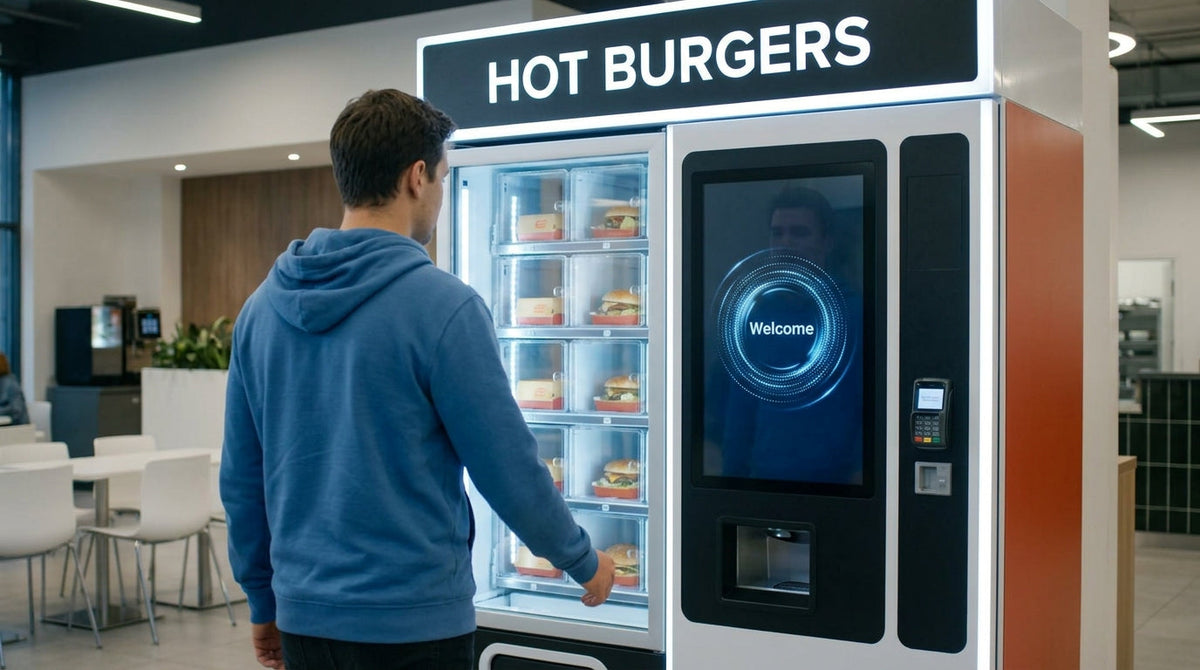
Once payment clears, a motor triggers the spiral coil or robotic arm holding your item, releasing it into the pickup bin or tray. Hot food and hot water machines add an extra automated step here — heating or dispensing hot water happens after selection but before the food reaches the pickup door, so the item arrives ready to eat rather than just released cold.
The exact sequence varies slightly by machine, but the core process holds across nearly every model in service today.
Not every vending machine dispenses food the same way, and knowing the type in front of you sets the right expectation for what happens after you pay.
| Machine Type | Dispensing Method | Typical Items |
|---|---|---|
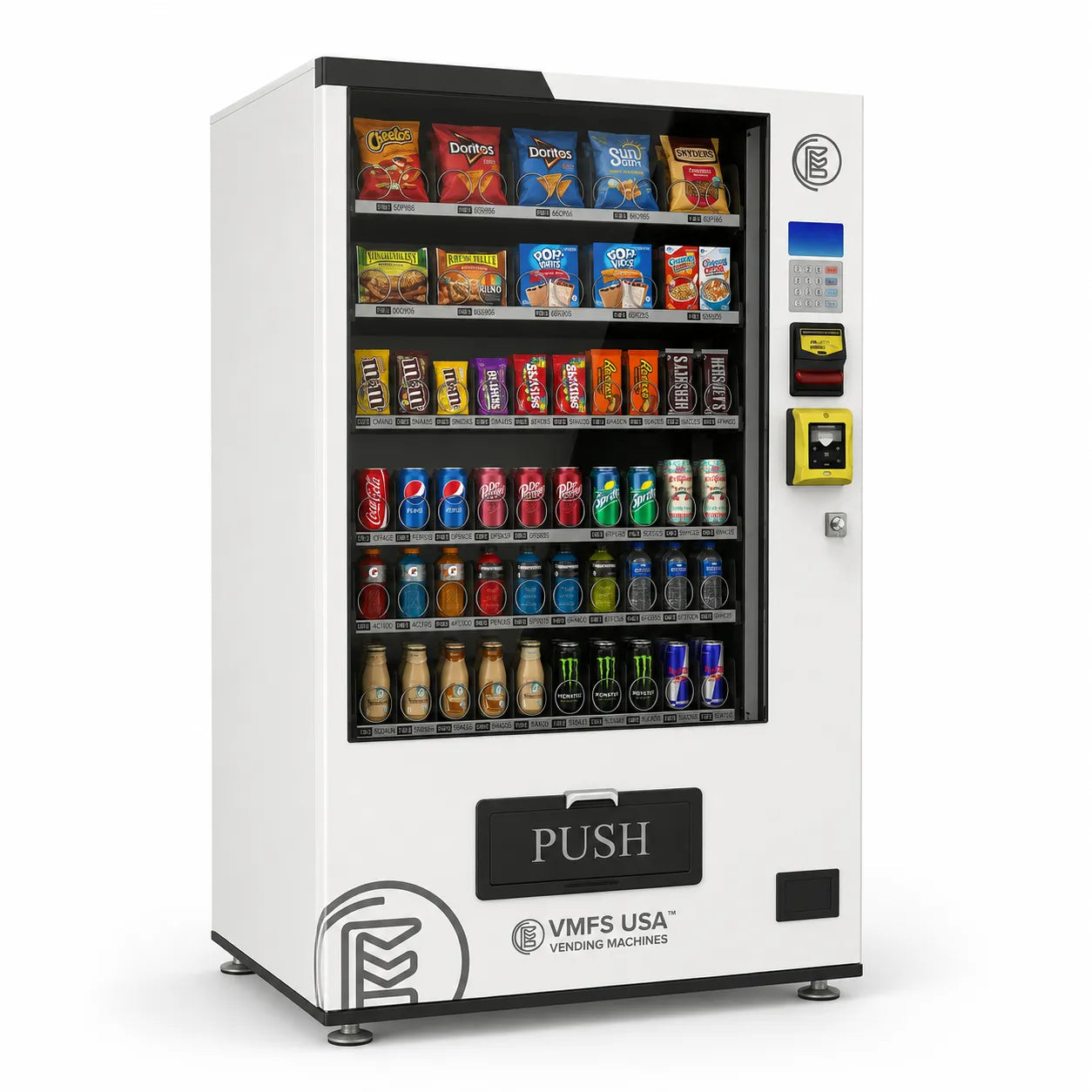
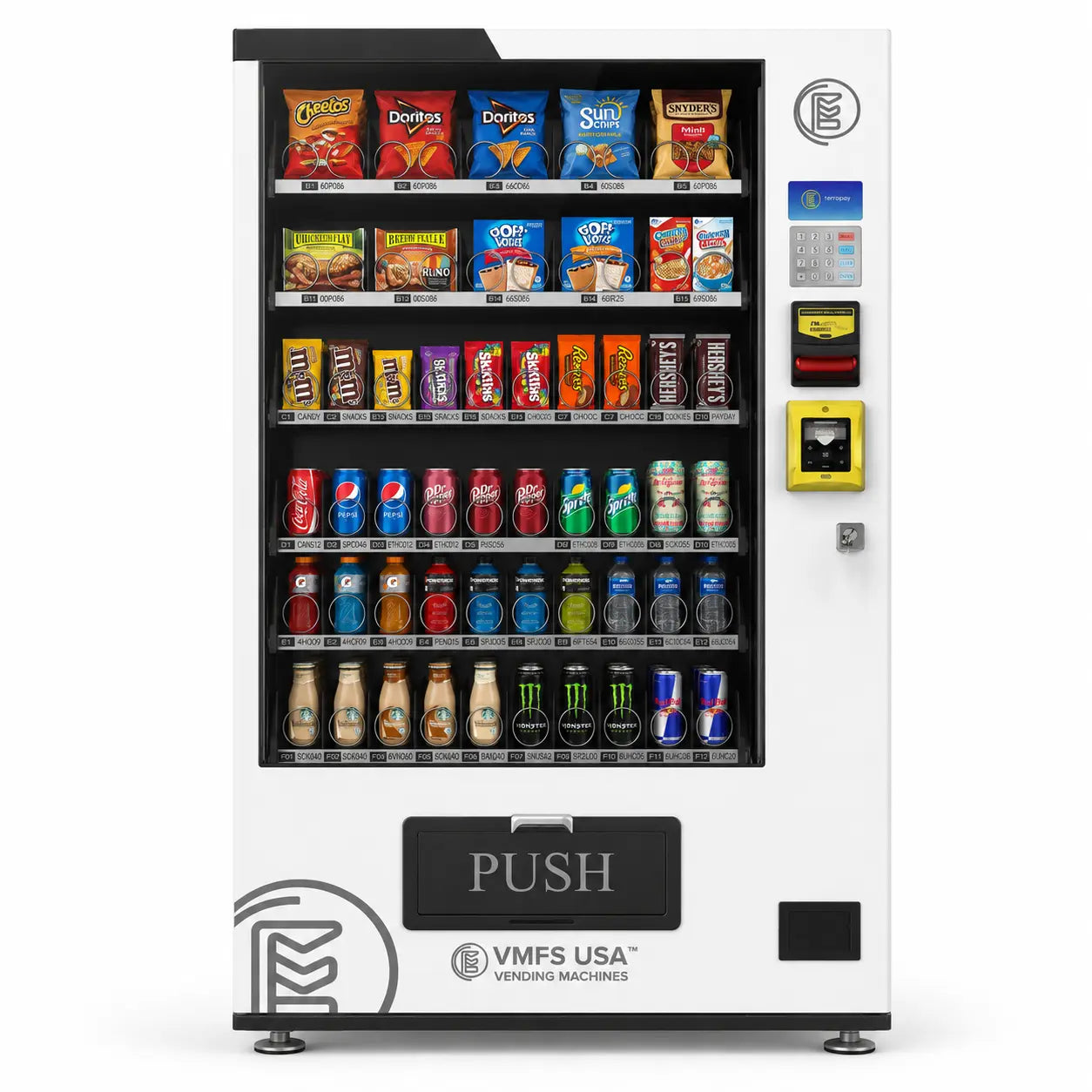
| Snack machine | Spiral coil release | Chips, candy, packaged snacks |
| Healthy/fresh vending | Refrigerated coil or robotic pick | Fresh food, salads, protein snacks |
| Hot food machine | Internal microwave or oven cycle | Burgers, hot sandwiches, entrees |
| Hot water / cup vending | Automatic hot water dispensing into the cup | Cup noodles, instant soups |
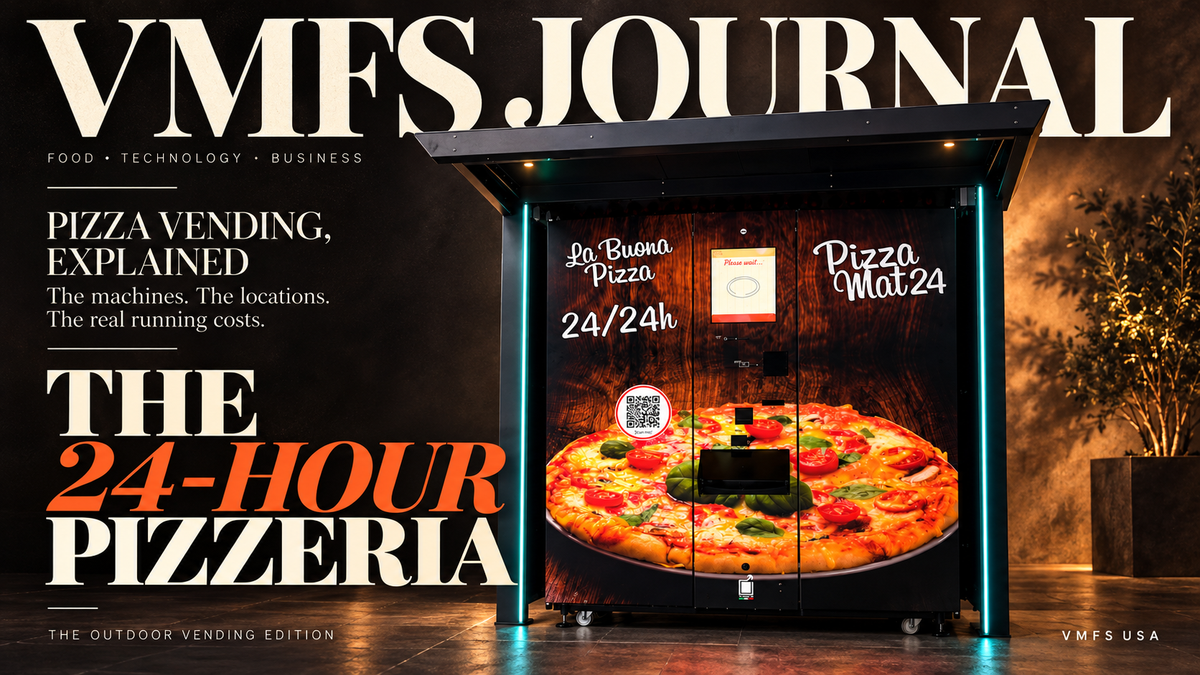
| Pizza vending | In-machine baking before release | Fresh-baked pizza slices or pies |
Operators choosing between these formats often start by reviewing what counts as healthy snacks for vending machines, since demand for better-for-you options now sits alongside — not instead of — traditional hot food formats.
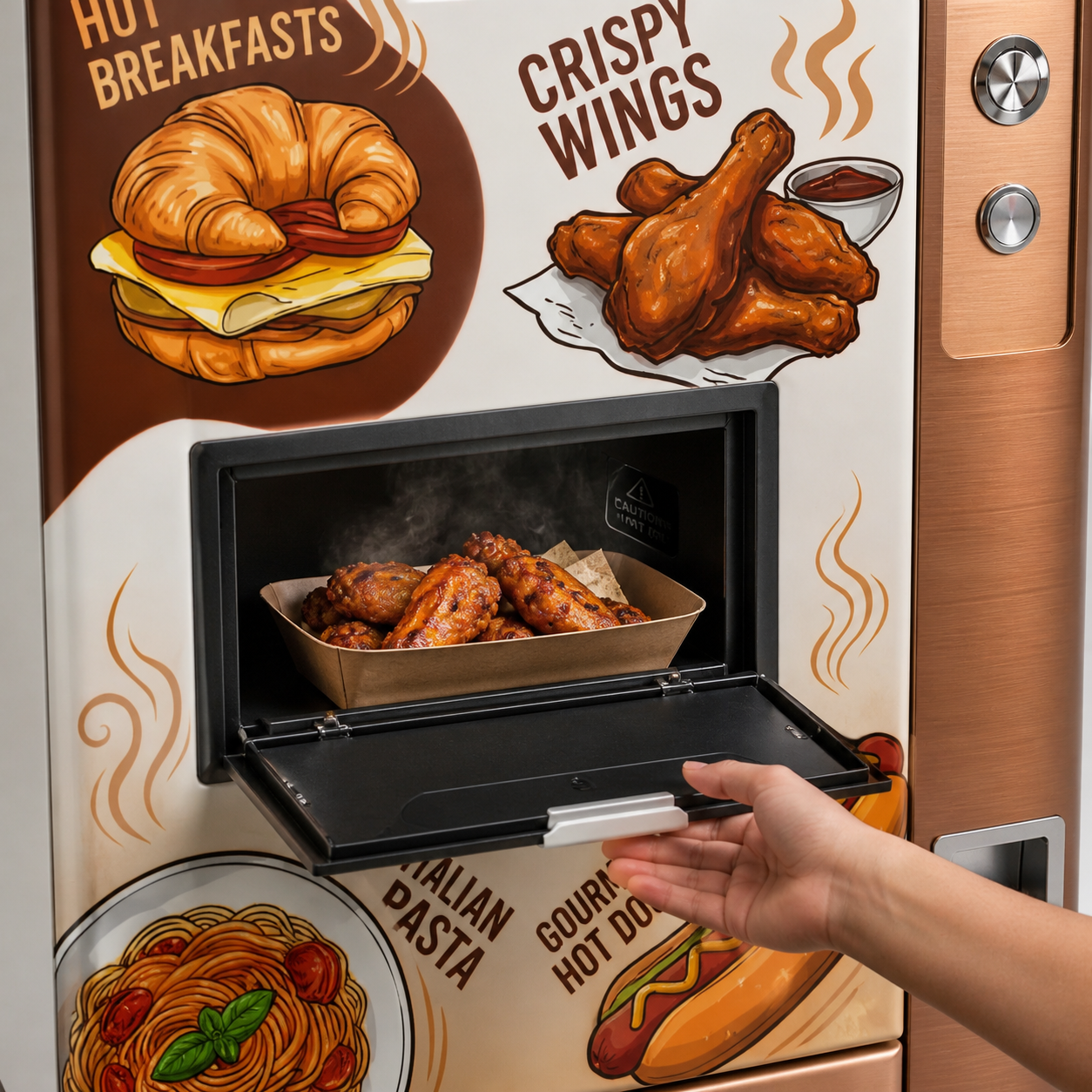
Hot food vending machines store items refrigerated until purchase, then run a built-in microwave or convection cycle immediately after payment, so food never sits at an unsafe temperature waiting for a buyer. Because the heating happens on demand rather than continuously, energy use stays low compared to keeping every item warm around the clock.
Cup noodle and instant soup machines take the concept a step further: the machine dispenses the cup, then automatically fills it with heated water at a set temperature before it reaches the pickup door. Seeing this technology up close at a recent industry expo made clear how far dispensing hardware has come — a cup noodle vending machine spotted at Venditalia 2026 dispenses hot water into the cup automatically, removing the need for a separate hot water station entirely.
Beyond chips and candy, many machines now stock protein bars, fresh fruit, yogurt, and portioned salads. A closer look at healthy food options for vending machines shows this shift is driven by workplace and gym demand, not a passing trend — buyers increasingly expect a legitimate healthy choice next to the candy bar.
Hot food vending has moved well past sandwiches. A dedicated burger vending machine guide covers how these units cook and dispense a hot burger start to finish, and the same on-demand heating principle powers fresh pizza slices and ramen cups now common in offices, dorms, and transit hubs.
Most vending failures fall into a small number of predictable categories, and knowing which one you're dealing with saves time.
| Problem | Likely Cause | What To Do |
|---|---|---|
| Item gets stuck on the coil | Mechanical jam or overstocked slot | Note the machine ID and contact the operator listed on the unit |
| Card declined or payment fails | Reader connectivity or bank-side decline | Try a different payment method or contactless wallet |
| Machine charges but nothing dispenses | Sensor error or mechanical failure | Use the posted refund contact — most connected machines log the failed transaction automatically |
| Hot food comes out cold | Heating cycle interrupted or skipped | Report it — this typically flags a maintenance issue for the operator |
| Pros | Cons |
|---|---|
| Available 24/7 without staffing | Limited menu compared to a full kitchen |
| Fast — most transactions complete in under a minute | Mechanical issues can occasionally cause failed dispenses |
| Hot food options now rival quick-service quality | Portion sizes are fixed, not customizable |
| Factor | Snack Machine | Hot Food Machine |
|---|---|---|
| Dispensing time | Seconds | 30–90 seconds for the heating cycle |
| Storage requirement | Ambient, shelf-stable | Refrigerated until purchase |
| Restock frequency | Weekly or bi-weekly | Daily or every few days |
| Best for | Quick snacking, drinks | Full meal replacement |
Getting into hot food vending means more than buying a machine — inventory sourcing, food safety compliance, and route logistics all differ from stocking a snack machine. A complete walkthrough on how to start a hot food vending machine business in 2026 covers what changes when the product is a hot meal instead of a bag of chips.
Food vending machines are regulated differently than snack or drink units in most states, because hot food carries food-safety requirements that dry packaged goods don't. Requirements vary significantly by state — the question of whether you need a license to operate food vending machines in Indiana illustrates how state-specific these rules get, so checking local health department and vending regulations before placing your first hot food unit is essential. Formalizing the business itself is a separate step worth handling early, since a registered entity simplifies contracts with locations and suppliers alike.
Getting serious about a vending business? Start with the right legal foundation:
Form an LLC for VendingHot food machines perform best in locations with real meal demand — offices, campuses, hospitals, and transit hubs — rather than spots suited only for quick snacking. Guidance on how to get locations for a hot food vending machine covers what property owners actually look for before agreeing to host a full meal-service unit rather than a standard snack machine.
Know a property owner who wants hot food vending on-site?
List a Location on VPlacedMachine choice comes down to what you're actually serving — a lunch box format suits pre-packaged meals, while dedicated pizza, ramen, and hot food units are built around a specific cooking or dispensing cycle for that item.
Compare food vending machine formats:
The mechanics behind getting food from a vending machine haven't changed much in principle — select, pay, retrieve — but what's now available inside that simple loop has expanded dramatically, from a fresh-baked pizza slice to a cup of ramen filled with hot water automatically. Understanding which machine type you're dealing with sets the right expectation for wait time, temperature, and what's actually possible in that pickup tray.
Ready to Serve Real Meals From a Vending Machine?
Browse the food vending machines built for hot meals, pizza, ramen, and more.
Buy Food Vending Machine
Compartir:
How to Scale an AI Vending Machine Business: The Complete Growth Playbook
How Does a Cold Food Vending Machine Work? Complete Guide