



Design the perfect vending solution for your location and customers.

Sales, inventory and alerts for your whole route, from one machine to a fleet.
Answer a few questions about your location, products and budget and get a shortlist.
Estimate revenue, payback period and margin before you buy.
Sales, setup help, warranty and parts from the VMFS USA team.
Join the VMFS newsletter and step into a thriving network dedicated to collective success.
One signup. Endless possibilities.
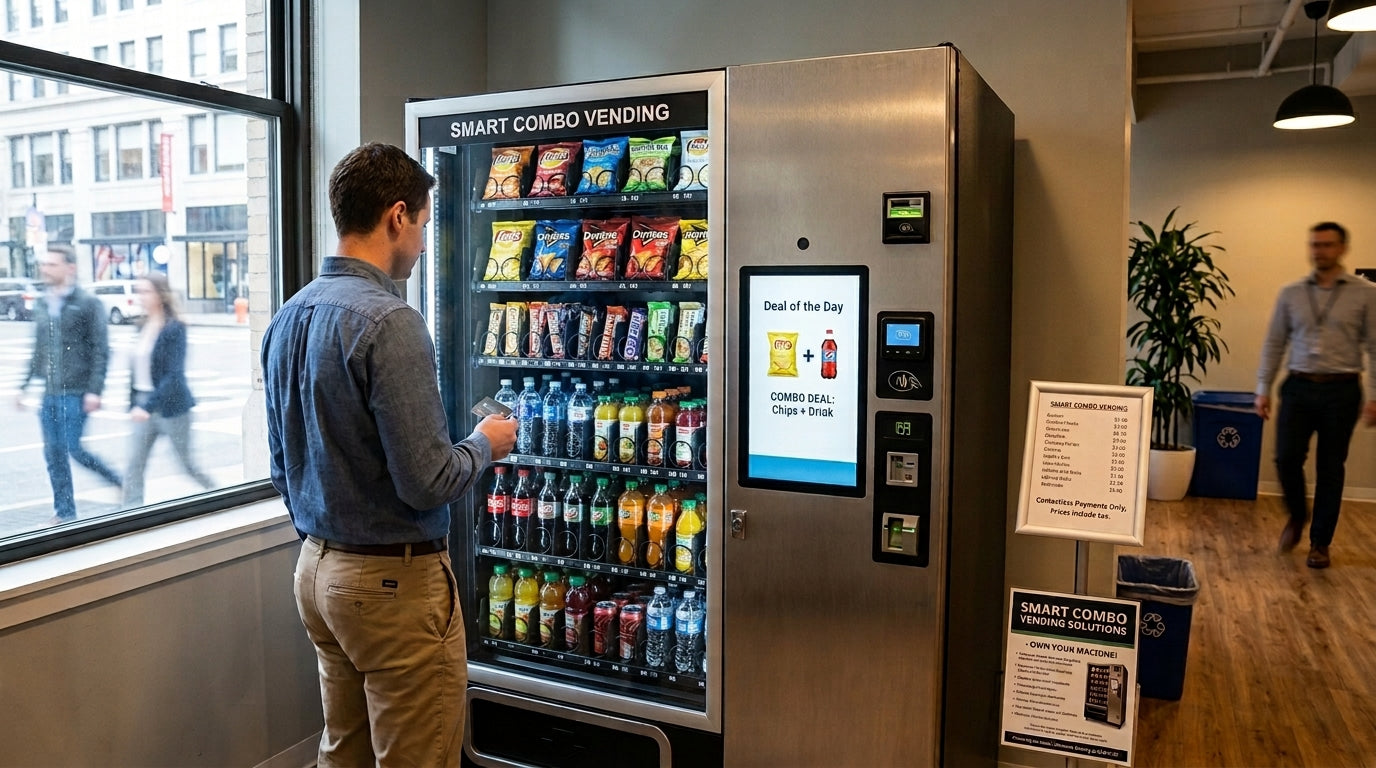
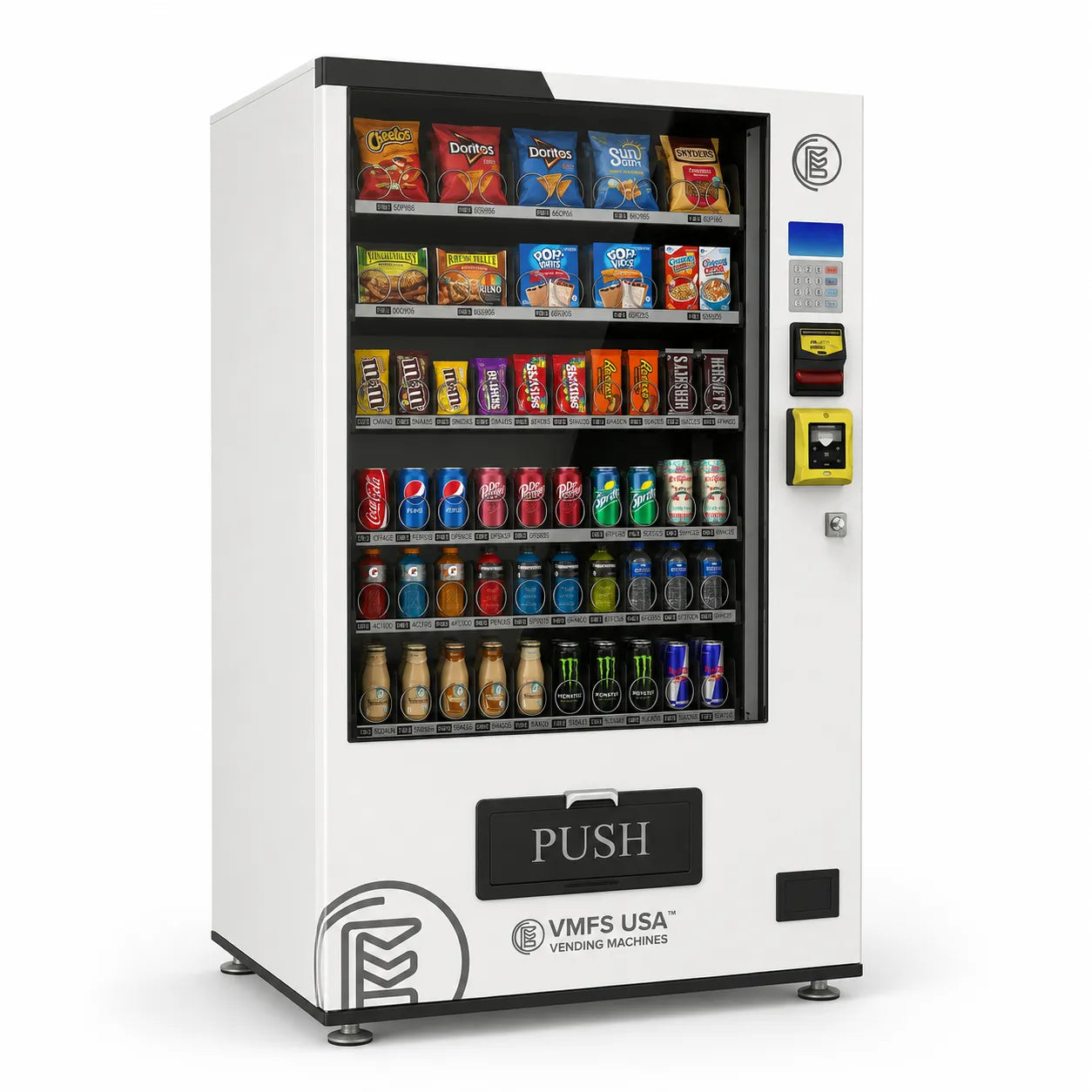
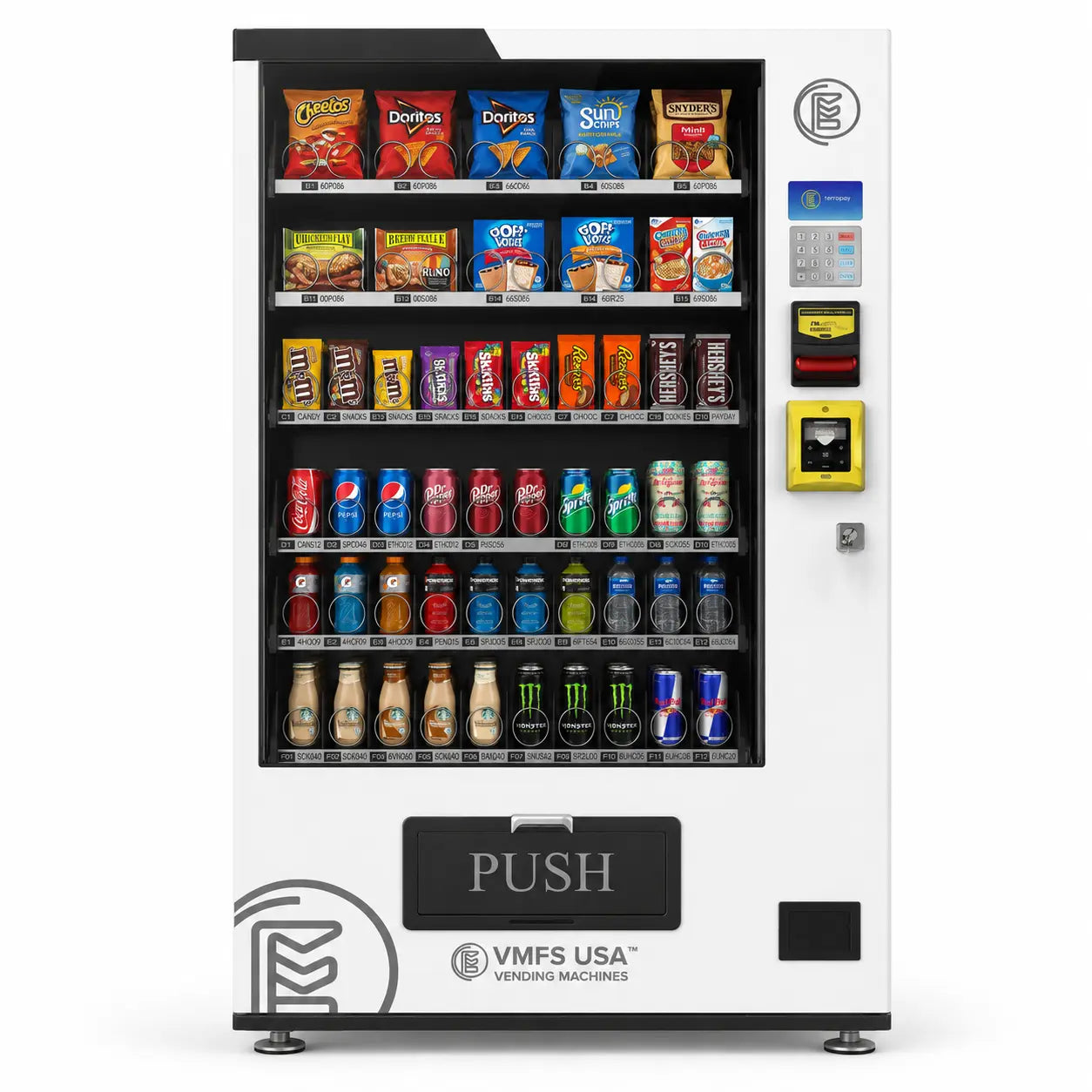
A smart combo vending machine typically costs between $3,000 and $13,000, with price driven mainly by capacity, refrigeration and connectivity features, and whether the unit is new or used. Entry-level compact units sit at the lower end, while high-capacity machines with advanced smart technology and larger footprints push toward the top of that range. This guide breaks down exactly what drives cost within that range and what to budget for beyond the machine's sticker price.
Table of Contents
Three factors consistently explain most of the price difference between a budget combo unit and a premium configuration, more than brand alone.
More product slots and a larger cabinet directly raise material and manufacturing cost, since a higher-capacity machine needs more internal structure, wiring, and mechanical components to support the added inventory volume. Understanding what a smart combo vending machine is clarifies why capacity varies so widely within this single product category compared to simpler single-purpose machines.
Cashless payment terminals, remote inventory telemetry, and touchscreen interfaces each add cost individually, and a machine bundling all three commands a higher price than a mechanically similar unit with more basic technology. A closer look at how a smart combo vending machine works explains why this technology layer specifically drives cost, since it depends on control board sophistication built into the unit from manufacturing rather than added after the fact.
Used equipment sells at a meaningful discount to new, though that discount comes with tradeoffs in warranty coverage, remaining service life, and current technology standards that a buyer needs to weigh against the upfront savings.
| Configuration Tier | Typical Price Range | Best Fit |
|---|---|---|
| Compact/slim combo | $3,000–$5,000 | Tight spaces, lower-traffic locations |
| Standard smart combo | $5,000–$7,500 | Offices, gyms, moderate-traffic sites |
| Full-feature smart combo | $7,500–$10,000 | High-traffic locations wanting advanced telemetry and interface |
| High-capacity combo | $9,000–$13,000 | Large facilities needing maximum product variety and slot count |
Beyond raw materials, price reflects refrigeration compressor quality, the control board and software layer that runs cashless payment and telemetry, and the manufacturing precision that keeps dispensing mechanisms reliable across thousands of transaction cycles. Cheaper units often cut cost by using lower-grade compressors or simpler control boards, which shows up later as increased service calls rather than upfront savings that hold over the machine's full lifespan.
Full manufacturer warranty coverage. Latest payment and telemetry technology standards. Maximum remaining service life before major component replacement is likely needed.
Lower upfront cost, often 30 to 50 percent less than new. Reduced or no warranty coverage. Technology may lag current cashless payment and monitoring standards.
A detailed comparison of used combo vending machines vs new walks through this decision in more depth, covering exactly where the tradeoffs matter most depending on budget and risk tolerance.
Delivery and installation, initial inventory stocking, and any revenue share negotiated with a venue owner all add to total launch cost beyond the equipment price itself. Operators sourcing a location through a matching service, such as VPlaced's location owner matching process, should factor the resulting placement terms into their total cost picture before finalizing a machine purchase, since revenue share directly affects the investment's payback timeline.
| Machine Type | Tier | Notable Feature |
|---|---|---|
| Slim Combo Vending Machine | Compact | Narrow footprint for tight spaces |
| Smart Combo Vending Machine | Standard | Balanced capacity and connected technology |
| Drink and Snack Vending Machine (RDS) | Standard | Dedicated dual-category dispensing |
| Seaga Envision IQ Combo Vending Machine | Full-feature | Advanced smart interface and monitoring |
| Seaga QuickBreak QB4000 | High-capacity | Larger slot count for high-traffic sites |
Beyond the equipment itself, operators should budget for licensing and compliance costs tied to legally operating the machine, separate from the purchase price. A broader overview of the law for smart combo vending machines covers licensing and permit costs worth factoring into a total budget, while a practical guide to a smart combo vending machine placement agreement covers what to expect in revenue share or flat-fee terms once a site is secured.
How a business is structured affects how equipment cost gets treated for tax purposes, since a machine typically qualifies as depreciable business equipment regardless of entity type, but the tax benefit that depreciation delivers depends on the surrounding income tax structure. Many operators form an LLC for their vending machine business before making an equipment purchase, and some evaluate an S-corporation election as revenue scales, since both decisions interact with how the eventual purchase gets financed and deducted.
Higher-capacity machines only pay off where traffic actually justifies the investment.
Upfront savings on used equipment can be offset by reduced warranty and service life.
Installation, inventory, and revenue share all add to total launch cost.
Add the machine's purchase price to estimated delivery, installation, and initial inventory costs to reach total upfront investment, then compare that figure against expected monthly net revenue at the intended location to estimate a payback timeline. A higher-tier machine with a longer payback period can still make sense if the location's traffic genuinely supports the added capacity, while the same machine in a lower-traffic site would extend payback well beyond what a smaller, cheaper unit would need to break even.
Higher capacity supports stronger sales in genuinely high-traffic locations. Advanced telemetry reduces wasted service visits. Longer expected service life before major component replacement.
Lower upfront capital requirement. Faster to deploy across multiple lower-traffic sites. Simpler technology means fewer components that can fail.
Cost is one part of a broader purchase decision that also includes placement strategy, branding, and ongoing compliance, each worth reviewing before finalizing a specific configuration. Matching machine tier to actual site demand remains the single biggest factor in whether a given cost level turns into a good investment or an oversized expense.
Compare current pricing across every combo configuration tier covered above.
Combo Vending MachinesFrom compact and budget-friendly to high-capacity and full-feature configurations.
Typical pricing ranges from $3,000 to $13,000, depending mainly on capacity, smart technology features, and whether the unit is new or used.
Compact or slim combo machines sit at the lower end of the price range, typically $3,000 to $5,000, since their smaller footprint and reduced capacity require less material and mechanical complexity.
Used machines typically run 30 to 50 percent less than new equipment, though buyers should weigh that savings against reduced warranty coverage and potentially outdated technology.
Capacity and footprint, smart technology features like cashless payment and telemetry, and overall build quality are the three main factors separating budget and premium configurations.
Yes, delivery and installation, initial inventory, and any revenue share negotiated with a venue owner all add to total launch cost beyond the equipment price itself.
Yes, business licensing, vending permits, and any applicable compliance costs are separate from the equipment purchase price and should be budgeted independently.
Add the machine's total upfront investment, including installation and initial inventory, then compare it against expected monthly net revenue at the intended location to estimate a payback timeline.
Not necessarily. A higher-tier machine only justifies its added cost in a location with traffic strong enough to actually use the extra capacity and features.
Business structure doesn't change the purchase price, but it does affect how the equipment cost gets depreciated and deducted for tax purposes, which factors into the machine's true net cost.
A standard smart combo configuration in the $5,000 to $7,500 range is a common starting point for first-time operators balancing capacity against manageable upfront investment.
Compartir:
How to Reset a Pokemon Vending Machine: The Complete Guide
How Much Is a Drink Vending Machine? Complete Pricing Guide