


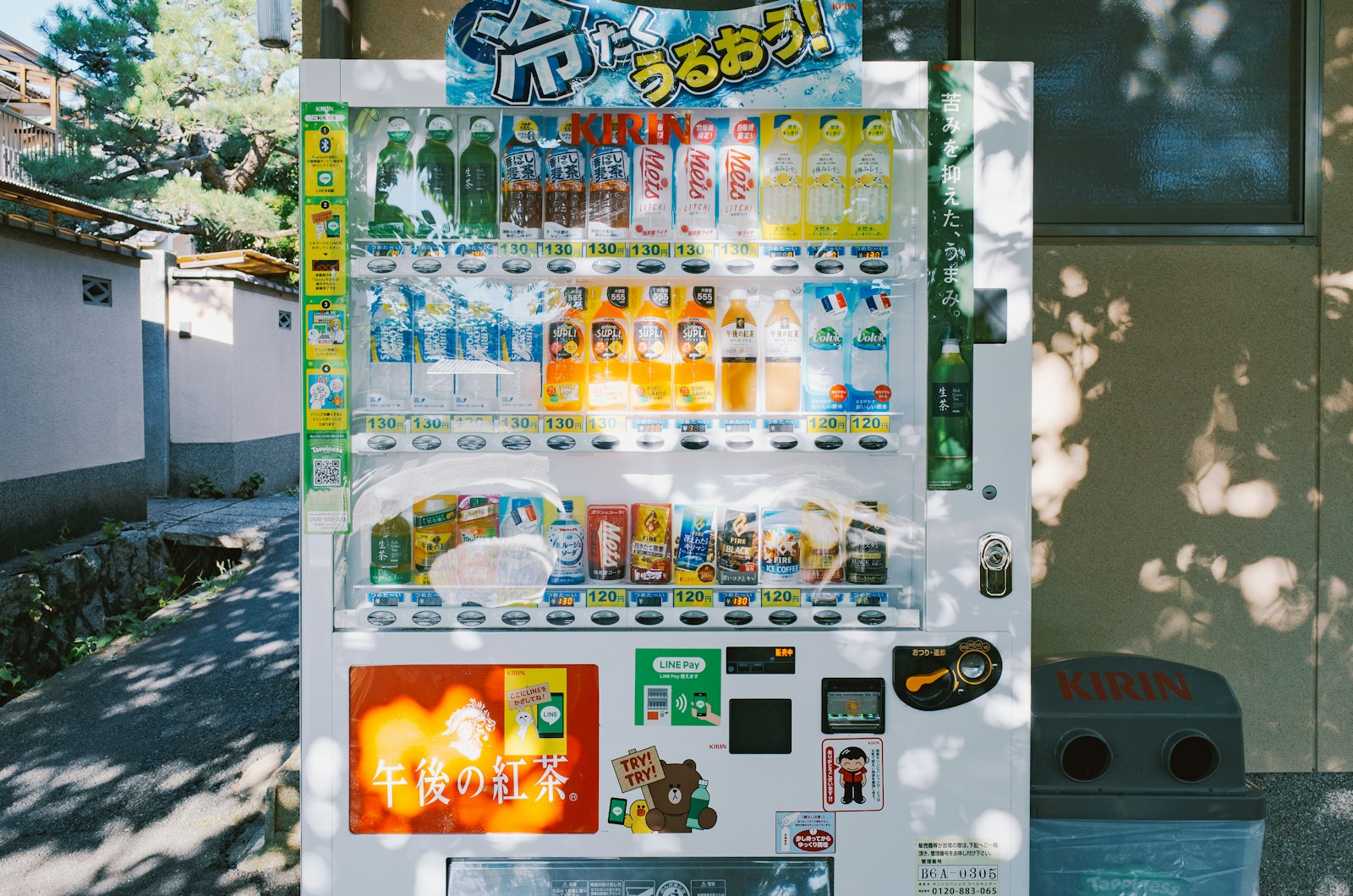


Design the perfect vending solution for your location and customers.

Join the VMFS newsletter and step into a thriving network dedicated to collective success.
One signup. Endless possibilities.
Almost every operator hits the same fork in the road within a week of deciding to get into vending. One tab has a listing for a used machine at a price that feels like a steal. The other tab has a new unit that costs three times as much and suddenly makes the whole plan feel expensive. Both tabs are showing you a real path to revenue. They just arrive at very different places two years down the line.
The honest answer is that the sticker price is the least useful number in the entire comparison. What decides whether a machine earns or bleeds is uptime, payment acceptance, energy draw, and whether the locations you want will actually let the thing through their front door. This guide walks through all of it with real market figures, so you can run the numbers for your own route instead of guessing.
If you already know you want dependable equipment and you are simply working out which format fits, you can browse the full lineup of vending machines for sale and match a build to your location before you go any further.
People talk about used versus new as though the only difference is age and cosmetics. It is not. The gap sits in five specific places, and every one of them shows up in your monthly profit and loss.
A used machine is not automatically a bad machine. A five year old unit from a discontinued route, serviced properly and sold with its history, can be a genuinely smart buy. A fifteen year old machine with no maintenance record and a bill validator that jams on crisp twenties is a repair bill wearing a price tag. The difference between those two purchases is entirely in what you inspect before you pay.
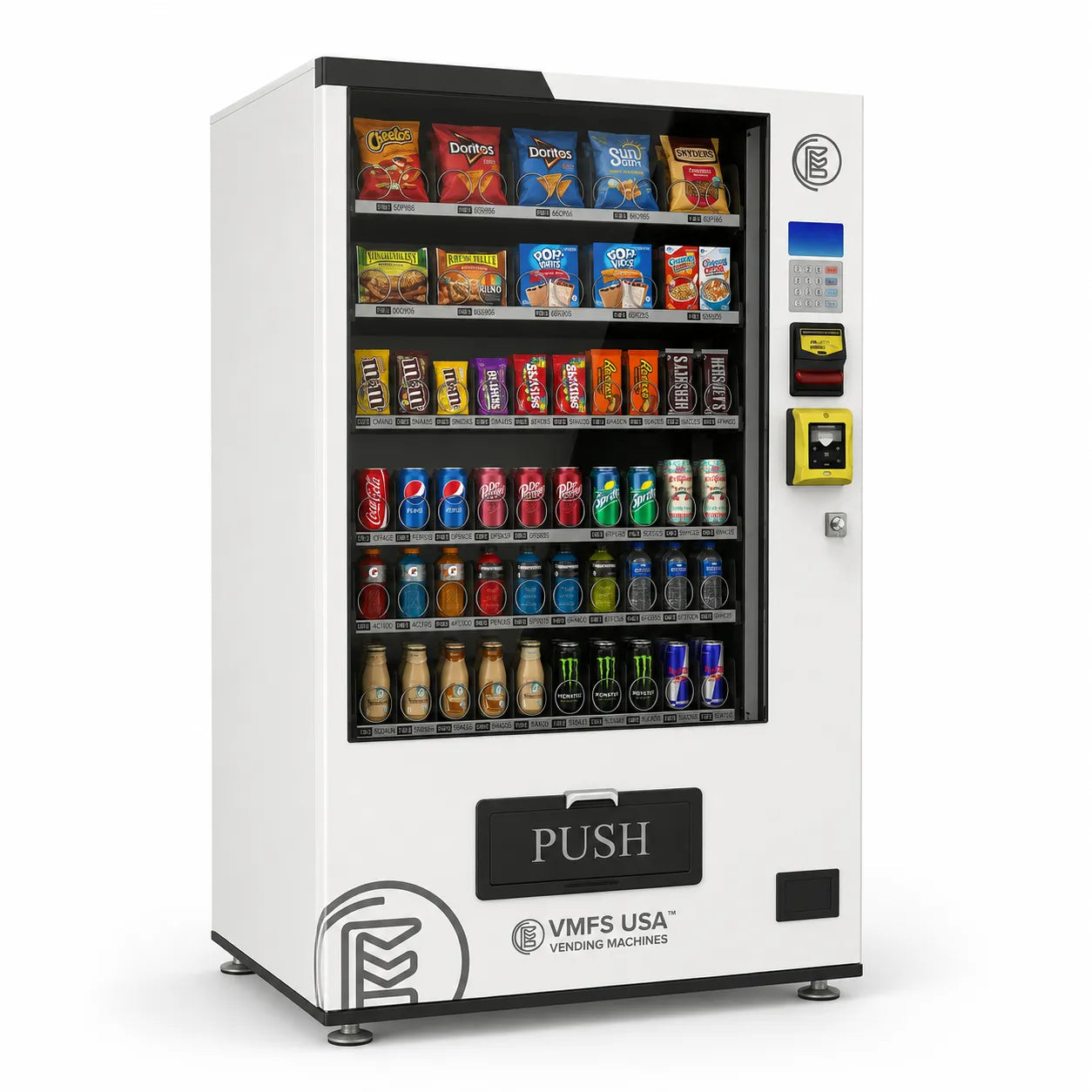
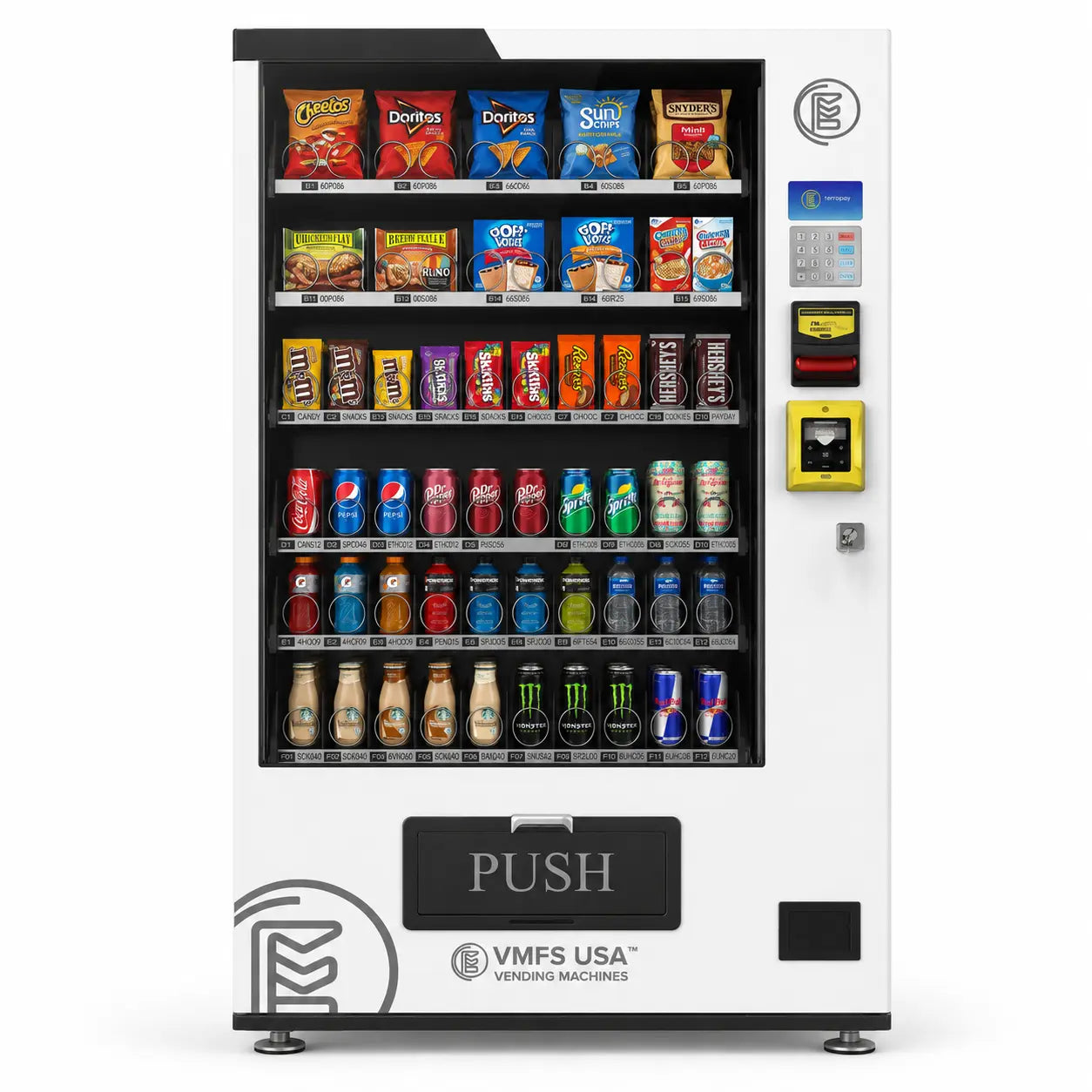
The gap widens with dual zone formats. Combo vending machines carry a dry snack section and a refrigerated drink section inside one cabinet, which means roughly twice the mechanical surface area and a cooling system that has to hold temperature on one side while the other sits at ambient. When those machines age, they age on two fronts at once, and a used combo therefore carries more risk than a used snack only unit at the same age and price.
Used pricing swings hard depending on age, format, refrigeration, and whether the seller has done any refurbishment. These are the ranges you will encounter across the secondary market in the United States.
| Machine type | Typical used price | Typical refurbished price |
|---|---|---|
| Snack only, non refrigerated | 1,000 to 2,500 USD | 2,200 to 3,500 USD |
| Beverage only, refrigerated | 1,400 to 3,200 USD | 2,800 to 4,500 USD |
| Combo, snack and drink | 1,800 to 4,000 USD | 3,200 to 5,500 USD |
| Glass front with cashless already fitted | 2,500 to 5,000 USD | 4,000 to 6,500 USD |
The number that catches people out: freight. A full size combo cabinet weighs between 600 and 800 pounds. Liftgate delivery on a used machine bought two states away commonly runs 400 to 900 USD, and it is almost never included in the listing price. Factor it in before you compare anything.
Refurbished sits in its own category and deserves a note. A genuinely refurbished machine has had its compressor tested, motors replaced where worn, validator serviced, and cabinet repainted. A machine described as refurbished that has only been pressure washed is a used machine with better photographs. Ask specifically which components were replaced and ask for the invoice.
New equipment across the market lands roughly where you would expect given the technology inside. A straightforward new combo cabinet with a bill acceptor and coin mech generally sits between 4,000 and 7,000 USD. Once you add a large touch display, guaranteed vend sensing, or conveyor delivery for fragile product, the range moves up toward 8,000 to 14,000 USD. Specialty formats such as elevator delivery, frozen, or fresh food run higher again.
What that premium buys is not really features. It is predictability. A new machine gives you a known starting point on every wear component simultaneously, warranty coverage while you are still learning the business, and payment hardware that already speaks the protocol your card reader expects. Those three things together are why new equipment tends to look expensive in month one and cheap in year three.
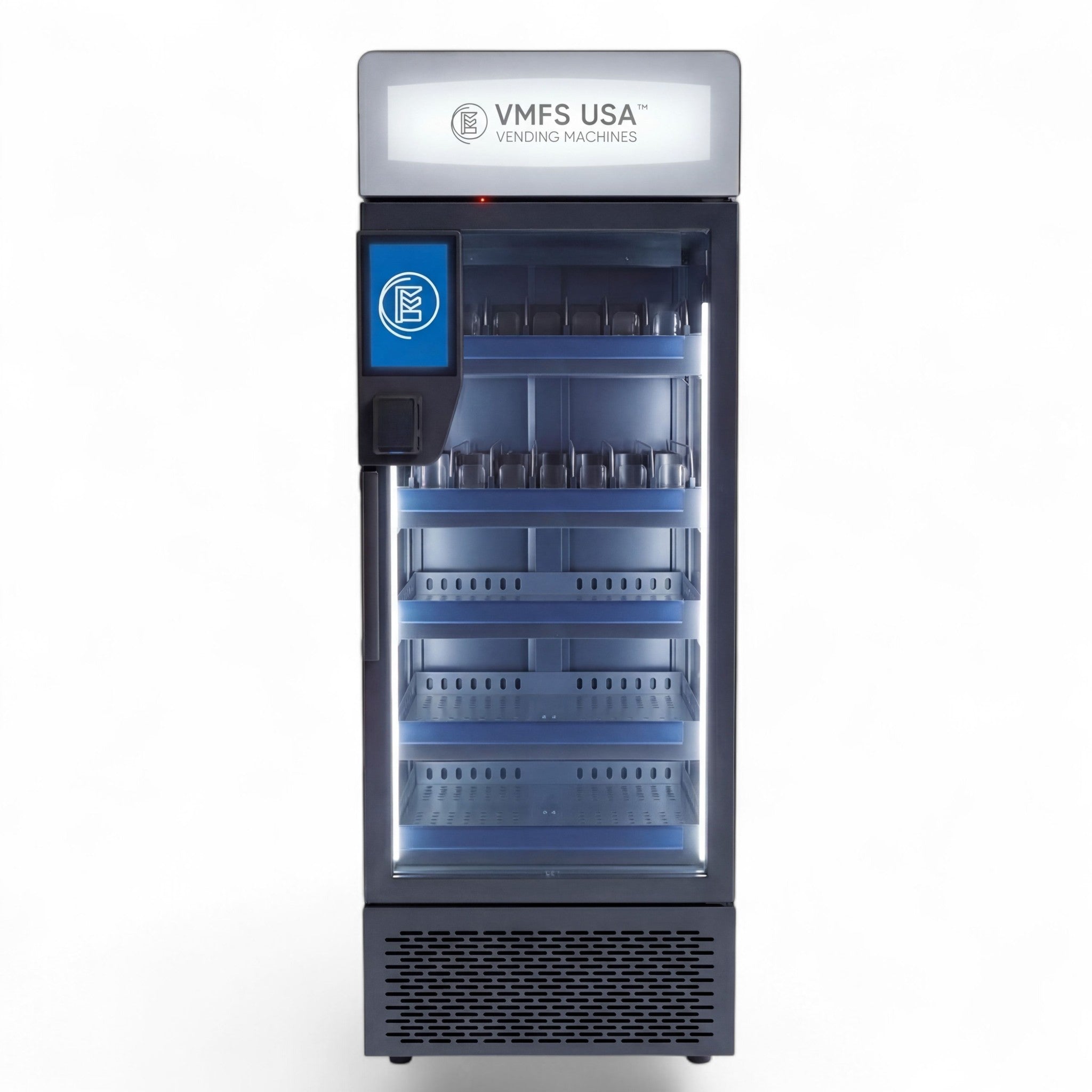
There is also a placement dimension that rarely gets discussed. Corporate offices, medical facilities, hotels, and universities all care what the machine looks like in their lobby. Modern touch screen smart vending machines read as an amenity. A scuffed cabinet with a faded product panel reads as clutter. When two operators pitch the same site, equipment appearance frequently decides it, and the better sites are exactly the ones worth winning.
Here is the comparison that matters. Take a used combo machine at 2,800 USD against a new combo machine at 5,500 USD and run both across five years at a moderate volume location.
| Cost line | Used combo | New combo |
|---|---|---|
| Purchase price | 2,800 | 5,500 |
| Freight and placement | 600 | Often included or reduced |
| Cashless retrofit | 300 to 500 | Configurable at order |
| Repairs over five years | 1,200 to 3,000 | 200 to 700 |
| Extra electricity | 500 to 1,200 | Baseline |
| Lost sales from downtime | Meaningful | Minimal |
| Five year outlay | 5,400 to 8,100 | 5,700 to 6,200 |
The gap that looked like 2,700 USD at the point of purchase closes almost entirely, and on the upper end it reverses. That is before you price in the sales you lose while a machine sits dark waiting on a part, and before you account for the locations a tired cabinet never gets into.
Downtime is the silent cost. A machine turning 900 USD a month that sits offline for eleven days waiting on a compressor has lost roughly 330 USD in sales. Two of those events a year and the repair bill has effectively doubled.
You cannot judge a used purchase without knowing what the failure bill looks like. These are the market rates operators pay when something goes.
| Component | Typical part cost | How often it bites |
|---|---|---|
| Compressor or sealed system | 400 to 900 USD | The most expensive single failure |
| Main control board | 250 to 600 USD | Hard to source on older models |
| Bill validator | 200 to 450 USD | Common, and jams cost sales daily |
| Coin mechanism | 150 to 350 USD | Common |
| Vend motors | 30 to 80 USD each | Cheap individually, they fail in clusters |
| Door gasket and glass seal | 80 to 200 USD | Quietly destroys cooling efficiency |
| Technician labor | 85 to 150 USD per hour | Plus travel, on every visit |
Notice how quickly two of these stack past the savings on a cheap machine. A compressor and a validator in the same year is roughly 1,100 USD in parts before anyone has picked up a wrench. That is the arithmetic that turns a bargain into a lesson.
This deserves its own section because it is the single largest hidden gap between old and new equipment, and it is not about convenience. It is about revenue.
Cash usage keeps falling. In a break room where most people carry a phone and a card and nothing else, a machine that only takes bills and coins is invisible to a large share of the people walking past it. Operators who add card acceptance to a previously cash only machine routinely see a step change in transaction volume, because they stopped turning away everyone without a folded five in their pocket.
Retrofitting a used machine is doable, but budget for the whole picture:
That last point is the one that ends deals. A buyer pays 2,400 USD for a used combo, orders a reader, and then discovers the controller cannot communicate with it. Now the choice is a new control board or a cash only machine in a cashless world. On new equipment, payment is configured at the point of order, so a card reader, contactless tap, mobile wallet acceptance, or a bill acceptor all get specified to fit the site rather than bolted on afterward.
Screen based units change the equation again. Digital vending machines run the whole selection process through the display instead of a keypad, so product images, descriptions, allergen notes, and pricing can be updated centrally without anyone touching a label. On older equipment, a single price change means physically relabeling every affected selection by hand, which is why so many aging machines quietly run on prices set years ago.
The same principle applies to telemetry. Modern machines can report sales and stock levels remotely, which is the difference between driving to a site to see what sold and knowing before you leave the house. VMFS Cloud provides that remote visibility as a subscription at 7.99 USD a month, and machines run perfectly well without it if you would rather not add the line item. Older equipment usually cannot offer the option at all.
None of the above means used equipment is a mistake. There are situations where it is clearly the right call, and pretending otherwise would be dishonest.
For a first low stakes placement, a compact format often makes more sense than a full size cabinet regardless of whether it is used or new. Mini vending machines fit sites that cannot spare the floor space for a full cabinet and need far less product capital tied up in inventory, which is exactly the profile of a location you are still evaluating.
The harder problem at this stage is rarely the machine. It is finding a site worth testing at all. Cold calling property managers and negotiating commission terms is a skill in its own right, and vending machine placement is run as a dedicated service inside the VMFS network for operators who would rather put their hours into the route than into prospecting.
If you do go used, this is the part that separates the operators who profit from it and the ones who write it off. Work through every item. Do not accept photographs in place of any of them.
Any single failure on that list is a negotiating point. Three or more and you should walk away, because the discount will not cover what is coming.
It also helps to know what good looks like before you inspect anything at all. Spend an afternoon with VendingFinder locating well run machines near you, then go and look at them. Pay attention to how the shelves are merchandised, which payment options are displayed on the front, and what condition the cabinets are in at the busiest sites. That is your benchmark.
Most people default to used because of one constraint: available cash today. That is a completely reasonable constraint, and it is also the one that financing exists to solve.
Spreading a new machine across monthly payments changes the comparison in a way that surprises people. The monthly figure on new equipment frequently sits close to what an operator spends on unplanned repairs for an aging machine, except one of those numbers is predictable and the other arrives without warning on the day the compressor dies. VMFS offers vending machine financing through registered outside partners, which lets you preserve working capital for product inventory rather than sinking it all into hardware on day one.
That matters more than it first appears, because in vending, product inventory is what actually generates revenue. An operator with three financed machines and healthy stock levels outperforms an operator with two owned machines running half empty, every time.
Here is where a lot of new operators get the sequence wrong. They buy a machine, then go hunting for somewhere to put it. The machine dictates the site, and the site is usually a compromise.
Reverse it. Establish the location first, learn its traffic pattern and demographics, then specify equipment that fits. A gym wants beverages, protein, and cashless. A manufacturing floor with three shifts wants capacity and durability above all. A school corridor wants a compact footprint and tight product control. A corporate lobby wants something that looks deliberate.
Once you know the site, capacity is the first thing to settle. A single cabinet covers most offices and break rooms comfortably. A dual combo vending machine starts to make sense the moment a single unit cannot hold enough product between service visits, because at that point you are driving to the site purely to refill, and route time is the most expensive thing an operator owns.
Interface is the second decision, and it is really a data decision. Where you want remote sales visibility alongside a modern front end, a smart combo vending machine delivers both in one build. The sales data alone often justifies the difference, because knowing precisely what sold and when turns restocking from guesswork into a schedule, and it tells you which slots are dead weight long before you would have noticed on your own.
The third consideration is regulatory, and it catches more operators than any of the mechanical questions. Permits, sales tax treatment, and product restrictions vary by state and by category, and age restricted products carry their own layer of rules on top of that. VAdviced covers vending compliance and licensing as a paid service in the network, and it is worth understanding the requirements before you sign a location agreement rather than after the machine is already on site.
Strip everything back and the choice comes down to four questions.
Used equipment lowers the cost of entry and raises the cost of operating. New equipment does the reverse. Operators who plan to run two or three machines for a while and service them personally often do well with used. Operators who intend to build something and want their weekends back almost always end up on new, and most of them get there after buying used first.
Whichever direction you take, the equipment is only half the business. Getting location owners to say yes, and getting property managers to know you exist before a competitor calls them, is a separate workstream that runs alongside the route. VMarketed handles operator marketing and lead generation for precisely that gap, and it tends to matter more the moment you move past your first two or three placements.
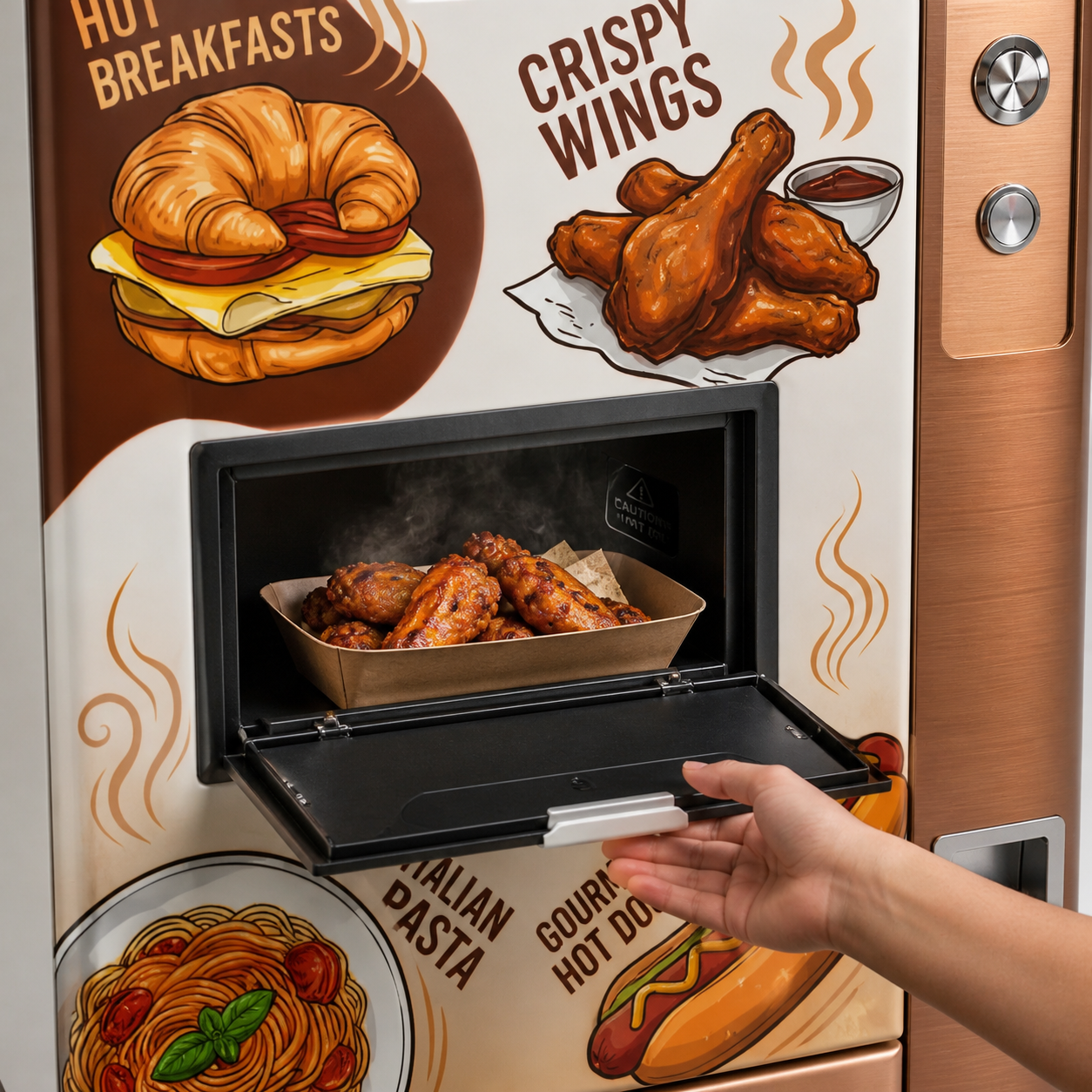
When you are ready to compare formats side by side, you can buy vending machines across snack, drink, combo, frozen, coffee, and specialty builds, with in stock units shipping within 7 to 21 days. Every machine carries a one year parts warranty, VMFS ships across the United States and Latin America, and payment hardware is configured to suit the site rather than assumed.
Are used vending machines worth buying?
They can be, in the right circumstances. A used machine works well when the location is low traffic, the relationship with the site owner is informal enough to tolerate downtime, and you can carry out basic repairs yourself. Where it stops working is on higher volume sites, on any site where a multi day outage damages the relationship, and anywhere the machine needs modern payment acceptance the controller cannot support. Inspect the refrigeration, every vend motor, the validator, and the door seal before buying, and confirm parts are still available for that model.
How much do used vending machines cost?
Across the United States market, used snack machines generally sell between 1,000 and 2,500 USD, used combo machines between 1,800 and 4,000 USD, and refurbished units carry a premium of roughly 1,000 to 1,500 USD over comparable used stock. Freight is the cost buyers most often forget, and it commonly adds 400 to 900 USD for a full size cabinet. Add a cashless retrofit at 250 to 500 USD plus a monthly service fee if the machine does not already accept cards.
How long does a new vending machine last?
Well maintained new equipment placed indoors commonly gives seven to ten years of service, and often longer where the site is climate controlled and the machine is cleaned and serviced on a regular schedule. Lifespan depends far more on maintenance discipline and environment than on the badge. Machines in humid, dusty, or outdoor locations wear faster regardless of what they cost new.
Do cashless payments really increase vending sales?
Yes, and it is one of the more consistent effects in the industry. As cash usage declines, a machine that only accepts bills and coins simply cannot serve a growing share of the people walking past it. Adding card and contactless acceptance widens the pool of customers who can buy at all. It also raises the practical ceiling on price points, since customers are less resistant to a higher priced item when they are tapping rather than counting coins.
Can you finance a vending machine?
Yes. VMFS offers financing through registered outside partners, which spreads the cost across monthly payments rather than requiring the full amount up front. This is frequently the deciding factor for operators weighing used against new, because the predictable monthly figure on reliable equipment often lands close to what unplanned repairs cost on an aging machine. Financing also preserves capital for product inventory, which is what actually generates revenue.
When should you upgrade to a dual combo vending machine?
When restocking frequency becomes the constraint. If you are visiting a site more often than your route schedule comfortably allows purely because the machine runs empty, the capacity is the problem rather than the demand. Busy corporate buildings, hospitals, schools, and manufacturing sites with multiple shifts commonly outgrow a single combo cabinet. Expanding capacity at an existing proven site is almost always a better return than adding an unproven new location.
Used and new vending machines both earn money. They just distribute the cost differently across time. Used moves your spending into the future as unpredictable repairs and lost sales. New concentrates it at the start and then largely leaves you alone.
Be honest about which constraint you are actually solving. If it is cash today, financing may solve it more cheaply than used equipment does. If it is genuine uncertainty about whether a site will produce, a modest machine at a test location is sound thinking. And if you are building something you want to still be running in five years, buy the equipment that will still be running in five years. To compare formats, capacities, and payment configurations across the full catalog, start with the current lineup of vending machines and work backward from the locations you want to win.
Share:
Office Vending Machines: Benefits, Costs and How to Get One
Eco-Friendly Vending Machines: Energy Use, Standards and Savings