

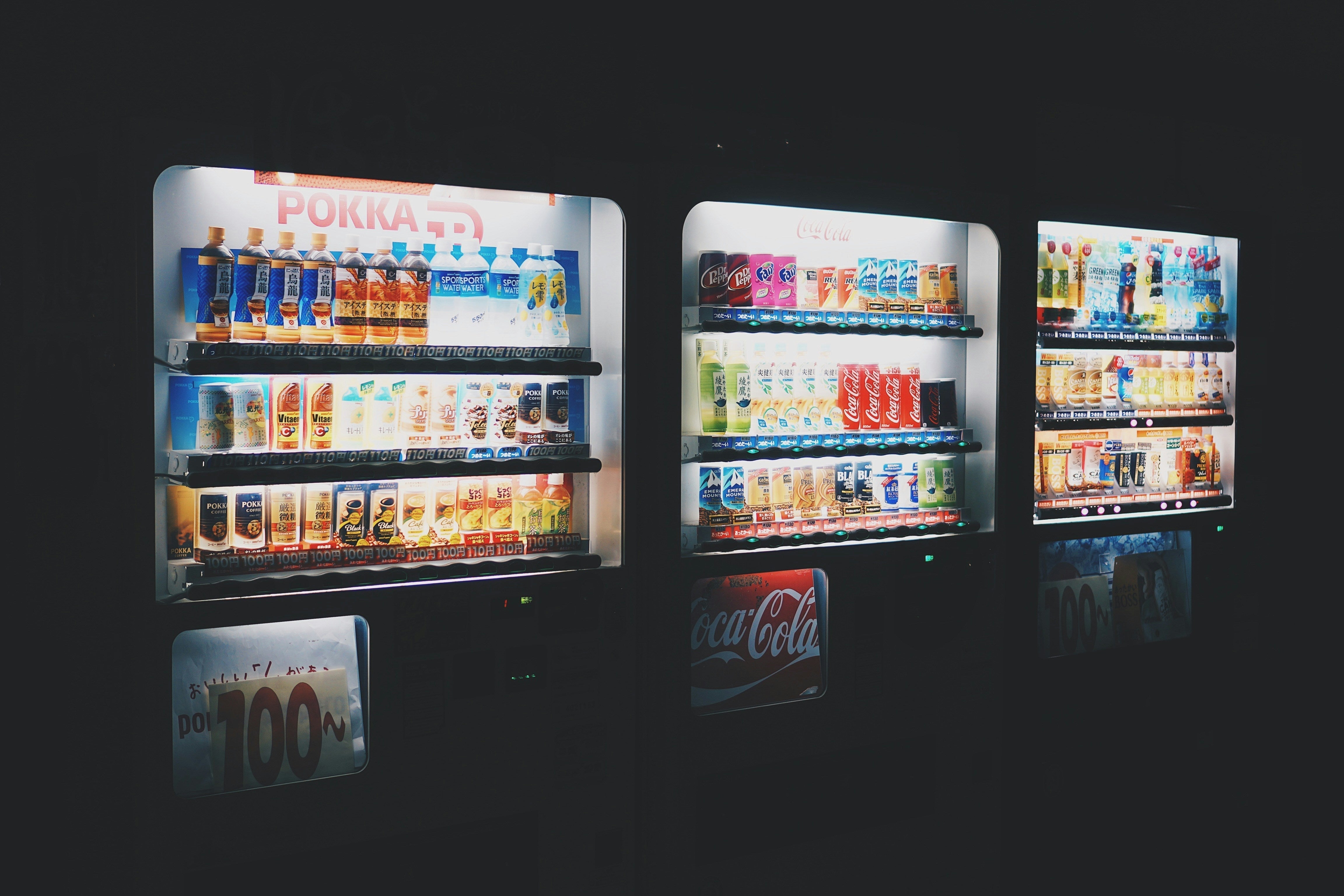


Design the perfect vending solution for your location and customers.

Join the VMFS newsletter and step into a thriving network dedicated to collective success.
One signup. Endless possibilities.
Formats, mechanics, hygiene, product economics, placement, and the rules on selling supplements unattended. Written for gym owners and vending operators.
A protein shake vending machine is an automated kiosk that prepares or dispenses supplement products without staff. Depending on the format it either mixes a shake on demand from bulk powder, dispenses a chilled ready to drink bottle, or blends a full drink to order. It handles payment, portioning, and delivery on its own, which is what separates it from a shelf behind a counter that needs someone standing at it.
The category goes by several names, and they are not interchangeable. Some units measure out scoops of bulk powder. Some mix a finished drink to order. Some simply hold sealed bottles at temperature and never touch the product at all. Those are three genuinely different machines with different running costs, different cleaning routines, and different permit positions behind them.
All four solve the same commercial problem from different angles, and the right one depends entirely on where the machine is going and who is walking past it. Operationally they sit in the same family as every other category of vending machines, with the same payment, monitoring, and restocking model behind them, and they overlap heavily with healthy vending machines in how sites evaluate them.
Here is the commercial case in one observation.
Most modern gyms sell 24 hour or extended hour access. Almost none of them staff the front desk for all of it. The supplement counter, which is usually the highest margin square footage in the building, is closed for a large part of the week. Every member who finishes a session at 5:40 in the morning or 10:30 at night walks past a locked shelf on the way out, at exactly the moment they are most likely to buy.
The scale of that gap is not small. Membership in the United States hit an all time high of 81 million people in 2025, and those members made close to 7 billion visits across roughly 114,370 fitness facilities. Meanwhile the US protein supplements market was valued at around $10.9 billion in 2025 and is forecast to grow at double digit rates, with the ready to drink segment expanding fastest of all.
Members do not stop wanting a shake because the desk is unstaffed. They just buy it somewhere else, or they skip it. Either way the gym loses the transaction it was best positioned to win.
The core argument for automated supplement retailThat is the space a protein shake vending machine occupies. It is not competing with the supplement counter. It is covering the hours the counter cannot, at the point in the building where the purchase intent already exists. For an operator it is the same vending machine business model applied to a category with materially better margins than snacks.
The sequence is short by design, because a member standing in workout clothes with a towel over their shoulder has very little patience. Every additional tap loses conversions.
The member chooses from the screen. Flavor is the primary variable, followed by size or scoop count. Because supplement selection involves more choice than a snack purchase, this is a category where touchscreen vending machines substantially outperform keypad units.
A gym floor is a cashless environment. Members carry a phone and a keyfob, not a wallet. Card, Apple Pay, Google Pay, and NFC contactless are the baseline, and some clubs integrate charges directly to the membership account. Options are covered on the payment system page.
In a powder unit an auger or dosing mechanism measures the scoop from a sealed hopper. In a ready to drink unit the machine simply retrieves the chilled bottle. This is the step that separates the formats, and it is covered in detail below.
Mixing units combine powder with chilled water or milk and agitate to a smooth consistency, then dispense into a cup or the member's own shaker bottle. Dispensing units deliver the sealed product directly. For tubs, glass bottles, and anything with damageable packaging, elevator delivery lowers the item rather than dropping it.
Every transaction reports which flavor sold. Flavor sell through is the single most important operating metric in this category, because a machine that runs out of chocolate on a Monday is effectively half a machine by Wednesday. Remote flavor level monitoring is what makes that manageable without daily visits.
This is the decision that determines everything downstream, including your cleaning routine, your permit position, and your unit economics. Most people looking at this category do not realise there are three genuinely different products under one name.
A protein powder vending machine measures bulk powder into a cup or the member's own shaker. Lowest cost per serving by a wide margin, no refrigeration needed, longest shelf life. The member adds their own liquid. Simplest to maintain and the cheapest to run.
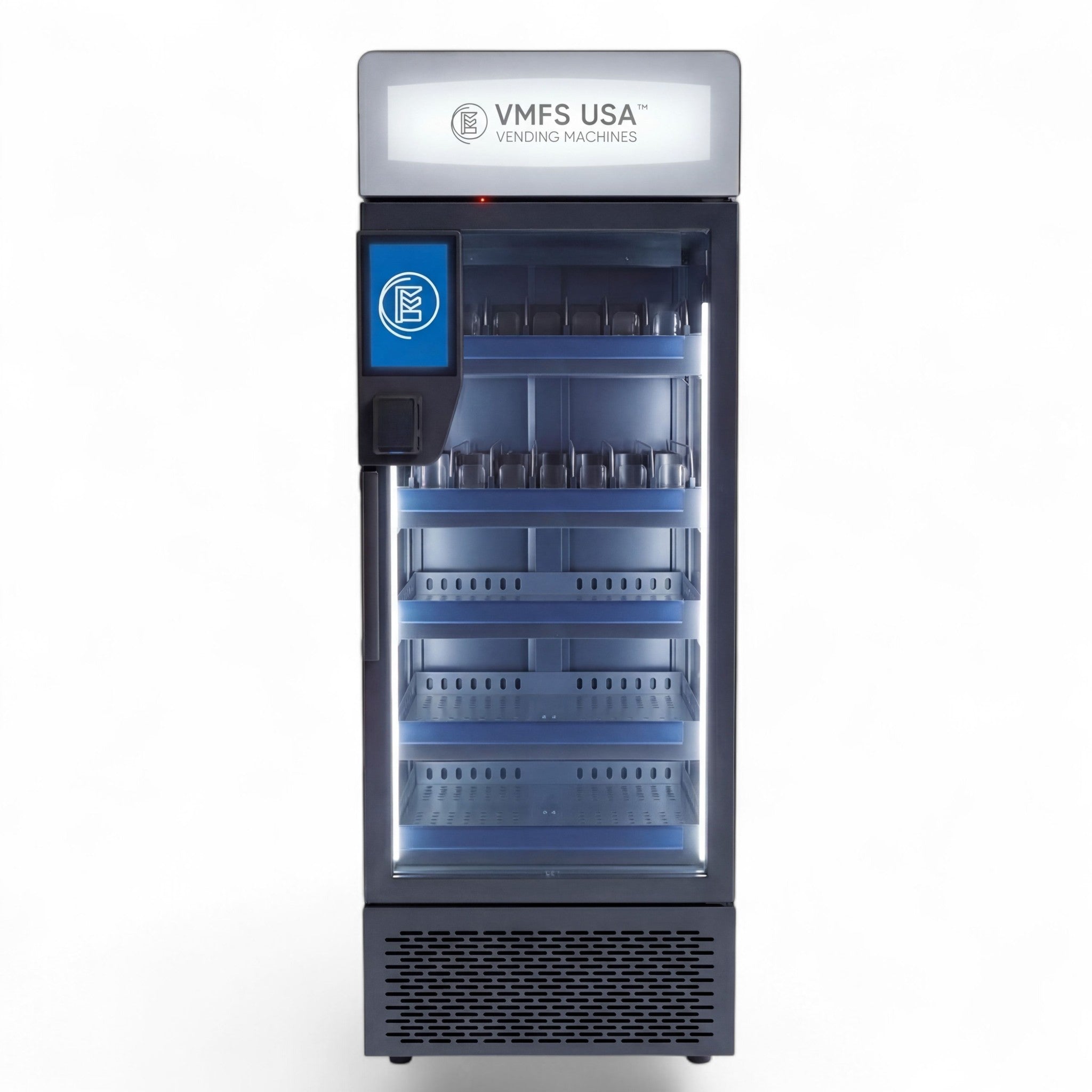
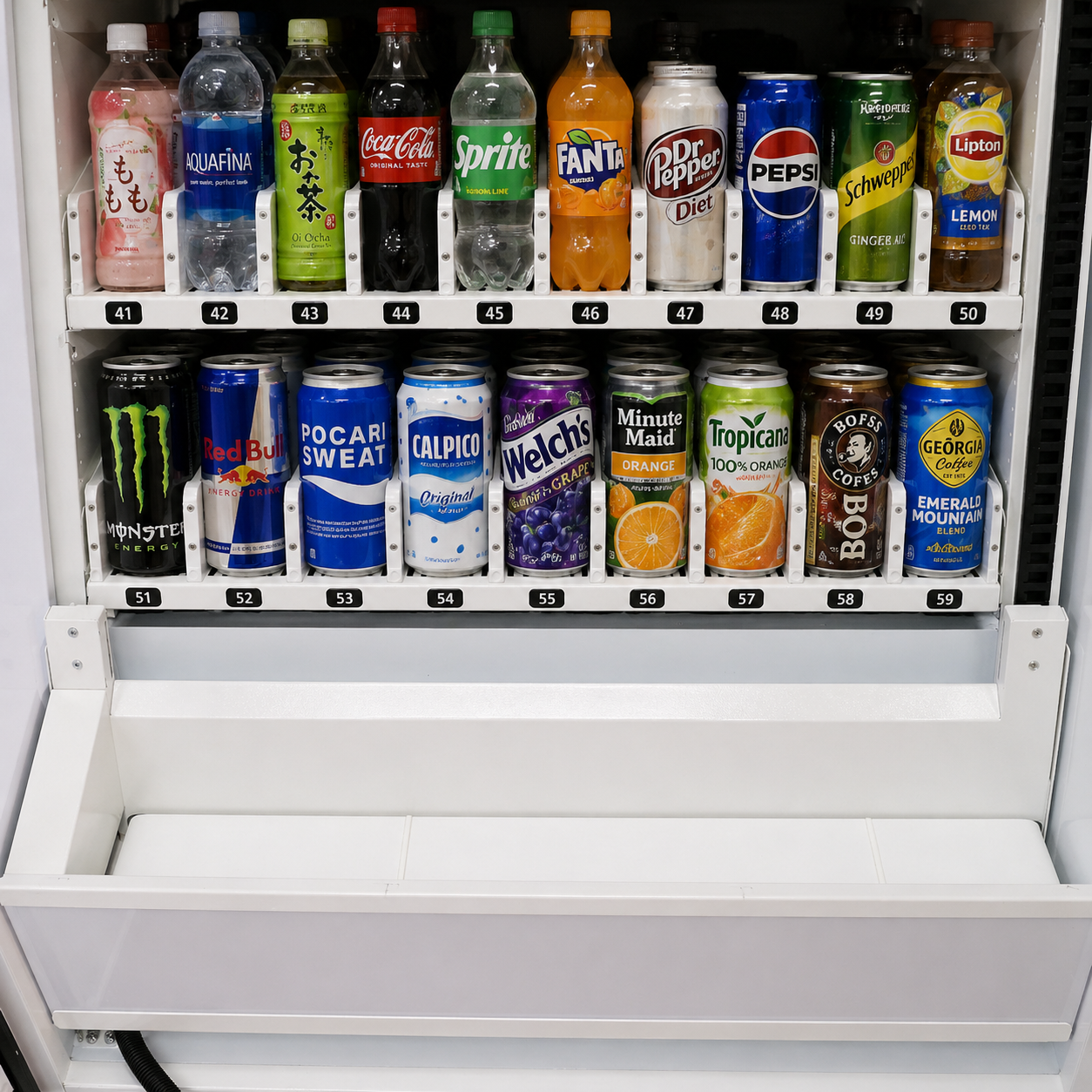
A protein drink vending machine holds sealed bottles at temperature. No mixing, no residue, no cleaning cycle, and no contact with the product at all. Highest cost per unit and lowest margin, but by far the simplest operationally. Effectively a refrigerated drink vending machine with a supplement planogram. An AI smart fridge or a smart fridge unit handles the same job as grab and go.
An automatic protein shake machine combines powder with chilled water or milk and mixes to order. Best perceived value and the strongest premium pricing, since the member receives a finished drink. Also the most demanding format: it needs a water source, a chilled line, and a proper cleaning cycle.
In practice most successful gym installations are hybrids. Shakes plus bars, plus recovery drinks, plus the accessories members forget. A combo vending machine covers the whole post workout basket rather than one item of it.
| Factor | Powder Dispensing | Ready to Drink | Blended On Demand |
|---|---|---|---|
| Cost per serving | Lowest | Highest | Low to moderate |
| Gross margin potential | Highest | Lowest | High |
| Refrigeration needed | No | Yes | Chilled liquid only |
| Water connection | No | No | Yes, or tank |
| Cleaning burden | Low | None | Daily or automated cycle |
| Perceived value | Moderate | Moderate | Highest |
| Best first install | Budget conscious clubs | Simplest launch LOWEST RISK | Premium and boutique clubs |
This is the first objection every gym owner raises, and any operator who cannot answer it in detail will not get the placement. It deserves a straight answer rather than a reassurance.
Ready to drink units never touch the product. The bottle is sealed at the factory and sealed when the member picks it up, which means the hygiene conversation is essentially over before it starts. Powder and blended units do handle open product, and that is where the real design questions live: is the hopper sealed against humidity, is the dispensing path enclosed, does the nozzle sit inside a protected chamber rather than exposed to the room.
Protein powder is hygroscopic, meaning it pulls moisture out of the air and clumps. A gym is a humid building. A hopper that is not properly sealed will produce caking, and caking causes two problems at once: inconsistent dosing and eventually a jam. Any serious protein vending machine addresses this at the hopper seal, not with a warning label.
Members who buy supplements track their intake. If the label says 25 grams of protein, the serving needs to deliver 25 grams of protein, consistently, on the four hundredth vend as reliably as the first. Volumetric dosing drifts as powder density changes with settling and humidity. Weight based or calibrated dosing holds accuracy far better. Ask any supplier directly how the machine doses and how often it needs recalibrating, because the answer tells you how the unit will behave in month six rather than in a showroom.
Blended units carry the highest burden because liquid protein residue is an ideal growth medium. Expect an automated rinse cycle between vends or on a timer, a periodic deeper clean of the mixing chamber, and a written cleaning log kept at the site. That log is the item most commonly missing when a health inspector visits, and it is trivial to set up in advance.
The shake is the anchor product, but a protein shake machine that only sells shakes leaves most of the basket on the table. The reason gym placements outperform is that the post workout purchase has several items in it, and members buy them together. Supplement categories carry materially stronger margins than snacks, which is the whole reason this niche is worth entering.
| Product Category | Typical Vend Price | Typical Gross Margin | Notes |
|---|---|---|---|
| Mixed protein shake, single serve | $4 to $7 | 60 to 75% | Highest margin item in the machine when dispensed from bulk powder |
| Ready to drink protein bottle | $4 to $6 | 30 to 45% | Lower margin, zero preparation, strong impulse conversion |
| Protein bar | $3 to $5 | 45 to 60% | Attaches to a shake purchase more often than it sells alone |
| Pre workout single serve | $3 to $6 | 60 to 70% | Sells before the session rather than after, widening your daypart |
| Electrolyte and hydration | $2 to $4 | 50 to 65% | Year round, and spikes in summer and in hot yoga settings |
| Creatine single serve | $2 to $4 | 60 to 70% | Daily use product, drives genuine repeat frequency |
| Shaker bottles | $8 to $15 | 55 to 70% | The forgot my shaker purchase, near pure impulse |
| Accessories: straps, grips, chalk | $6 to $20 | 55 to 70% | Low velocity, high margin, and they make the machine feel considered |
Figures are typical market ranges for planning purposes. Actual margins depend on your sourcing, volume, and pricing. Build a site specific projection in the ROI calculator.
If you want to move quickly, some vending machines are ready to ship rather than built to order. The variable that predicts performance is not raw membership. It is weekly visit frequency multiplied by hours the desk is unstaffed. A 24 hour club with 1,200 committed members outperforms a staffed daytime facility with 3,000 casual ones, because your machine is the only option during a much larger share of the week.
Product mix should be planned per site rather than copied between them, which is what the product mix tool is for. A powerlifting gym and a hot yoga studio buy almost nothing in common.
Configure format, capacity, payment, and product mix before delivery. Financing available on all units.
Fitness is the obvious home, but it is not the only one, and within fitness the differences between venue types are large.
Put the machine on the exit path, not in the lobby. The purchase decision is made in the last ninety seconds of a session, which happens between the floor and the door. A machine in the entrance lobby is passed on the way in, when nobody wants a shake, and missed on the way out because it sits behind the turnstile.
Hydration is worth planning alongside it, since a water bottle vending machine captures a purchase almost every member makes. Second consideration: sight line from the training floor. Supplements are a social purchase in gym culture. Members buy what they see other members holding, so a machine visible from the free weight area sells more than an identical machine around a corner.
For larger clubs and multi building campuses, a single cabinet often becomes the constraint within a year. That is the point at which a micro market makes more sense than a second machine, and where the screen itself becomes an asset through screen advertising to members, since a gym audience is a demographically defined, captive, repeat viewership.
Supplements sit in a different regulatory category from snacks, and the difference is not trivial. Dietary supplements in the United States are governed under DSHEA, which sets requirements around labeling, claims, and ingredient disclosure. Selling them through an unattended machine does not remove any of those obligations.
Three specifics are worth flagging because they catch operators out. Allergen disclosure: milk is a major allergen and most protein powders are dairy based, so the machine has to communicate that clearly at the point of selection. Open dispensing: a machine that measures loose powder or mixes a drink is preparing food in the language of many county codes, which is a different permit from a sealed bottle machine. Claims: screen copy that promises results is a regulatory exposure entirely separate from the health department.
A new machine has one window where attention is free, and it is the first ten days. After that it becomes furniture. Gyms are unusually good launch partners because they already own a direct channel to every single person who will ever use the machine.
Member email, app push, and the whiteboard at the desk. Ask for it during the placement conversation and write it for them so it takes thirty seconds to send.
A machine that looks like part of the gym gets treated as an amenity. One that looks like an outside intrusion gets treated as clutter. Custom wrap options matter more here than in almost any other placement.
A free or reduced price launch week converts trial into habit. Supplements are the most repeat driven category in vending, so the first serving pays for itself quickly.
Send the gym owner the numbers and the top selling flavor. Almost no operator does this, it takes five minutes, and it is how one placement becomes a referral to the club down the road.
On the equipment side, every unit ships with a warranty and ongoing help from the Customer Success Team, which is the answer gym owners want when they ask who fixes it at 6am on a Sunday.
For the wider campaign work, local search presence, and member facing creative, VMarketed builds marketing specifically for vending operators rather than adapting retail playbooks.
The knowledge base goes deeper on day to day operations. Not sure which unit suits the club? Take the machine finder quiz.
VMFS USA supplies vending machines to operators across all 50 states, with configuration handled before shipping, white glove delivery, warranty, and financing on every unit.
White Glove Delivery · Warranty Included · VMFS Cloud · How to start a vending business


Compartir:
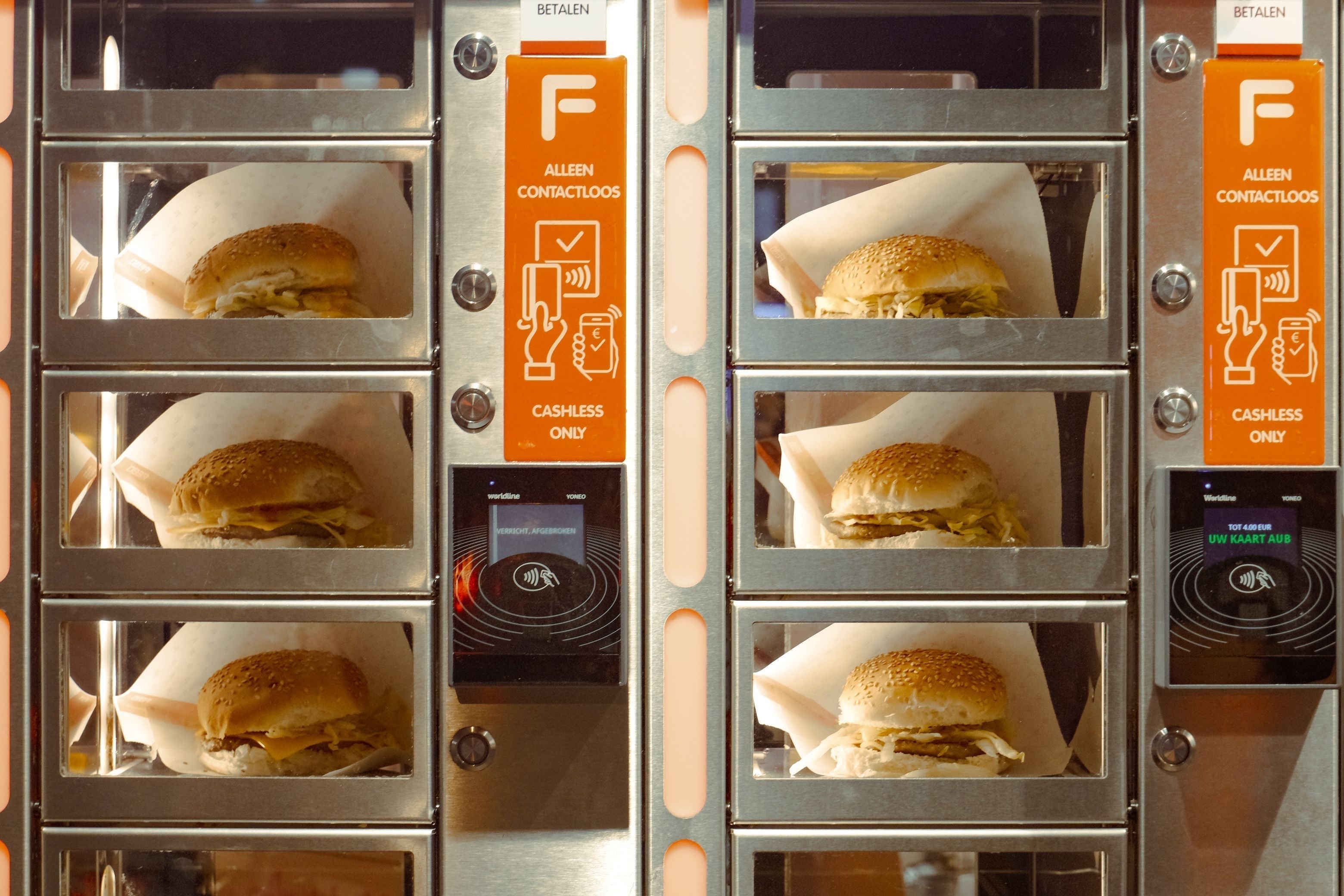
Burger Vending Machines: How Hot Food Vending Actually Works