



Design the perfect vending solution for your location and customers.

Sales, inventory and alerts for your whole route, from one machine to a fleet.
Answer a few questions about your location, products and budget and get a shortlist.
Estimate revenue, payback period and margin before you buy.
Sales, setup help, warranty and parts from the VMFS USA team.
Join the VMFS newsletter and step into a thriving network dedicated to collective success.
One signup. Endless possibilities.
Finding the best coffee machine for a large office requires assessing high-volume output capacity, multi-user speed, milk texturing automation, and robust continuous plumbing. Large enterprises housing 50 to 200+ employees face intense morning rushes where standard domestic brewers fail instantly. Investing in a heavy-duty commercial unit eliminates employee downtime, reduces commercial café runs, and directly supports workplace satisfaction, as highlighted in this guide to purchase office coffee machine.
Evaluating enterprise-grade hardware prevents frequent mechanical breakdowns and guarantees consistent beverage quality across hundreds of daily extractions. For a broader look at current industry projections, consult the insights inside the coffee vending machine market 2025 report. Selecting the correct system keeps corporate breakrooms running efficiently without bottlenecks.
A corporate office with over fifty active workers consumes massive quantities of hot beverages during compressed morning and post-lunch windows. When a hundred people demand espresso, lattes, or drip coffee simultaneously, slow extraction cycles create frustrating lines and lower workplace morale. Workplace productivity drops because employees waste valuable minutes walking off-site for commercial caffeine fixes.
Deploying a high-capacity machine keeps teams focused inside the building while cultivating collaborative breakroom spaces. Business leaders can explore how premium refreshments improve retention through the research on how coffee machine helps in retaining employees. Furthermore, understanding physical spatial requirements ensures the unit fits cleanly into corporate layouts, as detailed within the office coffee machine dimensions reference.
Enterprise coffee systems must feature direct water line hookups to eliminate manual refilling bottlenecks during high-demand hours. Internal filtration attachments prevent scale buildup, protecting internal heating elements from hard water damage. Without direct plumbing, staff members spend hours hauling water pitchers back and forth.
Large office environments demand bean hoppers holding at least two pounds of coffee alongside oversized internal waste drawers. These dimensions ensure the unit can process 100 to 250 cups daily before requiring maintenance alerts. Smaller bean containers lead to constant interruptions and messy refill procedures during critical work hours.

Commercial machines utilize dual-boiler systems to extract espresso and steam milk simultaneously without losing thermal stability or pressure. Rapid heating cycles maintain consistent beverage temperatures even when back-to-back orders are placed across the department. Reviewing baseline setup procedures via how to use a coffee machine in office helps facilities teams train personnel efficiently.
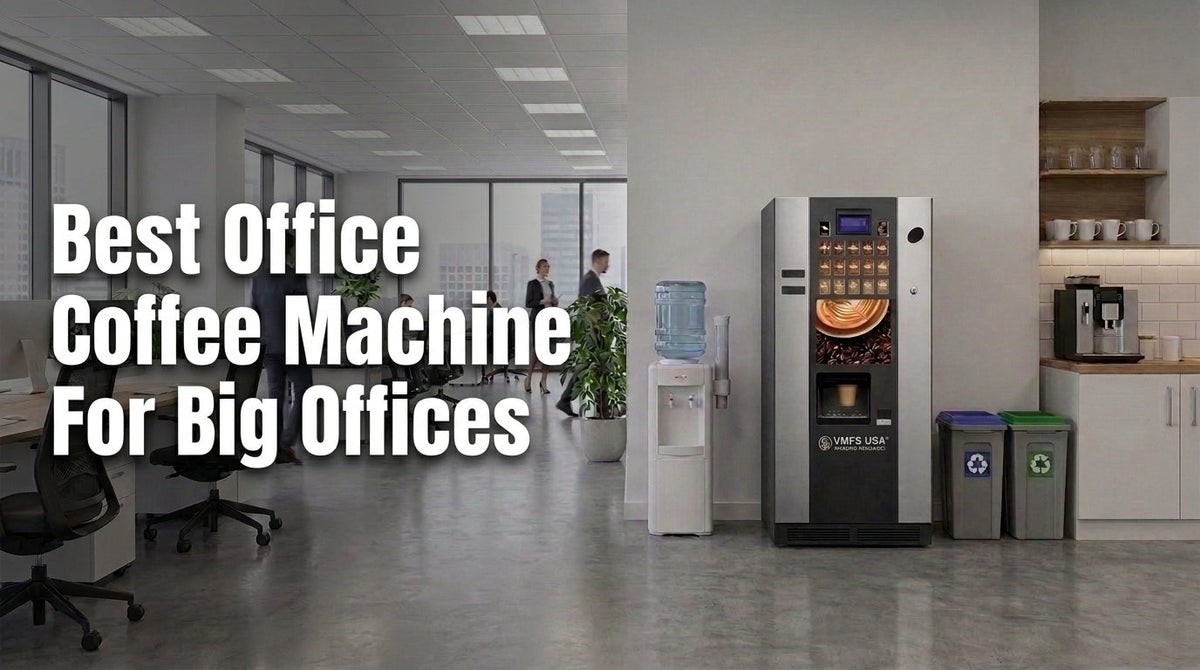
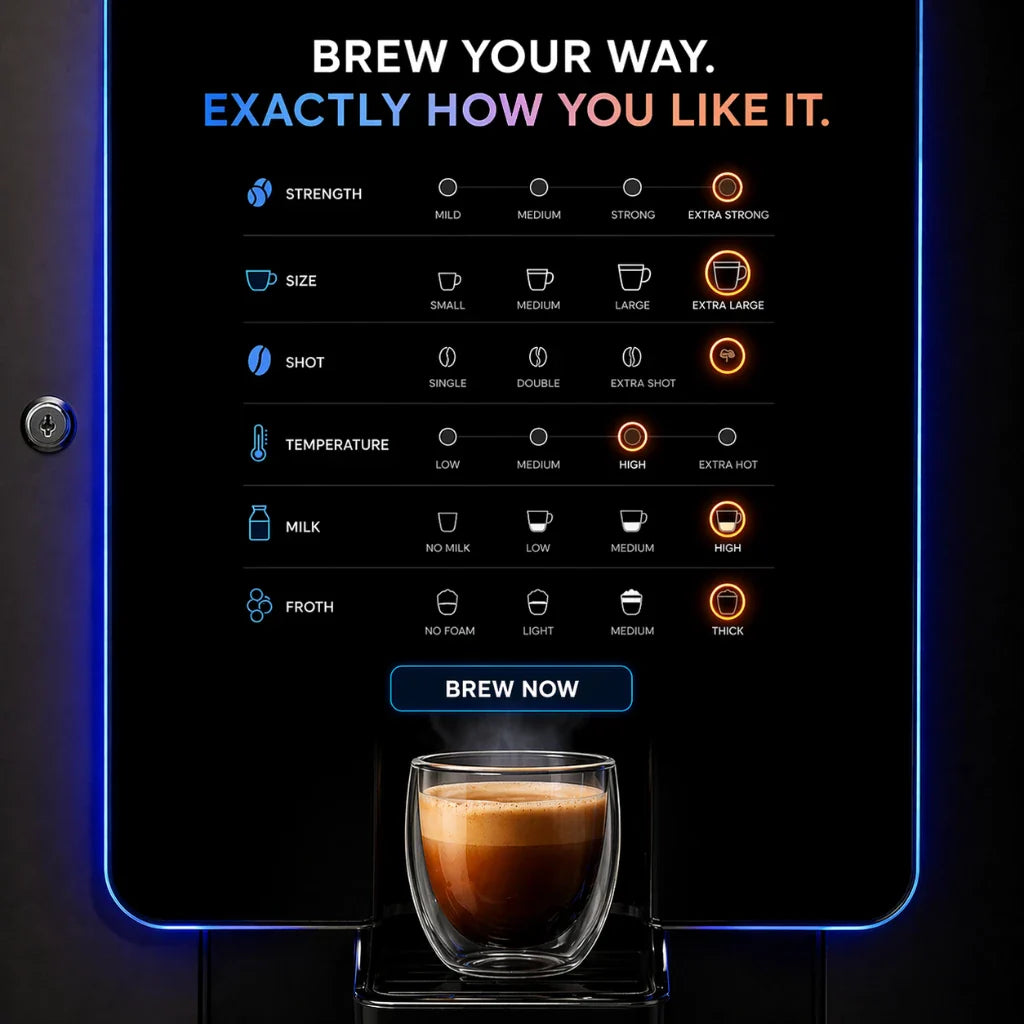
The VMFS USA CorePro Coffee Vending Machine serves as the definitive engineering solution for expansive corporate headquarters and high-traffic workspaces. Built for heavy enterprise duty, this unit features industrial-grade grinders, large-capacity ingredient canisters, and direct-line plumbing integration. It handles hundreds of complex milk-based and black coffee beverages daily without missing a beat.
Deploying this system transforms a standard breakroom into a high-performance beverage station capable of serving diverse professional tastes. You can review full technical data directly on the VMFS USA CorePro coffee machine for large offices product page. Companies managing multiple departments can also browse the complete coffee vending machines collection to compare alternative sizes like the pro coffee vending machine for mid-sized branches.
Pros: Massive daily cup capacity, direct plumbing hookup, heavy-duty commercial grinders, automated milk frothing, and cashless payment integration.
Cons: Requires dedicated professional floor or large counter space; higher upfront investment compared to consumer machines.
Choosing the right equipment format depends heavily on employee headcounts, daily drink volume, and budget allocations. The table below outlines how enterprise commercial coffee solutions compare across key operational metrics.

For deeper context on scaling workplace refreshments, examine the guides covering best office coffee machines and the comprehensive ultimate guide to office coffee machines.
Strategic breakroom positioning prevents bottlenecks during peak morning arrival times and department lunch breaks. Placing the machine away from narrow doorways ensures smooth foot traffic flow and easy access to auxiliary supplies. Facility managers can optimize layout planning by consulting the best location to place office coffee machine guidelines.
Consistent preventive maintenance safeguards your capital investment against premature hardware failure or scale blockages. If mechanical issues arise, administrators can reference the expert troubleshoot coffee vending machine troubleshooting manual. Establishing structured employee usage policies via an office coffee machine policy template minimizes equipment misuse. Entrepreneurs looking to scale internal services into a broader venture can also enroll in the coffee vending business resources course.

The best coffee machine for a large office is a plumbed, high-capacity bean-to-cup unit like the VMFS USA CorePro Coffee Vending Machine. It handles hundreds of daily extractions, features automated milk frothing, and supports continuous enterprise demand.
A large office machine must comfortably produce between 100 and 300 cups daily to withstand simultaneous morning and afternoon rushes. High-volume hoppers and direct water lines prevent constant manual reloading.
Direct plumbing eliminates the need for manual water tank refills, saving staff hours of labor during busy workdays. It ensures uninterrupted brewing capacity even when dozens of employees use the station consecutively.
Bean-to-cup machines grind fresh whole beans on demand, offering lattes, cappuccinos, and espressos that elevate workplace satisfaction far beyond standard batch drip coffee. They also eliminate paper filter waste.
Enterprise units require daily automated milk circuit cleaning cycles and a weekly deep rinse of the internal brewing assembly. Following a routine schedule prevents residue buildup and extends machine lifespan.
Speed, direct water line connectivity, dual-boiler thermal stability, and large ingredient hoppers are the most critical features for corporate environments. Touch interfaces also minimize user error.
Investing in whole-bean commercial machines reduces per-cup operating expenses compared to single-serve capsule systems. Buying coffee beans and cleaning supplies in bulk further lowers long-term overhead.
Essential upkeep supplies include commercial water filtration cartridges, food-safe descaling solutions, and milk line sanitation tablets. Regular replacement of these items prevents costly emergency repairs.
Providing high-end cafe beverages onsite reduces off-site coffee runs and encourages valuable peer collaboration in the breakroom. Quick access to quality caffeine boosts daily focus and morale.
It should be installed in a spacious, well-ventilated breakroom on a sturdy, level surface near a dedicated water line and power outlet. Proper clearance around the unit ensures smooth maintenance access.

Compartir:
How Much Does a Protein Shake Vending Machine Cost? (2026 Price & ROI Guide)