


Commercial Protein Shake Vending Machine Pricing Overview
A commercial protein shake vending machine costs between $3,000 and $14,500+ depending on internal mixing technology, refrigeration capacity, and interactive telemetry features. Standard refrigerated glass-front machines designed for pre-packaged, Ready-to-Drink (RTD) protein bottles cost between $3,000 and $5,500. Automated fresh powder-mixing machines equipped with self-cleaning systems, touchscreens, and multi-dispensing hoppers range from $6,500 to $14,500+.
The commercial fitness vending industry splits equipment costs across distinct functional tiers. Selecting the right hardware depends on your location's traffic volume, labor availability for cleaning, and target customer demographic.

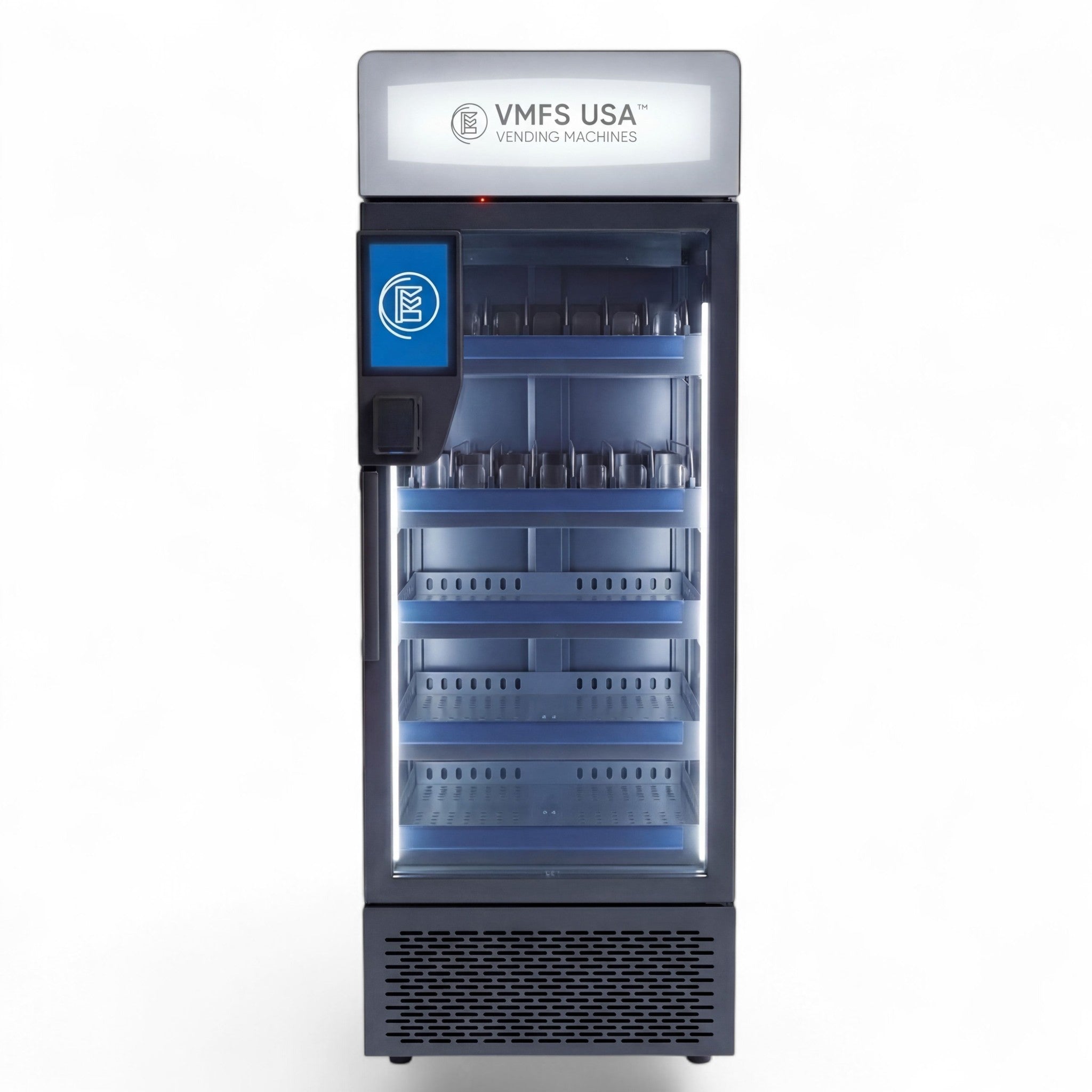
Evaluating equipment costs requires analyzing total cost of ownership rather than initial purchase price alone. Advanced hardware like the VMFS USA Protein Shake Vending Machine minimizes operator labor through automated self-cleaning features, directly reducing daily maintenance expenses while maintaining hygiene standards required for liquid food service.
Core Factors Dictating Protein Vending Machine Costs
Hardware manufacturing costs depend directly on internal sanitization technology, fluid dynamics engineering, and interactive payment components. Understanding these mechanical elements allows operators to select machinery that balances capital expenditure with daily operational reliability.
Dispensing Mechanism and Powder Management
Powder-mixing units require high-torque peristaltic pumps, food-grade canisters, and high-speed mixing whisk motors. Machines with variable powder-to-water dosing pumps cost more because they offer custom nutrition profiles (e.g., 25g vs. 50g protein shots). Precision augers prevent clumping and moisture ingress, preserving raw inventory quality over extended operating periods.
Automated Sanitization Systems
Automated sanitization engineering accounts for a significant portion of equipment manufacturing costs. Fresh-mix machines require internal hot-water flush cycles, UV-C line sterilization, and food-safe drainage circuits to comply with municipal health regulations. Machines equipped with programmable automatic rinse cycles reduce physical site visits, lowering monthly labor overhead.
Payment Telemetry and Interactive Displays
Modern consumers expect touchless transaction capabilities, mobile wallet acceptance, and high-definition visual interfaces. Integrating 21.5-inch to 32-inch capacitive touchscreens running cloud-connected telemetry increases base hardware costs by $1,200 to $2,500. Remote management platforms allow operators to track inventory levels, monitor water line pressure, and alter product pricing in real time.
Fresh Powder-Mixing vs. Ready-to-Drink (RTD) Units
Deciding between fresh powder-mixing machinery and pre-packaged RTD refrigerated vendors directly impacts initial capital requirements and ongoing profit margins. Each equipment design presents distinct operational characteristics.

Fresh Powder-Mixing Machines
Fresh-mix hardware blends raw protein powder with purified water instantly upon customer payment. These units deliver significantly higher gross profit margins because raw powder purchased in bulk costs far less per serving than pre-bottled beverages.
-
Pros: Gross margins frequently exceed 75% to 85%; customers receive customized, freshly blended drinks; higher price point tolerance ($5.00 – $8.00 per cup).
-
Cons: Higher initial capital investment ($6,500 – $14,500+); strict requirements for daily or weekly water filter replacement and line sanitation.
Ready-to-Drink (RTD) Refrigerated Machines
RTD machines utilize standard cold health safety vending mechanics to dispense sealed protein bottles or cans. Operators seeking simplified logistics often utilize fridge vending machines or dedicated healthy vending machines to distribute pre-packaged nutritional drinks.
-
Pros: Lower initial machine purchase cost ($3,000 – $5,500); zero fluid mixing mechanics; minimal maintenance limited to standard refrigeration unit care.
-
Cons: Lower profit margins (40% to 50%) due to high wholesale bottle costs; limited inventory capacity per shelf relative to bulk powder canisters.
Reviewing different types of vending machines before committing capital ensures alignment between your local logistics capabilities and the equipment's mechanical demands.
Initial Stocking and Ongoing Operational Expenses
Launching a protein vending operation requires capital beyond the base machine purchase price. Initial working capital must cover inventory, water filtration setups, telemetry software, payment processor gateway fees, and routine maintenance materials.
Initial Stocking Costs
Stocking a fresh-mix machine with premium whey isolate, plant protein options, flavor drops, paper cups, and lids costs between $400 and $800 per machine loadout. For RTD bottle vendors, initial inventory costs range from $600 to $1,200 due to higher wholesale unit prices. Understanding how much it costs to stock a vending machine allows operators to calculate required starting liquidity accurately.
Recurring Operational Overhead
-
Telemetry and SaaS Connectivity: $10 to $30 per month per machine for cellular data and inventory management software.
-
Credit Card Processing Fees: 2.5% to 5.5% per transaction depending on the payment hardware provider.
-
Water Filtration Maintenance: $70 to $150 bi-annually for commercial line filter replacements.
-
Utility Consumption: $20 to $45 monthly for continuous refrigeration and mixing system power draw.
-
General Maintenance: Allocating 3% to 5% of gross revenue for spare parts handles routine component wear. Factoring in long-term vending machine maintenance costs prevents operational downtime from impairing cash flow.
Operators scaling across multiple locations often hire route technicians to assist with restocking and sanitization. You can evaluate competitive labor rates by searching vending machine restock jobs to benchmark local servicing costs accurately.
Profit Margins, Revenue Potential, and Payback Timeline
Protein shake vending delivers strong unit economics driven by high consumer demand in target fitness environments. Fresh-mix protein shakes cost approximately $0.90 to $1.30 in raw materials (powder, water, cup, lid) and retail for $5.00 to $7.50, resulting in an average gross margin of 75% to 82%.
Financial Unit Economics Breakdown
-
Average Retail Price per Shake: $6.00
-
Cost of Goods Sold (COGS): $1.15
-
Payment Processing & Telemetry: $0.25
-
Location Revenue Split / Rent (15%): $0.90
-
Net Profit per Cup: $3.70

Achieving high profit margins depends heavily on setting competitive retail price points without suppressing purchase frequency. Consulting a professional operator pricing guide helps align your pricing structure with local purchasing power.
Analyzing overall vending machine profit margin metrics across your machine fleet provides the financial baseline required when applying for business expansion loans.
High-Yield Placement Locations for Fitness Vending
Location quality remains the single largest factor determining vending profitability. High-foot-traffic facilities with health-conscious patrons generate the sales volume needed to achieve rapid payback on capital investment.
Commercial Gyms and Health Clubs
Large-format commercial gyms boasting 2,000+ active members provide ideal foot traffic. Placing machines directly near locker room exits or weight room transition areas captures post-workout recovery demand when protein synthesis timing is top of mind for athletes.
CrossFit Boxes and Functional Fitness Studios
CrossFit boxes exhibit lower overall member counts than commercial gyms but demonstrate significantly higher per-capita spend. Members actively prioritize workout nutrition, enabling higher retail pricing per shake. Reviewing guidelines on gym vending machines clarifies optimal placement strategies within athletic facilities.
Universities and Student Athletic Complexes
Collegiate recreation centers offer continuous daily foot traffic from young demographics accustomed to touchless, cashless transactions. Equipment utilizing AI grab-and-go vending machines or specialized automated protein dispensers excels in these high-volume institutional environments.
For a comprehensive evaluation of site selection parameters, review detailed guides on how to choose a profitable vending location before finalizing lease agreements.
Business Formation and Legal Protection for Operators
Operating commercial vending machinery requires proper legal structuring to mitigate liability, protect personal assets, handle sales tax compliance, and secure commercial location contracts.
Entity Selection and Asset Protection
Establishing a formal legal entity insulates personal assets from business liabilities, such as slip-and-fall claims or product liability issues. Most vending operators utilize a Limited Liability Company (LLC) structure due to its operational simplicity and pass-through tax treatment.
If you are setting up a commercial vending route, you can form an LLC for a vending machine business through legal setup specialists to ensure your state filings and tax structures are properly established. Maintaining operational compliance also requires appointing a dedicated registered agent for a vending machine business to manage official state correspondence and legal notices.
Tax Compliance and Permitting
-
Sales Tax Registration: Vending sales are subject to local and state sales tax. Operators must register with their state department of revenue before placing equipment.
-
Health Department Permits: Fresh-mixing machinery utilizing internal water lines and bulk powder dispensers may require local health department food handling permits depending on county regulations.
Securing Placement Contracts and Location Partnerships
Securing profitable machine placement requires presenting clear financial benefits to property managers and gym owners. Typical location contracts involve either a fixed monthly space rental fee ($100 – $300/month) or a revenue-sharing agreement (10% to 20% of gross sales).
Location Acquisition Strategy
-
Identify Target Sites: Map high-density athletic facilities using online tools like vendingfinder.com to assess competitive machine coverage in your area.
-
Present Business Value: Emphasize to property owners that a protein vending machine adds a modern amenity for their members without requiring capital layout or staff oversight from their team.
-
Draft Location Contracts: Formalize operational boundaries, utility usage terms, liability responsibilities, and commission structures using formal agreements.
Operators seeking location contracts can study proven outreach techniques on how to find vending machine location contracts to accelerate site acquisition.
Property owners interested in hosting vending hardware can list their facility details directly through specialized placement networks. You can list your property for vending placement to connect directly with qualified regional operators looking for active locations.
Before purchasing hardware, reviewing a complete guide on buying a vending machine from industry suppliers like VMFS USA helps ensure your equipment selection aligns with long-term route expansion goals.
Frequently Asked Questions
How much does a commercial protein shake vending machine cost on average?
A new commercial protein shake vending machine costs between $3,000 and $14,500+. Entry-level refrigerated bottle vendors start near $3,000, while advanced fresh powder-mixing machines with automated self-cleaning features average $6,500 to $12,000.
Are protein shake vending machines profitable?
Yes, protein shake vending machines are highly profitable. Fresh-mix machines generate gross margins between 75% and 82%, with average net profits ranging from $2.00 to $4.00 per cup sold depending on location pricing and traffic.
How often do fresh protein vending machines require cleaning?
Automated fresh-mix machines perform daily programmable rinse cycles automatically. Manual deep cleaning of powder hoppers, mixing bowls, and waste lines is typically required once or twice per week depending on sales volume and health code requirements.
Can I place a protein vending machine in a gym for free?
Placing a machine in a gym usually requires offering the facility owner either a 10% to 20% commission on gross sales or paying a fixed monthly space rental fee ranging from $100 to $300.
How long does it take to recoup the cost of a protein vending machine?
The payback period for a protein vending machine averages 3 to 8 months in high-traffic gym locations selling 20 to 30 shakes per day, driven by strong gross profit margins.
What ingredients do automated protein vending machines use?
Fresh-mix protein vending machines use commercial-grade protein powder canisters, purified water supplies (connected via direct plumbing or internal water jugs), flavor concentrates, and automated cup drop mechanisms.
Do protein vending machines require direct water plumbing?
No, direct plumbing is not strictly required. Most professional machines support dual water configurations, operating via direct municipal lines with inline filtration or using internal food-grade 5-gallon water carboys with submerged pumps.
What is the difference between an RTD vending machine and a powder-mixing vendor?
An RTD machine dispenses pre-packaged cold bottles with lower gross margins (40-50%), while a powder-mixing vendor blends powder and water on-demand, yielding much higher gross margins (75-85%).
How much electricity does a protein shake vending machine consume?
A protein shake vending machine consumes approximately 3 to 7 kWh per day depending on ambient refrigeration demand and heating elements used during automated cleaning cycles, costing about $15 to $40 monthly.
What business structure is best for starting a vending route?
A Limited Liability Company (LLC) is the recommended business structure for vending operators because it protects personal assets from business liability, simplifies tax filings, and provides a professional entity for signing location contracts.
Compartir:
How to Start a Protein Shake Vending Machine Business
Best Coffee Machine for a Large Office: The Definitive 2026 Enterprise Buying Guide