



Design the perfect vending solution for your location and customers.

Sales, inventory and alerts for your whole route, from one machine to a fleet.
Answer a few questions about your location, products and budget and get a shortlist.
Estimate revenue, payback period and margin before you buy.
Sales, setup help, warranty and parts from the VMFS USA team.
Join the VMFS newsletter and step into a thriving network dedicated to collective success.
One signup. Endless possibilities.
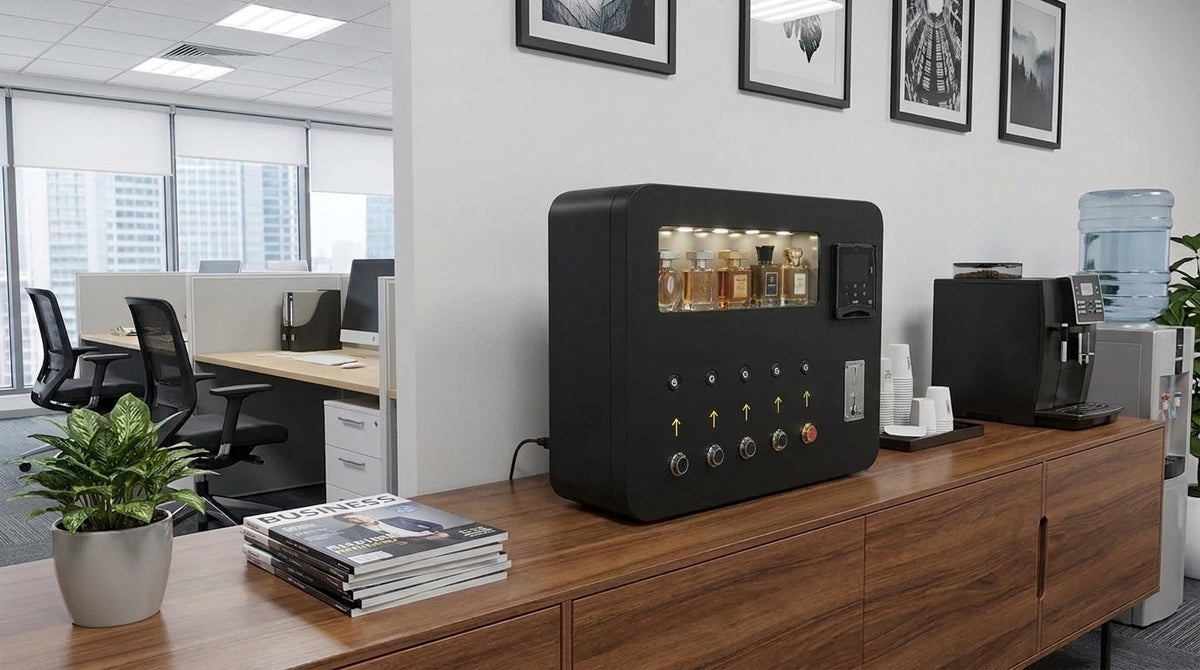
A commercial perfume vending machine costs between $750 and $10,650, depending on whether you choose a wall-mounted spray dispenser, a freestanding touch-screen kiosk, or a full-sized glass-front bottled fragrance machine.
Standard commercial spray vending machines engineered for high-traffic venues typically average $3,000, offering integrated payment systems, liquid spray nozzles, and cloud telemetry management.

Perfume vending hardware falls into two primary engineering categories: liquid spray dispensers that sell measured bursts of cologne, and mechanical shelf vendors that deliver full or sample-sized glass fragrance bottles.
A dedicated perfume vending machine from industry-leading manufacturers like VMFS USA costs approximately $3,000 for a five-slot, tray-free timed spray model.
Entry-level wall-mounted spray units cost between $750 and $1,200, whereas high-capacity glass-front machines equipped with soft-touch delivery elevators range from $6,500 to $10,650.
Hardware price variations stem directly from cabinet dimensions, payment acceptor technology, housing security, and internal dispensing mechanisms.
Heavy-gauge steel enclosures with anti-prying locks cost roughly $300 to $600 more than basic plastic alloy frames but prevent costly vandalism in unattended nightlife venues.
Machines integrated with high-definition digital screens and interactive touch interfaces command higher upfront capital investments because they double as digital advertising displays.
Hardware costs directly reflect dispensing capacity, security level, and automated software integration.
| Machine Classification | Typical Price Range | Capacity / Slots | Dispensing Type | Ideal Location Placement |
| Compact Wall-Mount Spray | $750 – $1,200 | 5 Slots (100ml bottles each) | Timed Spray Atomizer | Restrooms, Lounges, Nightclub Entrances |
| Freestanding Commercial Spray | $1,500 – $3,000 | 5 to 10 Spray Modules | Direct Measured Spray | Concert Halls, Fitness Centers, Event Venues |
| Smart AI Glass-Front Kiosk | $3,950 – $6,500 | 15 to 30 Product Slots | Shelf Pick-and-Grab / Vision | Upscale Shopping Malls, Transit Hubs |
| Smart Elevator Luxury Vendor | $8,650 – $10,650 | Up to 168 Bottled Scents | Gentle Conveyor Elevator | Airport Terminals, Luxury Hotel Lobbies |
Before investing in equipment, review comprehensive data on buying a vending machine to align your equipment selections with target venue demographics.
Beyond the initial equipment purchase, automated vending requires ongoing software infrastructure to track inventory and handle payment processing.
Cloud management telemetry typically costs $9.95 to $39.99 per month per machine, supplying operators with real-time stock alerts, sales analytics, and temperature status.
Cellular connectivity modules carry an additional $10 per month data charge, eliminating dependence on location Wi-Fi networks and guaranteeing 99.9% uptime for transaction approvals.
Stocking a perfume vending machine requires an initial inventory outlay of $150 to $600 for liquid spray models, or up to $2,000 for luxury bottled units.
Liquid spray machines consume bulk designer fragrances or concentrated oil blends that yield thousands of applications per bottle.
A standard 100ml fragrance reservoir provides roughly 1,000 to 2,000 spray applications, keeping per-unit consumable expenses exceptionally low.
Operators analyzing baseline inventory budgeting should consult guidelines on how much does it cost to stock a vending machine to calculate gross margin requirements across different product categories.
Cashless payment hardware adds $225 to $450 per unit during initial assembly, allowing machines to process credit cards, debit cards, Apple Pay, and Google Pay.
Card processors charge a standard merchant fee averaging 2.5% to 5% plus $0.05 to $0.10 per transaction.
Integrated Nayax or VMFS cashless devices transmit encrypted transaction data over LTE cellular networks, ensuring reliable payment settlements directly to your business bank account.
Securing prime placement requires negotiating a monthly rental fee or a commission percentage with property owners.
Standard location agreements allocate 10% to 25% of gross monthly sales to venue management in exchange for floor space and power supply.
Operators evaluating site economics can explore detailed analyses of the vending machine revenue split operator vs location vs supplier to craft profitable contracts.
Property owners interested in hosting machines can list their available space on VPlaced for location owners to connect with verified operators.
Routine servicing expenses for spray machines remain minimal due to the absence of mechanical drop trays or complex internal coils.
Annual maintenance allocations typically average $150 to $300 per unit, covering nozzle cleaning, fluid line sanitization, and cabinet key replacement.
Reviewing vending machine maintenance costs ensures proper cash reserve planning for unexpected component replacements.
Factory warranties generally cover major mechanical and electronic parts for 12 to 36 months.
Perfume vending delivers exceptionally high gross margins because consumers pay for immediate convenience and premium sensory refreshment.
Vendors typically set per-spray pricing between $0.50 and $2.00, while the raw fluid cost per spray measures less than $0.03.
Gross profit margins routinely hover between 80% and 95%, making fragrance vending significantly more profitable per transaction than traditional packaged food or beverage route operations.
Detailed calculations of operational returns are outlined in specialized guides covering perfume vending machine profit and general vending machine profit margin structures.
Investments in spray vending machines achieve capital payback within 3 to 8 months under normal operating conditions in high-foot-traffic venues.
Wall-mounted spray units provide maximum space efficiency, allowing operators to deploy automated retail solutions inside restrooms, crowded bars, and tight corridor spaces where floor real estate is unavailable.
Stand-alone floor models occupy a larger physical footprint but offer higher customer visibility, integrated digital screens, and greater fragrance capacity.
Placing machines near high-density nightlife corridors drives strong impulse purchases from customers seeking quick grooming touch-ups.
To discover optimal physical placements, consult resources on smart places to put a vending machine and how to choose a profitable vending location.
Operators looking to catalog local units or browse nearby installations can utilize Vending Finder to map competitor density.
When vending high-end boxed perfumes or fragile glass bottles ranging from $30 to $150 each, traditional drop-coil mechanisms cause bottle breakage and product damage.
Smart elevator systems gently retrieve packaged fragrances using motorized transport platforms, ensuring zero impact landing.
Operators can explore hardware configurations within the elevator vending machines and AI grab and go vending machines collections to accommodate high-value luxury retail goods.
+-----------------------------------------------------------------------------------+
|                     DISPENSING TECHNOLOGY COMPARISON MATRIX                       |
+--------------------------+-----------------------+--------------------------------+
| Feature / Attribute      | Spray Module System   | Elevator Pickup Kiosk          |
+--------------------------+-----------------------+--------------------------------+
| Product Form             | Liquid Fragrance      | Boxed / Glass Fragrance Bottles|
| Delivery Style           | Direct Atomizer Spray | Motorized Platform Lift        |
| Breakage Risk            | Zero                  | Zero                           |
| Average Unit Price       | $0.50 - $2.00 / spray | $20.00 - $150.00 / bottle      |
| Target Environment       | Restrooms & Nightlife | Airports & Upscale Malls       |
+--------------------------+-----------------------+--------------------------------+
Operators seeking non-traditional product applications can also explore specialty vending machines designed for custom retail formats.
Perfume vending machines offer exceptional profitability due to massive markup margins on liquid fragrance consumables.
Micro Footprint: Compact wall-mounted frames enable placement in previously unusable venue real estate.
Low Maintenance Requirements: Tray-free spray modules eliminate physical product jams common to traditional coil vendors.
High Gross Margins: Raw fluid consumable costs represent less than 5% of gross transaction revenue.
Passive Operation: Cloud-based telemetry provides total remote oversight of inventory levels and cash flow.
Navigating fragrance retail requires attention to liquid quality control and location foot traffic consistency.
Scent Selection Risk: Carrying unpopular scent profiles reduces daily conversion rates.
Restroom Access Constraints: Wall-mounted units installed inside single-gender restrooms restrict access to half the potential foot traffic.
Nozzle Clogging: Infrequent cleaning leads to dried oil residue buildup inside delicate spray atomizers.
Operating an automated retail route requires establishing formal liability protection to shield personal assets from commercial claims.
Forming a dedicated limited liability company ensures legal separation between individual finances and vending operations.
Operators should learn how to form an LLC for a vending machine business to ensure compliance with state tax registrations, local health guidelines, and commercial insurance standards.
+-----------------------------------------------------------------------------------+
|                        RECOMMENDED LEGAL FORMATION WORKFLOW                       |
+-----------------------------------------------------------------------------------+
|  1. Select Entity Structure -> Limited Liability Company (LLC)                     |
|  2. Register Business Entity -> Obtain State Articles of Organization              |
|  3. Obtain Federal EIN -> IRS Tax Identification Number Setup                      |
|  4. Secure Commercial Liability Insurance -> Minimum $1,000,000 Coverage Policy    |
|  5. Draft Location Agreements -> Standard Revenue Split & Power Allocation Terms  |
+-----------------------------------------------------------------------------------+
Securing reliable site placement requires clear legal documentation covering liability, electricity usage, machine security, and commission distribution.
Executing formal agreements prevents sudden location evictions and establishes dispute resolution terms.
Before placing equipment, review standard legal templates and contract drafting guidelines on how to find vending machine location contracts.
New operators entering the industry should also read comprehensive starter guides on how to start investing in vending machines to calculate total capital requirements, insurance premiums, and scaling pathways.
A standard commercial perfume vending machine costs approximately $3,000. Entry-level wall-mounted spray models start around $750 to $1,200, while high-capacity smart elevator kiosks range from $6,500 to $10,650 depending on screen size and hardware options.
Perfume spray vending machines utilize timed electronic pump modules connected to bulk liquid fragrance bottles inside a secure cabinet. Upon payment confirmation, the internal atomizer releases a metered 0.03ml to 0.1ml mist spray directly through an exterior nozzle.
Gross profit margins on perfume spray vending machines range between 80% and 95%. Because bulk fragrance costs roughly $0.02 to $0.05 per spray while retail prices range from $0.50 to $2.00, operators capture substantial returns on every transaction.
Most operators achieve complete capital payback within 3 to 8 months after deployment. Payback speed depends on daily foot traffic, location demographics, and setting appropriate per-spray pricing.
Standard spray vending machines hold between 5 and 10 distinct fragrance selections. Larger glass-front elevator vending kiosks can store up to 168 individual boxed perfume or cologne bottles.
Yes, modern fragrance vending machines support cashless payment terminals like Nayax or VMFS telemetry systems. These terminals process credit cards, debit cards, Apple Pay, Google Pay, and contactless QR code payments.
Optimal placements include high-traffic nightlife venues, upscale bars, nightclubs, airport restrooms, fitness centers, and hotel lobbies. These locations capture high impulse demand from consumers seeking immediate grooming touch-ups.
Refilling a 5-slot spray machine costs between $150 and $300 in bulk fragrance oils, which generates up to $3,000 in gross retail sales. Annual maintenance costs average $150 to $300 for basic spray nozzle cleaning and key replacement.
Yes, premium perfume vending machines feature integrated 10.1-inch to 42-inch HD touchscreens or top advertising lightboxes. These screens allow operators to run promotional brand videos, generating secondary advertising revenue from local sponsors.
Operating a commercial vending route requires a standard local business license and state sales tax permit. Establishing a Limited Liability Company protects personal assets from commercial liabilities and streamlines venue contract negotiations.

Share:
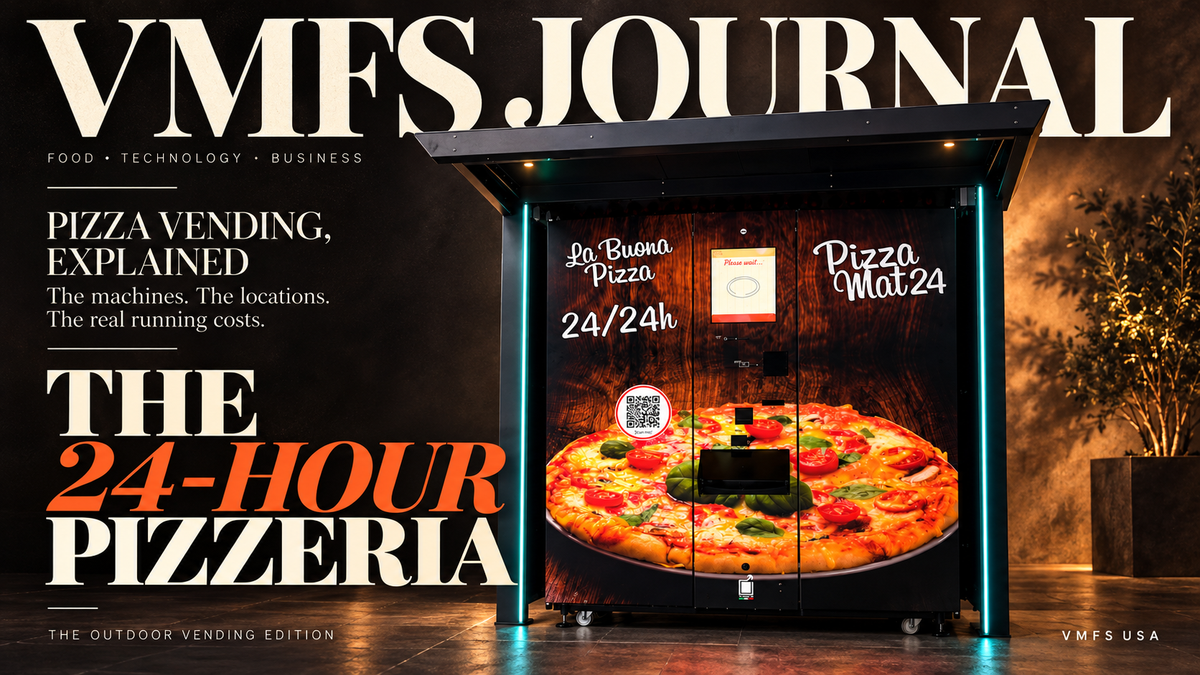
Outdoor Pizza Vending Machines: How They Work and Why They Beat Indoor Units