


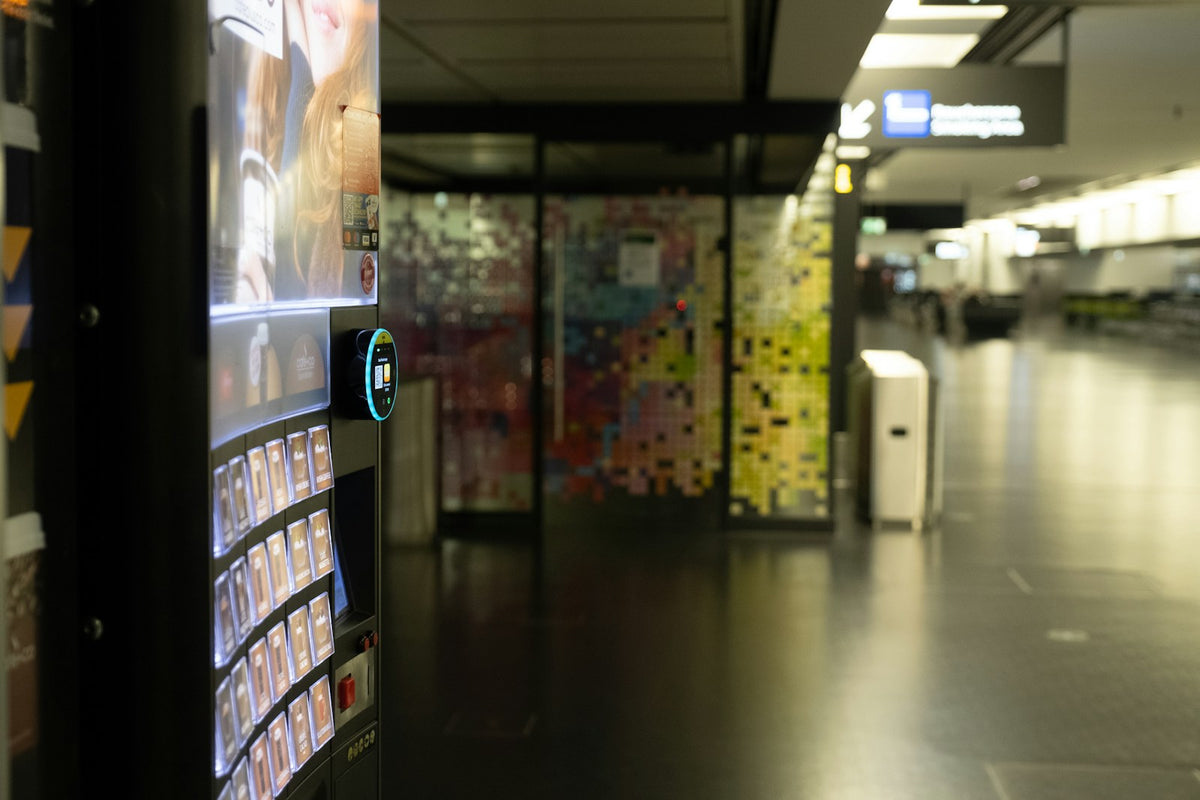


Design the perfect vending solution for your location and customers.

Join the VMFS newsletter and step into a thriving network dedicated to collective success.
One signup. Endless possibilities.
Airport vending machines sell travel essentials, chargers, food, drinks and gifts to a captive audience: TSA screened 904 million people in 2024, and every one of them spent time between the checkpoint and the gate. Getting a machine into a terminal, though, runs through the airport authority's concession process, not a handshake with a property manager.
This guide keeps our list of 10 airport vending machine ideas and adds what the idea lists skip: how airport concession RFPs and the ACDBE program work, real revenue shares from airport contracts (8% to 59.5% of gross), airside versus landside rules, security and restocking requirements, and current VMFS machine prices for each idea.
Airports work for vending because they combine heavy, predictable foot traffic with long waits and limited choices after security. TSA screened 904 million people at US checkpoints in 2024, which averages out to roughly 2.5 million a day, and its busiest single day that year, the Sunday after Thanksgiving, topped 3.1 million. Each of those travelers passes through a terminal on a schedule they do not control, which turns boredom, delays and forgotten items into purchases.
The second advantage is time of day. A terminal serves red-eye departures, early banks of flights and late arrivals, while staffed shops and restaurants in secondary concourses often close hours before the last flight leaves. A vending machine keeps selling in those gaps, and airport programs are built around that: the fresh-meal vending machines at Minneapolis-St. Paul, for example, are accessible 24 hours a day.
The third advantage is ticket size. Travelers expect airport prices and buy items they would never buy from an office snack machine, such as earbuds, phone chargers, cosmetics and toys. That is why automated retail brands started in airports; Best Buy launched its Best Buy Express electronics kiosks in 2008 with about a dozen units in eight major US airports.
The trade-off is control. You do not pick the spot, set the term or always set the price. The airport authority does, through a formal solicitation, and it takes a share of every sale. The rest of this guide explains how that works so you can decide whether a terminal, a landside lot or an airport employee area fits your route.
Captive traffic
Passengers wait at gates with time to kill and few alternatives once concessions close for the night.
24/7 demand
Early departures, delays and late arrivals create sales at hours a staffed shop cannot cover profitably.
Higher tickets
Chargers, cosmetics, toys and fresh meals sell at prices a breakroom machine never sees.
Formal access
Space is awarded by the airport authority through a bid, with revenue share, badging and service rules attached.
What sells in an airport is whatever solves a traveler's problem in the next few minutes: hunger, thirst, a dead phone, a forgotten toothbrush, a restless child or a missing gift. The ten ideas below are ranked roughly from the broadest demand to the most specialized, and each notes where in the terminal it tends to fit. Prices for the matching VMFS hardware are in the machine table further down.
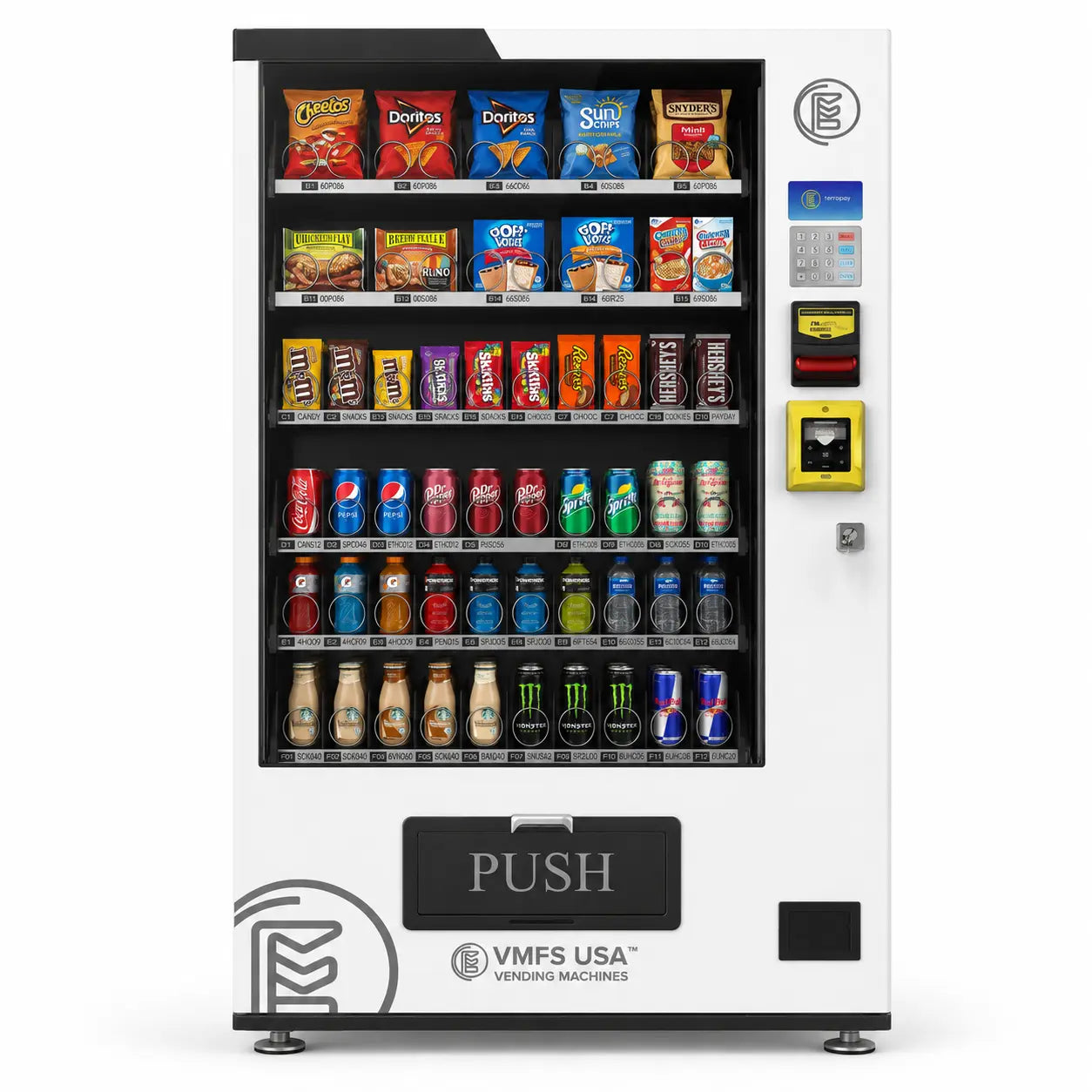
A combo machine is the workhorse of airport vending because one footprint covers both chips and cold drinks for a traveler who wants something fast before boarding. Floor space in a terminal is allocated in small parcels and every unit carries its own rent obligation, so one machine that covers two categories is usually a better use of a slot than two single-purpose units. Combo vending machines fit gate corridors, baggage claim, landside waiting areas and employee break rooms.
Fresh meals sell in airports because terminal dining is slow at peak times and closed at off-peak times, and a traveler with a tight connection cannot wait in a food court line. Salads, wraps, sandwiches, protein boxes and fruit cups carry a much higher ticket than a candy bar. The hardware has to hold safe temperatures on every shelf, which points to AI grab-and-go coolers with camera checkout or refrigerated food vending machines with elevator delivery. Minneapolis-St. Paul's fresh-meal machines, covered in the examples section, show how an airport rolls this category out by gate. For menu planning, see our guide to healthy vending machine snacks.
Beverages are a steady seller past security because most liquids cannot come through the checkpoint in normal-size containers, so travelers buy drinks on the secure side. Water, sports drinks, sparkling water, iced coffee and juice all move, and placement right after the checkpoint and near baggage claim tends to catch the most buyers. Check the airport's product rules before you plan a planogram: Los Angeles World Airports noted that its 2023 vending concession had to comply with the city's plastic water bottle ban starting June 30, 2023, so a drink plan built around single-use plastic water would not have worked at LAX. Drinks vending machines with deep refrigeration and fast card checkout are the usual fit.
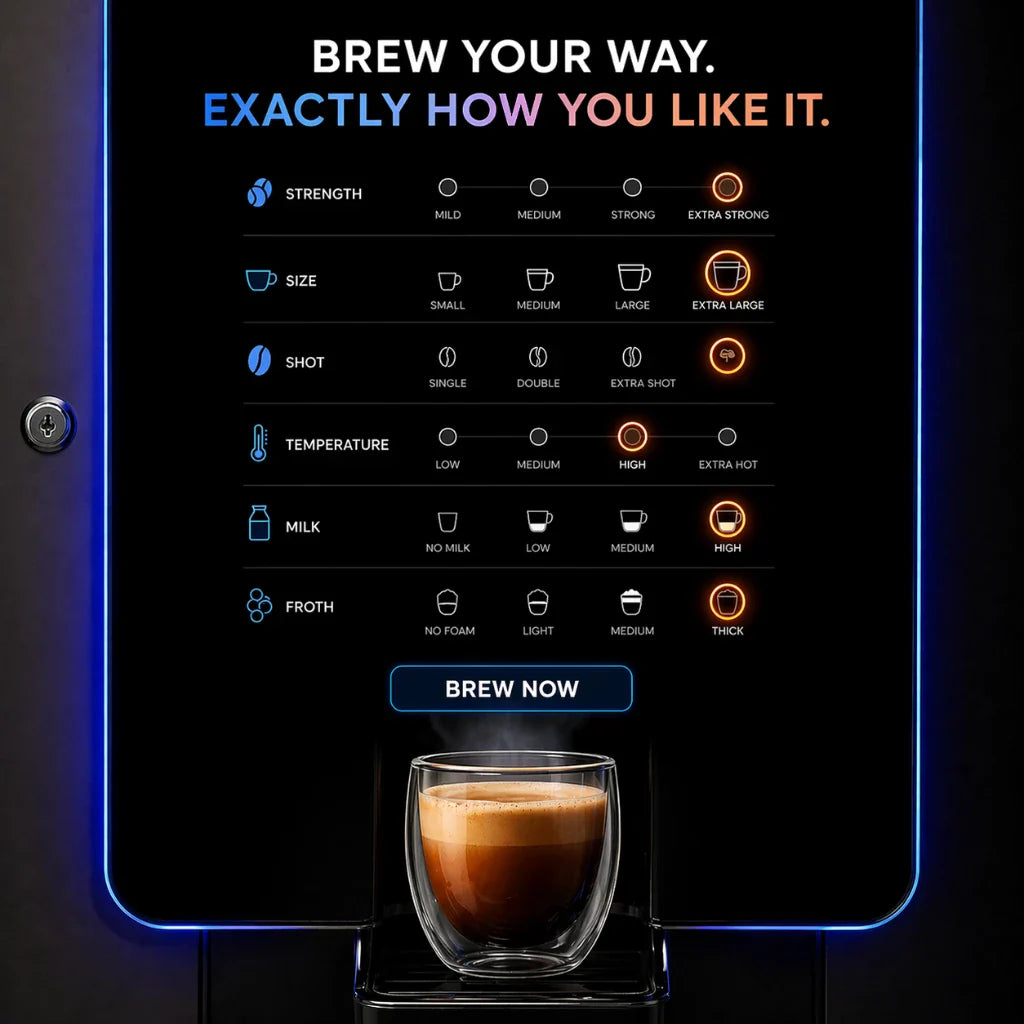
Coffee machines earn their slot in airports because the first departures leave before many cafés open and the line at a staffed counter can be longer than a boarding window. A bean-to-cup machine that makes lattes, americanos, tea and hot chocolate covers that gap at gate clusters, crew areas and landside waiting zones. Coffee vending machines also suit airport employee break rooms, where shift workers buy several drinks a day and the airport often allows a simpler approval process than in the public terminal.
Electronics are the highest-value impulse category in a terminal: a traveler with a dead phone and a cable packed in a checked bag will pay for a charger, power bank, earbuds or adapter on the spot. Boxed electronics need gentle dispensing, which is why our electronics vending machine uses adjustable trays and soft elevator delivery instead of a spiral drop. One rule shapes the assortment: the FAA requires spare power banks to travel in carry-on bags only and limits them to 100 watt-hours per battery without airline approval, so stock power banks with the watt-hour rating printed clearly on the box.
Travel essentials sell because the need is immediate and the alternative is arriving at a meeting or a hotel without a basic item. Toothbrushes, travel toothpaste, deodorant, face wipes, razors, eye masks, earplugs, neck pillows, face masks and hand sanitizer all tolerate room temperature and restock on a predictable cycle, which keeps service costs low. This is also the category behind the search for the benefits of travel toiletries vending machines: they serve red-eye passengers and long connections without a staffed shop. Over-the-counter medicine fits here too, subject to the airport's product approvals and state rules.
Beauty products convert well in terminals because travelers want a quick refresh before landing and often forget makeup, skincare or a fragrance at home. Cosmetics vending machines with touchscreens let shoppers browse shades and product details the way they would in a store, and a perfume spray vending machine sells single sprays from a compact cabinet near restrooms, lounges and international arrivals. Higher-priced items need secure delivery and clear product imagery more than a high slot count.
Kids' products sell to parents facing a long delay with a bored child, and the purchase is about buying calm, not the item itself. LEGO sets, minifigure blind bags, coloring packs, sticker books and fidget toys all work near family restrooms, play areas and domestic gate seating. Our LEGO vending machine uses elevator delivery and adjustable trays so boxed sets arrive without crushed corners, which matters for a collectible audience that judges the box as much as the bricks.
Baby supplies are hard to find once a family clears security, so diapers, wipes, formula packs, pacifiers, bottles and toddler snacks sell quickly near nursing rooms and family lounges. An airport authority that is trying to improve the family travel experience may view this category favorably during evaluation, because it fills a service gap rather than competing with existing shops. Use a machine with adjustable tray spacing so bulky diaper packs and small pouches can share one cabinet.
The last category covers the forgotten gift and the small indulgence: paperbacks and puzzle books for the flight, chocolate, local souvenirs, and specialty treats such as cake slices, cookies, baked goods, ice cream, ramen and boba tea. Specialty machines draw attention in international terminals and long-layover concourses, but they are larger investments and often need water, drainage or a dedicated circuit, so confirm utilities with the airport before you propose one. Baked goods and coffee pair well for the morning departure rush, and ice cream fits family corridors in warm-weather airports.
Check the concession map first: airports avoid awarding vending products that compete head-on with an existing lease. Before you build a menu, ask which categories the current food, news and retail concessionaires already hold, then propose what is missing at night, at remote gates or landside.
Airport vending is a concession: the airport authority, usually a city department or independent authority, awards the right to operate machines in specific locations through a competitive solicitation, and the winner pays the airport a share of sales. You cannot simply call a terminal manager and place a machine the way you would at a laundromat. The process is public, scored and documented, which is good news for a well-prepared small operator, because the rules are written down.
Most airports issue a request for proposals (RFP) or an invitation for bids that lists the locations, products, term, insurance and service standards, then score the responses. Missoula Montana Airport's 2021 vending RFP is a clear example. It asked for snacks and beverages at a minimum, allowed proposals for gifts or electronics, and scored proposals out of 100 points: 45 for the vending plan itself, 35 for the percentage of gross sales and minimum annual guarantee offered, 10 for qualifications, 5 for overall quality and 5 for past history with the airport. It also required machines to accept $1 and $5 bills plus credit cards, asked for each machine's monthly energy use, and let the airport add, remove or relocate machines at no cost.
Other airports set the price terms up front. San Antonio's 2004 beverage and snack vending award required the greater of 14.5% of sales or a $12,000 annual minimum over a five-year term, covering both terminals plus aviation department offices and break rooms. New solicitations keep appearing as terminals open: McKinney National Airport in Texas advertised a 2026 RFP for three post-security machines and up to two pre-security machines selling travel essentials, grab-and-go food, beverages and snacks in its new passenger terminal.
Who you negotiate with depends on how the airport runs its concession program. Under direct leasing, the airport signs each operator itself, so you bid directly. Under a prime or master concessionaire model, one company holds a category or a whole terminal and sublets to others, so your route in is a sublease with that company. LAX's 2023 vending award shows the path from sublease to direct contract: First Class Vending, which had been operating month to month as a sub-concessionaire under the prior concessionaire, Bottling Group, won the five-year concession directly. Landside areas such as parking structures, rental car centers and airport office buildings are often covered by the same vending contract, so ask whether a landside-only slot is even available before you plan around it.
The Airport Concession Disadvantaged Business Enterprise (ACDBE) program is a US Department of Transportation rule, 49 CFR Part 23, that applies to concessions at airports receiving federal funds. Part 23 defines a concession as a business on the airport selling consumer goods or services to the traveling public, and it requires primary airports that receive FAA financial assistance to run an approved ACDBE program. To be certified, a firm's average gross receipts over the prior five fiscal years must not exceed $56.42 million, and an owner whose personal net worth exceeds $2,047,000 is not presumed economically disadvantaged.
The program changed in late 2025. DOT published an interim final rule on October 3, 2025, effective immediately, that removed the race- and sex-based presumptions, requires every previously certified DBE and ACDBE firm to be reevaluated under an individualized standard, and directs recipients to pause or limit participation goals until recertification is done. In practice, requirements vary by solicitation: LAX set no ACDBE goal on its 2023 vending award, while Missoula asked proposers for examples of DBE and ACDBE goals and utilization reports plus the name of the team member responsible for that reporting. Read the current solicitation, and if a goal applies, plan your subcontracting or joint venture before the deadline, not after.
Shortlist hardware before you bid
Airport proposals ask for dimensions, power draw, payment options and service plans. Pick machines with specs ready to drop into the RFP.
Browse All MachinesAirports are usually paid through a percentage of gross sales, often with a minimum annual guarantee (MAG) underneath it, rather than flat rent. The operator pays whichever is higher. The Airport Cooperative Research Program's guidebook on airport contracts (ACRP Report 33) explains the logic: the percentage lets the airport share in strong sales, while the MAG protects the airport if sales drop, and a common approach sets the MAG close to, but below, the prior year's rent, with 85% given as an example.
The percentage itself varies far more than most vending blogs suggest. The table below lists the terms in real US airport vending documents we reviewed. Treat it as a range of outcomes, not a rate card, since every airport sets its own terms.
| Airport and document | What it covers | Payment to the airport |
|---|---|---|
| Wilmington ILG (2025 resolution) | Snack and beverage vending in the passenger terminal, 3 years plus two 1-year options | 8% to 9% of gross receipts |
| San Antonio SAT (2004 ordinance) | Beverage and snack vending, Terminals 1 and 2 plus office break rooms, 5 years | Greater of 14.5% of sales or $12,000 a year |
| Missoula MSO (2021 RFP) | Snack and beverage vending, new terminal, pre- or post-security | Proposer offers a percentage of gross or a MAG; worth 35 of 100 evaluation points |
| Flagstaff FLG (2025 staff report) | Two micro-markets and a coffee kiosk | 20% of gross quarterly receipts, plus more above $120,000 a year |
| Los Angeles LAX and Van Nuys (2023 award) | 67 machines at LAX and 5 at Van Nuys, 5 years | Greater of 59.5% of gross receipts or $100 per machine per month |
Two patterns stand out. First, small regional airports with low passenger counts ask for single-digit or low-teens percentages, because the airport mostly wants the service to exist. Large hubs ask for much more because bidders compete for the volume; LAX's 59.5% went to a bidder offering beverage and snack vending across public areas including parking structures. Second, the MAG is the real risk. At San Antonio's terms, 14.5% of sales only exceeded the $12,000 minimum once annual sales passed roughly $83,000, so in a weak year the operator pays the floor out of margin. LAX's $100 per machine per month floor is low, but a 59.5% share leaves little gross margin, so that structure only works with high volume and tight cost control. Build your bid from realistic sales per unit and your revenue split math, not from the percentage alone.
For context, the same ACRP guidebook shows sample food and beverage percentage rents from 10% to 18% depending on concept and sales tier, and 12% to 16% for newsstands. Vending percentages that fall in that band are in line with other airport concessions; offers far above it only make sense when the volume is proven.
Airports also control pricing. LAX's agreement caps prices at 18% above "street pricing," defined as the average price for similar products in similar machines within five miles of the airport, and price changes need written approval. Set your planogram margins with that cap in mind, using an operator pricing guide rather than assuming airport-style markups.
Airside means past the security checkpoint, in what federal rules call the sterile area where passengers board; landside means everything before it, such as ticketing, baggage claim, parking and rental car centers. The split matters because it changes your customers, your access and your costs. McKinney National Airport's 2026 RFP illustrates the mix with three machines post-security and up to two pre-security, Flagstaff put one micro-market on each side of its checkpoint, and MSP placed fresh-meal machines near gates and in baggage claim.
Airside machines see the longest waits and the most captive buyers, which favors chargers, beauty, kids' items, fresh food and drinks. Every restock, though, has to pass through security screening or the airport's merchandise inspection process, and your staff need badges or escorts. Landside machines serve meeters and greeters, arriving passengers, rental car customers and airport employees, with simpler access and often lower sales per unit. Airport employee break rooms and cargo facilities are a third option: smaller audiences, but steady daily demand for coffee, combo and fresh food.
Airside advantages
Airside limitations
The zone guide carried over from our original article still holds as a starting point for matching categories to locations:
| Zone | Best categories | Machine type |
|---|---|---|
| Landside, pre-security | Drinks, snacks, travel essentials | Combo, drinks |
| Airside, post-security | Fresh food, coffee, electronics | AI cooler, food, coffee, elevator |
| Gate seating | Kids' items, snacks, chargers | Elevator, combo |
| Baggage claim | Drinks, toiletries, gifts | Drinks, elevator |
| Parking and rental car centers | Combo, coffee, essentials | Combo, coffee |
| Employee and crew areas | Fresh food, coffee, combo | Food, coffee, micro-market |
Airside vending is governed by the airport's TSA-approved security program, so expect background checks for your staff, inspection of your stock and limits on what can be sold. The rules are set by TSA regulations and each airport's own procedures, which is why the solicitation documents spell them out.
Anyone servicing machines airside without an escort needs an airport ID badge, and getting one requires a background check and security training. Missoula's RFP required a full background check, all required training and compliance with the airport's security directives for any employee who needs post-security access, and Fairbanks requires unbadged vendors to be escorted at all times by a badged concessionaire. Budget time for badge processing before your install date, and your service plan in the proposal should name who will hold badges.
Products bound for the sterile area must be inspected before they go airside. Fairbanks International Airport's concession operating order is a useful public example: all items brought through the checkpoint are screened, vendor deliveries must be inspected by an authorized representative before they are stored, delivery staff must declare any item on TSA's prohibited items list before inspection, and unbadged vendors must be escorted at all times by a badged concessionaire with escort authority. Your airport's version will differ in detail, so ask for it during the pre-proposal conference.
Keep the airside assortment to items a passenger can legally carry onto a plane. Sharp tools, aerosol quantities above carry-on limits and similar prohibited items do not belong in a gate-area machine even if the airport would technically allow the sale. Power banks are allowed in the cabin, and in fact the FAA requires spare power banks to travel in carry-on bags only, limited to 100 watt-hours per battery, with batteries from 101 to 160 watt-hours needing airline approval and a maximum of two spares. Airlines can set stricter limits, so a short label on the machine helps buyers avoid surprises at the gate.
Airport contracts expect machines to run around the clock and to be fixed fast, so plan your route and staffing around written service levels rather than "as needed" visits. The LAX agreement is a good benchmark: inspect each machine at least once every four days, repair or replace a malfunctioning machine within 24 hours of notice, keep every machine fully operational at least 99% of the year, keep products in stock, clean the machine front at each service visit, and post refund instructions on every machine, and machines must take credit or debit cards. Missoula asked proposers to describe their checking schedule, on-site response time and refund process, and it required machines to accept $1 and $5 bills as well as cards.
Those standards are much easier to meet with remote monitoring. VMFS Cloud shows sales, stock levels and fault alerts by machine, so you can pre-pick the exact items each unit needs, schedule badged staff for one trip, and fix problems before the airport calls. A card reader that takes chip, tap and mobile wallets covers the payment requirements above, and our guide to restock scheduling and routes shows how to build visit frequency from sales data.
Plan for sales reporting: Missoula's RFP required a quarterly report of monthly gross receipts for each machine, and a percentage-rent contract always needs audited sales. Choose telemetry that exports sales per unit per month so your concession report is a download, not a weekend of spreadsheets.
The right airport machine is the one that matches your category, fits the space the airport offers, and meets the RFP's payment and service rules. The table lists current prices for active VMFS models that map to the ten ideas above. Prices are list prices on vmfsusa.com as of October 2026 and exclude freight, card readers sold separately and installation.
| Idea | VMFS model | Starting price | Typical airport zone |
|---|---|---|---|
| Snack and drink combo | Slim Combo Vending Machine | $3,650 | Tight landside alcoves, break rooms |
| Snack and drink combo | Smart Combo Vending Machine | $4,650 | Gate corridors, baggage claim |
| Snack and drink combo | Seaga QuickBreak QB4000 | $4,450 | Employee and crew areas |
| Fresh food | AI Grab & Go Cooler | $2,950 | Airside food gaps, employee areas |
| Fresh food | AI Smart Fridge | $9,950 | Airside, high-volume gates |
| Fresh food | Food Elevator Vending Machine | $8,950 | Connecting concourses |
| Cold drinks | Seaga Prosper Beverage | $5,450 | Post-checkpoint, baggage claim |
| Coffee | CorePro Coffee Vending Machine | $4,950 | Gate clusters, crew rooms |
| Coffee | Pro Coffee Vending Machine | $7,450 | Early-morning departure areas |
| Electronics and chargers | Electronics Vending Machine | $7,950 | Checkpoint exits, gate entrances |
| Travel essentials, PPE, baby care | Smart Elevator Vending Machine | $8,650 | Restrooms, nursing rooms, arrivals |
| Beauty | Mini Cosmetics Vending Machine | $4,968 | Restroom corridors, lounges |
| Beauty | Cosmetics Vending Machine | $5,950 | International departures |
| Fragrance | Perfume Spray Vending Machine | $3,000 | Restrooms, arrivals halls |
| Kids | LEGO Vending Machine | $10,695 | Family areas, domestic gates |
| Specialty treats | Cookie Vending Machine | $8,500 | Near coffee, lounges |
| Specialty treats | Ramen Noodle Vending Machine | $9,950 | Red-eye and long-haul concourses |
| Specialty treats | Boba Tea Vending Machine | $14,350 | International terminals |
| Specialty treats | Big Screen Ice Cream Vending Machine | $14,950 | Family corridors |
| Specialty treats | Baked Goods Vending Machine | $15,075 | Morning departure areas |
| Specialty treats | Cake Vending Machine | $15,800 | Lounges, layover zones |
A few hardware choices matter more in airports than elsewhere. Elevator delivery protects boxed electronics, cosmetics and LEGO sets, which is why the elevator vending machines category shows up so often in terminals. Large touchscreens help international passengers navigate products without reading English labels. Energy use matters too, since Missoula asked for each machine's monthly consumption and preferred Energy Star units, so keep spec sheets handy. Finally, check reach ranges and clear floor space for accessibility; airports will ask how the machine's controls meet ADA standards. Our size and dimension guide covers footprints and clearances.
For employee areas with a steady daily population, an unattended micro-market can replace several machines, as Flagstaff's airport chose to do in place of a staffed restaurant.
Real airport programs show the pattern: a specialist operator, a defined set of gate and landside locations, and a contract built around 24-hour service. These public examples cover fresh food, electronics, general vending and micro-markets.
Minneapolis-St. Paul (MSP), fresh meals. In February 2022 the Metropolitan Airports Commission announced eight Farmer's Fridge machines, seven in Terminal 1 and one in Terminal 2, placed in the main food court, near several gates and in baggage claim. They sell salads, meal bowls and healthy snacks, are accessible 24 hours a day, and track inventory for freshness. Farmer's Fridge ran more than 400 units nationwide at the time.
Best Buy Express, electronics. Best Buy launched Best Buy Express in 2008 with about a dozen automated kiosks, built with ZoomSystems, in eight airports: Atlanta, Boston, Dallas, Houston, Las Vegas, Los Angeles, Minneapolis and San Francisco. The machines sold phone and computer accessories, cameras, headphones, travel adapters and chargers, the same high-ticket mix that still works unattended in terminals.
LAX and Van Nuys, general vending. Los Angeles World Airports awarded First Class Vending a five-year concession in 2023 covering 67 machines at LAX and five at the Van Nuys FlyAway building, selling cold and hot drinks, snacks and food in public areas including parking structures, with credit and debit acceptance required.
McKinney National, new terminal. McKinney's 2026 solicitation, posted on the Airports Council International-North America RFP board, asks one provider to install, operate and maintain three post-security machines and up to two pre-security machines for travel essentials, grab-and-go food, beverages and snacks, a typical package for a small airport opening commercial service.
Flagstaff Pulliam, micro-markets. After restaurant RFPs struggled to cover the airport's desired early-morning to evening hours, Flagstaff's staff recommended a license with Hi-Line Snack & Vending for one pre-security and one post-security micro-market plus a coffee kiosk, paying the airport 20% of gross quarterly receipts.
To get a vending machine into an airport, find the airport's concessions or business development office, watch for its vending solicitation, and submit a complete proposal that wins on service plan and price. The steps below follow the order most airports use.
Two other resources help. Our vending machine insurance guide explains coverage types, and our vending machine contract template lists the clauses to check before you sign any placement agreement. If you are still building a route outside airports, location matching can connect you with host sites while you prepare for your first airport bid, and our guide on how to scout and pitch a vending location covers the non-airport side.
When an award arrives with a hard install date, equipment financing keeps a multi-unit contract from draining working capital in the first month, which matters most when a MAG is due whether or not the machines have ramped up.
Finance your airport machines
Spread the cost of a multi-unit airport award across monthly payments and keep cash for inventory, badges and bonds.
Explore Financing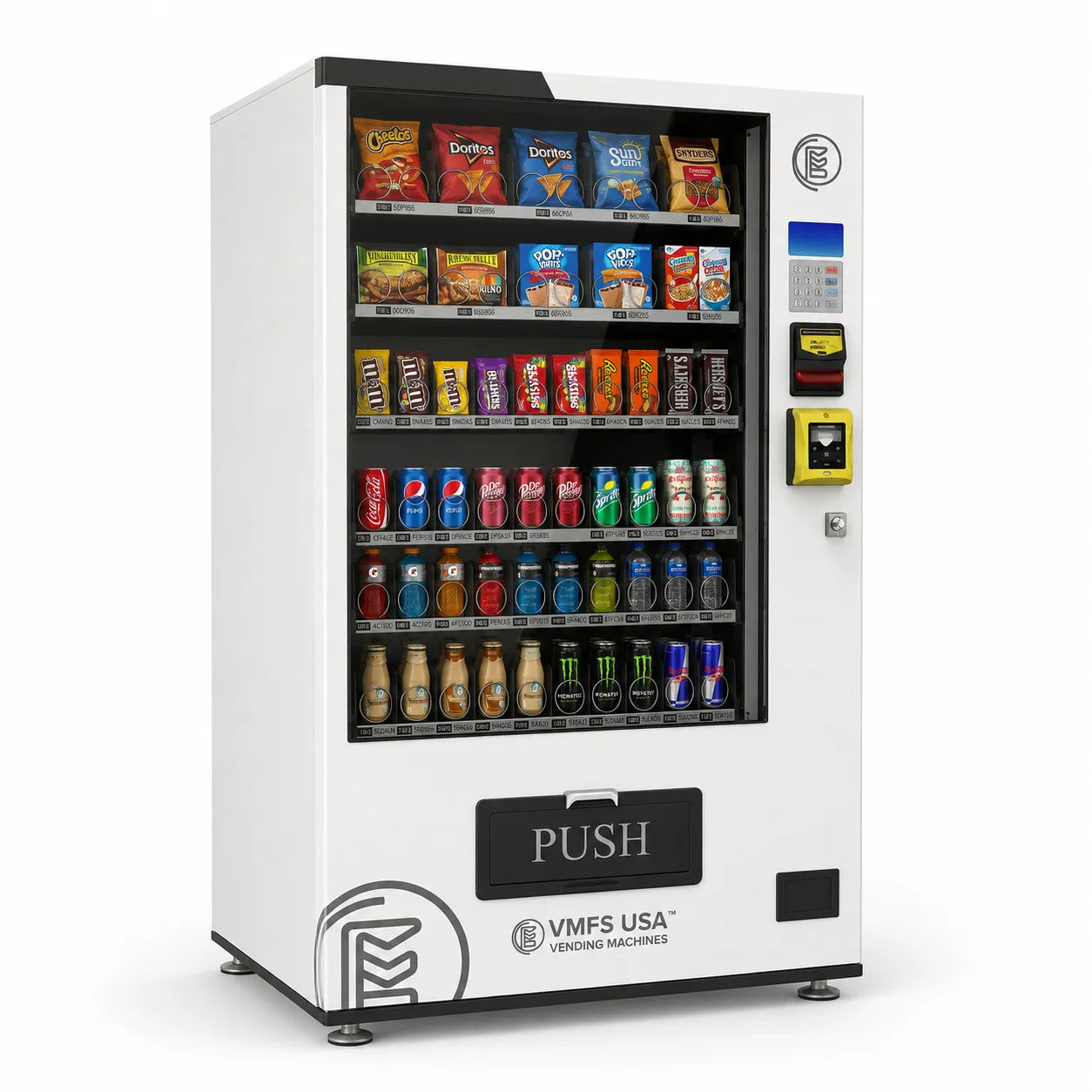
Share:
Where To Buy Pizza For Vending Machines In The USA (Complete Operator Guide)
Cantaloupe Card Reader Guide: Models, Prices, Fees & How to Choose