




Design the perfect vending solution for your location and customers.

Join the VMFS newsletter and step into a thriving network dedicated to collective success.
One signup. Endless possibilities.
A Cantaloupe card reader is a cashless payment device that plugs into a vending machine's MDB port and lets customers pay by card, tap or phone; in 2026 the US lineup is the touchscreen Engage family and the G11 kits, with base hardware listed at $329 on Cantaloupe's store and processing at 5.95% plus a monthly plan from $9.95.
This guide covers what each model does, what a reader really costs over a year (including why Cantaloupe's $329 store price and the $450 reader upgrade on VMFS machines differ), how its fees compare with Nayax, what the Seed software platform adds, the contract and used-device traps to avoid, and how to choose the right reader for each machine on your route.
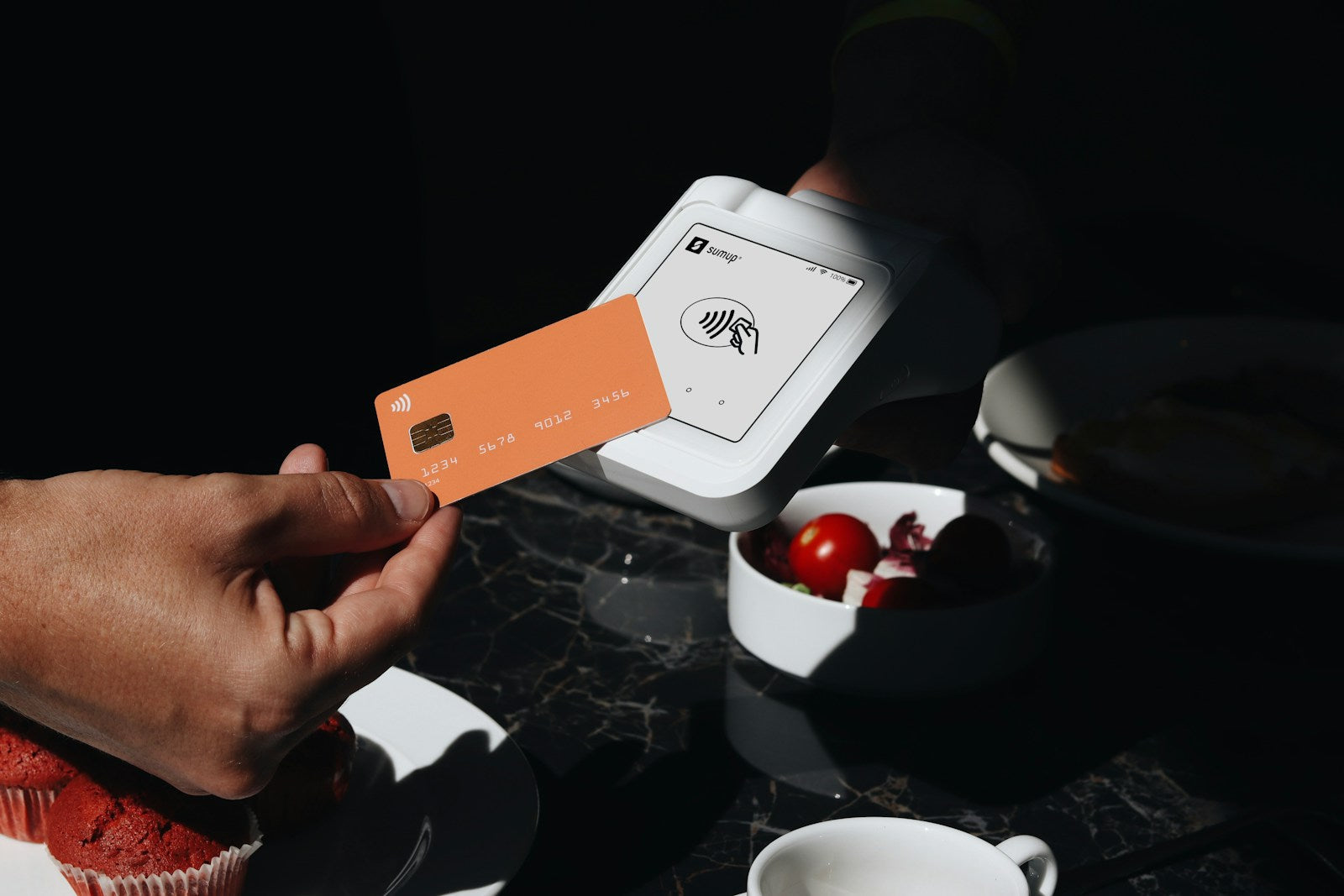
A Cantaloupe card reader is the payment terminal and telemeter that turns a coin-and-bill machine into a cashless one: it accepts credit and debit cards, contactless taps and mobile wallets, approves the sale over a cellular connection and reports every transaction to Cantaloupe's cloud software. It connects to the machine's controller through MDB (the Multi-Drop Bus standard that coin mechanisms and bill validators already use), so the machine treats it as one more payment peripheral rather than a new piece of software.
The company behind it has a long history in vending. Cantaloupe, Inc. was known as USA Technologies until April 19, 2021, and its older ePort readers are the reason many operators still search for terms like "G11 ePort." It is based in Malvern, Pennsylvania, and traded on Nasdaq as CTLP. In May 2026, 365 Retail Markets announced it had completed its acquisition of Cantaloupe, saying the deal would bring nearly 40,000 new customers onto its platform and that the combined business would operate under 365 Retail Markets. The announcement did not detail changes for existing reader customers, so watch for notices from your account manager about software or billing.
The reader matters because it is the part of the machine customers actually touch. A bill validator that rejects a crumpled note or a reader that times out costs you the sale, and in a location where most people carry only a phone, a cash-only machine is invisible. If you are new to the topic, our cashless payment system guide explains how card readers, telemetry and processing fit together across brands; this article focuses on Cantaloupe specifically.
Every Cantaloupe reader does three jobs. It takes the payment, it acts as a telemeter that sends sales and machine status over 4G LTE, and it feeds Cantaloupe's Seed software, where you see sales, deposits and device health. The entry tier, Seed Live, comes free with the reader, and paid tiers add route and inventory tools, as the Seed software section below explains. That bundle of payment, data and software is why operators compare Cantaloupe with Nayax rather than with a generic retail card terminal.
Cantaloupe's US vending lineup has two families: the Engage readers, which are all-in-one units with a touchscreen, and the G11 kits, which pair a card reader with a separate telemeter. Each family also has Pulse versions for coin-operated equipment that does not speak MDB. The table below is built from Cantaloupe's card reader product page and the prices on its online store as of October 2026.
| Model | Format | Payments accepted | Best fit | Store price (buy) |
|---|---|---|---|---|
| Engage | All-in-one reader and telemeter, edge-to-edge touchscreen | EMV chip, EMV contactless, NFC/RFID, magstripe, mobile wallet | Most snack, drink and combo machines; promotions on screen | $329 |
| Engage Combo (Gen 2) | All-in-one, 2.5-inch touchscreen, fits over an existing bill acceptor | Same as Engage | Machines with no spare space beside the bill validator | $329 |
| Engage Pulse / Engage Combo Pulse | Engage with a pulse adapter | Same as Engage | Coin-operated equipment without MDB | $389 without power supply, $414 with |
| G11 Cashless Kit | G11 card reader plus separate G11 telemeter and two antennas | EMV contactless, magstripe, NFC cards, mobile wallets (no chip insert) | Low-cost upgrade on standard MDB machines | $329 |
| G11 Chip Kit | G11 reader with LED color display plus telemeter | EMV chip and contactless, NFC, mobile wallets | Locations where chip insertion matters | Not listed on the store collection page |
| G11 Pulse Kit | G11 reader and telemeter with pulse interface | EMV contactless, NFC/RFID, magstripe, mobile wallet | Amusement machines, massage chairs and other coin-op equipment | Not listed on the store collection page |
Engage is Cantaloupe's current flagship reader. The standard Engage is a single unit that combines the card reader and telemeter with an edge-to-edge touchscreen, accepts every payment type Cantaloupe supports, and carries PCI PTS 5.X certification with anti-tamper protection. Because the reader and modem are one box, installation is simpler and there is one less cable to fail inside the door. Cantaloupe's product FAQ also notes that Engage and Engage Combo can accept campus cards, which matters on university routes.
The Engage Combo exists for a physical problem: many older machines have no free cut-out for a reader. The Combo has a smaller 2.5-inch touchscreen and mounts over the existing bill acceptor, so you add cashless without cutting the door. Both are listed at $329 on the Cantaloupe Engage series store page, with the Pulse versions at $389 to $414.
The G11 is the current generation of Cantaloupe's G-series (ePort) line and the reader most operators picture when they think of Cantaloupe. The G11 Cashless Kit bundles the G11 reader, a G11 telemeter, two standard-gain antennas, mounting hardware and decals. It takes contactless cards, phones and swipes but not chip insertion, which is acceptable at most vending price points because contactless already dominates (more on that below). The G11 Chip Kit adds EMV chip acceptance and a color LED display for operators who want every card type covered. The G Series store page also sells a G11 reader on its own for $140 without a telemeter, which is a replacement part for an existing installation, not a starter option.
Pulse readers solve a different compatibility problem. Laundry equipment, amusement games and massage chairs often count coins as electrical pulses instead of talking MDB, so a standard reader has nothing to plug into. A Pulse kit converts each card payment into the pulses the equipment expects. If your route is all snack, drink and combo machines, you will not need one; if you run a laundry vending machine or game equipment, it is the option to price.
You may also see Cantaloupe material that mentions a P66 or P100 reader. Neither appears on Cantaloupe's US vending card reader page as of October 2026, so for a US vending route the practical choice is between the Engage and G11 families above.
Choose the Engage when you want chip acceptance, an on-screen message and a single all-in-one unit; choose the G11 Cashless Kit when you want the simplest contactless upgrade on a standard MDB machine; choose a Pulse version only for coin-operated equipment. The base price is the same $329 for an Engage and a G11 Cashless Kit, so the decision comes down to the machine and location rather than budget. That corrects a common claim in older guides, including an earlier version of this page, that the Engage was cheaper than the G11.
Standard MDB snack or drink machine
Engage or G11 Cashless Kit. Pick Engage if you want chip and a screen; G11 if contactless and swipe are enough.
No room for a reader cut-out
Engage Combo. It mounts over the existing bill acceptor, so you do not need to modify the door.
College or corporate campus
Engage or Engage Combo, the models Cantaloupe lists for campus card acceptance.
Laundry, games, massage chairs
Engage Pulse or G11 Pulse Kit, which translate card payments into coin pulses.
Traffic and ticket size should shape the choice too. At a busy break room where most buyers tap a phone, a G11 Cashless Kit handles the volume and keeps the hardware simple. Where tickets are higher, such as a smart vending machine selling meals or electronics, chip acceptance protects sales from the occasional customer whose card is not contactless, and the Engage screen gives you space for a price message or promotion.
Think about service as well. A G11 kit has two boxes and two antennas inside the cabinet, while the Engage has one, so a technician has fewer connections to check when a machine stops reporting. On the other hand, a G11 telemeter can be reused if the reader head is damaged, and the reader alone costs $140. Operators who standardize on one family across the route spend less time training staff and stocking spares, which usually outweighs small per-machine differences.
Engage strengths
G11 Cashless Kit trade-offs
A Cantaloupe card reader costs $329 to buy for the base Engage, Engage Combo or G11 Cashless Kit on Cantaloupe's store, or $389 to $414 for Pulse versions, before accessories, shipping and any sales tax. Alternatively, Cantaloupe One rents the hardware with no upfront payment on a 36-month subscription. Either way, the hardware is only part of the bill, because every reader also carries a monthly service fee and a processing rate, covered in the next section.
Buying gives you the lowest long-run cost on a machine you plan to keep. The G11 Cashless Kit product page lists the kit at $329 and, like the Engage Combo, ties it to a 12-month service commitment from the billing start date. Accessories add up if your machine needs them: the store lists a standard LTE antenna at $8, a high-gain antenna at $30, MDB cables from $10, and a Zero DEX cable for the Engage Combo at $28. Cantaloupe's operator FAQ also notes that sales tax may apply to devices, service and processing depending on your state and county. Orders require an existing Cantaloupe account, are subject to credit approval, and do not ship until onboarding is complete, which the store says can take up to three weeks.
Cantaloupe One bundles hardware, software and service into one monthly payment with "$0 upfront costs" apart from shipping. Card reader kits start at $18.95 a month for the Engage Pulse or G11 Pulse kit, and the Card Reader and VMS Starter Kit starts at $19.95. Subscriptions run 36 months, then continue month to month; Cantaloupe owns the device during the term, replaces failed hardware, and runs a credit check on new customers. The G11 subscription kit in Cantaloupe's store shows $19.95 a month plus the same 5.95% processing rate, although a note on the same listing cites $18.95, so confirm the figure on your order. Over 36 months, $19.95 a month is about $718 ($682 at $18.95), compared with $329 plus 36 months at $9.95 (about $687) if you buy. The three-year totals are close, so the real difference is ownership and risk: buying leaves you owning the reader after a 12-month commitment, while the subscription suits operators who need to conserve cash at launch or want hardware replacement included for the full 36-month term.
The two prices describe different purchases. Cantaloupe's $329 is the manufacturer's direct price for a bare base kit sold to an existing Cantaloupe account holder, while $450 is the price VMFS lists for adding a credit card reader to a machine order. On VMFS product pages such as the Smart Combo Vending Machine and the Countertop Snack Vending Machine, "Credit Card Reader" appears as a $450 upgrade, and the Seaga QuickBreak QB4000 lists a Seaga-specific reader upgrade at $550. Our payment system page uses the same $450 hardware cost for both Nayax and Cantaloupe in its comparison table.
The $329 store price is a floor, not a total. As the buying section above shows, Cantaloupe sells it only to operators who already have an account, subject to credit approval and an onboarding period of up to three weeks, and antennas, cables, shipping and any state or local sales tax come on top. The $450 VMFS upgrade, by contrast, is bought in the same order as the machine, so the reader is specified with the cabinet rather than sourced and scheduled separately.
Neither price covers running costs. Whichever route you take, the monthly service plan and the processing rate are paid to the reader provider, not to VMFS; our payment system page lists card reader service as a third-party fee of about $10 a month. Ask which reader brand and service plan your machine configuration uses when you order, so you know which portal, contract and fee schedule you are signing up for.
How to use the two numbers: if you already run Cantaloupe and are retrofitting your own machines, $329 plus accessories, shipping and tax is your hardware cost per base kit. If you are buying a new VMFS machine and want it to take cards, budget the $450 reader upgrade ($550 on Seaga models) inside the machine price. Either way, add the monthly plan and processing covered in the next section, and get a written quote before you order, because the struck-through "original price" on some Cantaloupe listings has moved in both directions.
For a full machine budget, add the reader to the cabinet price and stock. Our guide to how much a vending machine costs breaks down the rest, and VMFS also offers equipment financing if you want to spread machines and readers across monthly payments.
Buy a machine that is ready for a card reader
Every VMFS machine ships MDB ready, so a Cantaloupe or Nayax reader plugs straight in.
Shop card reader machinesCantaloupe card reader fees have two parts: a monthly service plan of $9.95 (Cashless) or $12.95 (Cashless Plus) on AT&T or Verizon, and a 5.95% processing rate on every cashless sale. Those are the figures on the G11 Cashless Kit listing, and the Engage Combo Gen 2 listing shows the same plans. The rate is a flat percentage with no per-transaction cent fee, which is unusual in card processing and suits low vending tickets.
The monthly plan covers the cellular data connection and the software service. The 12-month commitment has a real cost if you pull a reader early: the early termination fee is the monthly service fee multiplied by the months left in the commitment, so ending a $9.95 plan with six months remaining costs $59.70 per device. That makes a weak test location more expensive to exit than it looks, so pilot a reader at a site before you sign up a whole route.
The fixed monthly fee hurts most on low-volume machines. The table below applies the $9.95 plan and 5.95% rate to three levels of monthly cashless sales; it is arithmetic on Cantaloupe's published pricing, not a quote, and it ignores sales tax.
| Monthly cashless sales | Processing at 5.95% | Service plan | Total monthly cost | Effective rate |
|---|---|---|---|---|
| $300 | $17.85 | $9.95 | $27.80 | 9.3% |
| $1,000 | $59.50 | $9.95 | $69.45 | 6.9% |
| $3,000 | $178.50 | $9.95 | $188.45 | 6.3% |
The pattern is clear: on a busy machine the effective cost settles near the 5.95% headline, while on a quiet machine the monthly fee pushes it toward 10%. That is one reason to put cashless first on your strongest locations and to review readers on machines that sell little. Our hub on whether vending machines are profitable shows how payment costs sit alongside product cost, commission and fuel.
A flat percentage also behaves differently from the "percentage plus 10 cents" pricing some providers offer. At a $2.45 average cashless ticket, 5.95% is about 15 cents, while 2.5% plus $0.10 is about 16 cents. The two structures cost the same at roughly a $2.90 ticket; below that, the flat 5.95% is cheaper, and above it, the percentage-plus-fee model wins. Operators selling drinks and snacks at $1.50 to $3.00 sit right around that crossover, while machines selling meals, electronics or trading cards would generally pay less on a percentage-plus-fee plan.
Cantaloupe lets operators add an optional two-tier price of $0.10 to card and mobile wallet purchases to help cover processing. On a machine making 400 cashless sales a month, that is about $40 of added revenue, enough to cover most of the monthly plan and part of the processing. The trade-off is customer perception: a visible card surcharge can push buyers to cash or away from the machine. Our operator pricing guide covers how to build payment costs into the shelf price instead, which many operators prefer. Before you surcharge, check your card network rules and any state rules that apply to you.
When a customer taps or inserts a card, the reader places a temporary authorization of up to $5, the machine vends, and the actual sale amount settles; your money then arrives on a weekly deposit schedule. Cantaloupe's operator FAQs explain that readers pre-authorize up to $5 to meet Visa rules for unattended food and beverage sales, and that these holds typically clear within 24 to 72 hours. G10 and G11 readers in single-vend mode can use exact authorization instead, which holds only the item price.
That pre-authorization is behind many customer calls. A buyer who sees a pending $5 hold, or an unfamiliar "Cantaloupe" line on a statement, may assume they were overcharged. Point them to our explainer on the Cantaloupe charge on a credit card statement, and put a decal on the machine; Cantaloupe's store sells packs of debit-hold explanation decals for that reason.
Deposits default to a weekly Friday pay schedule and usually land the business day after payday, according to the same FAQ. A payment is only issued when the net amount is at least $25; anything less rolls over to the next pay date. On a new machine with slow early sales, the first deposit can therefore take more than a week. Sales tax on service and processing appears on your invoice or in your EFT payment, and Seed Live shows the amounts under Reports.
Security is handled at the device and network level. Cantaloupe's readers use EMV chip and contactless technology, which EMVCo describes as generating a one-time security code for each transaction, and the Engage carries PCI PTS 5.X device certification. Because card data is processed by Cantaloupe rather than stored in your machine, most of the PCI DSS burden sits with the provider, though you should still complete whatever compliance questionnaire your merchant agreement asks for.
Seed is Cantaloupe's operator software platform, and the tier you use depends on what you pay for: Seed Live comes free with a Cantaloupe card reader, Seed Cashless+ is a paid vending management subscription for small and mid-size routes, and Seed Pro is the enterprise system for large fleets. All three work from the data the reader sends back over its cellular connection. That is why "Cantaloupe telemetry" and "Cantaloupe Seed" usually describe the same setup: the reader doubles as the telemeter, and Seed is where its data appears.
| Seed tier | Who Cantaloupe builds it for | What it adds | Cost |
|---|---|---|---|
| Seed Live | Any operator with a Cantaloupe card reader | Device management: card transactions and payments, real-time device status and connectivity, daily emailed sales reports | Free with a Cantaloupe card reader |
| Seed Cashless+ | Small to medium operators with 1 to 200 machines | Vending management: depletion alerts, machine-level pre-kitting, route prioritization, best-seller insights, power failure and bill or coin jam alerts; pairs with the Seed Driver app | Paid subscription, no price on the product page; a separate VDI option on store reader orders; included in the Cantaloupe One Card Reader and VMS Starter Kit from $19.95 a month |
| Seed Pro | Enterprise operators with more than 200 machines or multiple micro market locations | Dynamic, interval or static route scheduling, par-level and planogram suggestions, pre-kit pick lists, commission and tax calculation, custom reporting, remote price change, Seed Copilot AI assistant | Custom price (Cantaloupe One Card Reader and VMS Enterprise Kit) |
Seed Live is the portal most new and small-route operators work in. Cantaloupe's Seed Live page describes it as cloud-based device management that comes free with a Cantaloupe card reader: you track card transactions and payments, see whether each device is online, add new readers to the dashboard, and schedule sales reports to arrive by email every day. What Seed Live does not include are the route and inventory tools; depletion alerts and pre-kitting sit in the paid tiers.
Seed Cashless+ is the step up when spreadsheets stop keeping pace with your route. Cantaloupe's Seed Cashless+ page says it was built for operators with 1 to 200 machines and lists depletion alerts, machine-level pre-kitting, route prioritization that sends drivers to the most depleted machines first, sales insights to spot best sellers and slow movers, and alerts for power failures and jams. It pairs with the Seed Driver mobile app, which loads the day's stops, shows how much product each machine needs and lets drivers take inventory without paper. When you buy a reader on Cantaloupe's store, the G11 Cashless Kit and Engage Combo listings offer "VDI (Seed Cashless+)" setup as a separate yes-or-no option on the order, which connects the G11, Engage or Engage Combo to vending management software. The listing does not say the $12.95 Cashless Plus plan includes the software, so ask what each plan covers before you order. On Cantaloupe One, the Card Reader and VMS Starter Kit bundles a reader, Seed Cashless+ and the Seed Driver app from $19.95 a month, while the Pulse kits at $18.95 come with Seed Live.
Seed Pro serves a different kind of business. Cantaloupe's Seed Pro page positions it for operators with more than 200 vending machines or multiple micro market locations and adds dynamic, interval or static scheduling, suggested restock quantities and par-level changes, planogram updates from machine data, pre-kit pick lists, commission and tax calculation, custom reporting, remote coil price changes and an AI assistant called Seed Copilot. The same page says those enterprise features may be more than an operation under 200 machines needs. For a new operator the practical path is Seed Live from day one, Seed Cashless+ once route planning starts eating your week, and Seed Pro only at fleet scale.
Keep two caveats in mind. Seed Live reports on Cantaloupe readers, so a route that mixes Cantaloupe and Nayax runs two dashboards with two sets of logins and reports. And since the 365 Retail Markets acquisition, product names and bundles could change, so confirm the current Seed tier and price with your account manager before you sign a 36-month agreement. On VMFS machines you can keep payments and deposits in Seed and use VMFS Cloud for machine-side inventory, alerts and pricing, as covered further down.
Cantaloupe and Nayax cost about the same to put on a machine, so the real differences are fee structure and software: Cantaloupe charges a flat 5.95%, while Nayax also offers a percentage-plus-fee option, and Cantaloupe's software leans toward large fleets while Nayax leans toward payment flexibility and loyalty tools. PAX is a different model, hardware with processor choice rather than a bundled service. The figures below come from the comparison table on the VMFS payment system page, not from quotes by either provider.
| Feature | Nayax | Cantaloupe | PAX |
|---|---|---|---|
| Hardware cost (VMFS payment page) | $450 | $450 | $500 to $650 |
| Monthly fee | $7.95 to $14.95 per device | About $9.95 to $18.95 per device, by plan | Usually no fixed platform fee; processor and connectivity costs vary |
| Transaction fee | About 5.95%, or about 2.5% + $0.10 | About 5% to 5.95% | Varies by processor, often about 2% to 3% plus a fixed fee |
| Connectivity | Cellular, Wi-Fi, Ethernet | 4G/LTE cellular | 4G, Wi-Fi, LAN and more |
| Best use case | Small to mid-size operators, easy upgrade | Larger operators, fleet management | Custom software and processor choice |
For most new operators the choice is close, and it often comes down to which dashboard you prefer and which fee model suits your ticket size, using the $2.90 crossover above. If your average sale is low, Cantaloupe's flat percentage is competitive; if you sell higher-priced items, a percentage-plus-fee plan usually costs less. Our Nayax vending card reader guide covers that platform in the same depth, and our roundup of card readers for vending machines compares the wider field.
One practical point favors whichever brand you already use. Readers, spare parts, driver and technician cards, and staff training are all brand-specific, and mixing providers means two portals, two deposit schedules and two support lines. Unless a location requires a specific feature, standardizing on one provider usually saves more time than any fee difference.
Buy Cantaloupe readers new from Cantaloupe or an authorized source, because a second-hand reader that was not properly deactivated by its previous owner cannot be activated on your account. Cantaloupe's operator FAQs say that devices bought from another Cantaloupe customer must be transferred by the seller through Cantaloupe, and that a reader bought from a marketplace such as eBay may have to be returned for a refund if it is still tied to someone else's account.
That lock exists for good reasons, because the reader is linked to a merchant account and a bank account, but it catches many new operators who buy a used machine with a reader attached. Before you pay for a used machine, ask the seller to start the transfer, confirm the reader's serial number, and get written confirmation that the device has been released. Our vending machine buying guide lists the other checks to run on used equipment.
Contracts deserve the same attention. Bought readers carry a 12-month service commitment and Cantaloupe One subscriptions run 36 months, with early termination fees calculated from the months remaining. Deactivation requests must come from an authorized account admin with the serial numbers and a reason. If you plan to sell a route later, keep a list of serial numbers, contract start dates and which devices are owned, leased or rented, because a buyer will ask for it. For account and billing questions, the FAQ lists Cantaloupe customer support at 800-227-3657 for operators with fewer than 200 machines (larger accounts go through their account manager) and customer service at 888-561-4748 for RMAs, 1099s and chargebacks.
A Cantaloupe reader works on any vending machine with an MDB interface, which covers most snack, drink and combo machines built for the US market, and Pulse versions cover coin-operated equipment without MDB. Our explainer on MDB and DEX describes the two connections: MDB carries the payment conversation between reader and controller, while DEX lets the reader collect detailed sales and inventory data from the machine.
Connectivity is built in. Cantaloupe says its readers connect over Verizon or AT&T 4G LTE, so you do not need Wi-Fi at the location, and the Engage can also use Ethernet. Signal is the variable you control: a machine in a basement or behind a steel wall may need a high-gain antenna. Test the signal at the spot where the machine will stand before you commit, which is one of the checks in our Cantaloupe card reader setup guide.
That setup guide is where the installation detail lives: the contract and bank account you need before activation, wiring the reader first in the MDB line, Engage and G11 installation steps, signal readings, activation by serial number, test vends and troubleshooting. If you are choosing a reader, this page is the place; when the box arrives, switch to the setup guide.
Older machines are the main exception. Some pre-MDB machines need an interface kit, and very old controllers may not support the reader at all, so check the model before you buy. For a DEX connection on a VMFS machine, our DEX harness listing covers the cable.
For most US vending machines a card reader is worth it, because the majority of vending sales are now cashless and cashless tickets are larger. Cantaloupe's 2026 Micropayment Trends Report found that 78% of vending sales were cashless in 2025, up from 73% the year before, and that the average cashless vending transaction was $2.45 against $1.57 for cash. Contactless made up 85% of cashless vending sales. Those are Cantaloupe's figures from its own network, so they describe machines that already have readers, but they line up with what operators see: a machine without a reader turns away a large share of buyers.
Whether a Cantaloupe reader in particular is worth it depends on the contract and your volume. On a machine doing $1,000 a month in cashless sales, the fees in the table above come to about $69 a month; on a $300-a-month machine they are about $28, or more than 9% of sales. The reader pays its way where the location is strong, and the fixed monthly fee is the cost to watch where it is not.
Advantages
Limitations
On reviews, most of what you will find online is either Cantaloupe's own customer stories or forum threads about individual support tickets, and neither gives a reliable overall rating. Judge the provider on the things you can verify: the written contract terms, the fee schedule, the deposit timing, and how quickly your reseller or Cantaloupe answers a pre-sale question. Run one or two readers for a few months before converting a whole route, and track uptime and declined transactions in the portal during that trial.
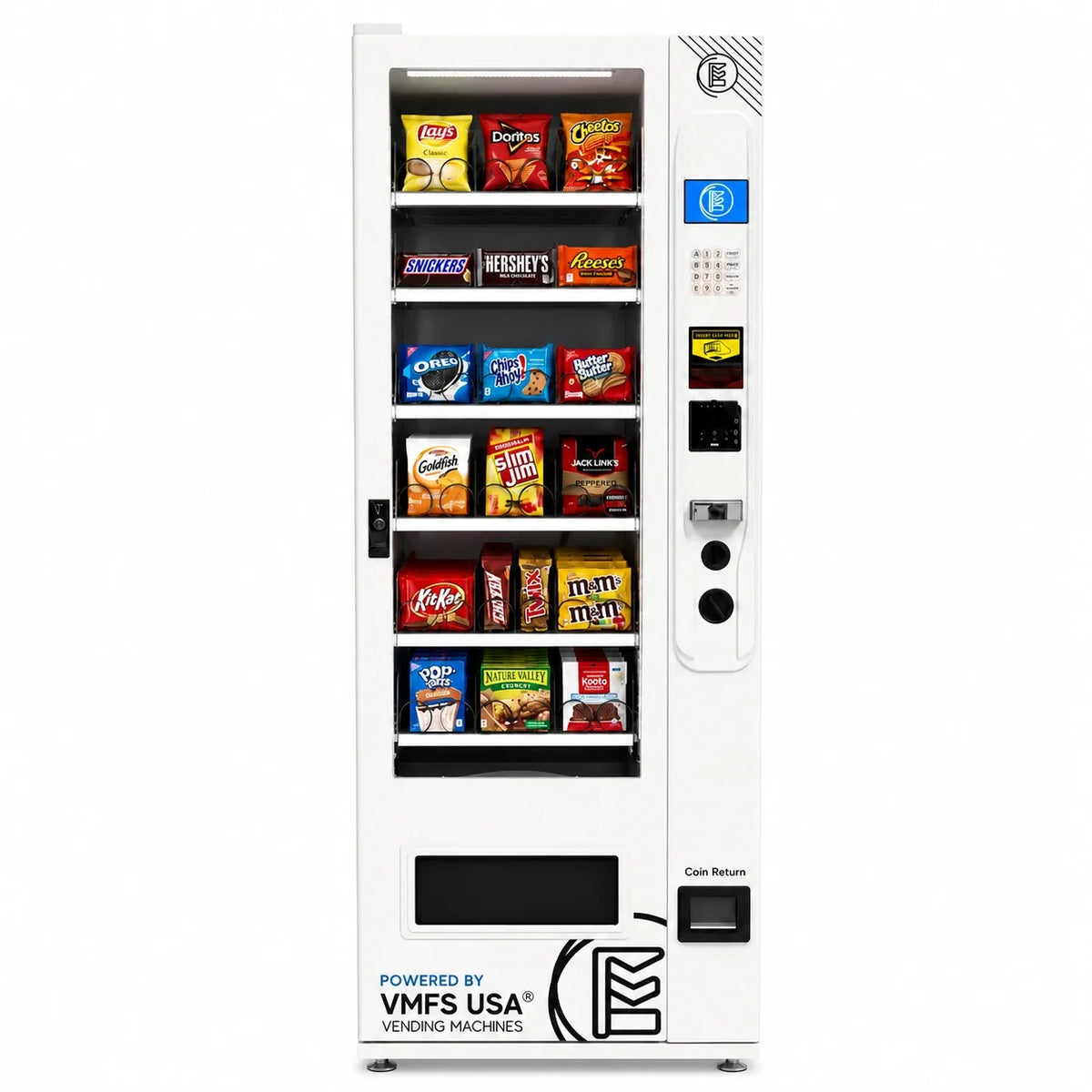
Every VMFS machine ships MDB ready, so a Cantaloupe or Nayax reader plugs into the existing harness without special wiring, as our payment system page explains. That includes compact combo vending machines, dedicated snack vending machines and drink vending machines, and Seaga models such as the Seaga QuickBreak QB4000, a combo machine listed at $4,450.
Card readers also bring their own telemetry and dashboards, so you can run payments without any other software. If you want machine-level data as well, VMFS Cloud works with every VMFS machine; plans start at $7.99 per machine per month, with Advertising Cloud at $16 (which adds remote pricing and screen ads) and AI Cloud at $39.99. The two can run side by side: Seed for deposits and payment reports, and VMFS Cloud for inventory, alerts and pricing on the machine itself. If you would otherwise pay for Seed Cashless+ only to get inventory alerts, compare it with a VMFS Cloud plan first.
Plan the reader at the same time as the machine. Decide which brand you will standardize on, open the provider account early because Cantaloupe onboarding can take up to three weeks, and budget the reader inside the machine cost rather than as an afterthought. Once machines are live, keep the reader in your routine vending machine maintenance: clean the face, check signal strength and review declined transactions each month. If you need help choosing a reader for a specific VMFS model, contact VMFS USA support before you order.
The right reader is the one that suits the machine and the location. For most standard vending machines, that is an Engage or a G11 Cashless Kit at $329 with the $9.95 plan; for crowded doors, an Engage Combo; for coin-op equipment, a Pulse kit. Price the full year, not just the box, and put cashless on your strongest locations first.
Compare payment systems before you buy
See Nayax, Cantaloupe and PAX side by side, with VMFS and third-party fees separated.
View payment systems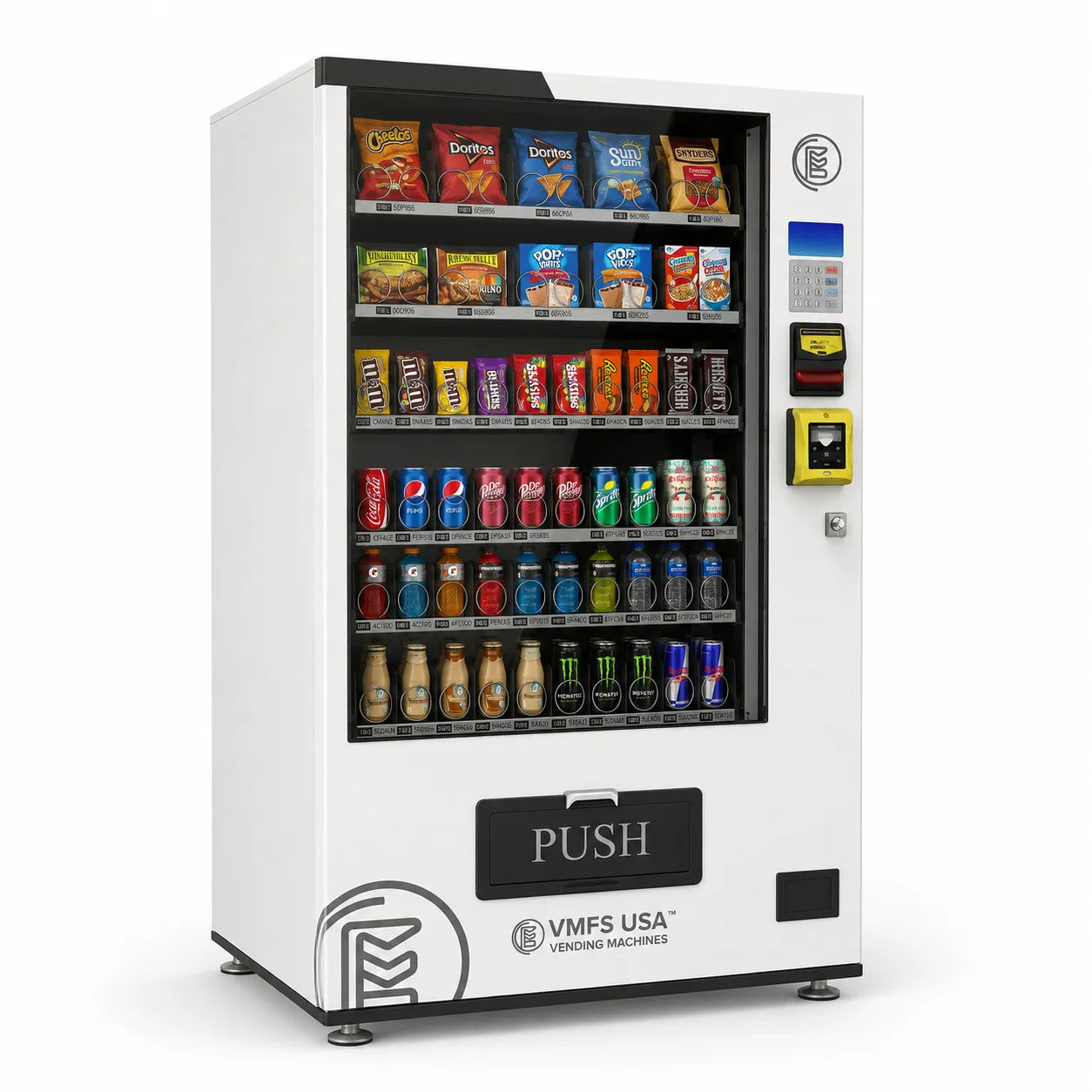
Share:
Best Coffee Machines for Home Office 2026
Best Coffee Machines for Home Office 2026