




Diseñe la solución de vending perfecta para su ubicación y clientes.

Únete al boletín de VMFS y forma parte de una red próspera dedicada al éxito colectivo.
Un registro. Posibilidades infinitas.

Los productos de cartas coleccionables sellados y las cajas sorpresa parecen negocios diferentes sobre el papel. Uno es Pokémon, One Piece y tarjetas deportivas. El otro son cajas misteriosas, cajas sorpresa y líneas de figuras de diseño. Sin embargo, en el punto de venta, se comportan de forma idéntica. Ambos venden anticipación en lugar de un artículo conocido. Ambos son compras impulsivas con un poderoso incentivo de repetición, porque el resultado que no obtuviste es la razón para volver. Y ambos se comercializan de la misma manera: muestras el objeto preciado y vendes el ticket.
Esa convergencia es realmente útil para un operador. Significa que no estás eligiendo entre dos mercados, sino que estás sirviendo a un mismo comportamiento con dos líneas de productos, y la segunda línea te respalda cuando la primera disminuye su actividad. Volveremos sobre esto, porque resulta ser uno de los aspectos más importantes de la economía en este sector.
Seamos claros sobre cómo interpretar esta sección. Cada cifra a continuación es ilustrativa, destinada a mostrarle cómo funciona la matemática en lugar de prometer lo que usted ganará. Sus resultados reales dependen de sus proveedores, su ubicación, sus precios y qué tan bien siga el calendario de lanzamientos. Dicho esto, la estructura económica es lo que hace que esta categoría sea interesante.
En realidad hay dos negocios dentro de esta misma máquina, y se comportan de manera muy diferente. El primero es de alto volumen y bajo valor unitario. Paquetes de mejora individuales y pequeños blísteres en el rango de cinco a diez dólares, comprados por impulso y vendidos en cantidad. Los márgenes por unidad son modestos una vez que se contabiliza el costo mayorista, pero la velocidad de rotación es excelente y el reabastecimiento es simple. El segundo es de bajo volumen y alto valor unitario. Colecciones selladas, cajas de entrenador de élite, cajas de mejora (booster boxes), líneas premium de cajas sorpresa, desde treinta hasta cien dólares o más. Menos ventas, muchos más ingresos por venta y un comprador mucho más deliberado.
El error es tratar estas categorías como alternativas. Las máquinas más exitosas operan con ambas, porque el producto económico genera el tráfico y el hábito, mientras que el producto caro genera los ingresos. Alguien que se detiene por un paquete de seis dólares esta semana es la persona que comprará la caja sellada de sesenta dólares cuando salga un set que le interese. La mayoría de las máquinas expendedoras creadas para esta categoría están diseñadas para manejar ese rango completo de precios, y el sistema de máquina expendedora de Pokémon es un buen ejemplo de un diseño hecho exactamente para esta mezcla.
Este es el ritmo que separa a los operadores que tienen éxito en esta categoría de aquellos que se frustran. La demanda de cartas coleccionables no es constante. Se dispara con fuerza alrededor de los lanzamientos de sets y tiradas de impresión, luego se estabiliza en una base más tranquila hasta el siguiente. Una máquina que está completamente abastecida y recién organizada durante la semana de lanzamiento puede tener cifras que no se parecen en nada a su mes habitual. Una máquina a la que le falta el nuevo set durante ese periodo ha perdido el objetivo de toda la categoría.
Eso significa que su frecuencia de reabastecimiento está dictada por el calendario, no solo por las espirales vacías. Quieres tener el producto en su lugar antes de un lanzamiento, no después, y quieres que tu merchandising refleje lo que es actual. Las cartas no se estropean como la comida, lo que elimina una categoría entera de riesgo, pero absolutamente quedan obsoletas en relevancia. Un set de la temporada pasada sentado en una espiral mientras los coleccionistas persiguen el nuevo es capital inmovilizado en algo que está perdiendo silenciosamente su atractivo. Nuestra guía de reabastecimiento cubre el lado práctico de planificar esto correctamente.
Aquí es exactamente donde el lado de las cajas sorpresa se gana su lugar. Los productos de cajas misteriosas y figuras coleccionables no siguen el calendario de lanzamiento de cartas, por lo que siguen vendiéndose durante los periodos tranquilos entre sets. Operar con ambas categorías en una máquina suaviza la curva de ingresos de una manera que una máquina solo de cartas simplemente no puede. Es el argumento práctico más sólido para la convergencia con la que empezamos, y es aún más importante en una ubicación con alquiler alto, razón por la cual vale la pena usar VPlaced para ajustar la máquina al sitio correcto antes de comprometerse con una ubicación.

Ahora, la parte que la mayoría de los artículos omiten por completo, y la parte que le costará dinero si se equivoca. En esta categoría, el mecanismo de entrega no es una nota técnica al pie, es una decisión sobre el estado del producto, y el estado del producto es valor.
La entrega por espiral es el sistema clásico. La espiral gira, el artículo cae y el cliente lo recoge. Es simple, confiable y totalmente adecuado para productos pequeños sellados. Un paquete de mejora, un blíster, un paquete minorista de cartas, estos soportan la caída corta sin ningún problema. La configuración estándar de pared delgada para cartas está construida exactamente para esto, y para ese producto es la respuesta correcta.
Es la respuesta incorrecta en el momento en que el producto se vuelve más grande o más valioso. Una caja de entrenador de élite sellada, una caja de mejora (booster box) o un coleccionable premium en una caja impresa impecable es otra historia, porque con este producto el empaque es parte de lo que el comprador está pagando. Una esquina abollada en una caja sellada de sesenta dólares no es un detalle estético, es un golpe real al valor percibido, y un cliente que pagó un precio premium y recibió una caja desgastada se lo hará saber. Aquí es donde entra la entrega por ascensor. Está disponible como configuración en máquinas personalizadas, y es el camino correcto para artículos sellados más grandes, porque la plataforma lleva el producto hasta la puerta de entrega en lugar de dejarlo caer. Hemos explicado el mecanismo en detalle en nuestra guía sobre cómo funcionan las máquinas expendedoras con ascensor.
Regla de oro: adapte la entrega al valor del producto. El sistema de espirales es adecuado para paquetes sellados pequeños. Para cajas de entrenador de élite, cajas de mejora y productos sellados más grandes donde el empaque tiene valor, la entrega por ascensor en una configuración personalizada es la opción. Tomar esta decisión correctamente antes de comprar es mucho más fácil que vivir con las consecuencias después.
Un pequeño detalle de vocabulario que vale la pena conocer, ya que surge constantemente en las conversaciones con los operadores. En estas máquinas, el mecanismo que desplaza el producto hacia el cliente es un transportador (conveyor). No es una cinta, y usar la palabra correcta le evitará confusiones al especificar un pedido. Puede ver las configuraciones que ofrecemos en nuestra gama de entrega por ascensor, y el sistema de máquina expendedora de Pokémon está diseñado específicamente en torno a esta categoría.
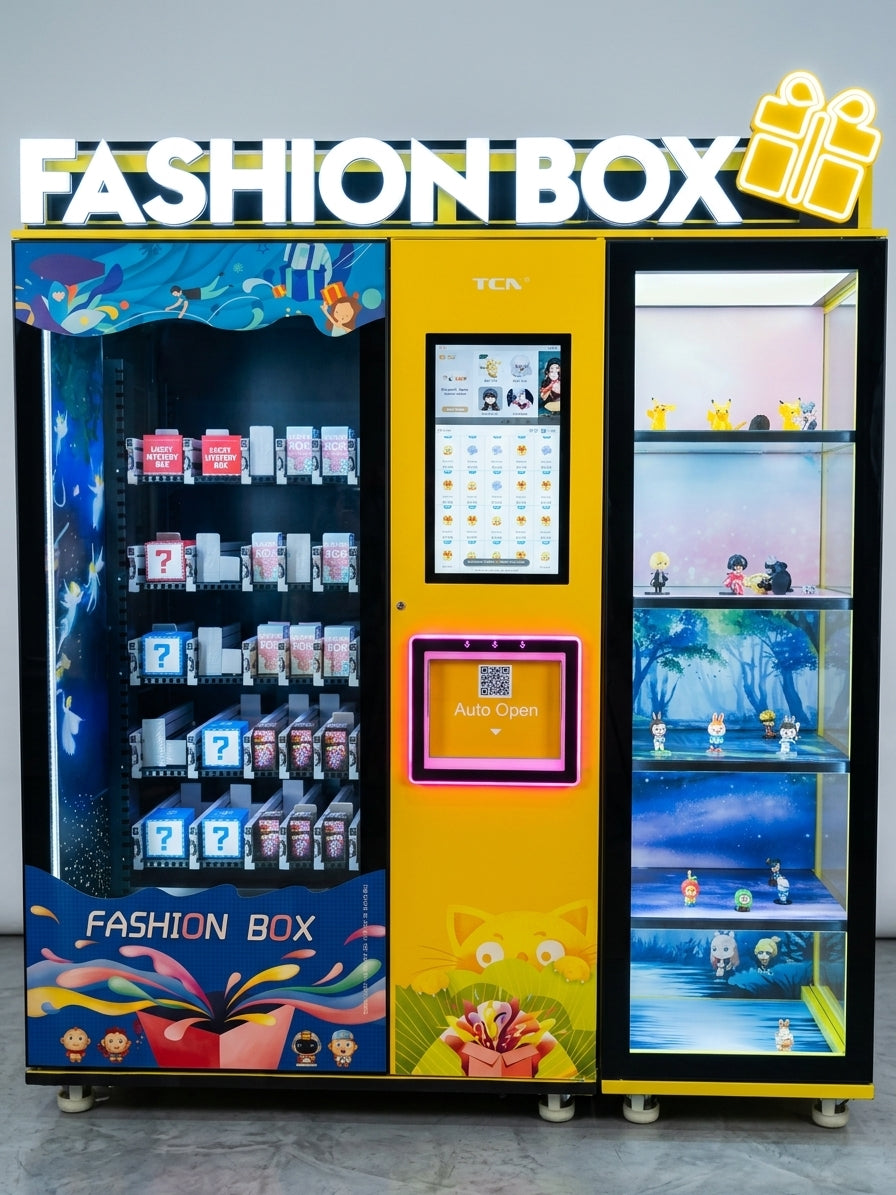
La máquina que vimos en la feria tenía tres gabinetes, y solo dos de ellos expenden productos. El tercero es una vitrina de cristal iluminada con estantes preparados y un fondo escénico impreso, que alberga figuras coleccionables y mercancía de personajes que no están a la venta. Si su instinto le dice que este es un espacio desperdiciado, vale la pena reconsiderarlo, porque ese gabinete puede estar realizando más trabajo comercial que cualquiera de los otros.
Esta es la mecánica de "muestra el objeto preciado, vende el ticket" en forma física. La vitrina es lo que detiene a alguien en un pasillo. Muestra el artículo codiciado, el objeto que vale la pena desear, y lo hace a la altura de los ojos bajo una iluminación adecuada donde una fila de espirales con paquetes sellados simplemente no puede competir visualmente. Entonces el cliente, ahora interesado, compra el producto asequible que está al lado. La exhibición costosa impulsa la venta económica, y la venta económica es su volumen. Tratar ese gabinete como almacenamiento en lugar de como un motor de merchandising es uno de los errores más caros que puede cometer con este formato. Si está configurando una máquina, vale la pena navegar por toda la gama de máquinas con esto en mente.

La columna de control en esta máquina cuenta con una gran pantalla táctil vertical, y vale la pena prestar atención a lo que muestra. En lugar de un teclado donde marcas el número de espiral, presenta una cuadrícula de selección de artículos individuales, cada uno representado como una tarjeta de producto con su propio precio. Esa diferencia suena cosmética. No lo es. Cambia lo que puedes vender y cómo lo haces.
Con tarjetas por artículo puedes fijar precios por posición en lugar de por fila, lo que significa que una máquina puede llevar un paquete de cinco dólares y una caja sellada de noventa dólares uno al lado del otro sin confundir a nadie. Puedes crear flujos de selección para productos de caja misteriosa, donde la elección en sí misma es parte de la diversión. Puedes cambiar los gráficos para el lanzamiento de un set y hacer que la máquina se vea actual desde el primer día en lugar de parecer de la temporada pasada. Y debido a que la pantalla es un visor, puede mostrar imágenes de marca y contenido promocional entre transacciones, lo que la convierte en una superficie multimedia tanto como en un menú. Este último punto merece un tratamiento completo por sí solo, y nuestro equipo de marketing lo cubre en VMarketed.
El pago en estas máquinas es configurable en lugar de fijo, y esa es una ventaja genuina. Dependiendo de cómo especifique el equipo, puede usar un lector de tarjetas, pago sin contacto (tap), billetera móvil o un aceptador de billetes, y la combinación correcta depende totalmente de dónde se ubicará la máquina. Un pasillo de centro comercial y una tienda de pasatiempos tienen clientes diferentes con hábitos distintos, por lo que vale la pena decidir esto deliberadamente en lugar de asumir que una sola configuración sirve para todo.
El monitoreo remoto está disponible a través de VMFS Cloud, que es un servicio pago de 7.99 dólares al mes. Vale la pena entender lo que esto le aporta en una categoría tan orientada al calendario, ya que saber qué se vendió y qué se está agotando sin tener que desplazarse hasta la máquina es mucho más importante cuando el lanzamiento de un set puede vaciar una fila en un fin de semana. Si la verificación de edad es parte de su configuración, tenga en cuenta que depende de la misma suscripción, así que inclúyalo en su planificación.
La seguridad escala con lo que hay dentro. Una máquina que contiene colecciones selladas tiene un valor de inventario real, y eso cambia el cálculo en torno al vidrio, el cierre y el anclaje en comparación con una máquina de snacks. La unidad que vimos incluía una apertura de cámara colocada sobre la puerta de entrega, lo cual es cada vez más estándar en formatos de mayor valor. Piense en el valor de un gabinete completamente cargado, especifíquelo en consecuencia y asegúrese de que su seguro y estructura de negocio también reflejen ese valor, algo en lo que el equipo de VAdviced puede ayudarle a organizar.

Los productos de tipo «caja sorpresa» (blind box) no vienen en un tamaño estándar, y tampoco lo hacen los productos de cartas selladas. Una máquina limitada a una única configuración le obliga a comprar inventario que se ajuste al hardware en lugar de inventario que sus clientes deseen. Los estantes ajustables resuelven esto, permitiendo que una máquina contenga un blíster pequeño en una fila y una caja sellada más alta en la siguiente, y permitiéndole cambiar la oferta a medida que el mercado evoluciona sin tener que comprar hardware nuevo. Para una categoría impulsada por lo que se lanzó el mes pasado, esa flexibilidad no es un lujo, es lo que mantiene la máquina relevante después de un año. El sistema de máquinas expendedoras de Pokémon está configurado teniendo en cuenta esta realidad de productos variados, y nuestra comparación entre máquinas personalizadas y estándar cubre los pros y contras con más detalle.
Por el lado positivo, es una categoría con una verdadera pasión detrás, un fuerte comportamiento de repetición, sin riesgo de deterioro, un alto potencial de precio en productos sellados y un componente social natural, ya que los clientes se filman abriendo lo que compraron. Dos líneas de productos comparten una misma máquina y cubren los períodos de baja actividad de la otra. La mecánica de merchandising está probada y el hardware para respaldarla existe hoy en día.
Por otro lado, obtener productos sellados de forma fiable a un coste mayorista viable requiere un esfuerzo real y establecer relaciones. La demanda es cíclica y está ligada a un calendario de lanzamientos que usted no controla. El valor del inventario reside en una máquina desatendida, lo que aumenta los riesgos en materia de seguridad y seguros. El valor de las cartas fluctúa, por lo que un producto que permanece demasiado tiempo puede perder su atractivo. Y la categoría recompensa a los operadores que realmente la siguen, ya que saber qué colección es relevante este mes no es algo que se pueda delegar fácilmente. Ninguno de estos problemas es insuperable, pero cualquiera que le diga que esta es una máquina pasiva que se rellena una vez al mes, es que nunca ha operado una.
Tres factores externos al hardware determinan si todo lo anterior se convierte en un negocio real. La ubicación es lo primero, porque esta categoría depende del público adecuado y del tiempo de permanencia suficiente para que ocurra una compra impulsiva, y nuestros socios en VPlaced se enfocan en encontrar y asegurar precisamente esos lugares. El aspecto legal y de configuración es más importante de lo que la gente espera en este ámbito, desde la formación de la entidad y los certificados de reventa hasta la forma en que se tratan las mecánicas de las cajas sorpresa en diferentes jurisdicciones, algo en lo que el equipo de VAdviced puede asesorarle. Y el aspecto del marketing convierte a una máquina en un destino, que es el territorio de VMarketed. Estos son servicios pagados por separado en lugar de un paquete, pero tenerlos conectados en una red significa que usted no está reuniendo a cuatro proveedores independientes desde cero. Cuando esté listo para comparar modelos, puede comprar de toda nuestra gama aquí, y las unidades en stock generalmente se envían dentro de 7 a 21 días. Las máquinas cuentan con un año de garantía en piezas.
Puede serlo, y la categoría tiene ventajas reales: sin deterioro, un fuerte comportamiento de repetición y un alto potencial de precio en productos sellados. Los beneficios dependen en gran medida del coste de obtención, la ubicación y lo bien que ajuste el stock a los lanzamientos de nuevas colecciones. Las máquinas que ofrecen tanto paquetes pequeños por volumen como productos sellados para obtener ingresos tienden a funcionar de manera más consistente que aquellas que se limitan a uno solo.
Sí, y ofrecer ambos suele ser la configuración más inteligente. Ambas categorías se comportan de la misma manera en el punto de venta, y los productos de caja sorpresa siguen vendiéndose durante los períodos de calma entre los lanzamientos de colecciones de cartas, lo que estabiliza los ingresos a lo largo del año. Los estantes ajustables son lo que hace que ofrecer ambos tamaños sea práctico.
Adapte la entrega al producto. La espiral es adecuada para artículos sellados pequeños como sobres y blísters, y la configuración estándar de pared delgada para cartas está diseñada exactamente para eso. Para cajas de entrenamiento de élite (Elite Trainer Boxes), cajas de sobres y productos sellados más grandes donde el estado del embalaje afecta al valor percibido, la entrega por elevador en una configuración personalizada es la mejor opción.
Porque impulsa las ventas que realmente ocurren. La vitrina exhibe el artículo más deseado bajo una iluminación adecuada, lo que hace que la gente se detenga al pasar y crea el deseo que conduce a una compra en los compartimentos expendedores. Funciona como un motor de merchandising más que como almacenamiento, y tratarlo de esa manera es fundamental para el funcionamiento de este formato.
¿Construyendo una máquina de cartas coleccionables?
VMFS USA suministra sistemas de venta de cartas coleccionables y objetos de colección, desde unidades de pared delgada hasta configuraciones personalizadas con entrega por elevador para productos sellados. Cuéntenos qué planea vender y le ayudaremos a especificar la máquina adecuada.
Comprar una máquina expendedora
Compartir:
Guía para comprar una máquina expendedora usada: qué verificar antes de pagar
La máquina expendedora de pan que Estados Unidos aún no ha descubierto