




Diseñe la solución de vending perfecta para su ubicación y clientes.

Únete al boletín de VMFS y forma parte de una red próspera dedicada al éxito colectivo.
Un registro. Posibilidades infinitas.
En resumen
Te ha pasado. Son las siete y media de la tarde, pasas caminando frente a la panadería de tu calle y las luces están apagadas. Las bandejas, vacías. Todo lo que querías se agotó a las diez de la mañana o se tiró a la basura hace una hora. Así que vas al supermercado y compras pan en una bolsa de plástico que seguirá blando dentro de cuatro días, lo cual te dice mucho sobre lo que contiene.
Aquí está la parte que me molesta. Esa panadería quería venderte algo. Lo tenían. El problema es que el horario no era el adecuado para ninguno de los dos.

Piensa en cuándo deseas realmente pan fresco. Temprano, antes del trabajo, idealmente antes de que la tienda haya abierto siquiera. Y por la noche, al volver a casa, cuando te das cuenta de que no hay nada para cenar. Esos son los dos momentos clave.
Una panadería tradicional está cerrada en ambos casos. Abre después de que la multitud matutina ya se haya rendido, realiza la mayor parte de su actividad en un margen de tres horas y cierra mucho antes de que comience el horario vespertino. El producto está justo ahí, detrás de una puerta cerrada con llave.
Y lo que no se vende ese día no tiene una segunda oportunidad. El pan recién horneado tiene una vida útil de aproximadamente 24 horas antes de dejar de ser vendible. El pan de supermercado envasado dura unos tres días, que es exactamente la razón por la que está envasado de esa manera.
La investigación del Pacific Coast Food Waste Commitment sitúa a la panadería en el 15,8 por ciento de todos los alimentos no vendidos en Estados Unidos. Los datos minoristas indican que aproximadamente el 12 por ciento del pan y los productos horneados en tienda nunca llegan a venderse. Todos y cada uno de ellos fueron elaborados, etiquetados con precio, exhibidos y luego desechados.
Eso no es una pequeña molestia operativa. Para una panadería con márgenes estrechos, es la diferencia entre un año decente y uno difícil.
Ve a Alemania y encontrarás máquinas de pan fuera de las panaderías en pueblos pequeños, dispensando panecillos a las cinco de la mañana. En Francia e Italia, lo mismo. Allí no es una novedad, es simplemente la forma en que compras pan cuando la tienda está cerrada.
Una panadería alemana colocó una máquina fuera de su tienda y la llamó "Caja de Sostenibilidad". La idea era sencilla: compra nuestro pan fresco a cualquier hora, con hasta un 30 por ciento de descuento, y no irá a la basura. Fue la primera de su tipo en toda su región. Su director general lo definió como utilizar su producto de la forma más eficiente posible, que es una mejor manera de decirlo de lo que la mayoría de los departamentos de marketing lograrían.
Otro operador con panaderías en París y Hamburgo fue más allá, cargando pan precocido que se termina de hornear cuando el cliente lo pide.
La brecha: en la mayor parte de los EE. UU., una máquina de vending de pan sigue siendo el tipo de cosa que hace que la gente se detenga a tomar fotos porque nunca han visto una. Eso no es un mercado que no funcione. Es un mercado que nadie ha atendido todavía.
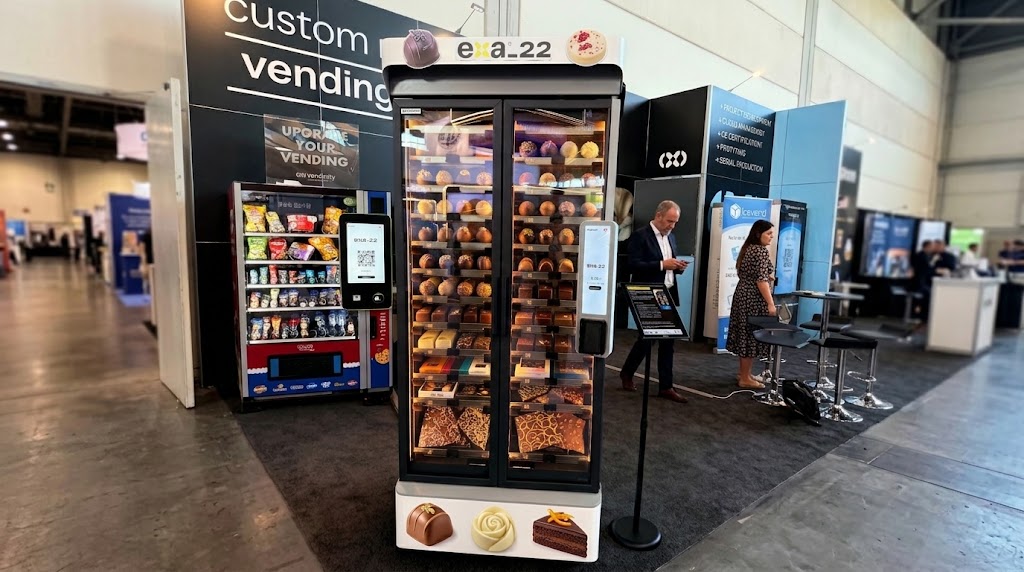
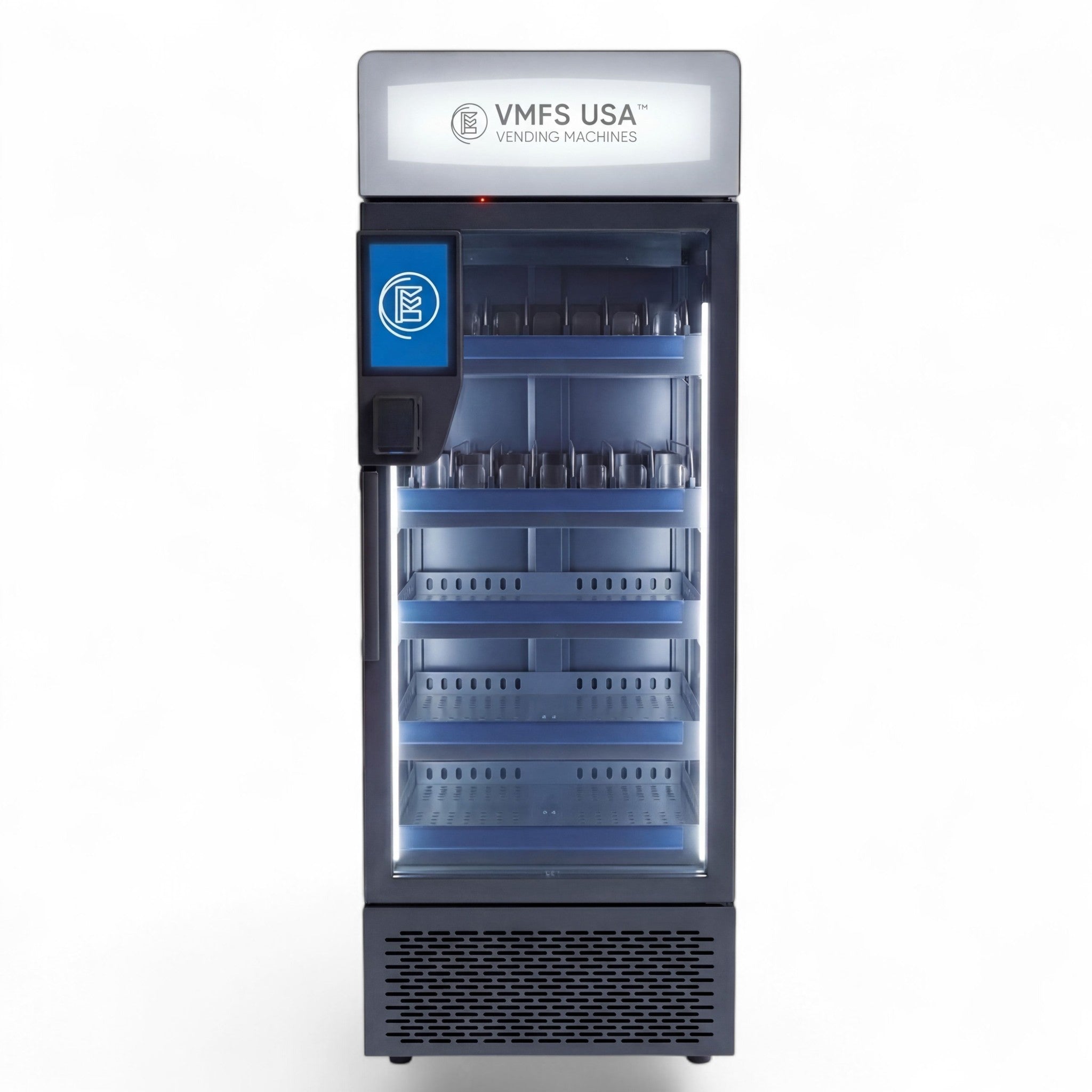
Bueno, la máquina. Dos puertas de vidrio, iluminación lineal ámbar cálida recorriendo ambos lados, y detrás del vidrio, una rejilla de estantes individuales numerados del 01 al 24. Cruasanes en uno, focaccia en otro, pretzels, baguettes, pequeños panes redondos. Cada artículo en su propia bandejita, sin que nada lo toque.
La iluminación merece una mención porque hace más trabajo del que cabría esperar. El pan bajo luz cálida parece pan. El pan bajo la tira de LED blanca fría de una máquina de snacks estándar parece un accesorio de atrezo.

La mayoría de las máquinas de vending que has usado funcionan con una bobina de espiral. La espiral gira, tu producto cae y lo sacas por una solapa en la parte inferior. Bien para una bolsa de patatas fritas. Absolutamente fatal para un cruasán.
Esta máquina no deja caer nada. Cada producto se coloca en su propio compartimento y, al pagar, ese compartimento se abre. Metes la mano y lo sacas de forma horizontal, igual que lo harías en un mostrador. Sin caídas, sin vuelcos, sin impacto en el fondo.
| Mecanismo | Cómo entrega | Ideal para |
|---|---|---|
| Espiral | El producto cae al depósito | Patatas, dulces, packs sellados |
| Elevador | Plataforma baja el producto suavemente | Tartas en caja, vidrio, productos frágiles |
| Taquilla | La puerta se abre, tú lo retiras | Pan, pastelería, cualquier cosa blanda o voluminosa |
Ya hemos hablado antes de la fila central con nuestra máquina de vending con elevador para alimentos, que es la respuesta correcta para productos en caja y frágiles. Las taquillas van un paso más allá para la panadería, porque una baguette no es solo frágil; tiene una forma difícil que ninguna espiral podrá sujetar correctamente.
Esta es la especificación sobre la que la gente pregunta más y que casi nadie explica correctamente, así que seré preciso al respecto.
La máquina cuenta con un módulo combinado de refrigeración y calefacción. No uno u otro. Eso importa más de lo que parece, porque una panadería no vende un solo tipo de producto. Un cruasán debe estar caliente. Un éclair relleno de crema definitivamente no, y puede causar problemas de salud si te equivocas. Poder mantener ambas condiciones en una sola máquina es lo que la hace viable para una panadería real en lugar de una simple novedad de un solo producto.
Seamos claros en una cosa: esta es una máquina de almacenamiento, no un horno. Mantiene el producto a temperatura. No hornea desde el estado crudo. Cualquiera que insinúe lo contrario te está vendiendo humo. Si deseas comida preparada genuinamente caliente, eso es una construcción diferente, más cercana a nuestra máquina de vending de comida caliente o a la máquina de vending de pizza.
En el lado refrigerado, si tu mezcla de productos se inclina más hacia lo frío que hacia lo caliente, una máquina de vending de frigorífico inteligente o algo de la gama refrigerada más amplia podría adaptarse mejor a ti que una taquilla de panadería.

La disposición de los compartimentos no es fija. Estas máquinas se construyen desde una sola sección hasta unas 40, y el tamaño de cada taquilla se ajusta a lo que vas a colocar en ella. Eso no es una frase de marketing, es una necesidad práctica. Una baguette y un macarrón no pertenecen a la misma caja, y una máquina que les obliga a ello es una máquina que desperdicia la mitad de su capacidad.
Así que una panadería que vende principalmente hogazas de pan configura compartimentos profundos y altos. Una que vende principalmente pasteles y dulces configura muchos pequeños. La mayoría gestiona una mezcla, y la parte útil es que el pan, los panecillos y la repostería pueden adquirirse en una sola transacción. Si estás especificando algo para tu propia línea de productos, nuestro sistema de máquina de vending de alimentos es el lugar ideal para empezar esa conversación.
La unidad que examinamos tenía una pantalla táctil vertical grande, pago con tarjeta integrado y un menú que puede personalizarse con los colores y la marca de la propia panadería. Esto es importante, porque una máquina fuera de tu tienda debe parecer que pertenece a tu tienda, no al fabricante. Puedes ver interfaces similares en nuestras máquinas de vending con pantalla táctil.
Detrás de ella se encuentra el software en la nube que realiza el trabajo realmente útil:
Vale la pena detenerse en la función de códigos de descuento. Es exactamente lo que convierte el excedente de fin de día en ingresos en lugar de desperdicio. Baja el precio automáticamente después de las 7 p. m., avisa a los clientes y vende lo que de otro modo habría terminado en la basura.

Preferimos decírselo ahora que esperar a que usted lo descubra en el tercer mes.
Tres cosas más allá del equipo deciden si esto funciona. Primero, la ubicación, porque una máquina de pan depende de estar cerca de donde la gente ya camina de regreso a casa, y encontrar esos lugares es lo que hacen nuestros socios de VPlaced. Luego, el aspecto legal, que para la comida fresca significa permisos, requisitos del departamento de salud y registros de temperatura, y eso es territorio de VAdviced. Y finalmente, que la gente sepa que existe, especialmente a las 6 a. m., que es donde entra en juego VMarketed. Estos son servicios pagados por separado, pero están conectados, por lo que no tendrá que reunir a cuatro proveedores no relacionados desde cero.
Por nuestra parte, puede explorar la gama completa de máquinas expendedoras de alimentos o ver lo que está listo ahora en unidades en stock, que generalmente se envían dentro de 7 a 21 días. Las máquinas tienen una garantía de piezas de un año. Si prefiere simplemente ver todo, la línea completa de máquinas expendedoras está aquí.
Dos cosas trabajando juntas. Cada artículo se coloca en su propio compartimento sellado en lugar de al aire libre, y un módulo combinado de refrigeración y calefacción mantiene la condición de almacenamiento adecuada para ese producto. Esa combinación prolonga la vida útil mucho más allá de lo que logra un mostrador de panadería abierto.
No, y tenga cuidado con cualquiera que diga que la suya lo hace. Una máquina de panadería tipo casillero mantiene el producto a temperatura, no hornea desde cero. Algunos operadores europeos cargan productos precocidos que se terminan en otro lugar, pero la máquina en sí es una unidad de almacenamiento y dispensación.
Porque una espiral deja caer el producto. Un croissant o un panecillo suave no sobrevivirían a eso, y una baguette ni siquiera cabría en una espiral. Con los casilleros, el compartimento se abre y el cliente retira el artículo nivelado, por lo que llega en el mismo estado en que se colocó.
Las configuraciones van desde una sola sección hasta unas 40, con cada compartimento adaptado al tamaño del producto. Una máquina construida para hogazas se ve muy diferente por dentro a una construida para pasteles, y la mayoría de las panaderías utilizan una mezcla para que el pan y los dulces se puedan comprar juntos.
Esa es la configuración europea más común: montada en la pared exterior para que los clientes puedan comprar cuando la tienda está cerrada. Necesita una construcción resistente a la intemperie y energía confiable, y vale la pena consultar primero las normas locales sobre instalaciones orientadas a la calle.
¿Pensando en una máquina de panadería?
Suministramos sistemas de venta de alimentos, refrigerados y calientes en todo EE. UU. Díganos qué hornea y dónde quiere venderlo, y le ayudaremos a especificar la máquina correcta.
Explorar las máquinas

Compartir:
Dentro de una máquina expendedora de cartas coleccionables: cómo funciona realmente el hardware
¿Qué es un operador de máquinas expendedoras? Guía completa sobre el negocio del vending