Smart vending machines are internet connected machines that accept cashless payment, monitor their own sales and stock, and report to the cloud in real time. In 2026, the most capable models layer AI on top of that connection to forecast demand, catch faults early, and verify age at the screen. The practical value is simple: fewer wasted service trips, fewer stock outs, and clean data behind every sale. This guide explains how they actually work, what is real versus oversold, the main machine types, what they cost, and how to evaluate one before you buy.
Key takeaways:
- IoT is the foundation. It gives you visibility. AI sits on top and only pays off once you have clean data.
- The four problems smart vending solves are wasted trips, stock outs, downtime, and messy numbers.
- Main types: touchscreen, AI grab and go, advertising, and fresh or cooler machines.
- Upgrade in order: payments first, telemetry second, reporting third, AI last.
- Treat telemetry as a strong signal, not perfect truth, and you will make better calls.
What "Smart" Actually Means in 2026
The word "smart" gets stretched in vending marketing, so it helps to be precise. A smart vending machine is not automatically an AI machine. Most of the value comes from connectivity, the machine's ability to send data to a system you can read and act on. AI is a separate layer that becomes useful only after that data exists.
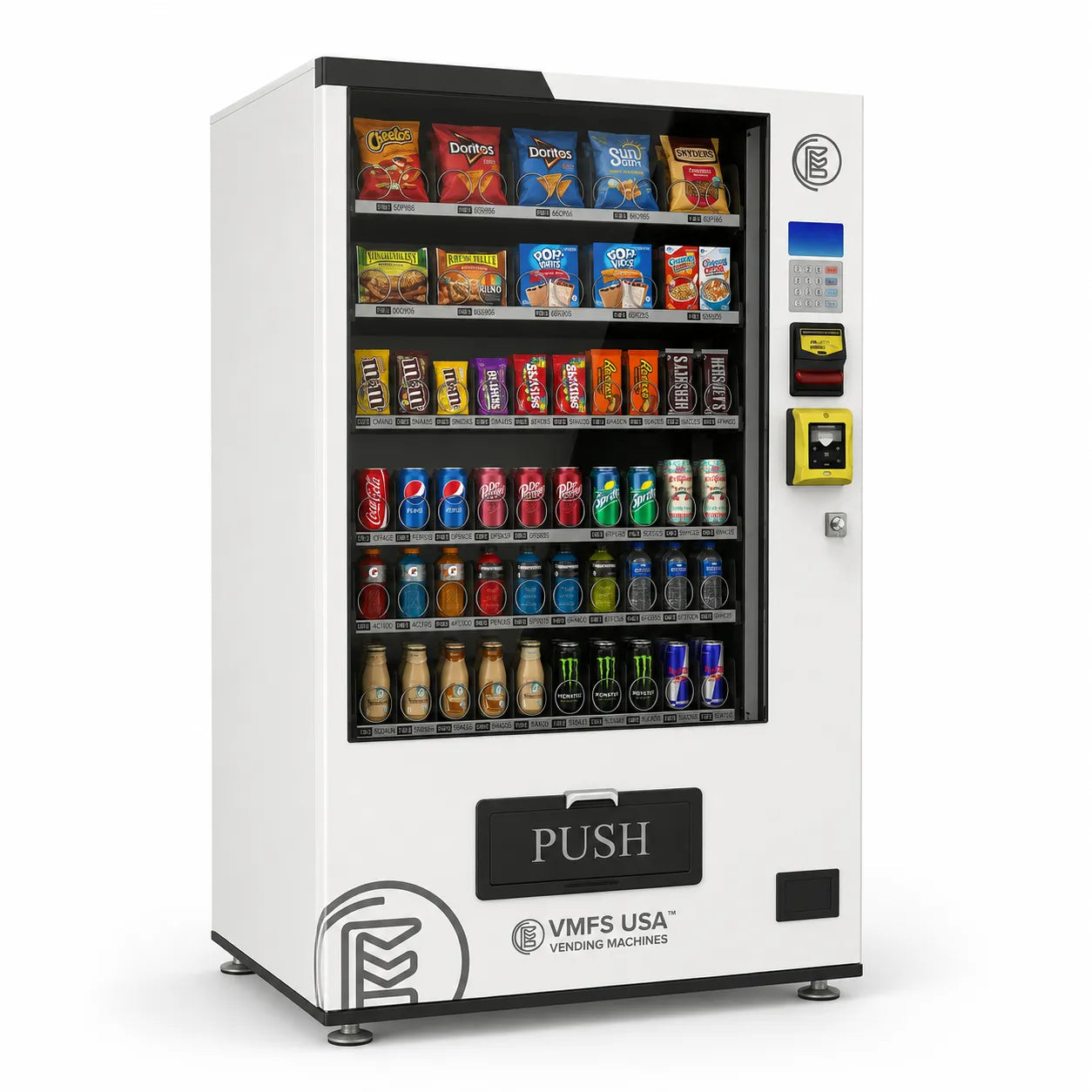
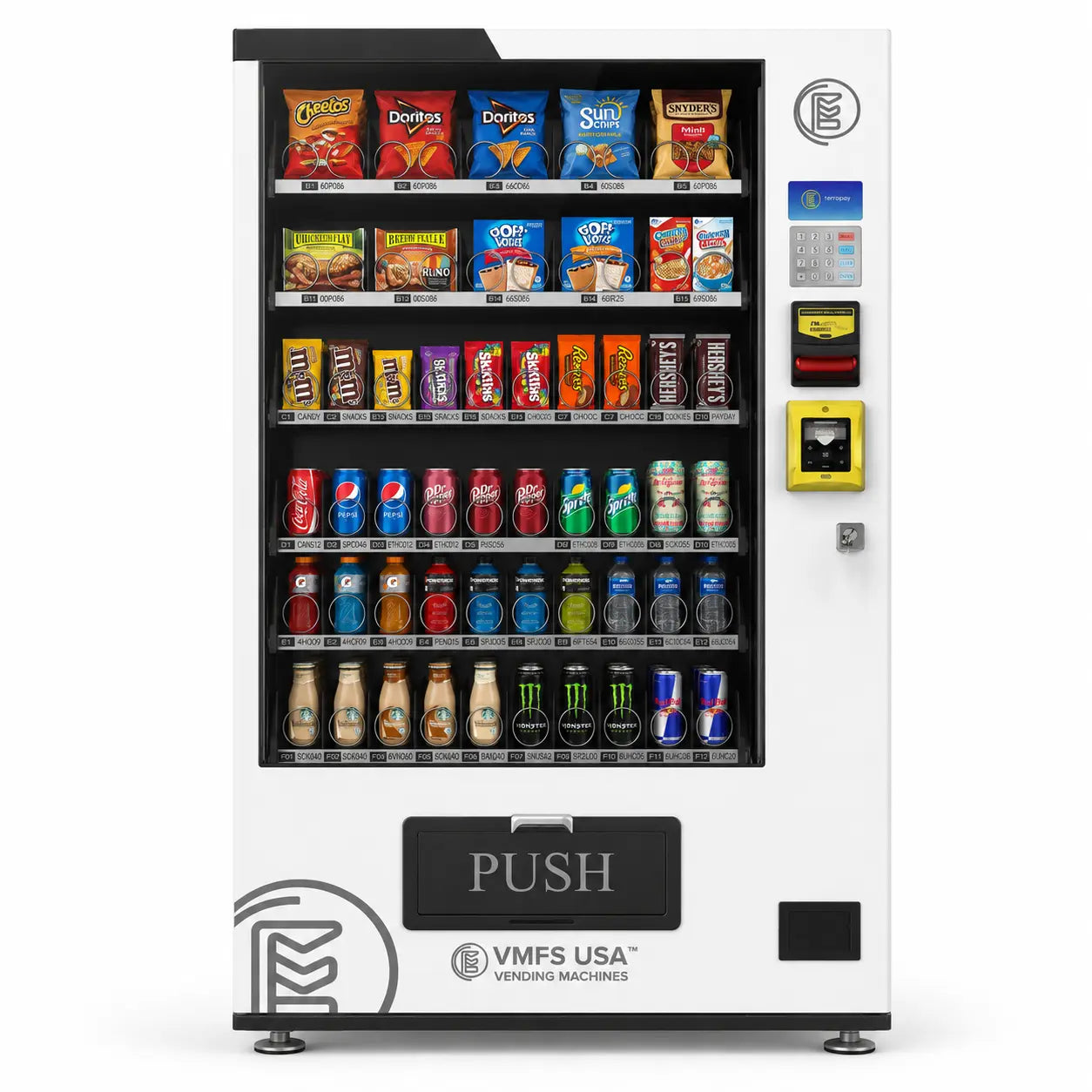
In practice, a smart vending machine usually includes:
-
Cashless payment: Card, contactless, and mobile wallet acceptance.
-
Telemetry: Remote monitoring of sales totals, alerts, and inventory estimates.
-
Machine health signals: Temperature, door events, and error states.
-
Remote configuration: Price updates and basic settings without a site visit.
If a machine can do those things, it is smart in the way that matters day to day. Anything labeled AI on top of that should be judged on whether it actually improves a decision you make, not on the label alone.
How a Smart Vending Machine Works
A smart vending machine works in two layers. The first is the connection. The second is the intelligence built on top of it. Keeping them separate is the single most useful thing an operator can understand, because it tells you what to buy first and what to expect from each part.
The IoT Layer: Connection and Visibility
IoT is the communication layer. It is what lets you know what happened when you were not standing at the machine. Used well, it reliably tells you:
- Total sales broken down by payment type
- Event logs such as errors, power cycles, and door activity
- Temperature alerts on chilled machines
- Whether the machine is currently online
It is worth being honest about the limits too. Telemetry is a strong signal, not perfect truth. Slot level inventory can drift if a planogram changes or a product jams, and a machine can show you that sales dipped without telling you why. The right way to use it is as visibility that sharpens your judgment, not as a replacement for good service routines. Even with those caveats, the gain is large. Industry data suggests connected monitoring cuts machine downtime by roughly a third and meaningfully extends the time between restocking trips.
The AI Layer: Prediction and Automation
Once a machine produces steady, reliable data, AI can find patterns in it. The realistic and genuinely useful applications in 2026 are:
-
Demand forecasting: Estimating what will sell before your next visit, which is most accurate at stable locations like offices and gyms.
-
Smarter restocking: Picklists that match real demand and cut wasted inventory you haul around.
-
Early warning signals: Surfacing patterns such as repeated payment failures or unusual sales drops before they cost you a week of revenue.
-
Age verification: On AI machines, scanning ID to block underage purchases of restricted products.
A fair word of caution: many features marketed as AI are really simple rules, such as alert me when temperature crosses a threshold. That is still useful, but it is not worth premium pricing dressed up as machine learning. The honest summary is that IoT delivers most of the everyday value, and AI compounds it once your inventory, planograms, and service records are consistent. If your data is messy, AI will only help you guess faster.
The Four Problems Smart Vending Solves
Strip away the marketing and smart vending is trying to fix four common leaks in a route:
-
Wasted trips: Driving to a machine that did not actually need service.
-
Stock outs: Running out of the one item that location buys most.
-
Downtime: A bill validator, motor, or cooling unit fails quietly and kills sales until your next visit.
-
Messy numbers: Cash collected does not match expectations, and you cannot reliably tell what sold where.
Every real benefit of smart vending traces back to one of these. If a feature does not reduce one of the four, it is not worth paying for.
Types of Smart Vending Machine
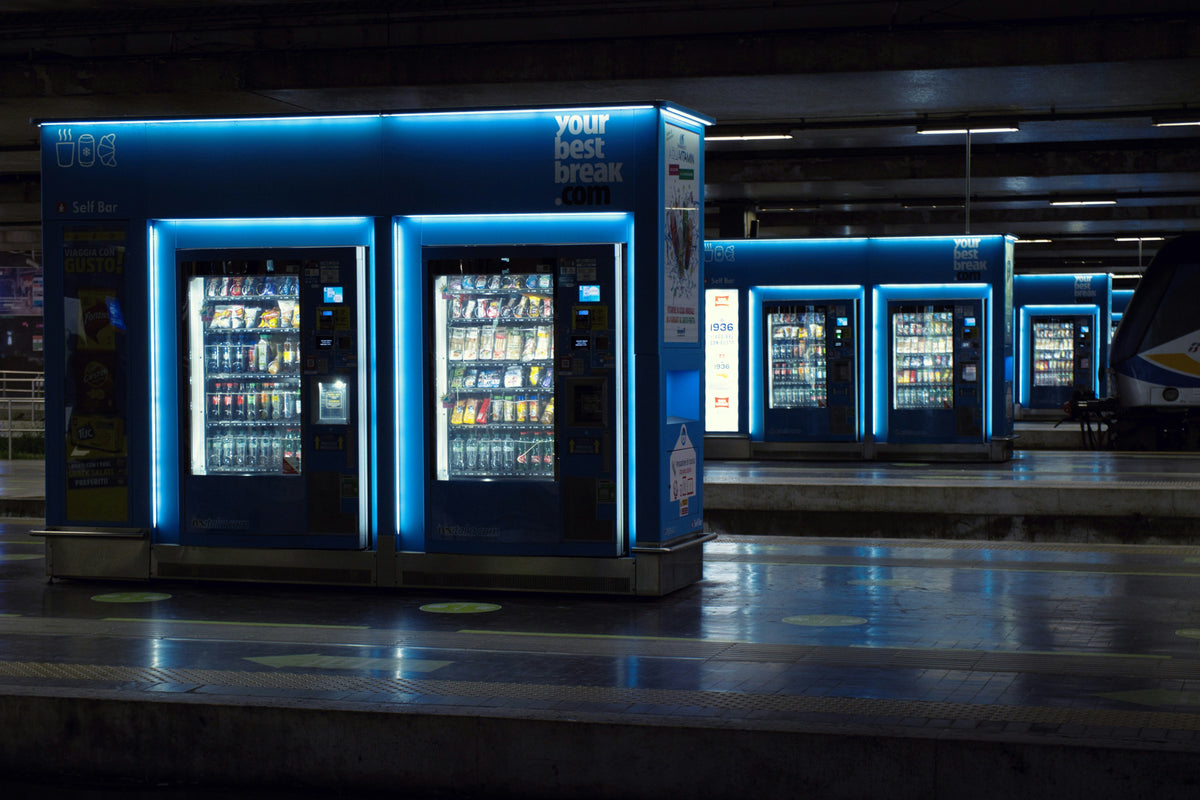
Smart vending is a family of formats, not a single product. Each fits a different location and goal.
| Type |
How It Works |
Best Location |
Operational Reality |
| Touchscreen smart machine |
Cashless, on screen info and upsells, telemetry |
Offices, gyms, lobbies |
The common modern default, low complexity |
| AI grab and go |
Open door, sensors detect items, auto checkout |
Premium offices, residential, transit |
Higher cost and more support overhead |
| Advertising machine |
Sells products plus paid screen advertising |
High traffic public spaces |
Adds a second revenue stream |
| Fresh and cooler machine |
Chilled food and drinks, larger basket |
Hospitals, campuses, large offices |
Higher ticket, needs reliable cooling |
A
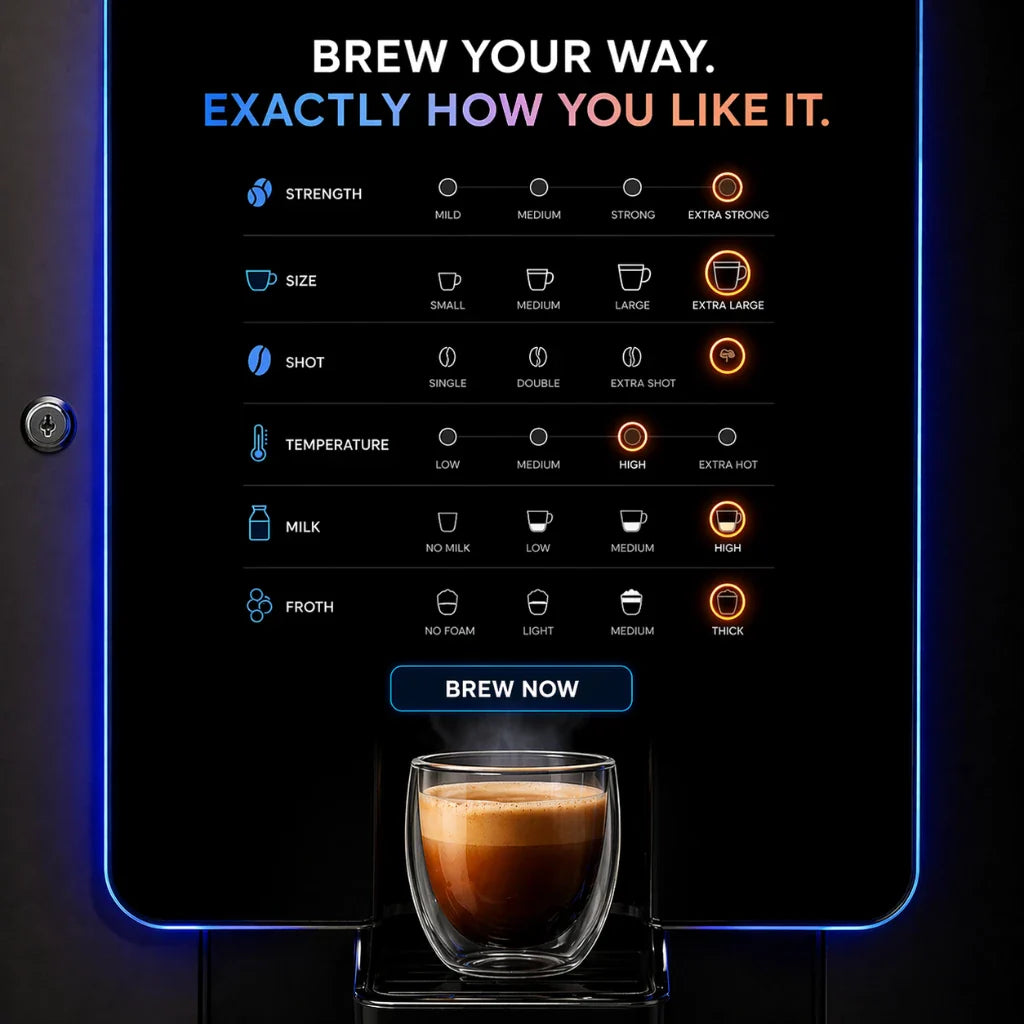
touch screen smart vending machine is the most common upgrade path and a sensible default for most sites. Where a location justifies premium, frictionless retail,
smart ai vending machines let customers take what they want and get charged automatically, though they carry more equipment cost and customer support expectations. In heavy foot traffic,
advertising vending machines turn the screen into an income stream on top of product sales. Alongside these, micro markets, which are unattended open shelf setups with a self checkout kiosk, are expanding quickly and suit larger break rooms.
The Numbers: Adoption in 2026
Smart vending is not a niche experiment anymore. A few accurate data points set the context, though estimates vary by source and definition:
- The North America smart vending market is on track to roughly double, from around four billion dollars in 2024 toward nine billion by the early 2030s.
- A majority of new vending installations now ship with connectivity, remote diagnostics, and analytics built in.
- Cashless is the default. Tap to pay makes up the large majority of cashless transactions, and mobile wallet use has grown sharply.
- There are roughly 2.3 million vending machines across the United States, and micro market locations have grown at double digit rates.
The direction is clear and steady. Connectivity is becoming standard infrastructure rather than a premium add on, which is why buying a machine that cannot report data is increasingly a false economy.
What to Evaluate Before You Buy
If you are weighing a smart vending upgrade, evaluate features in this order. The sequence matters as much as the list.
-
Payments first: Reliable cashless acceptance is the highest impact upgrade. It increases conversion and makes modern locations want your machine.
-
Telemetry second: Connectivity reduces surprises and tells you which machines need attention and which are stable.
-
Reporting and consistency third: A connected machine without clean reporting is just an expensive box. Your workflow should produce sales by machine and location, dependable service logs, and product performance history.
-
AI last: Only add forecasting and automation once your data is consistent enough to trust.
Also confirm the practical basics: MDB and DEX compatibility, connectivity options such as cellular and Wi-Fi, accessibility compliance, and whether the reporting platform centralizes your numbers instead of forcing you between apps.
A Realistic Upgrade Path
For both small and large operators, a safe sequence looks like this:
- Add or standardize cashless payment across the fleet.
- Connect telemetry for visibility into sales and machine health.
- Tighten service routines with a consistent product list and recording per location.
- Use reports to adjust placement, pricing, and how often you visit each site.
- Only then layer in AI tools for forecasting and picklists.
This keeps each upgrade practical and profitable, and it avoids paying for intelligence you cannot yet use.
What Smart Vending Machines Cost
Cost depends heavily on format, so think in components rather than a single number. There is the hardware itself, a small recurring fee for connectivity and software, and per transaction payment processing fees of roughly two to five percent. An upgraded smart snack or drink machine sits at the lower end of hardware cost, touchscreen and media machines sit higher, and AI grab and go is the most expensive because of its sensors and software. Because a single connected machine can lift revenue while cutting service costs, most operators view the premium over a basic machine as paying back within months rather than years. For current pricing by model, the
smart vending machines collection lists each configuration.
Why VMFS USA Machines
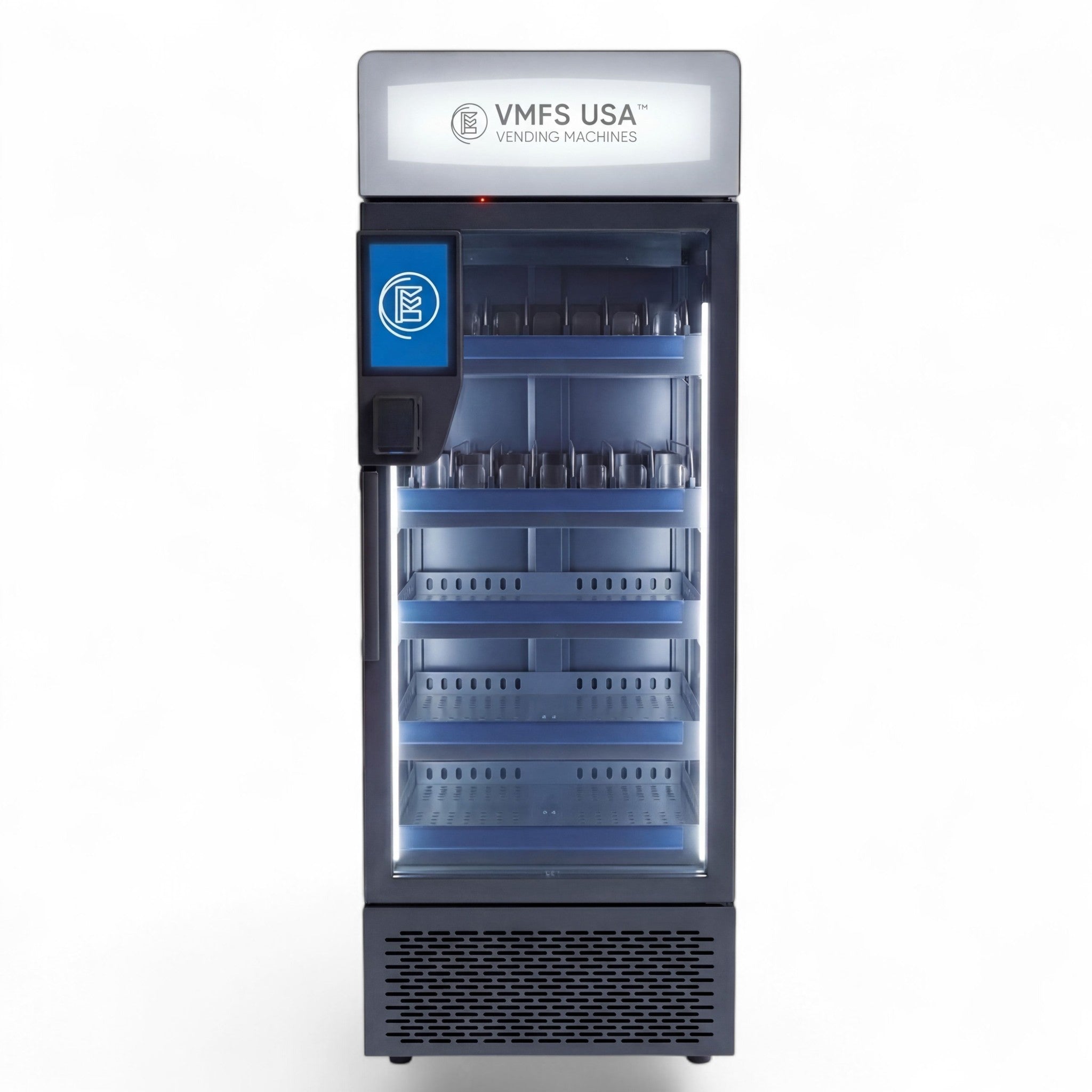
Most of this guide is brand neutral on purpose, because the principles apply no matter who you buy from. Where VMFS USA fits is the execution. Every VMFS machine is built MDB and DEX ready, so cashless readers and telemetry connect cleanly, and each unit reports to
VMFS Cloud for remote monitoring, sales tracking, and alerts the moment it powers on. Rather than forcing you into a fixed model, the
touch screen vending machine system builder and the
AI machine customizer let you specify the format, screen, and features your location actually needs. The goal is the same one this guide argues for throughout: a machine that gives you visibility and clean data from day one, not a cabinet that goes dark between visits.
Beyond the Machine: Compliance, Placement, and Marketing
A smart machine is one part of a working vending business. Three other parts decide whether it earns:
-
Compliance: Permits, licensing, and location contracts. VAdviced handles the full legal side so you operate cleanly.
-
Placement: The location sets the ceiling on earnings. VPlaced matches operators with vetted, high traffic sites.
-
Marketing: Getting found and selling more per machine. VMarketed runs marketing built specifically for vending operators.
The hardware, the legal foundation, the right locations, and the growth: get all four right and a smart machine becomes a genuinely scalable asset.
Frequently Asked Questions
What is a smart vending machine?
A smart vending machine is a connected automated retail unit that accepts cashless payment, tracks sales and inventory in real time, and reports to a cloud dashboard. Advanced models add AI for demand forecasting, fault detection, and age verification.
How do smart vending machines work?
They work in two layers. IoT connectivity handles payments, telemetry, and remote monitoring, sending data to a dashboard. AI then analyzes that data to forecast demand, suggest restocking, and flag faults early. IoT is the foundation, and AI builds on it.
Is AI in vending machines worth it?
It can be, but only after your data is consistent. AI is most valuable for forecasting and restocking at stable locations. Be aware that some AI labeled features are simple rule based alerts, so judge each on whether it improves a real decision.
Are smart vending machines worth the higher cost?
For most operators, yes. Cashless acceptance, fewer wasted trips, fewer stock outs, and clean reporting usually pay back the premium within months. The value grows across a fleet, where the data and automation compound.
What should I upgrade first on a vending machine?
Payments first. Reliable cashless acceptance has the biggest impact on sales. Add telemetry next for visibility, then make sure your reporting is clean, and consider AI tools only once your data is consistent.
Do smart vending machines require internet?
Yes. They use cellular, Wi-Fi, or Ethernet to authorize cashless payments and send sales and health data to the cloud. The connection is what makes the machine smart in the first place.
The Bottom Line
In 2026, smart vending is not about chasing futuristic features. It is about using IoT and AI to run a vending business with fewer wasted visits, fewer stock outs, and fewer surprises. Connection gives you visibility, clean reporting turns that visibility into decisions, and AI compounds the result once your data is solid. Keep your expectations realistic, upgrade in the right order, and a smart machine delivers what the word was always supposed to mean: more control, less guesswork, and a route that scales.
When you are ready to see the hardware, browse
smart vending machines and
smart ai vending machines from VMFS USA, then let
VPlaced,
VAdviced, and
VMarketed handle placement, compliance, and growth.




Compartir:
Hot Food From a Vending Machine: What We Saw at Venditalia 2026
Coffee Vending Routes & Operations: The Complete Guide for 2026