


Elegir el proveedor de máquinas expendedoras de café adecuado determina si su sala de descanso, vestíbulo o ruta de ventas genera ingresos constantes o se convierte en un dolor de cabeza de mantenimiento. Los mejores proveedores de máquinas expendedoras de café combinan hardware confiable, precios transparentes, respuesta de servicio rápida y términos de contrato flexibles, en lugar de solo ofrecer el presupuesto inicial más bajo. Esta guía detalla exactamente qué evaluar antes de firmar con un proveedor, para que evite los costos ocultos y las brechas de servicio que hacen fracasar la mayoría de las instalaciones de máquinas expendedoras.
Tabla de contenidos
- Por qué el proveedor adecuado importa más que la máquina
- Criterios clave para evaluar a un proveedor de máquinas expendedoras de café
- Tipos de máquinas expendedoras de café que ofrecen los proveedores
- Grano a taza vs. Instantánea vs. Cápsula: Comparación de proveedores
- Entendiendo los modelos de precios y contratos
- Tiempos de respuesta de servicio, mantenimiento y soporte
- Pros y contras de comprar, arrendar y el servicio completo de vending
- Banderas rojas que debe evitar al seleccionar un proveedor
- Lista de verificación para la evaluación de proveedores
- Preguntas frecuentes
Por qué el proveedor adecuado importa más que la máquina
Una máquina expendedora de café es tan confiable como el proveedor que le brinda mantenimiento. Las máquinas se descomponen, los depósitos se vacían y los sistemas de pago fallan independientemente de la calidad de la marca, por lo que la infraestructura de respuesta del proveedor determina directamente su tiempo de actividad y sus ingresos. Las empresas que eligen proveedores basándose únicamente en especificaciones de hardware a menudo descubren el verdadero factor diferenciador más tarde: qué tan rápido aparece alguien cuando la máquina deja de preparar café.
La selección del proveedor también afecta el costo total de propiedad. Una máquina más barata de un proveedor con reabastecimiento lento o sin técnicos locales cuesta más en tres años que una unidad un poco más cara respaldada por un servicio dentro de la misma semana. Para obtener un desglose completo de las tendencias actuales de la demanda que dan forma a esta decisión, consulte nuestro análisis del mercado de máquinas expendedoras de café de 2026.
Criterios clave para evaluar a un proveedor de máquinas expendedoras de café
Evaluar a un proveedor de máquinas expendedoras de café se reduce a cinco factores medibles: calidad del equipo, cobertura de la red de servicio, flexibilidad del contrato, tecnología de pago y trayectoria comprobada. Cada factor afecta una parte diferente de su operación, así que compárelos con su tipo de instalación específica en lugar de recurrir automáticamente al proveedor que ofrezca el precio más bajo.
1. Fabricación del equipo y calidad de construcción
Verifique si el proveedor fabrica las máquinas directamente o revende unidades de terceros. Los fabricantes directos suelen ofrecer una mejor disponibilidad de piezas y una resolución de garantía más rápida porque controlan la cadena de suministro. Pregunte específicamente sobre el tipo de caldera, el mecanismo de preparación y los datos del tiempo medio entre fallos si el proveedor los rastrea.
2. Red de servicio local y cobertura de técnicos
Un proveedor sin técnicos en su ciudad significa que cada reparación requiere enviar piezas y esperar días a que llegue un técnico de fuera. Confirme el radio de servicio del proveedor antes de firmar, porque el tiempo de inactividad de la máquina se acumula rápidamente en lugares de alto tráfico como oficinas y gimnasios.
3. Términos del contrato y cláusulas de salida
Muchos proveedores atan a los operadores a acuerdos de varios años con fuertes penalizaciones por terminación anticipada. Lea el contrato para identificar cláusulas de renovación automática, compromisos de volumen mínimo y términos de propiedad del equipo al finalizar el contrato.
4. Integración del sistema de pago
Las máquinas expendedoras de café modernas necesitan soporte para pagos sin efectivo, incluidos pagos por contacto (tap-to-pay), billeteras móviles y sistemas de recarga basados en aplicaciones. Un proveedor que aún ofrece máquinas que solo aceptan monedas indica una tecnología obsoleta en todo su catálogo.
5. Reputación y referencias verificables
Solicite referencias de clientes actuales con instalaciones de tamaño y tráfico similares a los suyos. Los proveedores que confían en la calidad de su servicio proporcionarán estas referencias sin dudarlo.
Consejo de investigación: Verifique las afirmaciones del proveedor de forma independiente. Busque el nombre de la empresa junto con "opiniones", "quejas" y el modelo específico de la máquina antes de firmar algo, y verifique el registro comercial y los años en operación a través del registro de empresas de su estado.
Tipos de máquinas expendedoras de café que ofrecen los proveedores
Los proveedores de café suelen tener tres categorías de máquinas: de grano a taza (bean-to-cup), instantáneas/en polvo y sistemas basados en cápsulas. Cada categoría atiende a diferentes volúmenes de tráfico y niveles de presupuesto, y el proveedor adecuado recomendará basándose en su afluencia de personas en lugar de promocionar su unidad de mayor margen.
Para obtener un desglose técnico más profundo de cómo funcionan estas unidades internamente, lea cómo funcionan las máquinas expendedoras de café y la mecánica detrás de las máquinas expendedoras de café.
| Tipo de máquina | Ideal para | Rango de costo promedio | Costo por taza para el operador |
|---|---|---|---|
| Grano a taza | Oficinas, hoteles, vestíbulos de alto tráfico | $3,500 – $9,000 | $0.25 – $0.45 |
| Instantánea/Polvo | Almacenes, salas de descanso con presupuesto | $1,200 – $3,000 | $0.12 – $0.20 |
| Basada en cápsulas | Pequeñas oficinas, lugares boutique | $800 – $2,500 | $0.35 – $0.60 |
Para un desglose completo de precios por nivel y configuración de máquina, revise nuestra guía de precios de máquinas expendedoras de café.
Grano a taza vs. Instantánea vs. Cápsula: Comparación de proveedores
Es raro que los proveedores se especialicen por igual en los tres tipos de máquinas, así que identifique en qué categoría es más fuerte un proveedor antes de comprometerse. Un proveedor conocido por máquinas instantáneas a granel puede carecer del inventario de piezas y la capacitación técnica necesaria para dar un mantenimiento adecuado a las unidades de grano a taza.
Ventajas de grano a taza
- La mayor calidad percibida impulsa el uso repetido
- Admite precios premium por taza
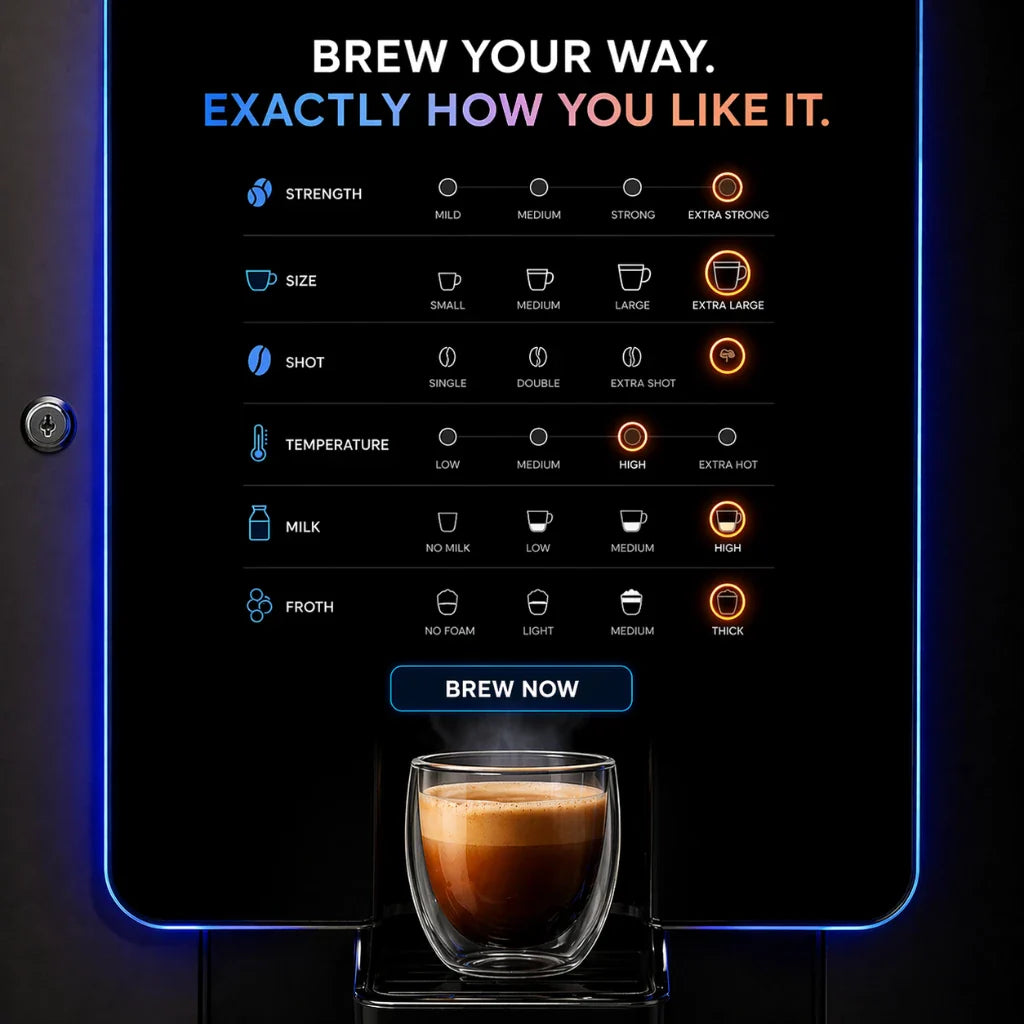
- Los menús de bebidas personalizables aumentan la participación
Desventajas de grano a taza
- Mayor costo inicial y de mantenimiento
- Requiere visitas de técnicos más frecuentes
- La frescura del grano exige ciclos de reabastecimiento más estrictos
Ventajas de instantánea/polvo
- Menor costo por taza para los operadores
- La mecánica más simple significa menos averías
- Reabastecimiento más rápido con mayor vida útil
Desventajas de instantánea/polvo
- Menor calidad percibida por los usuarios finales
- Personalización de bebidas limitada
- Menos adecuada para instalaciones de oficina premium
Entendiendo los modelos de precios y contratos
Los proveedores de máquinas expendedoras de café suelen ofrecer tres modelos comerciales: compra directa, arrendamiento con opción a compra y vending de servicio completo, donde el proveedor posee y abastece la máquina a cambio de una participación en los ingresos. Los acuerdos de servicio completo trasladan la carga del mantenimiento y el reabastecimiento totalmente al proveedor, lo que los hace atractivos para las empresas que desean servicio de café sin involucrarse en la operación.
Los modelos de compra tienen sentido para los operadores que construyen un negocio de rutas y quieren controlar los márgenes directamente. Si está evaluando ese camino, nuestra guía sobre cómo iniciar un negocio de máquinas expendedoras de café y si las máquinas expendedoras de café son rentables lo guiará a través de expectativas de margen realistas.
| Modelo | Costo inicial | Quién se encarga del servicio | Mejor opción para |
|---|---|---|---|
| Compra directa | Alto | Comprador (o contrato pagado) | Operadores de ruta, compradores de múltiples unidades |
| Arrendamiento con opción a compra | Bajo a nulo | Proveedor durante el plazo del contrato | Empresas que prueban una ubicación |
| Vending de servicio completo | Ninguno | Totalmente el proveedor | Oficinas que desean cero mantenimiento |
Tiempos de respuesta de servicio, mantenimiento y soporte
El tiempo de inactividad de la máquina ocurre debido a fallas técnicas, no porque la tecnología de venta de café sea inherentemente poco confiable. El tiempo medio de respuesta de reparación de un proveedor es la métrica más predictiva de la satisfacción a largo plazo, porque incluso la máquina más confiable eventualmente necesita la visita de un técnico para descalcificación, reemplazo de piezas o actualizaciones de software.
Pregunte directamente a los proveedores por su ventana de respuesta promedio por escrito, no verbalmente. Los proveedores confiables generalmente se comprometen a tiempos de respuesta de 24 a 48 horas para problemas no críticos y respuesta el mismo día para máquinas que están completamente inoperativas. Obtenga más información sobre las demandas operativas continuas en nuestra guía sobre operaciones de rutas de vending de café.
Pros y contras de comprar, arrendar y el servicio completo de vending
Pros de trabajar con un proveedor establecido
- Tiempo de actividad de la máquina predecible y niveles de servicio garantizados (SLA)
- Acceso a máquinas más nuevas con pagos modernos y conectividad IoT
- Precios por volumen en consumibles y piezas
- Cobertura de garantía respaldada por el historial del fabricante
Contras a tener en cuenta
- Contratos a largo plazo con términos de salida rígidos
- Los modelos de participación en los ingresos reducen el margen por taza
- Algunos proveedores venden unidades premium innecesarias
- Los proveedores regionales pueden carecer de cobertura nacional
Banderas rojas que debe evitar al seleccionar un proveedor
Ciertas señales de advertencia indican que un proveedor de máquinas expendedoras de café tendrá un bajo rendimiento después de firmado el contrato. Los compromisos de nivel de servicio vagos, la negativa a proporcionar referencias de clientes y la presión para firmar el mismo día sin revisar el contrato son las tres banderas rojas más comunes reportadas por los operadores de vending.
Los proveedores que evitan discutir qué sucede cuando una máquina se avería, o que cotizan precios inusualmente bajos sin explicar los detalles, generalmente compensan a través de tarifas ocultas en los precios de los consumibles o cargos por reabastecimiento. Solicite siempre el cronograma completo de tarifas por escrito antes de firmar.
Lectura relacionada en VMFS USA:
Lista de verificación para la evaluación de proveedores
Antes de firmar con cualquier proveedor de máquinas expendedoras de café, confirme lo siguiente por escrito: compromisos de tiempo de respuesta de servicio, cronograma completo de tarifas (incluidos consumibles), duración del contrato y términos de terminación, propiedad de la máquina al finalizar el contrato y al menos tres referencias de clientes verificables. Los proveedores que dudan en cualquiera de estos puntos merecen un escrutinio más detenido.
Marco de decisión rápido
Elija vending de servicio completo si desea cero involucramiento operativo. Elija compra directa si está construyendo un negocio de rutas en múltiples ubicaciones y desea el máximo margen. Elija arrendamiento con opción a compra si está probando una nueva ubicación antes de comprometer capital.
Obtenga su máquina expendedora de café de un proveedor diseñado para la disponibilidad
VMFS USA suministra máquinas expendedoras de café de grado comercial con cobertura de servicio nacional, precios transparentes y opciones flexibles de compra o servicio completo.
Explorar máquinas expendedoras de caféPreguntas frecuentes
¿Qué debo buscar primero en un proveedor de máquinas expendedoras de café?
Priorice la cobertura de servicio local y los compromisos escritos de tiempo de respuesta sobre el precio. Una máquina barata con una reparación lenta cuesta más en ventas perdidas que una unidad un poco más cara respaldada por técnicos locales rápidos.
¿Es mejor comprar una máquina expendedora de café helado?
Comprar una máquina expendedora de café helado depende de la ubicación. Si las personas en la ubicación sienten calor (por ejemplo, una obra en construcción), entonces optar por una máquina de café helado es mejor.
¿Cuánto cuesta una máquina expendedora de café comercial?
Las unidades comerciales suelen variar desde $800 para máquinas de cápsulas básicas hasta $9,000 para modelos premium de grano a taza. El precio depende de la tecnología de preparación, la capacidad y la integración del sistema de pago.
¿Qué es el vending de café de servicio completo?
El vending de servicio completo significa que el proveedor posee, abastece y mantiene la máquina en su ubicación a cambio de una participación en los ingresos o una tarifa plana. Este modelo requiere cero involucramiento operativo de la empresa anfitriona.
¿Cómo verifico que un proveedor de máquinas expendedoras de café sea legítimo?
Verifique el registro comercial a través del registro de su estado, solicite referencias de clientes y busque de forma independiente reseñas y quejas. Los proveedores legítimos proporcionan referencias y términos de servicio escritos sin dudarlo.
¿Cuál es el tiempo de respuesta promedio para reparaciones de máquinas?
Los proveedores confiables se comprometen a 24-48 horas para problemas estándar y respuesta el mismo día cuando una máquina está completamente inoperativa. Obtenga este compromiso por escrito antes de firmar cualquier contrato.
¿Son rentables las máquinas expendedoras de café para pequeñas empresas?
Sí, cuando se colocan en lugares de alto tráfico con el modelo de precios correcto. Los márgenes varían según el tipo de máquina, siendo las unidades de grano a taza generalmente compatibles con precios por taza más altos que las máquinas instantáneas.
¿Qué sistemas de pago debe admitir una máquina expendedora de café moderna?
Las máquinas modernas deben admitir pagos por contacto, billeteras móviles y recargas basadas en aplicaciones además de efectivo o monedas. Un proveedor que aún ofrece unidades que solo aceptan monedas indica un inventario obsoleto.
¿Puedo cambiar de proveedor de vending de café si la calidad del servicio cae?
Solo si su contrato incluye una cláusula de salida razonable. Siempre revise los términos de terminación y la propiedad del equipo antes de firmar, ya que algunos contratos bloquean compromisos de varios años con fuertes penalizaciones.
¿Dónde puedo comprar una máquina expendedora de café comercial en línea?
VMFS USA ofrece máquinas expendedoras de café comerciales con soporte de servicio nacional. Explore la colección completa de máquinas expendedoras de café para comparar modelos y precios.
Compartir:
Guía de precios de máquinas expendedoras de café: nuevas, usadas y dónde comprar
Limpieza y mantenimiento de máquinas expendedoras de café: La guía completa