


Una franquicia de máquinas expendedoras de café permite a un operador instalar máquinas de café caliente y máquinas expendedoras de café helado de marca y respaldadas por proveedores en oficinas, gimnasios y lugares de alto tráfico por una fracción del costo inicial de una cafetería. La mayoría de los paquetes de franquicias de café cuestan entre $8,000 y $45,000 por máquina, dependiendo del nivel del equipo (de grano a taza, de cápsulas o micro-market), alcanzándose el punto de equilibrio normalmente entre los 9 y 18 meses con una ruta de 8 a 12 unidades instaladas.
$8K–$45KCosto inicial por máquina
9–18 mesesVentana típica de ROI
40–65%Margen bruto por taza
8–12Máquinas para alcanzar el punto de equilibrio
Tabla de contenidos
- ¿Qué es una franquicia de máquinas expendedoras de café?
- Franquicia frente a propiedad independiente
- Cómo funciona una franquicia de máquinas expendedoras de café
- Desglose de costos iniciales
- Tipos de máquinas expendedoras de café
- ROI y márgenes de beneficio
- Estrategia de ubicación
- Pros y contras
- Pasos para comenzar
- Errores comunes a evitar
- Preguntas frecuentes
¿Qué es una franquicia de máquinas expendedoras de café?
Una franquicia de máquinas expendedoras de café es un modelo de negocio en el que un operador obtiene la licencia de equipos de marca, cadenas de suministro y soporte operativo de un franquiciador, para luego instalar y dar servicio a máquinas de café en locales de terceros. El franquiciador proporciona las especificaciones de la máquina, el abastecimiento de café e insumos, y a menudo el software de gestión de rutas; el franquiciado aporta el capital, la mano de obra y las relaciones locales para la colocación.
Esto difiere de una franquicia de vending tradicional porque el producto (café) requiere una reposición más frecuente, mantenimiento de la conexión de agua o del depósito, y un control de calidad más riguroso que las máquinas de snacks o bebidas frías. Los operadores que comprenden las tendencias del mercado de máquinas de café expendedoras en 2025 —mayor adopción de máquinas de grano a taza, estandarización de pagos sin contacto y la demanda por el regreso a las oficinas— están posicionados para elegir ubicaciones de mayor rendimiento desde el primer día.
Franquicia frente a propiedad independiente
La decisión fundamental antes de firmar cualquier cosa es si entrar en un sistema de franquicia de máquinas de café u operar como propietario independiente comprando sus propias máquinas y gestionando sus propias ubicaciones. La franquicia intercambia un porcentaje de los ingresos por reconocimiento de marca, formación y una cadena de suministro preestablecida; la propiedad independiente cambia ese soporte por la retención total del margen y la libertad operativa.
| Factor | Modelo de franquicia | Operador independiente |
|---|---|---|
| Costo inicial | Más alto (tarifa de franquicia + equipo) | Más bajo (solo equipo) |
| Tarifas continuas | Regalías, típicamente del 4 al 8 % de los ingresos | Ninguna |
| Reconocimiento de marca | Establecido, facilita la aprobación del lugar | Construido desde cero |
| Cadena de suministro | Prenegociada, menos flexible | Autogestionada, totalmente flexible |
| Búsqueda de ubicaciones | A menudo con asistencia del franquiciador | Impulsada por el operador |
| Beneficio por taza | Menor (después de regalías) | Mayor (se retiene el margen completo) |
| Tiempo para el primer ingreso | Más rápido (sistema implementado) | Más lento (construir desde cero) |
La propiedad independiente tiende a superar a la franquicia en términos de margen a largo plazo una vez que un operador cuenta con más de 10 máquinas, ya que las tarifas de regalías se acumulan sobre una base de ingresos creciente. La franquicia es ideal para operadores primerizos que necesitan capacitación y un tipo de máquina probado antes de comprometer su capital.
Cómo funciona una franquicia de máquinas expendedoras de café
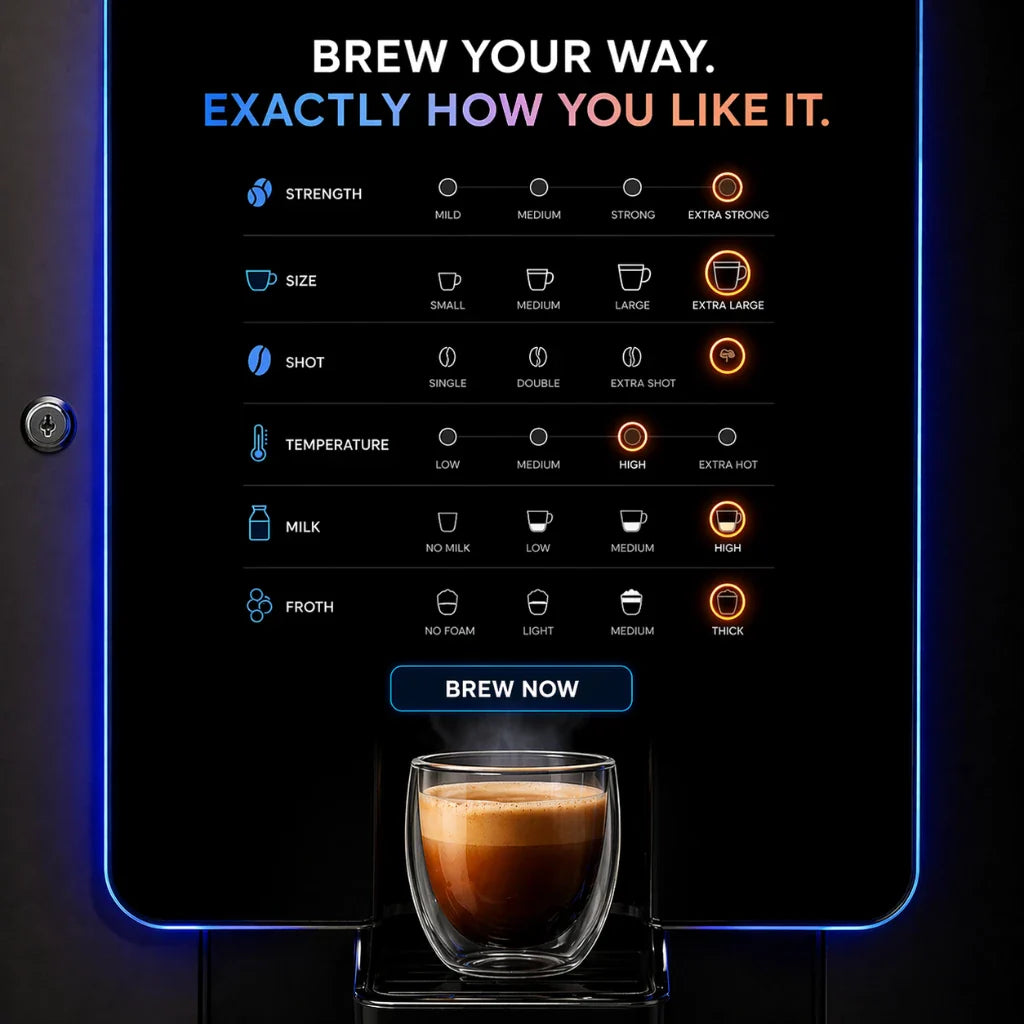
Las máquinas de café funcionan combinando una fuente de agua (conectada a la red o mediante depósito), un elemento calefactor, un mecanismo de molienda o dispensador de cápsulas, y una terminal de pago en una sola unidad de autoservicio. El trabajo del operador es la colocación, la reposición y el mantenimiento; la máquina convierte una transacción de efectivo o tarjeta en una taza preparada en 30 a 90 segundos, dependiendo de la clase de máquina.
Los sistemas de franquicia estandarizan este proceso en cada ubicación: especificaciones de máquina idénticas, proveedores de granos o cápsulas idénticos y guías de precios idénticas. Esa consistencia es lo que permite al franquiciador negociar colocaciones en locales a gran escala y lo que permite a los nuevos operadores saltarse la fase de prueba y error en la búsqueda de equipos confiables.
Vea exactamente cómo funcionan las máquinas expendedoras de café, paso a paso.
Leer el desglose →Desglose de costos iniciales
El costo inicial total para una franquicia de máquinas de café depende del número de máquinas, el nivel del equipo y si el franquiciador requiere una ruta de apertura mínima. Una unidad de grano a taza suele costar más al inicio que una máquina de cápsulas, pero ofrece un mayor precio por taza y un menor costo de consumibles por unidad a largo plazo.
| Elemento de costo | Rango típico | Notas |
|---|---|---|
| Tarifa de franquicia (pago único) | $3,000 – $15,000 | Cubre formación, licencia de marca, derechos territoriales |
| Máquina de grano a taza | $5,500 – $12,000 | Por unidad, de reacondicionada a nueva |
| Máquina de cápsulas | $1,800 – $4,500 | Por unidad, para lugares de menor volumen |
| Estación de café tipo micro-market | $15,000 – $30,000 | Incluye quiosco, refrigerador, centro de pago |
| Inventario inicial (por máquina) | $300 – $800 | Granos/cápsulas, vasos, tapas, removedores |
| Vehículo de ruta / transporte | $0 – $25,000 | Si no se posee uno previamente |
| Tarifa de regalías (continua) | 4% – 8% de los ingresos brutos | Solo modelo de franquicia |
Para una ruta de apertura de 8 máquinas que mezclan unidades de grano a taza y cápsulas, el capital total de lanzamiento generalmente se sitúa entre $60,000 y $140,000, tarifa de franquicia incluida. Los operadores que compran el equipo directamente en lugar de financiarlo a través del franquiciador reducen los costos de intereses a largo plazo, pero aumentan el requisito de efectivo inicial.
Tipos de máquinas expendedoras de café
Tres categorías de máquinas dominan el mercado de franquicias de café: grano a taza, cápsulas y estaciones híbridas de micro-market. Cada una se adapta a un tamaño de local y expectativa del cliente diferente.
Tipo 1
Grano a taza
Muele granos enteros por taza para un resultado de calidad de cafetería. Ideal para oficinas con más de 50 empleados y lugares donde la calidad del café impulsa el consumo repetido. Mayor costo inicial, menor costo de ingredientes por taza.
Tipo 2
Cápsulas
Menor costo inicial, instalación más rápida, mantenimiento mínimo. Ideal para oficinas pequeñas, salas de espera y salas de descanso de menos de 30 personas donde el volumen no justifica una unidad de grano a taza.
Tipo 3
Estación de Micro-Market
Combina café con snacks y bebidas frías en un solo quiosco de autoservicio. Ideal para instalaciones más grandes —almacenes, hospitales, universidades— que necesitan una solución completa para el área de descanso en lugar de solo café.
Los operadores que evalúan específicamente colocaciones en oficinas deben comparar las mejores máquinas de café para oficinas según el tamaño del lugar antes de comprometerse con el nivel de equipo estándar de una franquicia, ya que no todos los paquetes se ajustan a todos los espacios.
ROI y márgenes de beneficio
Las máquinas expendedoras de café generan márgenes brutos del 40% al 65% por taza porque el costo de los ingredientes (granos o cápsulas, vaso, tapa) rara vez supera los $0.35–$0.60 frente a un precio de venta promedio de $1.25–$2.50. La rentabilidad aumenta con el tráfico peatonal: una máquina en una oficina con alto tráfico que sirve más de 60 tazas diarias genera sustancialmente más ingresos mensuales que una sala de descanso de bajo tráfico que sirve 15 tazas, aunque el costo de mano de obra para reponer sea casi idéntico.
| Volumen diario de tazas | Ingresos mensuales est. | Beneficio mensual est. (después de COGS) |
|---|---|---|
| 15 tazas/día | $675 – $1,125 | $270 – $590 |
| 35 tazas/día | $1,575 – $2,625 | $630 – $1,375 |
| 60 tazas/día | $2,700 – $4,500 | $1,080 – $2,360 |
Una ruta de franquicia alcanza un flujo de caja positivo más rápido que una operación de una sola máquina porque los costos fijos (vehículo de ruta, viajes de reabastecimiento) se amortizan entre más unidades por visita. Es por esto que la mayoría de los sistemas de franquicias de café recomiendan una ruta de apertura de 6 a 10 máquinas en lugar de una sola colocación; el costo por parada se mantiene plano mientras los ingresos aumentan.
Para ver un modelo de margen completo que incluye puntos de referencia de precios de proveedores, vea ¿son rentables las máquinas expendedoras de café?, que desglosa la rentabilidad por tipo de lugar y clase de máquina.
Estrategia de ubicación
La calidad de la ubicación determina la rentabilidad más que la elección del equipo. Una máquina premium de grano a taza en un lugar de poco tráfico rinde menos que una máquina de cápsulas básica en una oficina de mucho tráfico, porque los ingresos dependen del volumen de tazas, no de la sofisticación de la máquina.
Las categorías de locales de mayor rendimiento para el vending de café en 2025 son las oficinas medianas (50–250 empleados) sin cafetería, instalaciones de fabricación y almacenes con múltiples turnos, consultorios médicos y odontológicos con áreas de espera, y centros de servicio automotriz donde los clientes esperan más de 30 minutos. Cada uno de estos lugares combina tráfico cautivo con alternativas limitadas de café; las dos condiciones que predicen un alto volumen diario de tazas.
Los operadores que buscan sus propias ubicaciones en lugar de depender únicamente de los leads del franquiciador deben estudiar rutas y operaciones de vending de café para estructurar horarios de reabastecimiento basados en la eficiencia de múltiples paradas, ya que la densidad de la ruta afecta directamente la rentabilidad por máquina.
Construya su ruta de café en equipos diseñados para durar
Explore máquinas expendedoras de café de grado comercial diseñadas para oficinas, micro-markets y lugares de alto tráfico.
Comprar máquinas de caféPros y contras de una franquicia de máquinas de café
Pros
- Menor costo de entrada que abrir una cafetería
- Ingresos recurrentes con ciclos de reabastecimiento predecibles
- La marca de la franquicia facilita la aprobación y confianza
- Escalable: agregue máquinas sin gastos generales proporcionales
- La cadena de suministro establecida reduce el riesgo de abastecimiento
Contras
- Las tarifas de regalías reducen el margen en comparación con la propiedad independiente
- El mantenimiento del equipo y la conexión de agua añaden costos laborales
- La rotación de lugares requiere una negociación constante de reubicación
- Los contratos de franquicia a menudo restringen la flexibilidad del proveedor
- Las ubicaciones de bajo tráfico pueden no alcanzar las proyecciones de equilibrio
Pasos para comenzar una franquicia de vending de café
El lanzamiento de una franquicia sigue una secuencia que determina qué tan rápido alcanza el operador la rentabilidad. Omitir el paso de validación de ubicación es la causa más común de una ruta de apertura de bajo rendimiento.
| Paso | Acción | Cronograma |
|---|---|---|
| 1 | Comparar franquiciadores por tarifas, nivel de máquina y derechos | Semanas 1–2 |
| 2 | Asegurar financiamiento o capital para equipo y tarifa inicial | Semanas 2–4 |
| 3 | Completar la formación del franquiciador y certificación de equipo | Semanas 4–6 |
| 4 | Identificar y validar las primeras 6–10 ubicaciones por tráfico | Semanas 3–8 (paralelo) |
| 5 | Negociar acuerdos de colocación y comisiones con los locales | Semanas 6–9 |
| 6 | Instalar máquinas y establecer la ruta de reabastecimiento | Semanas 9–10 |
| 7 | Seguimiento de volumen por máquina y ajustar bajo rendimiento | Continuo |
Los nuevos operadores deben revisar cómo usar una máquina de café antes del día de la instalación, y combinarlo con un plan de lanzamiento estructurado de cómo iniciar un negocio de máquinas expendedoras de café para obtener la lista de verificación previa al lanzamiento.
Errores comunes a evitar
Los operadores pierden margen al subestimar la frecuencia de reabastecimiento, no al fijar precios incorrectos. Una máquina que se queda sin granos a mitad del turno pierde un día completo de ingresos, lo que afecta más que un error de precio puntual.
El segundo error más común es firmar un contrato sin validar el tráfico real — una comisión del 20% en un lugar de alto volumen cuesta mucho menos en términos absolutos que una del 10% en uno de bajo volumen. El tercero es invertir demasiado en equipos de grano a taza para lugares con menos de 30 usuarios diarios, donde los ahorros en ingredientes nunca compensan el mayor costo del equipo.
Perspectiva del mercado 2025
La demanda de máquinas de café está aumentando porque los horarios de trabajo híbridos incrementaron la ocupación de oficinas a mitad de semana sin restaurar los presupuestos completos de cafeterías, impulsando a los gerentes de instalaciones hacia el café de autoservicio como un beneficio de menor costo. La adopción de pagos sin contacto y móviles también ha eliminado el punto de fricción histórico del café de vending: las máquinas que solo aceptan efectivo.
Los operadores que evalúan el momento de entrada deben revisar los datos del mercado de máquinas expendedoras de café 2025 sobre la demanda regional y las tasas de adopción de tipos de máquinas antes de elegir un territorio de franquicia, ya que la saturación varía significativamente según el área metropolitana.
Preguntas frecuentes
¿Cuánto cuesta comenzar una franquicia de máquinas de café?
Una franquicia de máquinas de café suele costar entre $60,000 y $140,000 para una ruta de apertura de 6–10 máquinas, incluyendo la tarifa de franquicia, equipo e inventario inicial. Los costos varían según si las máquinas son de grano a taza, de cápsulas o micro-markets.
¿Es rentable una franquicia de máquinas de café?
Sí, las máquinas generan márgenes brutos del 40% al 65% por taza. La rentabilidad depende principalmente del tráfico del lugar; las oficinas de alto volumen y salas de espera superan a los lugares de bajo tráfico independientemente de la calidad de la máquina.
¿Cuánto tiempo se tarda en alcanzar el punto de equilibrio en una franquicia de máquinas expendedoras de café?
La mayoría de los operadores alcanzan el punto de equilibrio en un plazo de 9 a 18 meses con una ruta de 8 a 12 máquinas. Este punto se alcanza más rápido cuando las máquinas se colocan en lugares con más de 35 ventas de tazas diarias, en lugar de distribuirlas en ubicaciones de poco tráfico.
¿Cuál es la diferencia entre una franquicia de máquinas expendedoras de café y comprar máquinas de forma independiente?
La franquicia proporciona reconocimiento de marca, formación y una cadena de suministro ya establecida a cambio de una regalía, generalmente del 4 al 8 % de los ingresos. La propiedad independiente mantiene todo el margen de beneficio, pero requiere que el operador busque el equipo, los proveedores y las ubicaciones sin el respaldo de un franquiciador.
¿Qué tipo de máquina expendedora de café es la más rentable?
Las máquinas de grano a taza generan el mayor margen por taza en lugares de alto tráfico (más de 50 usuarios diarios) debido al menor costo de los ingredientes por taza, mientras que las máquinas de cápsulas son más rentables para oficinas pequeñas donde el tiempo de recuperación del costo del equipo es más importante que el margen por taza.
¿Dónde debería colocar una máquina expendedora de café para obtener el mejor retorno de inversión (ROI)?
Las ubicaciones de mayor rendimiento son oficinas medianas sin cafetería, almacenes e instalaciones de fabricación con varios turnos, salas de espera médicas y centros de servicio automotriz con largos tiempos de permanencia de los clientes. Estos combinan una afluencia cautiva con alternativas de café limitadas.
¿Necesito una licencia comercial para operar una franquicia de máquinas expendedoras de café?
Sí, los operadores necesitan una licencia comercial estándar y, en la mayoría de los estados, un permiso de servicio de alimentos o de salud, ya que el café es un producto consumible. Los requisitos varían según el estado y el condado, así que confirme las normas locales de manipulación de alimentos antes de instalar las máquinas.
¿Con qué frecuencia se deben reabastecer las máquinas expendedoras de café?
La frecuencia de reabastecimiento depende del volumen de tazas: las máquinas de alto tráfico (más de 50 tazas al día) generalmente necesitan ser reabastecidas de 2 a 3 veces por semana, mientras que las de bajo tráfico pueden requerir servicio solo una vez por semana. Quedarse sin granos o cápsulas a mitad del turno provoca la pérdida de ingresos de todo un día en esa ubicación.
¿Puedo llevar una franquicia de máquinas expendedoras de café como negocio secundario?
Sí, muchos operadores comienzan con 2 a 4 máquinas como una ruta a tiempo parcial mientras mantienen otros ingresos, ya que reabastecer una ruta pequeña suele requerir solo unas pocas horas a la semana. Escalar más allá de 10 a 15 máquinas generalmente requiere tiempo dedicado o personal a tiempo parcial.
¿Qué costos continuos debo esperar con una franquicia de máquinas expendedoras de café?
Los costos continuos incluyen la regalía de la franquicia (4-8 % de los ingresos), consumibles (granos/cápsulas, vasos, tapas), mano de obra de reabastecimiento o combustible, mantenimiento de la máquina y reparación periódica de equipos. El servicio de la línea de agua añade un costo adicional para las unidades de grano a taza conectadas a la red, en comparación con las máquinas de depósito.
¿Listo para adquirir equipos de café para su ruta?
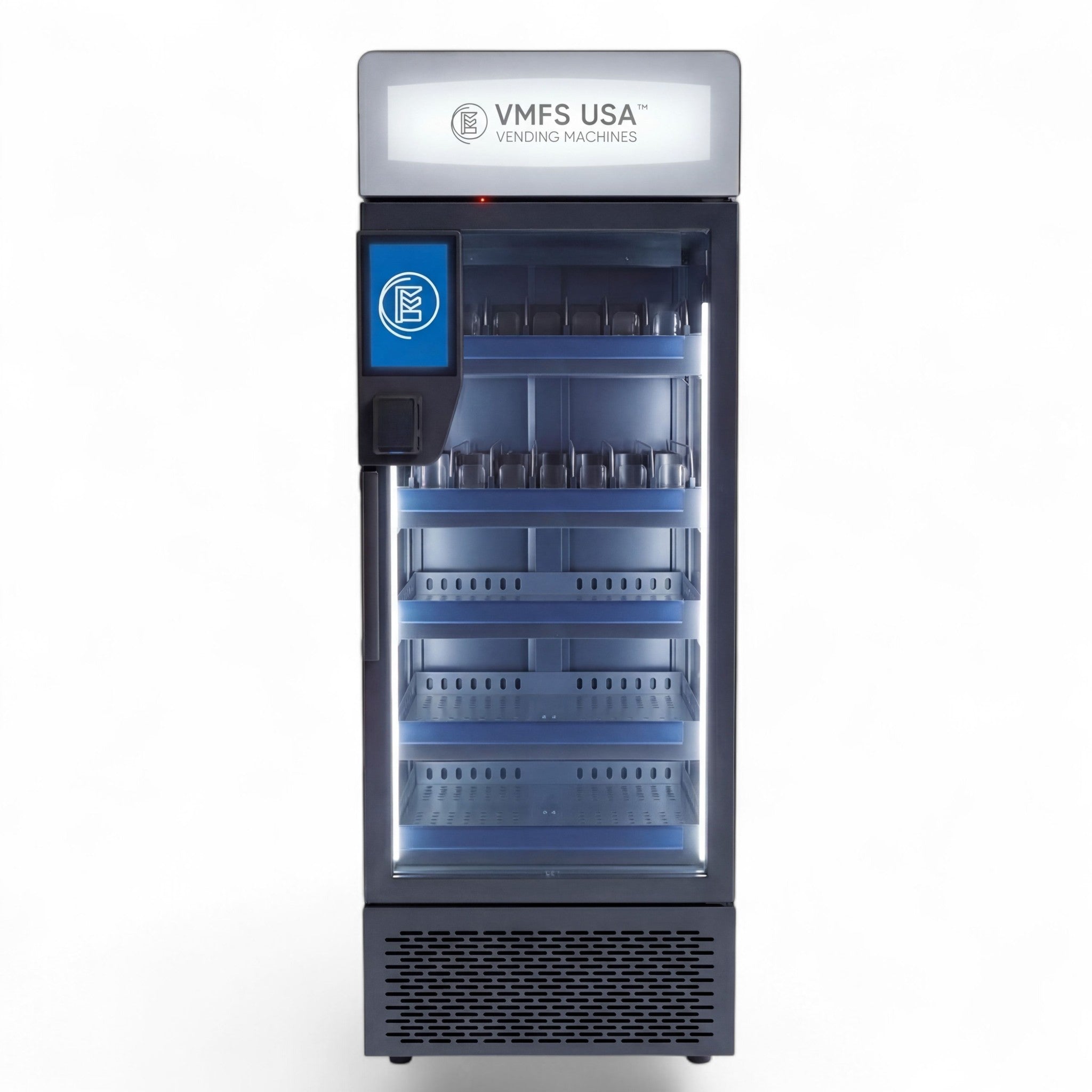
VMFS USA suministra máquinas expendedoras de café comerciales diseñadas tanto para franquiciados como para operadores independientes.
Explorar la colección
Compartir:
Rutas y operaciones de máquinas expendedoras de café: La guía completa para 2026
Cómo funcionan las máquinas expendedoras de café: una guía técnica y operativa completa