




Design the perfect vending solution for your location and customers.

Join the VMFS newsletter and step into a thriving network dedicated to collective success.
One signup. Endless possibilities.
Vending machine rental typically costs about $50 to $250 a month, based on rates published by US vending operators, with basic snack machines at the low end and refrigerated or smart machines at the top. Delivery, card reader fees, products and electricity usually sit on top of that monthly fee.
This guide shows what a rental includes, how renting compares with leasing, financing and buying over 12 to 36 months, who rentals actually suit, how each option is taxed, and the contract terms to check before you sign anything.
Renting a vending machine usually costs $50 to $250 a month in the US. Vending Group, a national operator network, quotes that range for standard rentals, and Digital Media Vending puts the average at $50 to $150 a month, with basic snack machines around $50 to $100, beverage machines around $75 to $150, and high-tech machines at $200 or more. Those are published asking rates rather than a survey, so treat them as a starting point for quotes, not a price list.
The spread comes from three things. Refrigeration and capacity raise the rent because a cold-drink or combo cabinet costs more to build, ship and repair than a dry snack spiral machine. Technology raises it again: touchscreens, cashless readers, telemetry and age verification all add hardware the rental company has to recover over the term. Contract length works the other way, since a company that gets a 24-month commitment can spread its delivery and setup cost over more payments than one that rents for a single month.
The monthly rent is rarely the whole bill. Most rental companies quote delivery, installation and pickup separately, some ask for a deposit or the first month in advance, and the card reader usually carries its own monthly and per-transaction fees. You also still buy the products, pay for power and carry insurance if the contract makes the machine your responsibility. A rental quote that looks cheap per month can end up close to a finance payment once those are added, which is why the comparison later in this guide uses total cost rather than the headline rent.
| Machine tier | Published monthly rent | What drives the price |
|---|---|---|
| Basic snack machine | $50 to $100 | No refrigeration, spiral delivery, simple payment |
| Beverage machine | $75 to $150 | Refrigeration, heavier cabinet, higher power draw |
| High-tech or smart machine | $200 or more | Touchscreen, AI or telemetry hardware, card reader |
| Typical overall range | $50 to $250 | Machine type, features, term length and location |
If you are pricing the purchase side of the same decision, our guide to vending machine cost lists live VMFS prices by machine type, add-ons and running costs, so you can set a rental quote against what the same class of machine costs to own.
The four options differ in one thing above all: who owns the machine at the end. Renting gives you use of someone else's machine for as long as you pay, a true lease does the same over a fixed term, a lease-to-own or financing plan ends with you holding title, and buying outright makes the machine yours on day one. Everything else, including the tax treatment, follows from that ownership question.
In practice the words get mixed up. Many companies call a month-to-month arrangement a "lease," and some lease products are really installment purchases with a small final payment. Read the agreement rather than the label: if your payments build equity or end with you receiving title, the IRS treats it more like a purchase than a rental, and you should plan your budget and taxes that way.
| Option | Upfront | Monthly | Who owns it | End of term | Best for |
|---|---|---|---|---|---|
| Rent | Low: delivery, maybe a deposit | Ongoing rent | Rental company | Return or renew | Events, short trials |
| True lease | Low | Fixed for the term | Lessor | Return, renew or buy at fair value | Fixed needs, no ownership goal |
| Lease-to-own | Low: documentation fee | Fixed payments | You, after the purchase option | You keep the machine | Weak or thin credit, low cash |
| Finance | Low or none | Fixed payments | You (lender may hold a lien) | Paid off, owned outright | Operators building a route |
| Buy outright | Full machine price | None | You | Already owned | Lowest total cost |
For a new operator, the practical choice is usually between renting to test a single location and financing a machine you intend to keep. Leasing sits between them and makes the most sense when you know you need equipment for a set period but don't want to own it afterward.
A rental always includes use of the machine, and it may include delivery, installation, repairs and stocking, but only if the contract says so. Vending Group notes that whether stocking and repairs are covered depends on the agreement, and event rental companies such as Innovative Vending Solutions bill shipping on top of the rental price. Never assume service is bundled because the machine isn't yours.
The costs a renter typically still pays fall into four groups. Products come first: you buy the snacks and drinks, and your margin on them is what has to cover the rent. Payments come second. On the VMFS cashless payment system page, Nayax and Cantaloupe readers list at $450 for hardware, Nayax service runs $7.95 to $14.95 a month per device, and transaction fees run about 5.95%, or about 2.5% plus $0.10, depending on the plan. A rented machine may come with a reader, but the processing fees usually still land on you.
Power is the third group. The Department of Energy's purchasing guidance lists about 1,354 kWh a year for an ENERGY STAR-level beverage machine (Class A, 30 cubic feet), and the July 2026 US average commercial electricity price was 14.53 cents per kWh, according to the Energy Information Administration. That works out to about $197 a year, or roughly $16 a month, for an efficient cold-drink machine. Whoever's meter the machine plugs into pays it, which is one reason locations ask for a commission.
Insurance is the fourth. Most locations ask for a certificate of insurance with $1 million per occurrence in general liability before they approve a machine, as the VMFS financing page notes, and a rental contract that makes you responsible for theft or vandalism means you need property cover as well. Our vending machine insurance guide explains what each policy protects.
Quote checklist: ask every rental company for monthly rent, deposit, delivery and pickup fees, the card reader and its fees, who repairs the machine and how fast, who pays for damage, and what happens if you end the contract early. Compare quotes on the total, not the monthly line.
Renting costs less in the first months and more after that; for a standard combo machine, cumulative rent usually passes the purchase price somewhere between one and five years. The exact crossover depends on the rent you are quoted, so the math below uses the published $50 to $250 range against two machines VMFS sells today.
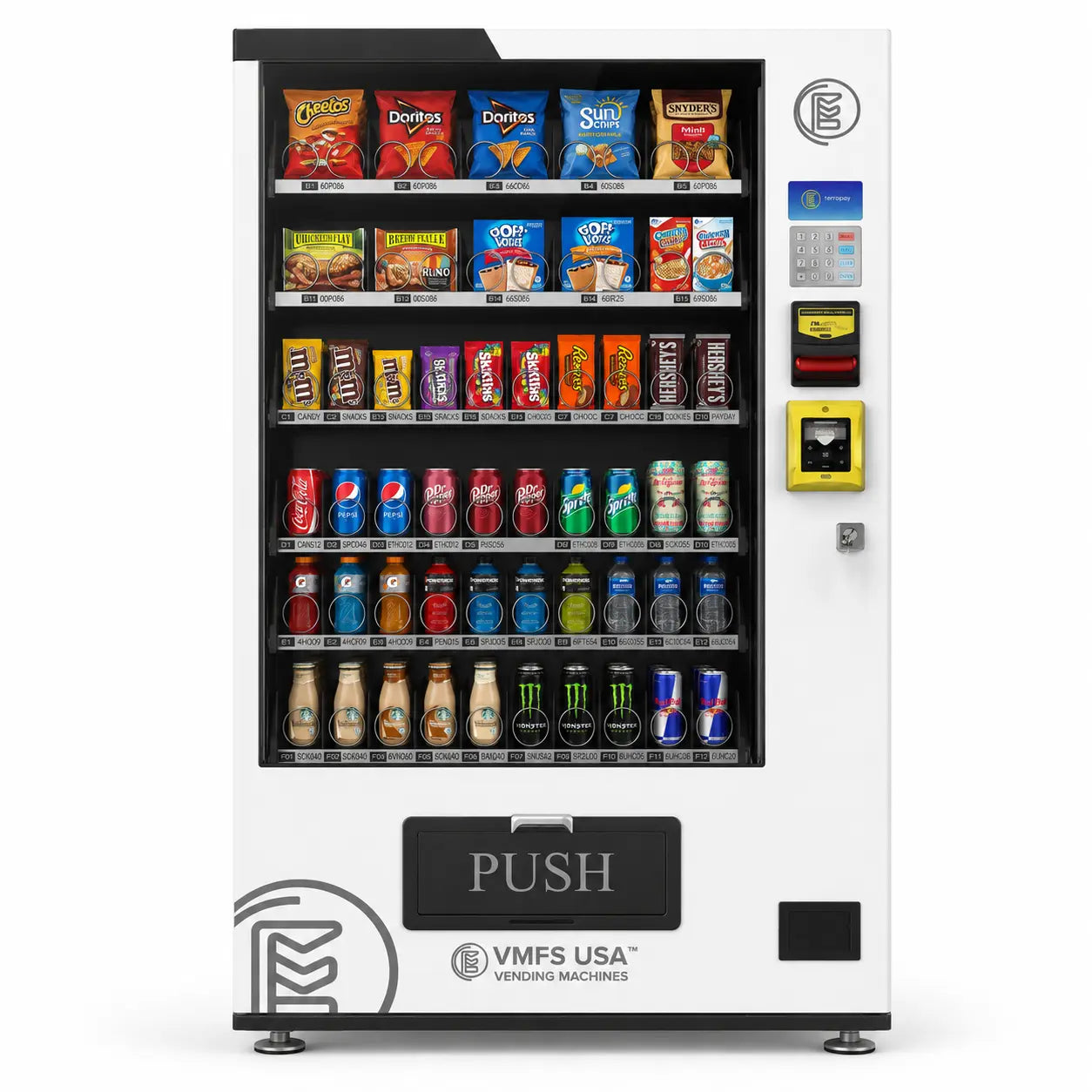
The Seaga QB2200 Snack & Soda Vending Machine lists at $2,999, and the Smart Combo Vending Machine lists at $4,650 to $4,950. Dividing each price by monthly rent gives the break-even month, the point at which you would have paid as much in rent as the machine costs to buy.
| Monthly rent | Rent paid in 12 months | Rent paid in 24 months | Break-even vs $2,999 QB2200 | Break-even vs $4,650 Smart Combo |
|---|---|---|---|---|
| $50 | $600 | $1,200 | About 60 months | About 93 months |
| $150 | $1,800 | $3,600 | About 20 months | About 31 months |
| $250 | $3,000 | $6,000 | About 12 months | About 19 months |
Two caveats keep this honest. A $50 rental is usually an older or basic machine, not a new refrigerated combo, so the low row overstates how long renting stays cheaper for comparable equipment. And the break-even ignores resale value: a machine you own still has value at month 24, while rent buys nothing you can sell.

Financing changes the picture because the payment builds ownership. PayPal Pay Monthly, one of the VMFS payment partners, covers purchases from $49 to $10,000 on 3, 6, 12 or 24-month plans at a fixed APR of 0% to 35.99%, according to PayPal. At those two ends of the rate range, a 24-month plan on the $2,999 QB2200 works out as follows.
| Option for a $2,999 combo machine | Monthly payment | Paid over 24 months | Own the machine at month 24? |
|---|---|---|---|
| Buy outright | $0 (paid upfront) | $2,999 | Yes, from day one |
| Finance, 24 months at 0% APR | $124.96 | $2,999 | Yes |
| Finance, 24 months at 35.99% APR | $177.07 | $4,249.62 | Yes |
| Rent at $150 a month | $150 | $3,600 | No |
| Rent at $250 a month | $250 | $6,000 | No |
Even at the highest PayPal rate, financing for two years costs less than renting at $250 a month and leaves you with the machine. At 0% APR the financed payment is lower than a mid-range rent. Renting only wins on total cost when you need the machine for less time than the break-even month, or when you can't qualify for financing at all. Run your own location numbers through the VMFS ROI calculator before you decide, because the profit a machine earns is what pays any of these bills.
Renting suits people who need a machine for a short, defined period or who want to prove a location before buying. It is a poor fit for an operator planning a multi-year route, because rent never turns into equipment you can move, sell or borrow against.
Events and promotions
Trade shows, product launches and brand activations that need a machine for days or weeks, often with custom graphics.
Location trials
New operators testing whether a site sells enough to justify buying, with a clear exit if it doesn't.
Businesses that want a machine
Offices, hotels and apartments that want vending for staff or guests but don't plan to run it themselves.
Seasonal sites
Pools, campgrounds and venues open only part of the year, where a year-round machine would sit idle.
Event rentals are priced per job rather than per month. Innovative Vending Solutions, for example, describes rentals as short as one night or as long as a six-month event, prices them by model, duration, number of machines and co-branding, and charges shipping on top. Ask for delivery, setup, stocking and pickup in one written quote, and confirm the venue has a standard outlet and a clear path for a machine that may ship in a crate.
A short rental can de-risk a location you are unsure about. Rent a machine similar to the one you would buy, track sales for two or three months, and compare monthly gross profit with what a finance payment would cost. If the site clears the payment comfortably, financing your own machine usually costs less from that point on. Our guide on whether vending machines are profitable shows how to read those early sales numbers.
If you are a business owner who simply wants vending in the building, renting is often unnecessary. Full-service operators place, stock and repair machines at no cost to qualifying locations and earn their money from sales. Vending Group, for instance, lists thresholds such as 40 or more full-time employees for a soda machine, 75 or more for snack and soda together, 40 or more guest rooms for hotels and 100 or more units for apartments. Below those levels, renting or buying a small machine such as the Countertop Snack Vending Machine ($1,900) may be the only way to get vending on site. Our guide to getting a free vending machine for your business walks through how those placements work.
Own Your Machine Instead of Renting It
Compare PayPal, Klarna and Clicklease plans and apply after you pick a machine.
See Financing OptionsLeasing protects your cash today, and buying protects your profit over time. A lease turns a large purchase into predictable monthly payments and can bundle service, while ownership removes the payment entirely once the machine is paid for and gives you full control over the equipment.
The cash-flow case for leasing is real. Avoiding a one-time purchase leaves money for the first inventory, a card reader and a second location, and a fixed payment is easy to plan around in your vending cash flow. Some leases include maintenance, so a compressor or board failure doesn't become a surprise bill. For an operator still learning which sites and products work, that predictability has value.
The long-term case for buying is stronger. Over a multi-year placement, total lease payments can exceed the cost of buying the machine outright, and the leasing company keeps the asset. An owner can move the machine to a better site, change the product mix, add a new reader or wrap it with custom branding without asking permission. Leases can also restrict where the machine goes and how it is used, so check those terms against your plans for the route.
Ownership does bring the responsibility for repairs, parts and eventual replacement. Machines lose value over time, so the resale price you can expect should be part of the calculation, and a manufacturer warranty matters more when no lessor is fixing things for you. VMFS machines carry a parts warranty, and the VMFS team supports owners after delivery.
Leasing or renting: advantages
Leasing or renting: limitations
Scale changes the answer too. One machine on a trial lease is low risk; ten machines on monthly rent is a large fixed cost that keeps running whether or not each site performs. Operators who expand usually move toward ownership once they know which locations hold up.
VMFS USA does not rent or lease machines itself. It sells new machines and connects buyers with three third-party payment partners, PayPal, Klarna and Clicklease, so your payments go toward owning the equipment. The application happens after you choose a machine and request a quote, and VMFS says decisions typically come within 24 to 48 hours, with terms usually running from 6 to 48 months.
Each partner fits a different buyer. PayPal offers Pay Monthly plans from $49 to $10,000 over 3 to 24 months, which covers most single machines. Klarna offers pay-in-four, pay-in-30-days and monthly plans with a soft credit check at checkout, according to the VMFS page. Clicklease, the third option, approves applicants down to a 500 FICO score, up to $30,000, with no time-in-business requirement, as listed on the VMFS vending machine financing page.
Clicklease is worth understanding because it is structured as a lease, not a loan. Its FAQ explains that Clicklease buys the equipment and leases it to you, there is no interest rate but a fixed surcharge spread across the payments, a documentation fee of typically $79 to $499 is charged at signing, and the customer handles maintenance and repairs. At the end of the term you typically make three more monthly payments and then own the equipment outright. That makes it a lease-to-own path for buyers who can't get conventional credit, and its total cost should be compared against the PayPal and Klarna quotes before you choose.
For larger routes, bank or credit union equipment loans are another way to fund ownership. Our step-by-step guide on how to finance a vending machine compares those routes, and the vending business with no money guide covers starting with minimal cash.

Rent on a vending machine is generally deductible as a business expense, while a machine you buy or finance is recovered through depreciation, often in the first year. The line between the two is ownership, and the IRS draws it the same way the contract does.
IRS Publication 334 defines rent as any amount you pay for the use of property you don't own, deductible when the property is used in your business. It adds a rule that matters for lease-to-own deals: if you have or will receive equity in or title to the property, you can't deduct the payments as rent. Publication 946 says the mirror image for depreciation: you generally can't depreciate property you lease, because you don't keep the incidents of ownership.
Owners get the larger first-year benefit. Publication 946 sets the Section 179 expense limit at $2,500,000 for tax years beginning in 2025, reduced once qualifying purchases exceed $4,000,000 in a year, and the IRS reinstated a 100% special depreciation allowance for qualified property acquired after January 19, 2025. For a single machine, that can mean writing off most or all of the cost in the year you place it in service, even if you financed it. A true rental spreads the deduction across the months you pay.
Ask your accountant: whether your agreement is a true lease or a purchase for tax purposes, whether Section 179 or bonus depreciation fits your income this year, and how state rules differ. Our vending tax implications guide covers sales tax and record-keeping.
The terms that cost renters money are the ones outside the monthly rent: the length of the commitment, what happens if you leave early, and who pays when the machine breaks. Digital Media Vending reports rental contracts ranging from six months to five years, so the commitment you sign can be far longer than a trial needs.
Be careful with "rental programs" that bundle machines with promised locations or income. The FTC's Business Opportunity Rule requires sellers who offer to provide locations for vending machines to give you a written disclosure document at least seven calendar days before you sign or pay, so a seller who rushes you past that window is a warning sign. For your agreements with property owners, our vending machine contract template and guide to vending contract renewal cover the clauses to include.
Renting space for a vending machine usually means paying the property owner a commission on sales rather than a fixed rent, and many locations take nothing at all. NerdWallet puts typical location commissions at 5% to 25% of sales, and smaller sites often accept a machine with no payment as a perk for staff or customers.
A commission is easier for a new operator to carry than flat rent because it falls when sales fall. If a site asks for a fixed monthly fee, compare it with your expected gross profit after products, card fees and power, and ask for a trial period before you commit. Busier sites such as hospitals, airports and campuses can command higher terms, which only work if their traffic turns into sales.
Finding the space is often the hardest part. Our guide to how to scout and pitch a vending machine location covers outreach and commission offers, the VMFS location matching service helps buyers find sites, and VPlaced runs a verified placement network that matches operators with reviewed locations.
To rent a vending machine, define how long you need it, secure the location, collect at least three written quotes, and compare them on total cost against financing the same machine. The steps below keep a short-term rental from turning into an expensive long-term habit.
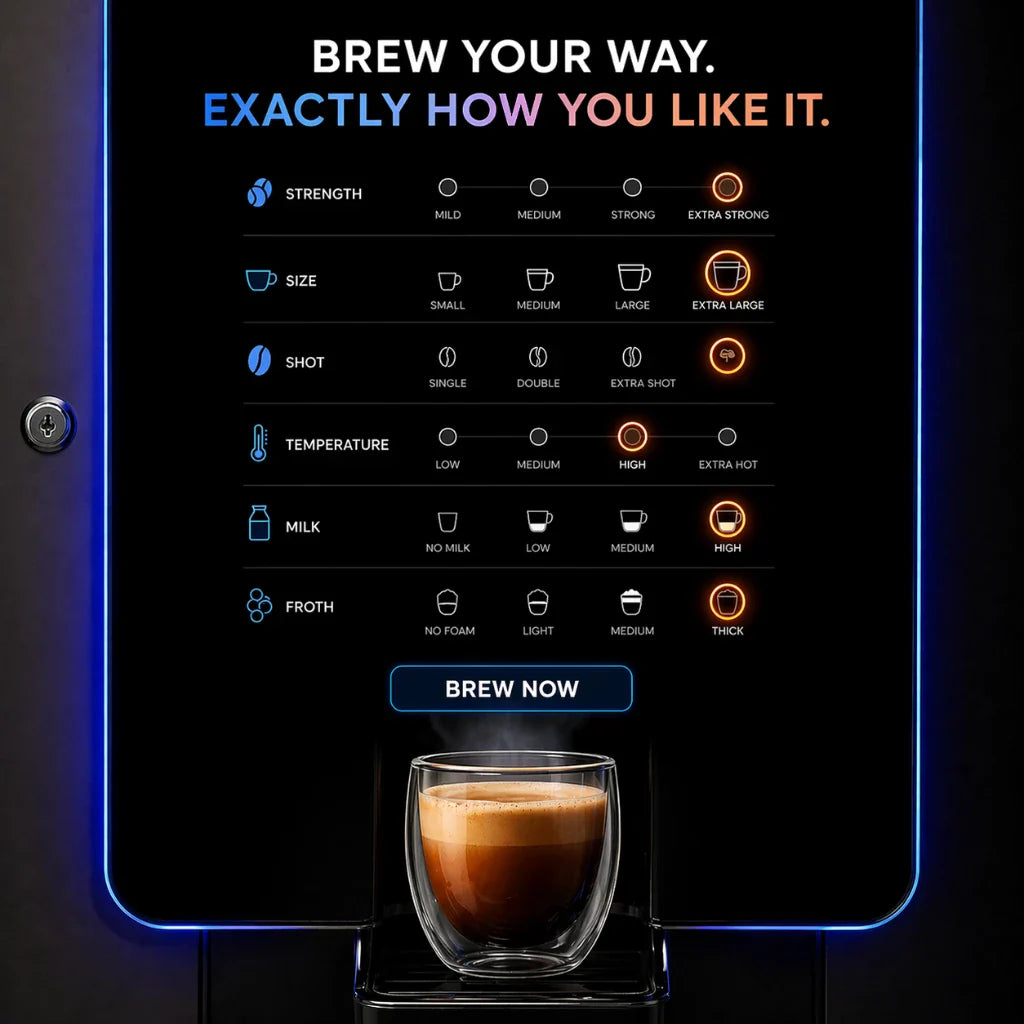
For coffee specifically, where machines, contracts and supply arrangements differ, see our guide to coffee vending machine rental and leasing. For everything else, comparing a rental quote with the cost of owning one of our vending machines takes ten minutes and can save thousands over a long placement.
Compare Combo Machines You Can Own
See live prices on snack and drink combos, then apply for financing after you choose.
Shop Combo Machines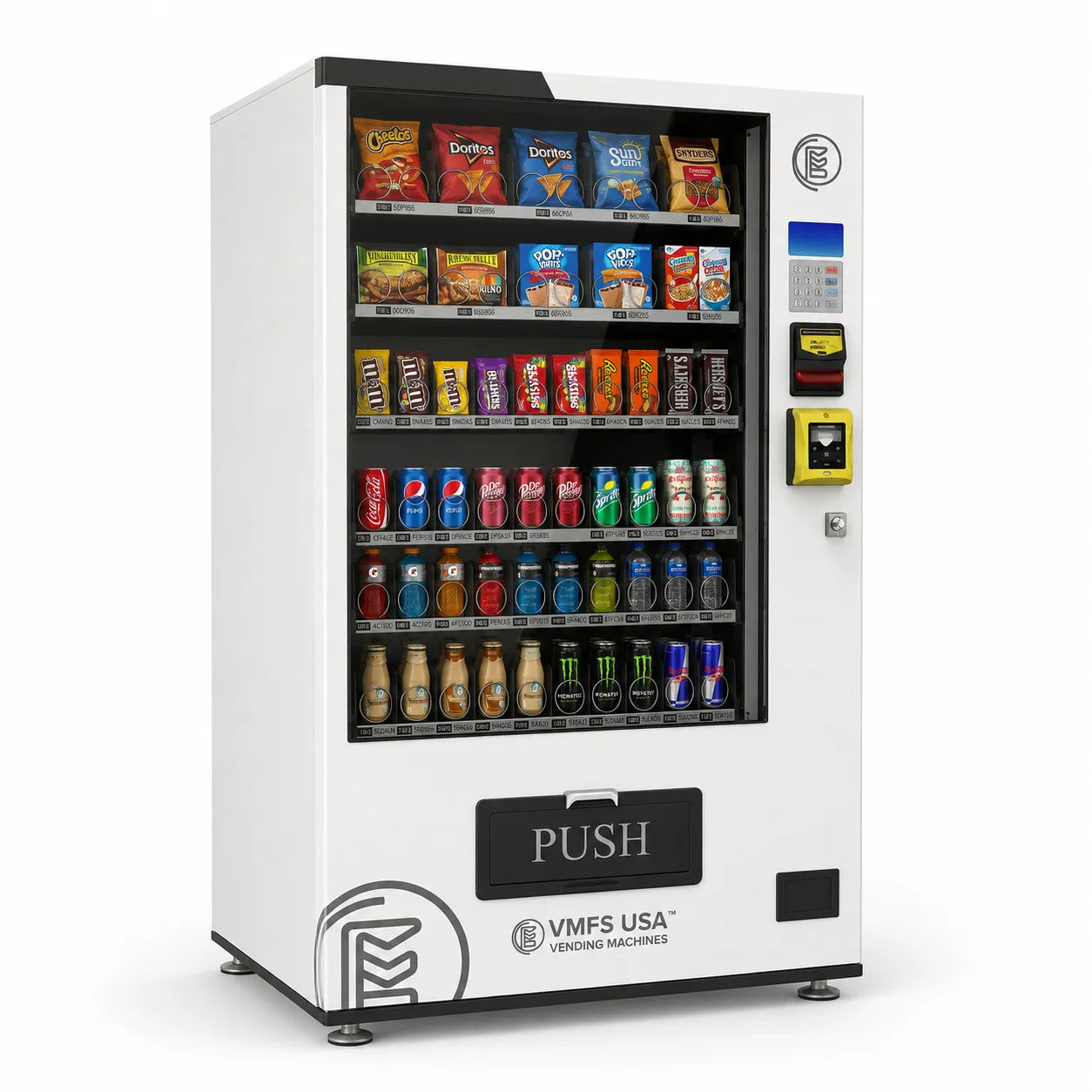
Share:
How to Legally Own and Operate a Beer Can Vending Machine in New York
How to Legally Own and Operate a Beer Can Vending Machine in New York