


El mercado de distribución automatizada de vaporizadores representa uno de los nichos de más rápido crecimiento en el sector de las máquinas expendedoras especializadas. Según datos de mercado de Grand View Research, el mercado estadounidense de cigarrillos electrónicos y vaporizadores alcanzó los 45.700 millones de dólares en 2025 y se proyecta que crezca hasta los 59.200 millones en 2026.
Los modelos de venta minorista automatizada sin atención capitalizan la alta demanda del consumidor, eliminando al mismo tiempo los costes laborales tradicionales. Sin embargo, establecer una ruta sostenible, legal y rentable requiere un estricto cumplimiento normativo, una selección estratégica de los locales, tecnología avanzada de verificación de edad y una previsión financiera precisa.
Un negocio de máquinas expendedoras de vaporizadores funciona mediante el despliegue de unidades minoristas automatizadas e inteligentes dentro de establecimientos con restricción de edad, como bares, discotecas, casinos y salones para adultos. A diferencia de las máquinas tradicionales de aperitivos o bebidas que operan con márgenes reducidos (del 15% al 25%), los dispositivos de vapeo y los recambios de líquido ofrecen márgenes brutos de entre el 60% y el 70%.
El cambio hacia el comercio minorista sin contacto y la tecnología automatizada de escaneo de documentos de identidad permite a los operadores vender artículos de alto margen de forma segura sin necesidad de personal en tienda. Para profundizar en la mecánica de estos sistemas, lea cómo funcionan las máquinas expendedoras de vaporizadores.
| Indicador de mercado | Referencia estadística | Impacto estratégico para los operadores |
| Tamaño del mercado de vapeo en EE. UU. (2026) | 59.200 millones de USD | La alta demanda del consumidor impulsa la rápida rotación de inventario. |
| Margen de beneficio bruto medio | 60% – 70% | Los altos márgenes absorben las comisiones de procesamiento y los gastos compartidos de ingresos. |
| Periodo medio de recuperación de la inversión | 4 – 7 meses | Recuperación rápida de capital en comparación con el comercio minorista físico tradicional. |
| Cuota del canal minorista principal | ~80,9% Ventas físicas | La disponibilidad física bajo demanda captura compras impulsivas inmediatas. |
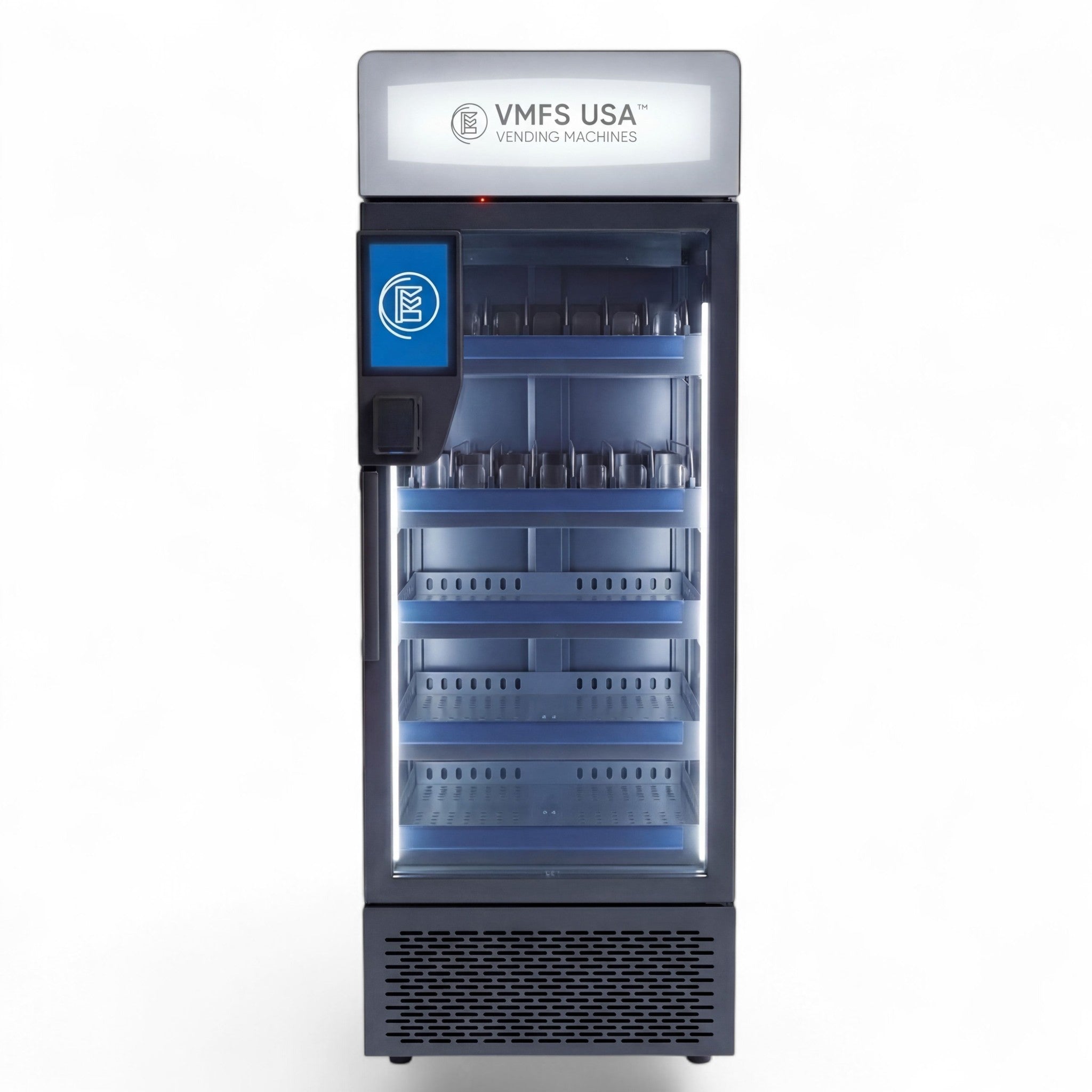
La elección del hardware de máquina adecuado depende de las restricciones de espacio, el volumen de ventas esperado y la estética del lugar. Las unidades van desde armarios compactos montados en la pared hasta quioscos de alta capacidad con pantalla táctil completa. Comprender el espectro completo del hardware se detalla en la guía definitiva sobre máquinas expendedoras de vaporizadores.
El hardware debe incluir tecnología integrada de verificación de edad. Las plataformas modernas utilizan una validación de doble capa: escáneres ópticos analizan los códigos de barras PDF417 en documentos de identidad gubernamentales, mientras que sensores de cámara verifican la vivacidad biométrica. Los operadores que buscan equipos automatizados fiables pueden consultar a una empresa líder en máquinas expendedoras en EE. UU. para adaptar las especificaciones del hardware a los requisitos del local.
Para adaptar el tamaño de la máquina al volumen del local, evalúe estas configuraciones básicas:
-
Unidades de pared compactas: Ideales para entradas estrechas de bares o pasillos. Explore la máquina expendedora de vaporizadores de pared para entornos con espacio limitado.
-
Sistemas de encimera: Perfectos para cajas o barras de alta afluencia. Consulte la mini máquina expendedora de vaporizadores de encimera.
-
Unidades de pantalla delgada: Alto compromiso visual con un tamaño reducido. Consulte la máquina expendedora de vaporizadores delgada de pared.
-
Unidades de suelo de alta capacidad: Diseñadas para grandes discotecas, locales musicales de alto volumen y casinos. Obtenga más información sobre la máquina expendedora de vaporizadores alta y la máquina expendedora de vaporizadores con pantalla completa de gran capacidad.
El cumplimiento normativo federal, estatal y local constituye la base de cualquier operación de máquinas expendedoras de vaporizadores. La Administración de Alimentos y Medicamentos de EE. UU. (FDA) exige estrictamente que las ventas de tabaco y vaporizadores en máquinas expendedoras solo estén permitidas en establecimientos exclusivos para adultos donde se prohíba permanentemente la entrada a menores de 21 años. Además, los minoristas deben verificar la identificación con foto de cualquier persona menor de 30 años.
Antes de colocar el equipo, los operadores deben verificar las leyes de licencias estatales, ya que algunas jurisdicciones requieren licencias especiales de minorista o permisos locales. Puede encontrar un resumen exhaustivo de las normas a nivel estatal en esta guía sobre si las máquinas expendedoras de vaporizadores son legales.
Estructurar correctamente su entidad comercial es esencial para mitigar la responsabilidad y gestionar el registro de impuestos estatales. Puede explorar el establecimiento de una LLC para un negocio de máquinas expendedoras o configurar una estructura corporativa a través de una Corporación S para optimizar las declaraciones de impuestos y las protecciones operativas.
La distribución automatizada de vaporizadores ofrece márgenes de beneficio bruto más altos que las máquinas expendedoras tradicionales debido a los elevados márgenes minoristas en dispositivos desechables, sistemas de pods y bolsas de nicotina. Los análisis detallados muestran por qué este modelo destaca en máquinas expendedoras de vaporizadores: el negocio rentable y sencillo.
Economía de la unidad por venta (Dispositivo desechable promedio)
-
Precio de venta minorista: 30,00 $
-
Coste de adquisición mayorista: 10,00 $
-
Comisión de procesamiento de pagos (Tarjeta + pasarela celular): ~1,25 $
-
Comisión del anfitrión del local (15% de participación neta): ~4,50 $
-
Beneficio neto por unidad: ~14,25 $
Estimaciones de costes iniciales
Comprender los gastos de capital totales ayuda a evitar cuellos de botella en el flujo de caja durante el lanzamiento. Para obtener un desglose completo de los costes, consulte cuánto cuesta una máquina expendedora de vaporizadores.
| Partida de gasto de capital | Estimación mínima | Estimación máxima |
| Adquisición de hardware (por unidad) | 2.800 $ | 5.500 $ |
| Configuración de hardware y software del escáner de edad | 300 $ | 500 $ |
| Inventario inicial de productos (primer llenado) | 600 $ | 1.200 $ |
| Licencias estatales/locales y configuración del negocio | 150 $ | 600 $ |
| Inversión inicial total estimada | 3.850 $ | $7,800 |
La ubicación de la máquina determina directamente el volumen de ventas. Los lugares con gran afluencia y alto margen cumplen tres criterios: alto tráfico peatonal, horario de atención extendido y un público exclusivamente adulto. Revise los matices clave de la ubicación en si se puede colocar una máquina expendedora de vapeo en un bar.
Lugares objetivo clasificados por rentabilidad
-
Discotecas y salas de baile: El volumen máximo de ventas ocurre entre las 10 PM y las 2 AM.
-
Bares y pubs de alto volumen: Tráfico peatonal constante con horarios extendidos durante los fines de semana.
-
Casinos y salones recreativos para adultos: Tráfico peatonal continuo las 24 horas del día, los 7 días de la semana, con altos ingresos disponibles.
-
Gasolineras (acceso restringido para mayores de 21 años): Tráfico diario constante. Para estrategias específicas, lea sobre máquinas expendedoras de vapeo para gasolineras.
Encontrar locales calificados requiere una presentación estructurada y contratos de participación en el espacio. Los operadores que buscan una colocación optimizada pueden aprovechar estrategias dirigidas en cómo encontrar ubicaciones para máquinas expendedoras.
Los propietarios de inmuebles que deseen monetizar el espacio de suelo no utilizado pueden listar su local a través de servicios de conexión entre ubicaciones y propietarios para conectar directamente con operadores automatizados calificados.
Gestionar una ruta eficiente requiere una gestión de inventario inteligente, mantenimiento rutinario de la máquina y una selección proactiva de proveedores. Elegir plataformas de hardware diseñadas para facilitar el servicio garantiza un tiempo de actividad a largo plazo. Aprenda a comparar opciones en cómo elegir la mejor máquina expendedora de vapeo.
Diversificación de categorías múltiples
Si bien el hardware de vapeo genera las principales ganancias, los operadores frecuentemente diversifican su inventario desplegando sistemas versátiles. Añadir artículos coleccionables de alto margen, como colocar una máquina expendedora de cartas Pokémon—permite a los operadores capturar mercados minoristas especializados adicionales en espacios adecuados.
Para una mezcla de productos más amplia, combinar soluciones de nicotina en una máquina expendedora de vapeo y cigarrillos dedicada o diseñar una construcción totalmente a medida mediante una máquina expendedora de vapeo personalizada proporciona la máxima flexibilidad de producto.
Evaluar los beneficios junto con los desafíos operativos garantiza una planificación empresarial realista.
Ventajas
-
Altos márgenes de beneficio: Los márgenes estándar generan entre un 60% y un 70% de margen bruto por unidad vendida.
-
Bajos costos laborales: El autoservicio automatizado elimina la necesidad de personal de tienda a tiempo completo.
-
Huella compacta: Las unidades montadas en la pared aprovechan el espacio vertical no utilizado sin ocupar área en el suelo.
-
Potencial de ingresos 24/7: Genera ventas pasivas durante todo el horario de operación del local.
Desventajas
-
Estricta supervisión regulatoria: Limitado exclusivamente a ubicaciones con restricción de edad para mayores de 21 años bajo las reglas de la FDA.
-
Mantenimiento de la verificación de edad: Los escáneres de identidad requieren actualizaciones de software y calibración constantes.
-
Tasas de procesamiento más altas: Las cuentas comerciales para categorías de alto riesgo conllevan tarifas de transacción ligeramente superiores.
Preguntas frecuentes
¿Son legales las máquinas expendedoras de vapeo en los Estados Unidos?
Sí, las máquinas expendedoras de vapeo son legales bajo la ley federal, siempre que se instalen estrictamente en lugares para adultos mayores de 21 años donde los menores están prohibidos en todo momento. Los operadores también deben cumplir con los requisitos estatales y locales de licencia de tabaco.
¿Cómo verifican la edad del cliente las máquinas expendedoras de vapeo?
Las máquinas modernas utilizan escáneres ópticos para leer identificaciones con foto emitidas por el gobierno (licencias de conducir o pasaportes) junto con software de reconocimiento facial. El sistema compara los datos de la identificación escaneada con verificaciones biométricas en tiempo real antes de permitir la selección del producto.
¿Cuánto dinero gana al mes una máquina expendedora de vapeo?
Los ingresos mensuales promedio oscilan entre $1,500 y $4,500 por máquina, dependiendo del tráfico peatonal del lugar. Las ubicaciones de discotecas de alto rendimiento pueden generar más de $6,000 mensuales en ventas brutas.
¿Cuál es el margen de beneficio promedio en los productos de máquinas expendedoras de vapeo?
Los productos de vapeo generalmente generan márgenes brutos de entre el 60% y el 70%. Una unidad desechable comprada al por mayor por $10 generalmente se vende por $30 en lugares de vida nocturna, absorbiendo cómodamente las tarifas comerciales y las comisiones de los anfitriones.
¿Qué ubicaciones son las mejores para colocar máquinas expendedoras de vapeo?
Las mejores ubicaciones incluyen discotecas, bares para adultos, casinos, salas de música y salones para mayores de 21 años. Cualquier ubicación con mucho tráfico peatonal y puertas con estricta restricción de edad produce los mejores resultados.
¿Cuánta comisión suelen recibir los propietarios de los locales?
Los anfitriones de los locales suelen recibir entre el 10% y el 20% de las ventas netas o una tarifa fija de alquiler mensual por el espacio. Ofrecer tasas de comisión competitivas ayuda a asegurar espacios privilegiados.
¿Qué licencias necesito para iniciar un negocio de máquinas expendedoras de vapeo?
Necesita una entidad comercial estatal (LLC o Corporación), un Número de Identificación de Empleador (EIN) federal, registro de impuestos sobre ventas estatales y una licencia estatal/local de venta minorista de tabaco.
¿Puedo usar procesadores de pago estándar para las máquinas expendedoras de vapeo?
No, los procesadores estándar suelen prohibir las transacciones de tabaco y vapeo con restricción de edad. Los operadores deben asociarse con procesadores de tarjetas mercantiles especializados en alto riesgo equipados para pasarelas minoristas automatizadas.
¿Con qué frecuencia necesitan reabastecimiento las máquinas expendedoras de vapeo?
Los lugares de vida nocturna con mucho tráfico requieren reabastecimiento semanal o quincenal. Las plataformas de telemetría incorporadas envían alertas de inventario en tiempo real cuando los niveles de existencias disminuyen.
¿Cuánto capital se requiere para iniciar una ruta de máquinas expendedoras de vapeo?
Una configuración de una sola máquina requiere aproximadamente entre $3,500 y $6,000, lo que cubre el hardware, la integración del hardware de identificación, el inventario inicial de existencias y los permisos estatales.
Compartir:
Problemas comunes y soluciones de las máquinas expendedoras de snacks
La máquina expendedora de zumo de naranja que exprime la fruta al momento