




Diseñe la solución de vending perfecta para su ubicación y clientes.

Únete al boletín de VMFS y forma parte de una red próspera dedicada al éxito colectivo.
Un registro. Posibilidades infinitas.

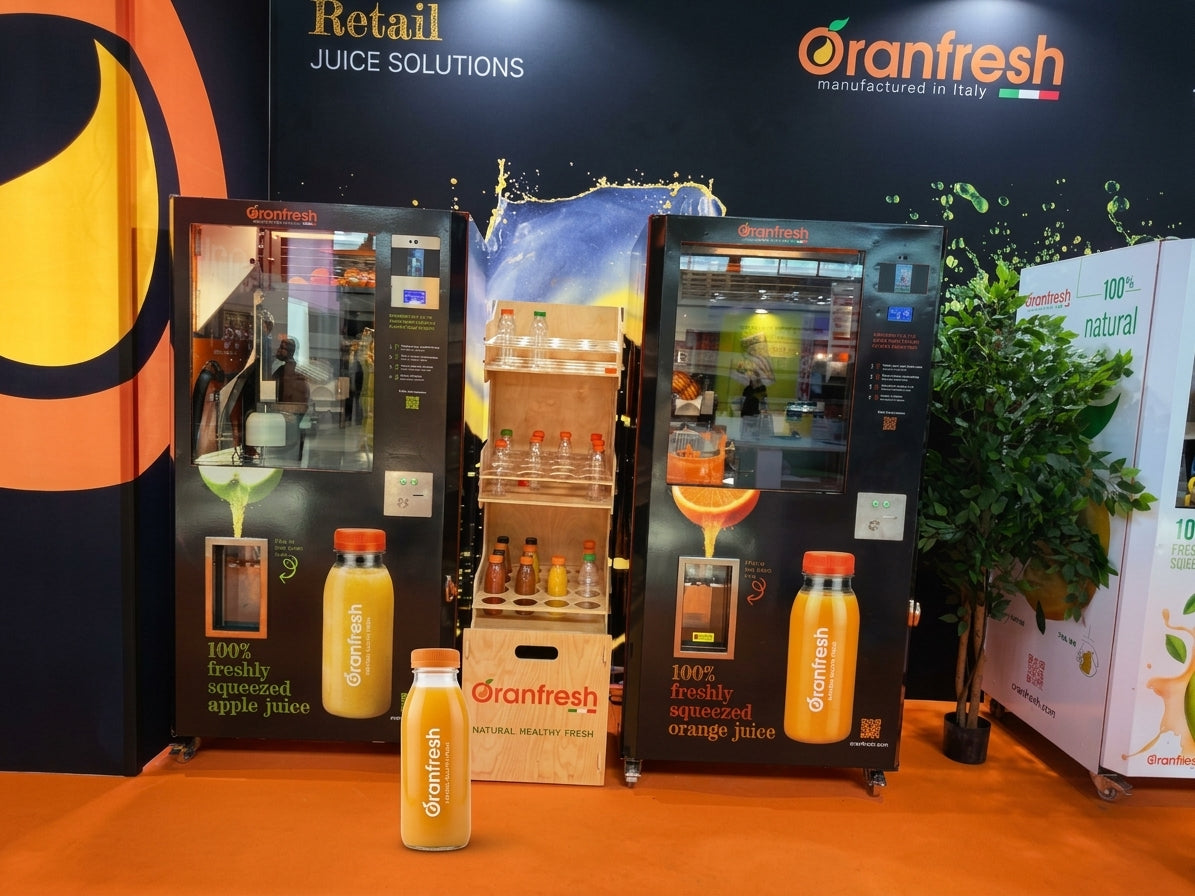
Lo primero que hay que entender es que esta máquina no almacena producto terminado. Almacena naranjas. Cuando alguien hace un pedido, un exprimidor interno prensa la fruta entera y llena una botella con el resultado, por lo que el zumo que sale tiene apenas unos segundos de haber sido hecho. Ese simple hecho cambia toda la propuesta. Una máquina expendedora de bebidas estándar compite en conveniencia y precio. Una exprimidora de zumo fresco compite en algo que ningún producto embotellado puede igualar: zumo auténticamente fresco, hecho delante de usted.
También ocupa un lugar distinto en el mercado. Es un producto premium, orientado a la salud, y se sitúa en medio de una tendencia que no deja de crecer. La gente lee las etiquetas, evita el azúcar añadido y paga más por productos que considera limpios y naturales. Una máquina que exprime naranjas reales sin añadir nada habla precisamente a ese tipo de cliente, y lo hace en un formato difícil de cuestionar porque se puede observar todo el proceso.

La experiencia del cliente es sencilla, que es precisamente el objetivo. Usted elige el tamaño de la botella y retira la tapa, presiona el botón del tamaño seleccionado, engancha la botella vacía en el soporte por el cuello y espera unos segundos mientras la máquina exprime y llena la botella. Luego toma su botella y se va. Existe una pequeña curva de aprendizaje la primera vez, pero es el tipo de cosas que la gente comprende al primer intento, y observar cómo funciona es parte del atractivo.

Detrás del cristal es donde se encuentra la ingeniería interesante. Existe un mecanismo exprimidor que maneja la fruta entera, un sistema de alimentación que coloca las naranjas en posición y el cabezal de llenado que dispensa el producto en la botella. Es esencialmente una barra de zumos automática y compacta integrada en una vitrina, funcionando sin necesidad de un operario.

Vender zumo fresco desde una máquina solo funciona si el equipo mantiene todo frío y limpio, y es aquí donde la unidad se justifica. El interior está refrigerado, manteniendo las naranjas y el zumo terminado a una temperatura segura, lo que protege tanto la frescura como la seguridad alimentaria. Igualmente importante es que cuenta con un sistema de limpieza automática para las piezas que entran en contacto con el zumo. Esto importa más de lo que parece, porque el mayor desafío operativo con cualquier instalación de zumo fresco es la higiene, y una máquina que se limpia a sí misma elimina gran cantidad del trabajo manual que, de otro modo, haría esto poco práctico.

Debido a que almacena y sirve un producto refrigerado y perecedero, esta máquina pertenece a la misma categoría que las máquinas expendedoras refrigeradas en lugar de las de snacks a temperatura ambiente, y encaja perfectamente junto a una gama más amplia de máquinas expendedoras saludables en ubicaciones orientadas al bienestar.
No subestime el espectáculo. Un frontal de cristal que permite ver cómo se exprimen las naranjas no es solo una elección de diseño, es una herramienta de ventas. La frescura es normalmente algo que hay que aceptar por fe, pero aquí el cliente lo ve con sus propios ojos, y esa prueba visible vale más que cualquier afirmación de etiqueta. También atrae a la gente. La gente se detiene, observa, graba, y esa atención se convierte en ventas y, a menudo, en que la máquina se venda sola a la siguiente persona en la fila.

Esta es la verdadera pregunta, y la respuesta es que pueden funcionar bien, con un par de advertencias que vale la pena mencionar. Por el lado positivo, el zumo recién exprimido se vende a un precio superior. La gente paga felizmente varios dólares por un vaso en una cafetería o bar de zumos, y una máquina puede alcanzar un precio similar sin los costes de personal. Su principal insumo son las naranjas, que son baratas en relación con lo que se vende el zumo terminado, por lo que el margen bruto de cada botella es saludable.
Para poner números aproximados, la fruta en sí cuesta alrededor de un dólar por botella, más o menos, dependiendo del tamaño que sirva y cuántas naranjas necesite cada llenado. Venda esa botella por cuatro o cinco dólares, que está dentro del rango que exige el zumo fresco, y el margen bruto por unidad es sólido antes de que el volumen siquiera entre en juego. Una máquina que mueve de treinta a cincuenta botellas al día en un buen lugar empieza a ser realmente interesante, y debido a que el producto es premium, no necesita los números de volumen de una máquina de snacks para ser rentable. El factor más importante es el flujo. La fruta fresca premia una ubicación concurrida y orientada a la salud, y castiga a una tranquila, por lo que la ubicación determina más su retorno aquí que con casi cualquier otro tipo de máquina.

Ahora las advertencias, porque son importantes. A diferencia del perfume o los snacks, su materia prima es perecedera, por lo que debe mantener la máquina abastecida con naranjas frescas y gestionar ese suministro; una máquina en una ubicación lenta desperdiciará fruta. También requiere más mantenimiento que una máquina expendedora en seco, ya que cualquier cosa que exprima y manipule zumo necesita atención regular incluso con un ciclo de limpieza automática. Nada de esto es un impedimento, pero sí significa que esta máquina recompensa la ubicación correcta y un poco de disciplina operativa más que una unidad estándar. Si elige bien la ubicación, el precio premium cubrirá con creces el esfuerzo extra. Si elige mal, el lado perecedero jugará en su contra.
La forma más fácil de entender dónde encaja esta máquina es compararla con las dos cosas con las que compite. Una barra de zumos le ofrece un producto fresco, pero necesita personal, un alquiler y horarios de apertura, y cobra en consecuencia. El zumo embotellado de estantería es barato y conveniente, pero rara vez es realmente fresco, a menudo lleva azúcar añadido o está hecho de concentrado, y suele llevar semanas almacenado. Ambos tienen una debilidad evidente.
Una máquina expendedora de zumo recién exprimido se sitúa en un punto medio y toma lo mejor de ambos. Obtiene la calidad de una barra de zumos, exprimido al momento de fruta entera sin nada añadido, combinado con la conveniencia del vending: sin personal, sin colas y con horario ininterrumpido. El precio se sitúa naturalmente entre una barra de zumos y una botella de supermercado, lo cual es un lugar cómodo porque los clientes sienten que obtienen la experiencia fresca sin el sobreprecio de una cafetería. Para el comprador adecuado, esa combinación es el argumento completo, y es por eso que esta categoría está creciendo mientras que el zumo embotellado simple no lo hace.
Para un operador, esta es una puerta de entrada al extremo premium y saludable del vending con un producto que tiene un poder real de fijación de precios y muy poca competencia directa en el mundo de las máquinas. Para una marca, es un formato impactante y memorable que convierte una compra rutinaria en una experiencia, y un ajuste natural para cualquiera que venda bajo el concepto de frescura y bienestar. Y para el cliente, es zumo fresco bajo demanda, sin colas, sin horarios, hecho de fruta real que vieron entrar. Todos en esa cadena obtienen algo que una bebida embotellada no puede ofrecer.
Vale la pena tener una visión clara del día a día, porque esta no es una máquina de instalar y olvidarse. Usted está gestionando una cadena de suministro de productos frescos en miniatura. Eso significa mantener la máquina abastecida con naranjas de calidad, rotar la fruta para que nada permanezca demasiado tiempo y estar al tanto de la limpieza y el mantenimiento que necesitan las piezas, incluso con un ciclo automático que hace el trabajo pesado. En la práctica, una ubicación concurrida recibe visitas de servicio más frecuentes que una máquina de snacks, y usted planifica sus pedidos de fruta según la demanda prevista en lugar de simplemente reponer cuando algo se agota.
Nada de esto es difícil, pero es trabajo real, y es la razón por la que la decisión de ubicación tiene tanto peso. Una máquina que vende su fruta rápidamente es fácil y rentable de manejar. Una máquina en el lugar equivocado significa naranjas desperdiciadas y un horario de servicio que cuesta más de lo que gana. La ventaja es que una vez que tiene una ubicación probada y un ritmo, la operación es muy repetible, y el precio premium le da margen para absorber el esfuerzo extra y aun así obtener un buen beneficio.
Debido a que el producto es fresco y perecedero, tres factores externos a la propia máquina determinarán su éxito o fracaso. La ubicación es lo primero, ya que una máquina de zumo fresco necesita el entorno adecuado, orientado a la salud y con alto tráfico para vender el producto antes de que la fruta se estropee, y nuestros socios en VPlaced se enfocan en encontrar esos lugares. El aspecto legal es realmente importante aquí también, porque vender zumo fresco sin pasteurizar conlleva normas de seguridad alimentaria reales que las bebidas embotelladas no tienen, y el equipo de VAdviced puede guiarle sobre lo que aplica. Y cuando llega el momento de colocar la máquina en un recinto potente, VMarketed maneja la propuesta y la colocación. La máquina es la parte fácil. Esos tres puntos son los que la convierten en un negocio.
Almacena naranjas enteras y las exprime bajo pedido con un exprimidor interno, luego llena una botella con el zumo fresco. No se añade nada, por lo que lo que obtiene el cliente es zumo puro hecho segundos antes, mantenido frío dentro de una vitrina refrigerada hasta el momento en que es exprimido.
Con este tipo de máquina, sí. El zumo se exprime bajo demanda a partir de fruta entera en lugar de servirse de una botella llenada hace semanas o meses. El cristal frontal permite a los clientes observar el proceso, por lo que la afirmación de frescura se mantiene de una forma que el zumo embotellado no puede igualar.
Pueden serlo, ya que el zumo fresco se vende a un precio premium mientras que las naranjas son un insumo relativamente barato, por lo que el margen por botella es alto. Las consideraciones principales son que la fruta es perecedera y la máquina requiere más mantenimiento que una unidad de productos secos, por lo que una ubicación adecuada de alto tráfico y buenos hábitos operativos son fundamentales.
Sí a ambas, y este modelo está diseñado para ello. Mantiene el interior refrigerado para conservar la fruta y el zumo de forma segura, y cuenta con un sistema de limpieza automática para las piezas de exprimido, lo que reduce el trabajo manual de higiene que, de otro modo, requeriría el zumo fresco.
¿Le interesa una máquina de zumo fresco?
VMFS USA suministra máquinas expendedoras de productos frescos, refrigerados y bebidas para operadores que desean vender productos premium. Compare unidades y le ayudaremos a encontrar la opción adecuada para su ubicación.
Comprar una máquina expendedora
Compartir:
Plan de negocios de máquinas expendedoras de vapeo: Estrategia ejecutiva y modelo de retorno de inversión (ROI)
Problemas y fallos comunes de las máquinas expendedoras con IA: Guía completa de solución de problemas