
Pokemon vending machine maintenance takes roughly 10 to 20 minutes for a routine restock and quick check, 20 to 40 minutes for a monthly deep clean and inspection, and up to an hour for quarterly service on payment validators and high-wear mechanical parts. Annual overhauls run longer because they can involve component replacement, not just inspection. The exact time depends on machine traffic, age, and how disciplined the prior maintenance schedule has been.
A trading card unit is not maintained on the same rhythm as a snack machine, because payment security, card-safe dispensing calibration, and touchscreen reliability all carry more weight per slot than they do on a $2 candy bar machine. Skipping a maintenance window on a card unit costs more in lost sales and customer trust than the same lapse costs on standard vending equipment.
Table of Content
Maintenance time scales with what the visit is checking, not with the size of the machine. A quick restock takes minutes because it only touches inventory; a quarterly service takes longer because it opens the payment validator and tests mechanical wear points that a restock never touches.
| Visit Type | Typical Duration | Frequency |
|---|---|---|
| Routine restock and quick check | 10 to 20 minutes | Weekly to several times a week |
| Monthly deep clean and inspection | 20 to 40 minutes | Monthly |
| Quarterly high-wear parts service | 45 to 60 minutes | Every 3 months |
| Annual full-service overhaul | Half a day or more if parts need replacing | Once a year |
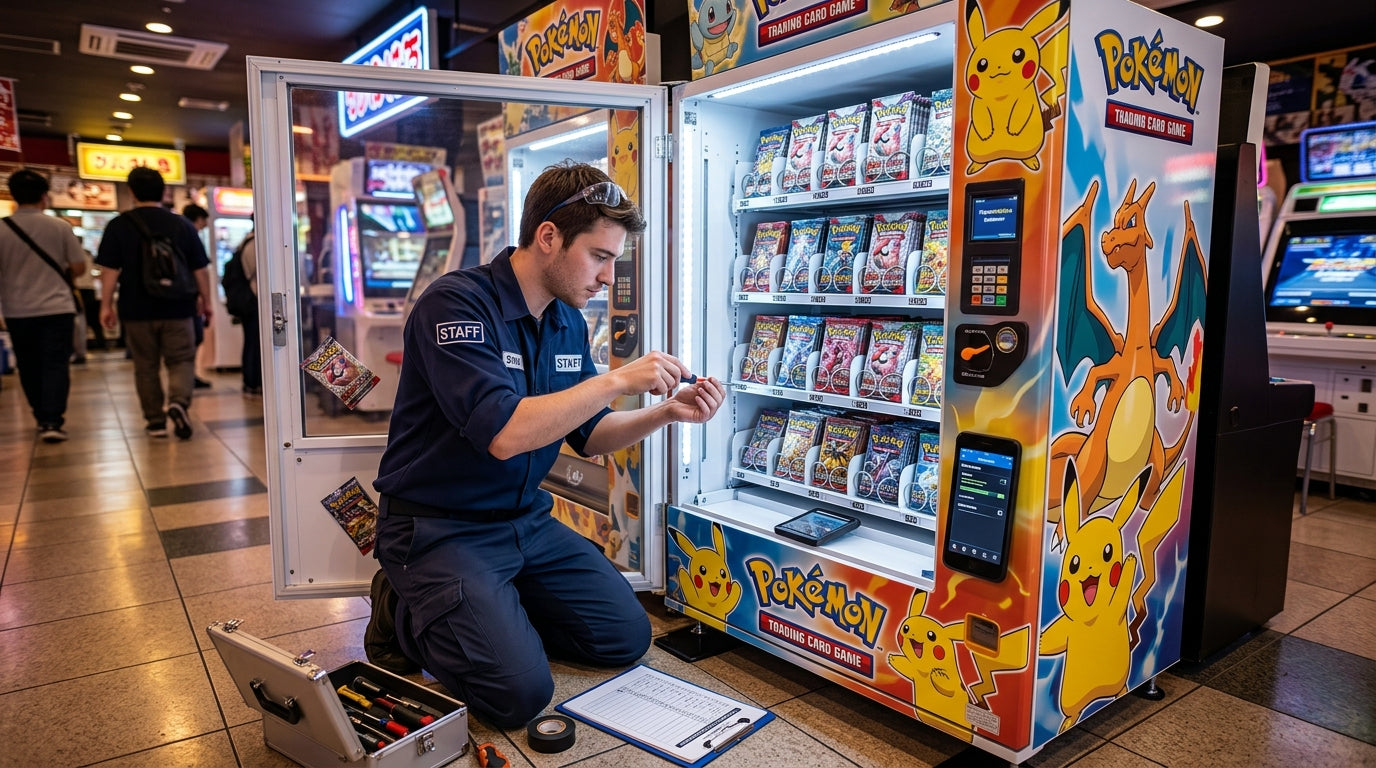
A routine visit covers refilling sold product, wiping the glass and touchscreen, clearing the delivery bin, and running one test vend to confirm the dispensing mechanism is working. Because this happens most often, keeping it fast and repeatable is what makes a multi-machine route actually scalable. Aligning this check with your restock schedule means one visit handles both jobs instead of two separate trips.
A monthly visit opens the cabinet rather than just servicing the exterior, clearing dust from internal fans and control boards and checking every electrical connection for fraying or loose plugs. This is also the point in the cycle to rotate which product slot gets the test vend, since a slot that has not dispensed in weeks is more likely to hide a developing mechanical issue than one in constant use.

Quarterly service targets the components that fail from cumulative use rather than sudden events: the card reader and tap-to-pay validator, the locking mechanism on the security glass, and any moving parts in the dispensing arm. This visit takes longer because these checks require partial disassembly rather than a surface inspection.
An annual overhaul is the only visit where component replacement is expected rather than exceptional, covering software updates on the payment system, full mechanical calibration, and replacing any part that quarterly inspections flagged as approaching end of life. Duration depends entirely on what needs replacing, which is why this visit is budgeted in hours rather than minutes.
Trading card units carry maintenance requirements that a standard snack machine simply does not have, because the product, the payment method, and the security profile are all different.
Tap-to-pay and mobile wallet readers need periodic firmware updates because payment security standards change faster than mechanical hardware does. A reader that fails silently costs sales without the operator knowing until the next visit, which is why testing an actual transaction, not just a visual check, belongs in every service visit.
Because card inventory carries far more resale value per slot than snacks or drinks, the locking mechanism and reinforced glass need direct inspection for tamper attempts or wear, not just a glance. A lock that sticks or a hinge that has loosened is a theft risk long before it becomes a visible failure.
Card-safe dispensing arms are calibrated to handle packaging that would be damaged by a standard spiral coil, and that calibration drifts slightly with use. A rotating test vend across different product slots during monthly and quarterly visits catches drift before it causes a jam or a crushed pack.
The touchscreen is the entire product-browsing interface on a card machine, so a software freeze or unresponsive panel takes the whole unit offline for sales in a way a broken button never would on a snack machine. If a machine has shown a black screen fault between visits, add a firmware check to that service call rather than assuming a power cycle alone fixed it permanently.
A high-traffic placement sells through faster, which means more frequent restocks, but each individual visit still stays roughly the same length since the tasks performed do not change with volume. What changes is how often the clock resets, not how long each visit takes.

Older machines take longer to service because wear compounds: a dispensing arm that is slightly out of calibration takes longer to diagnose and correct than one that was checked and adjusted on schedule the previous quarter. Consistent maintenance keeps each visit short; deferred maintenance turns every visit into a longer one.
A large-capacity unit with more product slots takes proportionally longer to restock, though the inspection portion of the visit stays about the same regardless of slot count. Reviewing the individual components inside a Pokemon vending machine makes clear which parts scale with capacity and which do not.
A newly installed machine needs closer attention than one that has been running for a year, because early inspections reveal issues that only show up under real transaction volume.
| Machine Stage | Recommended Check-In | Why |
|---|---|---|
| First 1 to 2 weeks after install | Every 1 to 2 weeks | Confirms sales rate and catches setup issues early |
| First few months | Same tight schedule until data stabilizes | Builds an accurate restock and sales prediction baseline |
| Stable operation | Standard visit cadence from the table above | Sales pattern is established; route can normalize |

Operator-Run Routine Checks
Pros: Fast, no scheduling delay, covers the restock and quick-check tasks that make up the bulk of total maintenance time.
Cons: Not sufficient alone for payment validator faults, security lock wear, or dispensing calibration drift that need specialized inspection.
Professional Quarterly and Annual Service
Pros: Catches high-wear component failures before they cause downtime, keeps warranty terms intact, handles component replacement correctly.
Cons: Longer visit, higher cost per visit, unnecessary to run at this depth more often than the recommended quarterly and annual cadence.
Between scheduled visits, certain signals mean maintenance should not wait for the next stop on the route. A machine that has gone unusually long without selling common items may simply be overdue for restocking, and understanding typical Pokémon vending machine drop times helps distinguish a genuine fault from normal sell-through variation. A dispensing hesitation, a payment reader that fails intermittently, or a screen that stays unresponsive after a basic reset are all signals worth an unscheduled visit rather than waiting out the calendar.
A documented maintenance schedule is what turns a single machine's routine into a repeatable process across an entire route, and it is one of the operational foundations covered in the complete 2026 operator guide. Operators still deciding how to structure the business should also review how to start and operate a Pokémon vending machine and confirm the numbers make sense with a look at whether the Pokemon vending machine business is profitable once maintenance time is factored into route economics.
A machine that is well maintained still needs to be legally cleared to operate, and the two are worth handling together rather than in sequence. Confirm whether it is legal to sell Pokemon product through a vending machine in your state and review whether you can use the Pokemon logo on a TCG vending machine before finalizing cabinet branding and service contracts.
Running a multi-machine route? Structure the business before a service dispute forces the issue
Form an LLC for Your Vending BusinessPlacement affects maintenance load directly, since a high-traffic location wears components faster and needs more frequent quick checks even though each visit stays the same length. Reviewing the best places for Pokemon vending machine placement before installation sets a realistic maintenance cadence from day one rather than discovering the mismatch after the machine is running.
Have retail space and want a vetted operator matched to your location?
List Your Location With VPlacedConsistent short visits beat occasional long ones, because deferred maintenance compounds into longer repair windows and lost sales. Machines sourced through VMFS USA, a commercial vending machine company in the USA, are built with remote diagnostics that flag developing issues before they turn a ten-minute check into an hour-long repair.
Less Time on Repairs, More Time on Route
Remote diagnostics and industrial-grade components on every VMFS trading card unit cut unscheduled service calls.
Pokemon Card Vending MachineLooking for a Pokemon and TCG unit?
TCG Vending MachineNeed higher capacity for a busy location?
Large Pokemon Vending MachineA routine restock and quick check takes about 10 to 20 minutes. Monthly deep cleaning runs 20 to 40 minutes, and quarterly service on payment validators and high-wear parts typically takes 45 to 60 minutes.
Duration depends on the type of visit. A quick weekly check runs 10 to 20 minutes, while a full annual overhaul that includes component replacement can take half a day or more.
Newly installed machines need a closer check-in every 1 to 2 weeks for the first few months, using the same short visit format as routine maintenance, until sales data stabilizes enough to set a standard cadence.
A routine visit covers restocking sold product, wiping the glass and touchscreen, clearing the delivery bin, and running one test vend to confirm the dispensing mechanism is working correctly.
Quarterly service inspects the card reader, security lock, and dispensing arm for wear that builds up over months, which requires partial disassembly rather than the surface-level inspection a routine visit covers.
Restocking time scales with the number of product slots, but the inspection portion of a visit stays roughly the same length regardless of capacity, since it checks systems rather than individual slots.
Yes. Deferred maintenance compounds, since a dispensing arm or lock that goes unchecked for multiple cycles takes longer to diagnose and correct than one that was adjusted on schedule the previous visit.
Tap-to-pay and card readers should be tested with an actual transaction at every routine visit, with a deeper firmware and validator check added at the quarterly service, since payment security standards change frequently.
Routine restocking, cleaning, and quick checks are straightforward for an operator to handle. Payment validator faults, security lock wear, and dispensing calibration are better handled by a qualified technician during quarterly and annual service.
Dispensing hesitation, a payment reader that fails intermittently, or a screen that stays unresponsive after a basic reset all warrant an unscheduled visit rather than waiting for the next stop on the route.
Compartir:
Drink Vending Machine for Office: Costs, Capacity & How to Choose One
Cashless Payment Systems for Coffee Vending Machines: The Complete Operational & Tech Guide