


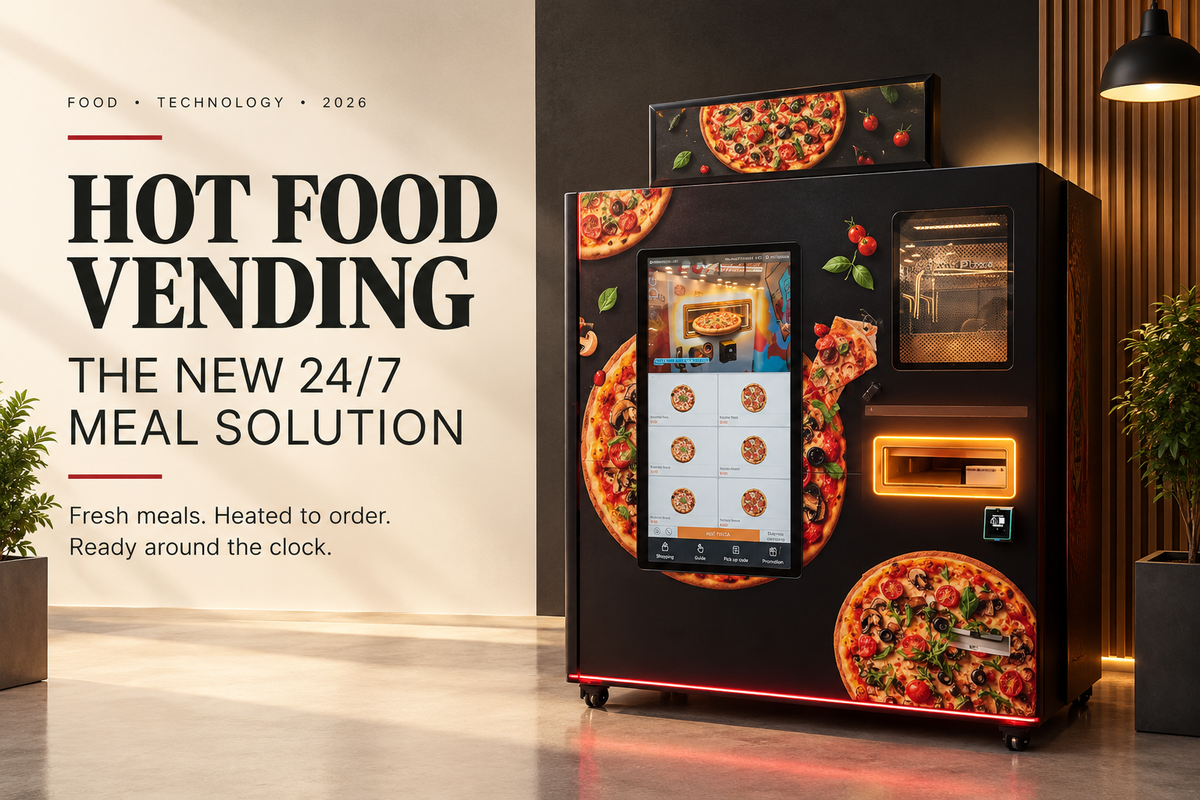


Diseñe la solución de vending perfecta para su ubicación y clientes.

Únete al boletín de VMFS y forma parte de una red próspera dedicada al éxito colectivo.
Un registro. Posibilidades infinitas.

Se ha intentado implementar el vending de comida caliente antes y tiene mala reputación, por una buena razón. El enfoque antiguo consistía en mantener la comida caliente —una forma lenta de arruinarla— o mantenerla congelada para recalentarla, lo que producía algo abrasador en los bordes y frío en el centro.
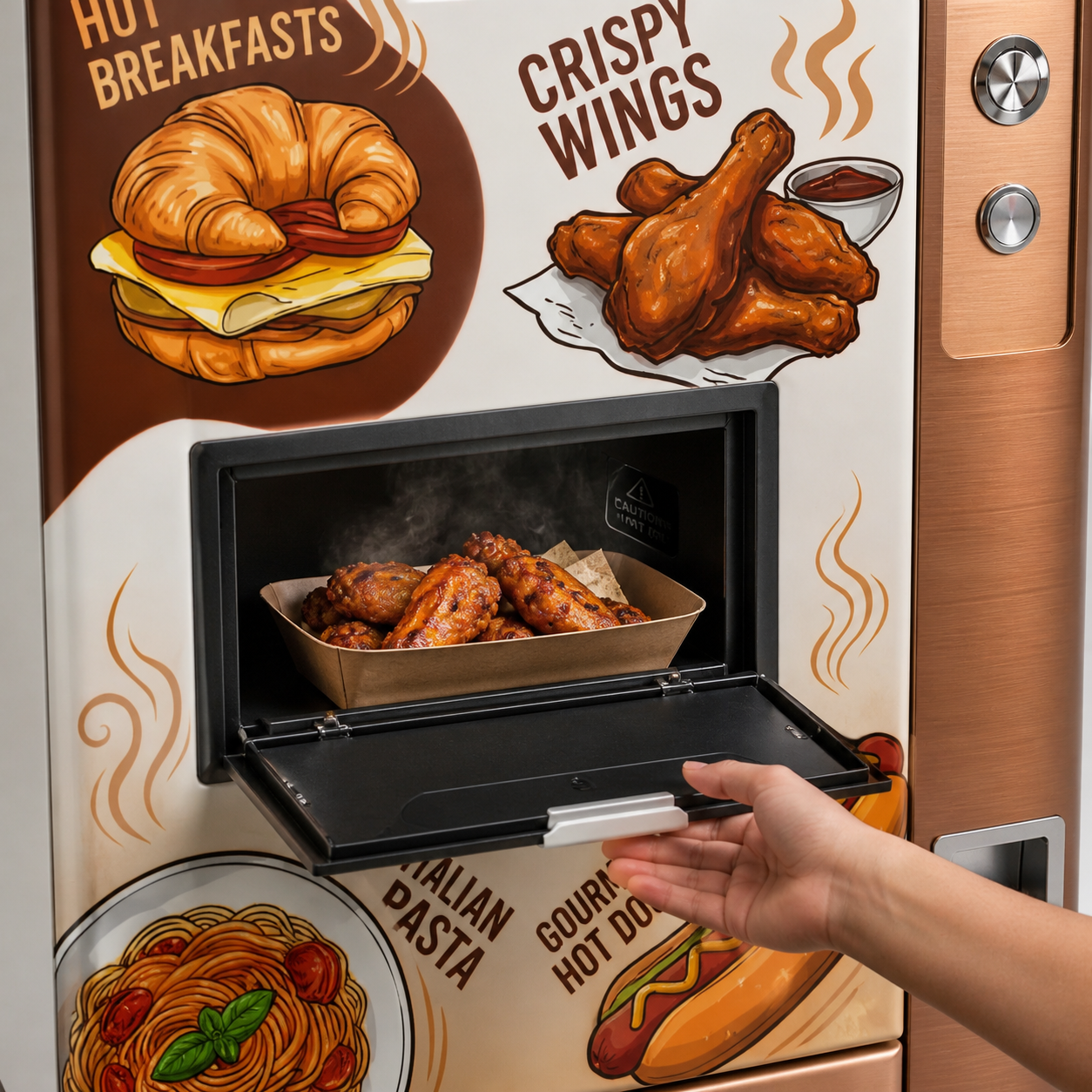
La generación actual invierte esta secuencia. Las comidas permanecen refrigeradas tras el cristal, a temperatura de conservación, exactamente igual que en una tienda. Nada está caliente y nada está congelado. Cuando alguien paga, la máquina toma esa bandeja específica y la calienta; pocos minutos después, entrega pasta, pizza, ramen o un burrito que está caliente por completo.
Esa distinción parece pequeña, pero representa toda la categoría. La comida refrigerada y calentada al momento sabe a comida real. La comida congelada y procesada a gran potencia no, y cada intento previo de vending de comida caliente falló precisamente en ese punto, no por falta de demanda.
Por qué es el momento adecuado: la comida caliente es uno de los sectores de más rápido crecimiento en toda la industria del vending y se encamina a duplicarse casi en todo el país durante la próxima década. No porque los operadores quieran vender comidas de repente, sino porque el equipamiento finalmente produce algo que una enfermera del turno de noche compraría dos veces.
Todo el mundo se fija en la pantalla táctil. La ingeniería realmente interesante está detrás del cristal, y es lo que explica por qué estas máquinas pueden manejar comidas cuando un gabinete convencional no puede.
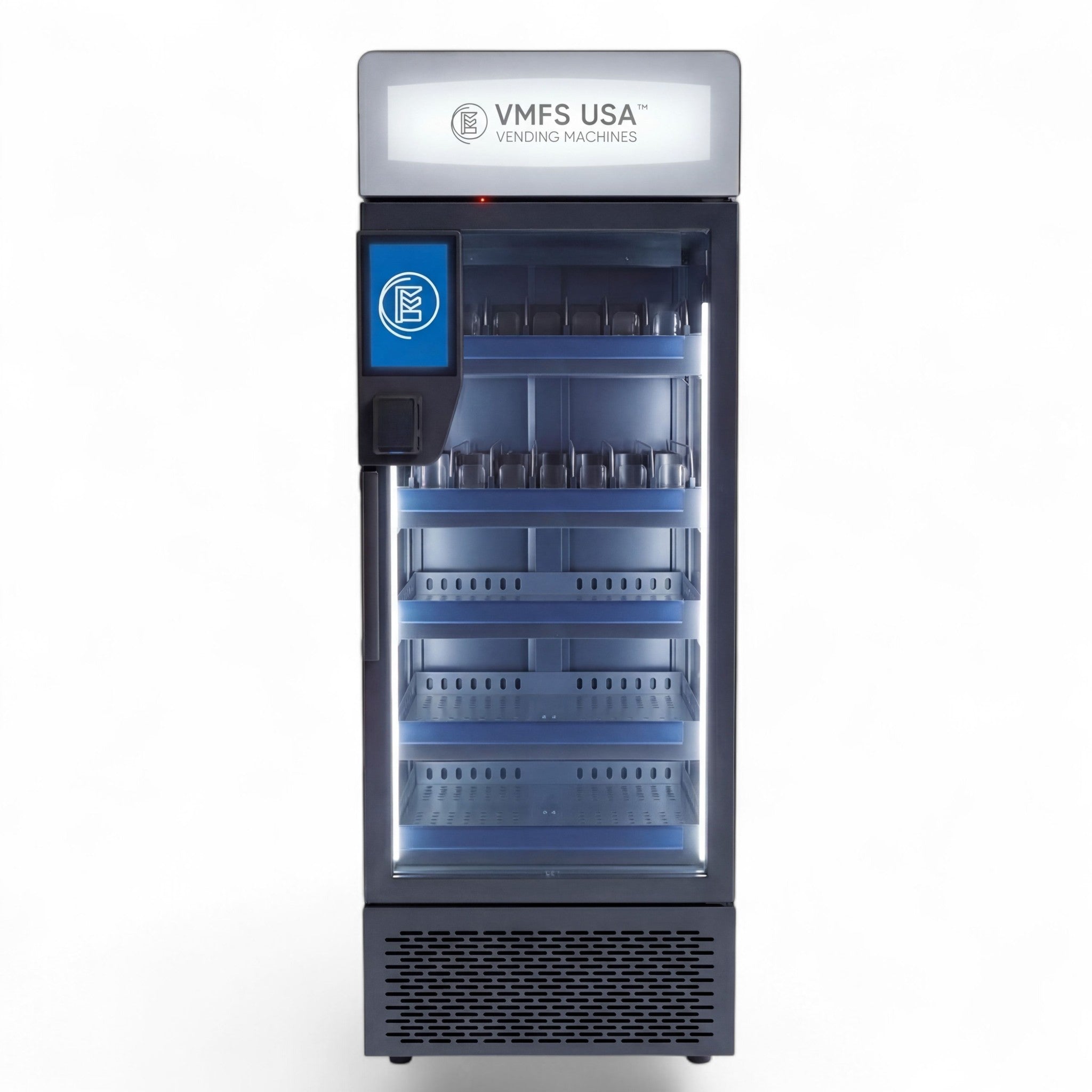
No hay espirales. Cada estante es un conjunto de carriles transportadores individuales, y la bandeja de comida se asienta plana sobre la cinta en lugar de colgar de una bobina. Cuando compra, la cinta avanza, la bandeja se desplaza hacia adelante y se entrega nivelada. Nada cae, nada se vuelca, nada llega con la salsa redistribuida por toda la tapa.
Esa simple decisión mecánica desbloquea la categoría, porque permite a la máquina transportar:

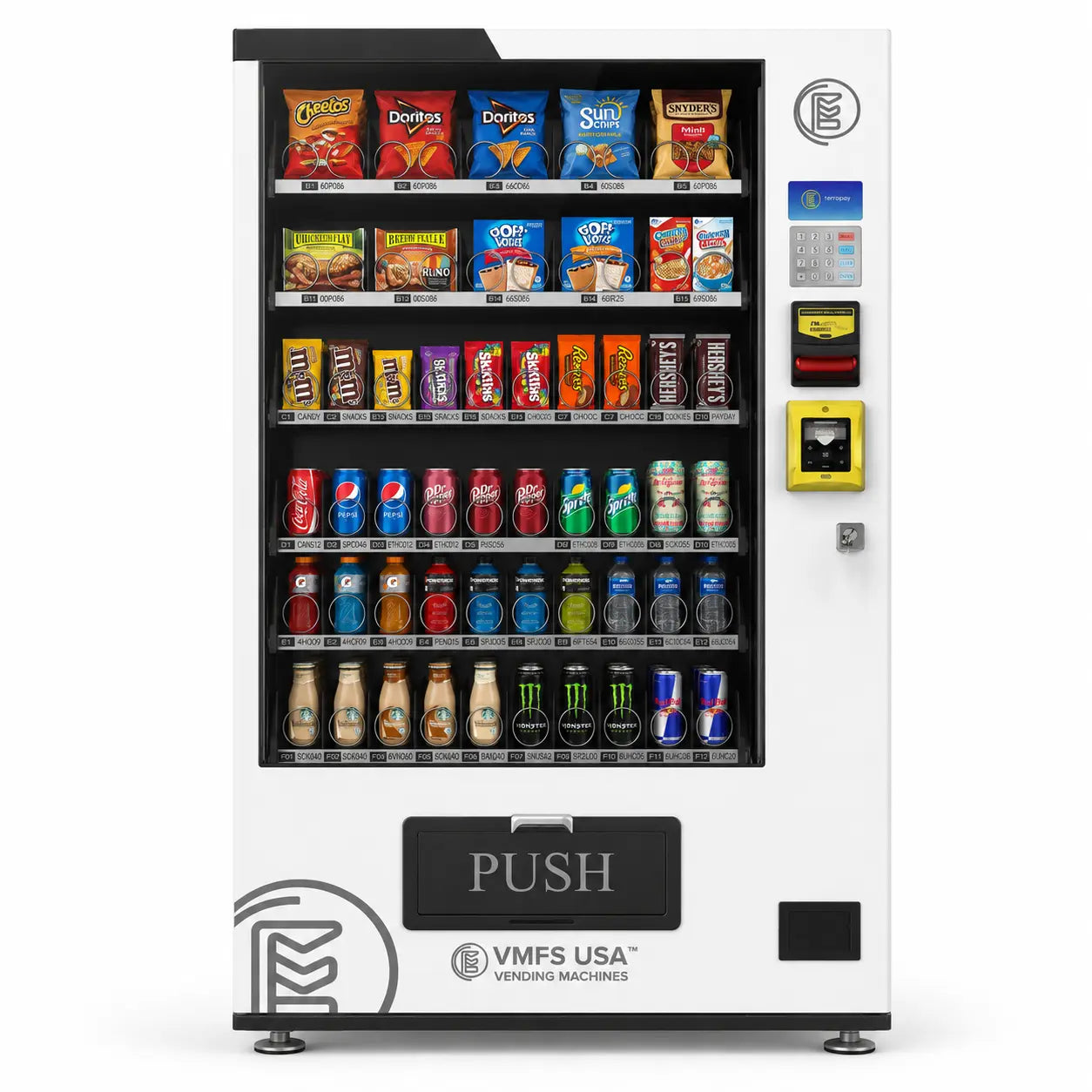
Observe de cerca la segunda fotografía. A lo largo del borde frontal de cada estante hay una tira iluminada, y en ella cada carril lleva su propio identificador (ranura 001, ranura 002, etc.), junto con una lectura digital del precio en tiempo real para ese carril específico.
En una máquina de snacks, el precio es mayormente uniforme y una etiqueta de papel es suficiente. En una máquina de comidas no lo es, porque una pasta con pollo, un cuenco vegetariano y un ramen premium tienen costos y márgenes genuinamente diferentes, y cambian a medida que los precios de su proveedor fluctúan.
El direccionamiento por ranura otorga al operador un control que el vending convencional simplemente no ofrece:
Aquí está el punto en el que más insistiríamos con cualquier operador que considere esta categoría, porque no es glamuroso, pero es lo que determina si el negocio funciona.
Vender comidas frescas significa que cada bandeja tiene una fecha de caducidad. En una máquina convencional, esto supone un problema manual que, a menudo, acaba con las operaciones de vending de comida. Un reponedor que carga un carril empuja el stock nuevo detrás o delante del viejo, dependiendo de cómo esté construida la máquina y de lo cansado que esté al final de su ruta. El producto más antiguo queda atrapado detrás del nuevo, caduca sin venderse y acaba en la basura o, mucho peor, llega al cliente.
Los carriles transportadores hacen que el sistema FIFO (primero en entrar, primero en salir) sea una propiedad estructural de la máquina, no una disciplina que espera que su conductor mantenga. El producto se carga por detrás y se vende por delante, y la cinta fuerza este orden. La bandeja más antigua en un carril es siempre la siguiente en salir, sin que nadie tenga que preocuparse por ello.
Por qué esto es tan importante para la seguridad alimentaria como para reducir desperdicios: combine la rotación forzada con el seguimiento de fechas por carril y la rebaja automática a una hora establecida, y la caducidad deja de ser algo que gestionar a posteriori. La máquina vende el artículo más antiguo primero, lo descuenta antes de que sea un problema y le informa de lo que no se ha vendido. Esa es una operación materialmente distinta a esperar que alguien revise las etiquetas.

Esta es la parte del programa piloto que más nos ha sorprendido, y cambia cómo debería ser toda la conversación con el lugar de instalación.
Todo operador que ofrece una máquina de vending lidera con la participación en los ingresos. Es una oferta razonable, pero también es una cifra pequeña, y a ningún director de instalaciones de un hospital o fábrica lo han ascendido por negociar una mejor comisión en una máquina de snacks.
Lo que a ese director realmente le importa es que, cuando no hay nada para comer en el lugar, el personal se va. Se suben a un coche a las dos de la mañana, conducen hacia donde haya algo abierto y regresan mucho después de que su descanso haya terminado. Si multiplicamos esto por cada turno y por año, vemos un costo operativo real que todo el mundo ha aceptado silenciosamente como inevitable.
Una máquina de comida caliente en las instalaciones elimina la razón para irse. En despliegues reales, los lugares que han implementado comida caliente han visto disminuir sus costos de mano de obra en servicios de restauración en aproximadamente un tercio. Por tanto, el argumento no trata sobre el vending en sí:
Convertir ese argumento en algo que un director de instalaciones pueda presentar a su propia dirección es donde nuestros colegas de VMarketed destacan, y encontrar los sitios donde mejor funciona es lo que hace VPlaced.
Hospitales y centros médicos.
El entorno más fuerte que hemos visto. Personal de noche, visitantes que llevan horas en el edificio y operaciones de emergencia 24/7, frente a una cafetería que cierra y un carrito de café que nunca pretendió ser una cena. El argumento de seguridad sobre mantener al personal clínico en el lugar es genuinamente persuasivo para quienes aprueban estas decisiones.
Fábricas, plantas y centros de distribución.
Equipos de turno que a menudo están a kilómetros de distancia de cualquier lugar abierto. Aquí es donde el argumento del tiempo de descanso es más agudo, porque un descanso de 30 minutos que se convierte en 50 es un costo de producción medible, y todo gerente de planta sabe que sucede.
Universidades.
Residencias, bibliotecas y espacios de estudio nocturnos que ninguna cafetería ha cubierto nunca de forma económica. Solo durante el periodo lectivo, pero el patrón de demanda es implacable y el público tiene pocas alternativas a la una de la madrugada.

Vender comidas preparadas significa mantener la comida a una temperatura segura de forma continua, en un edificio donde nadie de su empresa está presente, durante semanas. Esa es la obligación que subyace en toda esta categoría y no es algo con lo que se pueda improvisar.
Nuestras máquinas piloto informan continuamente a través de VMFS Cloud, y el propósito de esto no son solo los paneles de datos. Es que una desviación de temperatura sea detectada mucho antes de que se convierta en una cuestión de seguridad alimentaria, y mucho antes de que alguien haya consumido algo. Una máquina capaz de detectar una anomalía, alertar a un operador y detener las ventas está haciendo algo que un registro en papel fundamentalmente no puede.
Lo que monitoreamos en cada unidad piloto:
Obtener los permisos y la documentación de seguridad alimentaria junto con eso es un ejercicio independiente, y uno que nuestros socios en VAdviced manejan para los operadores que ingresan a esta categoría, porque una máquina de comida caliente se encuentra en un nivel de permisos más exigente que una vitrina de snacks.
Realizamos pruebas piloto en lugar de simplemente listar equipos porque una especificación escrita para otro mercado le dice muy poco sobre lo que un hospital estadounidense a las tres de la mañana realmente necesita. Las brechas aparecen en detalles que nunca figuran en una hoja de datos.
Esa última línea sigue produciendo los hallazgos más valiosos, exactamente como lo ha hecho en nuestros programas de exteriores y bebidas frescas. Nadie sabe lo que necesita un mercado hasta que el equipo está en él y alguien lo observa de cerca.

Si está considerando esta categoría, haga el pedido correcto. Primero asegure el sitio, porque la comida caliente necesita una población genuinamente activa las 24 horas y un producto premium en un edificio tranquilo no funcionará. Resuelva el suministro en segundo lugar, porque es más difícil que la máquina. Luego, obtenga los permisos y la documentación de seguridad alimentaria antes de encender, no después.
De nuestra parte, puede ver las gamas de vending de comida y pantalla táctil, ver qué está listo para enviar en las unidades en stock, o explorar todo en la tienda. Las unidades en stock suelen enviarse en un plazo de 7 a 21 días y cuentan con una garantía de piezas de un año. Una vez que una máquina está activa, vale la pena listarla en VendingFinder, porque una comida caliente a las dos de la mañana es exactamente lo que alguien está buscando cuando nada más está abierto.
También seguimos agregando ubicaciones piloto. Si usted dirige un hospital, planta, centro de distribución o campus con una población nocturna real y sería un buen sitio de prueba, nos gustaría saber de usted. La especificación que estamos construyendo para este mercado está siendo moldeada por los sitios que ya operan estas máquinas.
Las comidas se mantienen refrigeradas detrás del cristal a temperatura de refrigeración en lugar de mantenerse calientes o congeladas. Cuando alguien paga, la máquina toma esa bandeja específica y la calienta, entregando una comida caliente en unos pocos minutos. Mantener refrigerado y calentar bajo pedido es el cambio que hace que la comida sea genuinamente buena en lugar de simplemente tibia.
Porque las comidas vienen en bandejas anchas y planas que una espiral maneja mal y una caída arruina por completo. Los carriles de transporte entregan la bandeja nivelada, lo que significa que los platos con mucha salsa, las bandejas selladas con film y los tazones de fibra sobreviven al viaje. También hace que la rotación primero en entrar, primero en salir (FIFO) sea estructural en lugar de algo que un reabastecedor tenga que recordar.
Control individual sobre cada carril. Precios diferentes para diferentes comidas, cambiados de forma remota en lugar de con etiquetas, además de rebajas basadas en el tiempo para que las existencias antiguas se descuenten automáticamente a una hora determinada. También obtiene datos de ventas a nivel de carril que muestran exactamente qué comida se vende a qué hora, lo cual es imposible de adivinar con precisión.
Porque para ellos no es realmente una decisión de vending. Cuando no hay nada que comer en el sitio, el personal se va a buscar comida y regresa tarde. Una máquina de comida caliente elimina eso, y los sitios que despliegan comida caliente han visto caer los costos laborales de servicio de alimentos en aproximadamente un tercio. El reparto de ingresos es casi incidental al lado de eso.
Es una de las partes de más rápido crecimiento de la industria y está en camino de casi duplicarse en todo el país durante la próxima década. El motor subyacente es que aproximadamente 6.4 millones de estadounidenses trabajan durante la noche y, históricamente, no han tenido casi ninguna forma de obtener una comida real durante su turno.
Alimente al turno de las 2 a.m.
Tenemos pilotos de comida caliente funcionando en todo el país y estamos especificando estas máquinas según lo que realmente necesitan los sitios estadounidenses. Cuéntenos sobre su ubicación y los horarios que maneja.
Visite la tienda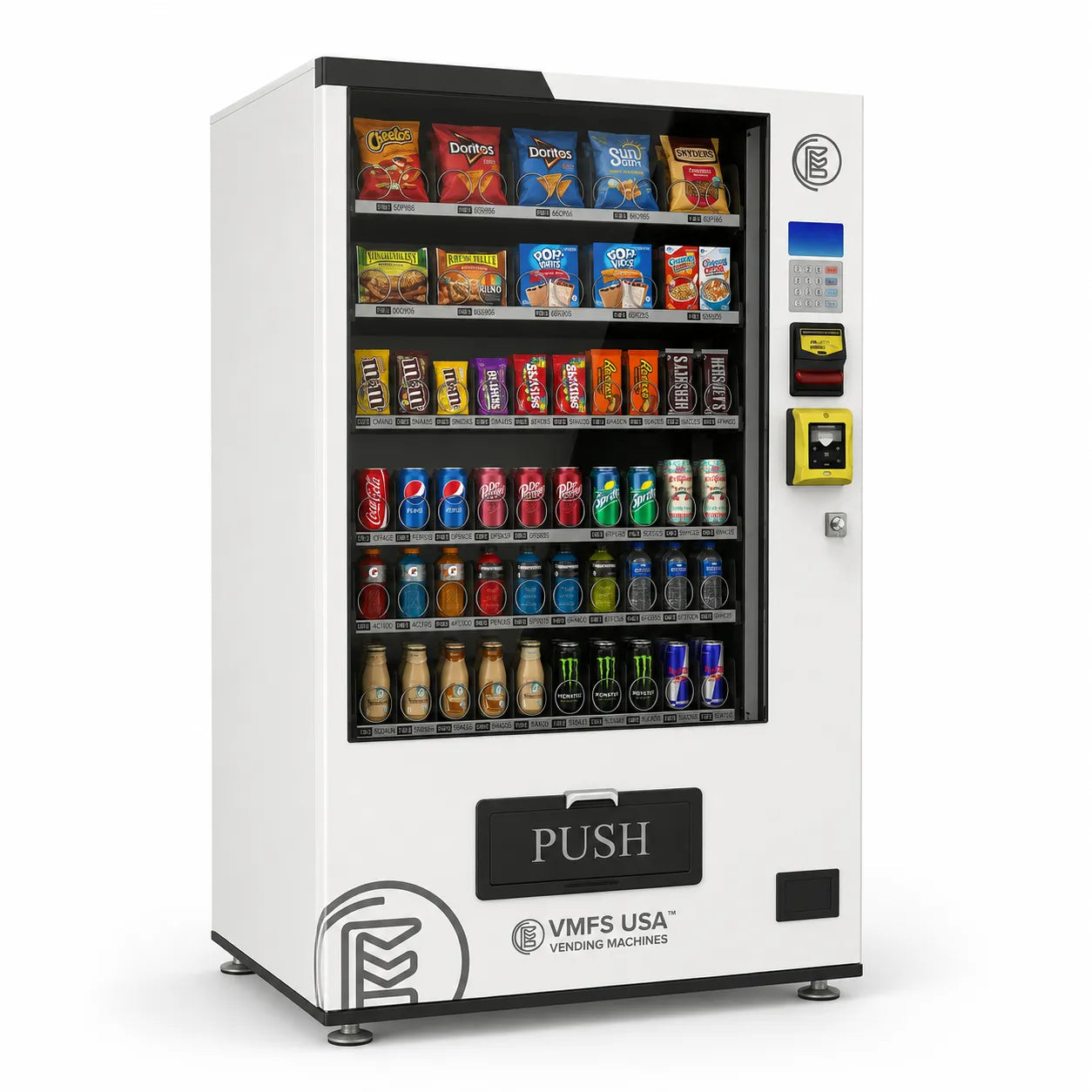
Compartir:
Cómo reparar el lector de tarjetas de una máquina expendedora de Pokémon: guía de solución de problemas técnicos
Calorías del café con leche de la máquina de oficina: guía completa de nutrición y calibración