


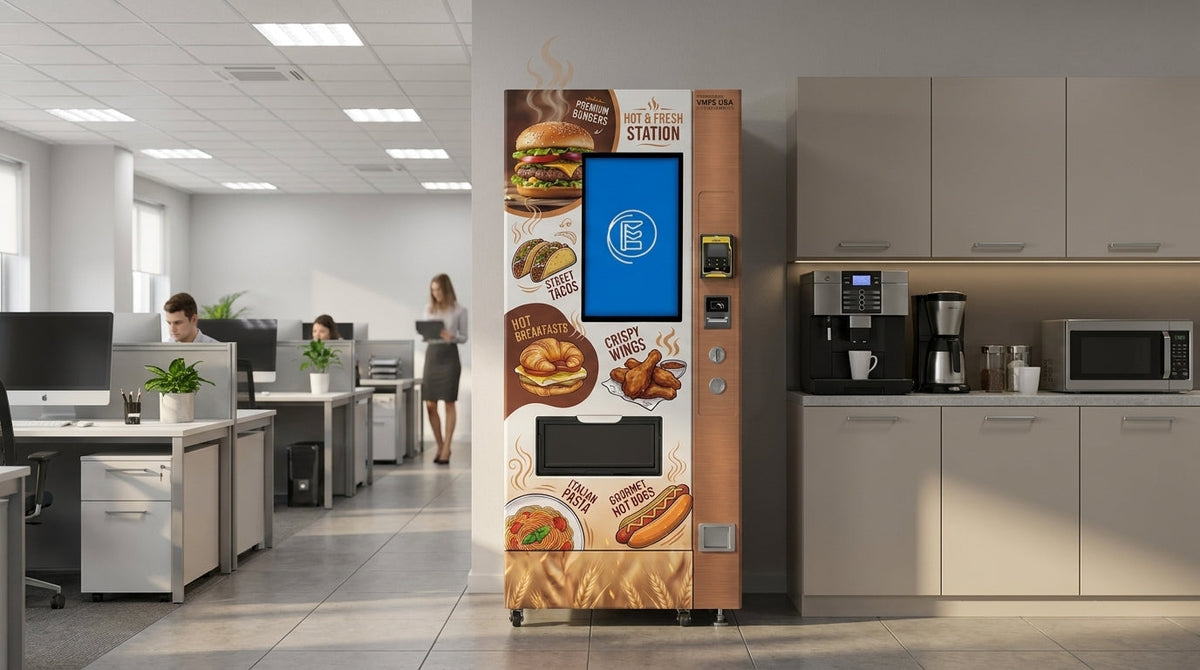


Design the perfect vending solution for your location and customers.

Join the VMFS newsletter and step into a thriving network dedicated to collective success.
One signup. Endless possibilities.
A food vending establishment is a commercial automated retail operation that utilizes self-service vending machines to store, prepare, hold, or dispense prepackaged or freshly cooked food items directly to consumers without immediate on-site human supervision.
Regulatory oversight governed by the FDA Food Code classifies any location housing one or more vending machines dispensing Time/Temperature Control for Safety (TCS) foods as a food service establishment subject to municipal health inspection. The legal umbrella includes both the physical footprint where machines reside and the central commissary facility where perishable stock is prepared, handled, and loaded into insulated transport vehicles.
According to data published in the 2024–2025 State of Convenience Services report by the National Automatic Merchandising Association (NAMA), total U.S. convenience service industry revenue reached $31.1 billion in 2025, expanding at an average annual growth rate of 8.1%. High labor overhead in traditional quick-service restaurants combined with consumer demand for round-the-clock convenience continues to accelerate deployment across corporate campuses, healthcare centers, and transport hubs.
Cold food vending machine establishments maintain constant internal refrigeration at or below 41°F (5°C) to prevent bacterial growth in perishable items such as sandwiches, yogurt parfaits, fresh salads, and milk beverages.
Unlike conventional snack dispensers that drop items via spiral coils, cold food units rely on motorized soft-drop elevators or push-bar carousels that safely transport delicate items to the access door without spilling or crushing. Understanding the technical internal mechanics involved in the cold food vending machine work process enables operators to reduce mechanical jams and prolong compressor lifespans.
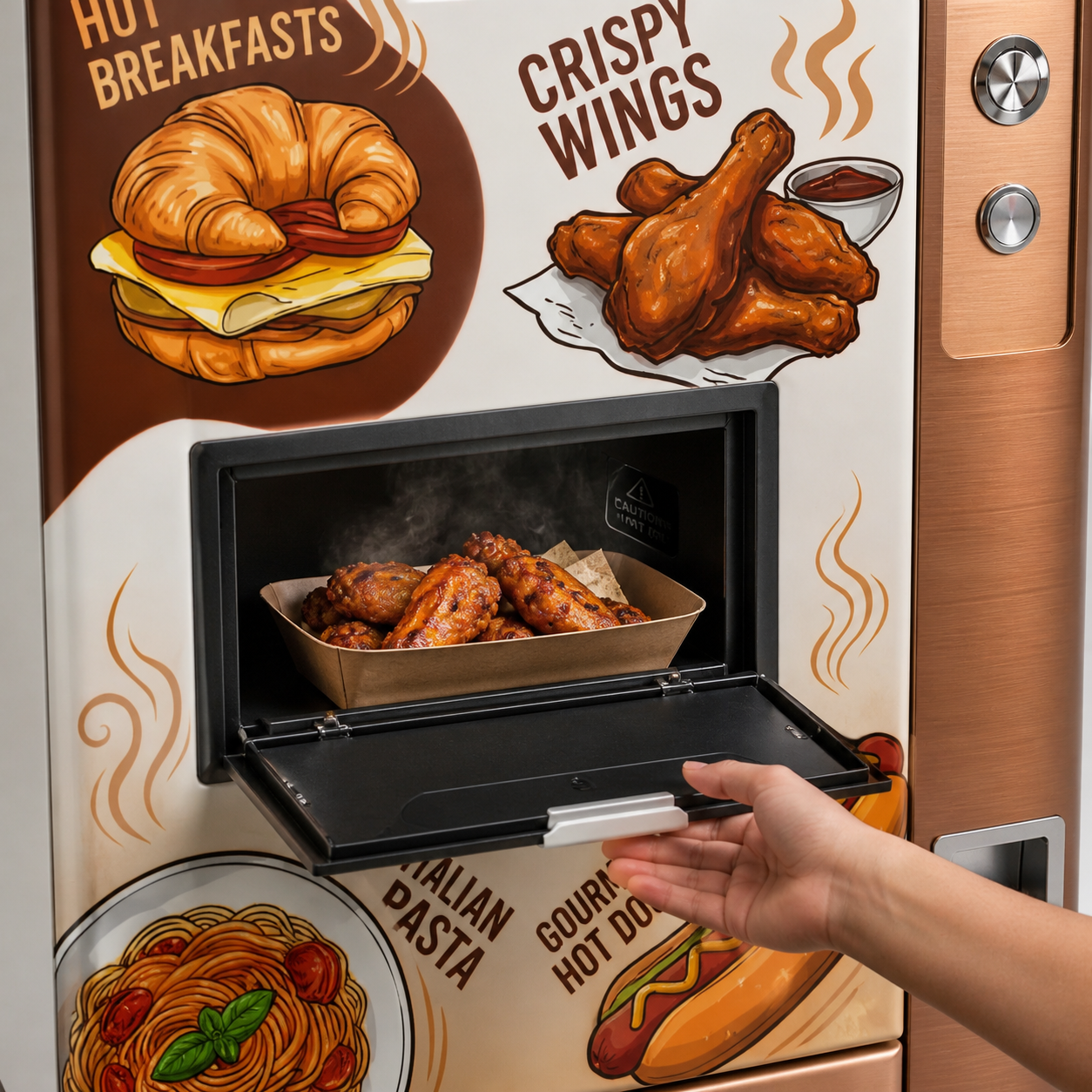
Hot food vending machine systems combine chilled inventory storage with high-output internal rapid-heating technology to bake, microwave, or cook fresh meals on demand within 45 to 90 seconds.
When a user initiates a transaction, internal robotic arms transfer frozen or chilled meal trays from the storage vault into a commercial-grade induction or microwave chamber. Operators evaluating commercial options can review dedicated Hot Food Vending Machines to compare internal shelf capacity and heating module wattage, or analyze strategic setup steps in this guide on how to start a hot food vending machine business in 2026.
Specialty fresh food vending establishments utilize robotic food preparation hardware capable of turning raw or par-baked ingredients into fully cooked gourmet meals.
Automated Pizza Stations: Store fresh dough, pizza sauce, cheese, and toppings in separate temperature-controlled modules. Upon customer order, the internal mechanism shapes the pizza, applies toppings, bakes the crust in a 500°F+ oven, and boxes the hot pizza within three minutes. Operators can read industry insights on how pizza vending machines are here, study how pizza vending machine works, evaluate a Pizza Vending Machine product listing, analyze overall pizza vending machine cost expectations, source wholesale ingredients via where to buy pizza for vending machines, calculate potential return on investment using how profitable is a pizza vending machine, examine general financial benefits of pizza vending, and evaluate commercial growth models through highest earning pizza food franchises.
Gourmet Burger Units: Refrigerate pre-formed burger patties and buns, transferring them through infrared thermal cooking tubes to grill meat while warming buns simultaneously. Route owners can review operational parameters in the commercial burger vending machine guide.
Automated ramen and noodle vending establishments integrate high-speed water heating boilers and precise liquid volumetric dispensers to serve hot noodle bowls in high-density locations.
Modern machines retain sealed noodle cups in internal carousels, automatically injecting filtered boiling water at precise temperatures upon purchase confirmation. Trade shows highlight advanced hardware, including a Cup Noodles vending machine that dispenses hot water automatically. Interested operators can purchase a dedicated Ramen Noodle Vending Machine, examine detailed mechanical functions in how ramen vending machines work, and review margin structures analyzing are ramen vending machines profitable.
Ambient and healthy food vending establishments focus on shelf-stable, better-for-you nutrition, catering to modern corporate wellness guidelines and school nutrition requirements.
Survey data from NAMA reveals that 65% of convenience service operators receive direct requests from corporate clients for healthier product mixes, while 59% identify healthy snacks as a major revenue driver. Operators stocking high-turnover locations can review product lists for healthy food for vending machines and consult strategic guidelines regarding a vending machine and healthy snacks to maintain high gross margins.
Time/Temperature Control for Safety (TCS) food standards require strict temperature maintenance to prevent foodborne illness caused by rapid bacterial proliferation.
Under Section 3-501.16 of the FDA Food Code, cold TCS foods (such as meat, poultry, dairy, cut leafy greens, and cooked rice) must be held at an internal temperature of 41°F (5°C) or lower. Hot TCS foods held for service must be maintained at an internal temperature of 135°F (57°C) or higher. The temperature range between 41°F and 135°F is designated as the "temperature danger zone," where pathogenic bacteria can double in quantity in under 20 minutes.
Automated health locks are mandatory safety systems built into food vending machine control boards that physically shut and disable dispensing doors when internal cabinet temperatures drift into unsafe ranges.
If refrigeration power cuts out or heating assemblies fail, internal thermistors measure temperature spikes. If cold cabinet temperatures exceed 41°F for more than 30 minutes, the electronic control board executes an un-bypassable lock. Transactions freeze, credit card processing halts, and screen displays warn consumers that the machine is out of service until a technician resets the system.
Modern food vending machine delivery mechanisms rely on sensor-driven elevators, conveyor tracks, and dual-beam optical sensors to guarantee item delivery.
Elevator Soft-Drop Mechanisms: An internal motorized platform ascends to the selected shelf level, receives the food item via a pushing arm, and descends smoothly to the retrieval door.
Conveyor Belt Systems: Flat belt drives pull boxed lunch trays or salads forward without tipping or shaking delicate packaging.
Infrared Drop Sensors: Dual optical light beams at the retrieval chute detect physical passage. If a product fails to drop, the system rotates secondary coils or cancels the credit card authorization instantly.
Reviewing guidelines on how should food in vending machines be dispensed helps route technicians adjust drop speeds, while end users can consult simple instructions detailing how to get food from a vending machine. Operators needing tailored equipment can deploy a compact Lunch Box Vending Machine, a Mini Hot Food Vending Machine, or a high-capacity Large Hot Food Vending Machine sourced from a premier Vending Machine Company in USA.
Selecting the optimal retail format requires comparing capital requirements, labor dependence, security risks, and operating footprints.
| Performance Benchmark | Food Vending Establishment | Micro Market (Open Kiosk) | Quick-Service Restaurant (QSR) |
| Initial Capital Investment | Moderate ($6,000 – $22,000) | Low-Moderate ($5,000 – $14,000) | Very High ($350,000 – $1,800,000+) |
| Labor Overhead Costs | Low (Route restocking only) | Low (Restocking & cleaning) | Very High (Kitchen & counter staff) |
| Physical Security & Theft Control | High (Secured behind locked cabinet) | Low (Subject to open retail theft) | High (Staff-controlled counter access) |
| FDA Health Lock Automation | Yes (Automatic hardware shutoff) | Partial (Requires kiosk screen lockouts) | Manual oversight by shift supervisors |
| Footprint Requirement | Very Compact (10 to 20 sq. ft.) | Moderate (80 to 250 sq. ft.) | Large (1,500 to 3,500+ sq. ft.) |
| Operating Hours | 24/7/365 Unattended | 24/7 Unattended (Semi-restricted) | Limited by staff shift schedules |
Launching a food vending establishment involves upfront capital outlay for automated commercial hardware, initial inventory stock, payment processing hardware, and licensing fees.
Commercial cold food vending units cost between $6,000 and $12,000, whereas specialized hot food machines equipped with internal convection ovens range from $12,000 to $22,000. Equipment financing allows operators to offset startup costs by matching monthly lease payments against incoming cash flows.
Gross margins in fresh food vending typically range from 55% to 70%, with average per-unit meal prices set between $6.50 and $12.00 depending on location demographics.
Because perishable meals carry short shelf lives (3 to 7 days for cold items), managing inventory spoilage is critical to maintaining net profitability. Modern operators rely on cloud telemetry systems transmitting real-time stock levels over cellular networks. Telemetry integration allows route managers to track exact SKU turnover, adjust restocking routes dynamically, and eliminate unsold waste before expiration dates occur.
Understanding both operational benefits and ongoing management challenges allows entrepreneurs to make informed investments in automated retail.
Unattended 24/7 Cash Flow: Generates continuous sales around the clock without incurring hourly wage expenses or shift management overhead.
Flexible Scalability: Operators can start with a single machine and scale to multi-location routes using cloud management software.
Low Footprint Real Estate: Compact physical requirements allow operators to secure high-traffic placements in hospitals, airports, and corporate towers.
Automated Health Compliance: Integrated electronic health locks eliminate human error by locking machines automatically if refrigeration fails.
Perishable Spoilage Exposure: Unsold fresh food past expiration dates results in direct inventory loss if route forecasting is inaccurate.
Routine Maintenance Requirements: Mechanical components, compressor units, and heating chambers require routine servicing to prevent downtime.
Higher Capital Outlay: Commercial hot food and robotic meal machines carry higher purchase costs compared to basic ambient snack units.
Operating a legal food vending establishment requires obtaining a local retail food establishment permit, state sales tax licensing, and adhering to federal labeling laws.
Under FDA calorie labeling regulations (21 CFR 101.8), operators who control 20 or more vending machines must display clear calorie disclosures adjacent to each food item or selection button prior to purchase. Route owners must also verify that all inventory originates from approved, health-inspected commercial commissaries. To review local licensing processes, consult this step-by-step guide on how to get a food vending license.
Forming a proper legal business structure protects operators from personal liability and simplifies corporate tax filings.
Entrepreneurs can establish the optimal business entity based on operational scale and investment backing:
Limited Liability Company (LLC): The standard choice for route operators, offering personal asset protection and flexible pass-through taxation. Learn how to form an LLC for a vending machine business and hire a certified registered agent for a vending machine business.
Sole Proprietorship: Simple structure for single-machine setups, though lacking personal liability separation. Review guidelines for a sole proprietorship.
Partnerships & LLPs: Ideal for co-owned routes. Review formation guides for a partnership for a vending machine business, a limited partnership for a vending machine business, or forming an LLP for a vending machine business.
Corporations & Nonprofits: Growth-focused operators seeking institutional investors can set up an S-Corporation or a C-Corporation, while institutional feeding initiatives can establish a nonprofit corporation for vending.
Executing formal location agreements is essential to define electricity usage obligations, floor rental terms, and revenue-sharing commissions. Commercial facility directors can list space requirements to connect directly with qualified route operators via VPlaced for location owners.
Expanding a vending establishment requires active location scouting and targeted local marketing to maximize machine usage.
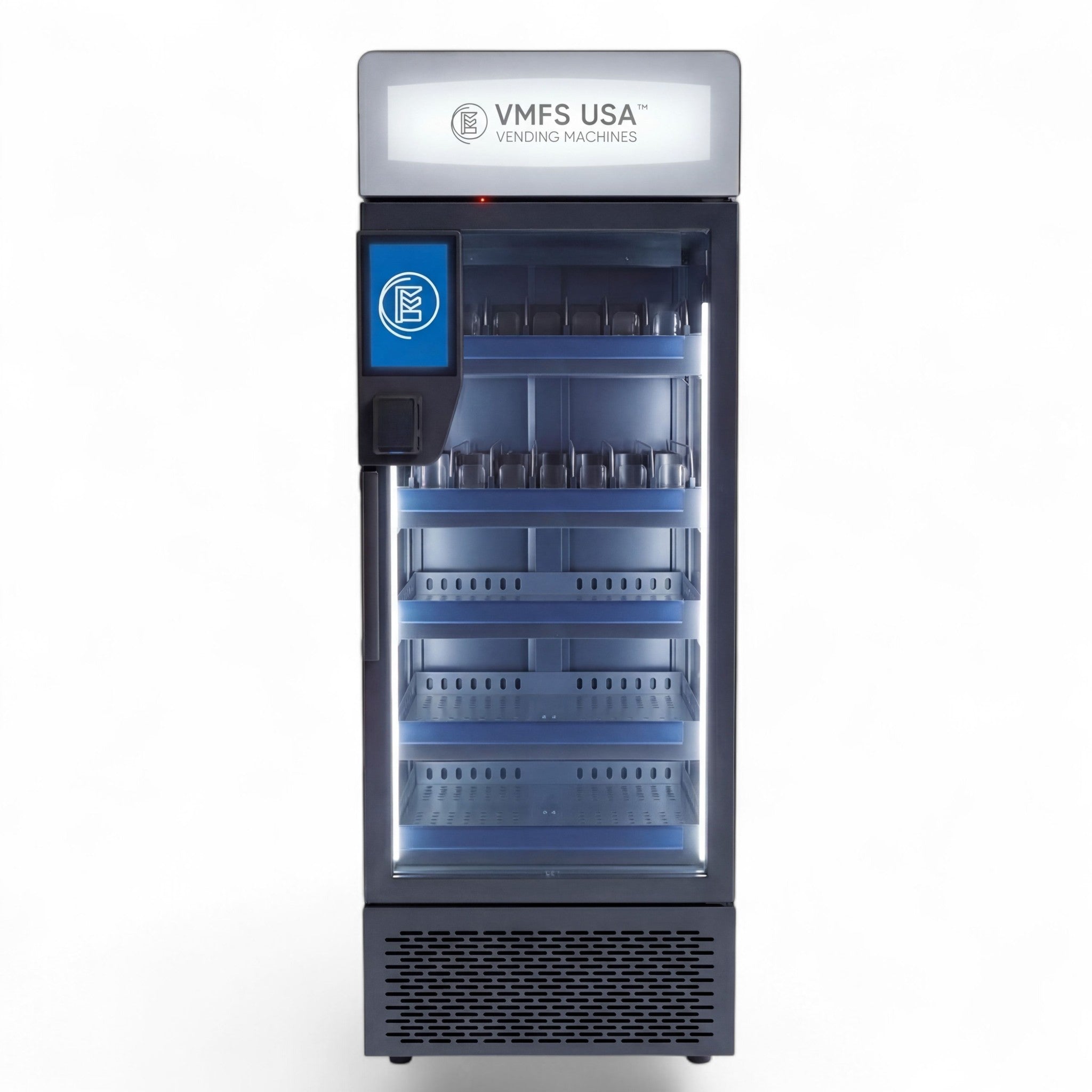
Operators can discover pre-screened commercial placements by using specialized location portals such as vendingfinder.com to secure high-traffic sites. To boost local foot traffic and promote machine offerings, operators can deploy automated digital growth strategies through vmarketed.com. For specialized hardware needs, operators rely on trusted commercial suppliers like VMFS USA.
A food vending establishment is any commercial automated retail operation that stores, prepares, holds, or dispenses prepackaged or cooked food directly to consumers using self-service vending equipment under health department oversight.
Yes, vending machines that dispense perishable Time/Temperature Control for Safety (TCS) foods require a retail food establishment permit and are subject to periodic municipal health inspections.
Cold food vending machines holding perishable items must maintain continuous internal refrigeration temperatures at or below 41°F (5°C) in compliance with Section 3-501.16 of the FDA Food Code.
An automatic health lock continuously monitors cabinet temperatures and electronically seals the dispensing door if internal temperatures exceed safe thresholds (such as 41°F for cold food) for more than 30 minutes.
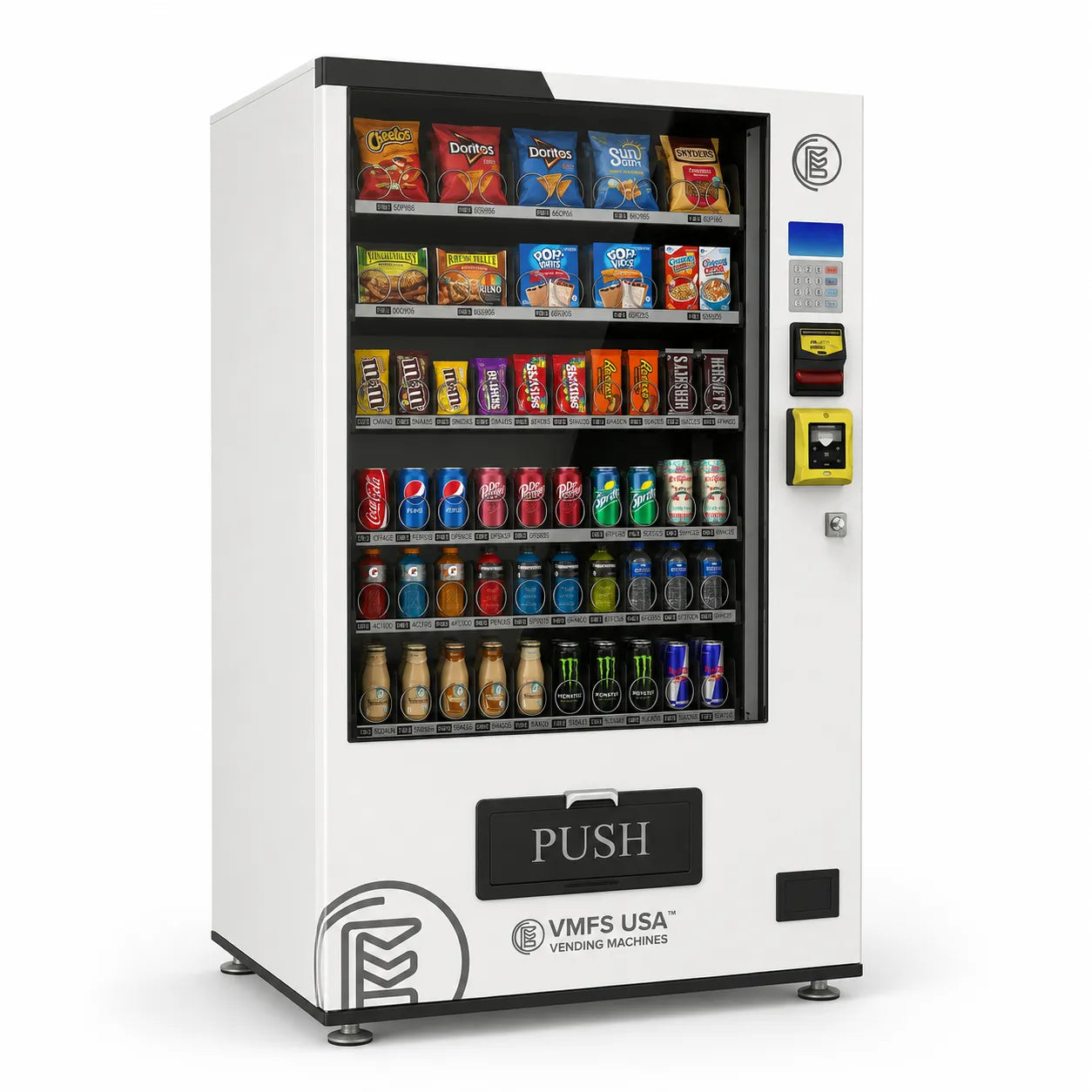
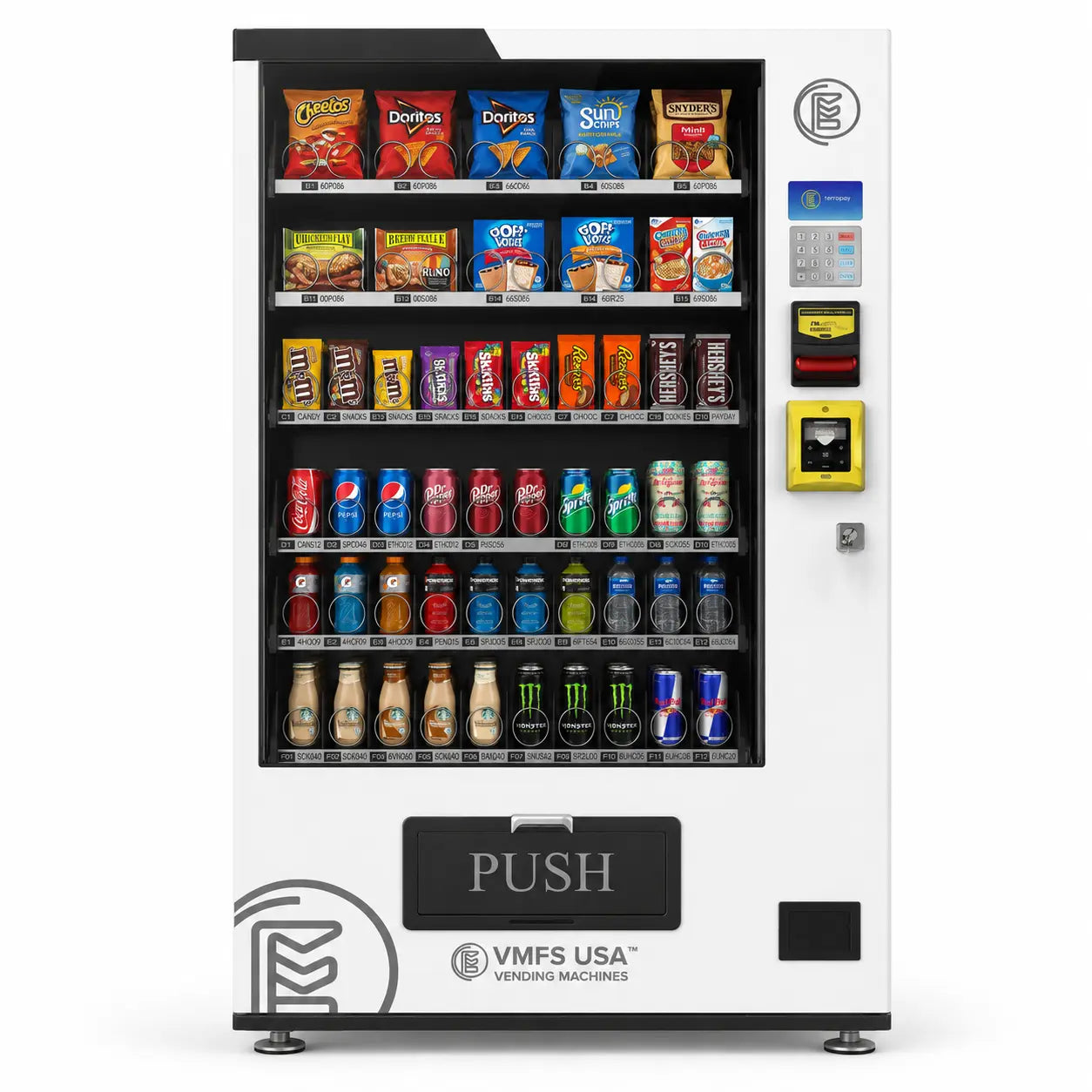
Snack vending machines sell shelf-stable items using basic gravity coils, whereas food vending machines incorporate active refrigeration or heating modules, electronic health locks, and elevator delivery lifters to safely serve fresh meals.
A Limited Liability Company (LLC) is generally recommended because it protects the operator's personal assets from commercial liabilities while providing simplified pass-through taxation.
Under 21 CFR 101.8, operators controlling 20 or more vending machines must display prominent calorie disclosures adjacent to each food item or selection button prior to purchase.
Hot food machines transfer chilled or frozen meals into internal microwave or high-efficiency induction convection ovens via robotic arms, heating the meal to safe serving temperatures within 45 to 90 seconds.
Starting a single-unit food vending operation requires between $8,500 and $20,500, covering commercial hardware, payment readers, initial food inventory stock, health permits, and legal setup fees.
Telemetry uses cellular modems inside vending machines to transmit real-time sales, temperature diagnostics, inventory levels, and mechanical error alerts directly to an operator's management dashboard.


Share:
Japanese Vending Machines: Why They Never Reached America
Pokémon Vending Machine Glitches and Common Issues: Fixes and Refunds