




Design the perfect vending solution for your location and customers.

Join the VMFS newsletter and step into a thriving network dedicated to collective success.
One signup. Endless possibilities.
Trading card vending machines are self-service kiosks that sell sealed card products such as Pokémon booster packs, sports card blasters, hobby boxes and other trading card game (TCG) items around the clock, with payment and delivery handled by the machine instead of a cashier. They have spread quickly because card demand has outrun traditional retail: Circana reported that Pokémon reached $2.5 billion in US sales in 2025, up 87 percent, and the official Pokémon machine network grew from about 200 units in 2024 to 1,871 by May 2026.
This guide covers the market data behind the boom, how official and independent machines differ, which machine types protect collectible product, what to stock and how to price it, worked economics with real VMFS equipment prices, placement, security and the legal basics every US operator should know before buying.
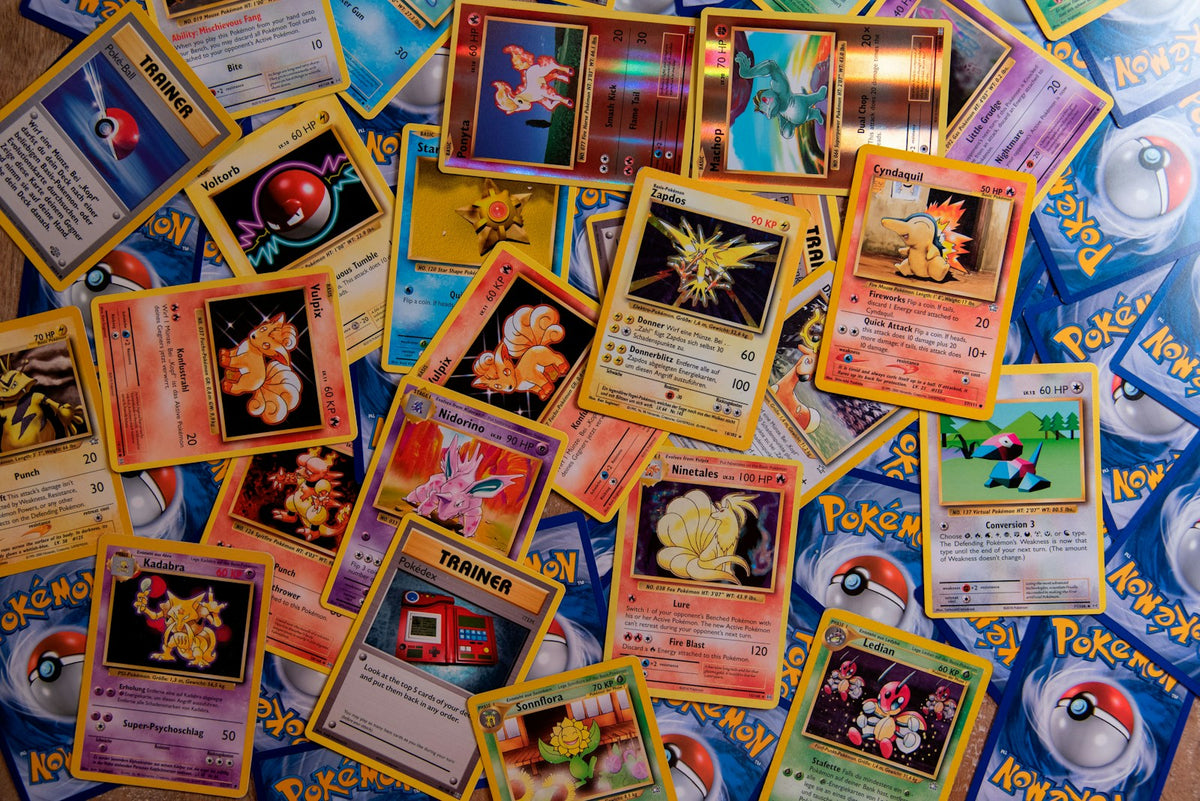
A trading card vending machine is an automated retail unit built to sell collectible card products instead of snacks or drinks. The customer picks an item on a keypad or touchscreen, pays by card, phone or (on some models) cash, and the machine delivers the item to a pickup bay without staff involvement. Typical stock includes Pokémon booster packs and Elite Trainer Boxes, sports card blasters, hanger boxes and hobby boxes, and other TCG lines such as Magic: The Gathering, One Piece and Disney Lorcana.
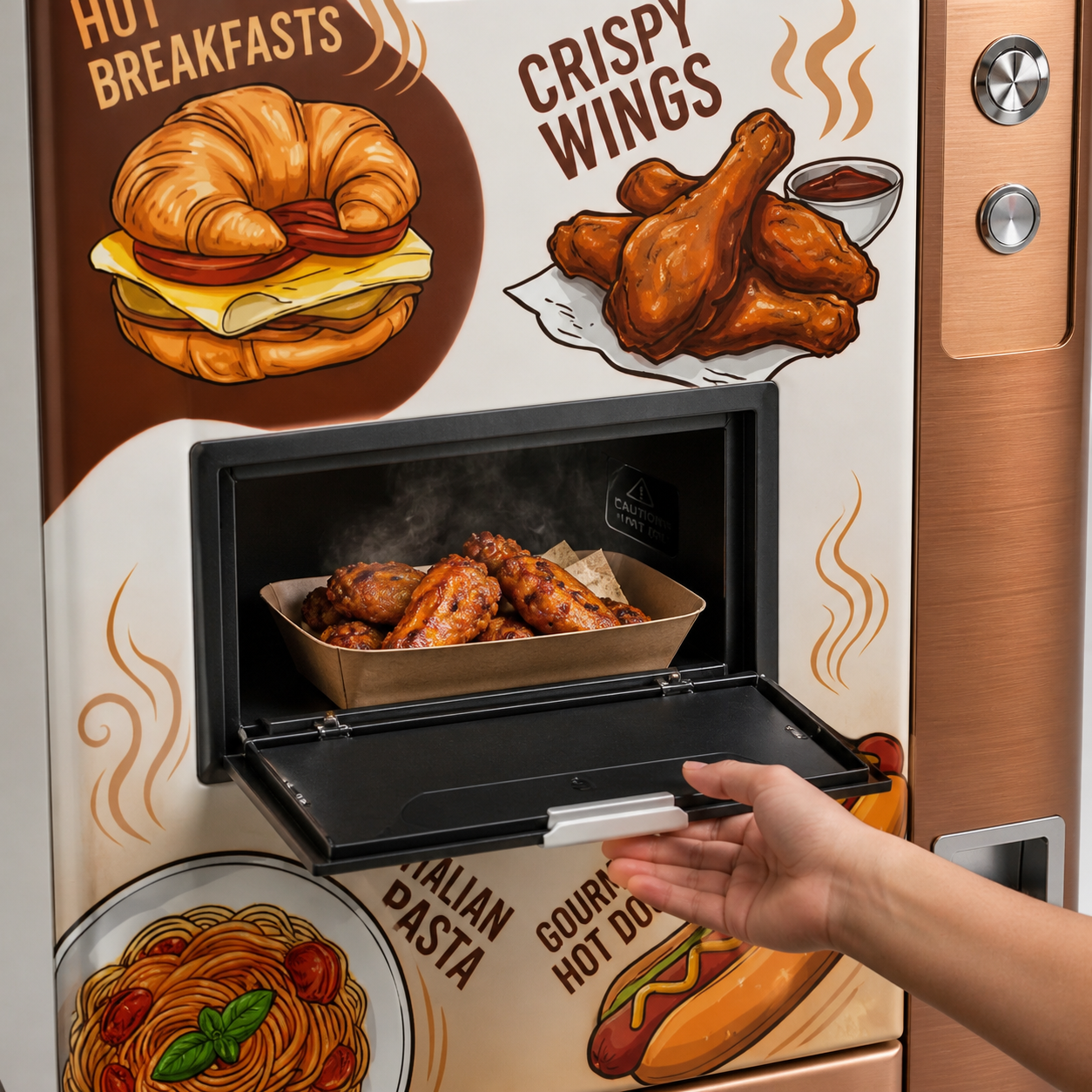
What separates these units from ordinary vending machines is how they treat the product. A snack machine pushes an item off a spiral coil and lets it fall into a bin, which is fine for a bag of chips but not for a sealed pack whose resale value depends on clean corners and an unbent wrapper. Purpose-built card machines use adjustable trays sized to pack and box formats, reinforced cabinets for high-value inventory, and in better designs an elevator or lift that carries each item down to the door instead of dropping it.
The category name covers several machine sizes and formats. A small coil wall unit in a game store, a floor-standing elevator machine in a mall and a large touchscreen kiosk at an airport gate are all trading card vending machines. The common thread is that each one turns a high-demand, theft-prone, quick-selling category into something a location can offer 24 hours a day with no extra labor. For a closer look at the mechanics, see our breakdown of the hardware inside a trading card vending machine.

Trading card vending machines are booming because card sales have grown faster than traditional retail can safely serve them. Strong demand, short supply around new set releases and a rising security burden on staffed stores push sellers toward locked, automated formats that sell around the clock.
The clearest data comes from Circana, the research firm that tracks US toy sales. In its full-year 2025 report, published through The Toy Association in February 2026, Circana said total US toy dollar sales grew 6 percent and that Pokémon generated $2.5 billion in US sales, up 87 percent year over year, the first property in at least 20 years to pass $2 billion in a single year. The Games and Puzzles supercategory rose 37 percent, driven primarily by Pokémon, while Explorative and Other Toys rose 20 percent on continued demand for NFL trading cards.
Trading cards were also the engine of growth earlier in the year. Writing in The Toy Book in September 2025, Circana's Juli Lennett said strategic and non-strategic trading cards together accounted for 70 percent of the toy industry's growth in the first half of 2025, and that a Pokémon Prismatic Evolutions Elite Trainer Box was the No. 2 toy item of that half. For a vending operator, this means demand is broad, not limited to a few hobby shops.
Mainstream retail confirms the trend. Axios reported in August 2025 that Walmart's marketplace trading card sales rose 200 percent between February 2024 and June 2025, with Pokémon card sales growing more than 10 times year over year, and that Target's trading card sales were up nearly 70 percent that year and on track to pass $1 billion. eBay officials said trading card sales had grown for 10 straight quarters. Circana also found that nearly one in five adults reported buying Pokémon cards for themselves.
Supply is expanding to meet that demand. PokeGuardian, citing The Pokémon Company's published TCG figures, reported that roughly 10 billion Pokémon cards were produced in fiscal year 2025/2026, bringing lifetime production to more than 85 billion cards.
$2.5 billion
Pokémon US sales in 2025, up 87% year over year (Circana via The Toy Association).
70% of growth
Share of first-half 2025 toy industry growth that came from trading cards (Circana, The Toy Book).
1,871 machines
Official Pokémon TCG vending machines in 28 states as of May 2026 (PokéBeach count via Wargamer).
10 billion cards
Pokémon cards produced in fiscal 2025/2026; more than 85 billion produced in total (PokeGuardian).
Card products have three traits that suit vending: they are small and non-perishable, they sell on impulse, and they are easy to steal. When Target suspended in-store sales of Pokémon and sports cards in May 2021 after a man was assaulted over trading cards at a Wisconsin store, it showed how much risk a staffed shelf can carry during a frenzy. A locked machine sells the same packs without a line at the counter, without an employee guarding the shelf and without closing at 9 p.m. That combination of high demand and high handling cost is the gap independent card vending has grown into.
The official Pokémon machines are owned and run by The Pokémon Company International (TPCi) and are not for sale, while independent trading card vending machines are bought by operators, card shops and venues that choose their own stock and prices. Both look similar from the front, but they compete for different shoppers and locations.
TPCi's program began as a limited rollout and has scaled quickly. Vending Times described the machines in October 2024 as "designed and operated by The Pokémon Company" and placed in grocery banners such as Fry's, Albertsons, Food 4 Less and Smith's. Wargamer, citing PokéBeach counts, reported about 200 machines in 2024, 1,473 in May 2025 and 1,871 in 28 states by May 2026, a 27 percent rise in a year. The same report noted that 562 machines were added and 207 removed or relocated since May 2025, roughly one in seven, amid complaints about scalpers camping machines around restocks.
Independent machines fill the spaces the official network does not reach. They sit in card shops, malls, arcades, airports, sports venues and entertainment centers, and they can carry sports cards, other TCGs and premium sealed boxes alongside Pokémon packs. Sports Collectors Daily profiled one early operator in 2023, The Fan Stand of Bowling Green, Kentucky, which had machines in eight states and on four Royal Caribbean cruise ships with sales split roughly 50-50 between sports cards and Pokémon. In August 2026 the same outlet reported that CardVault, the Tom Brady-backed card retailer, had launched branded kiosks at Minneapolis-St. Paul airport and at Play Boston. Our guide to how Pokémon vending machines work covers the official network from the collector's side.
| Feature | Official TPCi machine | Independent card machine |
|---|---|---|
| Owner | The Pokémon Company International | Operator, card shop or venue |
| Products | Sealed Pokémon TCG only | Pokémon, sports cards, other TCGs, premium boxes |
| Pricing | Retail (MSRP) | Set by the operator |
| Typical locations | Grocery stores | Card shops, malls, arcades, airports, venues |
| Can you buy one? | No | Yes, from commercial vending suppliers |
Card machine buyers fall into three groups: kids and families buying affordable packs, adult collectors chasing new sets and premium sealed product, and sports fans buying around games and seasons. Each group shops differently, so the right product mix depends on who walks past the machine.
Adults matter more than many new operators expect. Circana's finding that nearly one in five adults bought Pokémon cards for themselves, and its note that products for adult consumers led toy growth in the first half of 2025, both point to buyers with more disposable income who will pay for Elite Trainer Boxes, booster bundles and hobby boxes rather than a single pack. These shoppers compare prices online, follow release calendars and notice when a machine is stocked with the newest set.
Families and younger players drive volume at lower price points. They respond to visible product, simple selection and the fun of opening a pack on the spot, which is why bright displays and clear pricing matter in malls and entertainment centers. Sports card buyers behave differently again: demand follows the NFL, NBA and MLB calendars, rookie classes and big games, so a machine near a stadium or sports bar should lean into whichever league is in season. Collectors who want to know which products hold value can start with our guides to the best trading cards to collect and which trading cards are worth money.
There are three main formats: coil machines that push packs off a spiral, elevator or lift machines that carry each item down to the door, and large touchscreen kiosks that add a full-screen shopping experience. The right choice depends on the value of what you sell and how much restock labor you can tolerate.
Coil machines are the cheapest entry point and work for low-cost single packs, but they drop each item into a bin. To protect packs, many coil-based card machines rely on rigid top-loader cases that the operator fills by hand before every restock. VTM Vending, for example, sells coil wall units with 22mm coils and sells top-loader cases separately, and its own FAQ says large products such as Elite Trainer Boxes and booster boxes will not fit. That casing step is a recurring labor cost that the sticker price does not show.
Elevator machines solve the drop problem mechanically. A lift platform meets the selected tray, receives the item and lowers it to the pickup door, so packs, blisters and sealed boxes arrive intact without a protective case. This is the format most operators choose for mixed inventory that includes higher-value boxes, and it is the design used across the VMFS card lineup. The same lift design is used across VMFS elevator vending machines for other fragile or high-value products.
Touchscreen kiosks pair elevator delivery with a large display where customers browse product images, set names and prices before they buy. The screen helps in high-traffic public spaces where many passers-by are casual buyers, and it can run promotions for new releases. The trade-off is a higher purchase price and, usually, a longer build lead time.

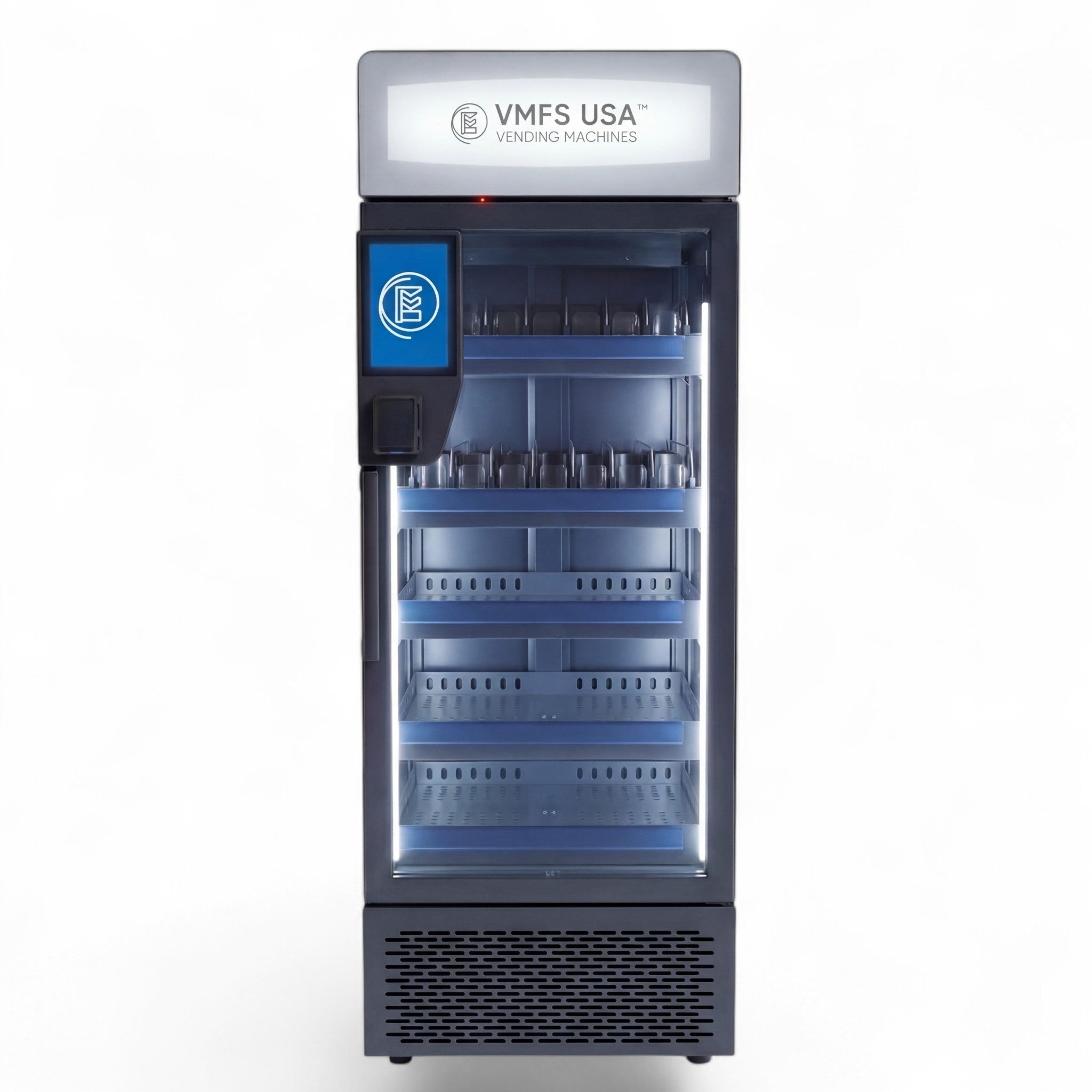
VMFS sells four ready-built card machines and a configurable build. The VMFS Trading Card Vending Machine is the core floor-standing unit, the PRO XL Trading Card Vending Machine adds capacity for busy floors, the sports card vending machine is configured for Panini box formats, and the TCG Vending Machine adds a 55-inch touchscreen. Operators who want a specific slot layout can start from the custom trading card vending build, listed from $3,800. Prices below are current list prices on vmfsusa.com.
| Model | Price | Capacity | Delivery | Best for |
|---|---|---|---|---|
| Trading Card Vending Machine | $9,395 | Up to 600 products; up to 8 trays, 7 channels each | Soft-drop elevator, sensor-confirmed vends | Card shops, malls, game stores |
| PRO XL Trading Card Vending Machine | $10,995 | 300 to 800 items; up to 8 trays, 9 channels each | Elevator, photocell vend assurance | High-volume floors, conventions |
| Panini Sports Card Vending Machine | $9,395 | Up to 600 products; about 56 slots | Soft-drop elevator, sensor-guided | Sports venues, sports card shops |
| TCG Vending Machine | $13,275 | About 650 items | Elevator, 55-inch touchscreen | Airports, malls, entertainment centers |
| Build Your Trading Card Vending Machine | From $3,800 | Configured to order | Configured to order | Custom slot layouts |
Elevator delivery: advantages
Elevator delivery: limitations
The core Trading Card Vending Machine measures 31.5 inches wide, 37.8 inches deep and 72.2 inches high, so confirm the doorway and floor space before you sign a placement. On the VMFS product pages, the credit card reader and coin and bill acceptor are listed as upgrades, so price the machine with the payment hardware you actually need.
See the VMFS Trading Card Vending Machine
Elevator delivery, adjustable trays for packs and sealed boxes, and up to 600 products in one locked cabinet.
View the machineStock what is new, recognizable and fairly priced for the location: the current Pokémon set at several price points, the sports line that is in season, and one or two other TCGs your local players follow. Then price each item from its landed cost with a consistent formula so margins stay predictable as wholesale prices move.
A good card machine offers something at every budget. Single booster packs and blister packs bring in impulse buyers; booster bundles, tins and sports blasters serve the mid-range; Elite Trainer Boxes and hobby boxes give adult collectors a reason to come back. Elevator machines make this ladder possible because large sealed boxes vend as safely as single packs. Rotate older sets out as new ones release, because the newest set usually draws the most attention, and keep a slot or two for whichever product sold out fastest last cycle.
The Fan Stand's roughly even split between sports cards and Pokémon is a reminder that the right mix is local. A machine in a sports bar or near an arena should carry more NFL, NBA or MLB product in season, while a mall or arcade usually leans Pokémon and anime TCGs. Use sales data rather than guesses: after a few restock cycles, slot-level reports show which items to expand and which to drop.
Buy from authorized distributors or reputable wholesale sellers and keep invoices. Counterfeit or resealed packs destroy a machine's reputation quickly and create legal exposure. VMFS sells factory-sealed Pokémon booster boxes and bundles from its Miami warehouse with case pricing for operators, which keeps sourcing and equipment under one supplier.
Many independent operators price above MSRP to cover convenience, card fees and commission. VTM Vending publishes one example formula for its operators: for packs under $35 wholesale, multiply cost by 1.25 and add $5; for $35 and up, multiply by 1.15 and add $5; then round up to the nearest $0.50. VTM also reports that its network vended more than 4,000 Pokémon booster packs in May 2026 at an average price just over $19. Whatever formula you use, apply it consistently and check it against local card shop and big-box prices so the machine reads as fair rather than gouging.
Restock tip: Load new releases the day you receive them and track sell-through by slot. A card machine that sits half empty during a hot release loses more revenue than any pricing tweak can recover.
A trading card vending machine makes whatever its per-pack margin times its daily sales comes to, minus card fees, commission and fixed software costs. There is no reliable industry average to quote, so the honest way to judge one is to run the numbers with your own product costs and a realistic sales rate for the location.
The table below uses one set of example inputs, not reported results. It assumes a pack bought at $10 wholesale and priced at $17.50 with the formula above, a card processing fee of about 5.95 percent (the flat-rate option in the comparison table on the VMFS payment system page), a 10 percent location commission, a reader service fee of $18.95 a month (the top of the $7.95 to $18.95 range VMFS lists) and VMFS Cloud Basic at $7.99 a month. That leaves about $4.71 per pack after fees and commission. Equipment cost is the $9,395 Trading Card Vending Machine plus its $550 card reader upgrade.
| Packs sold per day | Packs per month | Gross sales | Monthly contribution after fees, commission and software | Months to recover $9,945 |
|---|---|---|---|---|
| 5 | 150 | $2,625 | About $679 | About 14.6 |
| 10 | 300 | $5,250 | About $1,386 | About 7.2 |
| 20 | 600 | $10,500 | About $2,798 | About 3.6 |
Three things move these numbers more than anything else. The first is sales rate, which depends almost entirely on placement and on staying stocked during new releases. The second is product cost: sealed products bought at inflated secondary-market prices shrink the margin, which is why sourcing near distributor pricing matters. The third is commission, which NerdWallet puts at 5 percent to 25 percent of revenue for vending placements in general. The example also leaves out sales tax, delivery, restock labor, insurance, shrink and financing costs, so build those into your own model with the VMFS ROI calculator.
Compared with snack vending, card machines sell fewer items at much higher tickets. Cantaloupe's 2026 micropayment report puts the average cashless vending ticket at $2.45 in 2025; a single card pack is several times that, so a card machine can produce meaningful revenue on a handful of sales a day. For the broader profit picture across machine types, read are vending machines profitable, and for Pokémon-specific pricing, ROI modeling and launch timelines see the Pokémon card vending machine operator guide. If you prefer to spread the equipment cost, VMFS offers vending machine financing.
The best locations combine steady foot traffic, people who linger, and an audience that already buys cards: malls, card and game shops, arcades and family entertainment centers, airports, sports venues, campuses and conventions. A card machine in the wrong spot sells little no matter how well it is stocked.
Card and game shops use machines to keep selling after closing time and to free staff from the counter during busy launches. Malls and outlet centers offer heavy traffic and families with time to browse; The Fan Stand called malls its flagship locations and cited partnerships with Simon and Tanger Outlets. Airports deliver long dwell times and travelers looking for something to do, which is why CardVault placed one of its first kiosks at an airport gate. Arcades, bowling alleys, trampoline parks and family entertainment centers bring the right age mix, and sports bars or venues near stadiums suit sports card product.
When you approach a property, bring a clear proposal: the machine you plan to place, its footprint and power needs, the products you will sell, how often you will restock and the commission you offer. Our guide on how to find vending machine locations walks through scouting and pitching, and vending machine commission rates explains how revenue is usually split. VPlaced also maintains a list of high-performing placements for Pokémon vending machines, and property owners who want a machine can request one through VMFS location matching.
| Location type | Why it works | Product lean |
|---|---|---|
| Card and game shops | Existing collector traffic; sells after hours | Full ladder incl. hobby boxes |
| Malls and outlet centers | High traffic, families, browsing time | Pokémon packs, bundles, ETBs |
| Airports and transit hubs | Long dwell time, impulse buying | Packs and gift-friendly boxes |
| Arcades and entertainment centers | Right age mix, repeat visits | Pokémon and anime TCGs |
| Sports bars and venues | Fans around games and seasons | In-season NFL, NBA, MLB product |
Trading card machines need stronger security than most vending because the inventory is valuable and easy to resell, and operators also need to stay on the right side of trademark, permit and sales tax rules. None of this is complicated, but it should be settled before the machine goes live.
Choose a reinforced steel cabinet with an anti-vandal or multi-point lock; the PRO XL, for example, uses a 3-point lock. Place the machine in a lit, supervised area, ideally within sight of staff or cameras. Sensor-confirmed vending matters too: when the machine verifies each delivery, a failed vend does not turn into a lost sale or a chargeback argument. Our vending machine security guide covers placement, locks and monitoring in more detail.
Sell only factory-sealed product from verified sources, and never vend opened or resealed packs. VAdviced notes that sourcing through verified channels is the most direct way to avoid counterfeit exposure, and that selling counterfeit product can create trademark and copyright liability under federal law. Read its overview of the legal requirements for selling Pokémon cards in a vending machine before launch.
You can truthfully describe the genuine products you sell, but putting the official Pokémon logo or character art on a machine wrap requires a license. VAdviced explains why the Pokémon logo can't be used on a TCG vending machine without permission and suggests neutral wording such as "Trading Card Vending." Never imply that an independent machine is official or endorsed.
Vended goods are generally taxable, and many cities and counties require a business license or a per-machine permit or decal. Requirements vary by state and locality, so check them before placement; our guide to vending machine permits covers the common US rules and costs.
Day-to-day, a trading card vending business comes down to three systems: cashless payments that make high-ticket purchases easy, remote monitoring that tells you what sold and what is empty, and a restock routine built around release dates. Get these right and one operator can run several machines without being on site.
Payments should be cashless first. Cantaloupe reported that 78 percent of vending sales were cashless in 2025, up from 73 percent, and that contactless payments made up 85 percent of cashless sales. Card products, with tickets far above a snack, depend even more on tap-to-pay and mobile wallets. The VMFS card machines accept credit, debit, contactless, Apple Pay and Google Pay, with coins and bills available on the models that list a coin and bill acceptor.
Telemetry turns restocking from guesswork into a schedule. VMFS Cloud works with every VMFS machine; plans start at $7.99 per machine per month (Basic $7.99, Advertising $16 with remote pricing, AI Cloud $39.99). Basic covers live slot stock, real-time sales with margin and low-stock and fault alerts, so you can see which set is selling out before you drive to the site. On touchscreen models, the Advertising plan adds screen ads for new-release promotions.
Plan restocks around the release calendar rather than a fixed day of the week. Load new sets as soon as they arrive, increase visit frequency in the first weeks after a launch, then settle back to a routine once sell-through slows. Our Pokémon vending machine restock schedule lays out an operator's playbook. Every VMFS machine carries a 1-year parts warranty, and keeping trays clean and calibrated is the best way to avoid vend failures between visits.
Operator checklist: before launch, confirm the location agreement and commission in writing, register for any local vending permit, set up sales tax collection, connect the machine to telemetry, and load a first fill that covers every price tier.
The outlook for trading cards and card vending is strong but not risk-free: demand and production are at record levels, official and independent machine networks are still growing, and the main risks are hype cycles, supply swings and price volatility on individual sets.
Growth signals are clear. Pokémon's US sales nearly doubled in 2025 according to Circana, card production keeps climbing, and new entrants such as CardVault's kiosks show that established card retailers now see automated retail as a channel worth building. The official TPCi network's 27 percent growth to 1,871 machines confirms that the format works for sealed product, while its removals and relocations show that placement quality still decides which machines survive.
The risks are worth planning for. Card demand can cool after a hot set, wholesale prices can spike or fall, and scalpers can drain a poorly managed machine within minutes of a restock. Operators protect themselves by carrying several product lines rather than one set, pricing from cost instead of from secondary-market hype, setting purchase limits where the machine supports them, and using sales data to cut slow items early.
Find a location for your card machine
Tell us about your area and the machine you plan to run, and the VMFS team will help match it to a site with the right traffic.
Start location matching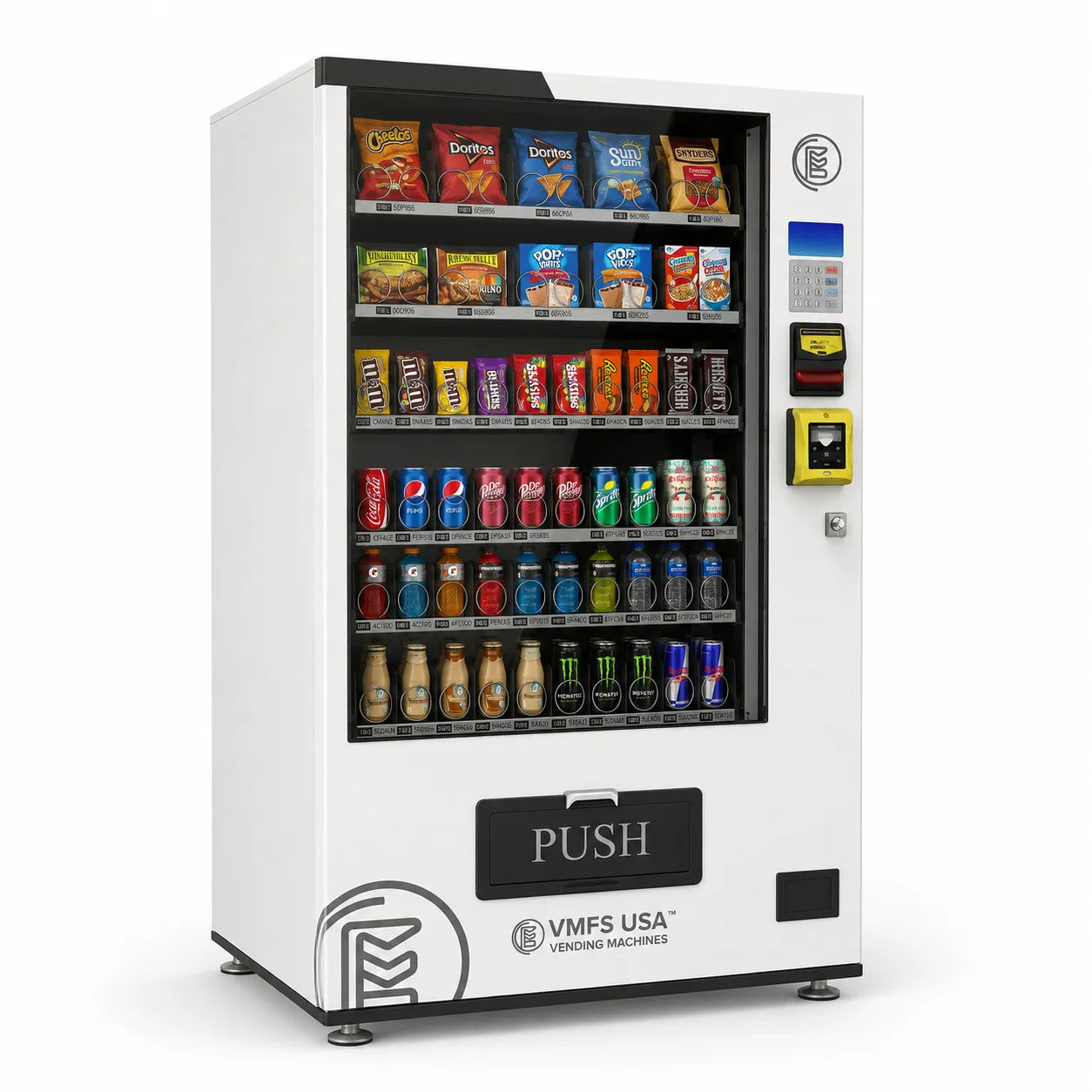
Share:
Types of Vending Machines - Choose the Right Product & Location
Guide to Vending Machine Warehouses for Buyers and Operators