


Complete Vending Business Launching Plan
Starting an AI vending machine business means placing internet-connected, camera-equipped machines in high-traffic locations, stocking them with a data-informed product mix, and using cloud software to manage inventory, pricing, and payments remotely. Independent operators typically launch a single unit for $3,950 to $16,880 in hardware cost, plus $600 to $2,000 in setup expenses, and reach break-even within 8 to 18 months when the location is chosen correctly. This guide walks through every decision point — machine type, true cost, location strategy, financing, and operations — so the first machine you buy is a profitable one, not an expensive lesson.
Table of Contents
- What Is an AI Vending Machine Business?
- Why Start One in 2026
- Choosing Your AI Vending Machine Type
- The Real Cost of Starting
- Step-by-Step: How to Start
- Finding a Profitable Location
- Financing Your First Machine
- AI vs Traditional Vending: Pros and Cons
- ROI and Break-Even Timeline
- Scaling to Multiple Machines
- Mistakes That Sink New Operators
- Frequently Asked Questions
What Is an AI Vending Machine Business?
Definition and Core Mechanics
An AI vending machine business is a retail operation built around unattended, sensor-equipped machines that use computer vision and cloud software instead of coin mechanisms and spirals. A shopper opens the door or scans in, picks up any item, and walks out; cameras and weight sensors identify exactly what was taken and charge the linked payment method automatically. Because there is no coil to size a product for, these machines sell almost anything that fits on a shelf — fresh meals, electronics, cosmetics, or beverages — which is why average transaction values run several times higher than a coin-based machine. For a deeper technical breakdown of the vision and sensor stack, see what an AI vending machine actually is and how the recognition and checkout process works.
Why This Differs From Traditional Vending
Traditional vending profits from volume and low overhead; AI vending profits from data and higher-ticket sales. The cloud dashboard shows real-time stock levels, sales velocity by SKU, and remote error alerts, so operators visit only the machines that actually need restocking. That single shift — from scheduled visits to data-triggered visits — cuts fuel and labor time by roughly 30% for operators running multiple units, according to manufacturer field data.
Compare every AI vending machine format side by side before you buy.
Shop AI Grab-and-Go MachinesWhy Start an AI Vending Machine Business in 2026
Market Growth Backing the Timing
The global intelligent vending machine market is valued at $17.7 billion in 2026 and is forecast to reach $53.2 billion by 2036, driven by operators replacing coin-based equipment with AI machines that sell more per transaction and require less manual oversight. That growth curve matters for a new entrant because it signals expanding location demand, not a saturated category. Property owners increasingly request AI units specifically because of the sustainability and space-efficiency angle covered in this piece on AI vending's role in smart cities and sustainability.
Consumer Payment Behavior Has Shifted
Roughly 84% of vending transactions in 2026 are cashless. A cash-only machine forfeits an estimated 30% to 40% of potential revenue because it excludes the majority of buyers who no longer carry cash. Every commercial-grade AI unit ships with cashless payment integration built into the purchase price, which removes a cost and setup step that traditional operators still have to solve separately.
| Market Factor | 2026 Data Point |
|---|---|
| Global smart vending market size | $17.7B, forecast $53.2B by 2036 |
| Cashless transaction share | ~84% of all vending sales |
| Cost reduction from smart tech | 20–30% via better restocking efficiency |
| Typical break-even window | 8–18 months with a strong location |
Choosing Your AI Vending Machine Type
Matching Machine Format to Product Category
Machine format determines which products you can sell, which in turn determines your margin. A smart cooler holds beverages and grab-and-go snacks; a smart fridge extends into fresh meals and perishables with tighter temperature control; a frozen food unit unlocks the highest average ticket but carries the highest hardware cost. Choosing the wrong format for your intended product mix is the single most common reason a new operator underperforms in month one. A full walkthrough of every format lives in the complete AI vending machine buyer's guide for 2026.
| Machine Type | Best For | Typical Price |
|---|---|---|
| AI Smart Combo | Snacks + drinks, offices, gyms | $3,950+ |
| AI Smart Cooler | Beverages, grab-and-go, retail | $5,950+ |
| Smart Fridge | Fresh meals, produce, hospitals | $7,940+ |
| Premium Frozen Food Unit | Meal prep, high-density retail | Up to $16,880 |
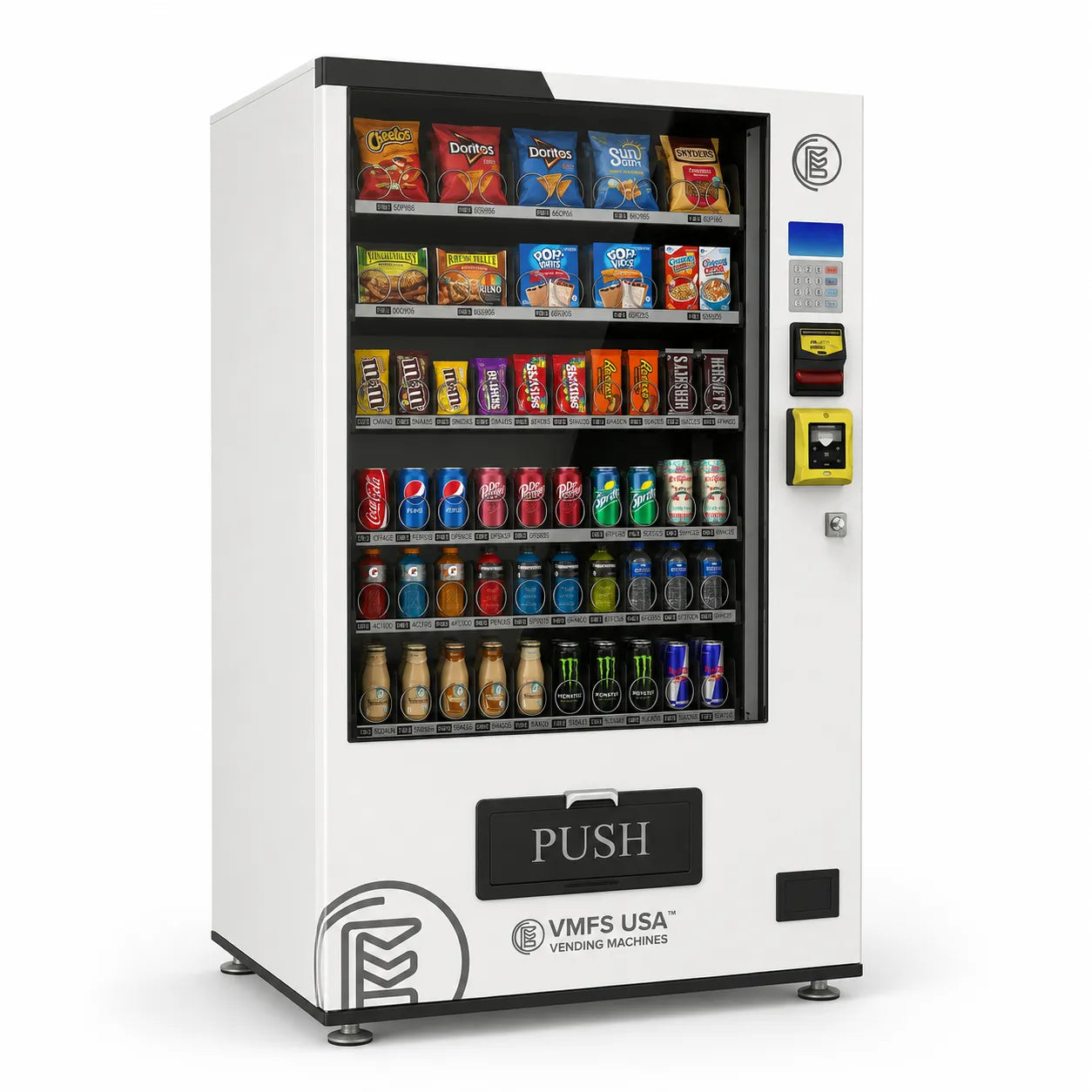
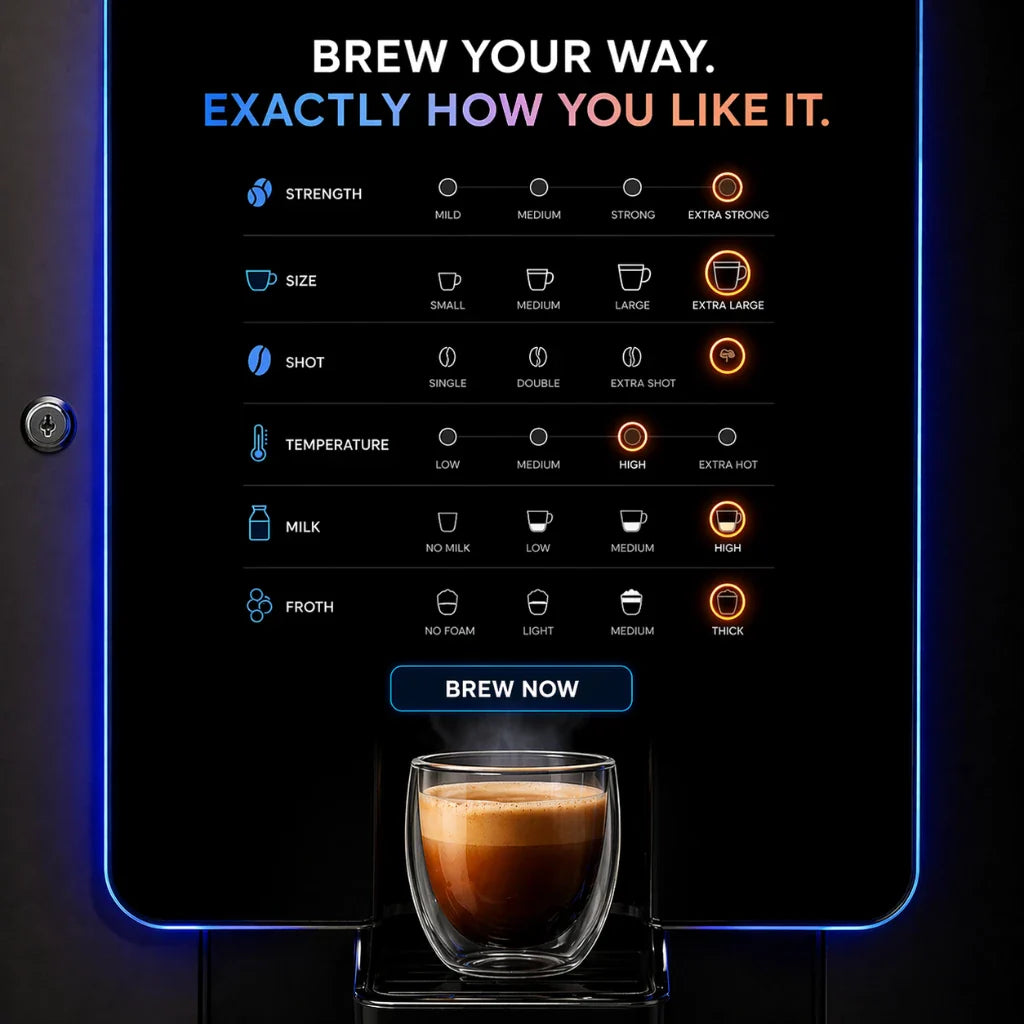
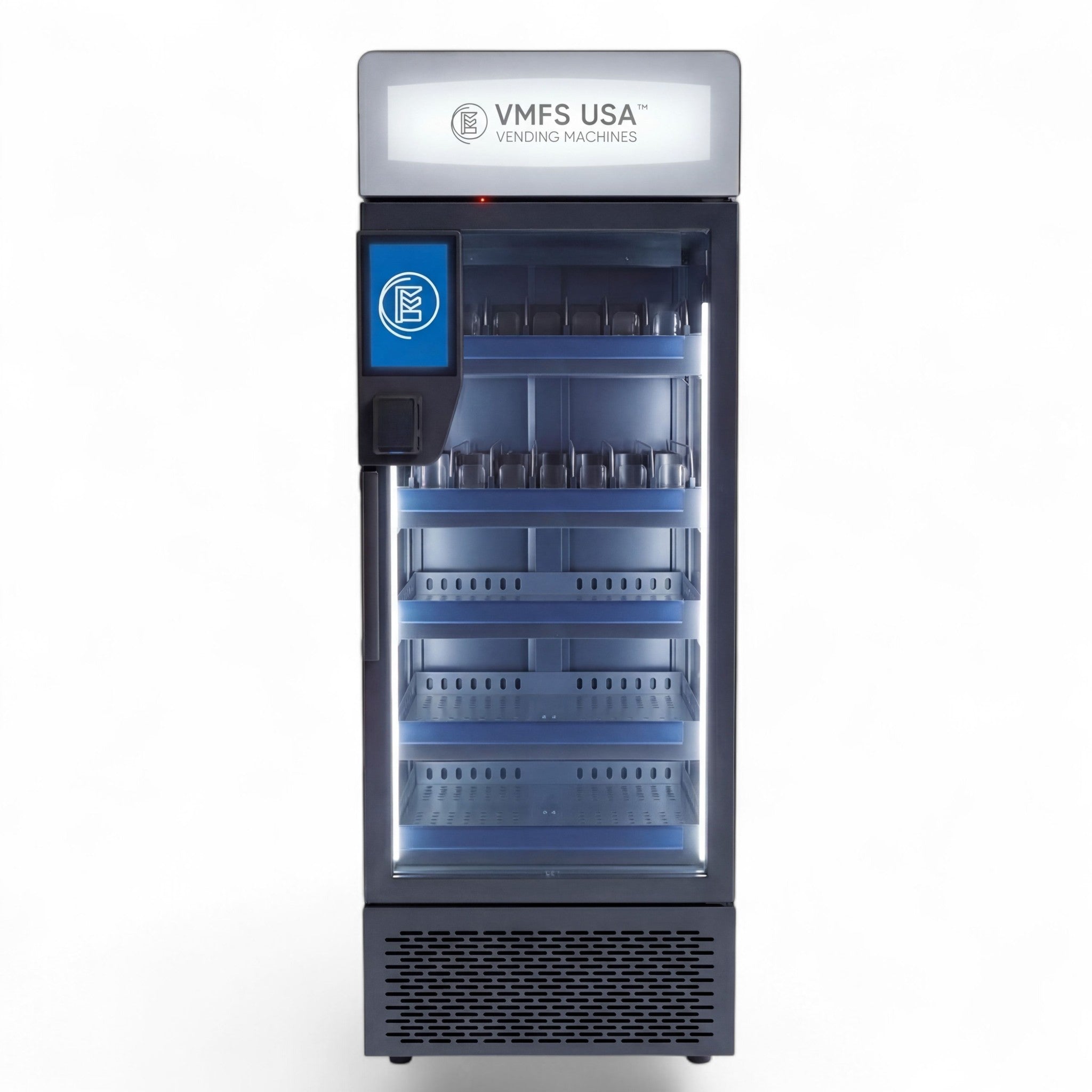
Browse three of the most common starter configurations directly: the AI Smart Cooler Vending Machine, the AI Smart Cooler Combo Vending Machine, and the Smart Fridge Vending Machine. Operators focused on beverage-first locations such as offices and waiting rooms should also review the coffee vending machine collection, since specialty coffee consistently posts 35% to 50% margins.
The Real Cost of Starting an AI Vending Machine Business
Hardware Is the Starting Point, Not the Full Budget
Operators who calculate hardware price alone consistently underestimate their real break-even timeline. Beyond the machine, launch costs include initial inventory ($400–$800), business license and seller's permit ($50–$300 annually), a health permit if selling food or beverages ($100–$500 annually), and optional branding wraps ($200–$600). A full category-by-category breakdown is available in this dedicated AI vending machine cost guide, and a side-by-side comparison of buying a pre-made unit versus a custom build is covered in pre-made vs. custom build payback analysis.
Recurring Monthly Costs to Budget For
Location commission typically runs 10% to 20% of gross sales or a flat monthly fee. Electricity and data connectivity stay under $50 per month for most AI units. General liability insurance runs $35 to $70 per month depending on location type and product category. Card processing fees also differ from standard retail rates because of the unattended, high-frequency transaction pattern — the mechanics are explained in how card processing works for AI vending machines.
| Cost Category | Range | Frequency |
|---|---|---|
| Machine hardware | $3,950–$16,880 | One-time |
| Initial inventory | $400–$800 | One-time |
| Business license/permit | $50–$300 | Annual |
| Insurance | $35–$70 | Monthly |
| Electricity/connectivity | Under $50 | Monthly |
| Location commission | 10–20% of gross sales | Ongoing |
Step-by-Step: How to Start an AI Vending Machine Business
1. Secure the Location Before the Machine
Almost every first-time operator buys the machine first. Reverse the order: confirm a signed location agreement, then purchase a machine sized to that location's foot traffic and product demand.
2. Register the Business
File an LLC ($40–$500 depending on state), obtain a free EIN from the IRS, open a business checking account, and apply for a state seller's permit. Vending sales are taxable in nearly every state, so this step protects against compounding back-tax bills later.
3. Choose the Right Machine for the Location's Demand
Match machine format to what the location's population actually buys — beverages and snacks for office breakrooms, fresh meals for hospitals and manufacturing sites, coffee for waiting areas. Because the machine sells almost anything shelf-sized, the product decision should come from foot-traffic data, not personal preference.
4. Install, Stock, and Connect the Cloud Dashboard
Once installed, the cloud platform tracks real-time inventory by SKU and flags restocking needs before the shelf goes empty, replacing the fixed weekly-visit model traditional operators rely on.
5. Optimize Using Sales Data, Not Guesswork
Adjust the product mix every 30 days for the first 90 days based on what the dashboard shows actually sells. This single habit is what separates a machine earning $75 a month from one earning $750.
Ready to see real machine pricing and specs?
Browse AI Vending MachinesFinding a Profitable Location
Location Determines 90% of Outcome
A state-of-the-art machine in an empty hallway underperforms a basic machine in a busy breakroom. The investment performs best when the placement point sees genuine returning foot traffic of at least 50 to 80 daily visitors, because repeat exposure — not one-time passersby — drives the transaction volume that justifies the hardware cost. Data-backed placement scoring is broken down in how to evaluate AI vending machine location data, and a worked example is available in this location case study.
High-Performing Location Categories
Manufacturing sites and warehouses with shift workers offer 24/7 demand and a captive audience with no nearby alternatives. Gyms, particularly 24-hour facilities, support sports drinks and protein bars with strong margins and real late-night demand. Apartment complexes with 200-plus units provide a captive resident base with low turnover, and property managers rarely negotiate aggressive commissions since the machine functions as a resident amenity. Auto repair waiting areas and laundromats add long, low-competition dwell time that consistently converts.
Financing Your First Machine
Cash vs. Financed Entry
Most operators start with personal savings to purchase one to three machines because it lets them validate a location's economics before committing more capital. Equipment financing exists for AI vending hardware, but interest rates often run 8% to 15% because the equipment is specialized; buying used for cash frequently beats financing new at those rates for a first unit. Lease-to-own structures are also common, letting operators access higher-end equipment for a fixed monthly payment with a buyout option at term end.
Reinvestment as a Scaling Strategy
Once a first machine is validated, revenue reinvestment becomes the most capital-efficient way to add units, because each profitable machine funds the next purchase without new debt or dilution.
AI Vending vs. Traditional Vending: Pros and Cons
Where AI Machines Win
AI machines increase profit margins by 20% to 30% through reduced downtime, cashless adoption, and real-time inventory visibility, and they support a far wider product range since nothing has to fit a coil. A full head-to-head is available in traditional vs. AI vending machines and whether the AI upgrade is worth it for your situation.
Pros of AI Vending
Higher average transaction value, near-zero mechanical failure points, real-time inventory data, remote dynamic pricing, faster restocking decisions, and broader product category flexibility.
Cons of AI Vending
Higher upfront hardware cost, per-transaction AI recognition fees, dependence on stable internet connectivity, and a steeper learning curve for first-time operators managing cloud software.
ROI and Break-Even Timeline
Typical Payback Period
Most operators reach break-even within 12 to 18 months, with net profit margins of roughly 40% to 45% after all expenses, because higher-ticket items like fresh meals and electronics push average transaction value to three or four times that of a traditional machine. High-traffic placements can shorten this to 8 to 12 months. A full ROI model with worked calculations is available in the AI vending machine ROI guide, and the mechanics behind how AI recommendation engines lift per-visit spend are covered in how AI-powered vending machines optimize sales.
What Actually Moves the Payback Date
Break-even accelerates when three conditions hold together: consistent foot traffic of 50-plus daily visitors, restocking timed to real sales velocity rather than a fixed calendar, and a product mix built from that location's actual transaction data rather than operator assumption.
Scaling to Multiple Machines
The Math Behind Reaching $100K a Year
Most operators need 15 to 30 machines averaging $300 to $600 net profit per unit per month to clear $100,000 in annual net profit; with premium locations or specialty machines such as fresh food or smart coolers, some operators reach that figure with 8 to 12 units. A single person can realistically manage a fleet of 20 to 30 machines using remote monitoring alone, without a warehouse or dedicated crew, because the cloud dashboard eliminates blind restocking trips.
Real-World Reference Point
One documented micro-market built on a single AI-style unit closed a month at over $22,000 in revenue, illustrating the ceiling a strong location and product mix can reach — though outcomes vary widely and this figure is illustrative rather than typical.
Mistakes That Sink New Operators
Buying Before Confirming a Location
Purchasing hardware before a location agreement is signed is the most common first-year error, because machine sizing and product category should be driven by the specific site, not decided in the abstract.
Skipping Cashless Payment
A cash-only machine forfeits 30% to 40% of potential revenue in a market where 84% of transactions are cashless.
Ignoring Sales Tax Obligations
Vending sales are taxable in nearly every state; skipping the seller's permit step causes back-tax bills that compound quickly once volume grows.
For a broader look at how AI vending fits into the wider smart-retail shift and what changed operators have already learned from early deployments, see this AI vending machine experiment on how smart retail is changing.
Buy Yourself an Ai Vending Machine Today!
Shop Ai Vending MachinesFrequently Asked Questions
How much does it cost to start an AI vending machine business?
Independent operators typically spend $3,950 to $16,880 on hardware, plus $600 to $2,000 on inventory, permits, and insurance, for a realistic launch budget of $5,000 to $18,000 for one machine.
Is an AI vending machine business profitable?
Yes, when placed in a high-traffic location with a data-driven product mix. Operators commonly see net profit margins of 40% to 45% and monthly net income between $200 and $1,500+ per machine depending on foot traffic.
How long does it take to break even on an AI vending machine?
Most operators break even within 12 to 18 months. High-traffic placements with strong product-market fit can break even in as little as 8 to 12 months.
Do I need a business license to run a vending machine?
Yes. You need a registered business entity, an EIN, and a state seller's permit, since vending sales are taxable in nearly every state. A health permit is required if selling food or beverages.
What is the best location for an AI vending machine?
Manufacturing sites, 24-hour gyms, large apartment complexes, and auto repair waiting areas perform best because they combine consistent daily traffic with limited nearby food or drink alternatives.
How many AI vending machines do I need to earn $100,000 a year?
Most operators need 15 to 30 machines averaging $300 to $600 in monthly net profit each. Premium locations or specialty formats like fresh food or smart coolers can reach that figure with as few as 8 to 12 units.
Can I finance an AI vending machine instead of paying cash?
Yes. Equipment financing and lease-to-own programs are available, though interest rates typically run 8% to 15%. Many operators start with cash for their first unit and reinvest profit to finance expansion.
Are AI vending machines better than traditional vending machines?
For most new operators, yes. AI machines increase margins by 20% to 30% through cashless payments, reduced downtime, and real-time inventory data, though they require a higher upfront hardware investment.
What products sell best in an AI vending machine?
Healthy snacks, premium beverages, specialty coffee, and fresh grab-and-go meals typically deliver the highest margins, with protein bars and sports drinks performing especially well in gym locations.
How does card processing work for AI vending machines?
AI machines process nearly every transaction as unattended, high-frequency, card-present payments, which carry different processing rates than standard retail. Budgeting 2.5% to 3% per transaction is a reasonable starting estimate.

Share:
AI Vending Machine Locations: How to Find and Qualify Sites
AI Vending Machine Profit Margins by Product Type - Detailed Guide For Operators