


Yes, ice cream vending machines can be profitable, but only when steady sales cover a fixed monthly cost stack and a machine price that starts at $8,990 at VMFS. In our labelled worked example, a $9,950 Frozen Ice Cream Vending Machine with a $450 card reader breaks even at about 6 sales a day once your restocking time is counted, and pays for itself in about 17 months at 20 sales a day.
This guide shows that math line by line: wholesale cost per bar, card fees, location commission, electricity, software and route time. It then covers seasonality, the best locations, food-safety rules and ice vending, so you can rerun the numbers for your own site.
Are Ice Cream Vending Machines Profitable? The Short Answer
Ice cream vending machines are profitable when a placement sells enough units, at a high enough price, to clear wholesale cost, card fees, location commission and fixed monthly costs, and then recover the machine price within a payback period you can live with. The product itself carries a healthy markup; the risk sits in volume, seasonality and cold-chain discipline.
Three things push ice cream ahead of many categories. First, the ticket is high: a frozen novelty priced at $3 to $4 sits well above the $2.01 average vending transaction that Cantaloupe reported for 2025. Second, impulse demand is strong where people linger, such as family entertainment centers, malls and hotels. Third, freezer machines with elevator delivery lower frozen items gently to the pickup area instead of dropping them, and remote temperature alerts flag a fault before a whole load is lost.
Three things work against it. Freezer machines cost more than a standard snack or combo vending machine, so payback takes longer. Demand swings with the weather. And a temperature failure can wipe out a full load of inventory, which is why monitoring is not optional. The rest of this guide puts numbers on each of those trade-offs instead of quoting a margin percentage with nothing behind it. If you want the category-wide picture first, our guide to whether vending machines are profitable covers snack, drink and combo economics.
High ticket
Packaged novelties at $3 to $4 earn more per transaction than the average vend, so each sale does more work.
Higher machine cost
Active VMFS ice cream machines run from $8,990 to $19,950, so you need steady volume to recover the outlay.
Seasonal demand
U.S. ice cream production peaks in summer and bottoms in winter, and vending sales tend to follow that curve.
Cold-chain risk
Freezer faults ruin stock fast; temperature alerts and auto shut-off protect both product and customers.
How Much Profit Does One Ice Cream Sale Make?
In our worked example, one ice cream sale contributes between $1.34 and $1.60 after wholesale cost, card processing and a 10% location commission. That contribution, not the shelf price, is the number that pays for the machine, the electricity and your time.
We built the example from two real wholesale listings on WebstaurantStore. A value bar, the Blue Ribbon Orange Dream bar, lists at $43.99 for a case of 48, or $0.92 each. A branded bar, the Snickers Ice Cream Bar, lists at $96.99 for a case of 48, or $2.02 each. Prices change and local distributors may beat them, but they are realistic starting points for a new operator buying in case quantities.
The vend prices of $3.00 and $4.00 are example settings, not market averages; you set your own price per selection in the machine or in VMFS Cloud. Card processing uses the ~5.95% flat rate shown on the VMFS payment system page, which comes within a few cents of the alternative ~2.5% + $0.10 rate at these price points. The 10% commission sits inside the 5% to 25% range NerdWallet gives for location revenue shares.
| Worked example: per sale | Value bar | Branded bar |
|---|---|---|
| Wholesale cost (WebstaurantStore case of 48) | $0.92 | $2.02 |
| Example vend price | $3.00 | $4.00 |
| Card processing at ~5.95% | $0.18 | $0.24 |
| Location commission at 10% of gross | $0.30 | $0.40 |
| Contribution per sale | $1.60 | $1.34 |
| Contribution as a share of price | 53% | 34% |
The surprise in that table is that the cheaper bar earns more per sale. Branded novelties cost more than twice as much wholesale, and a $1 higher vend price does not fully close the gap. Branded items still earn their slots, because recognizable products sell faster and justify the premium in placements like hotels and theme venues, but a menu built only on premium brands will show a thinner margin than many online guides promise. A balanced planogram, with a few value bars, a few branded bars and one or two premium pints, usually protects both velocity and margin. Our operator pricing guide walks through setting prices by selection.
Cash sales skip card fees but are now the minority. Cantaloupe's 2026 micropayment report found that 78% of vending sales were cashless in 2025, up from 73%, and that the average cashless ticket was $2.45 against $1.57 for cash. For a product priced at $3 or more, a card reader is not an upsell; it is the main checkout.
What It Costs to Run an Ice Cream Vending Machine Each Month
Our example machine costs about $135 a month in cash outlays, or about $271 a month once you value your own restocking time. Those fixed costs exist whether you sell five bars a day or fifty, so they set the volume you must reach before the machine earns anything.
Software and payments come first. VMFS Cloud works with every VMFS machine, and plans start at $7.99 per machine per month for the Basic plan, with Advertising Cloud at $16 and AI Cloud at $39.99. The VMFS payment page lists card reader service at about $10 a month and optional cellular data at $15 a month if the site has no stable Wi-Fi. We include the cellular line because many ice cream placements, such as pool decks, arcades and parks, do not offer reliable Wi-Fi to vendors.
Electricity is the cost operators most often ignore. The U.S. Energy Information Administration reported an average commercial electricity price of 14.53 cents per kilowatt-hour in July 2026. Freezer draw varies by model, ambient heat and how often the door opens, so we treat usage as an illustrative input: every 5 kWh per day costs about $21.80 a month at that rate, so 10 kWh per day is about $43.59 and 15 kWh per day is about $65.39. Put a plug-in meter on your own machine for a week and replace our figure with yours, and use your state's rate rather than the national average.
Route costs finish the stack. The IRS 2026 business standard mileage rate is 72.5 cents per mile, so four 20-mile round trips a month cost $58. If you value your time, or plan to hire a route driver later, O*NET reports a 2025 median wage of $22.81 an hour for coin, vending and amusement machine servicers and repairers; four 90-minute visits at that rate add $136.86. Ignoring labor is how a machine that looks profitable on paper turns into an unpaid job.
| Monthly fixed cost (worked example) | Amount | Basis |
|---|---|---|
| VMFS Cloud Basic | $7.99 | VMFS Cloud plan price per machine |
| Card reader service | $10.00 | VMFS payment page, third-party fee |
| Cellular data (if no Wi-Fi) | $15.00 | VMFS payment page, optional |
| Electricity at 10 kWh/day (illustrative) | $43.59 | EIA July 2026 U.S. commercial average, 14.53¢/kWh |
| Restock driving, 4 × 20-mile trips | $58.00 | IRS 2026 rate, 72.5¢/mile |
| Cash subtotal | $134.58 | |
| Your time, 4 × 1.5-hour visits | $136.86 | O*NET 2025 median, $22.81/hour |
| Total including labor | $271.44 |
Two costs sit outside that table because they are irregular. Repairs after the warranty period depend on the machine and how hard the site treats it; VMFS machines carry a 1-year parts warranty, and an extended warranty year is listed at $250 on the product pages. Spoilage and shrink depend on your temperature discipline and the site's security. Budget for both, and keep freezer coils and door seals on a regular cleaning schedule.
Break-Even and Payback: A Worked Example
Using a 50/50 mix of the two example bars, each sale contributes about $1.47, so the machine breaks even on its monthly costs at about 92 sales a month (roughly 3 a day) on cash costs alone, or about 185 sales a month (roughly 6 a day) once your time is counted. Everything above that line goes toward paying back the machine.
The method is the standard one the U.S. Small Business Administration recommends: break-even units equal fixed costs divided by price minus variable cost. Here, $271.44 divided by $1.47 gives about 185 units. For payback, we use the Frozen Ice Cream Vending Machine at its active price of $9,950 plus the $450 Credit Card Reader upgrade listed on its product page, for a total of $10,400 before delivery, wrap or taxes.
| Sales per day (30-day month) | Gross sales at $3.50 avg | Contribution | Net after $271.44 fixed | Payback on $10,400 |
|---|---|---|---|---|
| 5 | $525 | $220.76 | −$50.68 | Never at this volume |
| 10 | $1,050 | $441.53 | $170.09 | About 61 months |
| 20 | $2,100 | $883.05 | $611.61 | About 17 months |
| 30 | $3,150 | $1,324.58 | $1,053.13 | About 10 months |
How to read this example: the sales-per-day rows are scenarios, not predictions. Your site's foot traffic, price points and season decide which row you land on. Replace each input with your own quotes, then run the numbers in the VMFS ROI calculator before you sign a placement agreement.
The table shows why location quality matters more than machine choice. Doubling daily sales from 10 to 20 more than triples monthly net profit, because the fixed cost stack does not grow with volume. It also shows the downside: at five sales a day, the machine loses money every month even before you count its purchase price. If a site cannot credibly support ten or more sales a day in its slower months, a cheaper combo vending machine may be the better fit there.
How many ice cream vending machines does it take to make $100,000?
Under this example, it takes about 14 machines averaging 20 sales a day, or about 8 machines averaging 30 sales a day, to net roughly $100,000 a year before income tax and before recovering the machines' purchase prices. At 20 sales a day each machine nets about $7,339 a year; at 30 sales a day, about $12,638. Those are year-round averages, so a fleet that only hits those numbers in summer will fall short. Taxes can change the cash picture in year one: the IRS says most qualifying business property bought and put into use after January 19, 2025 can be deducted 100% in the first year, and the Section 179 expensing limit is now $2,500,000. Confirm how that applies to your situation with a tax professional, and see our overview of vending machine business taxes.
What VMFS Ice Cream Vending Machines Cost
Active VMFS ice cream vending machines range from $8,990 for a configured build to $19,950 for the Elevator Pro, with most packaged-ice-cream models between $9,950 and $14,950. The right one depends on how many items the site sells between visits and whether the menu goes beyond ice cream.
| Machine | Starting price | Capacity and cooling (per product page) | Best fit |
|---|---|---|---|
| Build Your Ice Cream Vending Machine | $8,990 | Configured around your product: frost-free storage, elevator delivery, cashless payment | Operators with a specific menu or branding plan |
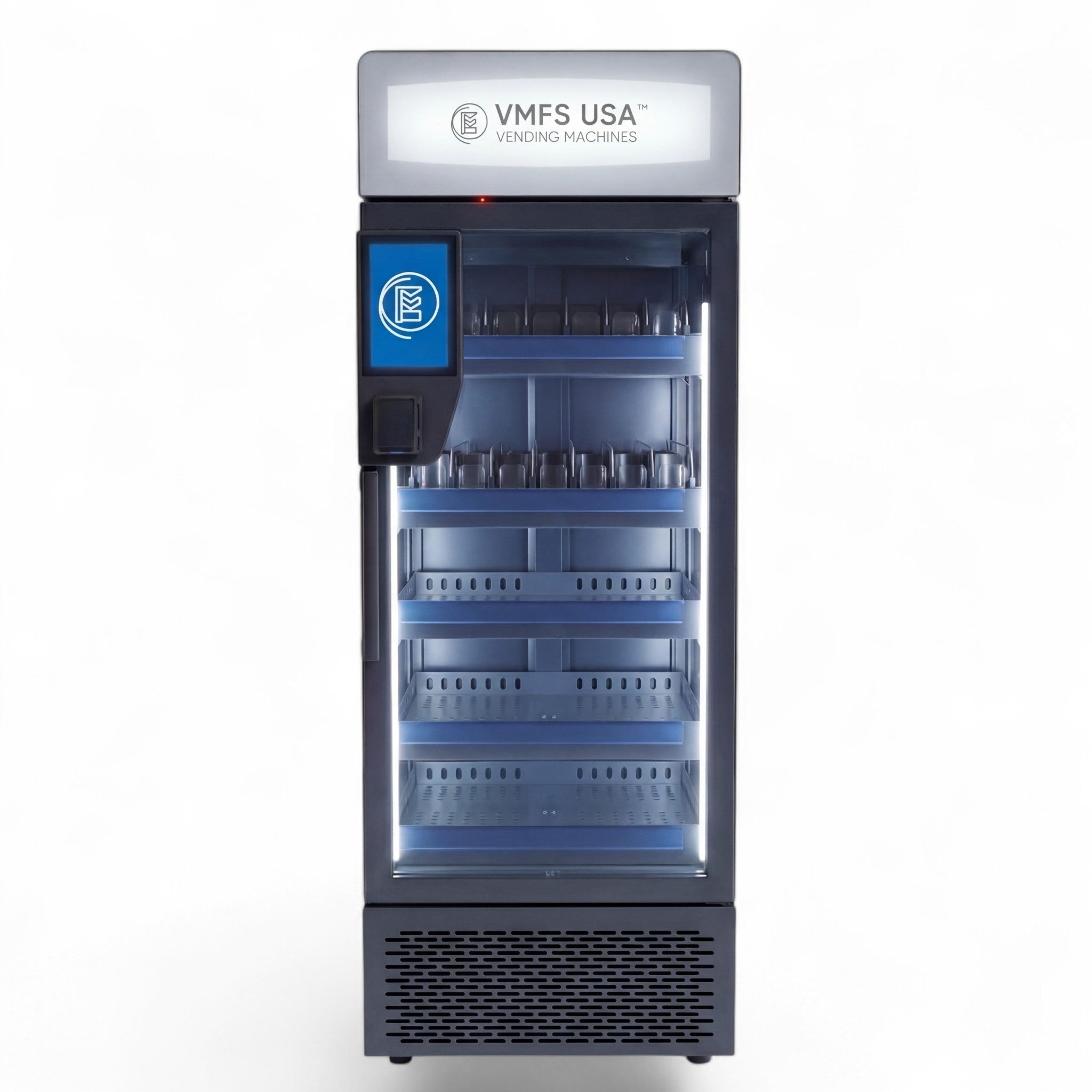
| Frozen Ice Cream Vending Machine | $9,950 | 54 slots, up to about 700 items; adjustable from -0.4°F to chilled | Mixed frozen menus and first machines |
| Big Freezer Vending Machine | $11,950 | About 54 selections, 500 to 550 frozen items; down to -0.4°F | Ice cream plus frozen meals |
| Big Screen Ice Cream Vending Machine | $14,950 | 54 slots, listed capacity 500; down to -0.4°F; cashless only | Malls and venues where the display drives impulse buys |
| Soft Serve Ice Cream Vending Machine | $14,950 | Makes soft serve on demand with automated cleaning | Sites that want a made-to-order product |
| Elevator Pro Ice Cream Vending Machine | $19,950 | 63 slots, up to 600 items; elevator delivery | High-traffic sites that need fewer restocks |
For a first placement, the Frozen Ice Cream Vending Machine keeps the payback math easiest because it has the lowest price among the fixed-spec models and the largest listed capacity. The Big Freezer Vending Machine suits operators who want to sell frozen meals beside ice cream, while the Big Screen Ice Cream Vending Machine trades menu breadth for a large interactive display in impulse-driven spaces. If you would rather spec the cabinet, payment hardware and wrap yourself, start with Build Your Ice Cream Vending Machine.
Check the add-ons before you compare totals. The product pages list a Credit Card Reader at $450, a Coin & Bill Acceptor at $450, a custom wrap at $600, a 4G module at $95 and an extra warranty year at $250. Soft serve has its own economics, with milk-based mix instead of packaged bars and a cleaning cycle to manage; read are soft serve ice cream machines profitable and how much a soft serve ice cream machine costs before choosing that route. For financing, VMFS works with outside partners rather than lending in-house; the financing options page lists PayPal, Klarna and Clicklease.
Compare Ice Cream Vending Machines
See every active VMFS freezer and soft serve model with current prices, capacities and add-ons.
Shop Ice Cream MachinesHow Seasonality Changes Ice Cream Vending Profit
Ice cream demand is strongly seasonal: USDA data show U.S. production of regular ice cream in July 2025 was about 46% higher than in December 2025. A machine that clears 20 sales a day in summer can drop toward 14 a day in winter if it follows the same curve, which moves it from comfortable profit toward the thin rows of the payback table.
The USDA National Agricultural Statistics Service publishes monthly production in its annual Dairy Products summary. Production is not the same as vending sales, since manufacturers build stock ahead of demand, but it is the best free national signal of when Americans buy ice cream. The 2025 figures also show the category is not growing on its own: regular ice cream production totaled 845 million gallons, down 9.2% from 2024. Growth has to come from better placements, not from a rising tide.
| Month (2025) | Regular ice cream produced | Index vs. July |
|---|---|---|
| January | 66.9 million gallons | 81% |
| March | 70.6 million gallons | 86% |
| May | 76.8 million gallons | 94% |
| July (peak) | 82.1 million gallons | 100% |
| September | 68.9 million gallons | 84% |
| November | 57.4 million gallons | 70% |
| December (low) | 56.1 million gallons | 68% |
Indoor, climate-controlled placements soften the curve because the customer's craving matters more than the weather outside. Hotels, hospitals, gyms, arcades and mall food courts are far less exposed to the weather than beaches, pools and outdoor parks. Operators with several machines can also rebalance: the Frozen Ice Cream Vending Machine's temperature range runs from frozen to chilled, so a slow winter site can switch part of its menu to chilled desserts or drinks. Pairing a freezer route with steady year-round categories, such as coffee vending machines, is another way to keep monthly cash flow level; model the slow months in your cash flow plan before they arrive.
Where Ice Cream Vending Machines Make the Most Money
Ice cream vending machines earn most where people stay a while, have time to snack and are often with children: family entertainment centers, malls, hotels, hospitals, gyms, campuses and tourist attractions. Dwell time and group visits drive impulse purchases more than raw foot traffic does.
Family entertainment
Bowling alleys, arcades, trampoline parks and family fun centers mix kids, teens and adults who want different frozen formats.
Malls and food courts
Long visits and food-court traffic suit large-display machines that sell on visual appeal.
Hotels and resorts
Guests buy late at night when nearby stores are closed, and indoor sites hold up in winter.
Hospitals and campuses
Round-the-clock staff and visitors create steady demand outside cafeteria hours.
Tourist attractions
Zoos, parks and beaches deliver the highest summer peaks but the steepest winter drop.
After-hours parlors
Ice cream shops and gelato cafes use a machine as a 24-hour extension when the counter closes.
Commission is the cost that varies most by site. Busy venues can ask for a larger share, and a higher rate can erase much of the volume advantage. Model each offer with the per-sale table above, and settle the rate in writing before the machine arrives; our guide to the vending machine revenue split explains how operators, locations and suppliers share the margin. For finding and pitching sites, start with our best vending locations overview.
School placements need extra care. K-12 sales during the school day fall under federal and district nutrition policies, so check the rules before you stock full-sugar novelties; our guide to vending machines in schools covers what is allowed. Outdoor sites bring weather, vandalism and power risks that indoor sites avoid, so price those risks into the commission you offer.
Food Safety, Permits and Temperature Control
Selling ice cream from a machine usually requires a food vending license or permit, a passed inspection, and equipment that keeps product frozen and stops sales if it cannot. The exact rules come from your state and often your county or city, so check locally before you buy.
Florida is a useful example of what regulators look for. The Florida Department of Business and Professional Regulation's vending machine guide requires new licensees to pass a sanitation and safety inspection before opening, to place the DBPR license decal on the machine, and to keep an accurate and accessible ambient air thermometer inside it. It also says the machine should have an automatic shut-off control that prevents vending if food is not held at the proper temperature. Other states phrase it differently, but thermometers, shut-off controls and inspections are common themes. Our vending machine permits guide covers the process state by state.
Temperature monitoring is also a profit tool. A freezer that drifts overnight can refreeze softened bars into deformed, ice-crusted product that customers refund or never buy again. The VMFS frozen product pages list sales, inventory and temperature alerts through VMFS Cloud, so you hear about a fault before the next scheduled visit rather than after. Keep a simple log of each restock, the cabinet reading and any alert, and buy liability coverage that fits a food business. Many owners also form an LLC to separate business and personal assets; see do you need an LLC for a vending machine business.
Ice Cream vs. Other Vending Categories
Compared with snack, drink and coffee machines, ice cream offers a higher ticket and stronger impulse appeal but costs more to buy, more to cool and more to protect. It works best as a specialist machine in the right site, or as one part of a mixed route.
Where ice cream wins
- Vend prices of $3 or more, well above the average vending ticket
- Strong impulse demand in family, leisure and hospitality sites
- A distinct offer at sites that already have snack and drink machines
- Packaged bars need no preparation, unlike soft serve or coffee
Where it falls behind
- Freezer machines cost more than standard snack or combo units
- Clear summer peak and winter slump in demand
- Higher electricity draw and a full-load spoilage risk
- Food licensing and temperature rules add compliance work
Coffee is the usual counterweight because it sells year-round, and the same per-unit method works for a cup of coffee. Snack and drink machines cost less and carry less spoilage risk but earn less per sale. If a site has both a summer crowd and steady staff traffic, a freezer machine next to a combo or coffee unit often beats either machine alone. Before you commit, compare the specialist path with a general route in our guide to starting an ice cream business with vending machines.
Is an Ice Vending Machine Profitable?
An ice vending machine can be profitable where people buy bagged ice on the spot, such as marinas, campgrounds, convenience stores, hotels and event venues, but it is a different business from ice cream vending, with its own product rules and economics. Run the same break-even method with your local ice supplier's price per bag instead of trusting a headline revenue figure.
VMFS sells the Mixology Ice Vending Machine at $14,075. Its product page lists about 45 adjustable selections holding roughly 270 to 500 packaged ice units, elevator delivery, cooling down to -0.4°F, bill, coin, card and mobile-wallet payments, and an all-steel cabinet rated for indoor and outdoor use. At about 1,037 pounds, it needs white-glove delivery and a site check for doorway clearance and power.
Ice is a food in the eyes of regulators. The FDA says it regulates packaged ice in interstate commerce as a food, requires Current Good Manufacturing Practices and labeling that includes the packer or distributor's name, place of business and net quantity, and leaves retail food stores to state and local authorities. In practice, that means buying from a supplier that follows those rules and confirming your local permit requirements, exactly as you would for ice cream. The ice-specific risk is weight and volume: bags are bulky, so restock frequency and route distance weigh more heavily on profit than they do with compact novelty bars.
How to Raise Ice Cream Vending Machine Profit
The fastest ways to raise profit are to place the machine where it can sell 20 or more items a day, price each selection on its own margin, cut wasted visits with remote monitoring, and protect inventory with tight temperature control. Each lever moves a specific line in the worked example.
Start with placement, since volume is the only input that improves every row of the payback table. Then price by item rather than by habit: in our example, raising the value bar from $3.00 to $3.25 adds about $0.21 of contribution per sale after card fees and commission, which at 20 sales a day of that item is worth roughly $125 a month. Test changes one selection at a time and watch sell-through in the dashboard.
Next, cut route cost. Restocking only when inventory alerts say a machine needs it, instead of on a fixed weekly loop, trims both mileage and labor, the two largest fixed lines in our cost table. Our guide to restock scheduling and routes explains how to build those trips. Finally, rotate the menu with the seasons: lean on value bars and multipacks in summer, then add chilled desserts or premium pints in winter where the machine's temperature range allows it.
Run Your Own Ice Cream Vending Numbers
Plug in your machine price, vend prices, commission and expected daily sales to see your payback period.
Open the ROI CalculatorFrequently Asked Questions
Sources
- USDA National Agricultural Statistics Service — Dairy Products 2025 Summary (April 2026)
- WebstaurantStore — Blue Ribbon Orange Dream Ice Cream Bar, 48/case
- WebstaurantStore — Snickers Ice Cream Bar 2.8 oz, 48/case
- Cantaloupe — Micropayment Trends Report 2026
- NerdWallet — How to Start a Vending Machine Business
- U.S. Energy Information Administration — Electric Power Monthly, Table 5.6.A
- IRS — 2026 business standard mileage rate
- O*NET OnLine — Coin, Vending, and Amusement Machine Servicers and Repairers
- U.S. Small Business Administration — Calculate your startup costs (break-even analysis)
- IRS — Working Families Tax Cuts: provisions for businesses
- Florida DBPR — Vending Machine Licensing Guide
- U.S. FDA — FDA Regulates the Safety of Packaged Ice
Share:
Get Paid to Find Locations for Vending Machines [Guide]
Vending Machine Routes for Sale: What to Check Before You Buy