


Food Vending Machines in Seattle, WA
Experience convenient, fresh meals anytime with our state-of-the-art vending machines throughout Seattle. Quality food, instantly available.
Deja de adivinar. Configure Your Food Vending Machine.
Answer a few quick questions about your location, your product mix, your temperature needs, and your budget. Our Food Vending System will match you with the right base model, add the right modules (refrigeration, ad screen, outdoor protection, payment suite), and show you real time pricing and lead time as you build.
Omita las idas y venidas. Omita la abrumadora hoja de especificaciones. Vea su configuración exacta, su costo exacto y su ventana de entrega exacta antes de comprometerse.
- Precios en tiempo real a medida que añade o elimina funciones
- Estimación del tiempo de entrega en tiempo real basada en su configuración
- Combinación de productos recomendada para su tipo de ubicación
- Capacidad, número de ranuras y límites de peso mostrados por configuración
- Opciones preestablecidas para alimentos, bebidas, electrónica, comercio minorista y congelados
Why Food Vending Machines?
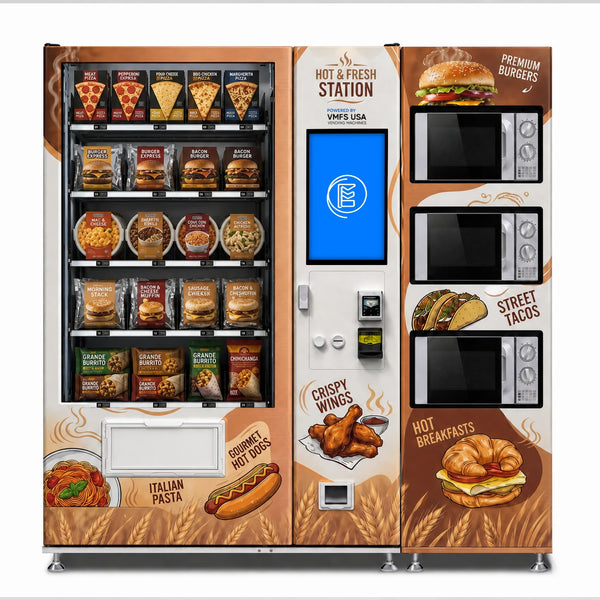
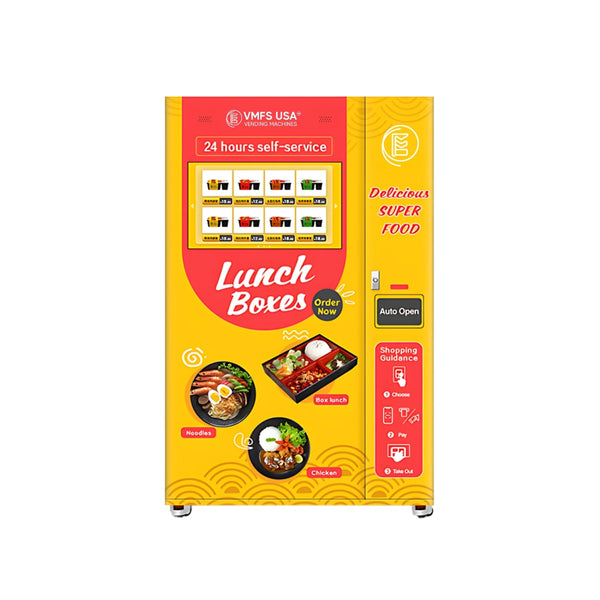
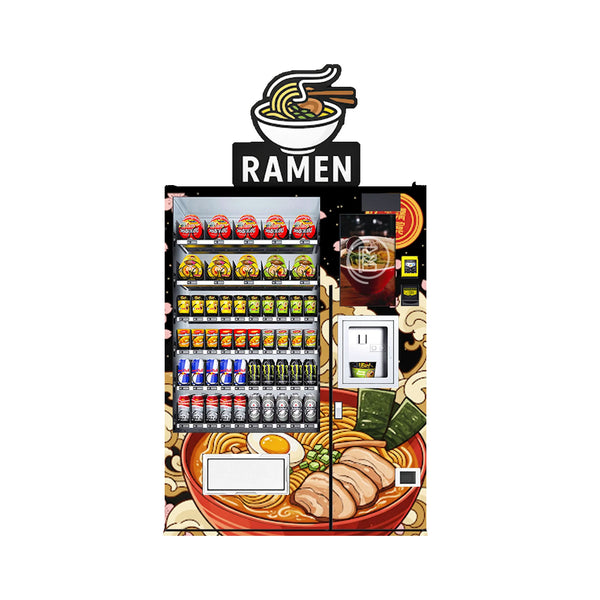
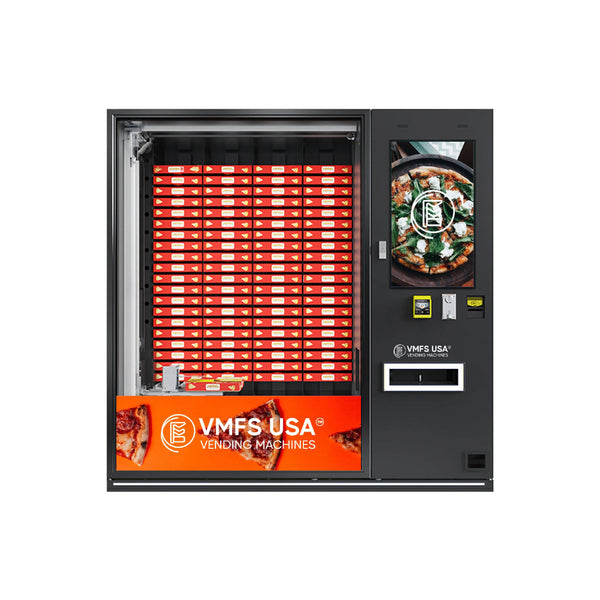
A food vending machine offers Seattle businesses the ultimate convenience solution for on-site dining. These versatile units range from hot food vending machines to cold food vending machines and fresh food vending machines, dispensing everything from salads and wraps to sandwiches, ramen, pizza, and hot entrees through a single configurable cabinet. With capacities spanning 250 to 800 items across 30 to 72 adjustable slots, each food vending machine accommodates healthy snacks, breakfast items, dairy products, and ready-to-eat meals. Advanced delivery systems include coil mechanisms for packaged goods, elevator delivery for fresh meal containers, and heated dispensing for hot food on demand. Customize temperature zones before shipping, then monitor real-time sales and inventory via the VMFS Cloud dashboard. Discover premium
fresh food vending machines
designed for modern Seattle workplaces and facilities.
Configurable Temperature Zones
One food vending machine system configurable for cold food, hot food, fresh food, frozen items, ambient products, or dual-zone mixed programs, with temperature settings calibrated before shipping based on the product mix
Versatile Delivery Options
Standard and custom-pitch coil delivery for packaged goods, elevator delivery for fresh meal containers and fragile items, heated delivery for hot food on demand, plus door-access AI cooler for mixed fresh and cold assortments
Wide Food Compatibility
Stocks salads, wraps, sandwiches, fresh meals, frozen meals, ramen, pizza, hot food entrees, healthy snacks, dairy items, microwavable meals, and ready-to-eat convenience foods from a single cabinet
Built For Demanding Venues
Designed for gyms (post-workout fresh meals), hospitals (24/7 staff and patient meals), schools (hot food when cafeteria is closed), warehouses with multiple shifts, corporate campuses, hotels, airports, and any venue needing consistent food access
VMFS Cloud Remote Management
Real-time sales, live inventory, temperature graphs across zones, fault alerts, and pricing updates stream to the VMFS Cloud dashboard from any device, with U.S.-based support and software updates included
Why Food Vending Machines Perform in Seattle, Washington
Seattle's thriving tech and corporate office corridor, anchored by Amazon, Microsoft, and countless startups, creates ideal conditions for
food vending machines
to thrive. Downtown Seattle's dense office parks and suburban tech campuses generate consistent daytime foot traffic, while employees increasingly prefer quick, contactless meal solutions over leaving their desks or waiting in café lines. The city's rainy climate and car-dependent commuter patterns further boost vending adoption, as workers seek convenient grab-and-go nutrition without stepping outside. High-capacity machines stocked with fresh hot meals, salads, and protein options capitalize on Seattle's health-conscious demographic and shift-based tech schedules, generating $400–$1,000 monthly per unit after restocking. Strategic placement across corporate breakrooms, hospital networks, and university campuses—enhanced by
professional placement services
—ensures maximum visibility and repeat traffic, making Seattle a proven market for premium food vending operations.
Best Locations in Seattle
High-value deployment sites where food vending delivers the strongest revenue per square foot.
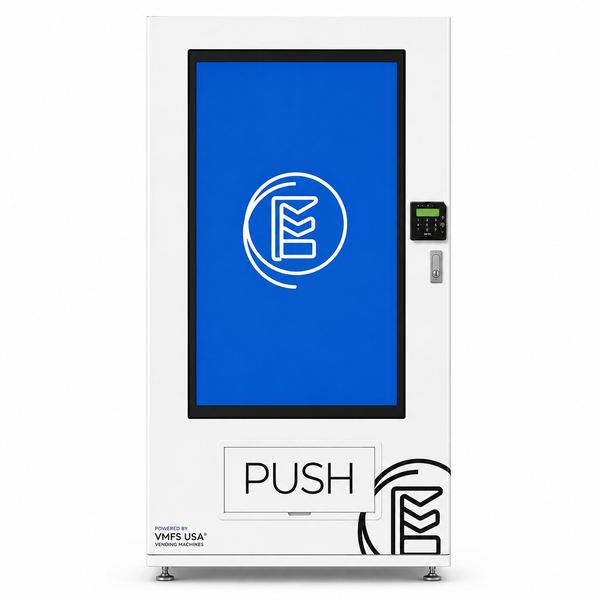
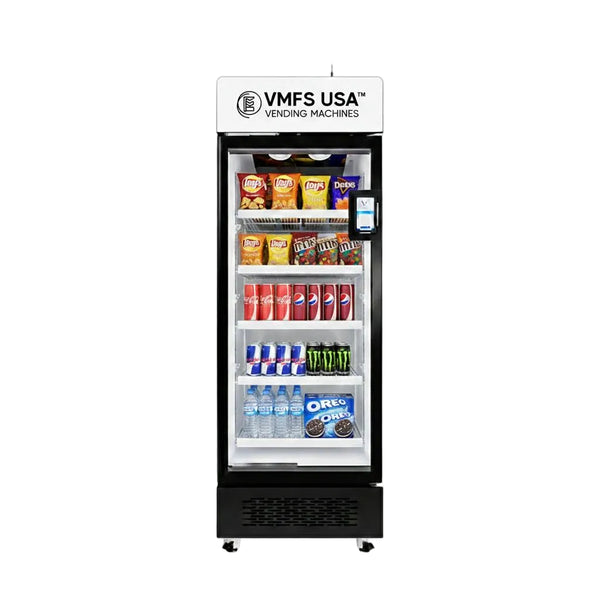
Food Vending Machines Available for Seattle
Every unit below ships configured, compliance-ready, and backed by VMFS Cloud monitoring.


How Operators Use Food Vending in Seattle
Corporate Tech Campus
Amazon, Microsoft, and Google offices throughout Seattle and the Puget Sound region employ tens of thousands of engineers, product managers, and support staff working long hours across multiple shifts. A food vending machine stocked with fresh salads, wraps, sandwiches, and hot ramen serves as a critical meal solution when employees skip cafeteria lines or work through lunch. The configurable temperature zones deliver refrigerated fresh meals, hot pizza and entrees on demand, and frozen backups in a single cabinet, while elevator delivery protects delicate containers and the 250 to 800 item capacity means fewer restocking trips per month. Campus operators report 400 to 1,000 dollars net profit monthly per machine, with fill costs of 300 to 700 dollars depending on fresh meal rotation, positioning the fresh food vending machine as a valued employee amenity that boosts workplace satisfaction and reduces lunch-hour downtime.
Pioneer Square & Belltown Office Towers
The historic Pioneer Square district and modern Belltown towers host law firms, design agencies, consulting groups, and professional services companies with daytime office populations of 500 to 2,000 workers per building. Lunch demand concentrates between 11:30 and 2 p.m., and mid-afternoon energy crashes drive snack and beverage traffic; a food vending machine positioned in lobbies or break areas captures both occasions with fresh salads, wraps, sandwiches, breakfast items, and healthy snacks. Refrigerated, frozen, and ambient zones in one machine eliminate the need for separate cabinets, heated delivery keeps hot entrees and ramen ready on demand, and the configurable slot density serves diverse preferences without excessive restocking. Monthly net profit ranges from 400 to 1,000 dollars per machine with fill costs between 300 and 700 dollars, making the food vending machine a high-traffic revenue generator in professional office settings.
Seattle-Tacoma International Airport & Ferry Terminals
SEA-TAC Airport and the downtown ferry terminals at Pier 50 and Colman Dock funnel thousands of travelers daily through security, boarding areas, and waiting zones where meal options are limited and pricing is inflated. Passengers seek quick, affordable fresh meals, sandwiches, wraps, and microwavable entrees during layovers and boarding delays; a fresh food vending machine delivers these items via elevator technology that protects meal integrity and heated zones that serve pizza and ramen hot on demand. The 250 to 800 item capacity reduces restocking frequency during peak travel windows, while tap-to-pay and mobile wallet acceptance (Apple Pay, Google Pay) match traveler payment preferences. Operators achieve 400 to 1,000 dollars monthly net profit per machine with fill costs of 300 to 700 dollars, positioning the food vending machine as essential guest infrastructure at transportation hubs.
Hospital Night Shift & Medical Center Campuses
Swedish Medical Center, UW Medicine, and Harborview Medical Center operate 24/7 with physicians, nurses, technicians, and support staff working graveyard and double shifts who need reliable meal access outside standard cafeteria hours. A food vending machine stocked with fresh meals, hot ramen, frozen entrees, sandwiches, and breakfast items serves as a lifeline for staff fueling between patient care rounds and critical procedures. Refrigerated zones preserve fresh salads and wraps, frozen compartments extend shelf life for backup entrees, and heated delivery keeps hot food ready for consumption without microwave delays, while the elevator delivery system handles fresh meal containers safely and the high item capacity (250 to 800 units) reduces restocking disruptions in 24/7 operations. Net profit of 400 to 1,000 dollars monthly per machine with fill costs of 300 to 700 dollars makes the food vending machine a reliable revenue stream that also improves staff retention and satisfaction.
What Ships With Every Food Unit
Regulations for Operating in Seattle, WA
Licensing, permits, sales tax, and health department standards for food vending operators in Washington.
State License Requirements
The Washington State Department of Health (DOH) oversees food vending machines and regulates food service operations statewide. Operators selling fresh, frozen, hot-delivery, and ambient food categories (salads, wraps, sandwiches, fresh meals, frozen meals, ramen, pizza, healthy snacks, dairy items) must obtain a Food Service License from the local health jurisdiction (King County Health Department in Seattle's area). Washington requires a basic Food Service License for any establishment preparing, storing, or serving food for sale. Operators must register for a Washington State Business & Operations Tax (B&O) Account through the Department of Revenue; obtain a federal Employer Identification Number (EIN) from the IRS if operating as a business entity other than sole proprietorship; and register for sales tax. Fresh food items (salads, wraps, sandwiches, fresh meals) require date-marking indicating the date prepared and a 7-day or shelf-life limit from preparation under refrigeration. Dairy products must be stored at 41 degrees Fahrenheit or below and require traceability documentation. Allergen disclosure is mandatory for sandwiches and all prepared meals, with clear labeling of major allergens (milk, eggs, peanuts, tree nuts, soy, wheat, fish, crustacean shellfish, sesame). Hot food vending machines must maintain an internal holding temperature of 135 degrees Fahrenheit or above and include automatic temperature monitoring. Frozen foods must be maintained at 0 degrees Fahrenheit or below with cold-chain documentation. The Food Service License must be renewed annually. Permit renewal frequency is typically annual; operators should contact King County Health Department for specific renewal timelines and fee structures.
City and County Permits
Seattle requires a City of Seattle Business License (also called a Business and Occupation License) issued by the Finance and Administrative Services Department; this license is mandatory for all business operations and must be obtained before starting vending operations. A Certificate of Use or Land Use Compatibility Statement may be required depending on vending location (see zoning restrictions below). Zoning compliance is essential; vending machines are subject to Seattle Municipal Code Title 23 zoning regulations, and certain zones restrict or prohibit food vending without a Conditional Use Permit. Fire Safety approval from the Seattle Fire Department may be required, particularly for machines with heating or electrical components; operators should contact the Fire Department's Plan Review office to confirm equipment safety certification. At the county level, King County Environmental Health (also known as Public Health-Seattle-King County) issues the Food Service License and conducts health inspections. Coin-operated machine declarations or similar filings are not separately required in Seattle, but operators must disclose the nature of vending in their business license application. Surrounding municipalities including Shoreline, Renton, and Tukwila have similar but distinct requirements; operators placing machines outside Seattle proper should contact the appropriate local health department and city business licensing office. Renewal timelines vary: the Seattle Business License typically renews annually, and the Food Service License through King County also renews annually. Late penalties for business license nonrenewal can result in license suspension and fines; contact the City of Seattle Finance Department at 206-684-8484 for business licensing questions, and King County Environmental Health at 206-477-7000 for food service permit questions.
Sales Tax Rate
The combined sales tax rate in Seattle, Washington is 10.25% (State rate of 6.5% plus King County rate of 0.5% plus City of Seattle rate of 3.25%). Prepared hot foods vended from a food vending machine are subject to the full 10.25% sales tax rate, as they are treated as prepared food sales similar to restaurant meals. Cold prepared foods such as sandwiches, wraps, and salads are also taxed at the full rate. Frozen meals and packaged snack items may receive different tax treatment depending on their ingredient composition; single-ingredient foods and certain grocery items can be exempt, but most prepared meals and convenience snacks sold via vending are taxable. Beverages are fully taxable at 10.25% regardless of type (hot or cold, carbonated or non-carbonated). Operators must register for a Washington State Business & Operations Tax Account and a Sales Tax License through the Department of Revenue; online registration is available at dor.wa.gov. Remittance of sales tax is required on a monthly or quarterly basis depending on sales volume, with filings made through the Department of Revenue. The economic nexus threshold for out-of-state sellers is triggered when a seller has over 200 individual transactions in the state or at least 75,000 dollars in sales revenue during the current calendar year or any prior 12-month period; out-of-state operators meeting this threshold must register and remit Washington sales tax.
Health Department Standards
King County Public Health (also known as Public Health-Seattle-King County) sets health standards for all food vending machines deployed in Seattle. Refrigerated and hot food vending machines must meet WAC 246-215 (Washington's Food Service Rules) requirements. Equipment must include multi-zone temperature controls with separate compartments for refrigerated foods (41 degrees Fahrenheit or below), frozen foods (0 degrees Fahrenheit or below), and hot-delivery sections (135 degrees Fahrenheit or above) as applicable to the machine's menu design. Food contact surfaces must be food-grade, corrosion-resistant, and capable of being sanitized (stainless steel or equivalent). Accurate thermometers or digital temperature sensors must be visible and functional in all temperature-controlled zones. Automatic shut-off mechanisms are recommended and may be required for certain machine types to prevent temperature abuse. Sanitation cycles (if the machine includes a cleaning/rinsing function) must meet NSF or equivalent standards. Placement rules require that machines be located in accessible areas, away from bathrooms and areas of direct contamination, and in compliance with Seattle zoning code. Operational requirements include date-marking on all fresh meals, sandwiches, salads, dairy products, and prepared foods with the date of preparation and a discard date. Cold-chain and hot-hold documentation must be maintained and available for inspection. Label visibility standards require that ingredient lists, allergen declarations, manufacturer information, and product expiration dates are clearly visible to customers. Unannounced inspections are conducted by King County Environmental Health staff; operators must pass inspection to maintain licensure. Secondary local health department oversight applies to machines placed in schools (Seattle Public Schools Health and Safety office), hospitals and healthcare facilities (institutional food service regulations), and government buildings (city and county facilities departments). Seattle's cool marine climate and high humidity can affect machine operation; machines must be positioned with adequate ventilation and moisture control to prevent condensation damage and mold. VMFS food vending machines deployed in Seattle ship with the appropriate spec standard, including configurable temperature zones (refrigerated, frozen, hot delivery, ambient, dual-zone) with energy-saving operation and a 1-year standard warranty with extended coverage options.
Disclaimer
Regulatory information is for reference only and current as of 2026. Operators should verify current requirements with the relevant agency before deployment. VMFS USA is not a legal or tax advisor. For operator-side legal guidance covering placement contracts, host venue agreements, documentation, business incorporation, tax registration, licenses, and permits, operators can consult <a href="https://vadviced.com">VAdviced</a>. For professional placement and location matching support, operators can work with <a href="https://vplaced.com">VPlaced</a>.
Seattle at a Glance
Geographic Identity
- County
- King County
- Metro Area
- Seattle-Tacoma-Bellevue
- Time Zone
- America/Los_Angeles (Pacific Time)
- Area Codes
- 206, 425, 253
- ZIP Codes
- 98101 to 98199
- Primary Airport
- SEA Seattle-Tacoma International Airport
- Secondary Airport
- None
- Major Port
- Port of Seattle, a major container and cruise port
- Nickname
- The Emerald City
Market Stats
- City Population
- 753,675
- Metro Population
- 4.0 million
- Annual Visitors
- 10.1 million (2023)
- Visitor Economy
- $13.6 billion annual economic impact
- Airport Passengers
- 50.7 million annual travelers through SEA
- Hospitality Jobs
- None
- Top Industries
- Technology, Aerospace and Defense, Healthcare, International Trade, Maritime and Logistics, Real Estate and Development, Tourism and Hospitality
- Demand Driver
- The concentration of major technology and aerospace headquarters, coupled with strong international business travel and tourism driven by outdoor recreation and cultural attractions, creates consistent demand across multiple market segments.
Climate Profile
- Climate Zone
- Oceanic
- Average Humidity
- 70 to 80 percent year round
- Summer High
- 79 degrees Fahrenheit in July and August
- Winter Low
- 37 degrees Fahrenheit, outdoor operating conditions year round
- Seasonal Hazard
- None
- Environmental Exposure
- Frequent cloud cover and moderate rainfall affect solar panel efficiency and require corrosion resistant hardware for durability.
- Deployment Note
- Seattle's temperate oceanic climate with mild winters and cool summers supports year round outdoor vending with standard weatherproofing. Units require corrosion resistant housings due to persistent moisture and sealed electronics to manage high humidity. VMFS ships all Seattle outdoor units with these specifications standard.
Location & Service Area
- Key Neighborhoods
- Downtown, Capitol Hill, Ballard, Queen Anne, Fremont, University District, Wallingford, Green Lake, Beacon Hill, West Seattle, Eastlake, Magnolia
- Nearby Cities
- Tacoma, Bellevue, Redmond, Kirkland, Renton, Federal Way, Sammamish, Shoreline
- Service Radius
- VMFS delivers, installs, and services machines throughout King County, with extended coverage to Pierce and Snohomish counties on request.
Your Location. Working 24/7.
Answers to common questions from Seattle operators. Didn't see yours? Send us a message — our US-based team responds within one business day.
What monthly revenue can the property expect from hosting a food vending machine in a Seattle office building or hospital?
How often does the machine need restocking, and what food selections work best for Seattle venues?
What electrical requirements and physical space does installation require in a Seattle facility?
What happens if the machine breaks down, and how is warranty coverage structured?
Does the machine accept only cash, or can employees use their phone to pay at a Ballard tech company or Pike Place Market venue?
How does hosting a food vending machine help address 24/7 meal access for shift-based workers in Seattle hospitals and industrial facilities?
Deploy Food Vending Machines in Seattle, WA Today
Request a custom quote today for
food vending machines
at your Seattle location, and we handle machine selection, delivery, configuration, and ongoing support from start to finish. Every deployment begins with a site assessment covering foot traffic patterns, food mix balance across fresh meals frozen entrees hot food and healthy snacks, temperature zone configuration and power requirements, network requirements for the cloud platform, and placement strategy can be coordinated through our
placement experts
for operators wanting professional location matching, with hospitals, tech campuses, factories, and corporate offices in Seattle prioritized for highest meal volume. We scale from a single unit in a small medical office breakroom to a rollout of 30 or more machines across a large university dining network or hospital system, and your quote includes hardware, installation, training, and 12 months of cloud monitoring at no extra cost.
Deploy Food Vending Across Seattle
1,200+ machines deployed. 1-year warranty standard. Free lifetime support. One team from site survey to uptime.