


Food Vending Machines in Grand Rapids, MI
Transform your space into a revenue-generating powerhouse with our reliable hot and cold food vending machines serving Grand Rapids today.
Stop Guessing. Configure Your Food Vending Machine.
Answer a few quick questions about your location, your product mix, your temperature needs, and your budget. Our Food Vending System will match you with the right base model, add the right modules (refrigeration, ad screen, outdoor protection, payment suite), and show you real time pricing and lead time as you build.
Skip the back and forth. Skip the spec sheet overwhelm. See your exact configuration, your exact cost, and your exact delivery window before you commit.
- Real time pricing as you add or remove features
- Live lead time estimate based on your configuration
- Recommended product mix for your location type
- Capacity, slot count, and weight limits shown per setup
- Option presets for food, drinks, electronics, retail, and frozen

Why Food Vending Machines?
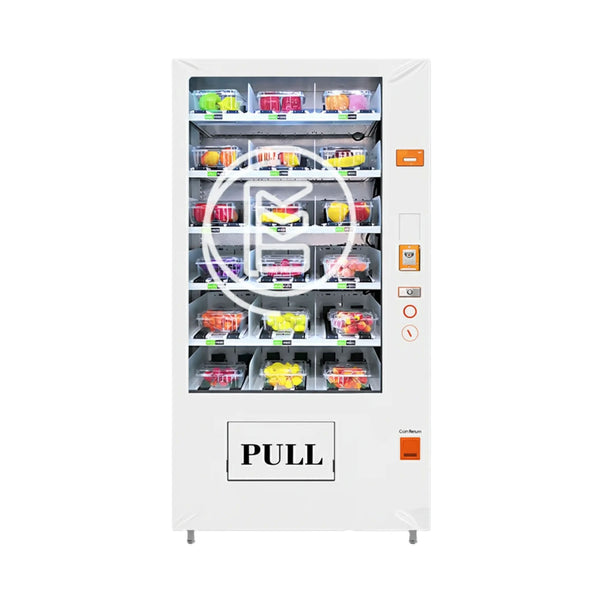
A food vending machine revolutionizes workplace nutrition in Grand Rapids by offering versatile, on-demand access to diverse meal options. These configurable cabinets accommodate hot food vending machines and cold food vending machines with separate temperature zones, dispensing salads, wraps, sandwiches, fresh meals, frozen items, ramen, pizza, and healthy snacks from a single unit. With capacities ranging from 250 to 800 items across 30 to 72 adjustable slots, our
fresh food vending machines
feature coil delivery for packaged goods, elevator delivery for meal containers, and heated dispensing for hot entrees. Each cold food vending machine arrives pre-calibrated with optimized temperature zones, while the VMFS Cloud dashboard provides real-time sales and inventory tracking for seamless operations.
Configurable Temperature Zones
One food vending machine system configurable for cold food, hot food, fresh food, frozen items, ambient products, or dual-zone mixed programs, with temperature settings calibrated before shipping based on the product mix
Versatile Delivery Options
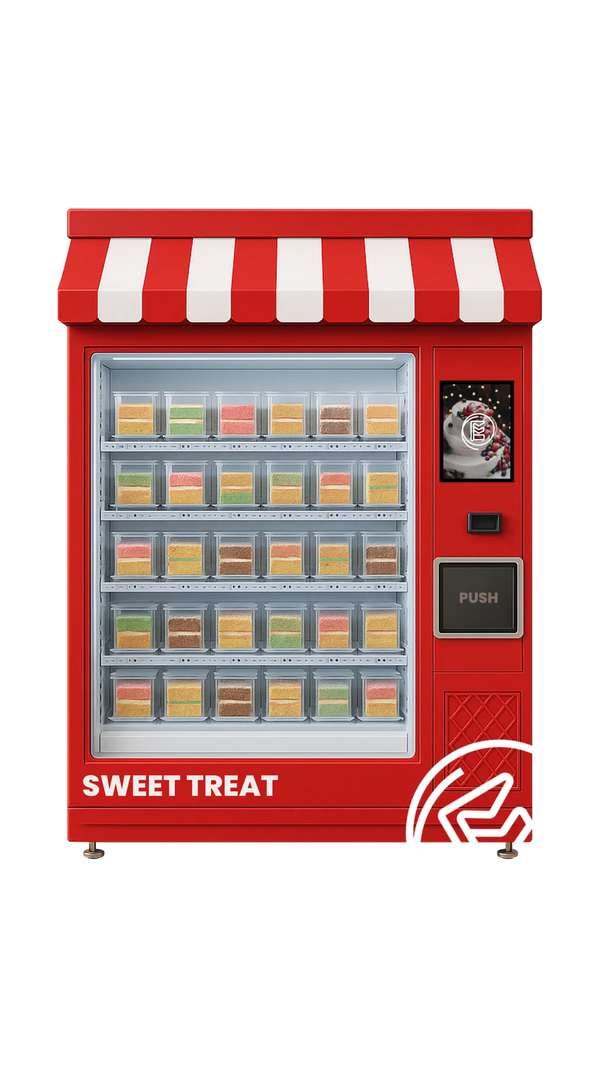
Standard and custom-pitch coil delivery for packaged goods, elevator delivery for fresh meal containers and fragile items, heated delivery for hot food on demand, plus door-access AI cooler for mixed fresh and cold assortments
Wide Food Compatibility
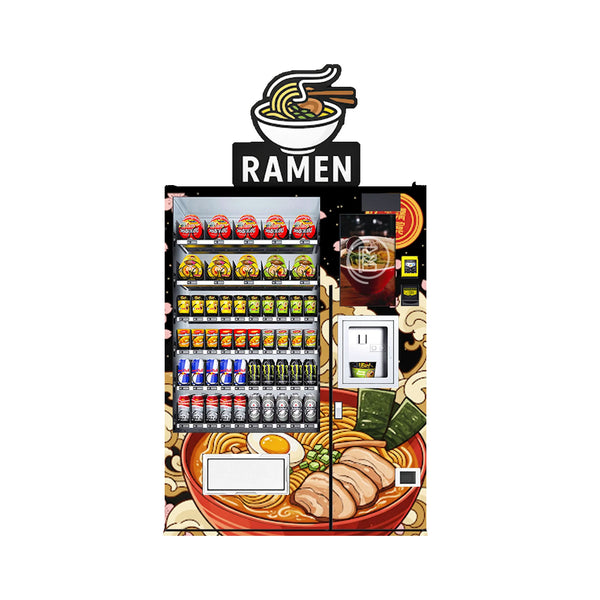
Stocks salads, wraps, sandwiches, fresh meals, frozen meals, ramen, pizza, hot food entrees, healthy snacks, dairy items, microwavable meals, and ready-to-eat convenience foods from a single cabinet
Built For Demanding Venues
Designed for gyms (post-workout fresh meals), hospitals (24/7 staff and patient meals), schools (hot food when cafeteria is closed), warehouses with multiple shifts, corporate campuses, hotels, airports, and any venue needing consistent food access
VMFS Cloud Remote Management
Real-time sales, live inventory, temperature graphs across zones, fault alerts, and pricing updates stream to the VMFS Cloud dashboard from any device, with U.S.-based support and software updates included
Why Food Vending Machines Perform in Grand Rapids, Michigan
Grand Rapids's thriving corporate office corridor along the Medical Mile and downtown business district creates consistent weekday demand for convenient meal solutions, making
food vending machines
an ideal fit for breakroom and lobby placements where employees need quick, fresh options during compressed lunch windows and shift changes. The city's growing healthcare workforce at Spectrum Health and Mercy Health, combined with manufacturing and tech sector concentration, generates 24/7 food access demand that traditional food service can't meet cost-effectively. Hot and cold food vending machines address this gap by delivering fresh, configurable meals without kitchen overhead, capturing high-traffic venues like hospitals, corporate offices, and industrial facilities. With venues holding 250–800 item capacity and real-time inventory tracking, operators typically net $400–$1,000 monthly per machine—particularly when stocking fresh meal and hot entrée options that drive highest transaction values.
Professional placement services
help identify Grand Rapids's highest-performing locations within medical, corporate, and industrial settings where foot traffic and shift-based demand guarantee consistent revenue.
Best Locations in Grand Rapids
High-value deployment sites where food vending delivers the strongest revenue per square foot.
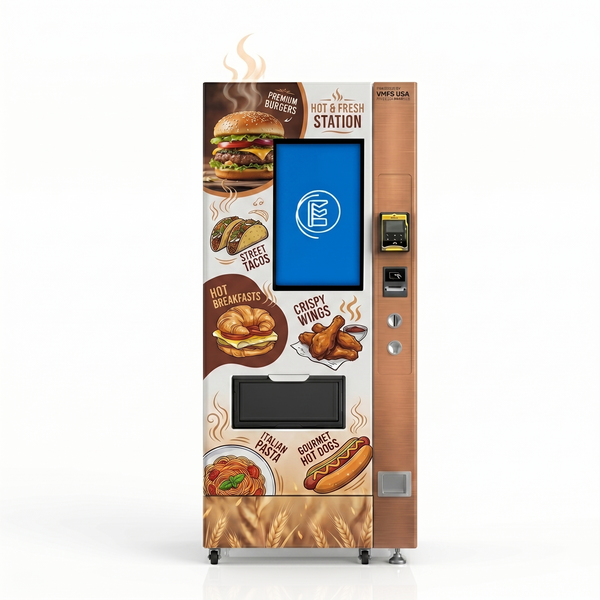
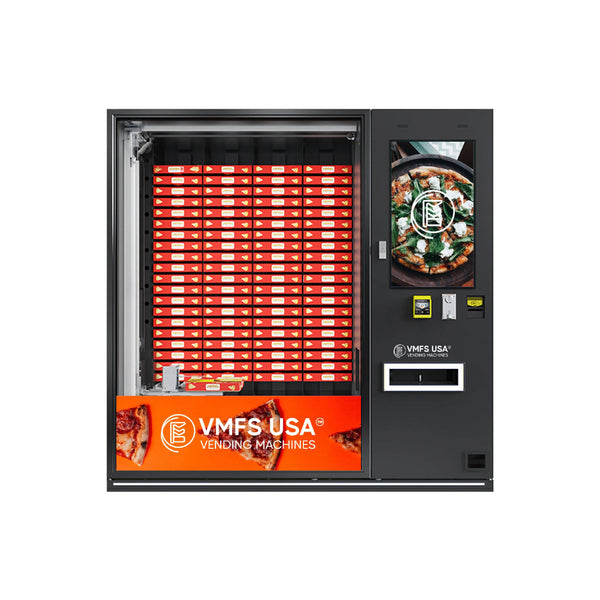
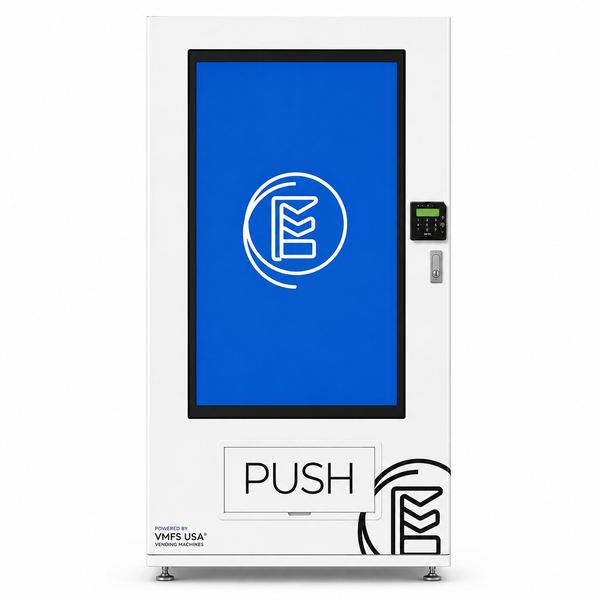
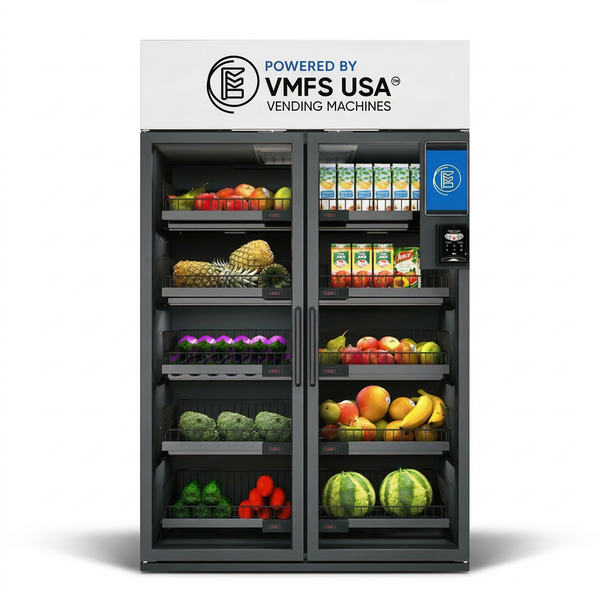
Food Vending Machines Available for Grand Rapids
Every unit below ships configured, compliance-ready, and backed by VMFS Cloud monitoring.

How Operators Use Food Vending in Grand Rapids
Corporate Breakroom
Steelcase, Bissell, Amway, and similar major employers across the east and west sides require tenant and employee amenities that match their talent retention standards. Staff rotate through breakrooms during shifts seeking fresh salads, wraps, sandwiches, breakfast items, and ready-to-eat meals without leaving campus. A food vending machine with refrigerated, frozen, and ambient zones in a single cabinet handles the full product mix while elevator delivery protects fresh meal containers and heated delivery serves hot food on demand, cutting restocking to once or twice weekly despite 250 to 800 item capacity. Net profit of 400 to 1,000 dollars per machine per month makes this a reliable revenue stream for facility managers seeking competitive employee amenities.
Medical Center Cafeteria
Spectrum Health, Cherry Health, and other healthcare networks operate 24/7 with night shift staff who cannot always access main cafeteria service. Night and swing shift nurses, technicians, and support staff grab fresh meals, frozen entrees, ramen, sandwiches, and protein-packed snacks during breaks. A fresh food vending machine with hot delivery for ramen and entrees, refrigerated zones for fresh meals, and frozen zones for backup inventory handles round-the-clock demand while 250 to 800 item capacity and elevator delivery for meal containers reduce staffing burden. Operators achieve 500 to 1,000 dollars net profit per month per machine by serving reliable meal access when traditional food service closes.
University Student Housing
Calvin University, Grand Valley State University, and Aquinas College students in dormitories need 24/7 meal access between dining hall hours and late night study sessions. Residents stock up on fresh salads, sandwiches, ramen, frozen meals, and healthy snacks to fuel academic schedules without leaving residence halls. A food vending machine with refrigerated, frozen, and heated zones stocked across 30 to 72 adjustable slots delivers fresh meals via elevator, hot ramen and pizza via heated delivery, and ambient snacks, all from one cabinet that students access anytime. Operators realize 400 to 900 dollars net profit per machine per month by meeting student demand for convenient, varied meal options in high-traffic dormitory common areas.
Hotel Lobby
Hotels and extended-stay properties along Pearl Street, in the Eastown district, and near major corridors serve business travelers and guests who arrive outside restaurant hours or seek quick meal solutions. Visitors and guests reach for fresh sandwiches, wraps, salads, ready-to-eat meals, frozen options, and breakfast items from a machine in the lobby or corridor. A food vending machine with configurable temperature zones handles fresh, frozen, hot, and ambient products in one unit, using elevator delivery to protect fresh meal containers and heated delivery to serve pizza and hot entrees on demand, while 250 to 800 item capacity minimizes daily restocking. Hotels generate 450 to 900 dollars net profit per machine per month by offering guest convenience that extends food service revenue and reduces front desk pressure for meal recommendations.
What Ships With Every Food Unit
Regulations for Operating in Grand Rapids, MI
Licensing, permits, sales tax, and health department standards for food vending operators in Michigan.
State License Requirements
Michigan's food vending operations are regulated by the Michigan Department of Agriculture and Rural Development (MDARD), which oversees food service licensing and commodity safety. Operators selling fresh, frozen, hot-delivery, and ambient food categories (salads, wraps, sandwiches, fresh meals, frozen meals, ramen, pizza, healthy snacks, dairy items) from vending machines must obtain a Mobile Food Service License or Food Service License from MDARD depending on the scope and complexity of operations. For hot food vending machines that hold food at temperatures above 135 degrees Fahrenheit, operators must comply with Michigan Food Law (MCL 289.1101 et seq.) and the Michigan Food Safety Rules (R 285.613 et seq.). Fresh food items require date-marking at the time of preparation with the date prepared and use-by date clearly visible. Dairy products must be maintained at 41 degrees Fahrenheit or below and handled according to Grade A Milk Standards. Allergen disclosure is required for all sandwiches and prepared meals, with clear labeling on or near the vending machine. Hot-hold temperature compliance mandates that hot food remain at 135 degrees Fahrenheit or above from the time of cooking until consumption. Frozen food cold-chain documentation must be maintained showing time and temperature records from production through vending. Michigan requires operators to register for a Michigan Sales Tax License and obtain an Employer Identification Number (EIN) from the IRS, and to register with the Michigan Department of Treasury. Business entity formation (sole proprietorship, LLC, or corporation) is the operator's choice but must be properly registered with the Michigan Department of Licensing and Regulatory Affairs (LARA). Mobile food service licenses require annual renewal, typically due by a specified date each calendar year; late renewal may result in operational suspension and penalties determined by MDARD. For current renewal dates and specific fee information, operators should contact MDARD's Food Safety Division directly.
City and County Permits
Grand Rapids requires operators to obtain a City Business License from the Grand Rapids Business Licensing Division prior to operation. A Certificate of Occupancy or Certificate of Use may be required depending on the location type and vending machine footprint. Zoning compliance verification is mandatory; operators should verify with the City of Grand Rapids Planning Department that the intended location is zoned to permit food vending operations, as some residential and commercial zones restrict vending. Fire Safety Certification may be required, particularly for hot food vending machines, through the Grand Rapids Fire Department; operators should contact them to confirm inspection and clearance requirements. At the county level, Kent County does not impose separate vending permits but operators must comply with Kent County Health Department food safety standards if operating in unincorporated areas (though Grand Rapids is within the city limits). Any coin-operated machine declaration or sales reporting may be requested; operators should confirm directly with Grand Rapids Business Licensing. Surrounding municipalities (such as Wyoming, Kentwood, or East Grand Rapids if expanding service area) may impose their own separate business licenses and zoning restrictions; operators must check each municipality individually. Business License renewal in Grand Rapids is typically annual; late renewal fees and penalties vary and operators should contact the Business Licensing Division for current amounts. Grand Rapids Business Licensing Division can be reached through the City of Grand Rapids' main public services line; interested operators should visit the official City website or call City Hall for current contact details. Kent County Health Department should be contacted for health permit and inspection details.
Sales Tax Rate
The combined sales tax rate in Grand Rapids, Michigan is 6 percent (Michigan state rate of 6 percent; as of 2026, no additional city or county surtax applies, though operators should verify current rates). Prepared food, including hot vended meals, sandwiches, and fresh prepared items, is taxable at the full 6 percent rate as restaurant meals under Michigan law. Packaged grocery food items (such as pre-packaged snacks, wrapped sandwiches, and sealed beverage containers purchased wholesale) may qualify for lower tax treatment or exemption if they meet the definition of food for home preparation, though the determination depends on the specific product and packaging; operators should consult MDARD and the Michigan Department of Treasury for classification of borderline items. Operators must register for a Michigan Sales Tax License with the Michigan Department of Treasury and remit sales tax monthly or quarterly depending on sales volume. The economic nexus threshold for out-of-state sellers is triggered if the seller has sales of tangible personal property (including vended food) exceeding a threshold in Michigan; as of 2026, that threshold is $150,000 in annual sales, though operators should verify the current threshold with the Michigan Department of Treasury. Remote sellers with nexus in Michigan must register and remit Michigan sales tax. Registration and remittance can be completed online through the Michigan Department of Treasury website (Michigan.gov/taxes).
Health Department Standards
The Michigan Department of Agriculture and Rural Development and the Kent County Health Department establish health standards for food vending machines, including refrigerated and hot food delivery units. All hot food vending machines must include multi-zone temperature controls capable of maintaining distinct refrigerated (41 degrees Fahrenheit or below), frozen (0 degrees Fahrenheit or below), hot delivery (135 degrees Fahrenheit or above), and ambient storage sections as needed. Food contact surfaces must be smooth, non-absorbent, and easily cleanable (stainless steel or food-grade materials preferred). Thermometers (accurate to plus or minus 2 degrees Fahrenheit) must be visible and monitored regularly. Automatic shut-off and sanitation cycle functionality ensures food safety during extended periods without restocking. Unannounced inspections by MDARD and Kent County Health Department inspectors may occur; operators must maintain complete compliance and be prepared to provide date-marking records, cold-chain documentation, temperature logs, and allergen disclosures on demand. Fresh meals, sandwiches, salads, and dairy products must be date-marked at preparation with use-by dates clearly visible. Hot-hold documentation (time and temperature records) and frozen cold-chain records must be maintained for audit. Secondary oversight applies if machines are placed in schools, healthcare facilities, or government buildings, which may impose additional vendor agreements or health inspections. Grand Rapids' climate is temperate with seasonal variation; machines must be designed for reliable operation in Michigan's temperature ranges, particularly during winter months when ambient conditions may affect equipment performance. VMFS food vending machines deployed in Grand Rapids ship with the appropriate specification standard, including configurable temperature zones (refrigerated, frozen, hot delivery, ambient, dual-zone) with energy-saving operation and a 1-year standard warranty with extended coverage options.
Disclaimer
Regulatory information is for reference only and current as of 2026. Operators should verify current requirements with the relevant agency before deployment. VMFS USA is not a legal or tax advisor. For operator-side legal guidance covering placement contracts, host venue agreements, documentation, business incorporation, tax registration, licenses, and permits, operators can consult <a href="https://vadviced.com">VAdviced</a>. For professional placement and location matching support, operators can work with <a href="https://vplaced.com">VPlaced</a>.
Grand Rapids at a Glance
Geographic Identity
- County
- Kent County
- Metro Area
- Grand Rapids-Kentwood-Wyoming Metropolitan Statistical Area
- Time Zone
- America/Detroit (Eastern Time)
- Area Codes
- 616, 231
- ZIP Codes
- 49503 to 49548
- Primary Airport
- GRR Gerald R. Ford International Airport
- Secondary Airport
- MBS MBS International Airport in Saginaw
- Major Port
- None
- Nickname
- None
Market Stats
- City Population
- 195,629
- Metro Population
- 1.39 million
- Annual Visitors
- None
- Visitor Economy
- None
- Airport Passengers
- 9.2 million annual travelers through GRR
- Hospitality Jobs
- None
- Top Industries
- Manufacturing, Healthcare, Advanced Technology, Logistics and Distribution, Business Services, Furniture and Design
- Demand Driver
- The city serves as a regional hub for manufacturing, healthcare, and business services with significant corporate headquarters and a diverse economy supporting sustained local employment and spending.
Climate Profile
- Climate Zone
- Humid Continental
- Average Humidity
- 65 to 75 percent year round
- Summer High
- 82 degrees Fahrenheit average with peaks near 85 degrees Fahrenheit in July and August
- Winter Low
- regularly below 20 degrees Fahrenheit, indoor placements recommended during winter months
- Seasonal Hazard
- Winter Storms, November to March
- Environmental Exposure
- Heavy seasonal snowfall and freeze thaw cycles require drain provisions and corrosion resistant hardware to prevent ice damage and salt exposure.
- Deployment Note
- Grand Rapids experiences cold winters with significant snow load and spring thaw risk, requiring weatherproofed units with sealed electronics and enhanced drainage systems. Refrigeration cycles must be rated for sustained sub freezing ambient conditions. VMFS ships all Grand Rapids outdoor units with weatherproofing, sealed electronics, and cold weather refrigeration specification as standard.
Location & Service Area
- Key Neighborhoods
- Downtown, East Hills, Heritage Hill, Eastown, Westside, Midtown, Creston, Alger Heights, Fountain Street, Garfield Park
- Nearby Cities
- Wyoming, Kentwood, Walker, Grandville, Jenison, East Lansing
- Service Radius
- VMFS delivers, installs, and services machines throughout Kent County and Ottawa County, with extended coverage to Allegan and Ionia counties on request.
Your Location. Working 24/7.
Answers to common questions from Grand Rapids operators. Didn't see yours? Send us a message — our US-based team responds within one business day.
what is the typical monthly net profit from a food vending machine placement in Grand Rapids?
how often does a food vending machine need restocking in a Grand Rapids office or facility?
what electrical requirements and installation space are needed for a food vending machine in a Grand Rapids facility?
what happens if the food vending machine breaks down or stops working in Grand Rapids?
what venue types and locations in Grand Rapids see the strongest demand for food vending machines?
how should a property owner or facility manager structure a placement agreement for a food vending machine in Grand Rapids?
Deploy Food Vending Machines in Grand Rapids, MI Today
Request a custom quote today for
food vending machines
at your Grand Rapids location, and we handle machine selection, delivery, configuration, and ongoing support from start to finish. Every deployment begins with a site assessment covering foot traffic patterns, food mix balance across fresh meals, frozen entrees, hot food, and healthy snacks, temperature zone configuration and power requirements, and network readiness for our cloud platform, with placement strategy available through our
placement experts
for operators seeking professional location matching across hospitals, automotive manufacturing facilities, university campuses, and corporate offices where meal volume runs highest. We size deployments to your venue whether that means a single unit in a small breakroom at a downtown office or a rollout of 30 or more machines across a large hospital system or factory campus in the area. Your quote includes hardware, installation, staff training, and 12 months of cloud monitoring at no extra cost.
Deploy Food Vending Across Grand Rapids
1,200+ machines deployed. 1-year warranty standard. Free lifetime support. One team from site survey to uptime.