


Food Vending Machines in Detroit, MI
Transform your Detroit business with reliable automated food vending solutions. Maximize revenue, satisfy customers, and operate effortlessly around the clock today.
Deja de adivinar. Configure Your Food Vending Machine.
Answer a few quick questions about your location, your product mix, your temperature needs, and your budget. Our Food Vending System will match you with the right base model, add the right modules (refrigeration, ad screen, outdoor protection, payment suite), and show you real time pricing and lead time as you build.
Omita las idas y venidas. Omita la abrumadora hoja de especificaciones. Vea su configuración exacta, su costo exacto y su ventana de entrega exacta antes de comprometerse.
- Precios en tiempo real a medida que añade o elimina funciones
- Estimación del tiempo de entrega en tiempo real basada en su configuración
- Combinación de productos recomendada para su tipo de ubicación
- Capacidad, número de ranuras y límites de peso mostrados por configuración
- Opciones preestablecidas para alimentos, bebidas, electrónica, comercio minorista y congelados
Why Food Vending Machines?
A food vending machine revolutionizes workplace and public space dining in Detroit, Michigan by offering unprecedented variety in a single configurable cabinet. These versatile units combine hot food vending machine and cold food vending machine capabilities, dispensing salads, wraps, sandwiches, fresh meals, frozen meals, ramen, pizza, hot entrees, healthy snacks, breakfast items, dairy products, and ready-to-eat convenience foods. With capacities ranging from 250 to 800 items across 30 to 72 adjustable slots, fresh food vending machines accommodate diverse inventory needs using coil delivery for packaged goods, elevator delivery for fresh meal containers, and heated delivery for hot food on demand. Each unit features configurable temperature zones calibrated before shipping and integrates with the VMFS Cloud dashboard for real-time sales tracking and inventory management. Explore our premium
food vending machines
designed to maximize profitability while meeting modern consumer expectations for quality convenience dining.
Configurable Temperature Zones
One food vending machine system configurable for cold food, hot food, fresh food, frozen items, ambient products, or dual-zone mixed programs, with temperature settings calibrated before shipping based on the product mix
Versatile Delivery Options
Standard and custom-pitch coil delivery for packaged goods, elevator delivery for fresh meal containers and fragile items, heated delivery for hot food on demand, plus door-access AI cooler for mixed fresh and cold assortments
Wide Food Compatibility
Stocks salads, wraps, sandwiches, fresh meals, frozen meals, ramen, pizza, hot food entrees, healthy snacks, dairy items, microwavable meals, and ready-to-eat convenience foods from a single cabinet
Built For Demanding Venues
Designed for gyms (post-workout fresh meals), hospitals (24/7 staff and patient meals), schools (hot food when cafeteria is closed), warehouses with multiple shifts, corporate campuses, hotels, airports, and any venue needing consistent food access
VMFS Cloud Remote Management
Real-time sales, live inventory, temperature graphs across zones, fault alerts, and pricing updates stream to the VMFS Cloud dashboard from any device, with U.S.-based support and software updates included
Why Food Vending Machines Perform in Detroit, Michigan
Detroit's robust automotive manufacturing and supplier network creates dense corporate office environments where shift workers and hourly employees demand convenient meal access outside traditional cafeteria hours.
Food vending machines
excel in these high-traffic breakroom settings, delivering fresh hot meals and cold beverages 24/7 without requiring kitchen staff or food service infrastructure. Manufacturing facilities, assembly plants, and regional headquarters throughout the Metro Detroit area operate extended shifts, creating consistent demand for grab-and-go nutrition. Modern machines offer configurable temperature zones to serve everything from heated entrees to fresh sandwiches, with 250–800 item capacity handling volume venues efficiently. Real-time inventory monitoring reduces spoilage while
professional placement services
identify optimal breakroom and lobby locations. Operators typically generate $400–$1,000 monthly net profit per machine in Detroit's industrial corridors, where hot meal and fresh option placements drive highest ticket sales.
Best Locations in Detroit
High-value deployment sites where food vending delivers the strongest revenue per square foot.
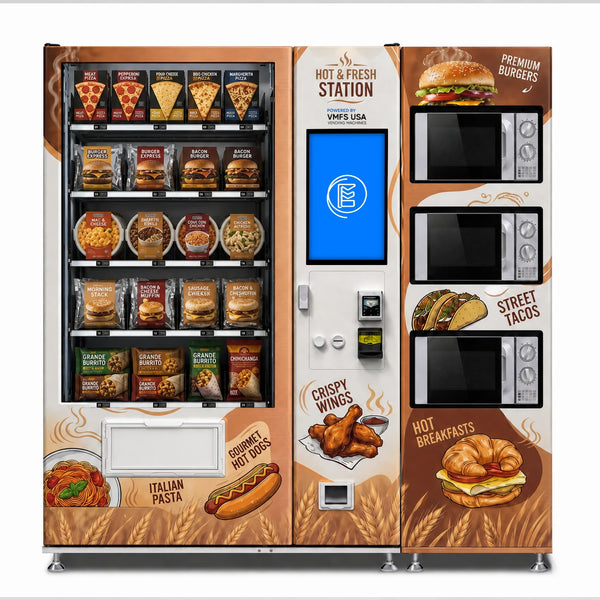
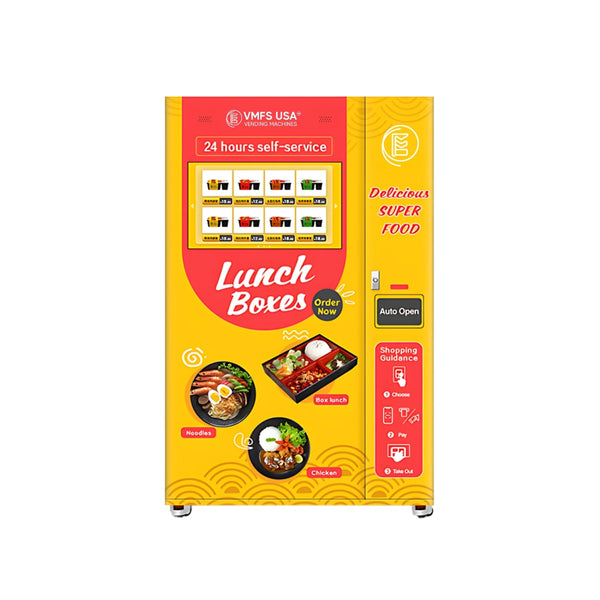
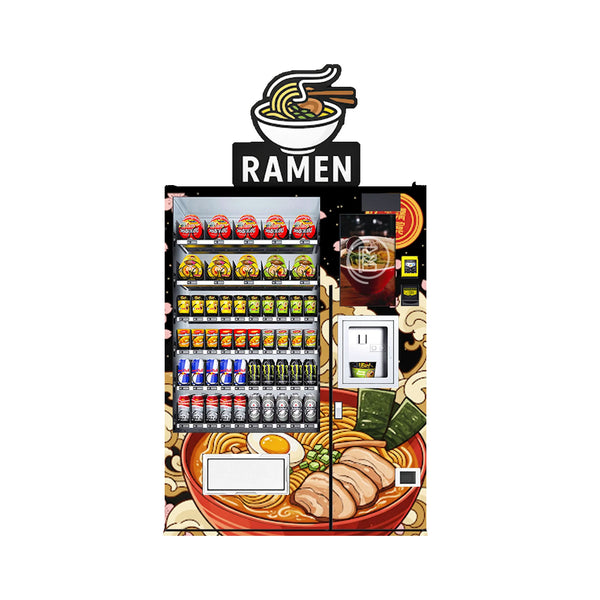
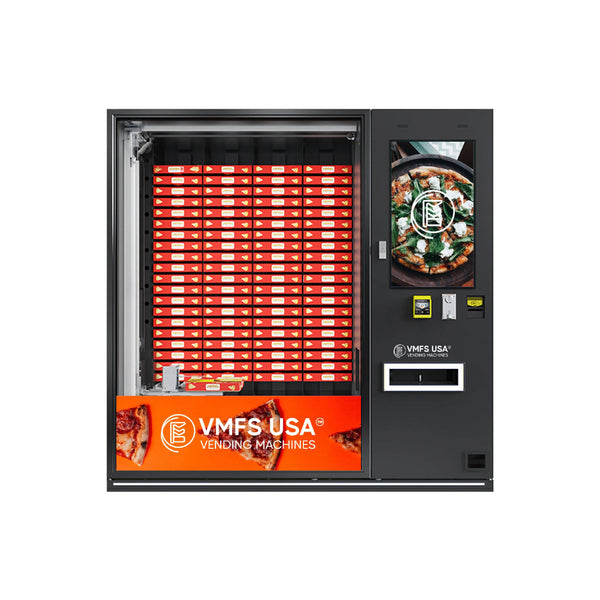
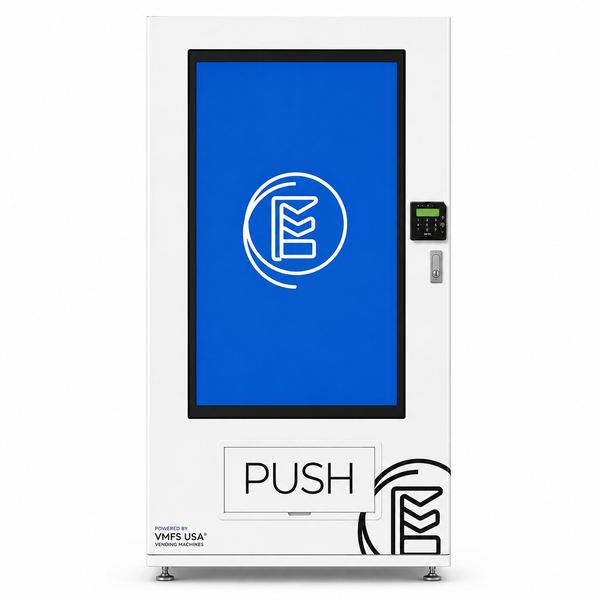
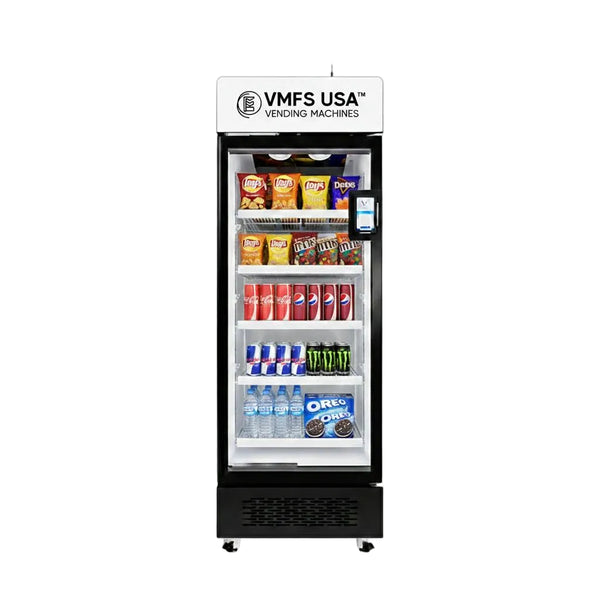
Food Vending Machines Available for Detroit
Every unit below ships configured, compliance-ready, and backed by VMFS Cloud monitoring.


How Operators Use Food Vending in Detroit
Corporate Breakroom
Downtown office parks in the Financial District, the Guardian Building, and the Renaissance Center house thousands of white collar workers who need lunch and breakfast solutions during long shifts. A fresh food vending machine stocked with fresh salads, wraps, sandwiches, and breakfast items meets demand without requiring employees to leave the building. The configurable temperature zones keep salads and wraps refrigerated while heating pizza and ramen on demand, and elevator delivery protects delicate fresh meal containers from damage. With 250 to 800 items per cabinet, restocking frequency drops significantly, lowering labor costs and maximizing net profit of 400 to 1000 dollars monthly per machine. Corporate tenants view reliable meal access as a retention amenity that reduces employee turnover and boosts productivity during the workday.
Hospital Night Shift
Detroit Medical Center and Henry Ford Hospital operate round the clock with nursing and support staff working overnight hours when external food options close. A fresh food vending machine loaded with fresh meals, frozen entrees, ramen, and sandwiches provides reliable 24 to 7 nutrition for graveyard shift workers and visiting families. Hot delivery dispenses ramen and hot entrees within minutes, heated zones keep fresh meal containers at safe temperatures, and refrigerated coils stock dairy and prepared salads. The 800 item capacity means one cabinet serves a floor or ward for days between fills, cutting into labor schedules and maximizing per machine revenue of 500 to 900 dollars monthly. Hospital administrators gain a competitive staffing advantage by offering convenient meals that competitors cannot match.
University Dorm
Wayne State University and University of Detroit Mercy house thousands of students in residence halls across their campuses who need meals at odd hours and between dining hall service windows. A fresh food vending machine stocked with fresh salads, sandwiches, ramen, frozen meals, and breakfast items becomes an essential dorm amenity that justifies room rental and supports student retention. Dual temperature zones keep fresh items crisp while frozen compartments extend shelf life, elevator delivery prevents crushing of delicate containers, and hot delivery turns ramen into a hot meal in seconds. The machine holds 250 to 800 items, reducing nightly restocking to weekly or biweekly visits and generating net profits of 400 to 800 dollars per machine monthly. Student housing operators gain a differentiated amenity that attracts families and improves occupancy rates year round.
Distribution Warehouse
Major logistics hubs and freight distribution centers in Pontiac and along I-94 east operate with three shift rotations of drivers and warehouse workers who clock long hours with limited break time. A fresh food vending machine filled with hearty hot meals, frozen entrees, sandwiches, and protein packed wraps fuels workers through physically demanding shifts without requiring them to leave the facility. Heated delivery dispenses hot pizza and hot entrees on demand, frozen zones preserve meal quality across long shifts, and the 800 item capacity means fewer interruptions to warehouse operations. Shift supervisors gain reliable meal access that reduces employee fatigue and cuts into break room downtime, and per machine monthly revenue reaches 600 to 1000 dollars with steady traffic across all three shifts.
What Ships With Every Food Unit
Regulations for Operating in Detroit, MI
Licensing, permits, sales tax, and health department standards for food vending operators in Michigan.
State License Requirements
In Michigan, the Department of Agriculture and Rural Development (MDARD) Food Safety Division oversees vending machine operations. Food vending machines fall under Michigan's Food Law (MCL 289.1101 et seq.) and require a Food Service License from MDARD. Operators selling fresh, frozen, hot-delivery, and ambient food categories (including salads, wraps, sandwiches, fresh meals, frozen meals, ramen, pizza, healthy snacks, and dairy items) must obtain a food establishment license. All operators must register for Michigan Sales Tax with the Department of Treasury and obtain an EIN from the IRS; business entity formation (LLC, Corporation, Sole Proprietorship) is required before licensing. Fresh food items require date-marking with manufacturer or preparation date and use-by date; dairy products must be stored at 41 degrees Fahrenheit or below with documented cold-chain maintenance; allergen disclosure is required for all sandwiches and prepared meals, clearly labeled on the machine or in accompanying documentation; hot food vending machines must maintain internal temperatures of 165 degrees Fahrenheit or higher with automatic temperature monitoring and shut-off systems. Vending machine licenses are typically renewed annually, and operators must submit renewal applications to MDARD at least 30 days before expiration. Contact MDARD Food Safety Division at (517) 373-8270 or visit michigan.gov/mdard for current licensing requirements and application forms.
City and County Permits
In Detroit, Michigan, operators must obtain a Business License (also called a Certificate of Occupancy or Certificate of Use) from the City of Detroit License and Inspections Department. Zoning approval is required; vending machines must comply with Detroit's zoning code (Title 24, Detroit City Code) which regulates placement in commercial, industrial, and public areas. Fire Safety Compliance is required; machines must pass fire inspection by the Detroit Fire Department if installed in public buildings or high-traffic areas. No separate coin-operated machine declaration is required at the city level, but the business license covers all vending operations. The City of Detroit also conducts health and sanitation inspections through the Detroit Health Department. At the county level, Wayne County does not typically impose additional vending permits beyond city requirements, but operators should verify with the Wayne County Health Department if operating across multiple county jurisdictions. Business licenses in Detroit must be renewed annually; late renewal penalties apply and typically include administrative fees (amount varies; contact the License and Inspections Department for current penalties). For Detroit permits, contact the City of Detroit License and Inspections Department at (313) 628-2451 or visit detroitmi.gov. For health inspections, contact the Detroit Health Department at (313) 876-4000.
Sales Tax Rate
The combined sales tax rate in Detroit, Michigan is 6% (Michigan state rate of 6%). Hot prepared foods sold from vending machines are taxed as restaurant meals at the full 6% rate. Packaged food items and cold foods (such as pre-packaged sandwiches, wraps, and snacks) are subject to the same 6% sales tax in Michigan; unlike some states, Michigan does not exempt grocery food from sales tax. Beverages are taxed at 6% regardless of type (hot or cold). Operators must register with the Michigan Department of Treasury, Tax Administration Division, to collect and remit sales tax; registration is completed online at michigan.gov/taxes. Remittance is due monthly or quarterly depending on sales volume (the state will assign a remittance schedule upon registration). There is no specific economic nexus threshold for out-of-state sellers in Michigan vending operations; any out-of-state operator with sales into Michigan must register and collect Michigan sales tax.
Health Department Standards
The Detroit Health Department and Michigan MDARD Food Safety Division jointly oversee food vending machines. All machines must maintain equipment with multi-zone temperature controls: refrigerated sections for fresh and dairy items must hold 41 degrees Fahrenheit or below, frozen sections must hold 0 degrees Fahrenheit or below, and hot-delivery sections must maintain 165 degrees Fahrenheit or higher. Food contact surfaces must be food-grade stainless steel or approved plastic; all internal components must be cleanable and non-corrosive. Thermometers (dial or digital) must be visible and accurate to within 2 degrees Fahrenheit. Machines must include automatic shut-off systems that trigger when internal temperatures fall outside safe ranges, and sanitation cycles (self-cleaning or agent-based) are required for all internal surfaces. Placement rules require machines to be installed in food-safe environments away from direct sunlight, moisture, and extreme heat; machines in schools, healthcare facilities, and government buildings are subject to unannounced inspections by local health authorities. Operational requirements include date-marking all fresh meals, sandwiches, salads, and dairy products with preparation/manufacture date and use-by or sell-by date (typically 7 days for fresh prepared foods, 14 days for dairy, as per MDARD guidelines); cold-chain and hot-hold documentation must be maintained and available for inspection, with daily temperature logs required. All labels must be clearly visible to consumers, indicating contents, allergens, date-markings, and storage temperatures. Detroit's climate (cold winters averaging 25-35 degrees Fahrenheit and humid summers averaging 70-80 degrees Fahrenheit) requires machines to include insulation and climate control to maintain internal zone temperatures year-round and prevent condensation damage. VMFS food vending machines deployed in Detroit ship with the appropriate spec standard, including configurable temperature zones (refrigerated, frozen, hot delivery, ambient, dual-zone) with energy-saving operation and a 1-year standard warranty with extended coverage options.
Disclaimer
Regulatory information is for reference only and current as of 2026. Operators should verify current requirements with the relevant agency before deployment. VMFS USA is not a legal or tax advisor. For operator-side legal guidance covering placement contracts, host venue agreements, documentation, business incorporation, tax registration, licenses, and permits, operators can consult <a href="https://vadviced.com">VAdviced</a>. For professional placement and location matching support, operators can work with <a href="https://vplaced.com">VPlaced</a>.
Detroit at a Glance
Geographic Identity
- County
- Wayne County
- Metro Area
- Detroit-Warren-Dearborn
- Time Zone
- America/Detroit (Eastern Time)
- Area Codes
- 313, 248, 586
- ZIP Codes
- 48201 to 48235
- Primary Airport
- DTW Detroit Metropolitan Wayne County Airport
- Secondary Airport
- MBS MBS International Airport
- Major Port
- Port of Detroit, a freshwater port on the Detroit River
- Nickname
- The Motor City
Market Stats
- City Population
- 670,031
- Metro Population
- 4.3 million
- Annual Visitors
- None
- Visitor Economy
- None
- Airport Passengers
- 36 million annual travelers through DTW
- Hospitality Jobs
- None
- Top Industries
- Automotive Manufacturing, Healthcare, Finance and Insurance, Logistics and Transportation, Technology and Software, Real Estate and Construction
- Demand Driver
- Strong corporate headquarters presence, major automotive industry concentration, and significant medical and healthcare sector employment drive sustained business travel and local economic activity.
Climate Profile
- Climate Zone
- Humid Continental
- Average Humidity
- 65 to 75 percent year round
- Summer High
- 82 degrees Fahrenheit average high with peaks near 90 degrees Fahrenheit in July and August
- Winter Low
- regularly below 20 degrees Fahrenheit from December to February, indoor placement recommended during winter months
- Seasonal Hazard
- Lake Effect Snow, November to March
- Environmental Exposure
- Heavy winter snow load and ice accumulation affect outdoor unit stability and drainage systems, requiring reinforced mounting and enhanced drainage design.
- Deployment Note
- Detroit's humid continental climate with cold winters and lake effect snow requires weatherproofed units with sealed electronics, enhanced drainage, and heated cabinets for winter operation. VMFS ships all Detroit outdoor units with these specifications standard.
Location & Service Area
- Key Neighborhoods
- Downtown Detroit, Corktown, Midtown, Greektown, Riverfront, Woodbridge, East Village, Rosedale Park, Palmer Woods, Virginia Park, Sherwood Forest, New Center
- Nearby Cities
- Dearborn, Dearborn Heights, Westland, Garden City, Inkster, Livonia, Novi, Southfield
- Service Radius
- VMFS delivers, installs, and services machines throughout Wayne County and Oakland County, with extended coverage to Macomb County on request.
Your Location. Working 24/7.
Answers to common questions from Detroit operators. Didn't see yours? Send us a message — our US-based team responds within one business day.
what monthly revenue can property owners expect from hosting a food vending machine in detroit?
how often does the vending machine need restocking and what products work best in detroit?
what electrical requirements and physical space does a food vending machine need in a detroit facility?
what happens if the machine breaks down or needs service in detroit?
what placement and revenue share arrangements should property owners discuss before hosting?
does the machine accept cashless payment and how does it work for detroit's workforce?
how does a property owner find the right vending machine partner and location strategy in detroit?
Deploy Food Vending Machines in Detroit, MI Today
Request a custom quote today for
food vending machines
at your Detroit location, and we handle machine selection, delivery, configuration, and ongoing support from start to finish. Every deployment begins with a site assessment covering foot traffic patterns, food mix balance across fresh meals, frozen entrees, hot food, and healthy snacks, temperature zone configuration and power requirements, network requirements for the cloud platform, and placement strategy can be coordinated through our
placement experts
for operators seeking professional location matching, with hospitals, automotive factories, university campuses, and corporate offices prioritized for highest meal volume. Whether you need a single unit in a small medical clinic or a rollout of 30 or more machines across a large manufacturing facility in Detroit, the quote includes hardware, installation, training, and 12 months of cloud monitoring at no extra cost.
Deploy Food Vending Across Detroit
1,200+ machines deployed. 1-year warranty standard. Free lifetime support. One team from site survey to uptime.