


Food Vending Machines in Baltimore, MD
Transform your Baltimore business with our reliable food vending machines. Boost revenue while serving customers fresh, convenient meals around the clock.
Deja de adivinar. Configure Your Food Vending Machine.
Answer a few quick questions about your location, your product mix, your temperature needs, and your budget. Our Food Vending System will match you with the right base model, add the right modules (refrigeration, ad screen, outdoor protection, payment suite), and show you real time pricing and lead time as you build.
Omita las idas y venidas. Omita la abrumadora hoja de especificaciones. Vea su configuración exacta, su costo exacto y su ventana de entrega exacta antes de comprometerse.
- Precios en tiempo real a medida que añade o elimina funciones
- Estimación del tiempo de entrega en tiempo real basada en su configuración
- Combinación de productos recomendada para su tipo de ubicación
- Capacidad, número de ranuras y límites de peso mostrados por configuración
- Opciones preestablecidas para alimentos, bebidas, electrónica, comercio minorista y congelados
Why Food Vending Machines?
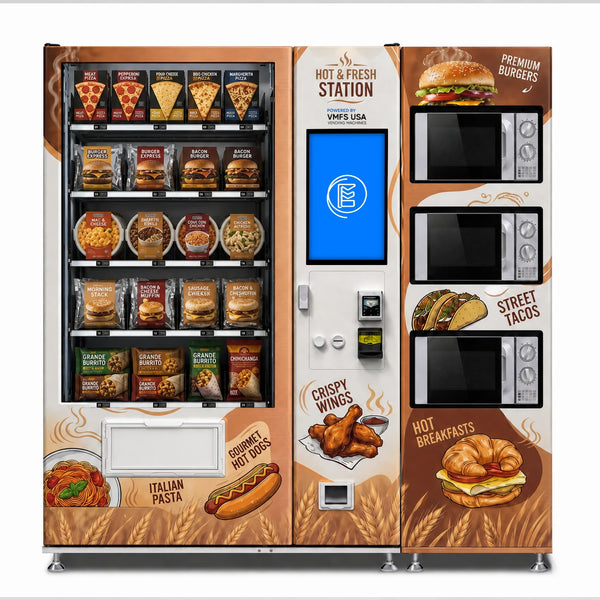
A food vending machine provides Baltimore businesses and organizations with convenient access to diverse dining options through a single configurable cabinet. Whether you choose a hot food vending machine for freshly heated entrees, a cold food vending machine for fresh meals and dairy products, or a frozen food vending machine for ready-to-eat options, these machines dispense salads, wraps, sandwiches, breakfast items, ramen, pizza, and healthy snacks with ease. With capacities ranging from 250 to 800 items across 30 to 72 adjustable slots,
fresh food vending machines
feature specialized delivery systems including coil mechanisms for packaged goods, elevator delivery for meal containers, and heated delivery for hot food on demand. Each unit offers configurable temperature zones calibrated before shipping to maintain optimal freshness, while the VMFS Cloud dashboard enables real-time sales tracking and inventory management for seamless operations.
Configurable Temperature Zones
One food vending machine system configurable for cold food, hot food, fresh food, frozen items, ambient products, or dual-zone mixed programs, with temperature settings calibrated before shipping based on the product mix
Versatile Delivery Options
Standard and custom-pitch coil delivery for packaged goods, elevator delivery for fresh meal containers and fragile items, heated delivery for hot food on demand, plus door-access AI cooler for mixed fresh and cold assortments
Wide Food Compatibility
Stocks salads, wraps, sandwiches, fresh meals, frozen meals, ramen, pizza, hot food entrees, healthy snacks, dairy items, microwavable meals, and ready-to-eat convenience foods from a single cabinet
Built For Demanding Venues
Designed for gyms (post-workout fresh meals), hospitals (24/7 staff and patient meals), schools (hot food when cafeteria is closed), warehouses with multiple shifts, corporate campuses, hotels, airports, and any venue needing consistent food access
VMFS Cloud Remote Management
Real-time sales, live inventory, temperature graphs across zones, fault alerts, and pricing updates stream to the VMFS Cloud dashboard from any device, with U.S.-based support and software updates included
Why Food Vending Machines Perform in Baltimore, Maryland
Baltimore's robust healthcare and hospital network—anchored by Johns Hopkins Medicine, University of Maryland Medical Center, and Sinai Hospital—creates ideal conditions for
food vending machines
to thrive. Medical facilities operate 24/7 with shift-based staff and visitors who need immediate meal access without leaving campus, making hot and cold vending units essential infrastructure. Hospitals also maintain high foot traffic across multiple buildings and departments, supporting machines with 250–800 item capacity and real-time inventory monitoring. Fresh meal and hot food placements in break rooms, cafeterias, and waiting areas drive strong ticket velocity, generating $400–$1,000 net monthly profit per machine after restocking. Baltimore's dense corporate and biotech sectors around Harbor Point and Canton further amplify demand.
Professional placement services
can identify high-performing hospital and office micro-locations, ensuring maximum visibility and accessibility for this underserved but high-volume market.
Best Locations in Baltimore
High-value deployment sites where food vending delivers the strongest revenue per square foot.
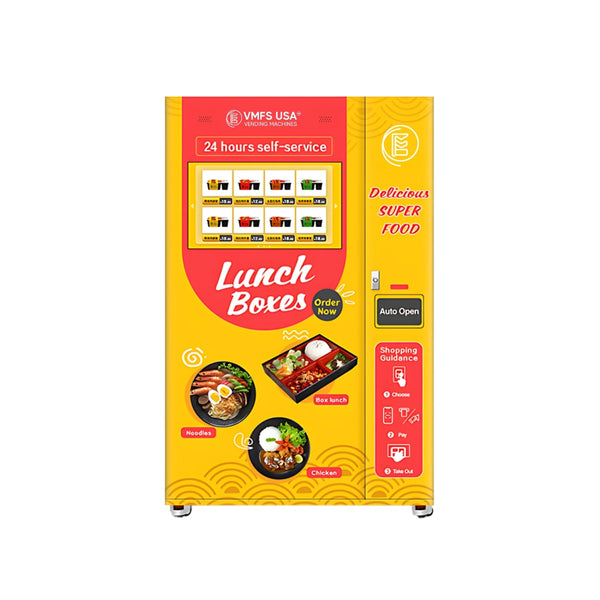
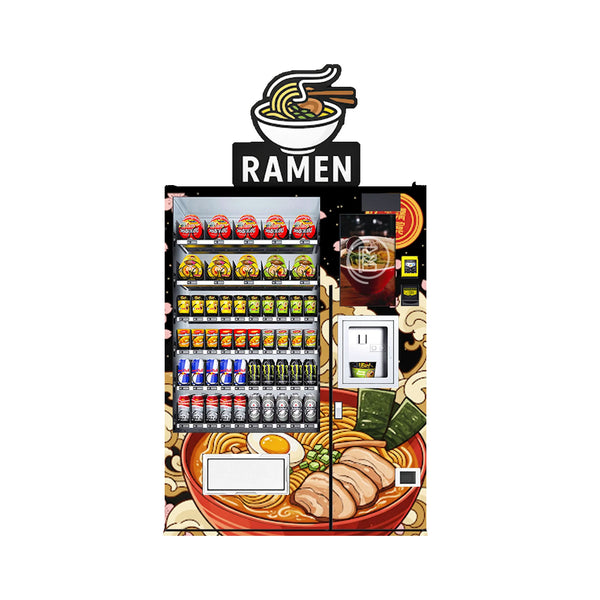
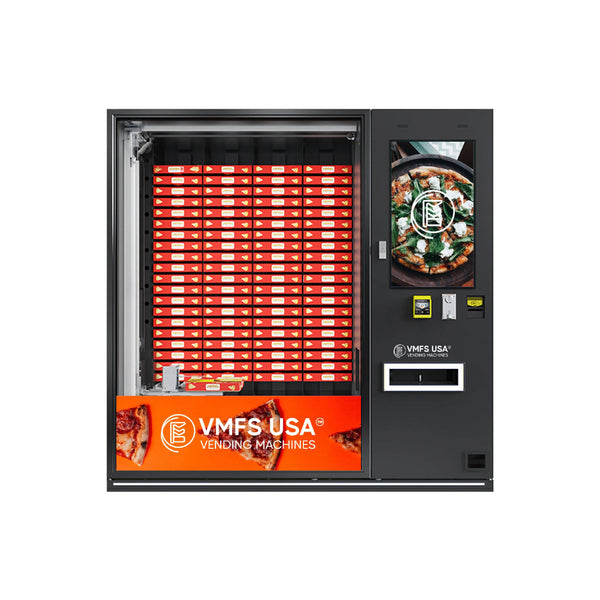
Food Vending Machines Available for Baltimore
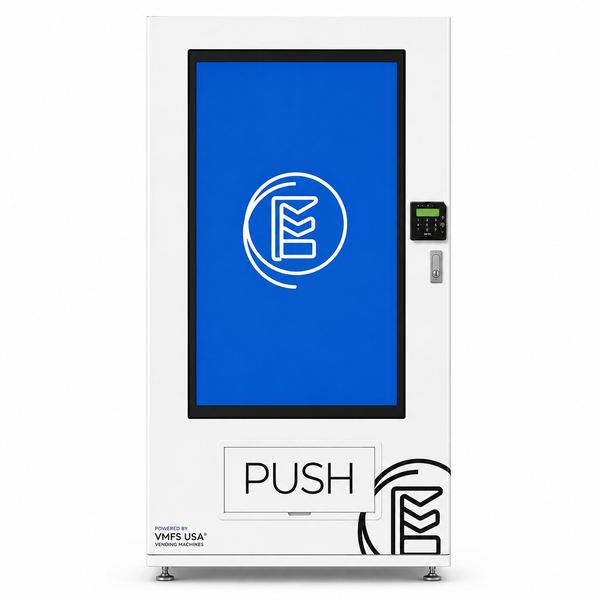
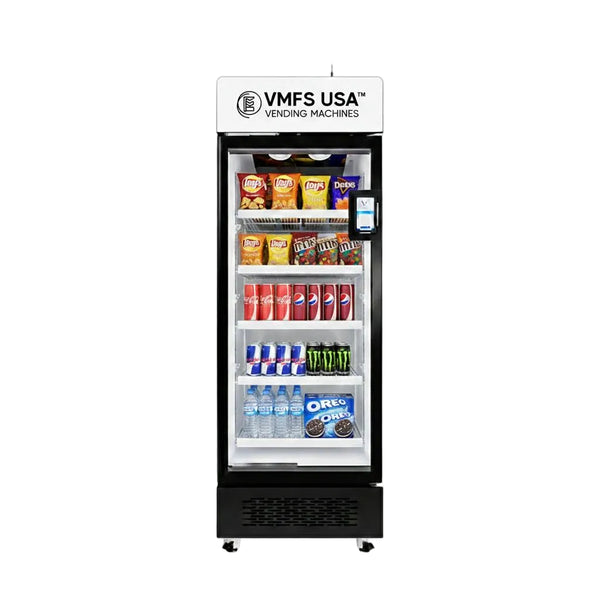
Every unit below ships configured, compliance-ready, and backed by VMFS Cloud monitoring.


How Operators Use Food Vending in Baltimore
Hospital Night Shift Stations
Medical centers including University of Maryland Medical Center, Johns Hopkins Hospital, and Sinai Hospital operate around the clock with staff working overnight shifts who need reliable meal access between patient rounds. A fresh food vending machine stocked with fresh meals, sandwiches, ramen, and frozen entrees serves this need without requiring cafeteria visits. The configurable temperature zones keep hot ramen and pizza ready on demand while refrigerated sections hold fresh salads and wraps, and elevator delivery protects meal container integrity. With 250 to 800 item capacity, restocking occurs weekly rather than daily, generating 500 to 800 dollars in monthly net profit while reducing labor costs for facilities managing 24/7 operations.
Port and Distribution Logistics Facilities
The Port of Baltimore and warehousing operations across Canton, Dundalk, and the Seagirt terminal employ thousands of shift workers handling cargo loading, sorting, and logistics coordination around the clock. A food vending machine stocked with hearty hot entrees, frozen meals, sandwiches, and microwavable options fuels workers during break periods and shift changes. Heated delivery provides pizza and hot meals on demand while frozen zones maintain long shelf life for items restocked once weekly, and the large capacity of 250 to 800 items reduces disruption to dock operations. Monthly net profit ranges from 600 to 900 dollars per machine while eliminating the need for workers to leave facility grounds during shifts.
Government and Civic Office Complexes
Federal and state offices downtown including the Social Security Administration, Department of Transportation, and multiple city agency buildings employ thousands of daytime workers with limited lunch break mobility. A fresh food vending machine stocked with salads, wraps, sandwiches, fresh meals, and breakfast items provides convenient midday fueling without leaving the building. Refrigerated zones preserve fresh ingredients while ambient sections hold yogurt and snacks, and elevator delivery ensures meal containers arrive intact and ready to eat. Machines generate 400 to 700 dollars in monthly net profit while functioning as a valued employee amenity reducing foot traffic outside secure facility perimeters.
University Student Housing and Recreation
University of Maryland Baltimore, Johns Hopkins University, and Towson University dormitories and recreation centers house thousands of students studying late or training between classes with unpredictable meal schedules. A fresh food vending machine stocked with ramen, fresh salads, sandwiches, frozen meals, and healthy snacks accommodates late night cravings and post-workout nutrition needs with 24/7 availability. Heated zones deliver hot ramen instantly while refrigerated sections hold fresh wraps, and 250 to 800 item capacity means weekly restocking fits student housing routines. Monthly net profit of 500 to 800 dollars per machine makes machines reliable revenue generators while improving residence life satisfaction and reducing dorm traffic to off-campus food sources.
What Ships With Every Food Unit
Regulations for Operating in Baltimore, MD
Licensing, permits, sales tax, and health department standards for food vending operators in Maryland.
State License Requirements
The Maryland Department of Health, Office of Food Protection, oversees food vending machine operations statewide. Maryland requires a food service license (also called a food establishment license) for operators vending fresh, frozen, hot-delivery, and ambient food categories including salads, wraps, sandwiches, fresh meals, frozen meals, ramen, pizza, healthy snacks, and dairy items. Operators must register for a Maryland sales tax license with the Comptroller of Maryland and obtain an EIN from the federal IRS if operating as a business entity other than a sole proprietorship. Commodity-specific rules include mandatory date-marking on all fresh foods, salads, sandwiches, and prepared meals with clear labeling of preparation and expiration dates; dairy products must be stored and maintained at 41 degrees Fahrenheit or below with documented cold-chain compliance; allergen disclosure is required for all sandwiches and prepared meals sold; and hot food vending machines must maintain hot-hold temperatures of 135 degrees Fahrenheit or above with continuous temperature documentation. Food service licenses must be renewed annually, typically in the calendar year following initial issuance. All vending operators must comply with Maryland's Food Service Sanitation Code and maintain equipment certification records.
City and County Permits
Baltimore City requires a Business License (also called a business tax registration certificate) issued by the Department of Finance, and operators must obtain a Certificate of Use from the Department of Planning confirming the vending location complies with zoning ordinances for food vending operations. Fire safety approval is required, obtained through the Baltimore City Fire Department, which inspects equipment placement and electrical connections. At the county level, Baltimore County (for operations outside city limits) requires similar business licensing through the Department of Finance and separate Certificate of Use approval through the County Department of Planning and Zoning. No formal coin-operated machine declaration is required in Baltimore, but operators must ensure machines comply with local electrical and placement codes. Surrounding municipalities such as Towson, Dundalk, and Columbia have their own business licensing requirements and may impose additional zoning restrictions; operators should verify requirements with each specific jurisdiction. Renewal timelines for Baltimore City business licenses occur annually, typically with a 30-day grace period; late renewal penalties vary by office and operators should contact the Department of Finance directly at the Baltimore City business licensing office for current penalty amounts. For contact information, operators can reach the Baltimore City Department of Finance at 410-396-3120 or the Planning Department at 410-396-8090.
Sales Tax Rate
The combined sales tax rate in Baltimore, Maryland is 6 percent, consisting of a 5.75 percent state rate plus a 0.25 percent Baltimore City tax. Prepared hot foods and ready-to-eat meals sold from vending machines are taxable at the full 6 percent rate as restaurant meals. Packaged grocery items, including pre-packaged sandwiches, some snack foods, and certain beverages, may qualify for lower tax treatment or exemption depending on classification; fresh produce, unprepared foods, and some beverages are typically exempt or taxed at reduced rates under Maryland's grocery exemption, though classification varies by product type. Operators must register for a Maryland sales tax license with the Comptroller of Maryland, Office of Revenue Administration, and remit sales tax monthly or quarterly depending on sales volume. Out-of-state sellers with no physical presence in Maryland are not required to collect sales tax unless they meet the economic nexus threshold; as of 2026, Maryland applies federal nexus thresholds for remote sellers, currently 200 transactions or 100,000 dollars in annual sales. Operators should contact the Comptroller's Office at 410-767-1340 or visit the website for current registration and remittance procedures.
Health Department Standards
The Maryland Department of Health, Office of Food Protection, and the Baltimore City Health Department jointly oversee food vending machine compliance. Refrigerated and hot food vending machines must include multi-zone temperature controls with separate refrigerated sections maintaining 41 degrees Fahrenheit or below, frozen sections at 0 degrees Fahrenheit or below, and hot-hold sections at 135 degrees Fahrenheit or above. Equipment must have food contact surfaces constructed of approved materials, calibrated thermometers visible in each temperature zone, automatic shut-off or alarm systems if temperatures fall outside safe ranges, and daily sanitation cycles with documented logs. Placement rules require machines to be sited away from direct sunlight, in climate-controlled or sheltered locations, and with adequate electrical access; placement in schools, healthcare facilities, and government buildings requires additional approval from those facilities and often from secondary health department liaisons. Operational requirements mandate date-marking on all fresh meals, sandwiches, salads, and dairy products with clear expiration labeling; strict cold-chain and hot-hold documentation must be maintained for all temperature-sensitive foods; all labels must be visible and legible; and unannounced inspections by Baltimore City Health Department inspectors occur regularly, with operators required to provide immediate access to machines and all temperature and sanitation records. Baltimore's humid subtropical climate during summer months requires robust cooling capacity, and machines must be capable of maintaining cold-chain integrity even in high-ambient-temperature environments. VMFS food vending machines deployed in Baltimore ship with the appropriate spec standard, including configurable temperature zones for refrigerated, frozen, hot delivery, ambient, and dual-zone configurations with energy-saving operation and a 1-year standard warranty with extended coverage options.
Disclaimer
Regulatory information is for reference only and current as of 2026. Operators should verify current requirements with the relevant agency before deployment. VMFS USA is not a legal or tax advisor. For operator-side legal guidance covering placement contracts, host venue agreements, documentation, business incorporation, tax registration, licenses, and permits, operators can consult <a href="https://vadviced.com">VAdviced</a>. For professional placement and location matching support, operators can work with <a href="https://vplaced.com">VPlaced</a>.
Baltimore at a Glance
Geographic Identity
- County
- Baltimore County
- Metro Area
- Baltimore-Columbia-Towson
- Time Zone
- America/New_York (Eastern Time)
- Area Codes
- 410, 443
- ZIP Codes
- 21201 to 21298
- Primary Airport
- BWI Baltimore/Washington International Airport
- Secondary Airport
- DCA Ronald Reagan Washington National Airport
- Major Port
- Port of Baltimore, one of the busiest container ports on the U.S. East Coast
- Nickname
- Charm City
Market Stats
- City Population
- 633,104
- Metro Population
- 2.8 million
- Annual Visitors
- 13.7 million (2022)
- Visitor Economy
- 5.3 billion annual economic impact
- Airport Passengers
- 36.5 million annual travelers through BWI
- Hospitality Jobs
- None
- Top Industries
- Healthcare and Life Sciences, Port and Logistics, Finance and Insurance, Manufacturing, Tourism and Hospitality, Technology and Innovation
- Demand Driver
- Major East Coast port operations, significant convention center traffic, leading medical research institutions, and historic waterfront attractions drive consistent visitation and business activity.
Climate Profile
- Climate Zone
- Humid Subtropical
- Average Humidity
- 65 to 75 percent year round
- Summer High
- 88 degrees Fahrenheit average high with peaks near 95 degrees Fahrenheit from June through September
- Winter Low
- 35 degrees Fahrenheit average low, regularly dropping below freezing from December through February
- Seasonal Hazard
- Nor'easter and Winter Storm Risk, November to March
- Environmental Exposure
- Winter ice and snow accumulation affects ground level placements, requiring enhanced drainage and freeze resistant seals on lower compartments.
- Deployment Note
- Baltimore's humid subtropical climate with cold winters and occasional heavy snow requires weatherproofed units with sealed electronics, enhanced drainage, and reinforced refrigeration cycles rated for seasonal temperature swings. VMFS ships all Baltimore outdoor units with these specifications standard.
Location & Service Area
- Key Neighborhoods
- Downtown Baltimore, Inner Harbor, Fells Point, Canton, Federal Hill, Harbor East, Hampden, Roland Park, Canton, Locust Point, Midtown, Pigtown
- Nearby Cities
- Columbia, Towson, Ellicott City, Catonsville, Glen Burnie, Dundalk, Essex, Bel Air
- Service Radius
- VMFS delivers, installs, and services machines throughout Baltimore City and Baltimore County, with extended coverage to Howard County and Anne Arundel County on request.
Your Location. Working 24/7.
Answers to common questions from Baltimore operators. Didn't see yours? Send us a message — our US-based team responds within one business day.
What net profit can a Baltimore hospital or university housing director expect monthly from a food vending machine placement?
How often does the food vending machine require restocking in Baltimore venues with varying demand patterns?
What electrical requirements and space dimensions does a food vending machine installation require in a Baltimore facility?
How does the warranty and maintenance program protect facility managers from downtime costs in Baltimore?
What payment methods does the food vending machine accept, and how does cashless capability benefit Baltimore workplaces?
How can a Baltimore property owner evaluate placement opportunity and negotiate terms with a vending operator?
Deploy Food Vending Machines in Baltimore, MD Today
Request a custom quote today for
food vending machines
at your Baltimore location, and our team handles machine selection, delivery, configuration, and ongoing support from start to operation. Every deployment begins with a site assessment covering foot traffic patterns, food mix balance across fresh meals, frozen entrees, hot food, and healthy snacks, temperature zone setup, power requirements, and network connectivity for cloud management, with placement strategy available through our
placement experts
for operators seeking professional location matching across hospitals, manufacturing facilities, university campuses, and corporate offices where meal volume runs highest. Whether you need a single unit in a medical office building downtown or a rollout of 30 or more machines across a hospital system or university dormitory network, your quote includes hardware, installation, staff training, and 12 months of cloud monitoring at no extra cost.
Deploy Food Vending Across Baltimore
1,200+ machines deployed. 1-year warranty standard. Free lifetime support. One team from site survey to uptime.