


Coffee Vending Machines in Tulsa, OK
Transform Your Tulsa Workplace with Premium Coffee Vending Machines – Boost Employee Satisfaction and Productivity Today
Deja de adivinar. Configure Your Coffee Vending Machine.
Answer a few quick questions about your location, your product mix, your temperature needs, and your budget. Our Coffee Vending System will match you with the right base model, add the right modules (refrigeration, ad screen, outdoor protection, payment suite), and show you real time pricing and lead time as you build.
Omita las idas y venidas. Omita la abrumadora hoja de especificaciones. Vea su configuración exacta, su costo exacto y su ventana de entrega exacta antes de comprometerse.
- Precios en tiempo real a medida que añade o elimina funciones
- Estimación del tiempo de entrega en tiempo real basada en su configuración
- Combinación de productos recomendada para su tipo de ubicación
- Capacidad, número de ranuras y límites de peso mostrados por configuración
- Opciones preestablecidas para alimentos, bebidas, electrónica, comercio minorista y congelados
Why Coffee Vending Machines?
A coffee vending machine transforms any Tulsa workplace into a premium café experience. Our bean-to-cup vending machine grinds fresh whole beans per order, delivering espresso, cappuccino, latte, mocha, americano, decaf, hot chocolate, tea, and 20+ specialty drinks in 30-60 seconds. From compact tabletop models brewing 150 cups daily to the Coffee Pro XL flagship producing 600 cups per day, each hot drinks vending machine features 9-bar espresso pressure, 3000W heating power, and an aluminum boiler with continuous temperature control. Programmable self-cleaning and our VMFS Cloud dashboard provide real-time sales and inventory tracking. Explore our full selection of
coffee vending machines
designed to elevate your office coffee experience.
Bean-To-Cup Brewing
Built-in grinder freshly grinds 7 to 16 grams of whole beans per order for true cafe-quality espresso, cappuccino, latte, mocha, and 20+ specialty drinks with no pre-ground coffee going stale
High-Capacity Brewing System
Capacity ranges from 150 cups per day on compact tabletop models up to 600 cups per day on the Coffee Pro XL flagship, with brewing time of 30 to 60 seconds per drink
Premium Drink Menu
Espresso, cappuccino, latte, mocha, americano, decaf, hot chocolate, tea selections, and iced coffee on select models, with adjustable strength, cup size, and ingredient ratios for every recipe
Automated Cleaning And Maintenance
Programmable self-cleaning of mixing circuits, product outlets, and grinder; tool-free access to removable parts; aluminum boiler resists scaling for long-term reliability rated for 750,000+ grinder cycles
VMFS Cloud Remote Management
Real-time sales, ingredient stock levels, fault alerts, and remote menu updates stream to the VMFS Cloud dashboard from any device, with U.S.-based support and software updates included
Why Coffee Machines Perform in Tulsa, Oklahoma
Tulsa's thriving corporate sector and energy industry headquarters create dense office parks with thousands of employees seeking quick caffeine solutions during morning rush and afternoon slumps.
Coffee vending machines
excel in these environments by delivering fresh-brewed cups in 30–60 seconds without requiring barista staffing, meeting demand from professionals who lack time for coffee shop visits. High-traffic venues like downtown office buildings, medical complexes, and hospitality hubs can support machines brewing 150–600 cups daily, generating $300–$700 monthly net profit per unit after ingredient costs. Real-time inventory monitoring ensures consistent availability during peak demand windows. Tulsa's growing workforce and limited specialty coffee accessibility outside main corridors create ideal conditions for bean-to-cup vending, while
professional placement services
help operators identify premium office and venue locations maximizing daily transactions and customer retention.
Best Locations in Tulsa
High-value deployment sites where coffee vending delivers the strongest revenue per square foot.
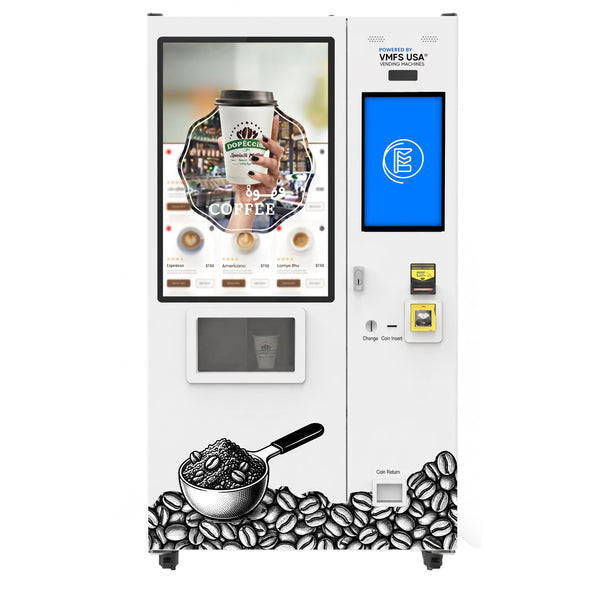
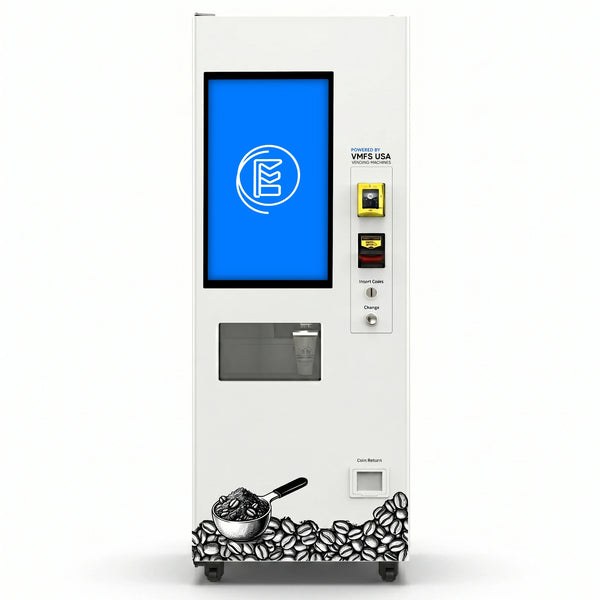
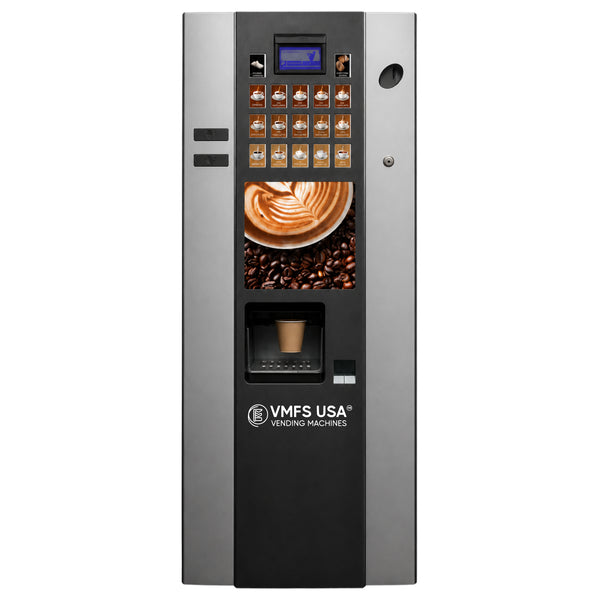
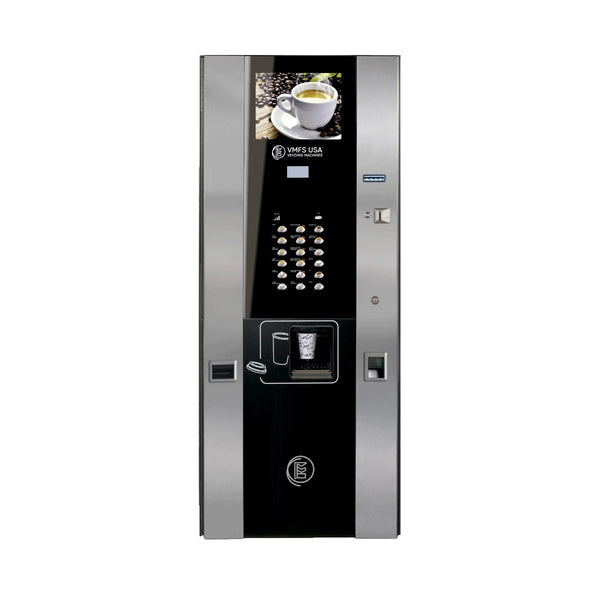
Coffee Vending Machines Available for Tulsa
Every unit below ships configured, compliance-ready, and backed by VMFS Cloud monitoring.

How Operators Use Coffee Vending in Tulsa
Corporate Breakroom
Tulsa's energy sector and oil and gas headquarters including Devon Energy, Coterra Energy, and regional offices throughout the Midtown and Downtown corridors drive consistent weekday traffic. The coffee vending machine stocks espresso, cappuccino, latte, americano, and decaf to fuel morning meetings and afternoon energy slumps. Bean-to-cup brewing delivers fresh shots and milk-based drinks within 30 to 60 seconds per cup, handling 150 to 600 cups per day depending on machine size without requiring daily restocking of the 1,700g bean canisters. Corporate tenants value reliable breakroom amenities that reduce employee departures to external coffee shops and justify rent premiums, generating $250 to $400 net profit per machine monthly after ingredient costs of $150 to $250.
Healthcare Facility
Tulsa's major medical centers including Saint Francis Health System, Hillcrest Medical Center, and OU Health operations employ thousands of nurses, physicians, and support staff across morning, evening, and overnight shifts. The coffee vending machine stocks freshly brewed coffee, espresso, cappuccino, and hot chocolate for round-the-clock clinical staff who cannot leave patient floors during shift transitions. High-capacity 600 cup per day brewing and fast 30 to 60 second brew times ensure reliable access during peak overnight demand when external cafés are closed, while the bean-to-cup system maintains consistent quality across hundreds of daily servings. Hospital administrators recognize 24/7 coffee access as essential staff retention infrastructure, generating $300 to $400 net profit per machine monthly after ingredient restocking costs of $200 to $300.
Airport Terminal
Tulsa International Airport handles 3 to 4 million annual passengers with heavy morning departure volumes and evening arrival waves requiring immediate beverage access. The coffee vending machine stocks premium espresso, cappuccino, latte, americano, iced coffee, and specialty hot drinks to serve departing business travelers and connecting passengers with minimal wait time. Bean-to-cup brewing delivers cafe-quality drinks in under a minute while handling 600 cups per day, and multi-payment acceptance including Apple Pay and Google Pay accommodates travelers without cash or specific card denominations. Airport concession space commands higher revenue per machine due to captive passenger volume and willingness to pay premium prices, generating $350 to $500 net profit monthly after ingredient costs of $250 to $300.
Hotel Lobby
Tulsa's hospitality corridor including the Philbrook Museum district, Riverside Drive hotel clusters, and downtown properties near the BOK Center and convention facilities host domestic and international guests seeking immediate morning coffee without leaving the building. The coffee vending machine stocks premium espresso, cappuccino, latte, mocha, americano, and hot chocolate to deliver hotel-quality drinks 24/7 at machine speed, allowing guests to grab coffee before breakfast service opens or after evening arrival. Bean-to-cup brewing ensures every drink meets guest expectations through consistent extraction and milk steaming, while 600 cup per day capacity and ingredient canisters holding up to 1,700g beans eliminate multiple daily refills during high-occupancy periods. Hotel operators recognize premium breakroom coffee as a guest experience differentiator that drives positive reviews and reduces front desk service calls, generating $300 to $450 net profit per machine monthly after ingredient restocking of $200 to $300.
What Ships With Every Coffee Unit
Regulations for Operating in Tulsa, OK
Licensing, permits, sales tax, and health department standards for coffee vending operators in Oklahoma.
State License Requirements
The Oklahoma Department of Health and Human Services (DHHS) Food Protection Division oversees food service operations including vending machines that dispense hot beverages. Operators selling hot coffee, espresso, milk-based drinks, hot chocolate, tea, and iced coffee must obtain a food service license from DHHS. This license applies whether machines dispense prepared hot drinks or packaged beverages. Milk and dairy product handling for milk-based espresso drinks must comply with Oklahoma dairy sanitation rules, including proper refrigeration and temperature maintenance. All milk-based drink recipes must display ingredient labeling and allergen disclosures clearly, identifying dairy and nut-based ingredients as required by Oklahoma food labeling statutes. Operators must register for Oklahoma sales tax with the Oklahoma Tax Commission and obtain an EIN from the IRS; business entity formation (LLC, sole proprietorship, or corporation) is the operator's choice but must be registered with the Oklahoma Secretary of State. Food service licenses are typically renewed annually; operators should verify current renewal timelines with DHHS. Commodity-specific rules require that powdered milk and other dairy components used in prepared drinks be date-marked and stored according to temperature control standards outlined in the Oklahoma Food Code.
City and County Permits
Tulsa requires operators to obtain a city business license before operating any vending machine within city limits; this is issued by the Tulsa City Business License Division. A Certificate of Occupancy or Certificate of Use may be required depending on the host venue and placement location. Zoning compliance must be verified; confirm that your placement location allows food service vending in its zoning district by contacting the Tulsa Planning and Development Department. Fire safety inspection and approval is required for machines that heat water or contain electrical components; the Tulsa Fire Department conducts these inspections. Tulsa County does not typically issue separate county-level permits for vending machines, but operators should verify with Tulsa County Health Department if placement is in unincorporated areas. Coin-operated machine declarations or similar filings may be required by the City of Tulsa; contact the Business License Division for current filing requirements. Surrounding municipalities (such as Broken Arrow, Owasso, or Bixby) have separate permit requirements if you operate machines there; each city's business license office can provide details. City business licenses typically renew annually, and late renewal may result in penalties assessed by the Tulsa City Treasurer's Office. The Tulsa City Business License Division can be reached through the City of Tulsa's main office at (918) 596-2000; the Tulsa Fire Department Non-Emergency line is (918) 596-9222 and the Planning and Development Department is (918) 596-5260.
Sales Tax Rate
The combined sales tax rate in Tulsa, Oklahoma is 9.23 percent, comprised of the state sales tax rate of 4.5 percent plus the Tulsa County sales tax rate of 1.03 percent, plus the City of Tulsa sales tax rate of 3.7 percent. Hot beverages prepared on-site by the vending machine (such as freshly brewed coffee or espresso made to order) are taxed as prepared food under Oklahoma law, subject to the full combined rate. Packaged or pre-made beverages in sealed containers may receive different treatment depending on classification; operators should verify with the Oklahoma Tax Commission whether a specific product qualifies as a packaged beverage or prepared food. All coffee vending operators must register with the Oklahoma Tax Commission for sales tax purposes; operators can register online at tax.ok.gov or by phone. Remittance frequency varies; most small operators remit sales tax monthly or quarterly, but the Tax Commission will specify the schedule during registration. Out-of-state sellers with economic nexus in Oklahoma (generally defined as over 200 transactions or $100,000 in gross sales to Oklahoma residents in a 12-month period) must register and collect Oklahoma sales tax; this applies to operators shipping or remotely managing machines in Tulsa.
Health Department Standards
The Oklahoma Department of Health and Human Services Food Protection Division sets statewide health department standards for office coffee machines; the Tulsa Health Department (part of Tulsa City-County Health Department) provides local enforcement and inspection oversight. Equipment must include a boiler with continuous temperature control maintaining hot water at a safe, consistent temperature, typically 180-200 degrees Fahrenheit depending on beverage type. Food contact surfaces must be constructed of stainless steel or other approved food-grade materials; automatic shut-off systems are required for safety and energy efficiency. Programmable self-cleaning cycles are required to reduce bacterial growth and maintain hygiene between uses. Machines must be placed in areas with adequate drainage, ventilation, and protection from outdoor contaminants; placement in food service areas, break rooms, or offices is typically permitted if local zoning allows. Operational requirements mandate that perishable ingredients such as powdered milk and dairy products be date-marked upon opening and stored at appropriate temperatures; labels must be visible on all ingredient containers. Unannounced inspections by Tulsa Health Department staff are conducted to verify compliance; operators must maintain records of cleaning and maintenance. Secondary local oversight may apply if machines are placed in schools (Tulsa Public Schools has additional food service standards), healthcare facilities (Tulsa County Hospital or private clinics may require extra certification), or government buildings (City of Tulsa facilities have specific food safety protocols). Tulsa's warm climate and humidity levels may affect machine performance; condensation management and drainage are important considerations. VMFS USA coffee vending machines deployed in Tulsa ship with the appropriate spec standard, including aluminum boiler with continuous temperature control and energy-saving design and a 1-year standard warranty with extended coverage options.
Disclaimer
Regulatory information is for reference only and current as of 2026. Operators should verify current requirements with the relevant agency before deployment. VMFS USA is not a legal or tax advisor. For operator-side legal guidance covering placement contracts, host venue agreements, documentation, business incorporation, tax registration, licenses, and permits, operators can consult <a href="https://vadviced.com">VAdviced</a>. For professional placement and location matching support, operators can work with <a href="https://vplaced.com">VPlaced</a>.
Tulsa at a Glance
Geographic Identity
- County
- Tulsa County
- Metro Area
- Tulsa, Oklahoma
- Time Zone
- America/Chicago (Central Time)
- Area Codes
- 918
- ZIP Codes
- 74103 to 74137
- Primary Airport
- TUL Tulsa International Airport
- Secondary Airport
- None
- Major Port
- Port of Catoosa, inland barge port on the Arkansas River
- Nickname
- The Oil Capital of the World
Market Stats
- City Population
- 413,066
- Metro Population
- 1.04 million
- Annual Visitors
- None
- Visitor Economy
- None
- Airport Passengers
- 4.5 million annual travelers through TUL
- Hospitality Jobs
- None
- Top Industries
- Energy and Petroleum, Aviation and Aerospace, Healthcare, Manufacturing, Finance and Banking, Real Estate
- Demand Driver
- A diverse economy anchored by energy sector headquarters, aviation manufacturing, medical institutions, and regional commercial activity drives steady business and consumer demand across Tulsa.
Climate Profile
- Climate Zone
- Humid Subtropical
- Average Humidity
- 45 to 65 percent year round
- Summer High
- 95 degrees Fahrenheit or higher from June through August
- Winter Low
- regularly drops to 30 degrees Fahrenheit or below, indoor placement recommended during winter months
- Seasonal Hazard
- Tornado Season, March to June
- Environmental Exposure
- Spring severe weather and hail risk requires impact resistant housing for outdoor placements in exposed locations.
- Deployment Note
- Tulsa's humid subtropical climate with significant tornado and severe weather exposure requires weatherproofed units with sealed electronics and impact resistant components. Enhanced drainage and reinforced refrigeration cycles manage summer heat and humidity. VMFS ships all Tulsa outdoor units with full weatherproofing and tornado impact specification standard.
Location & Service Area
- Key Neighborhoods
- Downtown Tulsa, Midtown, Brady Arts, Pearl District, Riverside, Cherry Street, Brookside, Utica Square, Maple Ridge, Cain's Ballroom District, Greenwood, North Tulsa
- Nearby Cities
- Broken Arrow, Owasso, Bixby, Jenks, Sand Springs, Sapulpa, Catoosa, Claremore
- Service Radius
- VMFS delivers, installs, and services machines throughout Tulsa and Rogers counties, with extended coverage to Creek and Osage counties on request.
Your Location. Working 24/7.
Answers to common questions from Tulsa operators. Didn't see yours? Send us a message — our US-based team responds within one business day.
How much net profit can a Tulsa office or facility expect per month from a coffee vending machine?
What drink options does the bean-to-cup machine offer, and can operators customize the menu for Tulsa venues?
How often does the vending machine need restocking and maintenance in a Tulsa location?
What electrical setup and space does a coffee vending machine require at a Tulsa facility?
Does the machine accept contactless and mobile payments, or only cash?
How can operators find suitable placements and navigate venue contracts for coffee machines in Tulsa?
Deploy Coffee Vending Machines in Tulsa, OK Today
Request a custom quote today for
coffee vending machines
at your Tulsa location, and we handle machine selection, delivery, configuration, and ongoing support from start to finish. Every deployment begins with a site assessment covering foot traffic patterns, drink menu balance across espresso, cappuccino, latte, and specialty hot drinks, ingredient canister capacity, power requirements, and network needs for the cloud platform, and placement strategy can be coordinated through our
placement experts
for operators seeking professional location matching, with high-foot traffic corporate offices, hotels, and hospital waiting rooms prioritized to maximize daily cup volume. Whether you need a single unit in a small medical clinic or a rollout of 30 or more machines across a large hotel property, hospital system, or university campus in Tulsa, the quote includes hardware, installation, staff training, and 12 months of cloud monitoring at no extra cost.
Deploy Coffee Vending Across Tulsa
1,200+ machines deployed. 1-year warranty standard. Free lifetime support. One team from site survey to uptime.