


Coffee Vending Machines in Seattle, WA
Seattle's Premier Coffee Vending Solutions for Your WorkplaceElevate your office experience with premium automated coffee machines delivering fresh, quality beverages to employees daily, boosting productivity and workplace satisfaction effortlessly.
Deja de adivinar. Configure Your Coffee Vending Machine.
Answer a few quick questions about your location, your product mix, your temperature needs, and your budget. Our Coffee Vending System will match you with the right base model, add the right modules (refrigeration, ad screen, outdoor protection, payment suite), and show you real time pricing and lead time as you build.
Omita las idas y venidas. Omita la abrumadora hoja de especificaciones. Vea su configuración exacta, su costo exacto y su ventana de entrega exacta antes de comprometerse.
- Precios en tiempo real a medida que añade o elimina funciones
- Estimación del tiempo de entrega en tiempo real basada en su configuración
- Combinación de productos recomendada para su tipo de ubicación
- Capacidad, número de ranuras y límites de peso mostrados por configuración
- Opciones preestablecidas para alimentos, bebidas, electrónica, comercio minorista y congelados
Why Coffee Vending Machines?
A coffee vending machine delivers premium freshly brewed beverages directly to your Seattle workplace. Our bean-to-cup vending machine grinds whole beans on demand for each order, brewing espresso, cappuccino, latte, mocha, americano, decaf, hot chocolate, tea, and 20+ specialty drinks in just 30 to 60 seconds per cup. Whether you choose a compact tabletop model serving 150 cups daily or our Coffee Pro XL flagship producing 600 cups daily, each hot drinks vending machine features 9-bar espresso pressure, 3000W heating power, and an aluminum boiler with continuous temperature control. Our bean-to-cup brewing technology includes programmable self-cleaning and the VMFS Cloud dashboard for real-time sales tracking and inventory management. Explore our complete selection of
coffee vending machines
designed to elevate your office break room experience.
Bean-To-Cup Brewing
Built-in grinder freshly grinds 7 to 16 grams of whole beans per order for true cafe-quality espresso, cappuccino, latte, mocha, and 20+ specialty drinks with no pre-ground coffee going stale
High-Capacity Brewing System
Capacity ranges from 150 cups per day on compact tabletop models up to 600 cups per day on the Coffee Pro XL flagship, with brewing time of 30 to 60 seconds per drink
Premium Drink Menu
Espresso, cappuccino, latte, mocha, americano, decaf, hot chocolate, tea selections, and iced coffee on select models, with adjustable strength, cup size, and ingredient ratios for every recipe
Automated Cleaning And Maintenance
Programmable self-cleaning of mixing circuits, product outlets, and grinder; tool-free access to removable parts; aluminum boiler resists scaling for long-term reliability rated for 750,000+ grinder cycles
VMFS Cloud Remote Management
Real-time sales, ingredient stock levels, fault alerts, and remote menu updates stream to the VMFS Cloud dashboard from any device, with U.S.-based support and software updates included
Why Coffee Machines Perform in Seattle, Washington
Seattle's thriving tech and corporate campus density—home to Amazon, Microsoft, and countless startups—creates massive demand for convenient caffeine solutions in high-traffic office breakrooms.
Coffee vending machines
excel in these environments, delivering fresh-brewed cups in 30 to 60 seconds without requiring barista staff, directly addressing the morning rush and afternoon slump that plague Seattle's fast-paced workforce. With daily brewing capacity of 150 to 600 cups and real-time inventory monitoring, these machines perform exceptionally well across Seattle's mixed venues—corporate offices, biotech facilities, hospitals, and transit hubs—where foot traffic justifies the $300 to $700 monthly net profit per machine. The Pacific Northwest's rainy climate and strong coffee culture amplify demand year-round, while
professional placement services
help operators identify optimal high-volume locations, maximizing returns in Seattle's competitive vending market.
Best Locations in Seattle
High-value deployment sites where coffee vending delivers the strongest revenue per square foot.
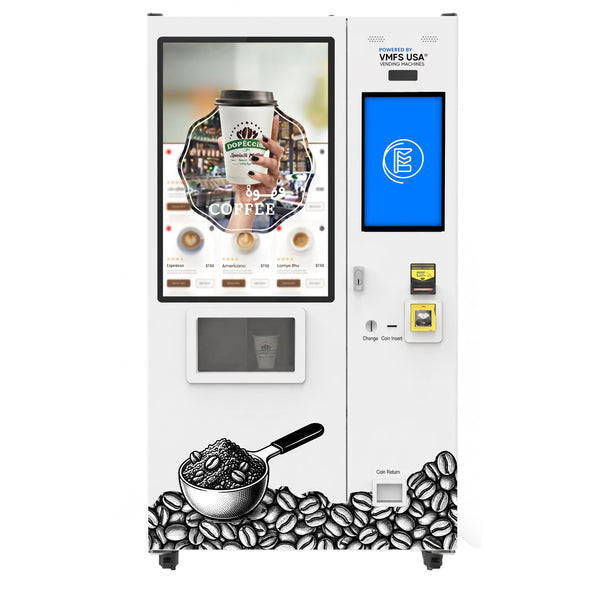
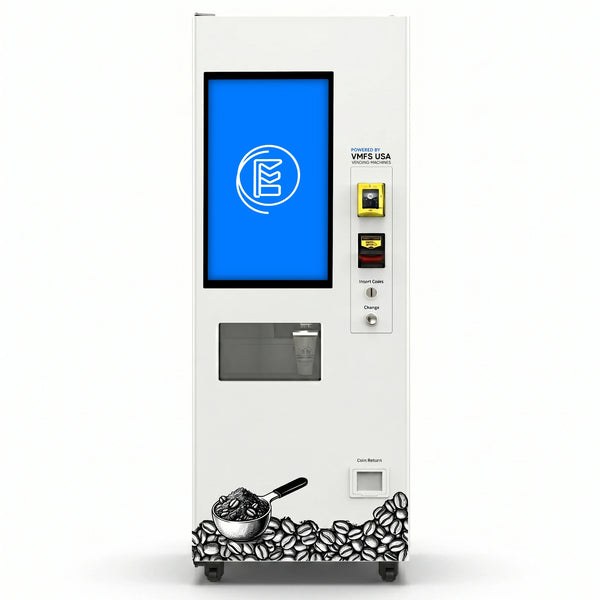
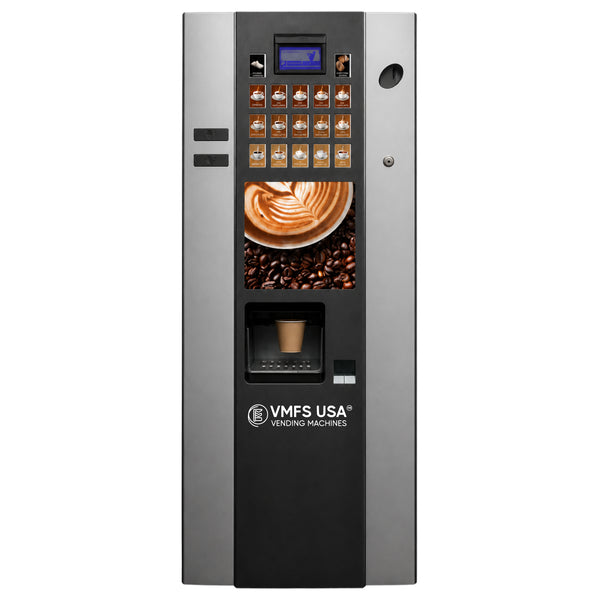
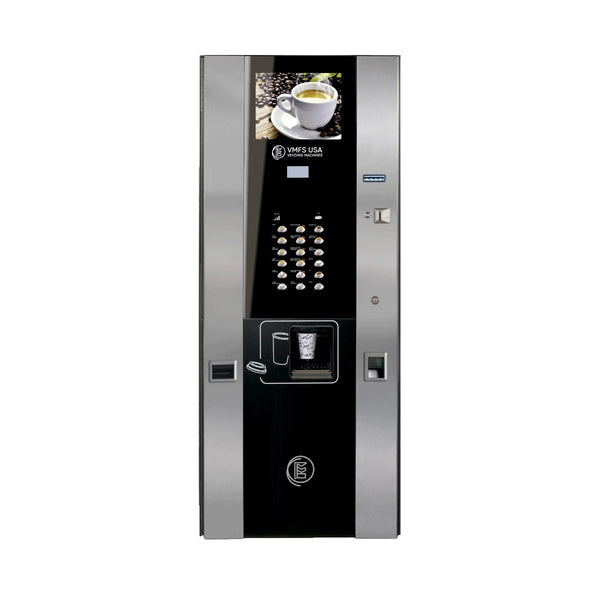
Coffee Vending Machines Available for Seattle
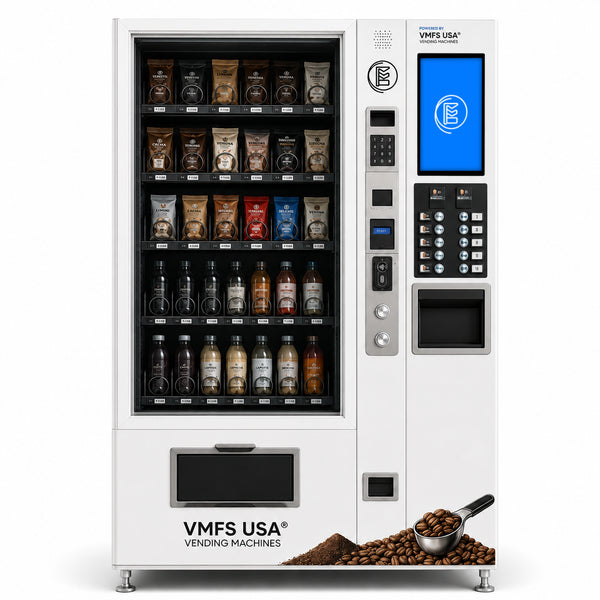
Every unit below ships configured, compliance-ready, and backed by VMFS Cloud monitoring.

How Operators Use Coffee Vending in Seattle
Tech Campus Breakroom
Amazon, Microsoft, and Google engineering teams across Seattle operate high-intensity work environments where morning espresso and afternoon caffeine demand drive consistent machine usage. Bean-to-cup capability delivers premium espresso, cappuccino, latte, americano, and decaf throughout the shift cycle without barista delays. The 600-cup per day Coffee Pro XL flagship handles sustained demand from large campuses without daily restocking, and real-time VMFS Cloud monitoring ensures uptime across multiple machines on one property. Net profit runs 250 to 400 dollars per machine monthly, making campus breakrooms a reliable revenue stream where employee retention depends on workplace amenities.
Downtown Hotel Lobby
Hotels along Pike Place Market, the waterfront, and Belltown serve guests expecting premium in-room and lobby beverage options within seconds of arrival. Espresso, cappuccino, latte, mocha, and specialty hot drinks paired with iced coffee variants from the built-in ice maker keep the lobby coffee vending machine active 24 hours daily. High-capacity brewing from 150 to 600 cups per day handles peak check-in periods and evening events without stock gaps, while tap-to-pay and Apple Pay integration accommodate guest payment preferences. Guest satisfaction drives repeat visits and hotel ratings, with monthly net profit of 300 to 500 dollars per machine in high-traffic lobby locations.
Medical Center Break Area
Swedish Medical Center, UW Medicine, and Harborview operate round-the-clock clinical and administrative staffing where night shift workers and early morning clinicians need reliable caffeine access outside standard cafe hours. The coffee vending machine stocks freshly brewed coffee, espresso shots, cappuccino, hot chocolate, and tea selections to support 12-hour and overnight shifts. Bean-to-cup brewing delivers consistent espresso pressure and 30 to 60 second cup times without operational complexity, and 150 to 600 cup per day capacity ensures staff never encounter empty canisters during critical demand windows. Medical facilities generate 200 to 350 dollars net monthly per machine because staff purchase multiple drinks daily and overnight shifts create reliable second-shift demand.
University Dormitory Common Area
University of Washington residence halls and student lounges concentrate high caffeine consumption during study hours, exam periods, and early morning classes where campus cafe access is limited. Espresso, cappuccino, latte, iced coffee, and hot chocolate selections appeal to student budgets and taste preferences while accepting cash and card payments for accessibility. The tabletop and mid-capacity brewing configurations handle sustained dorm-level demand with ingredient canisters requiring restocking only weekly, and real-time monitoring prevents mid-study stockouts during peak evening hours. Dorm machines generate 150 to 300 dollars net monthly after restocking, making them reliable revenue for student housing operators seeking student amenities without staffing additional cafe locations.
What Ships With Every Coffee Unit
Regulations for Operating in Seattle, WA
Licensing, permits, sales tax, and health department standards for coffee vending operators in Washington.
State License Requirements
The Washington State Department of Health (WA DOH) oversees food service establishments including vending machines that dispense prepared beverages. Operators selling coffee, espresso, milk-based drinks, hot chocolate, tea, and iced coffee must obtain a Food Service License from WA DOH. This applies to machines that prepare beverages on-site rather than dispense pre-packaged drinks. Washington requires registration with the Department of Revenue (DOR) for sales tax purposes and assignment of a Unified Business Identifier (UBI) number, which also serves as your Washington State tax identification number. Most operators structure as sole proprietors, partnerships, or LLCs; you will need to register your business entity with the Washington Secretary of State before applying for licensing. Milk and dairy products used in milk-based espresso drinks and other dairy-containing preparations must be handled according to WAC 246-215-01171, which covers time-temperature control, labeling with preparation dates, and segregation from non-dairy ingredients. All ingredients, especially those containing tree nuts, peanuts, soy, milk, and other major allergens, must be clearly labeled and documented in your machine's ingredient manifest available for inspection. Prepared beverage components must display allergen information visible on or near the machine. Food Service Licenses must be renewed annually, with renewal applications typically due 30 days before expiration. Late renewal may result in penalties or operational suspension; contact the WA DOH Food and Safety Division at 1-800-535-0622 for current renewal fees and procedures.
City and County Permits
Seattle requires a Business License from the City of Seattle Finance and Administrative Services (FAS) Department, available online or by mail. The Business License is required regardless of whether the machine serves prepared or packaged beverages and must be renewed annually. Additionally, Seattle Code 5.48.040 may require a Certificate of Use for certain locations; verify with FAS whether your intended placement location (office building, hospital, school, etc.) triggers this requirement. Zoning compliance is necessary; confirm with the Seattle Department of Construction and Inspections (DACI) that your placement location permits vending machine operation, as some zones restrict commercial activity. Fire safety compliance is required; machines must meet fire code standards under Seattle Fire Code Chapter 5, and fire marshal approval may be needed for placement in high-occupancy buildings. King County does not impose separate county-level vending permits beyond what Seattle requires, but surrounding municipalities such as Shoreline, Renton, Federal Way, and Kirkland each maintain their own business license and zoning requirements if you operate machines in those areas. Renewal timelines for Seattle Business Licenses are annual, with late-renewal penalties typically ranging from 10% to 50% of the license fee; apply for renewal by the expiration date. Contact the Seattle FAS at 206-684-8484 for business license questions, DACI at 206-684-8600 for zoning verification, and the Seattle Fire Department at 206-386-1400 for fire code compliance.
Sales Tax Rate
The combined sales tax rate in Seattle is 10.25%, consisting of 6.5% Washington State sales tax, 0.5% King County sales tax, and 3.25% City of Seattle sales tax. Prepared beverages including coffee, espresso, and hot drinks made on-site in vending machines are taxed as prepared food at the full 10.25% rate and are not eligible for the food and food ingredients exemption. Packaged, ready-to-drink beverages that are not heated or prepared on-site may also be subject to full sales tax; verify classification of any pre-packaged items with the Department of Revenue. Operators must register for a sales tax account with the Washington Department of Revenue online or by mail; obtain your UBI number first through the Secretary of State. Once registered, file sales tax returns either monthly or quarterly depending on your monthly tax liability; returns are due by the 25th of the month following the reporting period. Remit taxes via electronic funds withdrawal (EFW), check, or credit card through the DOR online portal. Out-of-state sellers with no physical presence in Washington are not subject to sales tax collection unless they meet the federal economic nexus threshold (currently $100,000 in sales into Washington annually), but this applies only to remote sellers; if you operate vending machines physically located in Washington, you owe tax regardless of your home state.
Health Department Standards
The Washington State Department of Health and the King County Department of Public Health jointly oversee office coffee machines. Machines that prepare beverages on-site must have boiler and heating systems capable of maintaining water at 190-205 degrees Fahrenheit for safe preparation; temperature controls must be automatic and monitored. Food contact surfaces, including brew heads, dispensing nozzles, and cup-holding areas, must be made of corrosion-resistant, food-grade materials such as stainless steel and be easily removable and cleanable. Machines must include automatic shut-off features to prevent overheating and must have programmable self-cleaning or descaling cycles that run at least daily to prevent microbial growth and mineral buildup. Placement must be in climate-controlled spaces (60-75 degrees Fahrenheit preferred) with protection from direct sunlight and moisture to prevent equipment degradation and contamination. Operational requirements include date-marking on all perishable ingredients, particularly powdered milk and dairy products mixed into drink preparations, with a maximum shelf life of 30 days for opened dairy components unless otherwise specified by product; labels must remain visible and legible throughout the product's use window. Ingredient ingredient labels listing all components and major allergens must be posted on or immediately adjacent to the machine. Unannounced inspections by King County Health Department food inspectors are conducted annually or as complaint-triggered; operators must maintain sanitation logs and temperature records for inspection review. Secondary oversight applies to machines placed in schools (Washington Department of Health and local school district food service rules), hospitals and healthcare facilities (additional infection control standards), and government buildings (additional security and sanitation protocols). Seattle's damp, cool climate necessitates machines with enhanced condensation control and humidity-resistant housing to prevent mold and electrical hazards. VMFS USA coffee vending machines deployed in Seattle ship with aluminum boiler systems featuring continuous temperature control, energy-saving design, stainless steel food contact surfaces, automatic daily self-cleaning cycles, and humidity-resistant housing rated for Pacific Northwest conditions, backed by a 1-year standard warranty with extended coverage options available.
Disclaimer
Regulatory information is for reference only and current as of 2026. Operators should verify current requirements with the relevant agency before deployment. VMFS USA is not a legal or tax advisor. For operator-side legal guidance covering placement contracts, host venue agreements, documentation, business incorporation, tax registration, licenses, and permits, operators can consult <a href="https://vadviced.com">VAdviced</a>. For professional placement and location matching support, operators can work with <a href="https://vplaced.com">VPlaced</a>.
Seattle at a Glance
Geographic Identity
- County
- King County
- Metro Area
- Seattle-Tacoma-Bellevue
- Time Zone
- America/Los_Angeles (Pacific Time)
- Area Codes
- 206, 425, 253
- ZIP Codes
- 98101 to 98199
- Primary Airport
- SEA Seattle-Tacoma International Airport
- Secondary Airport
- None
- Major Port
- Port of Seattle, container cargo and cruise ship terminal
- Nickname
- The Emerald City
Market Stats
- City Population
- 753,675
- Metro Population
- 4.02 million
- Annual Visitors
- 10.9 million (2023)
- Visitor Economy
- $11.6 billion annual economic impact
- Airport Passengers
- 50.7 million annual travelers through SEA
- Hospitality Jobs
- None
- Top Industries
- Technology, Aerospace and Defense, International Trade, Healthcare, Real Estate, Logistics and Shipping
- Demand Driver
- Strong technology sector headquarters, major international airport hub, convention center activity, and year-round tourism drive consistent consumer demand and foot traffic.
Climate Profile
- Climate Zone
- Oceanic
- Average Humidity
- 70 to 80 percent year round
- Summer High
- 79 degrees Fahrenheit in July and August with low humidity
- Winter Low
- 37 degrees Fahrenheit, outdoor operating conditions typical
- Seasonal Hazard
- None
- Environmental Exposure
- Frequent cloud cover and drizzle require water resistant seals on display panels and drainage provisions for standing moisture accumulation.
- Deployment Note
- Seattle's mild maritime climate supports year round outdoor vending with consistent moderate temperatures and high humidity. Units require weatherproofed enclosures, sealed electronics, and enhanced drainage systems to manage persistent moisture. VMFS ships all Seattle outdoor units with weatherproof sealing and drainage specifications as standard.
Location & Service Area
- Key Neighborhoods
- Capitol Hill, Downtown Seattle, Ballard, Queen Anne, Fremont, University District, Wallingford, Green Lake, Beacon Hill, West Seattle, Eastlake, Greenwood
- Nearby Cities
- Bellevue, Redmond, Kirkland, Renton, Federal Way, Tacoma, Sammamish, Shoreline
- Service Radius
- VMFS delivers, installs, and services machines throughout King County, with extended coverage to Pierce and Snohomish counties on request.
Your Location. Working 24/7.
Answers to common questions from Seattle operators. Didn't see yours? Send us a message — our US-based team responds within one business day.
What monthly profit can a Seattle office building expect from a coffee vending machine placement?
How often does a coffee vending machine need restocking in a Seattle office or institution?
What electrical infrastructure does a bean-to-cup espresso vending machine require?
How does real-time cloud monitoring reduce downtime and service costs?
Which payment methods does the espresso machine accept, and do Seattle venues prefer cashless?
Where should operators search for suitable coffee vending machine placements in Seattle?
Deploy Coffee Vending Machines in Seattle, WA Today
Request a custom quote today for
coffee vending machines
at your Seattle location, and we handle machine selection, delivery, configuration, and ongoing support from start to finish. Every deployment begins with a site assessment covering foot traffic patterns, drink menu balance across espresso, cappuccino, latte, and specialty hot drinks, ingredient canister capacity and power requirements, and network specifications for the cloud platform, with placement strategy available through our
placement experts
for operators seeking professional location matching across high-foot-traffic corporate offices, tech campuses, hotels, and hospital lobbies to maximize daily cup volume. Whether you need a single unit in a small Seattle medical clinic or a rollout of 30 or more machines across a large hotel chain or university system throughout the region, the quote includes hardware, installation, staff training, and 12 months of cloud monitoring at no extra cost.
Deploy Coffee Vending Across Seattle
1,200+ machines deployed. 1-year warranty standard. Free lifetime support. One team from site survey to uptime.