


Coffee Vending Machines in Charleston, SC
Transform your Charleston office break room into a premium coffee destination with our state-of-the-art vending machines delivering fresh, hot beverages daily.
Deja de adivinar. Configure Your Coffee Vending Machine.
Answer a few quick questions about your location, your product mix, your temperature needs, and your budget. Our Coffee Vending System will match you with the right base model, add the right modules (refrigeration, ad screen, outdoor protection, payment suite), and show you real time pricing and lead time as you build.
Omita las idas y venidas. Omita la abrumadora hoja de especificaciones. Vea su configuración exacta, su costo exacto y su ventana de entrega exacta antes de comprometerse.
- Precios en tiempo real a medida que añade o elimina funciones
- Estimación del tiempo de entrega en tiempo real basada en su configuración
- Combinación de productos recomendada para su tipo de ubicación
- Capacidad, número de ranuras y límites de peso mostrados por configuración
- Opciones preestablecidas para alimentos, bebidas, electrónica, comercio minorista y congelados
Why Coffee Vending Machines?
A coffee vending machine transforms workplace refreshment by delivering café-quality beverages on demand. Our premium bean-to-cup vending machine features automatic whole bean grinding for each order, brewing espresso, cappuccino, latte, mocha, americano, decaf, hot chocolate, tea, and 20+ specialty drinks in just 30-60 seconds. With 9-bar espresso pressure, 3000W heating power, and an aluminum boiler featuring continuous temperature control, every cup meets café standards. Choose from tabletop models dispensing 150 cups daily or the flagship Coffee Pro XL handling 600 cups per day. Our hot drinks vending machine includes programmable self-cleaning and VMFS Cloud dashboard integration for real-time sales tracking and inventory management. Discover Charleston's leading
coffee vending machines
and office coffee machines designed for maximum productivity and employee satisfaction.
Bean-To-Cup Brewing
Built-in grinder freshly grinds 7 to 16 grams of whole beans per order for true cafe-quality espresso, cappuccino, latte, mocha, and 20+ specialty drinks with no pre-ground coffee going stale
High-Capacity Brewing System
Capacity ranges from 150 cups per day on compact tabletop models up to 600 cups per day on the Coffee Pro XL flagship, with brewing time of 30 to 60 seconds per drink
Premium Drink Menu
Espresso, cappuccino, latte, mocha, americano, decaf, hot chocolate, tea selections, and iced coffee on select models, with adjustable strength, cup size, and ingredient ratios for every recipe
Automated Cleaning And Maintenance
Programmable self-cleaning of mixing circuits, product outlets, and grinder; tool-free access to removable parts; aluminum boiler resists scaling for long-term reliability rated for 750,000+ grinder cycles
VMFS Cloud Remote Management
Real-time sales, ingredient stock levels, fault alerts, and remote menu updates stream to the VMFS Cloud dashboard from any device, with U.S.-based support and software updates included
Why Coffee Machines Perform in Charleston, South Carolina
Charleston's thriving tourism and hospitality economy drives consistent foot traffic through hotels, restaurants, and corporate offices, creating ideal conditions for
coffee vending machines
to thrive. Visitors and business travelers demand convenient caffeine access during early mornings and afternoon slumps, while hotel lobbies, office breakrooms, and retail spaces operate extended hours that outpace traditional café schedules. Bean-to-cup machines deliver fresh-brewed coffee in 30–60 seconds without barista overhead, perfectly suited to Charleston's fast-paced hospitality and business districts. High-traffic venues easily support 150–600 cups daily, generating $300–$700 monthly profit per machine after ingredient costs. Real-time inventory monitoring ensures consistent availability across multiple locations, while
professional placement services
help operators identify Charleston's highest-performing office buildings, hotels, and corporate campuses to maximize returns.
Best Locations in Charleston
High-value deployment sites where coffee vending delivers the strongest revenue per square foot.
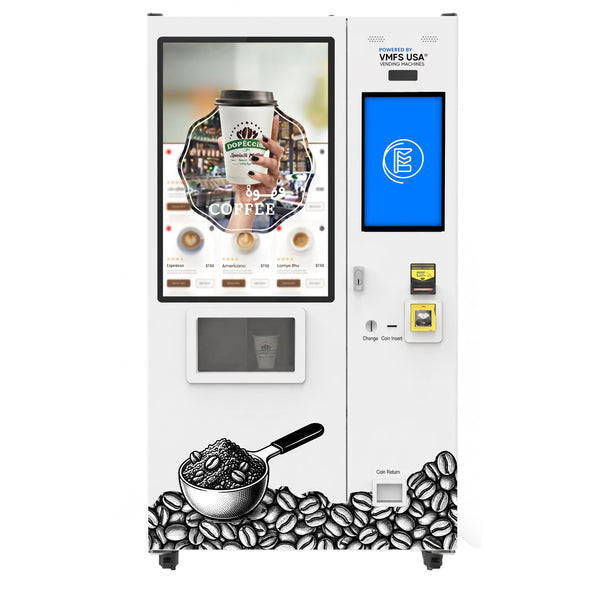
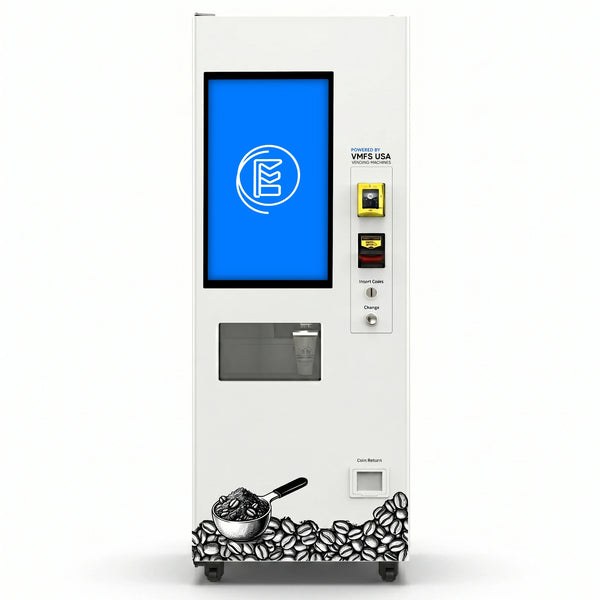
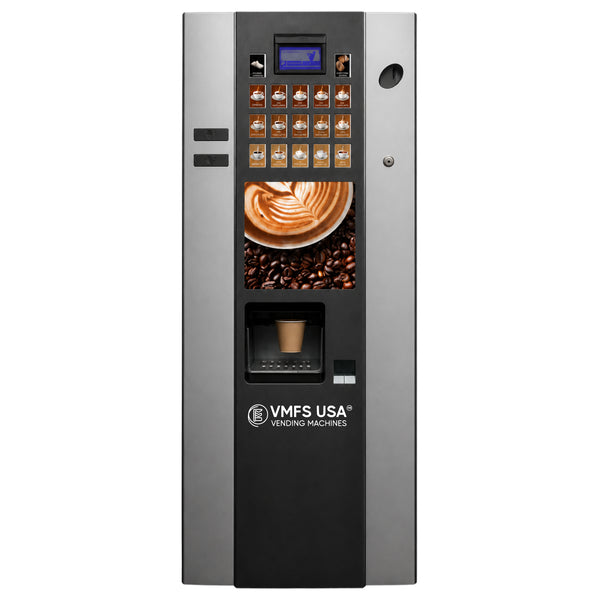
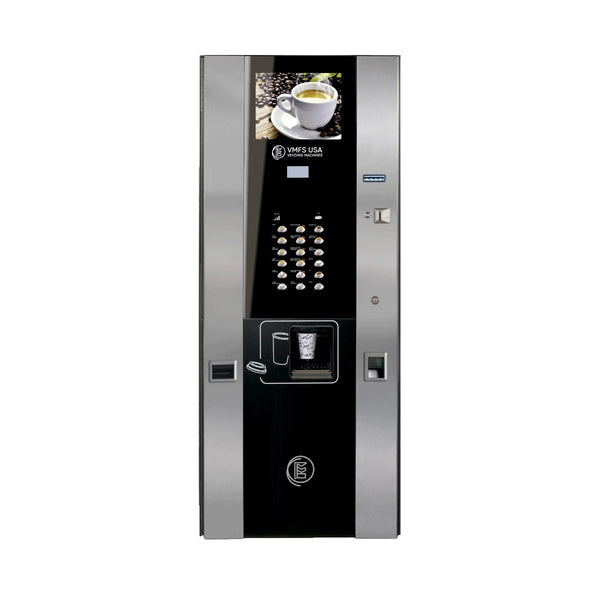
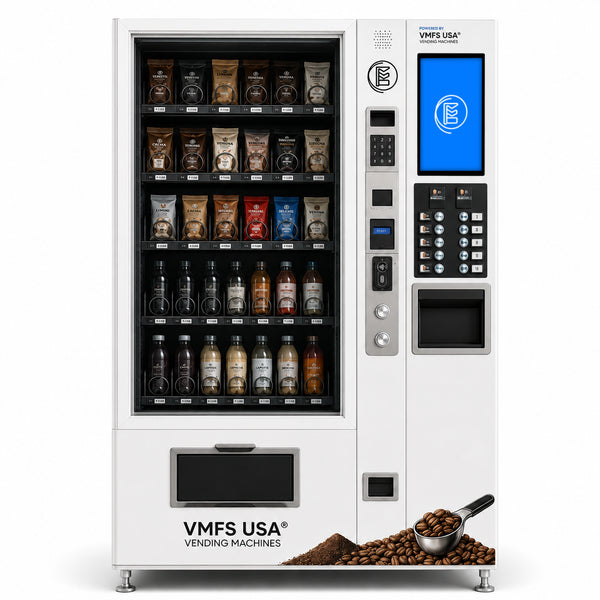
Coffee Vending Machines Available for Charleston
Every unit below ships configured, compliance-ready, and backed by VMFS Cloud monitoring.

How Operators Use Coffee Vending in Charleston
Historic District Hotel Lobby
Charleston's historic hotels along King Street, East Bay, and properties like The Vendue and The Restoration Hotel serve travelers seeking premium morning coffee before exploring local attractions. The coffee vending machine stocks freshly brewed espresso, cappuccino, latte, mocha, and americano alongside hot chocolate and tea selections for guests arriving early or departing late. Bean-to-cup brewing delivers consistency across 150 to 600 cups per day without requiring staff intervention, while 9-bar espresso pressure and 30 to 60 second brew times meet guest expectations for quality. Hotels capture 200 to 400 dollars net profit monthly because guests pay premium prices for convenience, and the machine runs unattended during night shifts when front desk staffing is minimal.
Medical Center Breakroom
Roper St. Francis Healthcare System, MUSC (Medical University of South Carolina), and Trident Medical Center employ thousands of clinical and administrative staff working rotating shifts including nights and weekends. The coffee vending machine dispenses strong espresso, cappuccino, americano, decaf, and hot chocolate to sustain energy during long hospital shifts and overnight patient care. The high-capacity brewing system handles sustained demand without daily restocking, while reliable bean-to-cup mechanics ensure fresh coffee at 2 AM when cafes are closed and staff fatigue peaks. Medical centers generate 250 to 450 dollars net profit per machine monthly because shift workers depend on accessible caffeine and purchasing happens during unpredictable off-hours when traditional cafes cannot operate.
Corporate Office Park
Technology companies, financial services firms, and professional offices concentrated in areas like Park Circle and the upper King Street corridor employ concentrated workforces with morning coffee demand and afternoon caffeine needs. The coffee vending machine supplies espresso, cappuccino, latte, americano, decaf, and iced coffee variants with adjustable strength and milk ratios for individual preference across hundreds of daily transactions. Bean-to-cup brewing handles 150 to 600 cups per day with consistent quality and minimal maintenance, while card and mobile payment acceptance (Apple Pay, Google Pay, tap-to-pay) removes friction from purchase behavior. Corporate parks produce 200 to 350 dollars net profit monthly because employees purchase multiple drinks daily, machines run 12 to 16 hours per business day with zero downtime, and property managers value tenant amenities that reduce off-site coffee runs.
Tourism and Hospitality Training Center
Charleston's robust hospitality workforce development programs, culinary schools, and tourism industry support facilities require breakroom infrastructure for employees and trainees. The coffee vending machine stocks espresso, cappuccino, latte, mocha, americano, cold brew, iced lattes, and hot chocolate to support service staff, instructors, and hospitality professionals preparing for shifts or between training sessions. The coffee vending machine's real-time VMFS Cloud monitoring tracks sales and ingredient depletion automatically, while 1,700g bean capacity and ability to brew 150 to 600 cups daily ensures consistent availability during peak morning hours and extended afternoon operations. Hospitality training centers generate 180 to 320 dollars net profit per machine monthly because employees work unpredictable hospitality schedules, repeat purchases are high among staff preparing for customer-facing roles, and breakroom amenities reduce staff turnover in a competitive labor market.
What Ships With Every Coffee Unit
Regulations for Operating in Charleston, SC
Licensing, permits, sales tax, and health department standards for coffee vending operators in South Carolina.
State License Requirements
In South Carolina, the Department of Health and Environmental Control (DHEC) oversees food service operations including coffee vending machines. Operators selling hot beverages such as coffee, espresso, milk-based drinks, hot chocolate, and tea from vending machines must obtain a Food Service License from DHEC. This applies whether beverages are pre-packaged or prepared on-site. For milk-based espresso drinks and any products containing dairy, operators must comply with South Carolina's dairy product handling rules, including proper refrigeration and temperature maintenance. All ingredients must be properly labeled with allergen disclosures clearly visible, particularly for nut-based or dairy-based recipes. Operators must register for a South Carolina Sales Tax License with the Department of Revenue and obtain an EIN from the federal government. Business entity formation (sole proprietorship, LLC, corporation, or partnership) is required before licensing. Permits must be renewed annually, and late renewal may result in penalties assessed by DHEC. Contact DHEC's Food Protection Division at 803-896-0640 for specific license applications and commodity rules.
City and County Permits
In Charleston, South Carolina, operators must obtain a City of Charleston Business License from the Business Licensing Department before deploying any vending machine. A Certificate of Occupancy or Certificate of Use may be required depending on the specific placement location and zoning designation. Zoning compliance is enforced by the City of Charleston Planning, Preservation and Design Services Department to ensure the machine placement is permitted in the designated zone. Fire safety compliance is required under the Charleston Fire Department's inspection protocols; hot beverage machines must meet fire code standards for electrical safety and placement. At the county level, Charleston County does not require a separate county permit for vending machines, but county facilities may have additional internal approval processes. Coin-operated machine declarations are not separately required in Charleston but should be documented in any host venue agreement. Renewal timelines for the city business license occur annually, with late penalties assessed by the City. Contact the Charleston Business Licensing Department at 843-724-3776 for business license applications. Contact the Charleston Fire Department at 843-577-7000 for fire safety compliance. Contact Planning, Preservation and Design Services at 843-724-3733 for zoning verification.
Sales Tax Rate
The combined sales tax rate in Charleston, South Carolina is 8.5 percent, consisting of the state rate of 6 percent plus a county surtax of 2.5 percent. Hot beverages prepared on-site by a vending machine, such as freshly brewed coffee and espresso drinks made with milk, are taxed as prepared food at the full 8.5 percent rate. Pre-packaged drinks, if any, may receive different treatment but are typically also subject to the full rate in South Carolina. Operators must register for a Sales Tax License with the South Carolina Department of Revenue and remit sales tax monthly or quarterly depending on sales volume; the department will provide a filing schedule upon registration. Out-of-state sellers with no physical presence in South Carolina are not required to collect sales tax unless they meet the federal economic nexus threshold or have economic nexus under South Carolina law, currently triggered by gross revenue exceeding a threshold set by state regulation. Register for sales tax at www.sctax.org or contact the South Carolina Department of Revenue at 803-898-5000.
Health Department Standards
The South Carolina Department of Health and Environmental Control (DHEC) establishes health standards for all food service equipment, including coffee vending machines. Machines must include a boiler with continuous temperature control to ensure water reaches and maintains proper brewing temperatures, typically 195-205 degrees Fahrenheit. Food contact surfaces must be made of food-grade materials such as stainless steel or aluminum and be easily cleanable and sanitizable. Machines must have automatic shut-off features to prevent overflow and safety hazards, and programmable self-cleaning cycles are required or strongly recommended to minimize bacterial growth in milk lines and internal passages. Placement must be in compliance with DHEC spacing and ventilation requirements, with adequate clearance from walls and other equipment to allow for cleaning and maintenance. Operational requirements include date-marking all perishable ingredients, especially powdered milk and dairy products used in milk-based espresso drinks, with clear visibility of expiration dates. Labels on all ingredients must be visible and legible. DHEC conducts unannounced inspections of food service equipment, including vending machines. Secondary local health department oversight may apply if machines are placed in schools, healthcare facilities, or government buildings, which often have additional food service requirements. Charleston's warm and humid subtropical climate requires machines to have robust drainage and condensation management to prevent mold growth and equipment failure. VMFS USA and all coffee vending machines deployed in Charleston ship with the appropriate spec standard, including an aluminum boiler with continuous temperature control and energy-saving design, and a 1-year standard warranty with extended coverage options.
Disclaimer
Regulatory information is for reference only and current as of 2026. Operators should verify current requirements with the relevant agency before deployment. VMFS USA is not a legal or tax advisor. For operator-side legal guidance covering placement contracts, host venue agreements, documentation, business incorporation, tax registration, licenses, and permits, operators can consult <a href="https://vadviced.com">VAdviced</a>. For professional placement and location matching support, operators can work with <a href="https://vplaced.com">VPlaced</a>.
Charleston at a Glance
Geographic Identity
- County
- Charleston County
- Metro Area
- Charleston-North Charleston, SC
- Time Zone
- America/New_York (Eastern Time)
- Area Codes
- 843
- ZIP Codes
- 29401 to 29403, 29405 to 29407, 29409 to 29410, 29412, 29414 to 29415, 29417 to 29418, 29422, 29424 to 29425
- Primary Airport
- CHS Charleston International Airport
- Secondary Airport
- SAV Savannah/Hilton Head International Airport
- Major Port
- Port of Charleston, one of the busiest container ports on the U.S. East Coast
- Nickname
- The Holy City
Market Stats
- City Population
- 150,227
- Metro Population
- 1.64 million
- Annual Visitors
- 8.2 million (2023)
- Visitor Economy
- $10.1 billion annual economic impact
- Airport Passengers
- 12.7 million annual travelers through CHS
- Hospitality Jobs
- None
- Top Industries
- Tourism and Hospitality, Port and Maritime Services, Healthcare, Real Estate Development, Aerospace and Defense, Retail and Commerce
- Demand Driver
- Year round tourism driven by historic architecture, waterfront appeal, major cruise port operations, and strong convention business attract sustained domestic and international visitor traffic.
Climate Profile
- Climate Zone
- Humid Subtropical
- Average Humidity
- 70 to 80 percent year round
- Summer High
- 89 degrees Fahrenheit or higher with high humidity from June through September
- Winter Low
- rarely below 40 degrees Fahrenheit, year round outdoor operating conditions
- Seasonal Hazard
- Hurricane Season, June 1 to November 30
- Environmental Exposure
- Coastal salt air exposure within 3 miles of the coast requires corrosion resistant housing and sealed electronics for equipment longevity.
- Deployment Note
- Charleston's humid subtropical climate with coastal salt air exposure demands weatherproofed units with corrosion resistant housing and sealed electronics for reliable year round operation. Summer heat and humidity require enhanced refrigeration cycles. VMFS ships all Charleston outdoor units with corrosion resistant housing and sealed electronics as standard specification.
Location & Service Area
- Key Neighborhoods
- Downtown, Historic District, French Quarter, East Battery, South of Broad, Upper King, Folly Beach, West Ashley, Mount Pleasant, James Island, Daniel Island, Sullivan's Island
- Nearby Cities
- Goose Creek, Moncks Corner, Ladson, Summerville, Walterboro, Isle of Palms, Beaufort
- Service Radius
- VMFS delivers, installs, and services machines throughout Charleston County and Berkeley County, with extended coverage to Dorchester County and Beaufort County on request.
Your Location. Working 24/7.
Answers to common questions from Charleston operators. Didn't see yours? Send us a message — our US-based team responds within one business day.
How much net profit can a property owner expect from hosting a coffee vending machine in Charleston, SC?
What payment options does the bean-to-cup machine accept, and can hospital staff and office workers pay contactlessly?
How often does the machine need restocking and maintenance in a typical Charleston office or medical facility?
What espresso drinks and hot beverages does the machine brew, and can operators customize the menu for different Charleston venue types?
Does the machine fit standard electrical outlets, and what power requirements should a Charleston property owner know about before installation?
How should operators and property owners establish a placement agreement and revenue share arrangement that protects both parties in Charleston, SC?
Deploy Coffee Vending Machines in Charleston, SC Today
Request a custom quote today for
coffee vending machines
at your Charleston location, and we handle machine selection, delivery, configuration, and ongoing support from start to finish. Every deployment begins with a site assessment covering foot traffic patterns, drink menu balance across espresso cappuccino latte and specialty hot drinks, ingredient canister capacity and power requirements, network setup for the cloud platform, and placement strategy can be coordinated through our
placement experts
for operators seeking professional location matching, with high-foot traffic office parks, hotels, and hospital waiting rooms prioritized to maximize daily cup volume. We work everywhere from a single unit in a small medical office or boutique hotel to rollouts of 30 or more machines across larger hospitality properties or corporate campuses throughout Charleston, and your quote includes hardware, installation, training, and 12 months of cloud monitoring at no extra cost.
Deploy Coffee Vending Across Charleston
1,200+ machines deployed. 1-year warranty standard. Free lifetime support. One team from site survey to uptime.