



Design the perfect vending solution for your location and customers.

Sales, inventory and alerts for your whole route, from one machine to a fleet.
Answer a few questions about your location, products and budget and get a shortlist.
Estimate revenue, payback period and margin before you buy.
Sales, setup help, warranty and parts from the VMFS USA team.
Join the VMFS newsletter and step into a thriving network dedicated to collective success.
One signup. Endless possibilities.
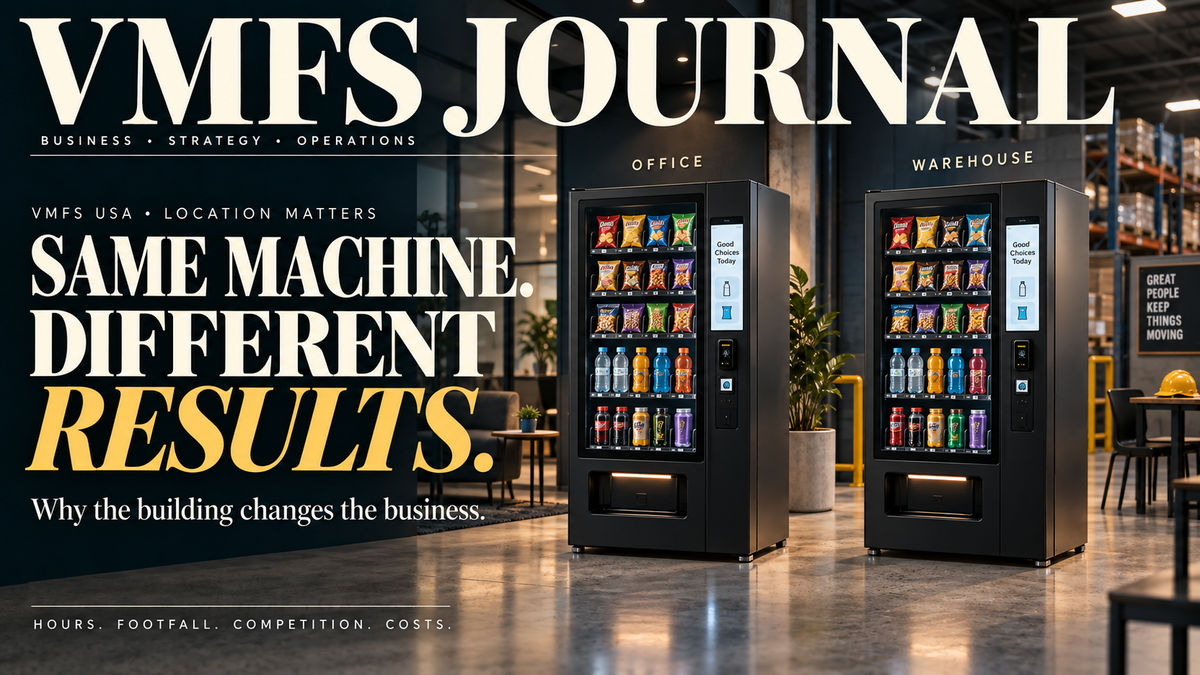
The short answer is this: the machine did not change. The building around it did.
Most new operators spend weeks choosing between vending machines and an afternoon choosing where to put one. This breakdown shows why it should be the other way around.
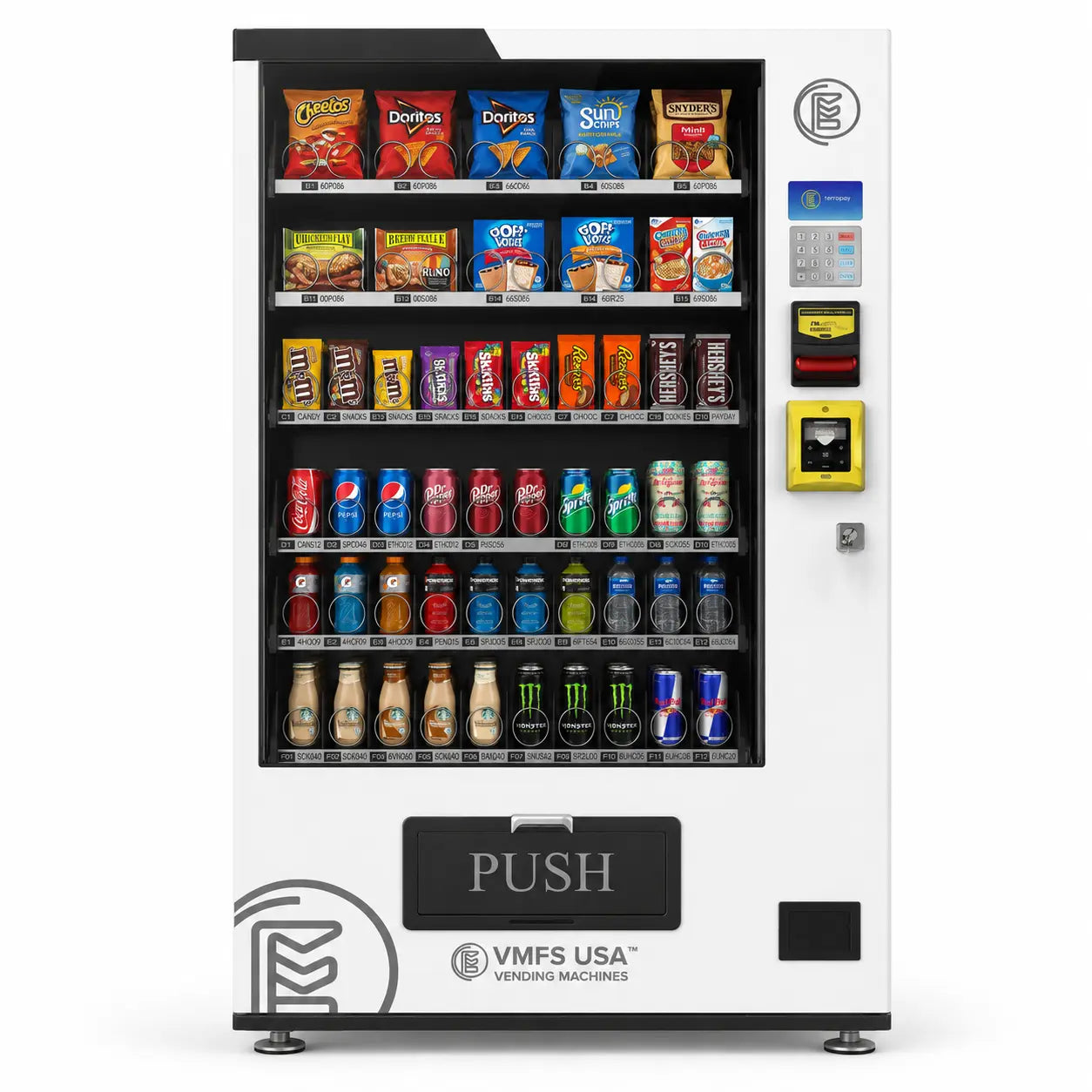
We took one refrigerated combo machine selling snacks and cold drinks, added a card reader, and put it in two different places.
On paper, the office looks better. More people, a cheaper deal with the location, and a shorter drive. Now look at the money.
| Where the money goes | Office | Warehouse |
|---|---|---|
| Total sales | $1,500 | $2,375 |
| Cost of the snacks and drinks | $720 | $1,093 |
| Paid to the location | $120 | $285 |
| Card payment fees | $42 | $71 |
| VMFS Cloud monitoring | $8 | $8 |
| Gas and driving | $73 | $182 |
| Products that expired or went missing | $37 | $36 |
| What you keep | $500 | $700 |
Here is the surprising part. Both machines sell about the same number of items each day, around 33 or 34. The office is not a bad location. The warehouse simply wins on three things.
The office sells on about 22 days a month. The warehouse sells on all 30.
The office machine can only sell during office hours, about 228 hours a month. The warehouse machine sells for about 730 hours, including nights and weekends.
At the office, the average sale is $2.05. At the warehouse, it is $2.35. Workers on long shifts with nowhere else to go buy bigger drinks, energy drinks and more filling snacks.
| What is different at the warehouse | Effect |
|---|---|
| More sales, after paying for the products | adds $502 |
| Pays the location more | costs $165 |
| More driving | costs $109 |
| More card fees, because of more sales | costs $29 |
| Fewer expired products | adds $1 |
| Extra money kept each month | $200 |
Before you place any machine, ask these ten simple questions.
The number of people on the payroll is not the number in the building. Badge data from Kastle Systems shows offices in the biggest US cities running at about 55% of their old attendance in mid 2026. An office with 220 staff might only have about 120 people in on a normal day.
A machine can only sell when people can reach it. According to the Bureau of Labor Statistics, about 1 in 6 US workers usually works evenings, nights or rotating shifts. Those workers rely on whatever food is inside the building.
If there is a cafe in the lobby, your machine has competition all day. If the nearest store is a drive away and breaks are short, your machine is the easy choice. This one factor affects both how much you sell and what you can charge.
Across the industry, the average vending sale in 2025 was about $2.01, according to the largest yearly study of vending payment data. Busy, hard working crowds with no other options tend to spend more than that. Office crowds with lots of choices tend to spend less.
The same study found that 71% of vending sales were cashless in 2024. People paying by card or phone also spent more, about $2.24 per sale compared with $1.78 in cash. No payment system comes standard on VMFS machines, so you choose the card reader and tap to pay options that fit your location.
Locations usually ask for a share of sales, anywhere from nothing at a small office to 25% or more at a very busy venue. Most deals land between 10% and 15%. A higher share at a great location is often better than a small share at a quiet one.
Driving costs more than most people think. The IRS raised its business mileage rate to 76 cents a mile from July 1, 2026, because gas prices rose from about $2.82 a gallon in January to about $3.89 by July, according to AAA. In our example, driving is the warehouse's third biggest cost.
A slow machine holds products longer, and some expire before anyone buys them. The office loses more to expired products than the busier warehouse. Remote monitoring shows you what is selling, so you can stock what each location actually wants.
Heat and humidity make the cooling system work harder and can spoil products faster. That is why VMFS USA runs its private pilots in different American climates and types of locations, and chooses equipment built for US conditions instead of importing a machine designed for another market.
A machine by the break room door and a machine at the end of a quiet hallway can be in the same building and earn very different amounts. Put it where people already walk and stop.
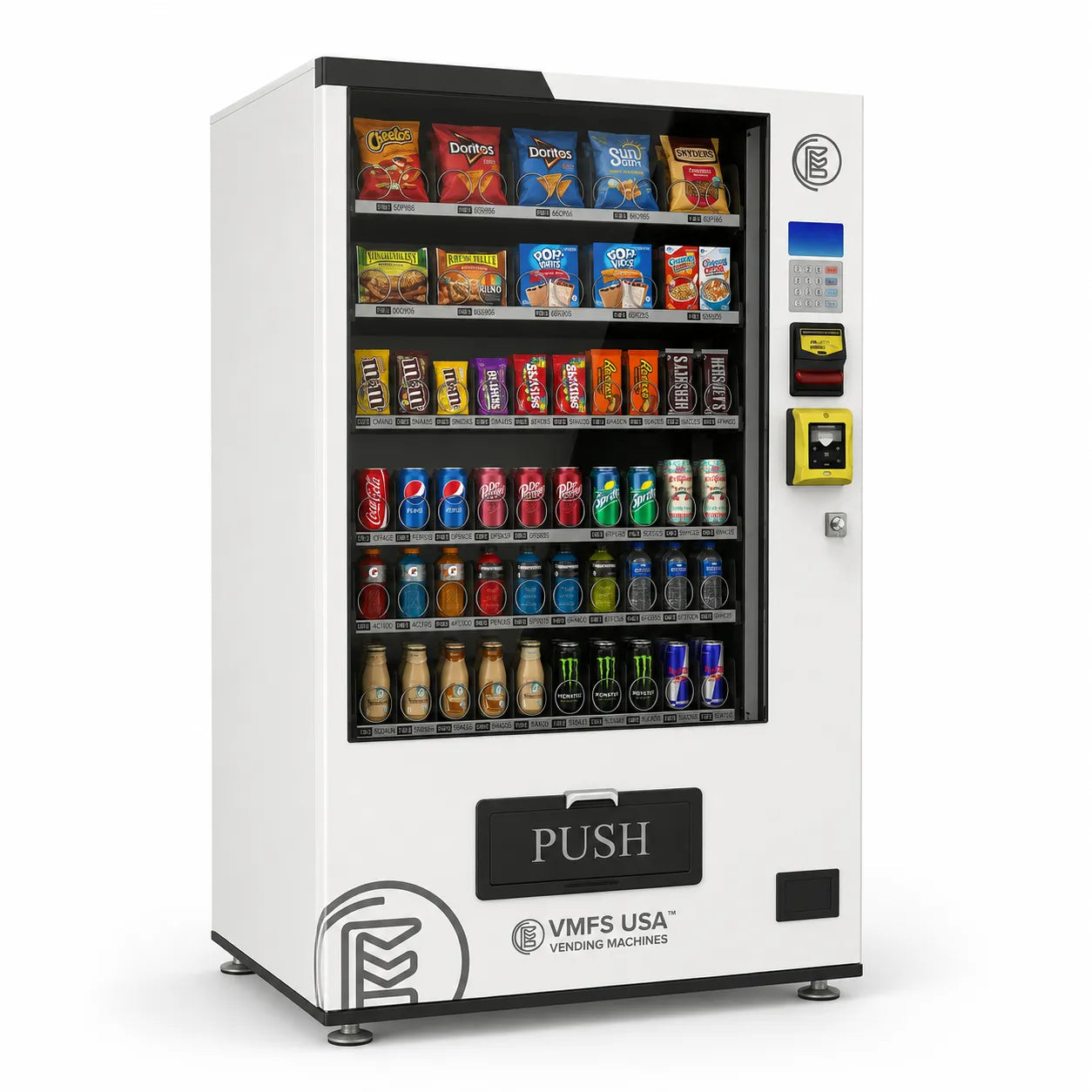
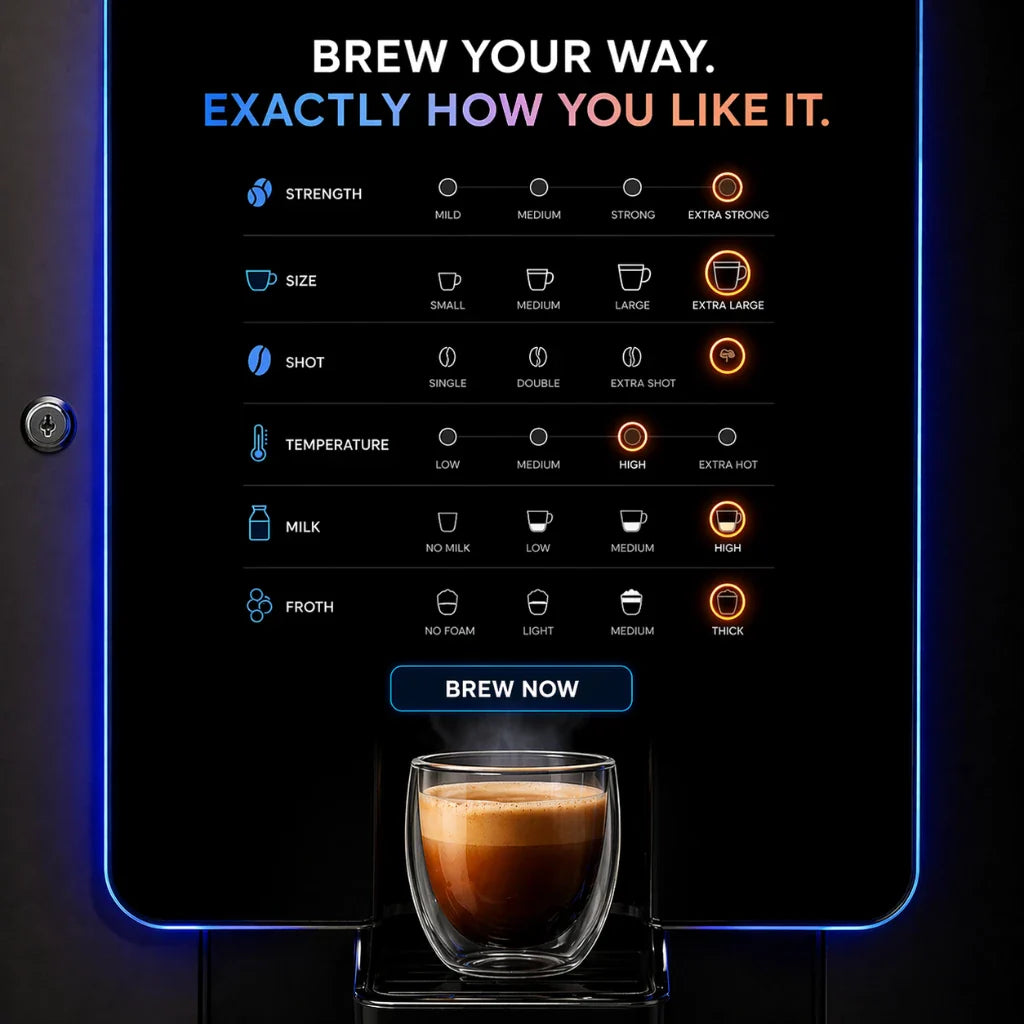
Once you know the location, choosing the machine gets easy. A busy site open around the clock suits combo vending machines, which sell snacks and drinks in one unit. Locations with busy mornings do well with coffee vending machines. Smaller rooms with fewer people are often a better match for mini vending machines, which cost less to buy and fill.
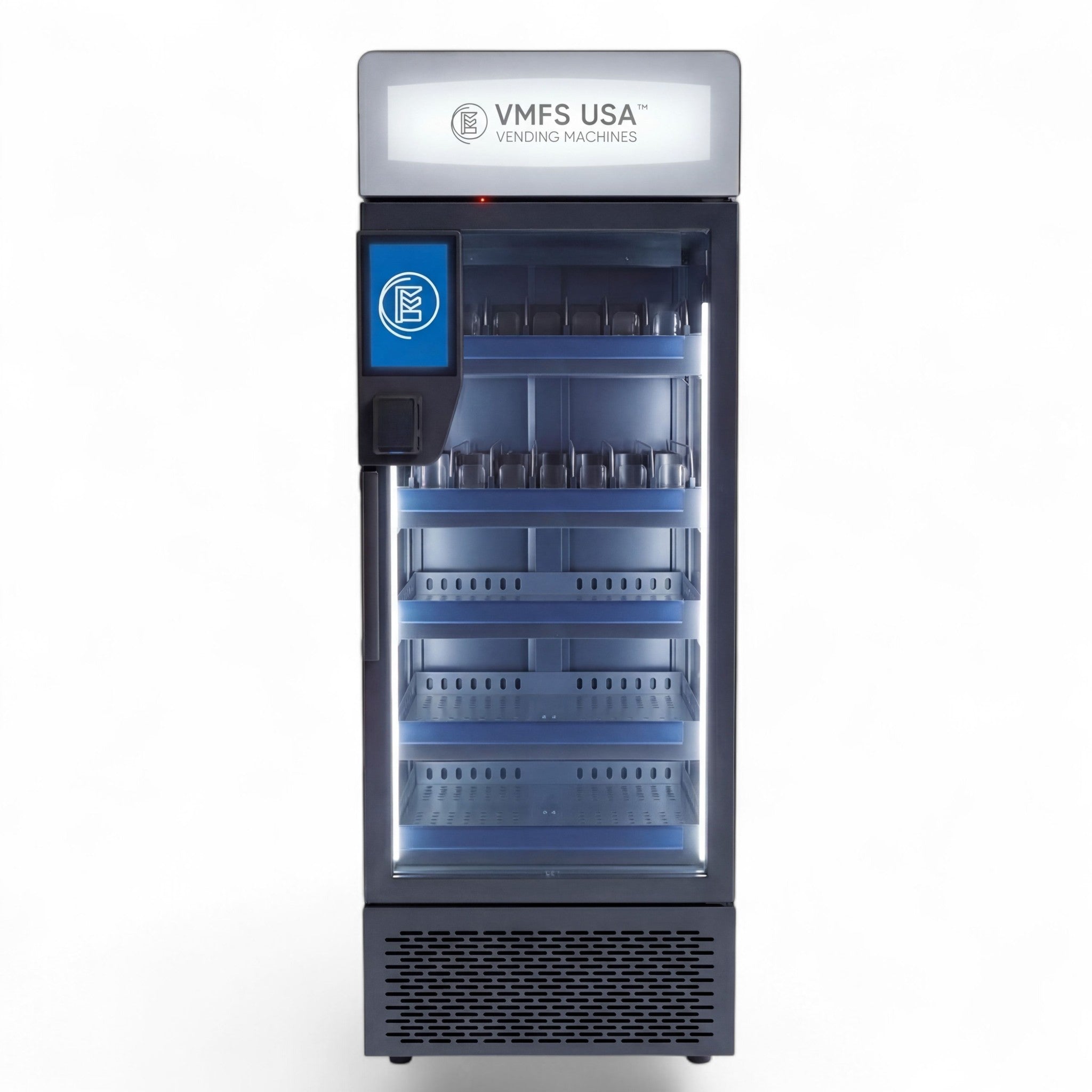
The type of machine can raise the average sale too. The same industry study found that open door smart stores averaged $4.49 per sale in 2025, more than double regular vending. That makes smart vending machines a strong choice for busy sites with a trusted crowd, while digital vending machines help sell products that look better on a screen with pictures and prices.
| Location | Why it can work | What to watch |
|---|---|---|
| Office | Steady weekday sales | Work from home days, closed weekends |
| Warehouse or factory | Open all the time, few other options | More visits, bigger commission asks |
| Hospital | Staff and visitors day and night | Formal approval process |
| Apartment building | Evening and weekend sales | Smaller sales, security |
| Gym | Strong demand for drinks | Owners who negotiate hard |
| Outdoors | Lots of people passing by | Heat, sun and weather |
VMFS USA was started by people from outside traditional vending, and it puts operators first. That means helping with the whole business, from the machine to the place it earns money.
Operators looking for good locations can work with VPlaced, and property owners can request a machine through the same program. People looking for a machine nearby can find one on VendingFinder. Location agreements and legal questions are handled by VAdviced, and VMarketed helps operators market themselves to new locations. VMFS Cloud, an optional add on starting at $7.99 per machine per month, shows your sales, stock levels and machine alerts, so you can see which location is really earning.
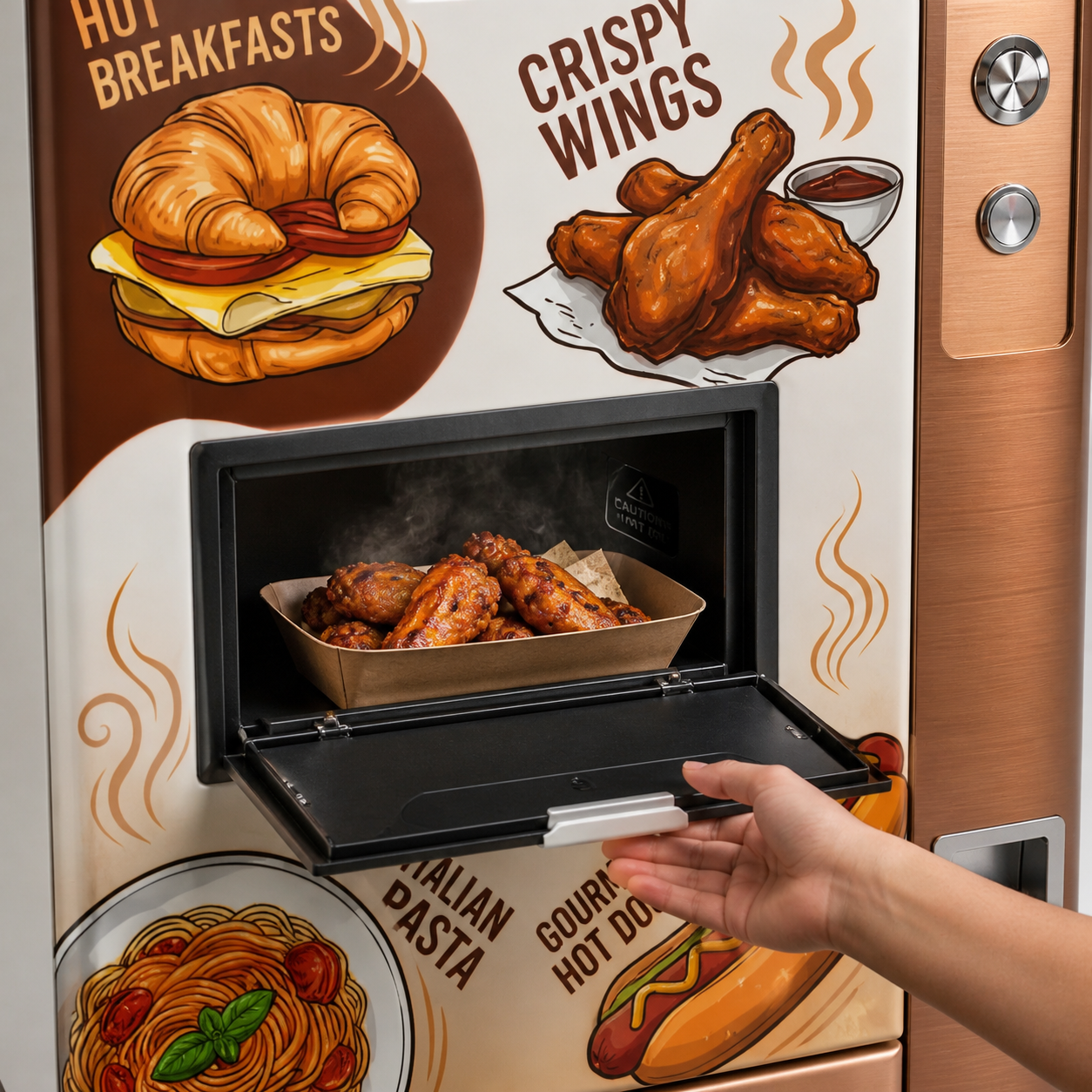
VMFS USA runs private pilot programs across the United States for machines including protein shakes, smoothies, custom printing, outdoor units and hot food. They are placed in different climates and types of locations on purpose, and every one teaches the team more about how location changes the numbers. If you own a busy or challenging site, VMFS would love to hear from you.
Ready to start? Browse the full range of vending machines for sale, or book a visit to the Miami showroom and talk through your location before you choose a machine.
Compartir:
Spanish Language Vending Machines: VMFS USA Brings Spanish Support to Operators Across the US and Latin America