




Diseñe la solución de vending perfecta para su ubicación y clientes.

Únete al boletín de VMFS y forma parte de una red próspera dedicada al éxito colectivo.
Un registro. Posibilidades infinitas.

Pregunte a cualquier operador experimentado qué es lo que realmente erosiona su margen y obtendrá la misma lista cada vez: stock muerto. Productos que parecían una buena idea en marzo y que siguen allí en septiembre. Adivinar mal lo que un lugar en particular quiere. Capital inmovilizado en un inventario que se vuelve silenciosamente sin valor mientras usted lo mira.
Una máquina de impresión bajo demanda elimina toda esa lista. Lo que contiene son fundas en blanco y tinta, y ninguna de esas cosas tiene sabor, temporada, tendencia o fecha de vencimiento adjunta.
El punto estructural: el vending tradicional vende un producto básico y compite en conveniencia, lo que significa que siempre está sujeto al precio de cualquier tienda cercana. Una máquina de impresión vende algo que no existía antes de que el cliente lo pidiera y que nadie más en la tierra posee. Eso no es una máquina expendedora compitiendo con una tienda; es una tienda que nadie puede socavar.
Todo lo siguiente es ilustrativo más que una promesa, ya que sus números dependen de su aprovisionamiento, su ubicación y sus precios. Pero la estructura económica aquí es lo suficientemente inusual como para valer la pena analizarla cuidadosamente.
Su costo de insumo es una funda en blanco más una pequeña cantidad de tinta. Su precio de venta es lo que valga un producto personalizado y único para alguien parado en un centro comercial que lo quiere en ese momento. Esos dos números están muy separados y, a diferencia de una lata de refresco, no hay un precio de referencia que el cliente pueda contrastar con una tienda a quince metros de distancia.
Ese último punto merece énfasis porque es genuinamente raro en el vending. Un cliente que mira una botella de agua de dos dólares en una máquina sabe exactamente cuánto cuesta esa botella en la tienda de abajo y ajusta el valor de su conveniencia en consecuencia. Nadie sabe cuánto debería costar una funda personalizada con la foto de su perro, porque hasta que no estuvieron frente a su máquina, no existía como objeto comprable.
Luego, añada la carga emocional, que es donde esta categoría se distingue por completo. Alguien que compra un snack está resolviendo el hambre y optará por una opción más barata sin pensarlo mucho. Alguien que imprime una foto de su hijo, su perro o el lugar que acaba de visitar está comprando un pequeño recuerdo, y la gente no compara precios de recuerdos de la misma manera que compara precios de bebidas. El artículo sale de la máquina significando algo. Si desea ver qué está disponible para moverse ahora, nuestras unidades en stock se envían en un plazo de 7 a 21 días.
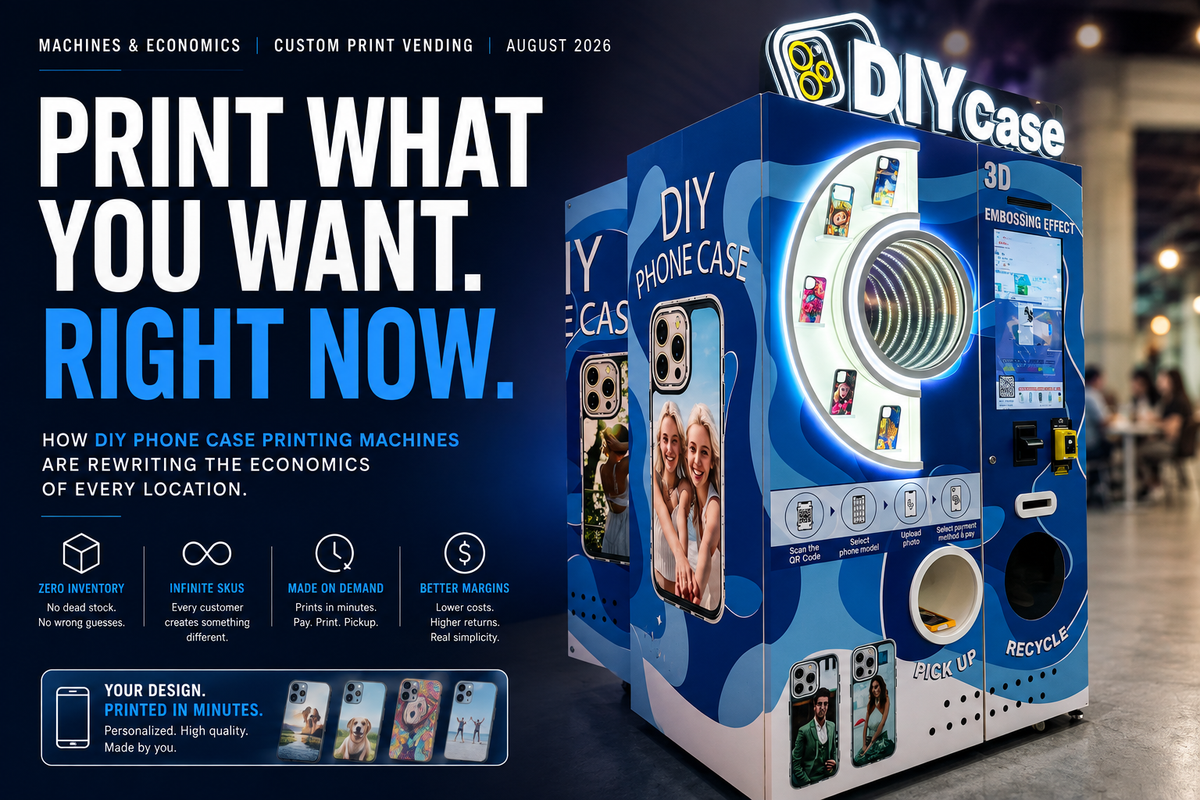
El proceso impreso en la parte frontal de la máquina tiene cuatro pasos, y la simplicidad es deliberada. Todo debe funcionar para alguien que nunca ha visto una antes, estando en público, sin más instrucciones que lo que está en el panel.

Por dentro, es una impresora UV más que cualquier cosa que se parezca a un mecanismo de vending convencional. No hay bobinas, ni plataforma elevadora, ni contenedor de entrega en el sentido habitual. Hay una base de impresión, un soporte para la funda, tinta y una etapa de curado, y todo el gabinete es esencialmente una pequeña celda de fabricación con una terminal de pago adjunta.
La unidad que examinamos contaba con tecnología de impresión establecida de un fabricante importante, lo cual importa considerablemente más de lo que sugiere la marca. La calidad de impresión no es una característica de este producto, es el producto en sí mismo. Una máquina que produce fundas ligeramente borrosas o descoloridas fallará independientemente de lo bueno que sea todo lo demás, porque el cliente compara el resultado con la foto en su propia pantalla, la cual conoce íntimamente. Es lo primero que vale la pena cuestionar cuando compara las construcciones de toda la gama.
También ofrecía un acabado en relieve en lugar de una impresión plana. Ese es el tipo de detalle que convierte un producto de una novedad en algo que la gente realmente quiere poseer y mostrar a otros, y vale la pena preguntar por ello específicamente al comparar modelos.
Algunas cuestiones prácticas que no aparecen en ningún folleto pero que moldean cómo se comporta esta máquina en el campo.
Aquí hay algo que ninguna máquina de snacks ha tenido jamás, y vale la pena valorarlo correctamente en lugar de tratarlo como un efecto secundario agradable. La gente graba esta máquina.
El proceso de ver cómo su propia fotografía aparece en un objeto físico es inherentemente entretenido, y el resultado es un producto que el comprador muestra inmediatamente a quien esté con él. Vimos que esto sucedía repetidamente en la feria. Una persona inicia un pedido, otros dos o tres se acercan a ver qué está haciendo la máquina, y una parte significativa de esos espectadores se convierte en la siguiente fila.
Eso significa que la máquina genera su propio tráfico de manera que simplemente no vemos en otras categorías, y significa que la espera, que parece una desventaja sobre el papel, está en realidad haciendo el trabajo de marketing. Convertir eso en una ventaja deliberada en lugar de un accidente afortunado es en lo que se enfocan nuestros colegas en VMarketed, y cambia cómo debería posicionarse la máquina dentro de un local.

Vale la pena ponerla en contexto, porque se comporta de manera tan diferente al resto del catálogo que compararla con una máquina de snacks lleva a las personas a conclusiones erróneas.
| Vending convencional | Impresión bajo demanda | |
|---|---|---|
| Lo que almacena | Productos terminados | Materias primas |
| Riesgo de stock muerto | Constante | Ninguno |
| Referencia de precio | Tienda a quince metros | Ninguna, producto único |
| Tiempo de transacción | Segundos | Minutos |
| Atrae a la gente | Nunca | Habitualmente |
| Tipo de mantenimiento | Mecánico, ocasional | Cuidado de la impresora, programado |
Lea esa tabla y la descripción de la ubicación se redacta sola. Esta máquina requiere tráfico de navegación con tiempo de sobra y espacio para el público, lo cual es un estudio completamente diferente al de la ubicación de una máquina de bebidas. Encontrar el lugar adecuado es lo que manejan nuestros socios en VPlaced, y aquí es más importante que en casi cualquier otra categoría que suministramos.
Preferimos exponer esto ahora antes de que alguien lo descubra en el tercer mes.
Tenemos unidades piloto operando en todo Estados Unidos con hardware de impresión personalizado, y el razonamiento es el mismo que aplicamos a cada categoría que nos tomamos en serio. Una especificación escrita para otro mercado no le dirá lo que un centro comercial estadounidense exige realmente un sábado, y la única forma de averiguarlo es poner máquinas frente a clientes estadounidenses y observar de cerca.
Lo que estamos midiendo:
Esa última pregunta ha generado comentarios más útiles que cualquier otra, porque es el momento en el que este formato deja de comportarse como una máquina expendedora y empieza a comportarse como una tienda. Una máquina de snacks que se traga un dólar es una molestia. Una máquina de impresión que produce una funda que no le gusta a alguien es una interacción de servicio al cliente, y los operadores que dirigen nuestros proyectos piloto han tenido opiniones contundentes sobre cómo debería funcionar.
Nuestra postura, claramente: preferimos construir la versión que este mercado necesita realmente antes que importar la versión que llegó aquí primero. Cada nota de un sitio piloto, y cada pregunta que plantea el propietario de un gimnasio o un administrador de centro comercial que a nadie se le ocurrió responder, alimenta la especificación que estamos preparando.
Si está considerando una de estas, el orden de las operaciones importa más de lo habitual. La máquina es la decisión fácil. Las tres cosas que la rodean son las que determinan si genera ingresos.
Defina primero la descripción de la ubicación, porque el tiempo de impresión descarta muchos sitios que, por lo demás, serían buenos, y usted no quiere descubrirlo después de comprar. Resuelva la cuestión de la ilustración y la carga con VAdviced antes de que la máquina acepte su primer pedido, no después de una queja. Y planifique el lanzamiento correctamente, porque el primer fin de semana de una máquina como esta genera una atención que nunca volverá a obtener.
Las máquinas tienen una garantía de un año en piezas. Si usted es dueño de un local en lugar de operar las máquinas usted mismo, puede registrar su sitio directamente con VPlaced, y si la máquina ya está colocada, hacer que la gente la note en el primer mes es lo que maneja VMarketed.
Y si quiere hablar sobre el programa piloto específicamente, o si tiene una ubicación que sería un sitio de prueba genuinamente bueno, nos gustaría saber de usted. No es una frase vacía. Las máquinas que estamos especificando para este mercado están siendo moldeadas por las personas que ya las operan.
Escanea un código QR, elige su modelo de teléfono, carga una foto de su carrete y paga, todo en su propio teléfono en lugar de en una pantalla táctil pública. Luego, la máquina imprime su imagen con rayos UV en una funda en blanco, a menudo con un acabado en relieve, y la entrega en la bandeja de recogida unos minutos después.
La estructura de margen es inusualmente fuerte, porque su insumo es una funda en blanco y un poco de tinta, mientras que el precio de venta refleja un producto personalizado único en su clase sin ningún artículo comparable cerca con el cual comparar precios. Además, no hay stock muerto ni caducidad, lo que elimina dos de los mayores costos ocultos en la venta automática ordinaria. Los resultados siguen dependiendo de la ubicación, el precio y el abastecimiento.
Más que una máquina de espirales y de un tipo diferente. Usted está manteniendo una impresora, por lo que los niveles de tinta, los cabezales de impresión, la alineación y los ciclos de limpieza necesitan atención programada. Además, el stock de fundas en blanco debe mantenerse al día a medida que se lanzan nuevos modelos de teléfono cada año, lo que es una tarea continua en lugar de algo puntual.
Unos minutos en lugar de segundos, ya que la máquina está fabricando genuinamente el producto en lugar de dispensar algo ya hecho. Esa restricción es lo que da forma a la lista de ubicaciones, empujando este formato hacia centros comerciales, atracciones y áreas de espera en lugar de sitios de tránsito.
Esta es la pregunta más importante en la categoría y merece una respuesta adecuada en lugar de una esperanzadora. Debido a que su máquina fabrica lo que se le da, necesita términos de carga, filtrado automatizado y un proceso de eliminación documentado antes del lanzamiento. Vale la pena obtener asesoramiento específico sobre esto antes de que la máquina acepte su primer pedido.
Una máquina que fabrica el producto
Tenemos proyectos piloto funcionando con hardware de impresión personalizado en todo el país y estamos especificando estas construcciones para el mercado estadounidense. Cuéntenos sobre su ubicación y hablemos.
Explorar las máquinas
Compartir:
Berlín descifró las máquinas expendedoras de batidos de proteínas en 2011. Estados Unidos sigue viendo a gente haciendo un desastre en un banco.
Cómo convertirse en operador de máquinas expendedoras: guía completa